


Xiphydria prolongata
Woodwasp Xiphydria prolongata
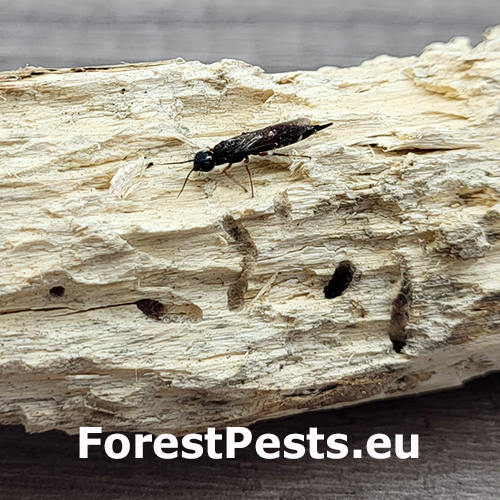
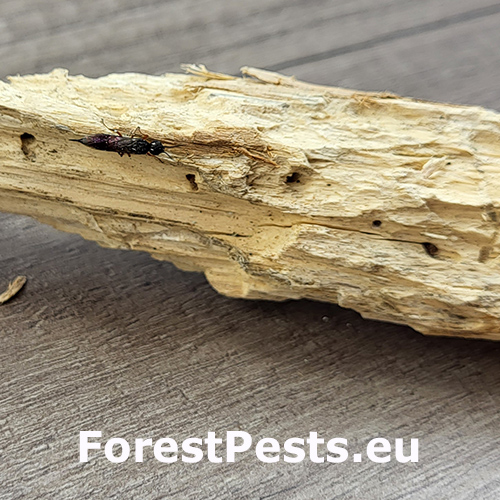
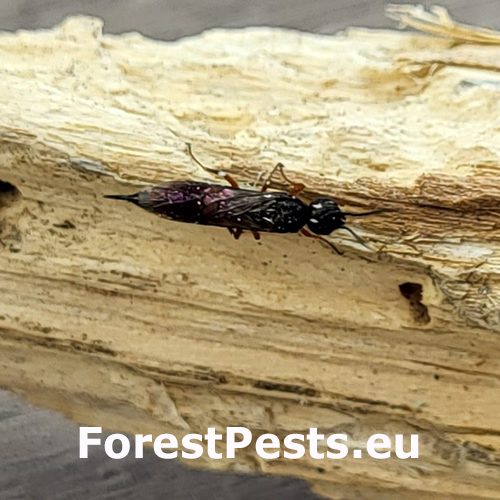
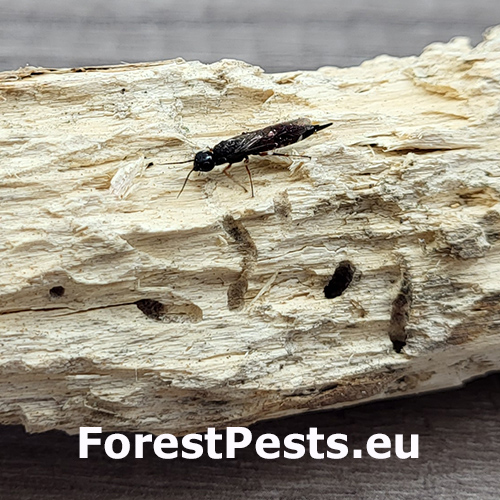
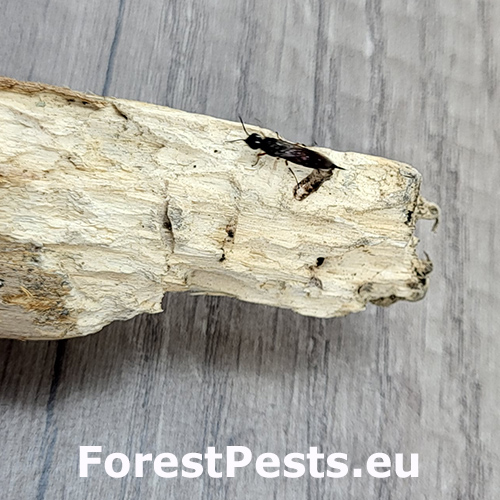
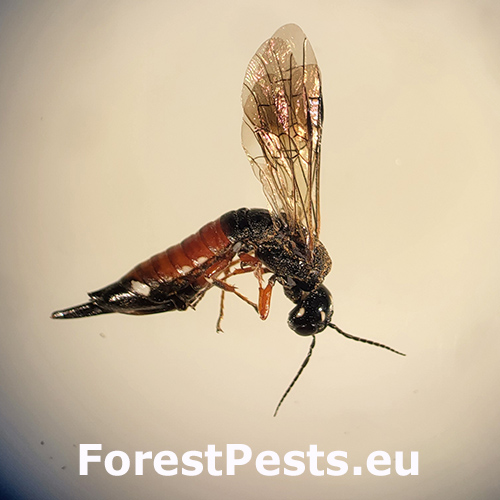
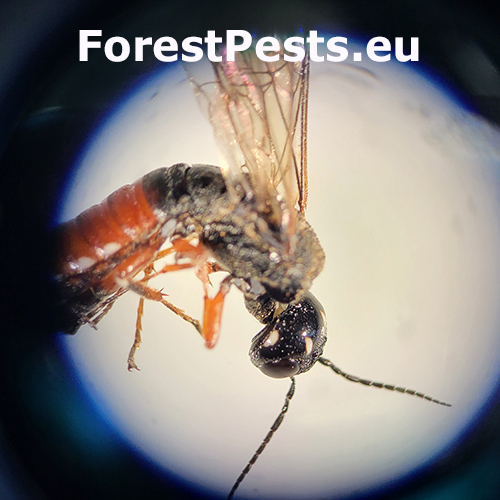
The size of the imago is 6 to 18mm, and the rear part of the abdomen is reddish. The emergence occurs roughly from May. After mating, the females lay eggs in crevices of the bark. Hatched larvae feed in all directions and live in symbiosis with fungi of the Daldinia genus, which accelerate wood decomposition. The larvae have a characteristic spine at the end, and their feeding process lasts almost the entire year. Therefore, the generation is annual, and in the spring of the following year, individuals of a new generation emerge again.
Holes of various diameters in branches and smaller trunks filled out with sawdust.
Tree Species: Poplar, Willow
Part of a plant- attacked: Tree trunk
Pest significance: Less harmful
Pest Category: Insects
Invasive Species: No
Present in EU: Yes
Pest group: Insect
Affected part of wood: Bark, Heartwood, Sapwood, Underbark area
Depth of damages: Bark, More than 5 cm depth, Under bark only, Up to 0,5 cm depth, Up to 2 cm depth, Up to 5 cm depth
The extent of damage: Whole trunk
Prevalence in Europe: Very common
Damaged products: Firewood, Fresh timber logs (water still in the sapwood), Furniture, Lumber, boards and prisms, Wooden house constructions
Roundwood size: Diameter 50+, Diameter from 10 up to 50 cm, Diameter up to 10 cm
Wood discoloration: No
Exit holes: Round
Pest subcategory: Wood-boring insect
Similar pests

Xiphydria longicollis

Sirex noctilio
