


Xeris spectrum
Wood wasp Xeris spectrum
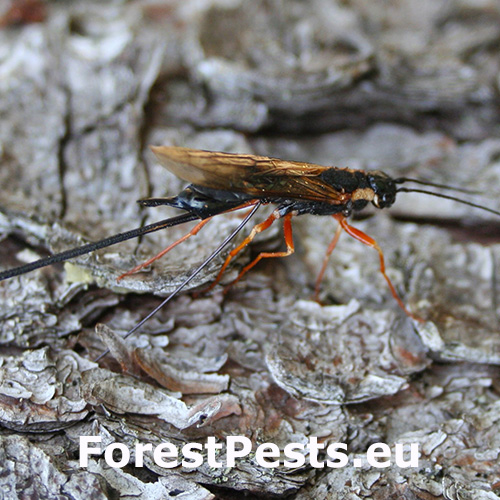
Xeris spectrum is a wood wasp from the family Siricidae, commonly found in coniferous forests throughout Europe, Asia, Africa, and North America. This large wasp, with females measuring up to 28 mm, uses its powerful ovipositor to lay eggs under the bark of coniferous trees, mainly targeting spruce, pine, and larch. The larvae bore into the wood, creating extensive tunnels as they feed, but unlike most Siricidae species, X. spectrum lacks own symbiotic fungi. Instead, it often exploits the fungi associated with other wood-boring wasps. The complete development cycle, from egg to adult, spans several years, with adult emergence taking place in summer.
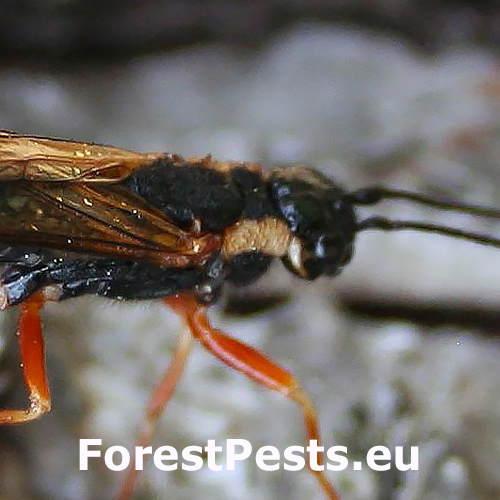
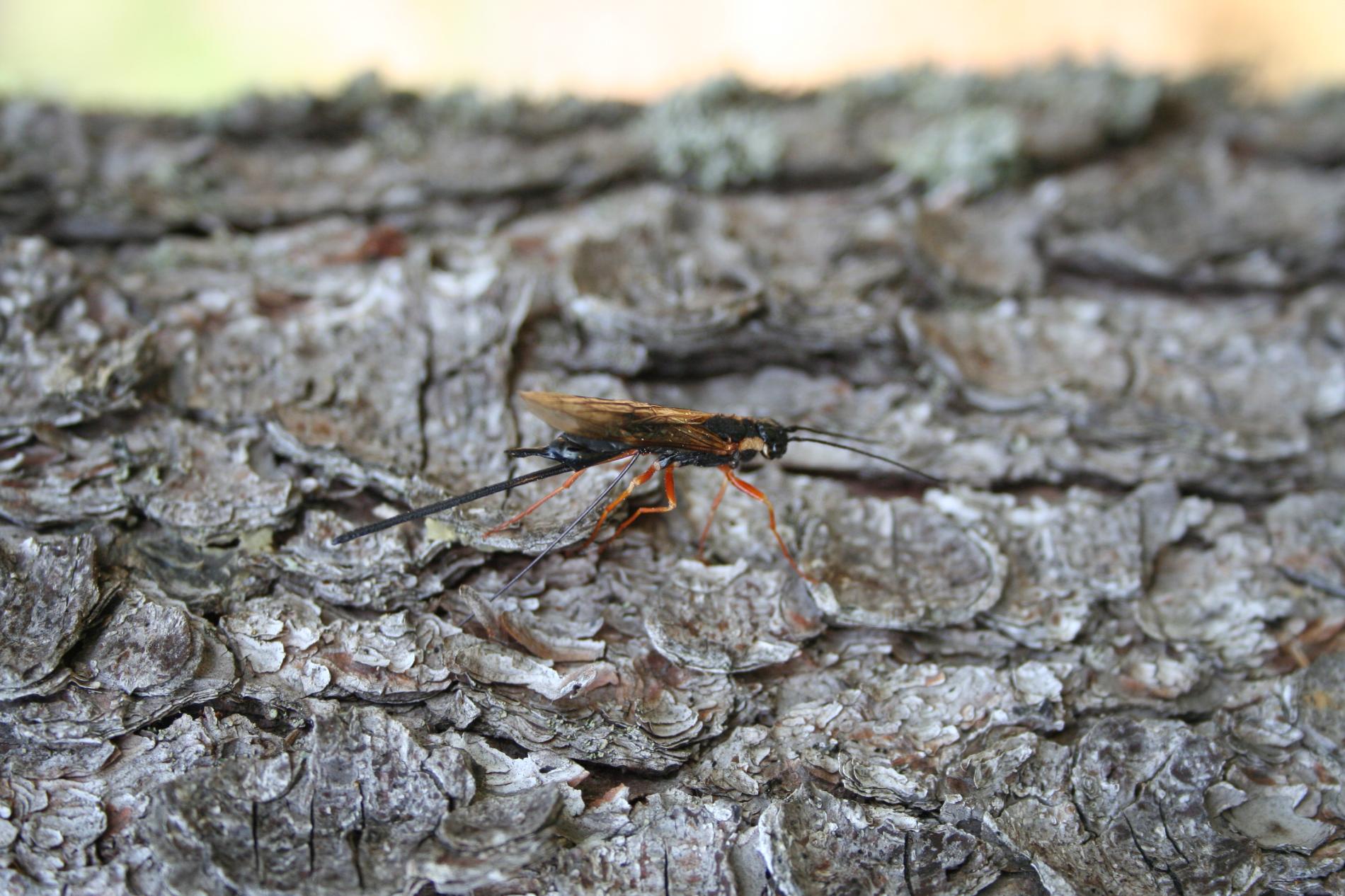
Infested trees exhibit galleries filled with sawdust-like frass. Extensive larval tunneling weakens the wood, reducing timber value. Common especially in damaged or homogeneous conifer stands. In Xeris spectrum, the white spots are distinctive identification markers located on the sides of the prothorax, just behind the eyes. These spots stand out against the generally dark (black or dark brown) shiny body and help differentiate X. spectrum from other similar wood wasps. The white spots, paired with the insect's cylindrical body shape and orange-red legs, provide clear visual cues for identifying this species.
Tree Species: Pine, Fir, Spruce, Larch
Part of a plant- attacked: Tree trunk
Pest significance: Harmful
Pest Category: Insects
Invasive Species: No
Present in EU: Yes
Pest group: Insect
Affected part of wood: Sapwood
Depth of damages: Up to 5 cm depth
The extent of damage: Lokally, Whole trunk
Prevalence in Europe: Common
Damaged products: Firewood, Fresh timber logs (water still in the sapwood), Furniture, Wooden house constructions
Roundwood size: Branches and twigs, Diameter 50+, Diameter from 10 up to 50 cm, Diameter up to 10 cm
Wood discoloration: No
Exit holes: Round
Pest subcategory: Wood-boring insect
Similar pests

Tremex fuscicornis

Vespa crabro
