


Urocerus gigas
Greater horntail wasp
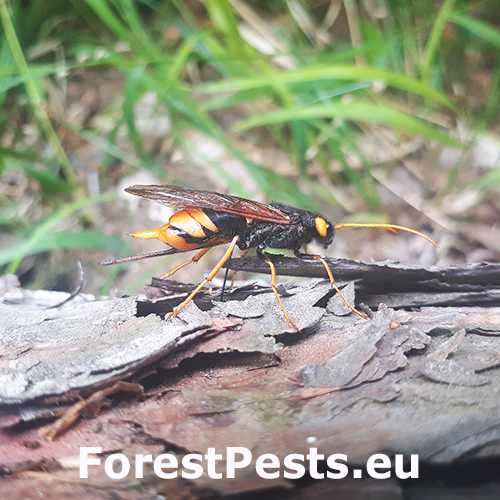
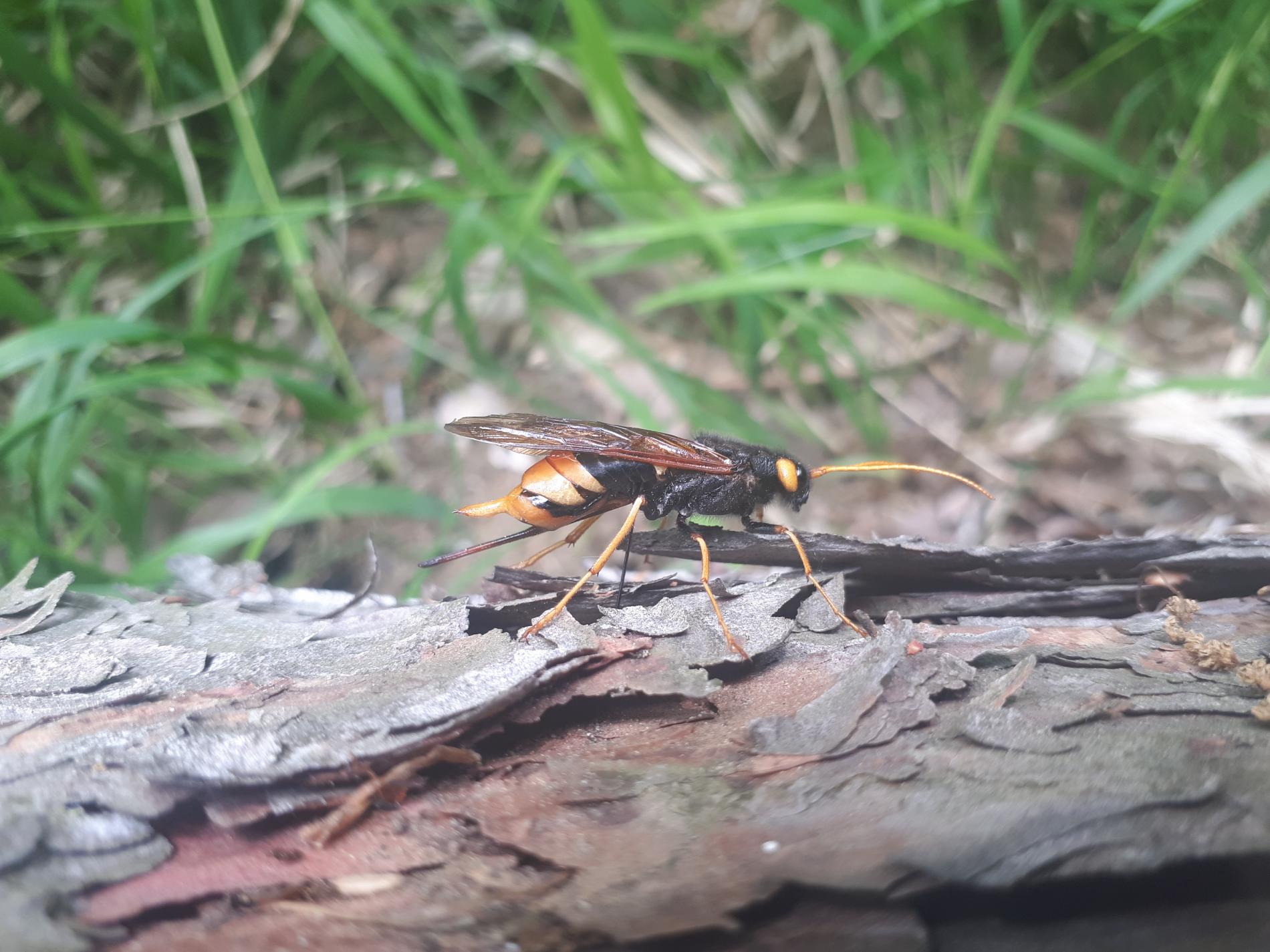
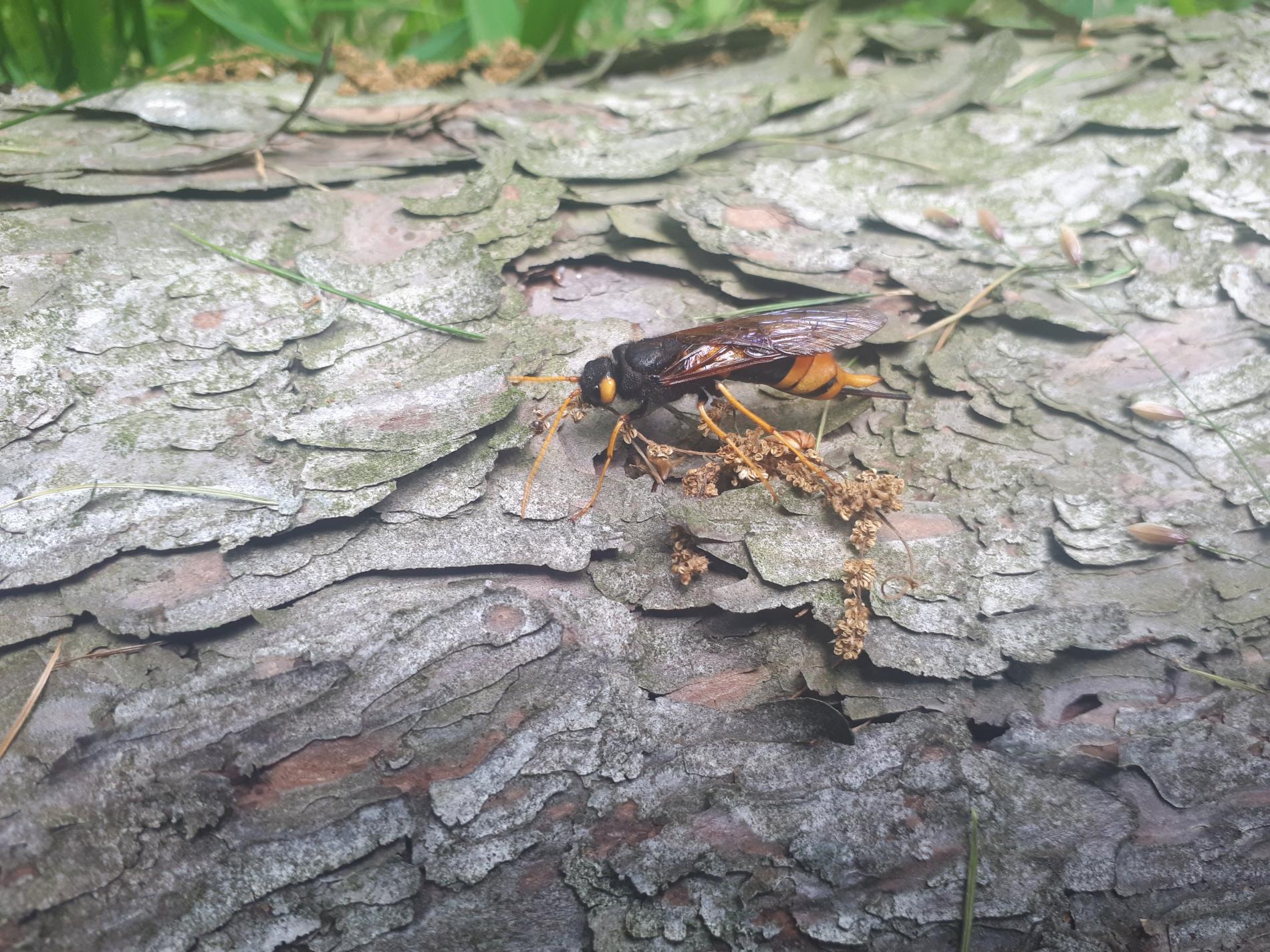
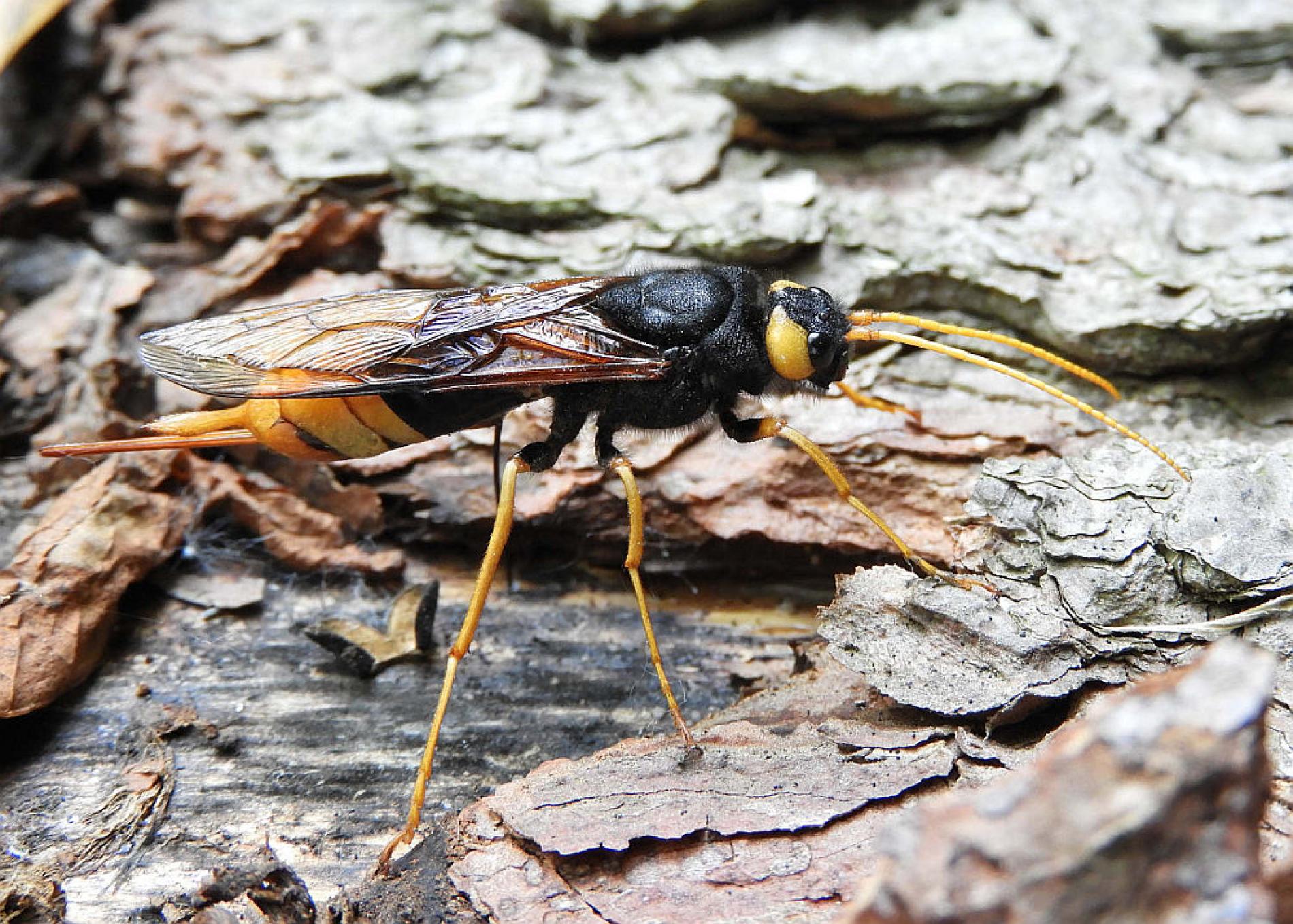
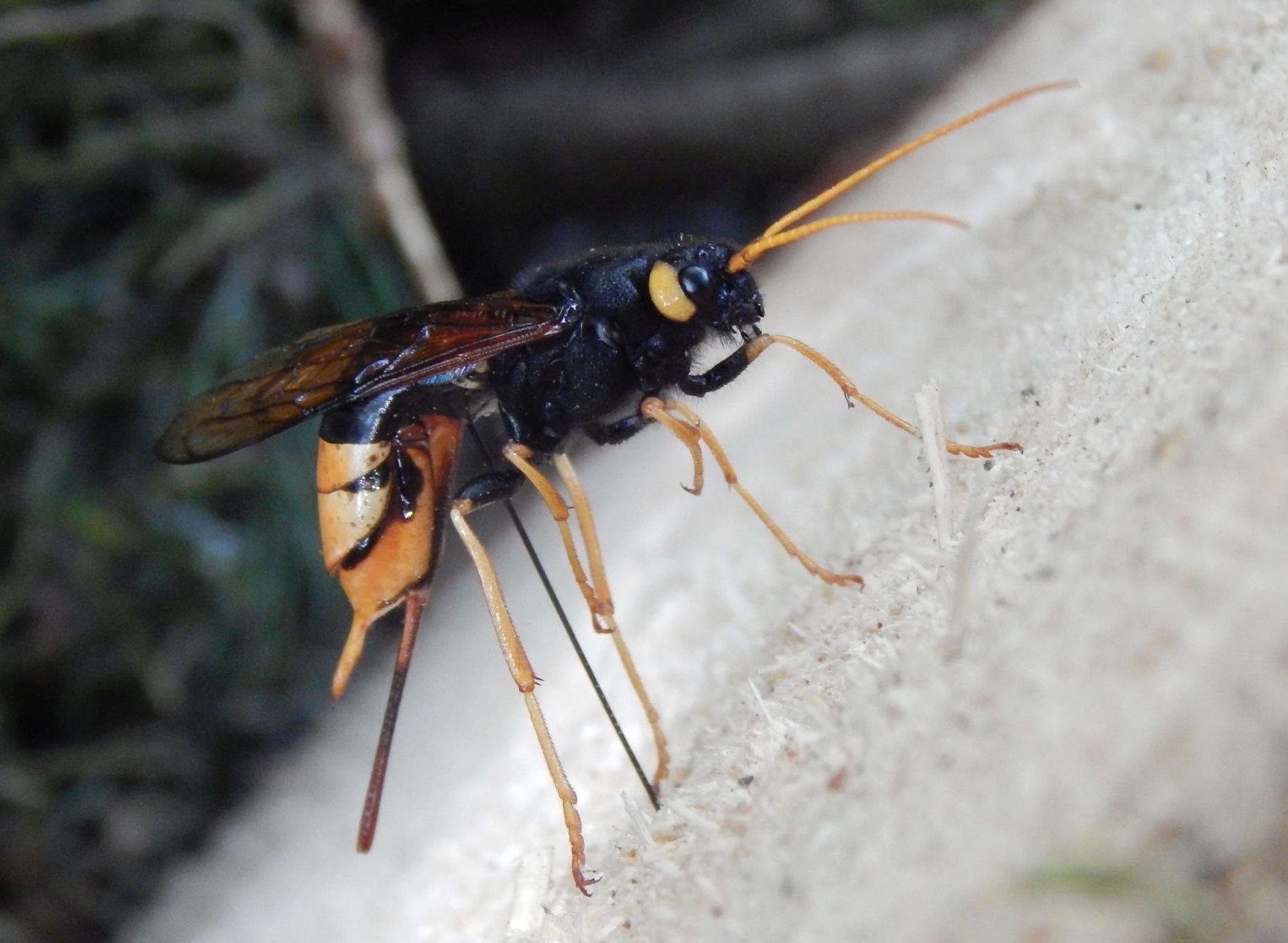
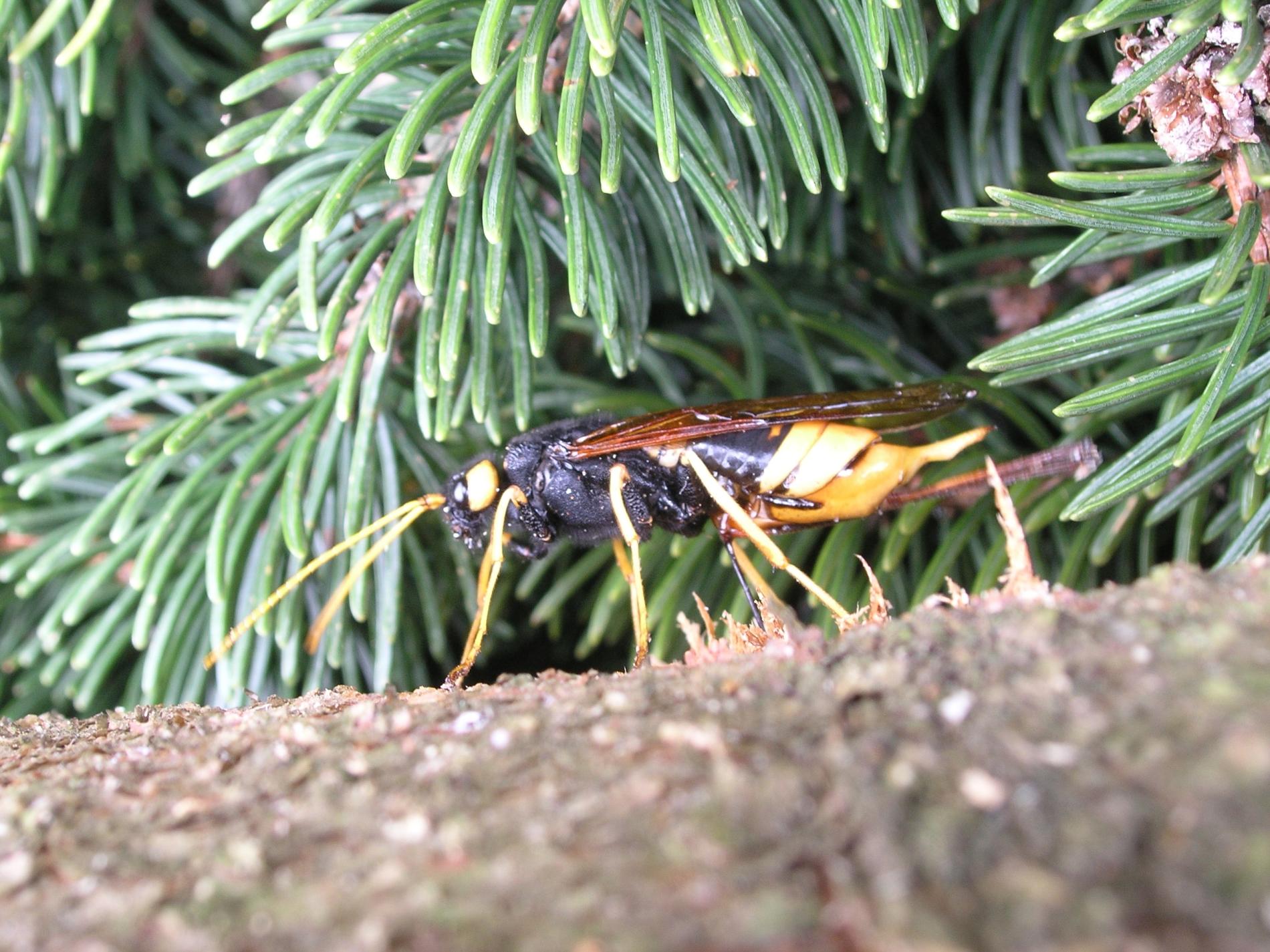
The Urocerus gigas is a large wasp species, with males ranging from 15 to 30 mm in length, and females being even longer. Their bodies are elongated and yellow in color. Females have a highly visible ovipositor. These wasps are active from June to August. Females lay several hundred eggs directly into the wood, and the larvae bore long, sinuous tunnels deep into the wood. The development process is slow and can take two to three years or even longer. Adults emerge from typical circular exit holes. The Urocerus gigas typically damages conifers that have been previously injured by fire, weakened by insects or pathogens, or wounded by harvesting. It is considered one of the most important technical pests of coniferous trees, particularly spruce and fir. Additionally, symbiotic fungi associated with U. gigas can also cause technical damage to the wood.
A large wasp-like Hymenoptera perched on a tree. Round exit holes.
Tree Species: Pine, Douglas Fir, Fir, Spruce, Larch
Part of a plant- attacked: Tree trunk
Pest significance: Harmful
Pest Category: Insects
Invasive Species: No
Present in EU: Yes
Pest group: Insect
Affected part of wood: Bark, Heartwood, Sapwood, Underbark area
Depth of damages: Bark, More than 5 cm depth, Under bark only, Up to 0,5 cm depth, Up to 2 cm depth, Up to 5 cm depth
The extent of damage: Lokally
Prevalence in Europe: Common
Damaged products: Firewood, Fresh timber logs (water still in the sapwood), Furniture, Lumber, boards and prisms, Stored timber logs (dried wood), Wooden house constructions
Roundwood size: Diameter 50+, Diameter from 10 up to 50 cm
Wood discoloration: No
Exit holes: Round
Pest subcategory: Wood-boring insect
Similar pests

Xylocopa violacea

Cerambyx cerdo
