


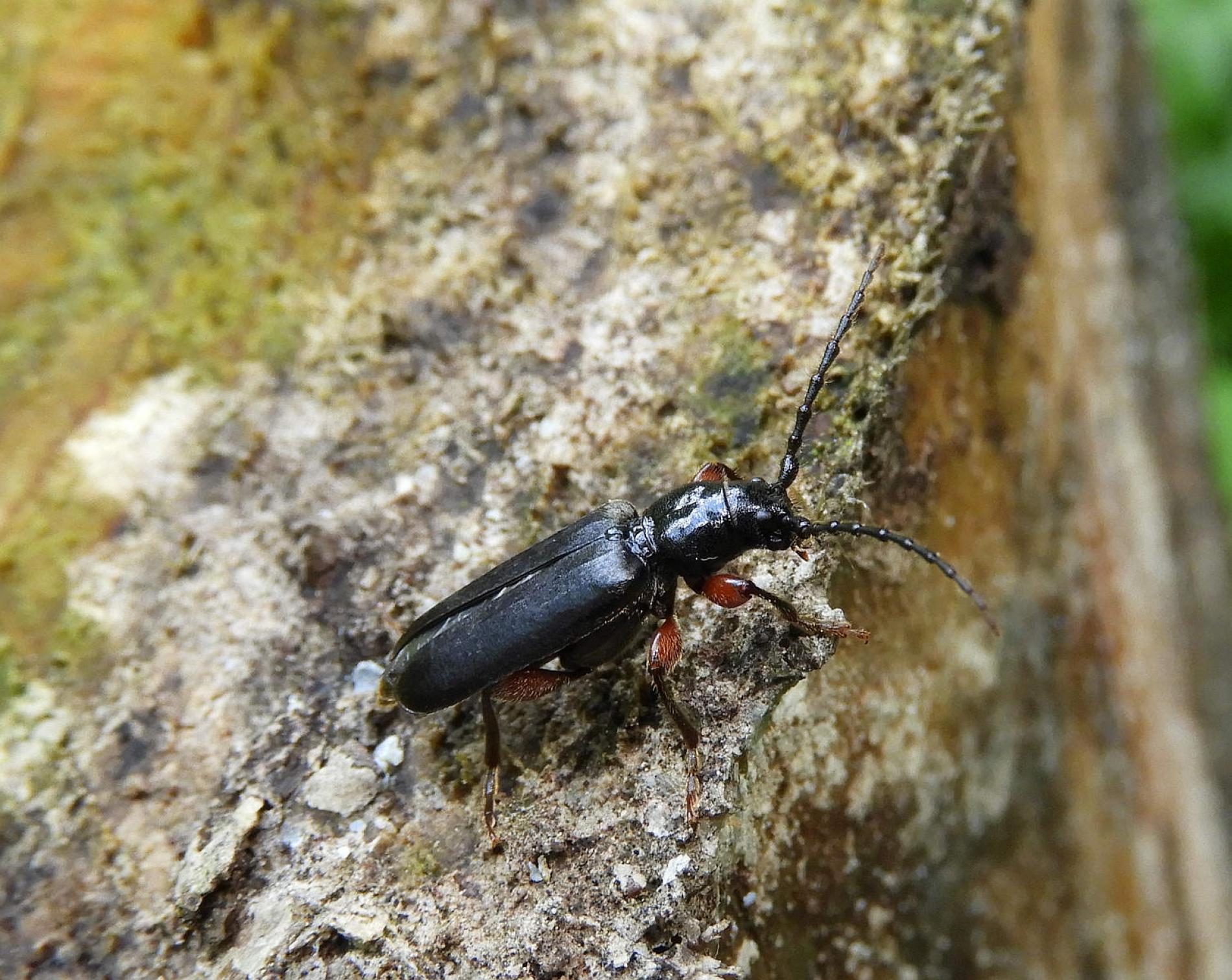
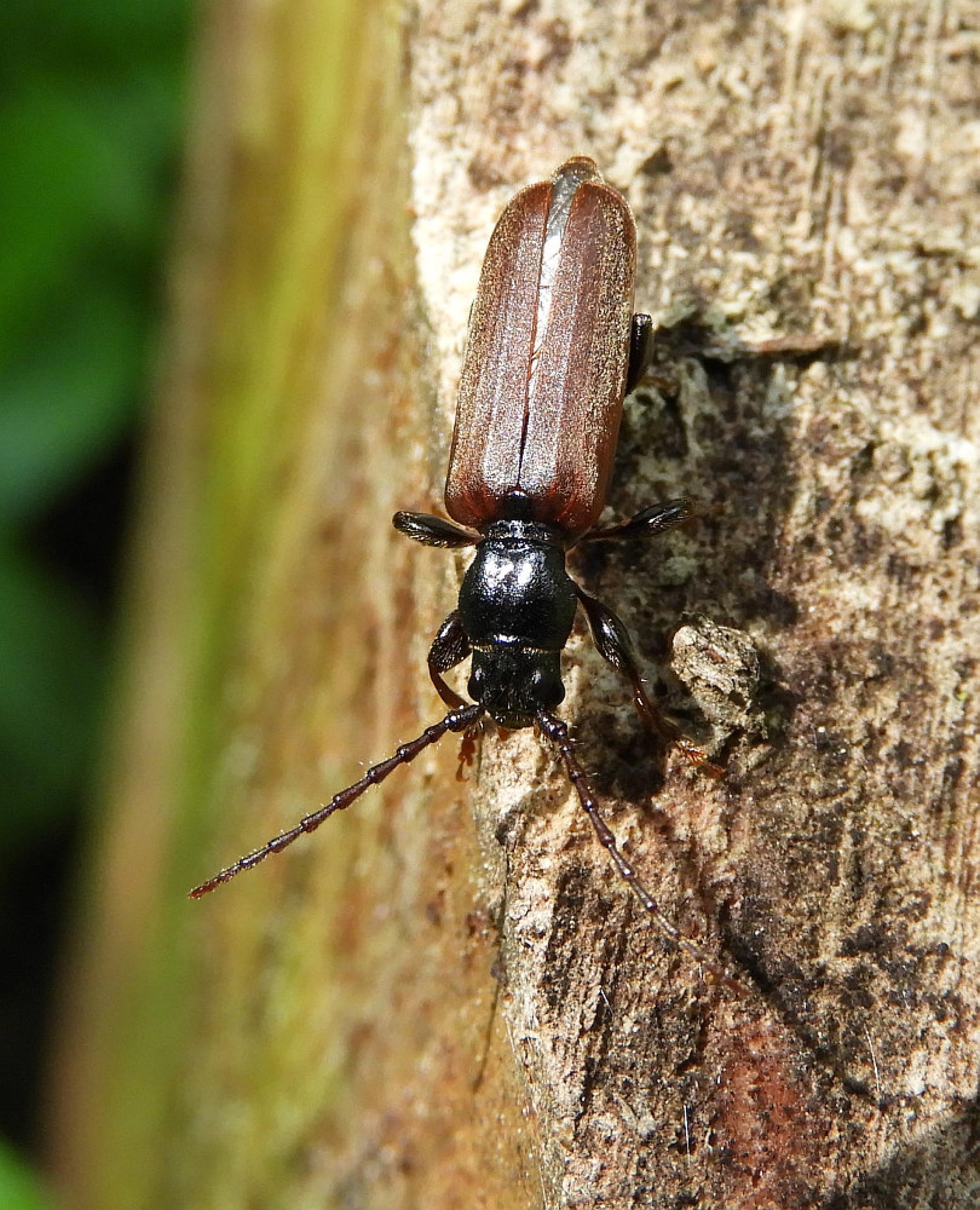
Tetropium castaneum
Black spruce beetle
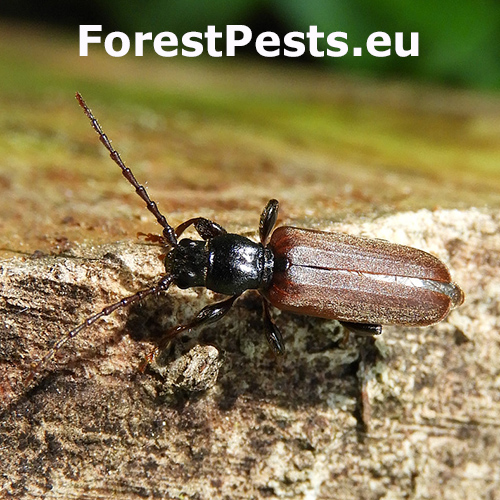
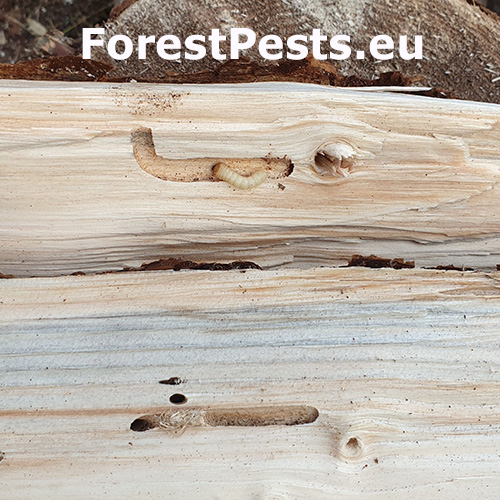
From April to July, the black spruce beetles deposit their eggs under the bark scales of weakened or newly dead trees, or occasionally on their roots. The hatched
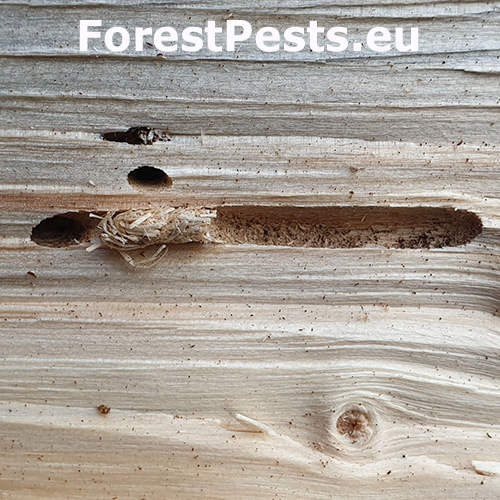
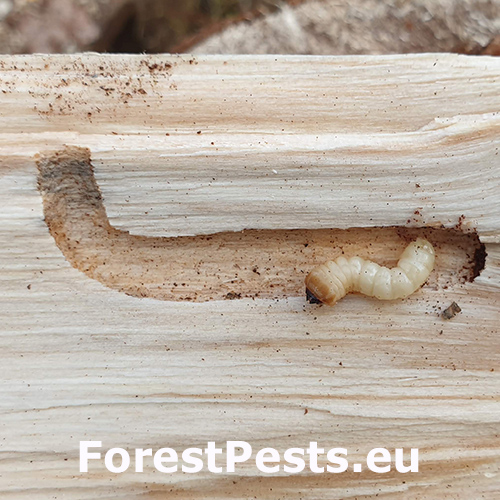
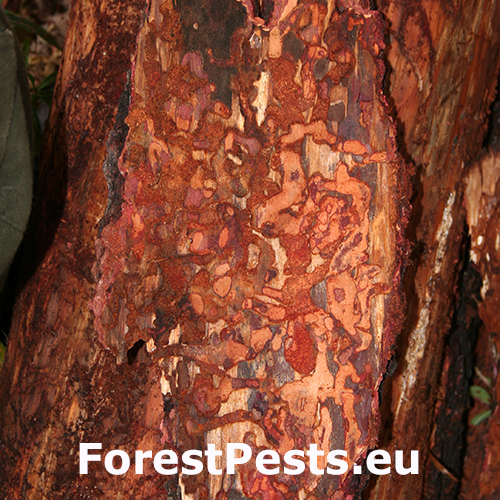
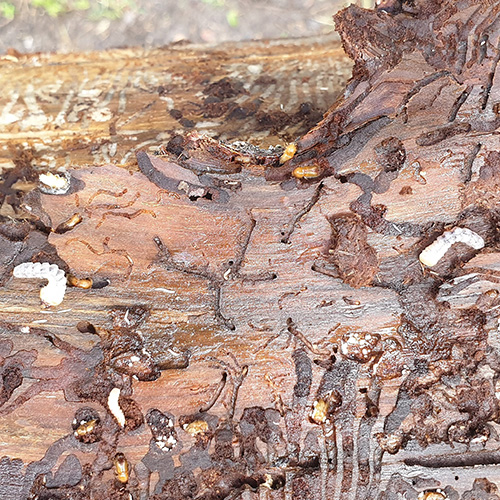
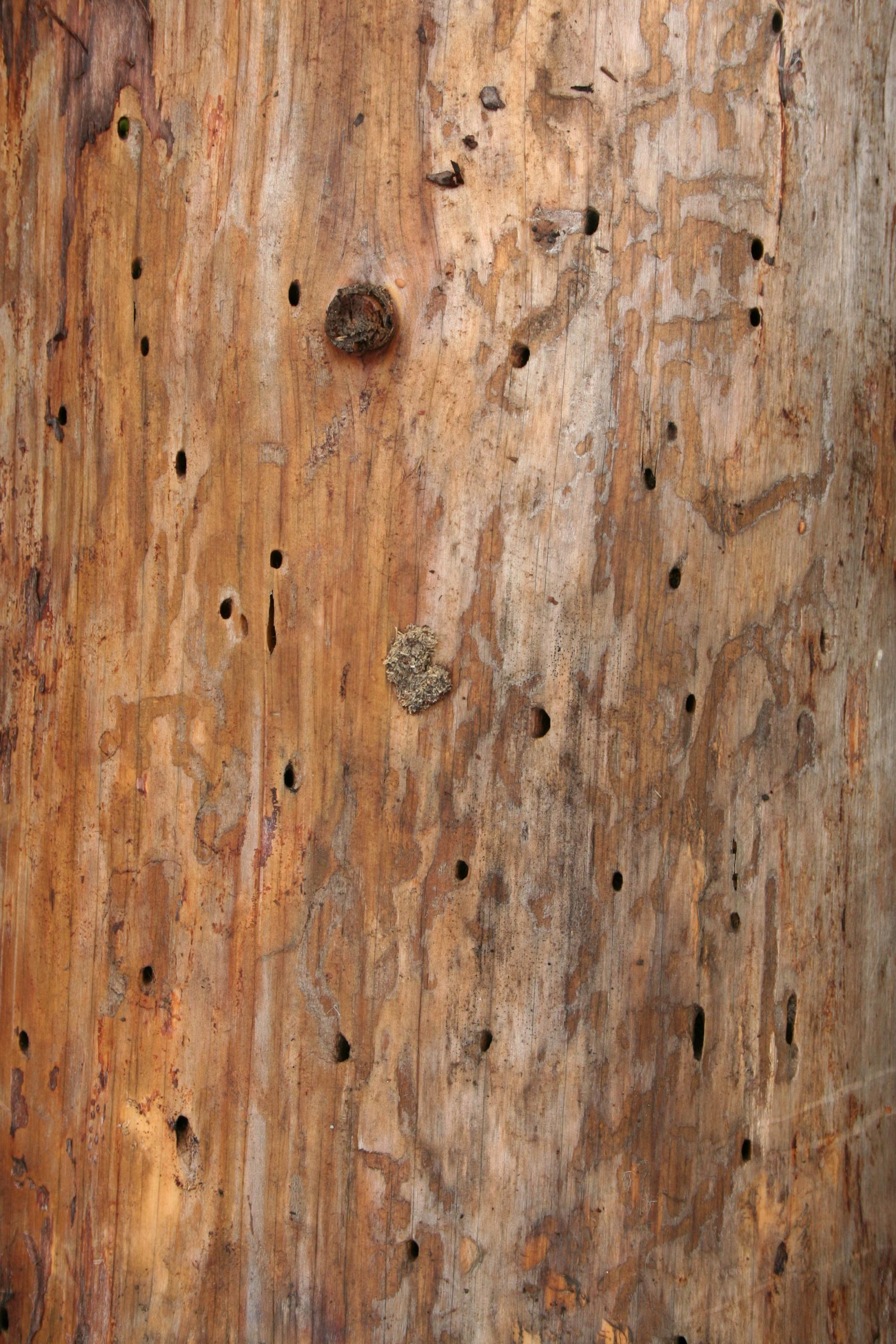
larvae penetrate the bark and feed in the phloem between the bark and the wood, producing irregularly curled galleries. In fall the larvae excavate a characteristic, hook-shaped tunnel in the wood where they pupate in spring. Pupation may also occur in thick bark. Since the preferred hosts are dead, old, or greatly weakened trees, the potential damage is minor. The pupal chambers may reduce the quality of infested wood. It can be found in mountain, coniferous forests in Central and North Europe.
Irregularly curled galleries under the bark.
Tree Species: Fir, Spruce
Part of a plant- attacked: Tree trunk
Pest significance: Harmful
Pest Category: Insects
Invasive Species: No
Present in EU: Yes
Pest group: Insect
Affected part of wood: Sapwood
Depth of damages: Bark, Under bark only, Up to 0,5 cm depth, Up to 2 cm depth, Up to 5 cm depth
The extent of damage: Lokally
Prevalence in Europe: Common
Damaged products: Firewood, Fresh timber logs (water still in the sapwood), Furniture, Lumber, boards and prisms, Wooden house constructions
Roundwood size: Diameter 50+, Diameter from 10 up to 50 cm, Diameter up to 10 cm
Wood discoloration: No
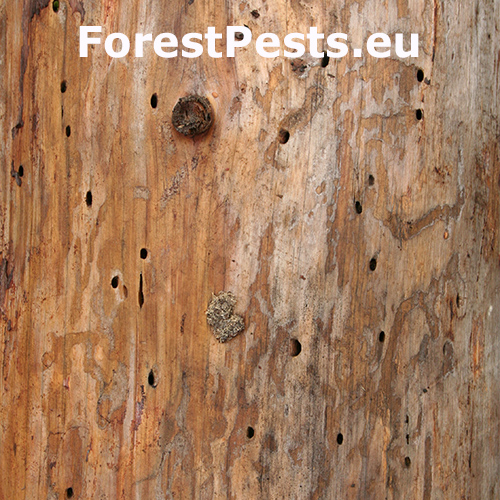
Exit holes: Oval
Pest subcategory: Wood-boring insect
Similar pests

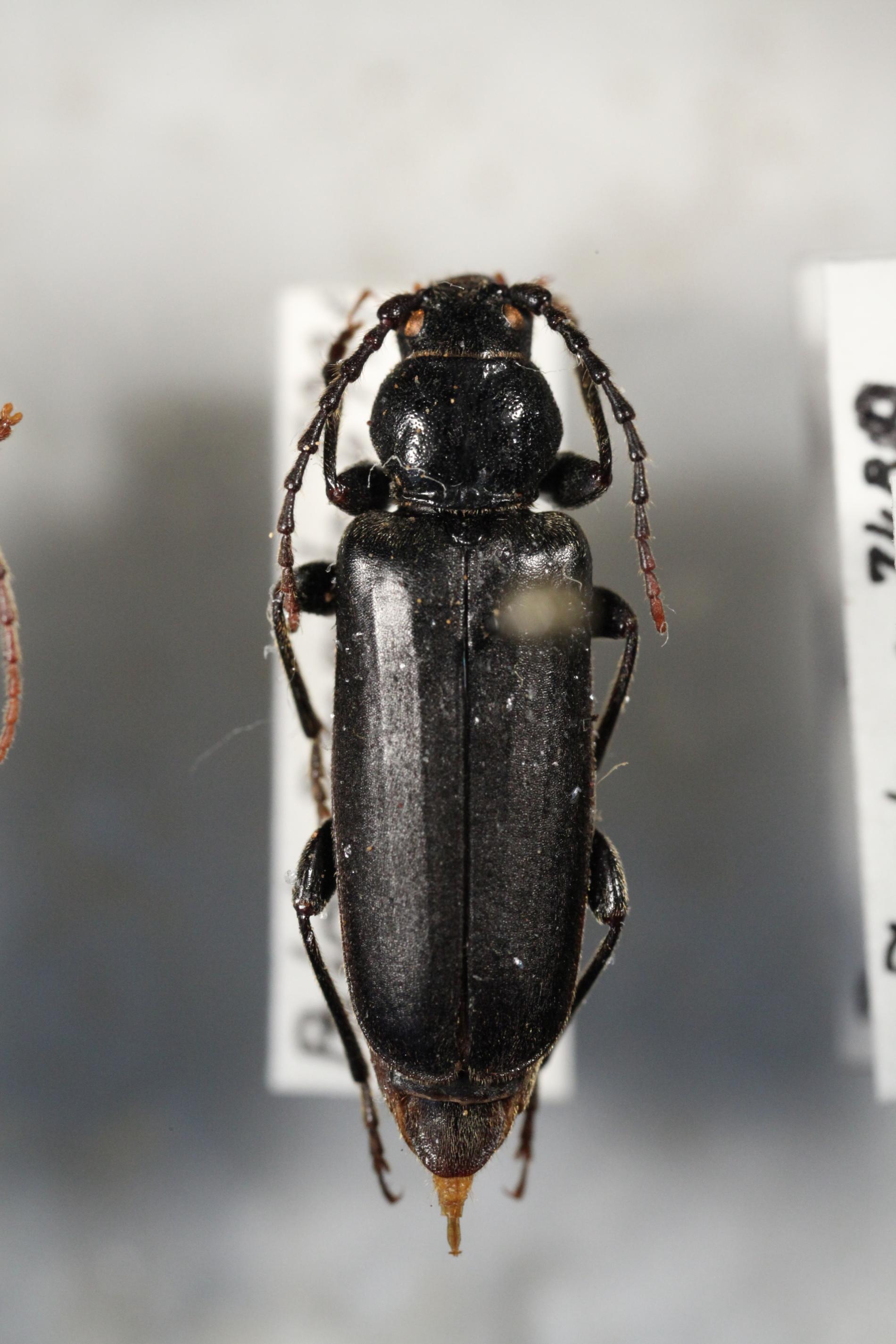
Hylotrupes bajulus

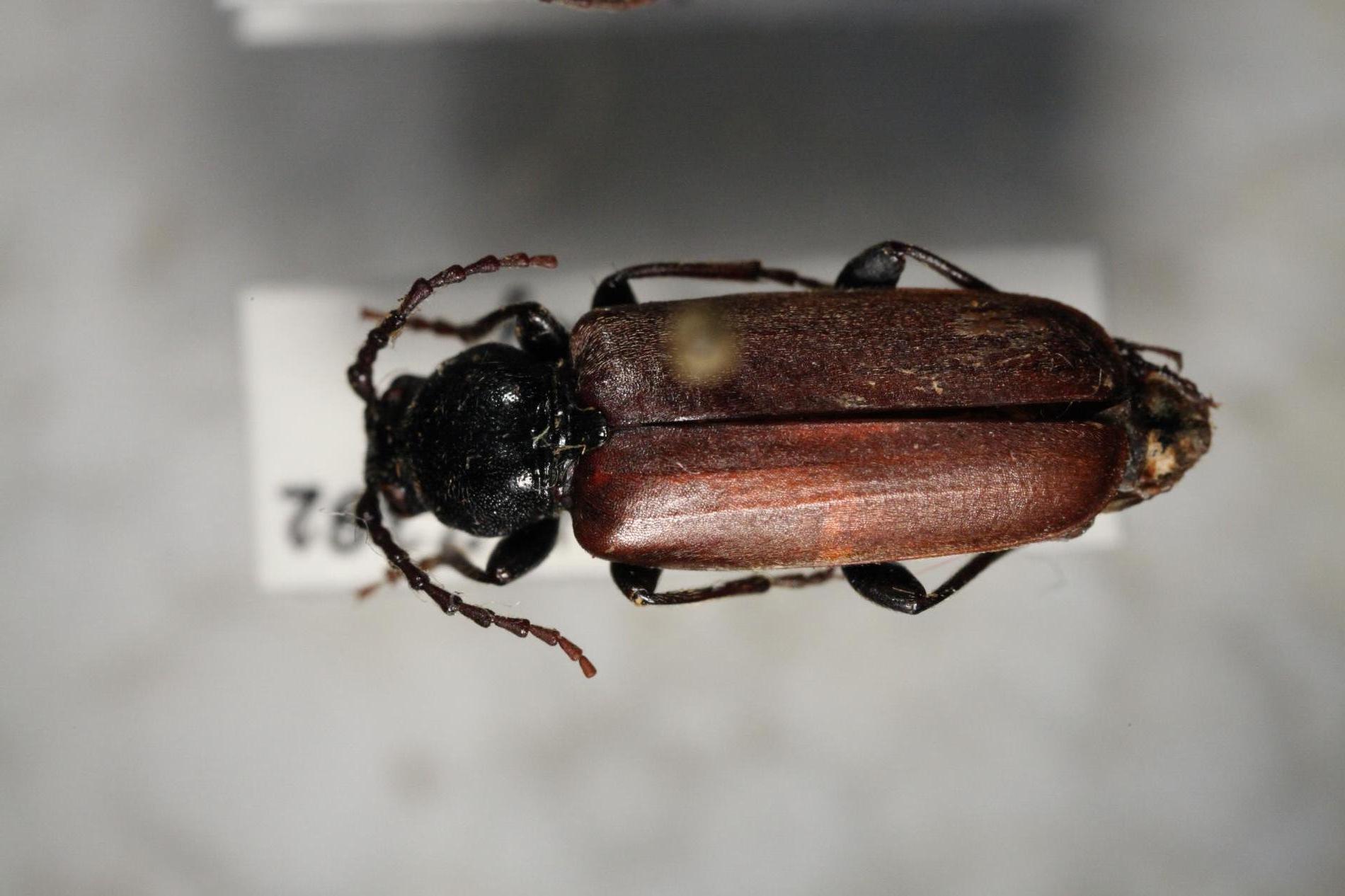
Ergates faber
