


Sus scrofa
Wild Boar
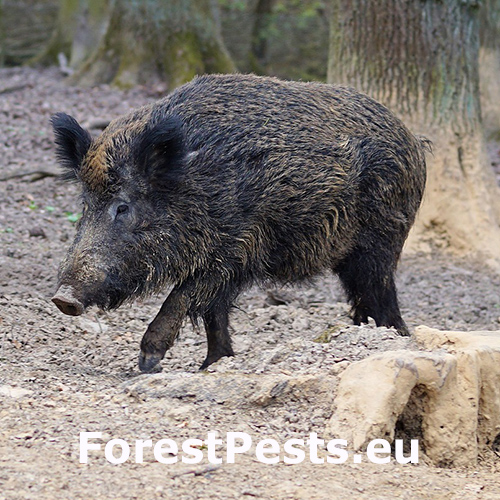
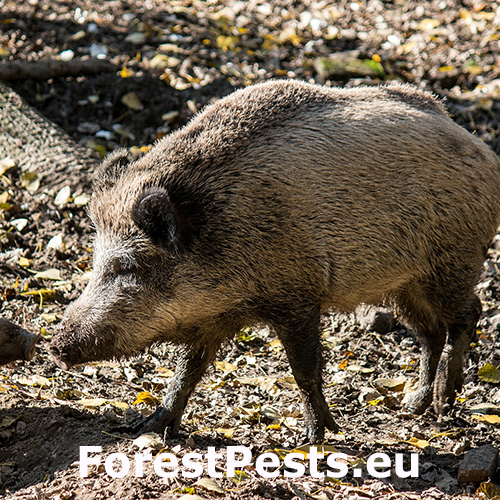
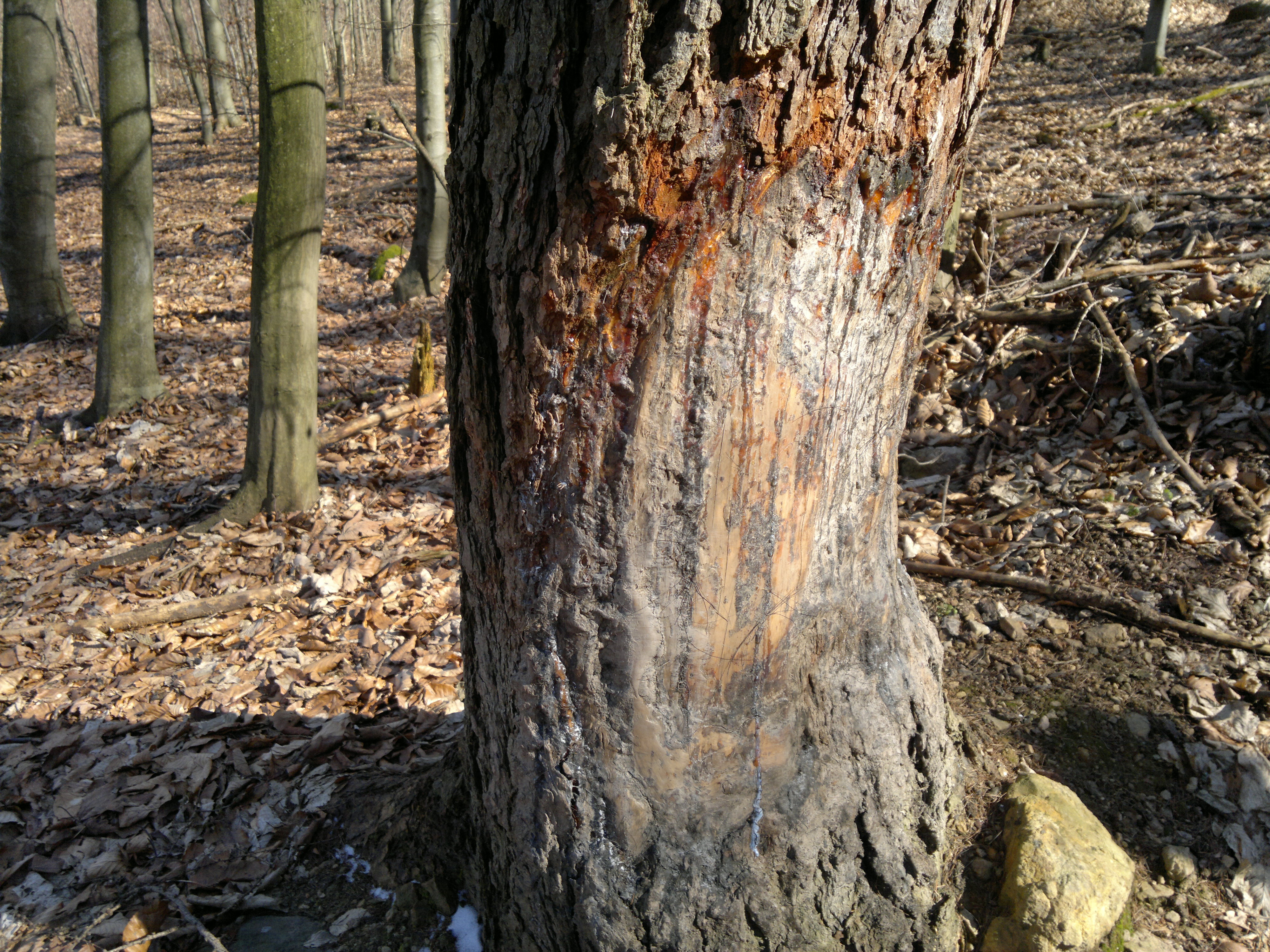
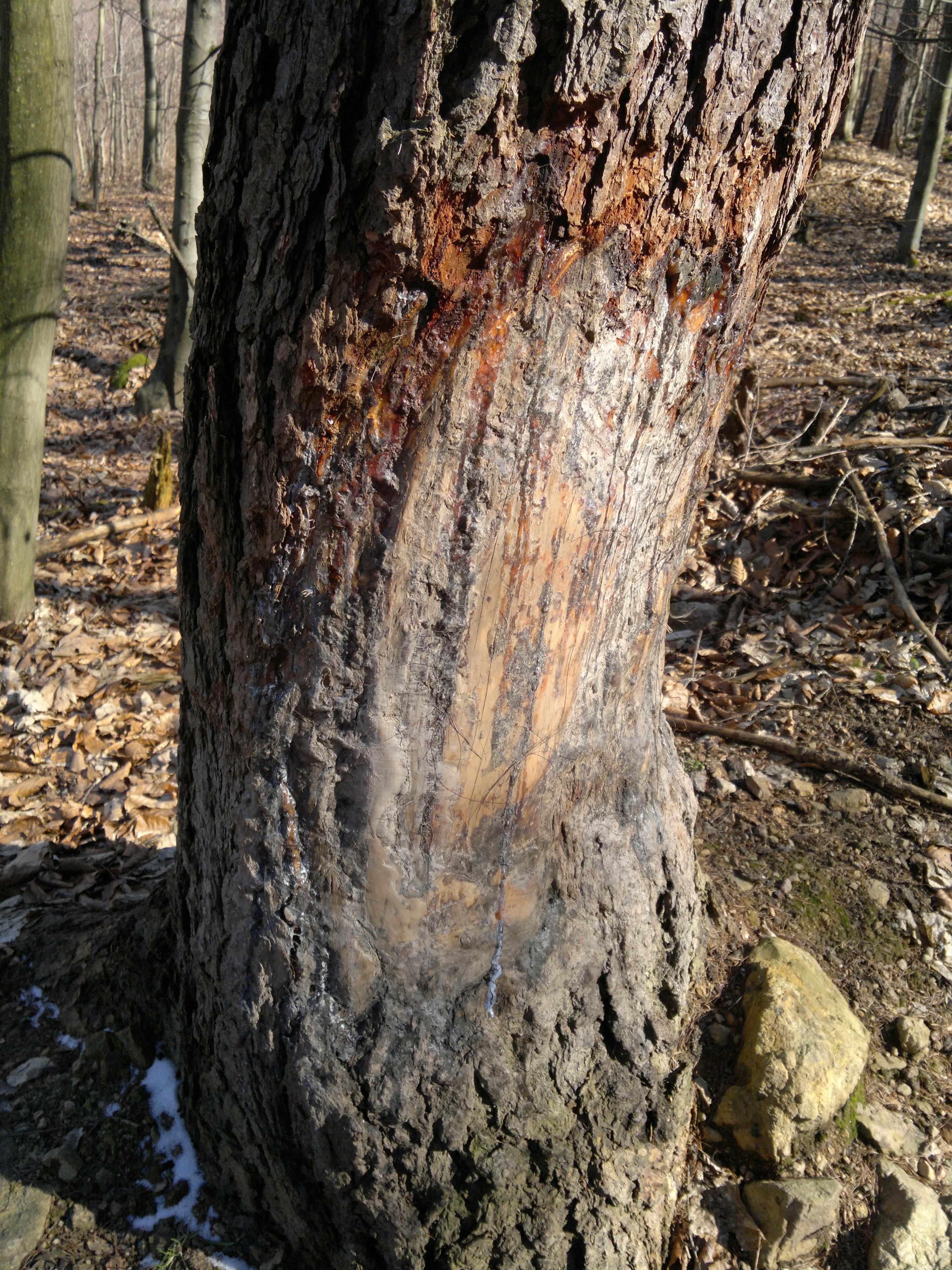
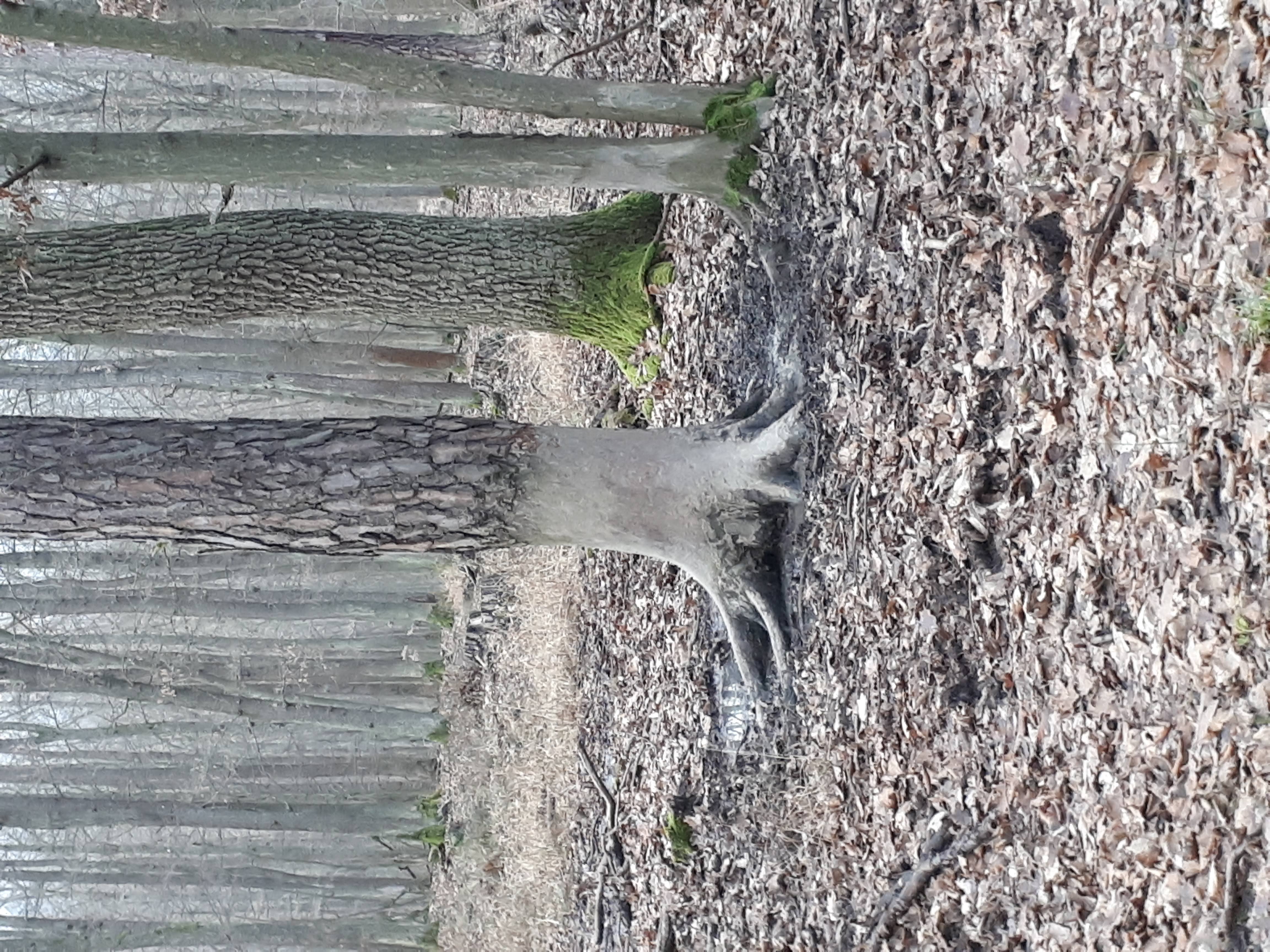
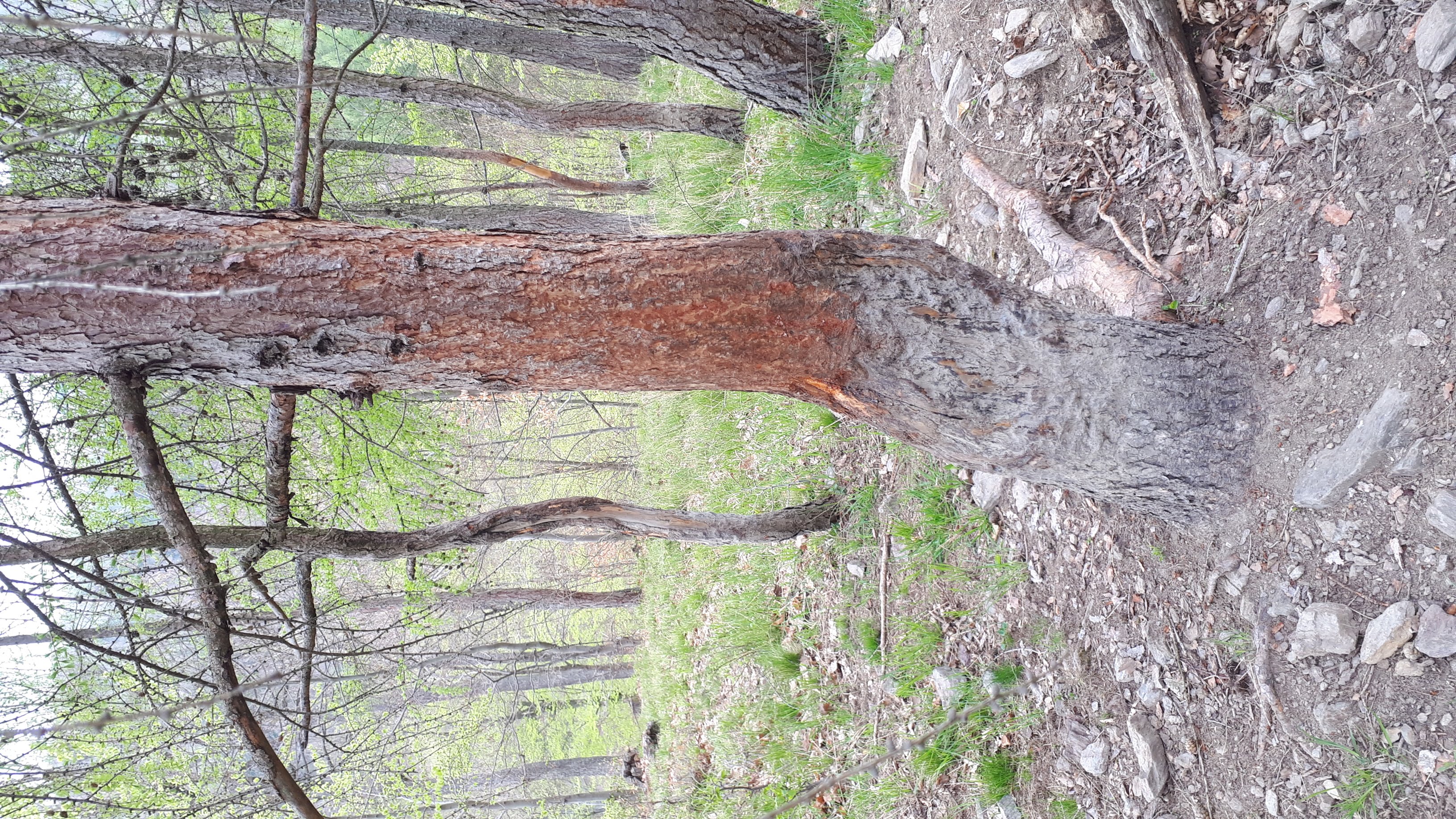
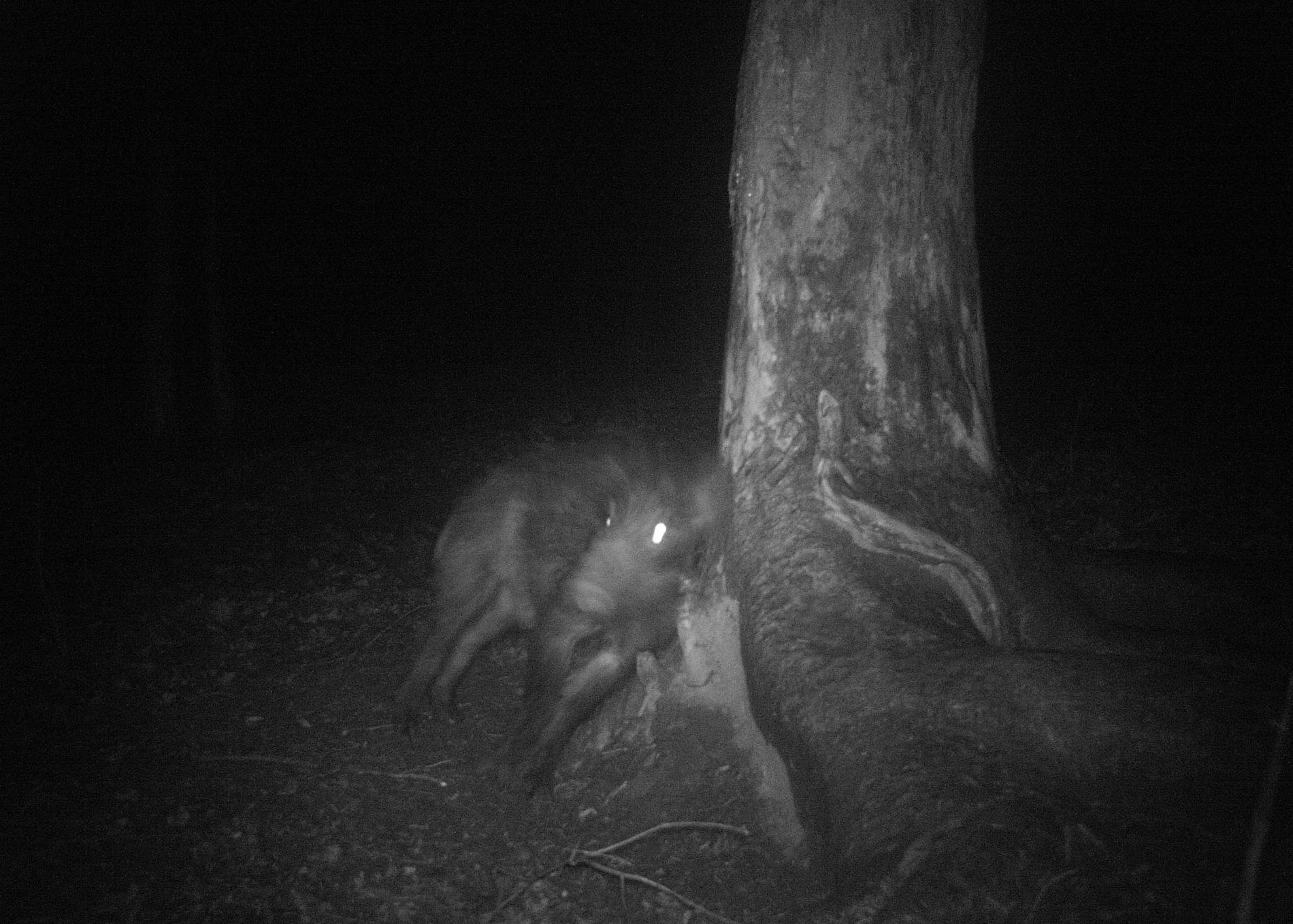
Wild boar´s weigh reach 150 - 160 kg. The color is black, brown, sometimes gray-brown. The female gives birth to several cubs in the spring. Adults live in groups. They prefer forestland, especially those areas with lot of agricultural land.
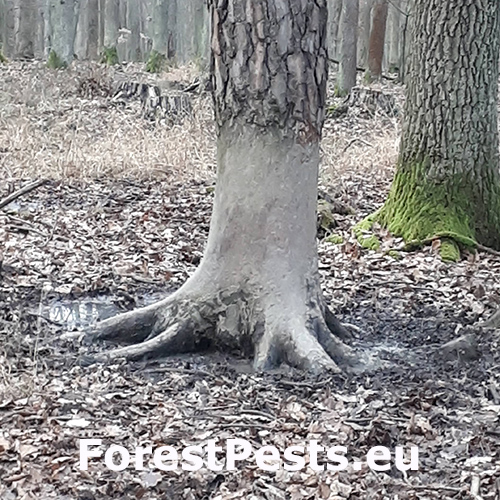
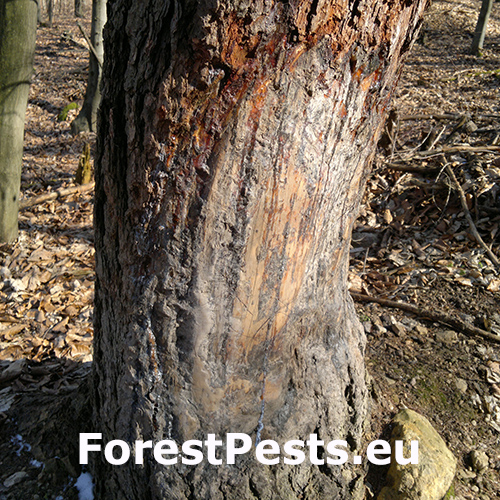
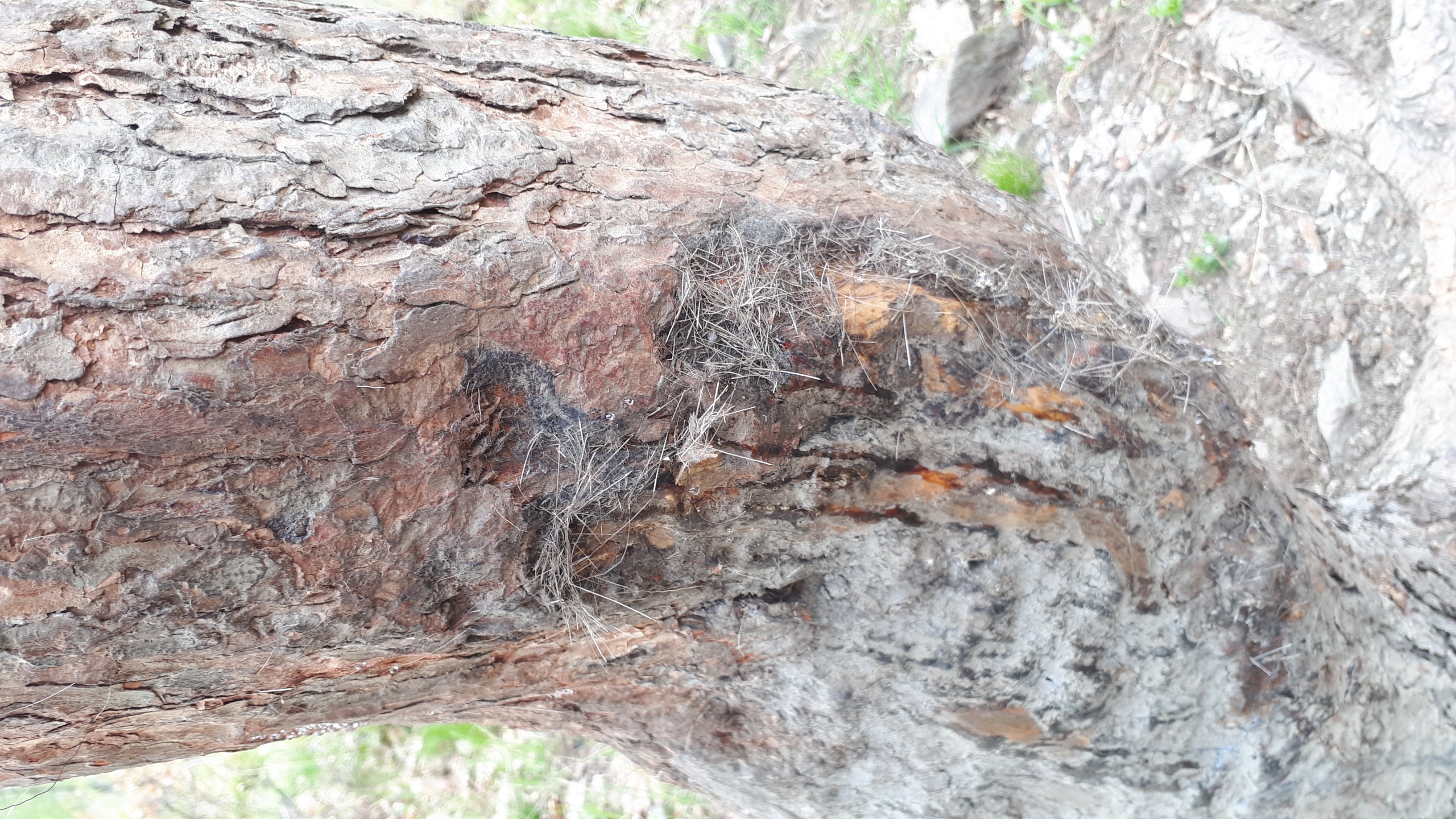
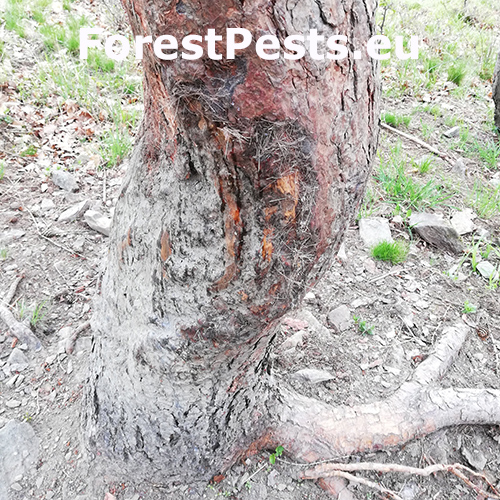
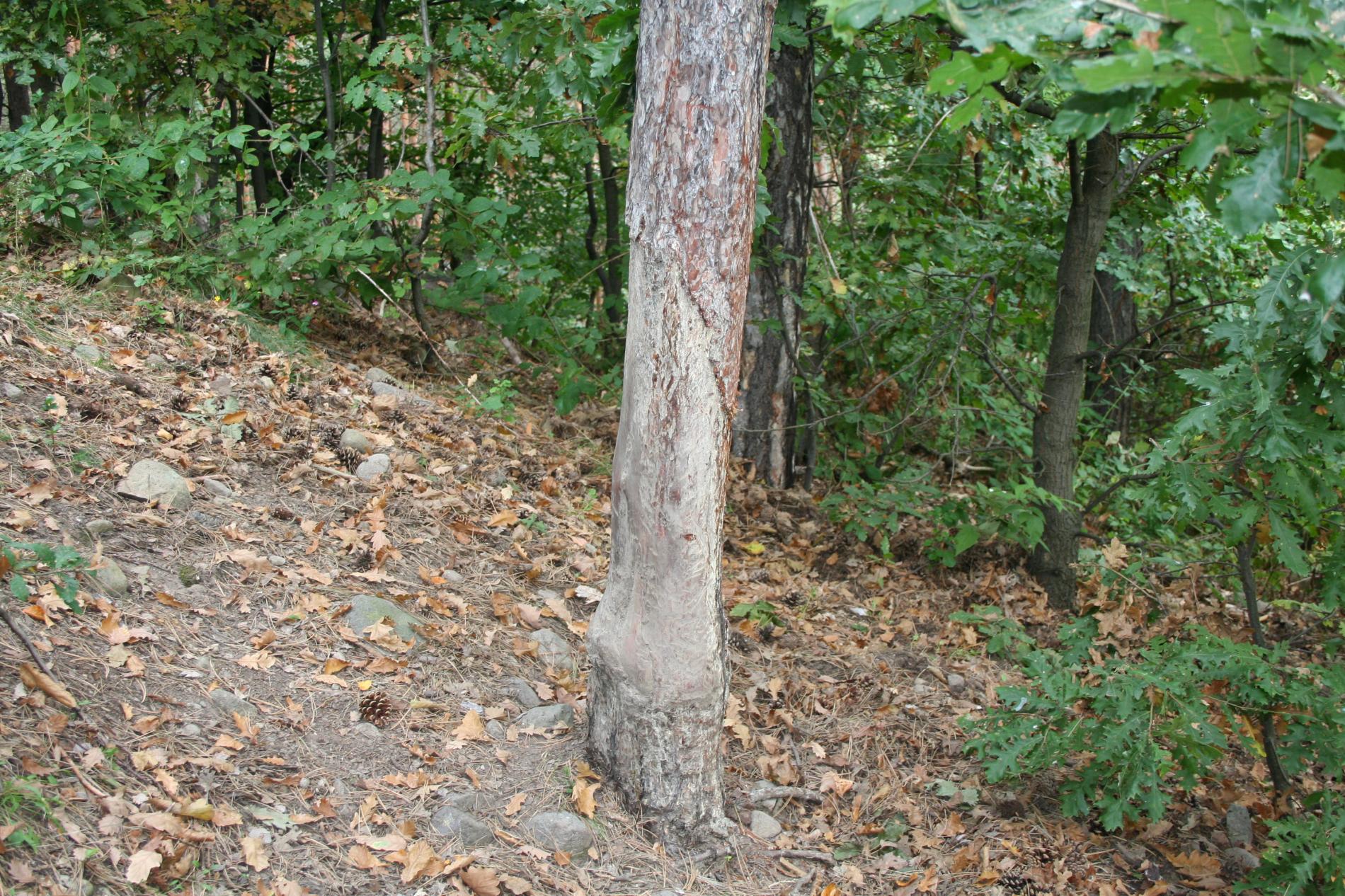
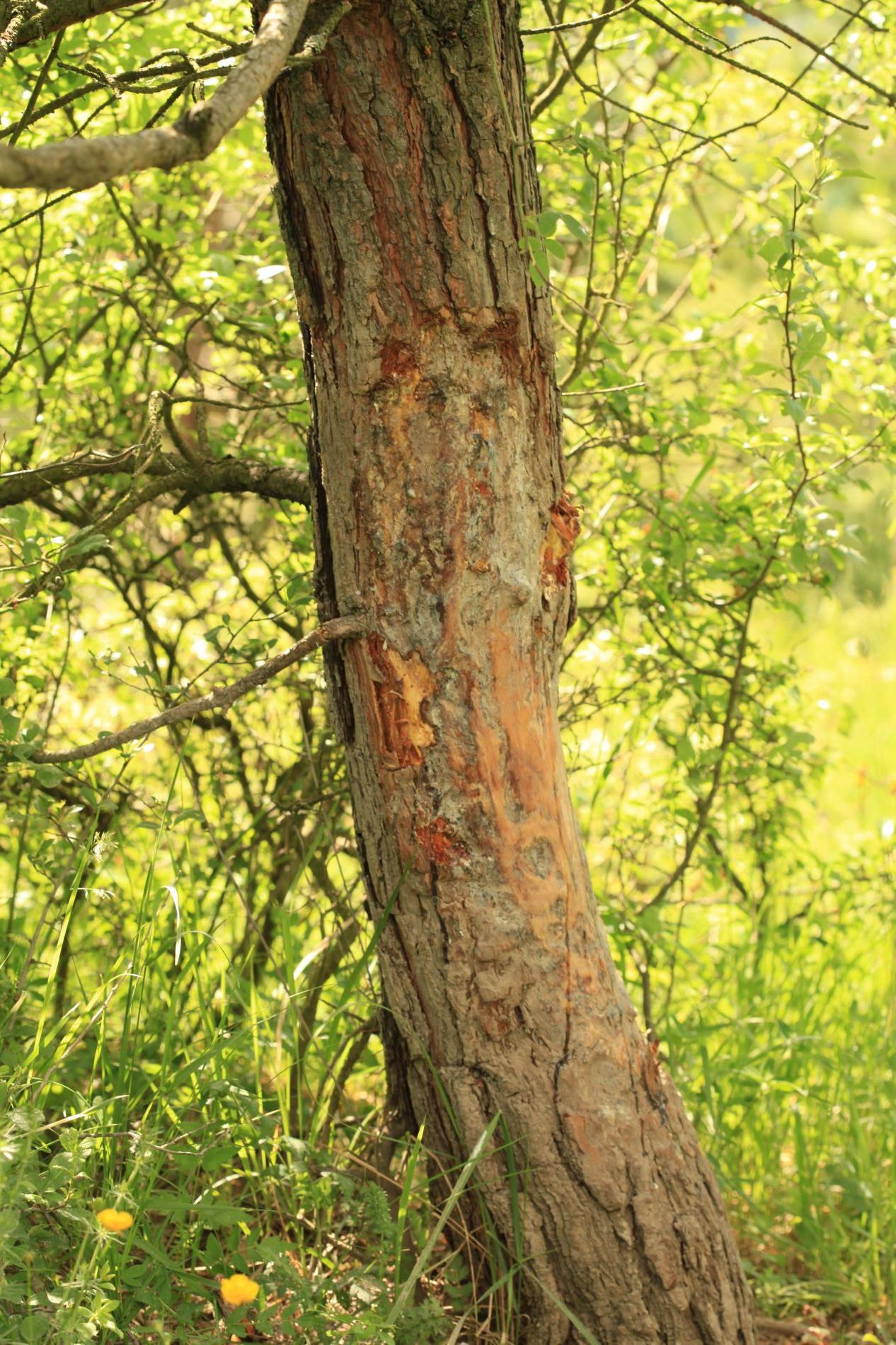
Trees are damaged by abrasion The damage occurs at any time of the year, less in winter.. Near the pools, the game rubs against the trunks of surrounding trees, thus getting rid of parasites in its fur. Using the same trunks for many years, the bark and bast is ripened to the sapwood, with a subsequent disposition for secondary damage, especially by fungal pests. During multi-year abrasion, the bark and bast are removed up to the sapwood and calluses forms.
Most damaged used to be an older stands near the pools that the game visits. Damage occurs locally in stands, often on individual trees.
Wild boars are digging seedlings and ripping the soil with natural seeding.
Woody plants with a rougher bark are more often damaged. Other types of game (roe deer, fallow deer, and mouflon) cause similar damage.
Tree stems are covered by mud, sometimes debarked partialy or completely.
Tree Species: Pine, Birch, Oak, Ash
Part of a plant- attacked: Tree trunk, Roots
Pest significance: Harmful
Pest Category: Animals
Invasive Species: No
Present in EU: Yes
Pest group: Game
Depth of damages: Bark, Under bark only
The extent of damage: Individually - one place
Prevalence in Europe: Common
Damaged products: Fresh timber logs (water still in the sapwood)
Roundwood size: Branches and twigs, Diameter 50+, Diameter up to 10 cm
Wood discoloration: No
Similar pests

Cervus elaphus

Capreolus capreolus
