


Sirex juvencus
Steely-blue wood wasp
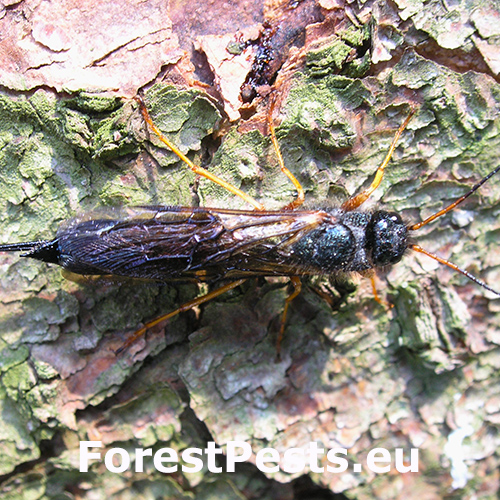
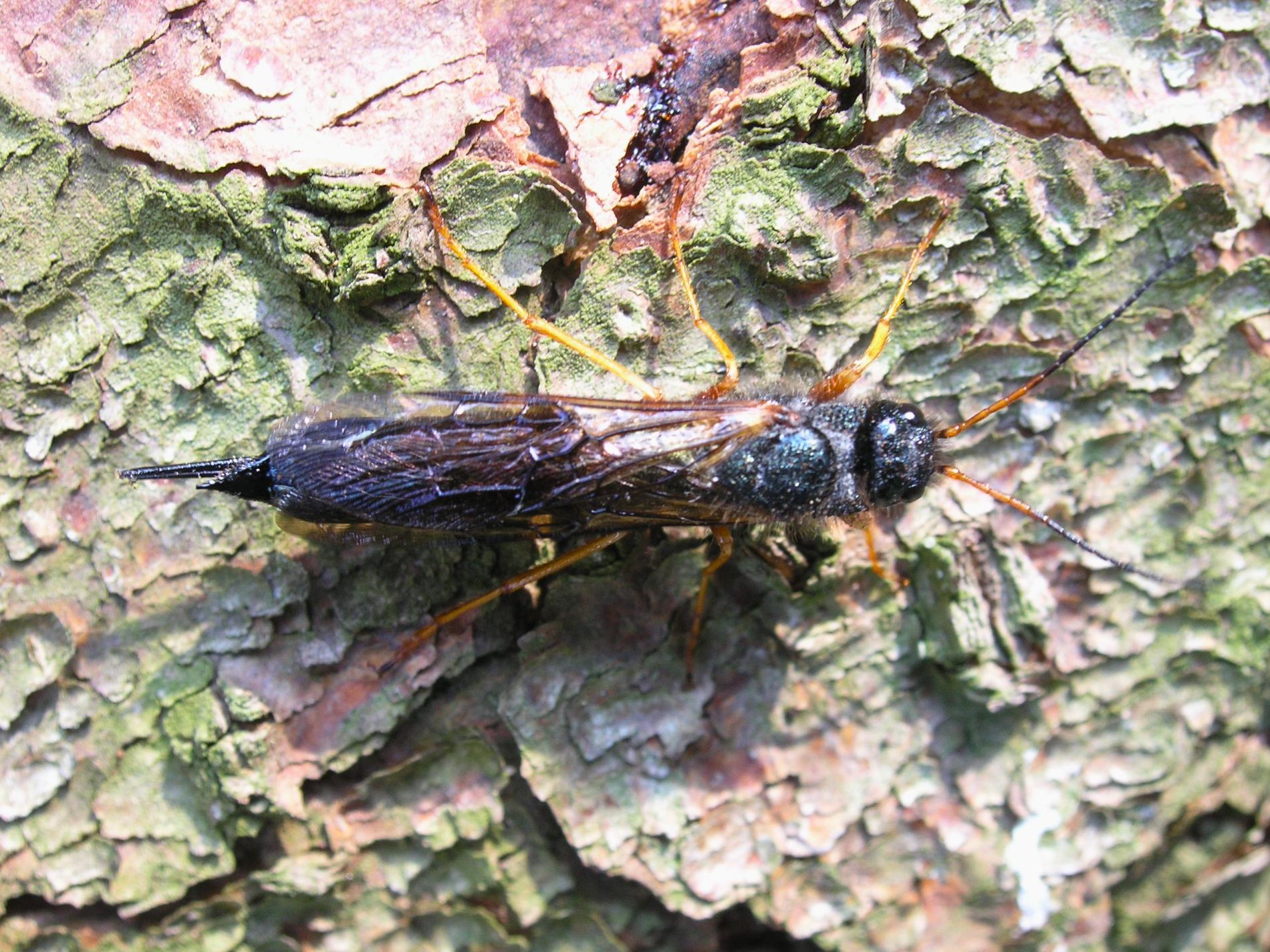
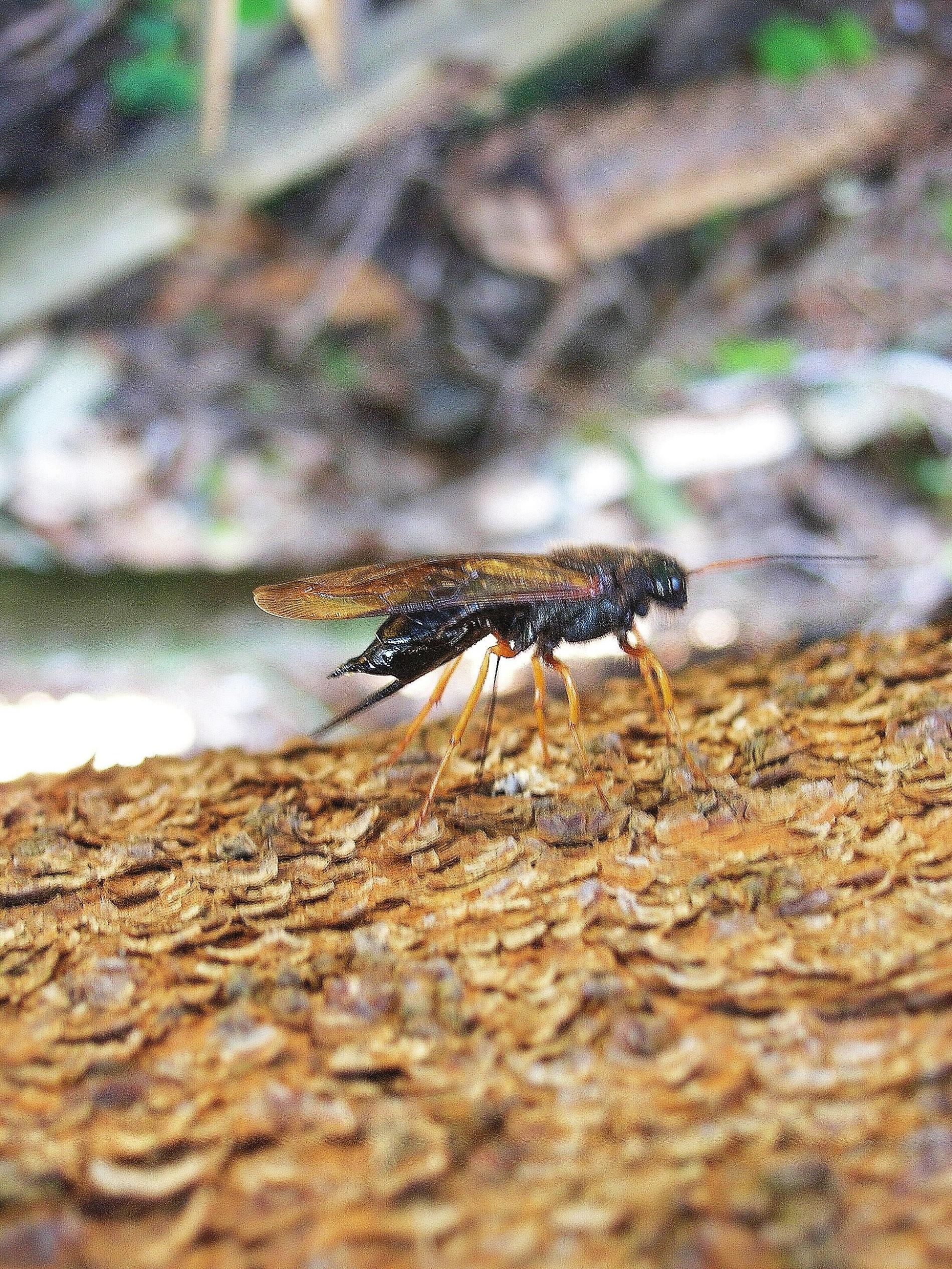
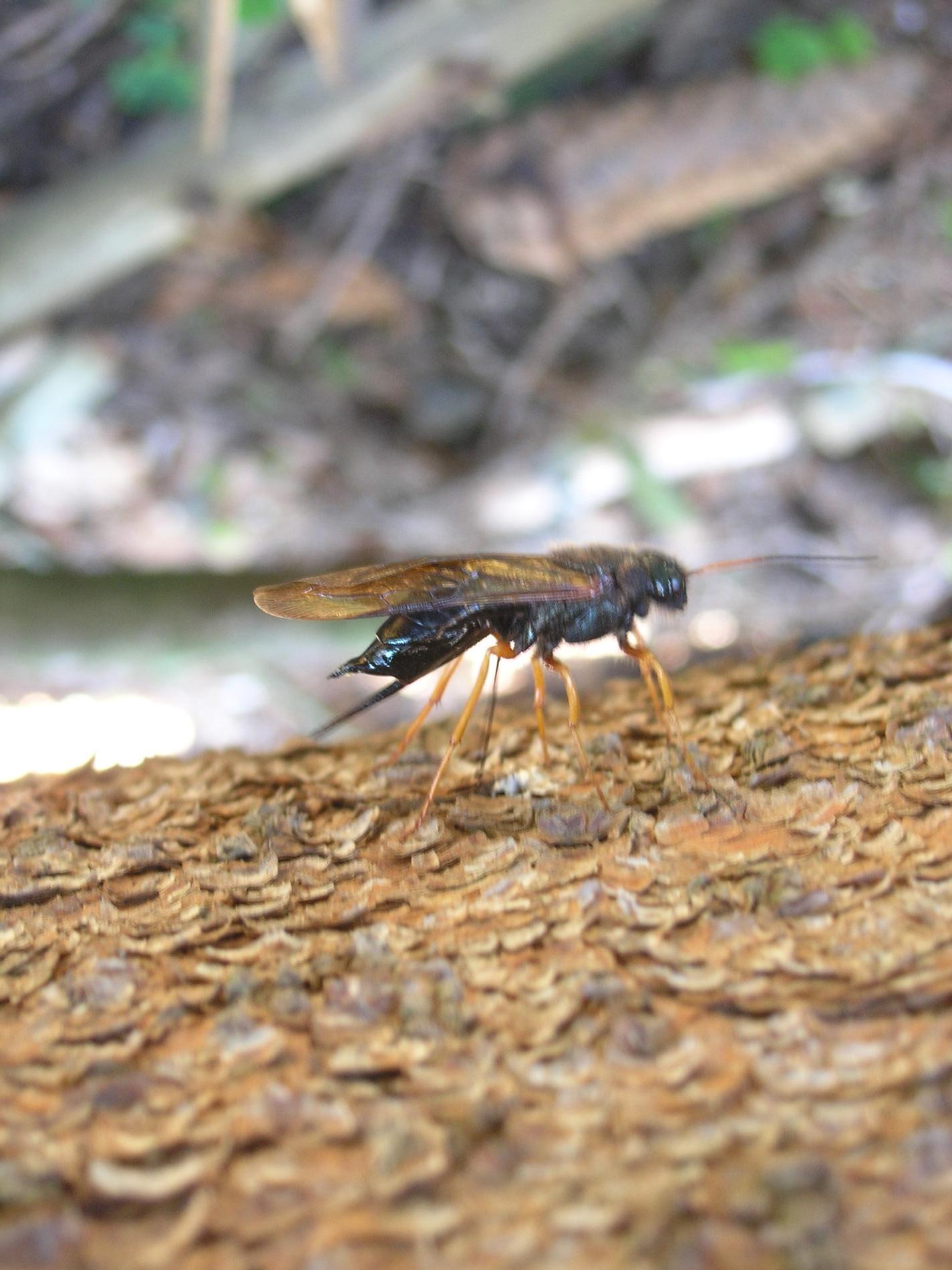
Sirex juvencus, commonly known as the steely-blue wood wasp, is a large horntail found across Europe, Siberia, Japan, and other regions. The adults display sexual dimorphism, with females being slightly larger (up to 32 mm) and having a metallic bluish-black body, while males are slightly smaller and darker. The females use their ovipositor to lay eggs deep into the wood of weakened or dying coniferous trees, especially spruce and pine. As larvae hatch, they burrow into the wood, creating extensive tunnels. Additionally, S. juvencus carries a symbiotic fungus that infects the wood, which aids in larval development by breaking down the wood fibers, making it easier for the larvae to digest.
Infestation is possible by small, round exit holes (4-6 mm). In the wood, there are tunnels densely filled with frass. In adult S. juvencus, the female’s ovipositor is short, shorter than the body. Males have several yellow segments on the abdomen. While the female has all legs red, the male has the front two pairs of legs red and the hind pair black.
Tree Species: Pine, Fir, Spruce, Larch
Part of a plant- attacked: Tree trunk, Branch
Pest significance: Harmful
Pest Category: Insects
Present in EU: Yes
Pest group: Insect
Affected part of wood: Sapwood
Depth of damages: Bark, Under bark only, Up to 0,5 cm depth, Up to 2 cm depth, Up to 5 cm depth
The extent of damage: Lokally, Whole trunk
Prevalence in Europe: Common
Damaged products: Firewood, Fresh timber logs (water still in the sapwood), Furniture, Stored timber logs (dried wood), Wooden house constructions
Roundwood size: Branches and twigs, Diameter 50+, Diameter from 10 up to 50 cm, Diameter up to 10 cm
Wood discoloration: Yes
Exit holes: Round
Pest subcategory: Wood-boring insect
Similar pests

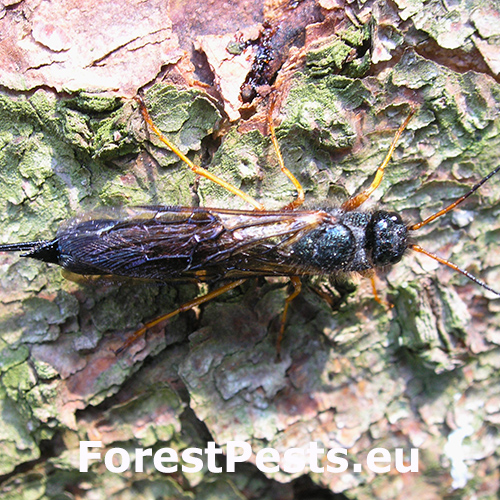
Xiphydria longicollis

Xeris spectrum
