


Sesia apiformis
Hornet moth
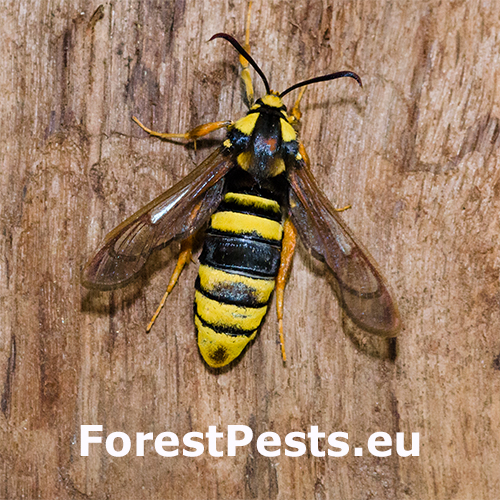
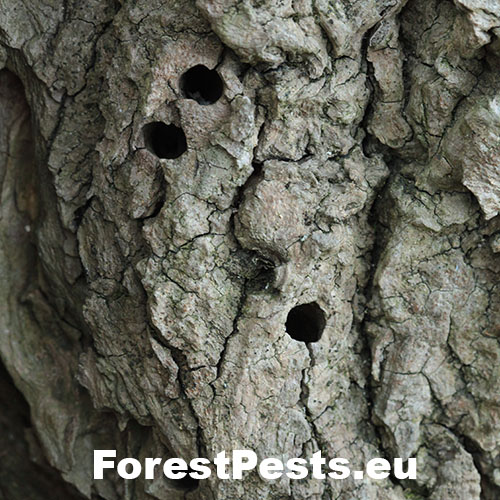
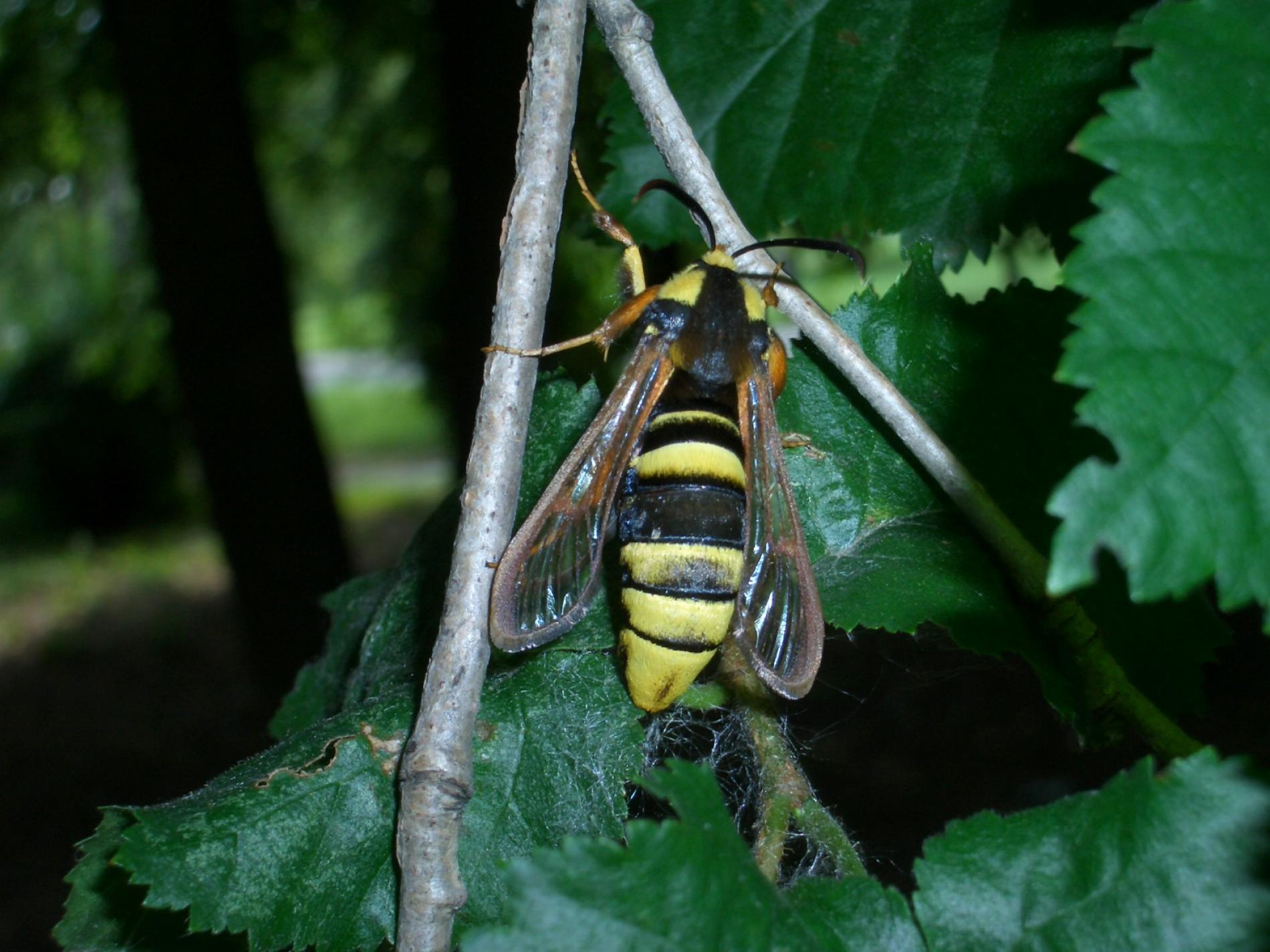
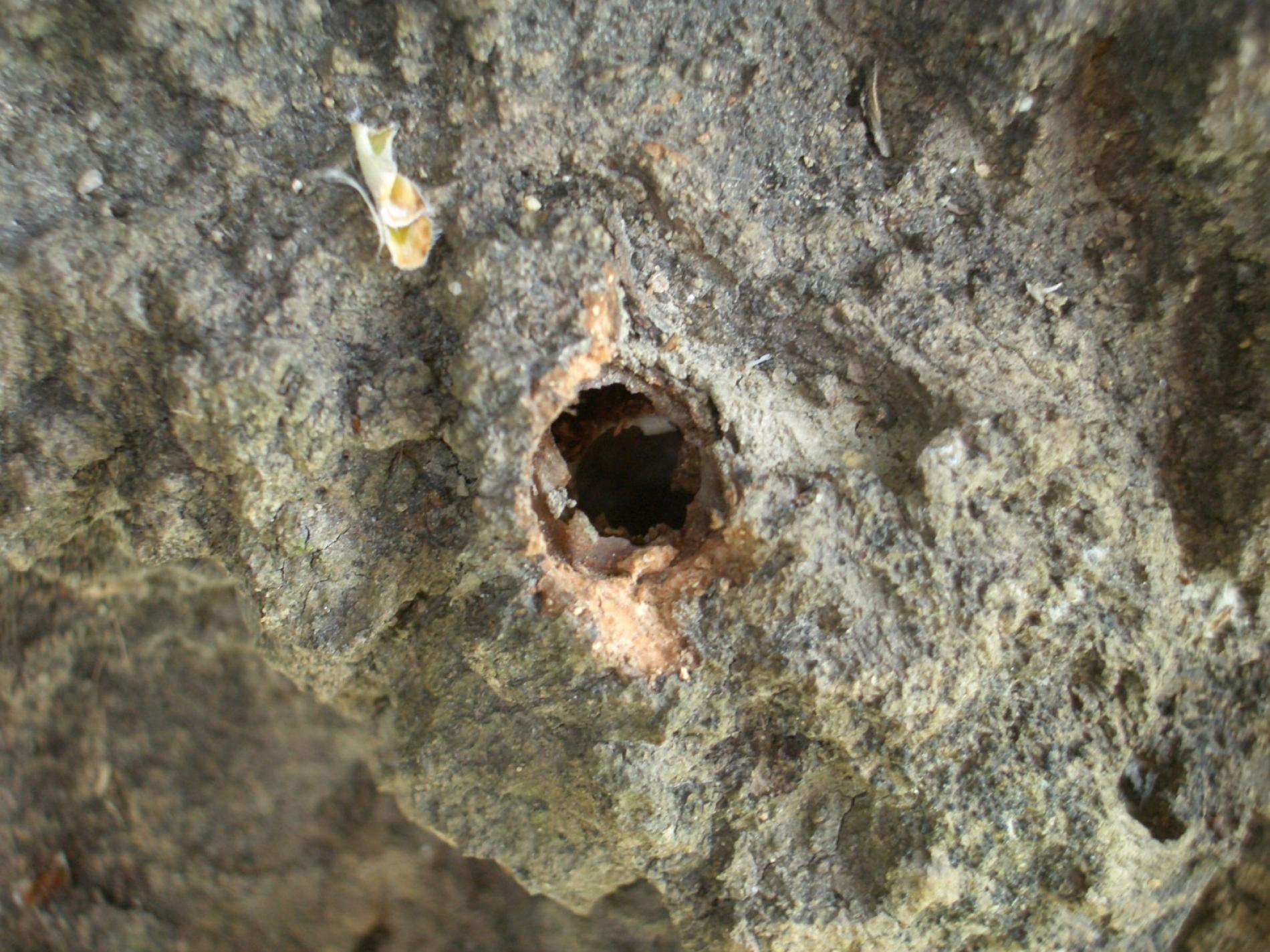
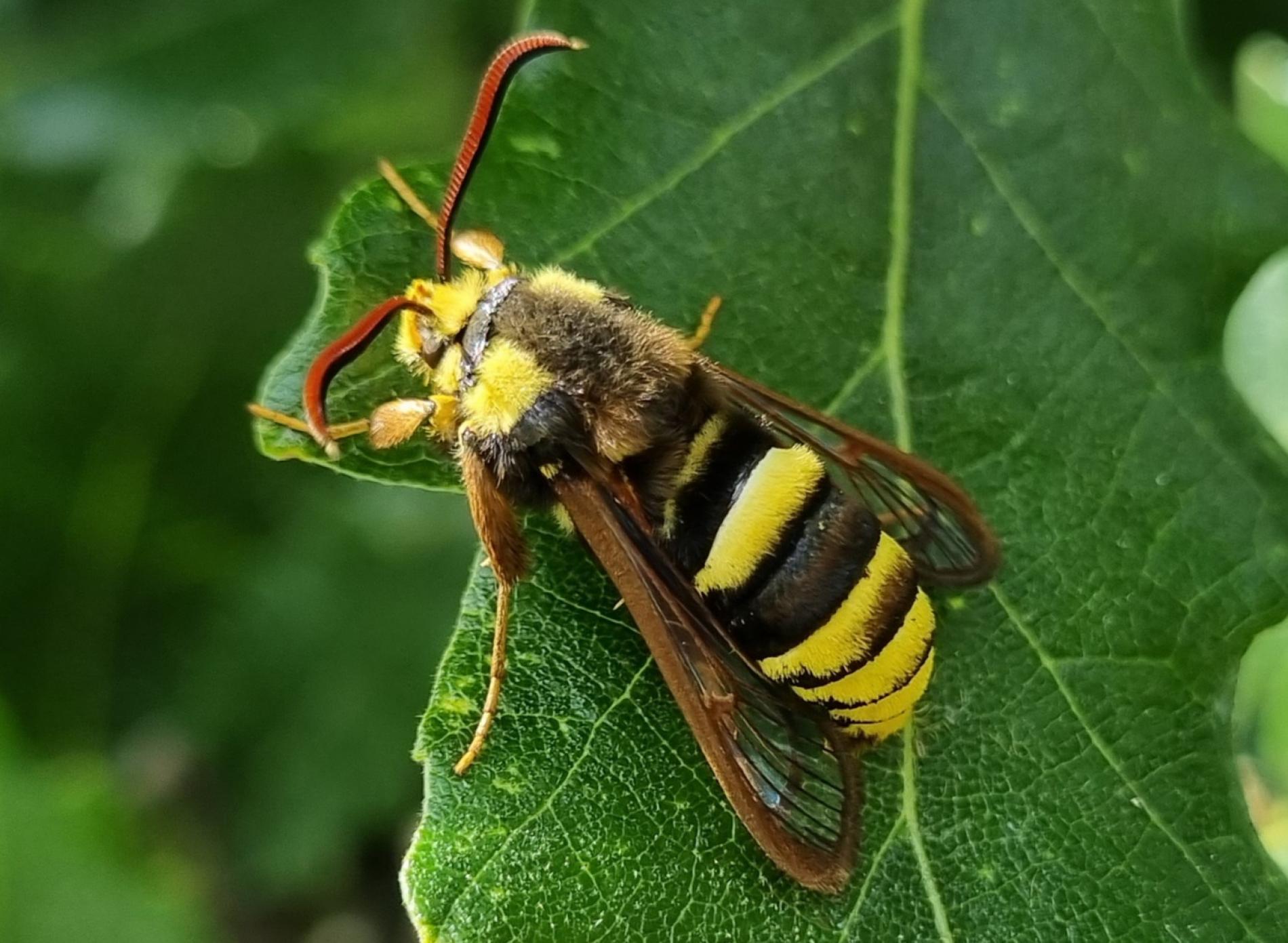
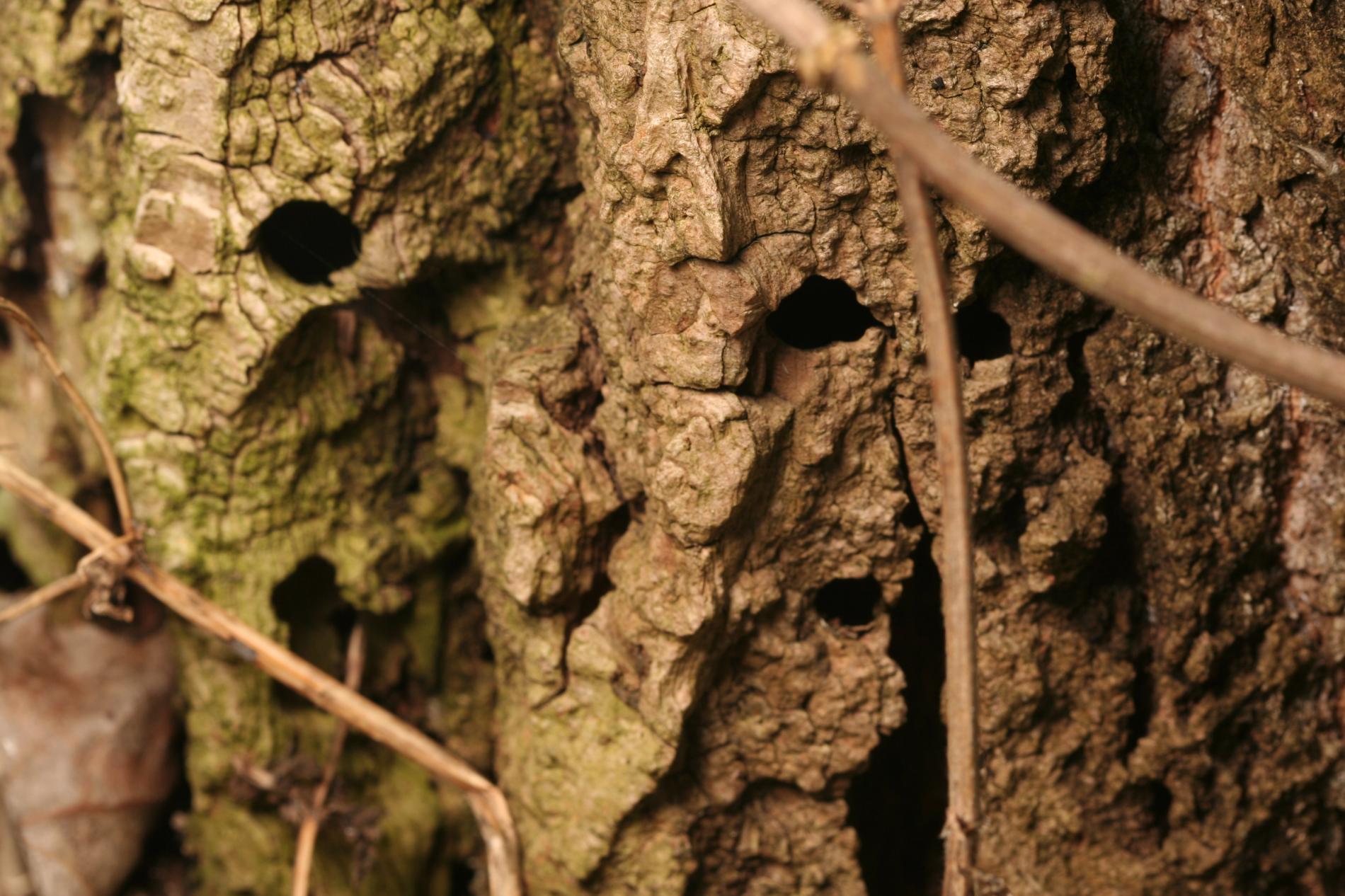
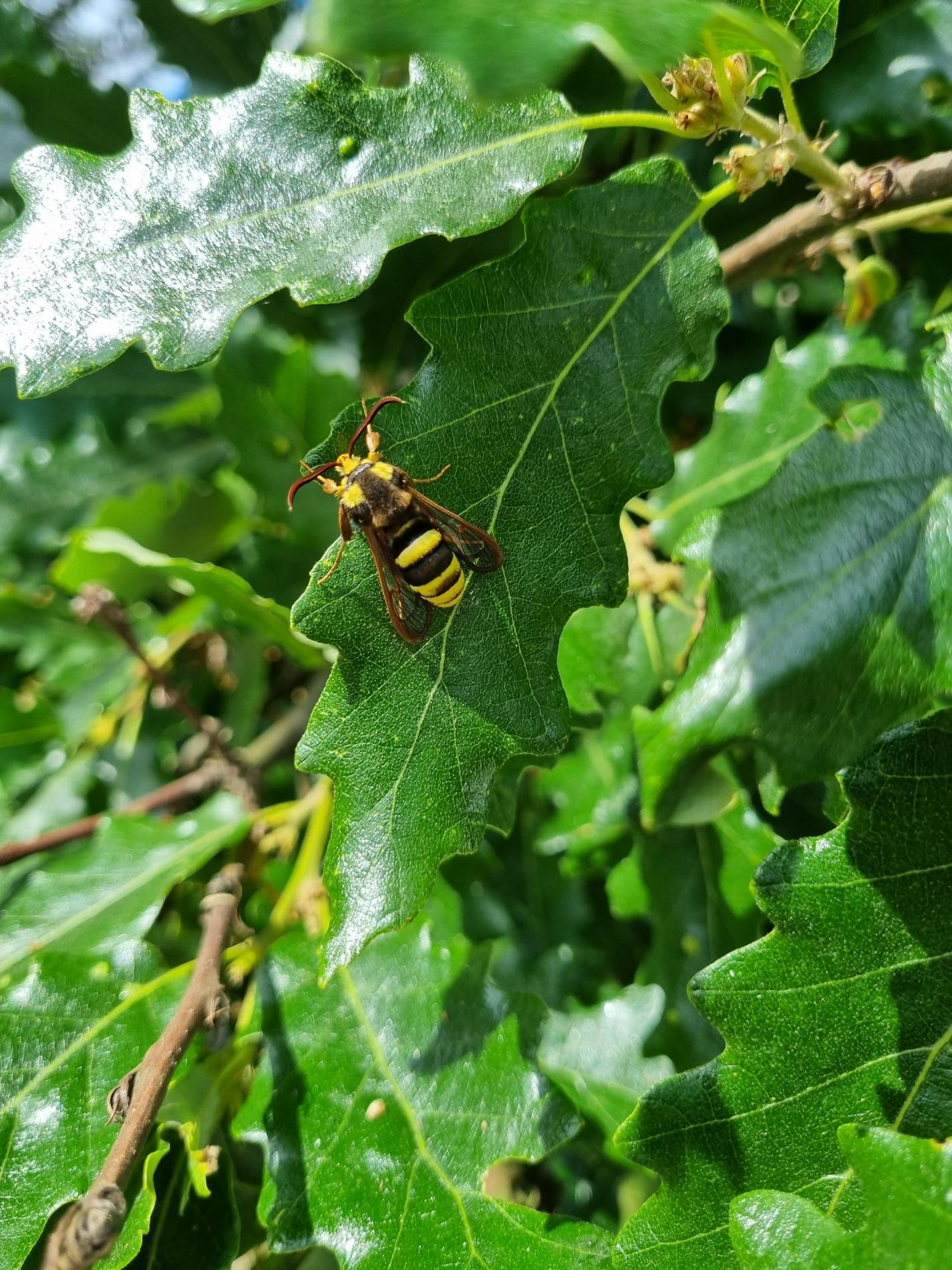
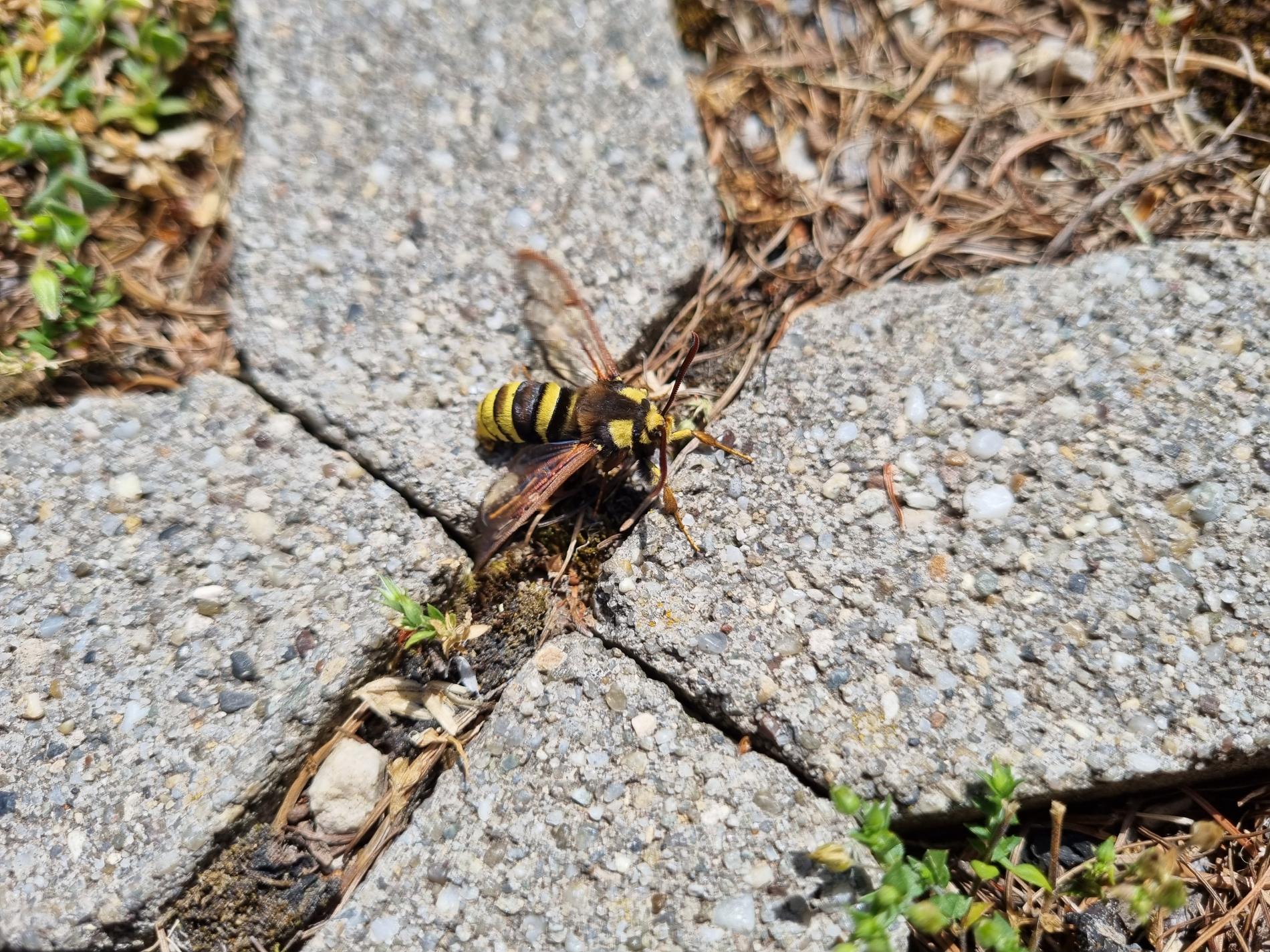
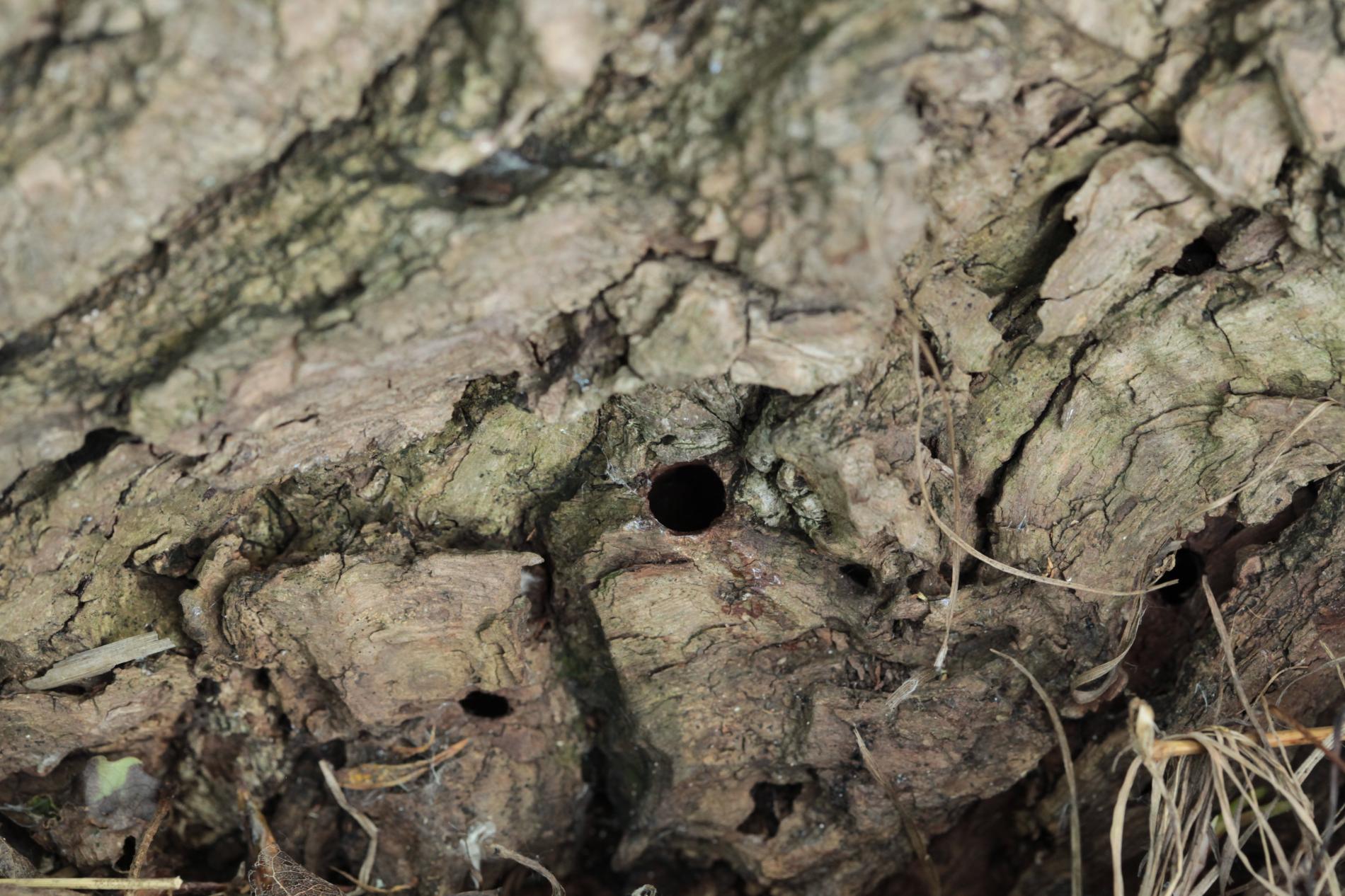
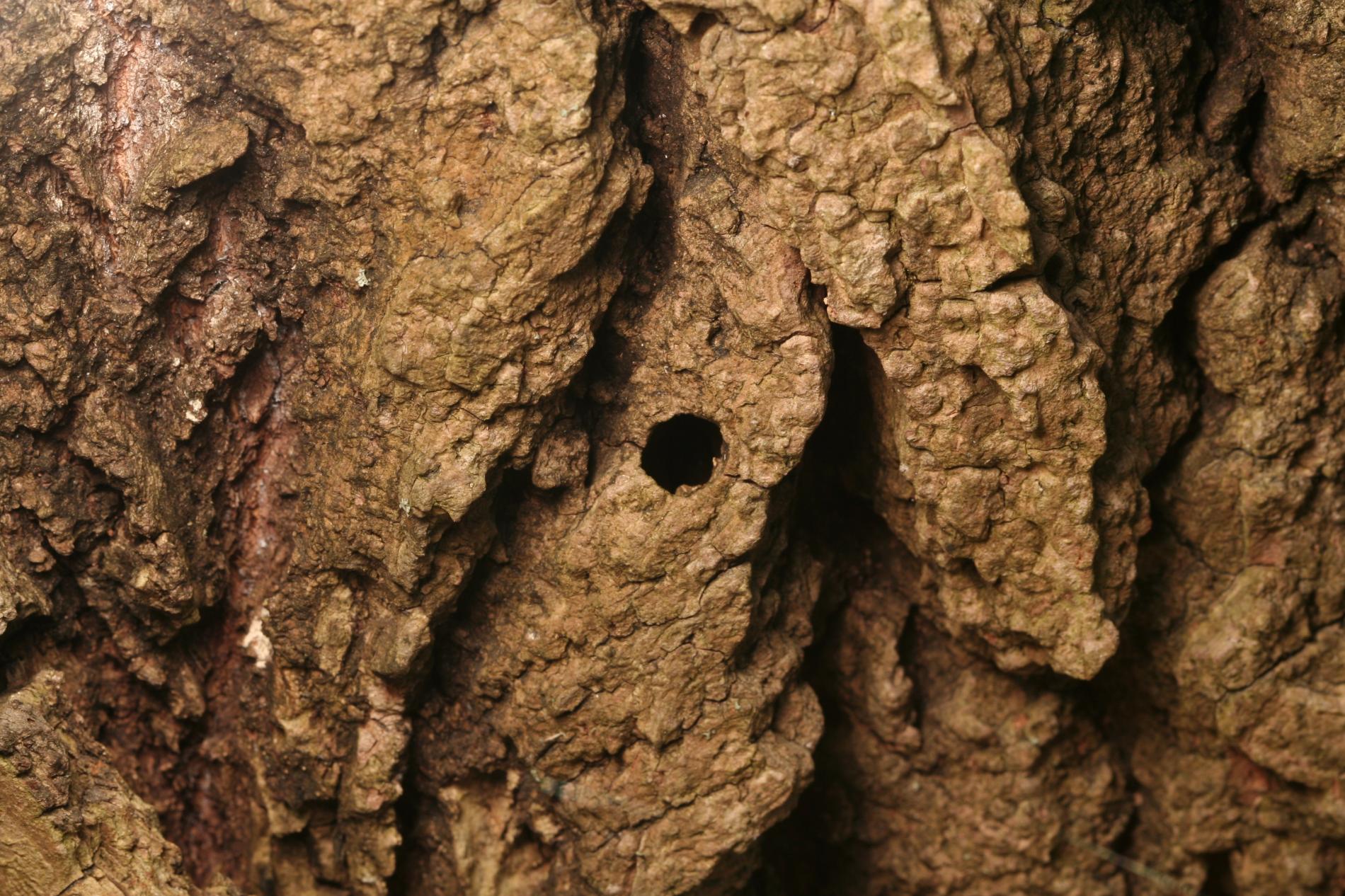
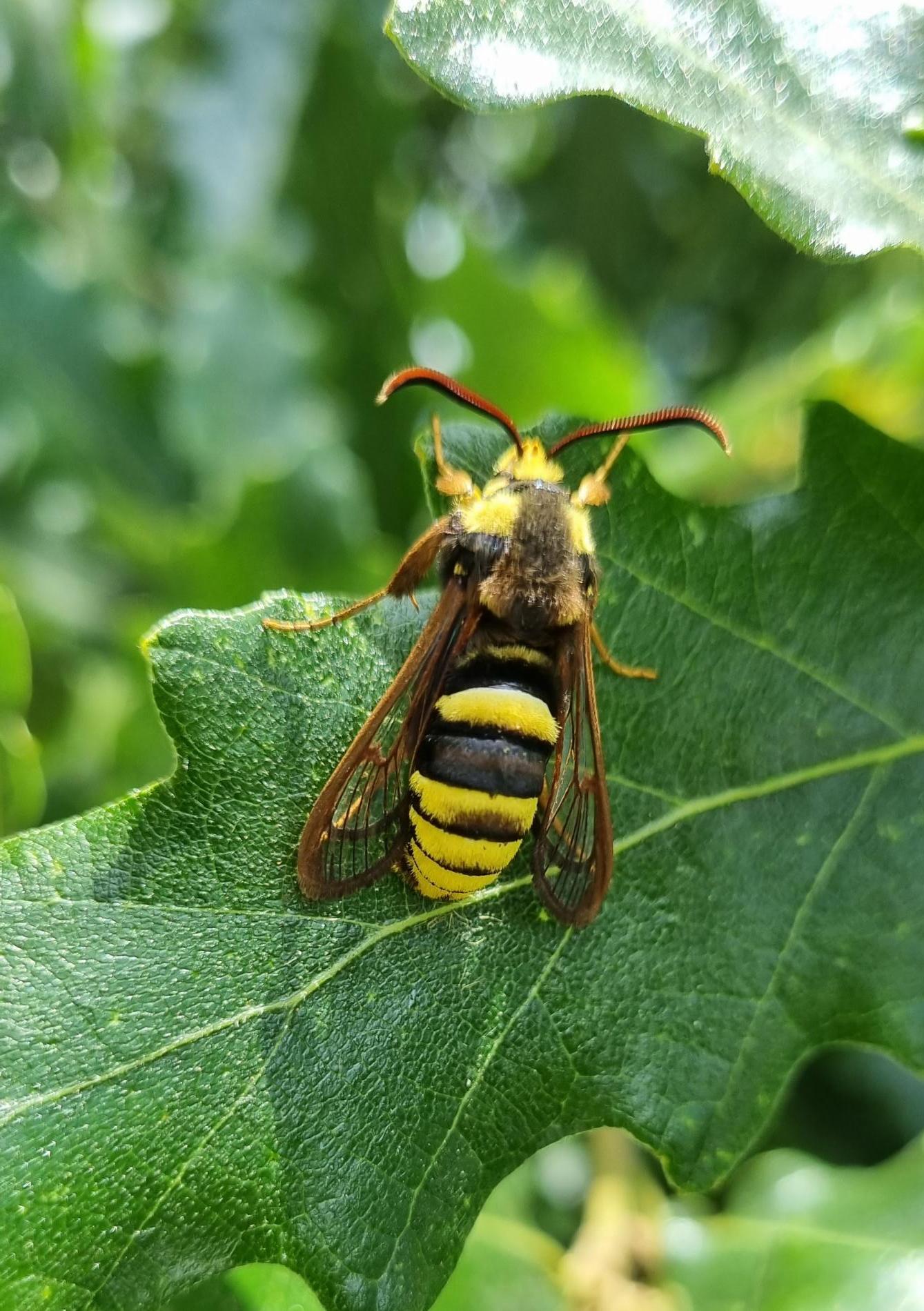
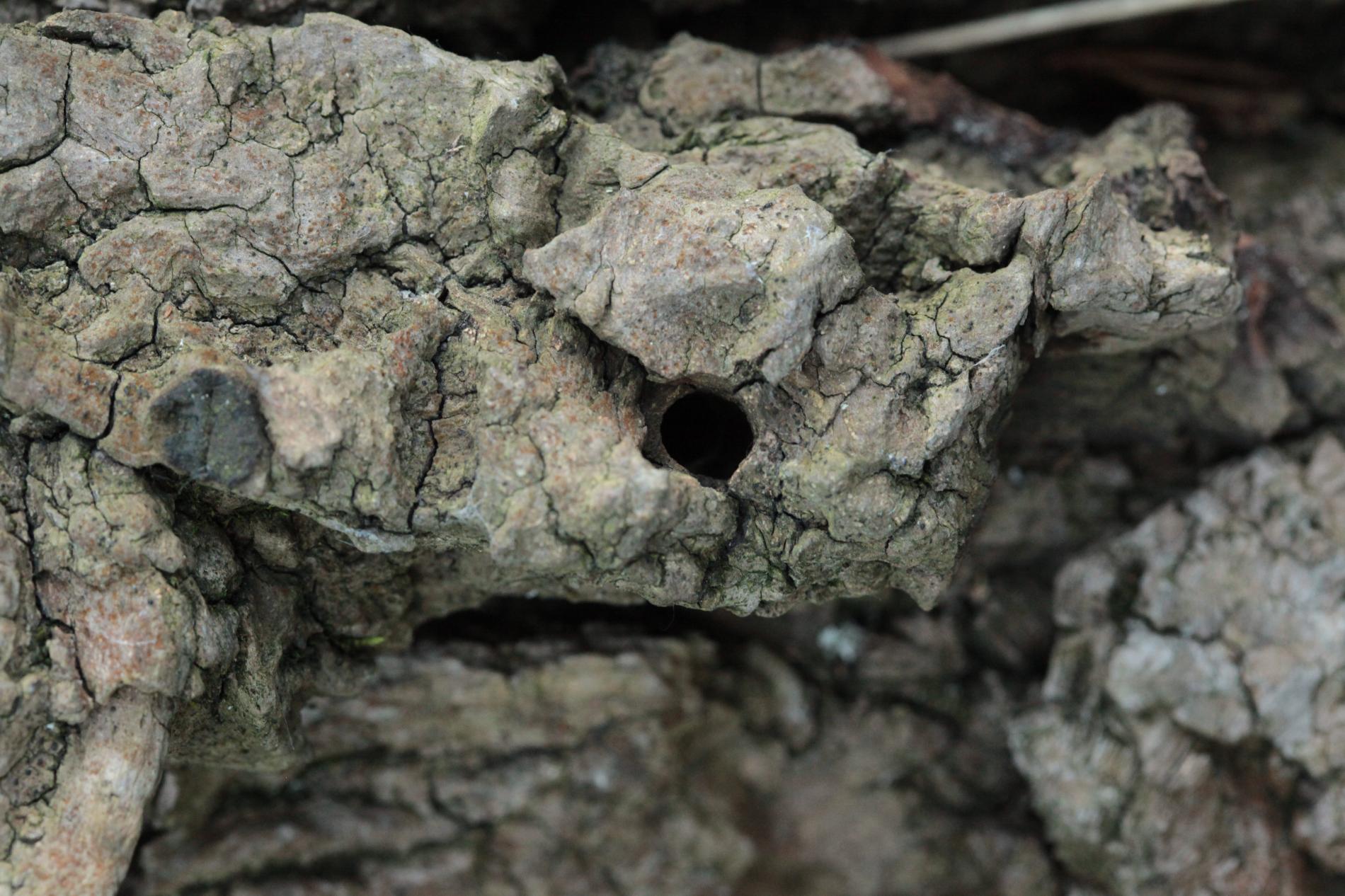
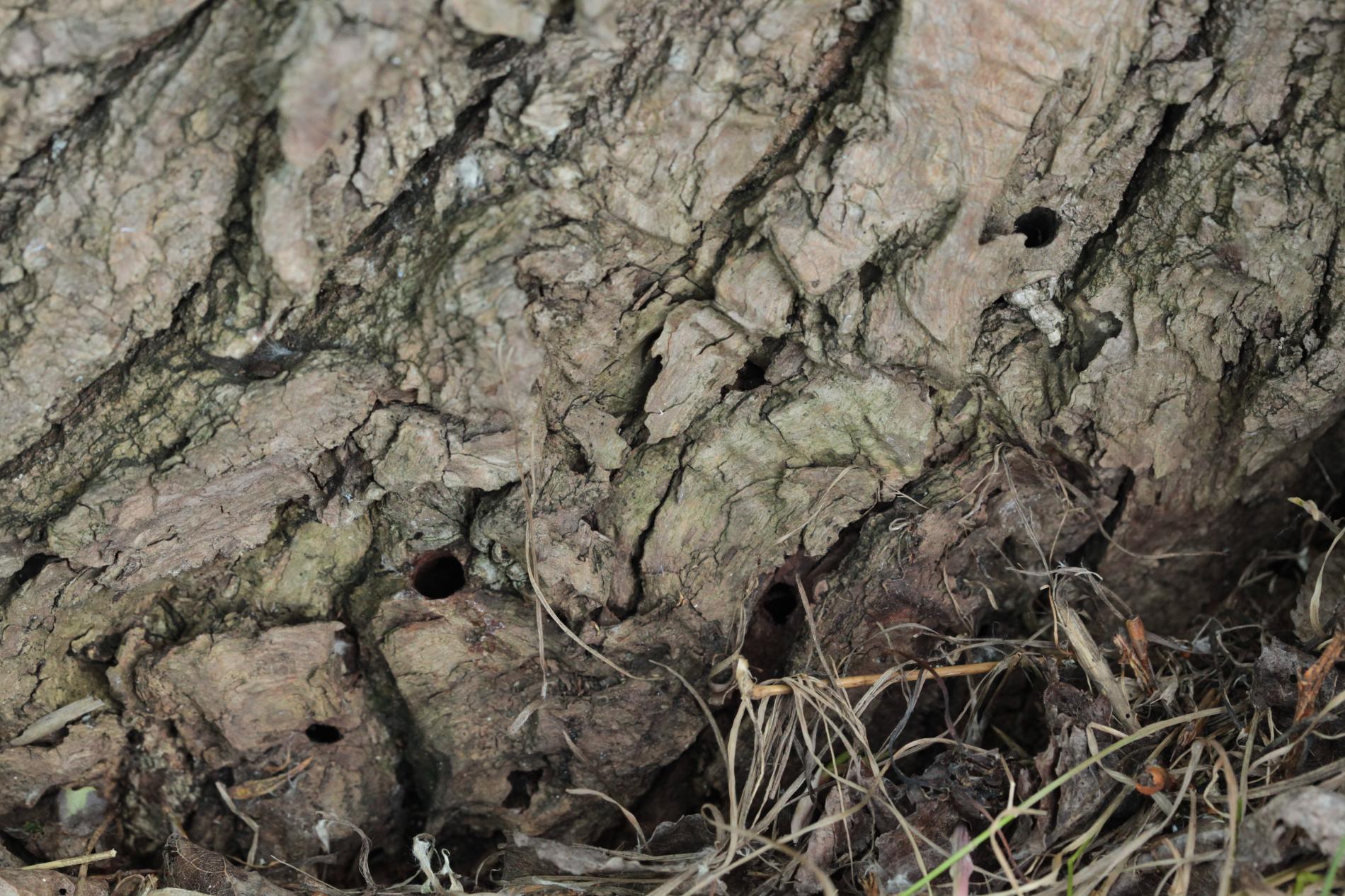
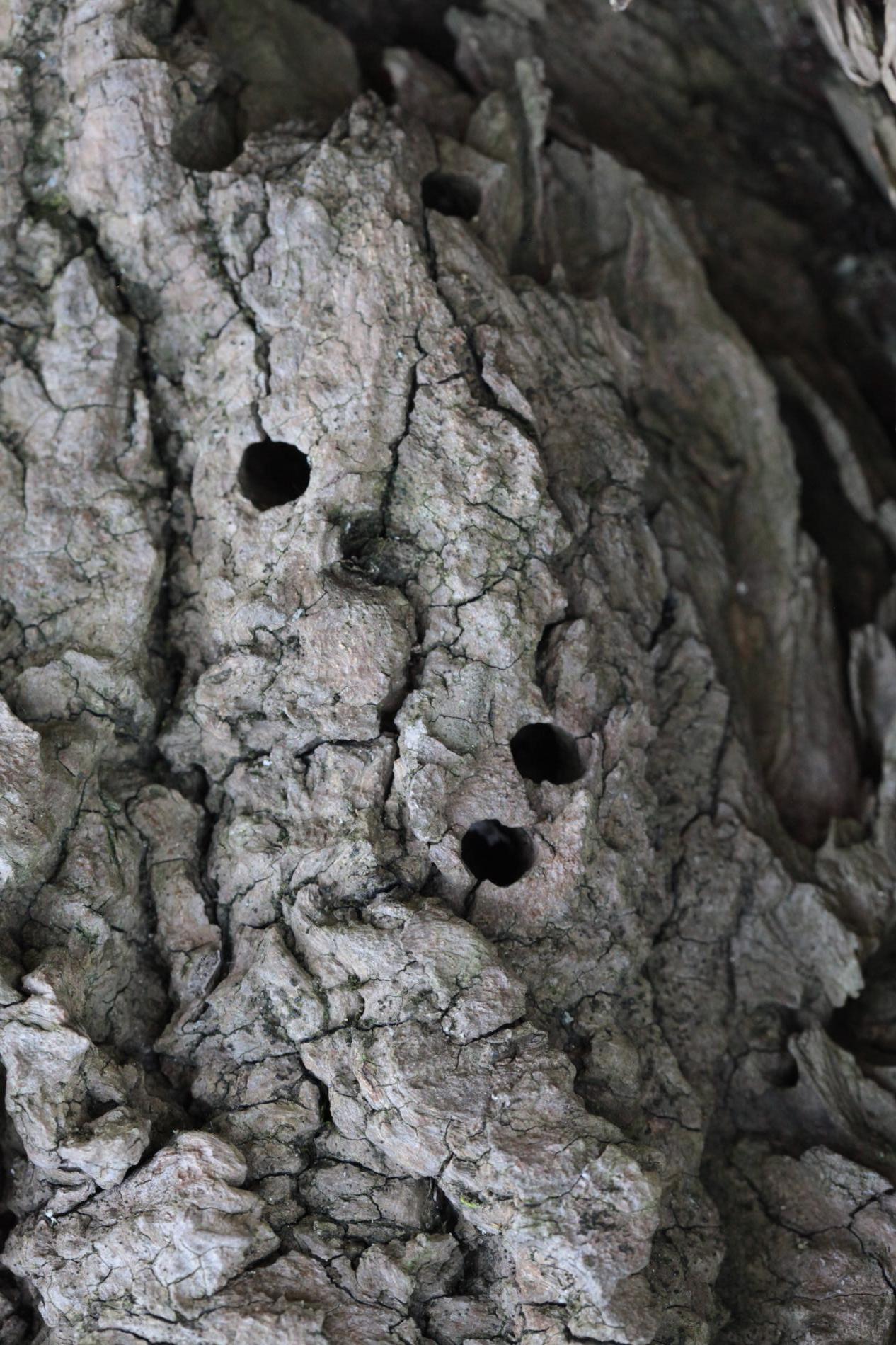
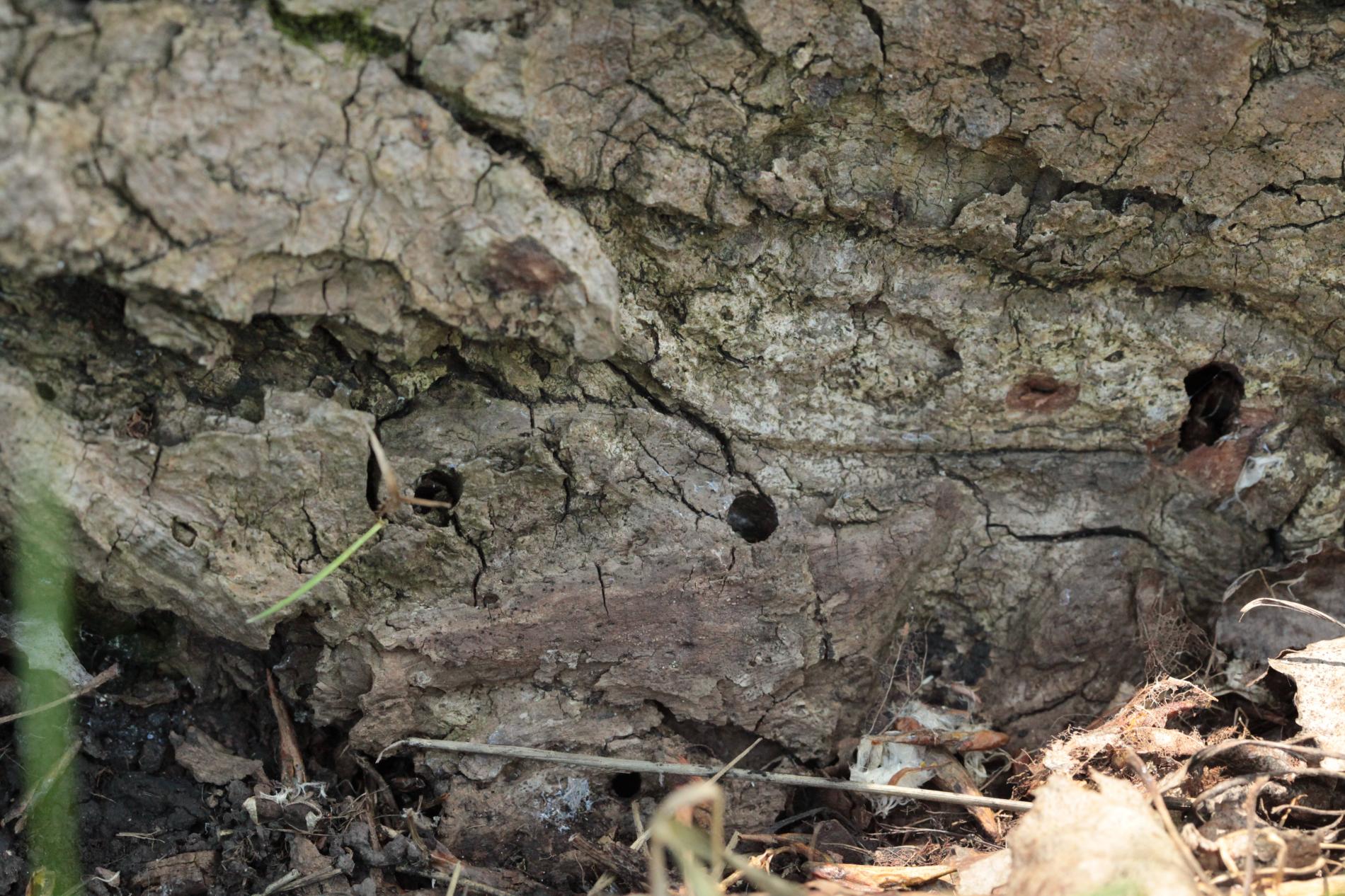
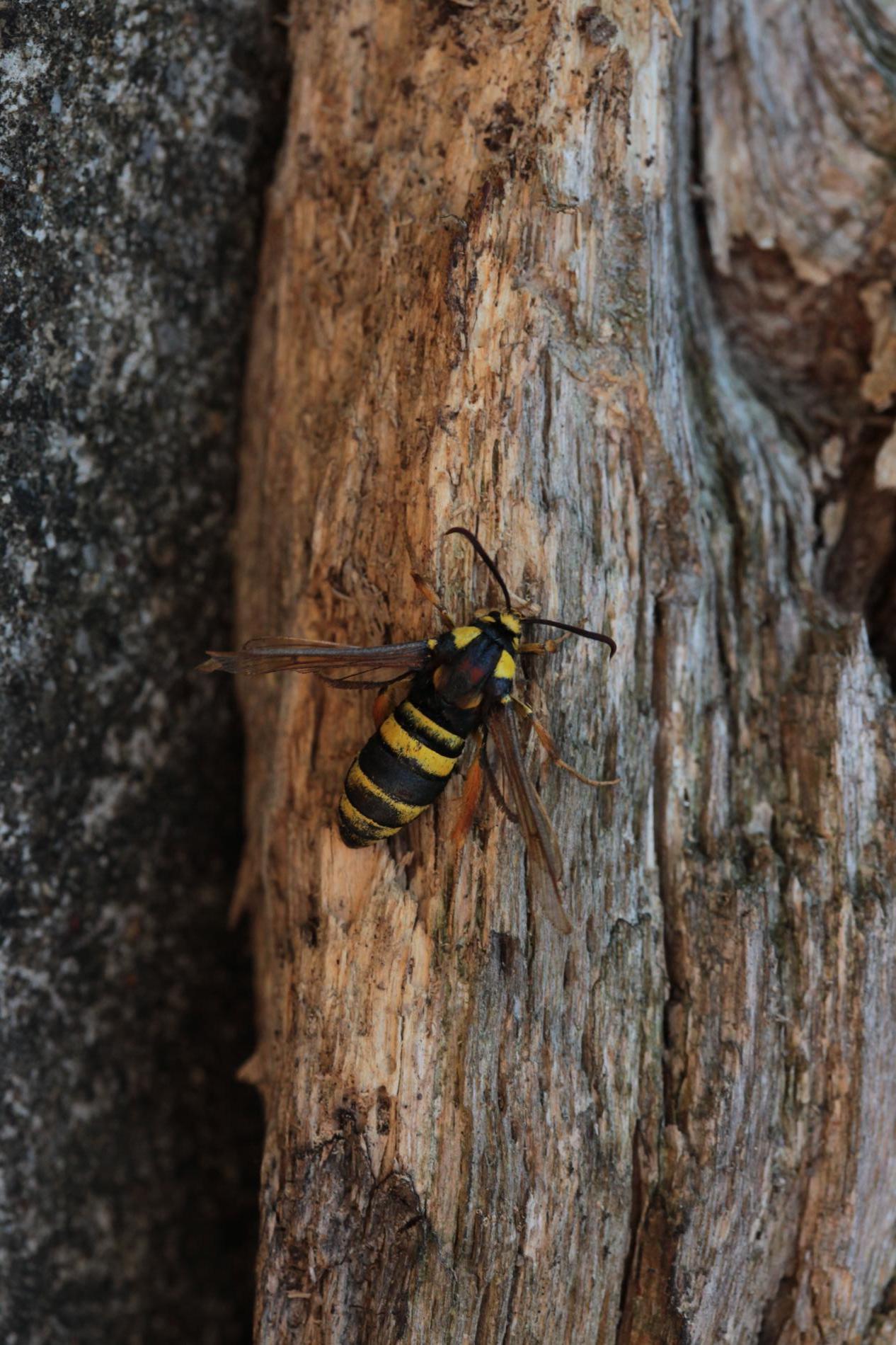
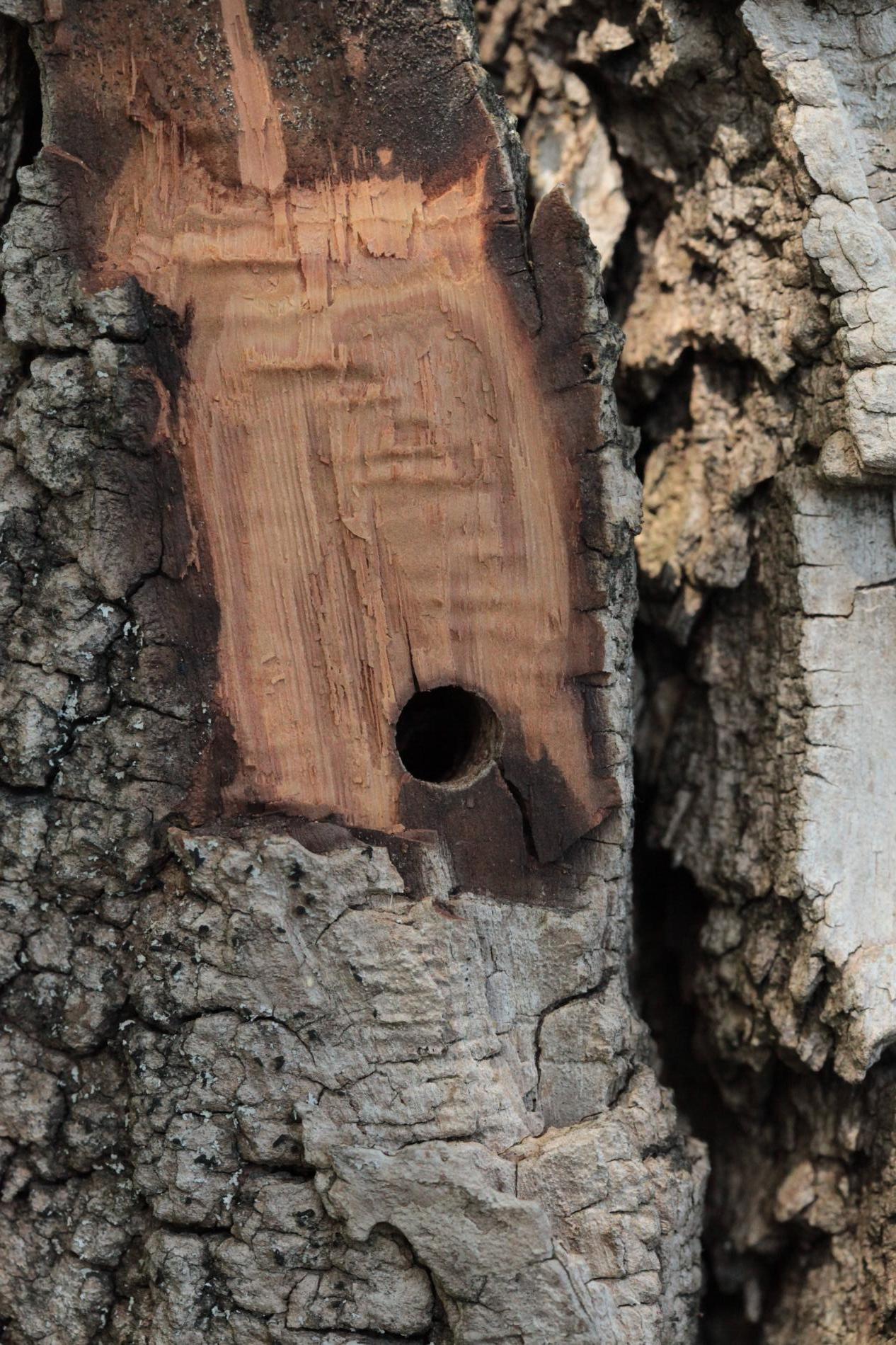
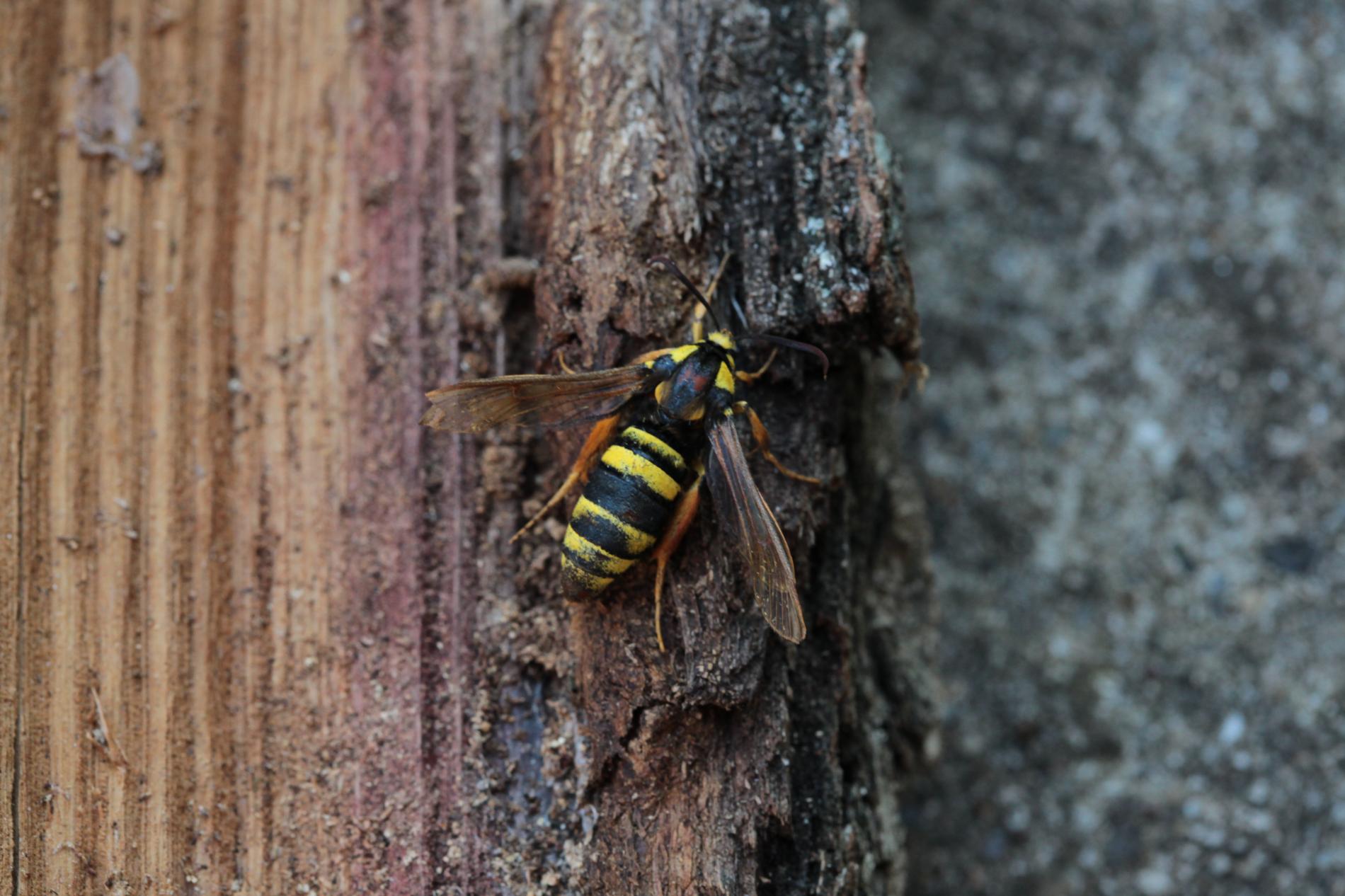
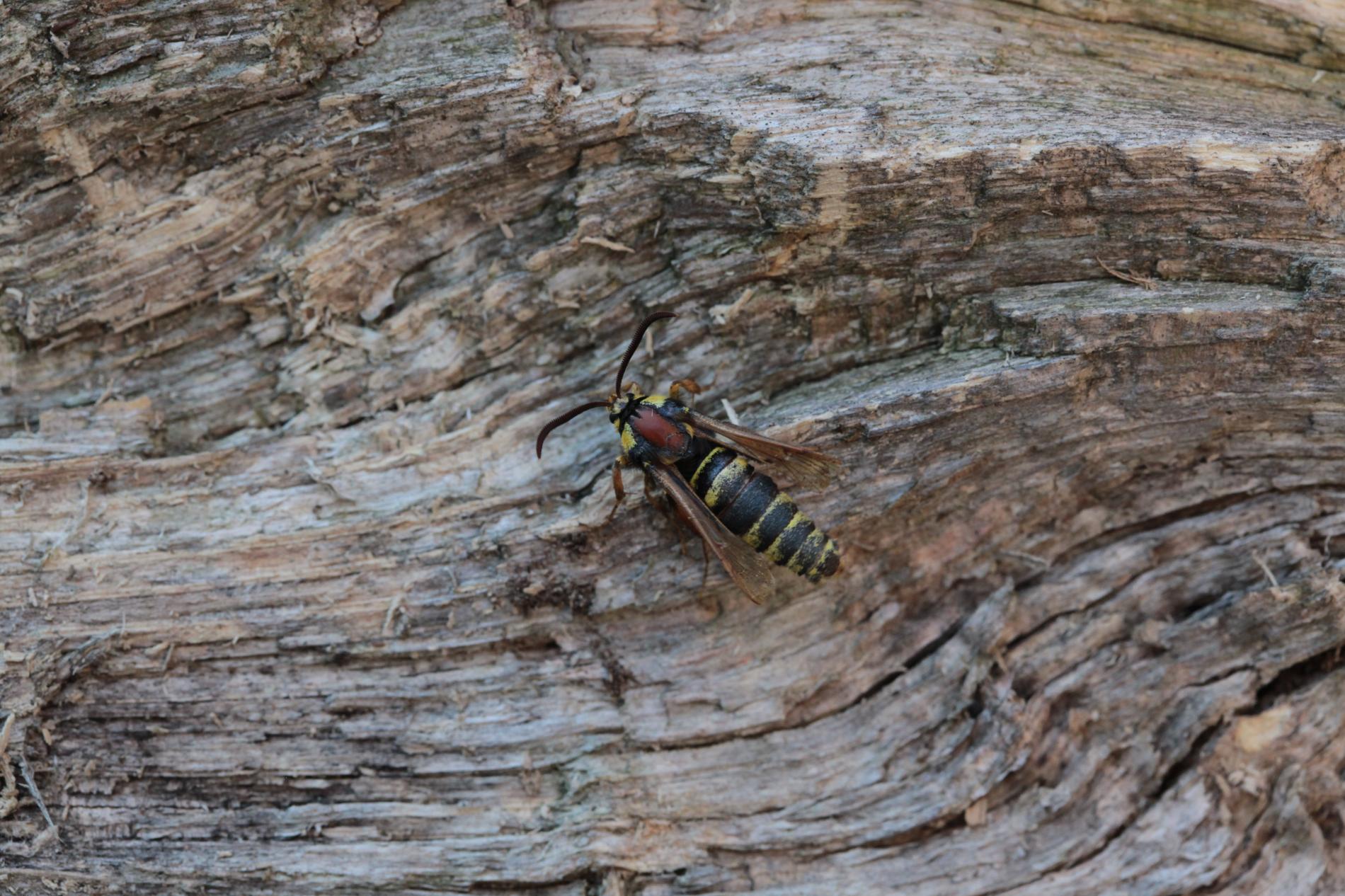
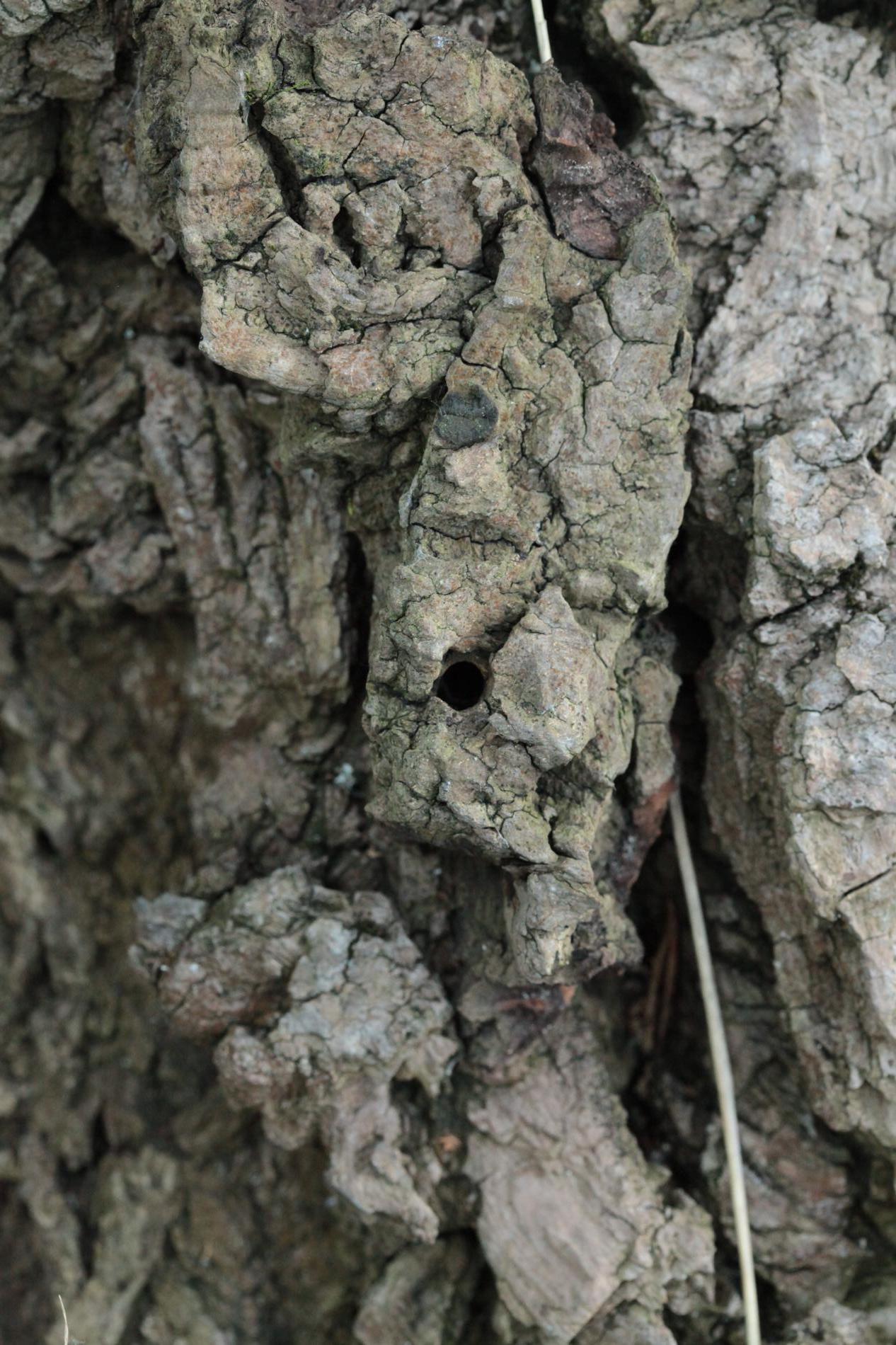
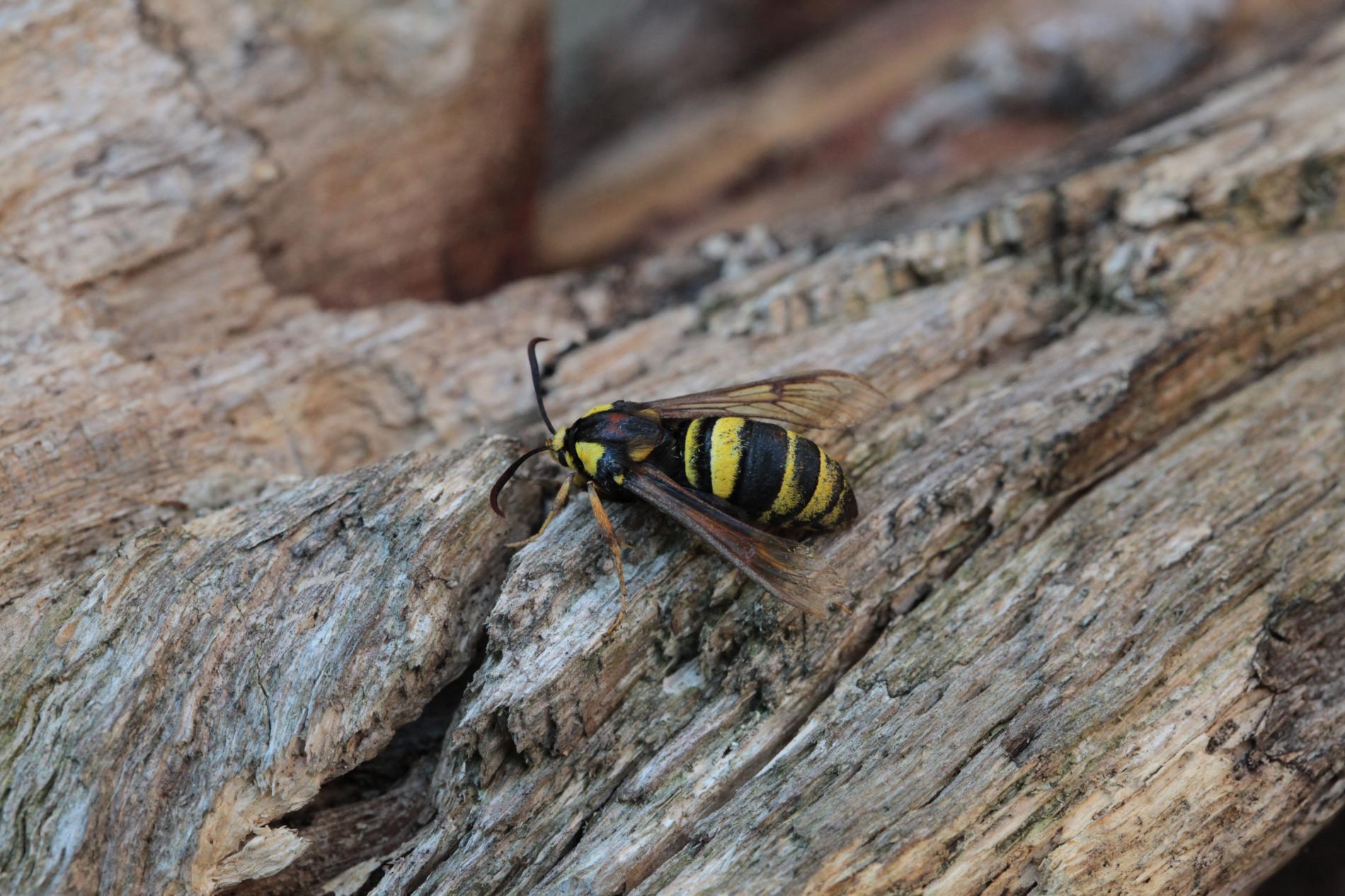
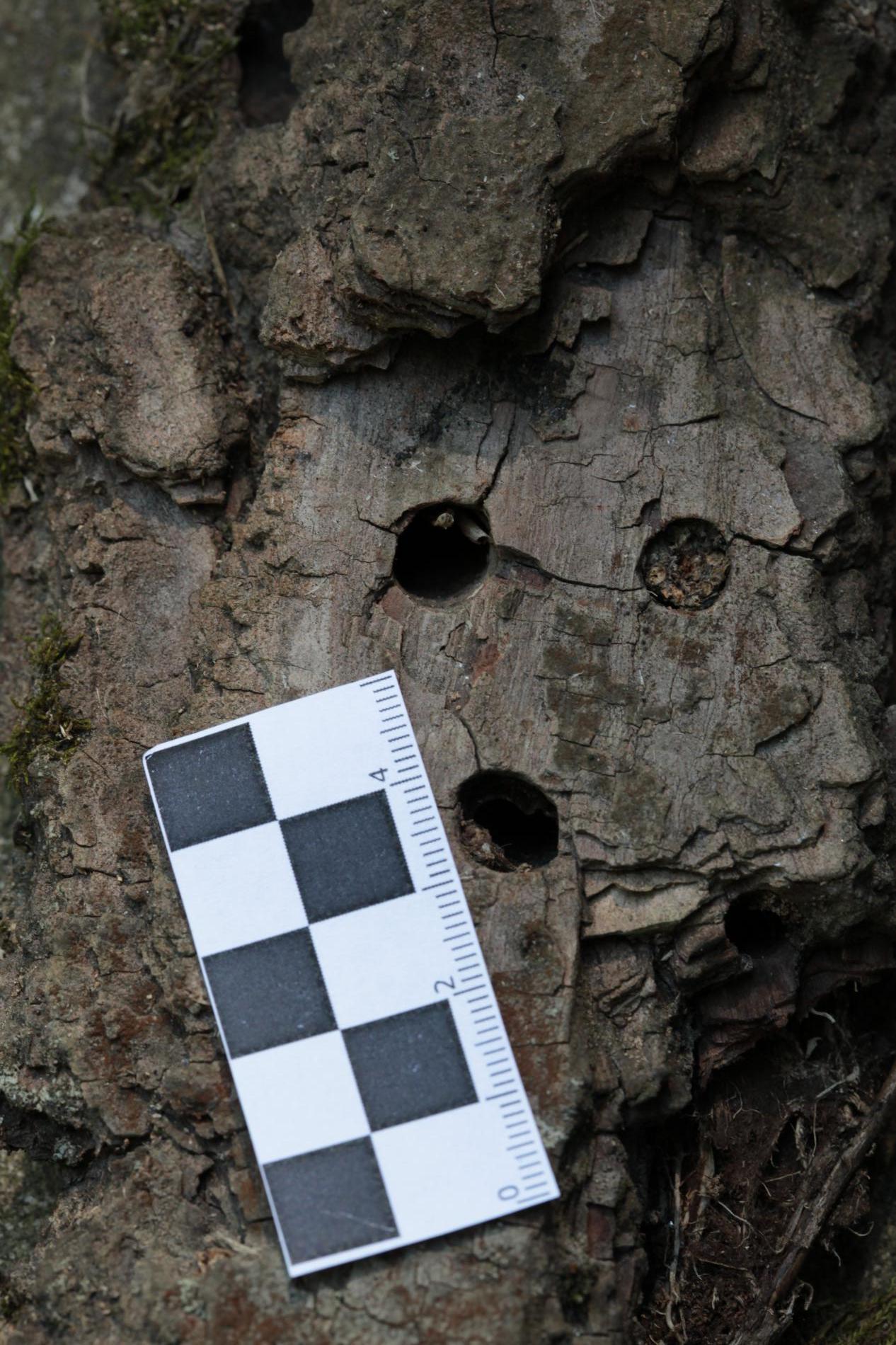
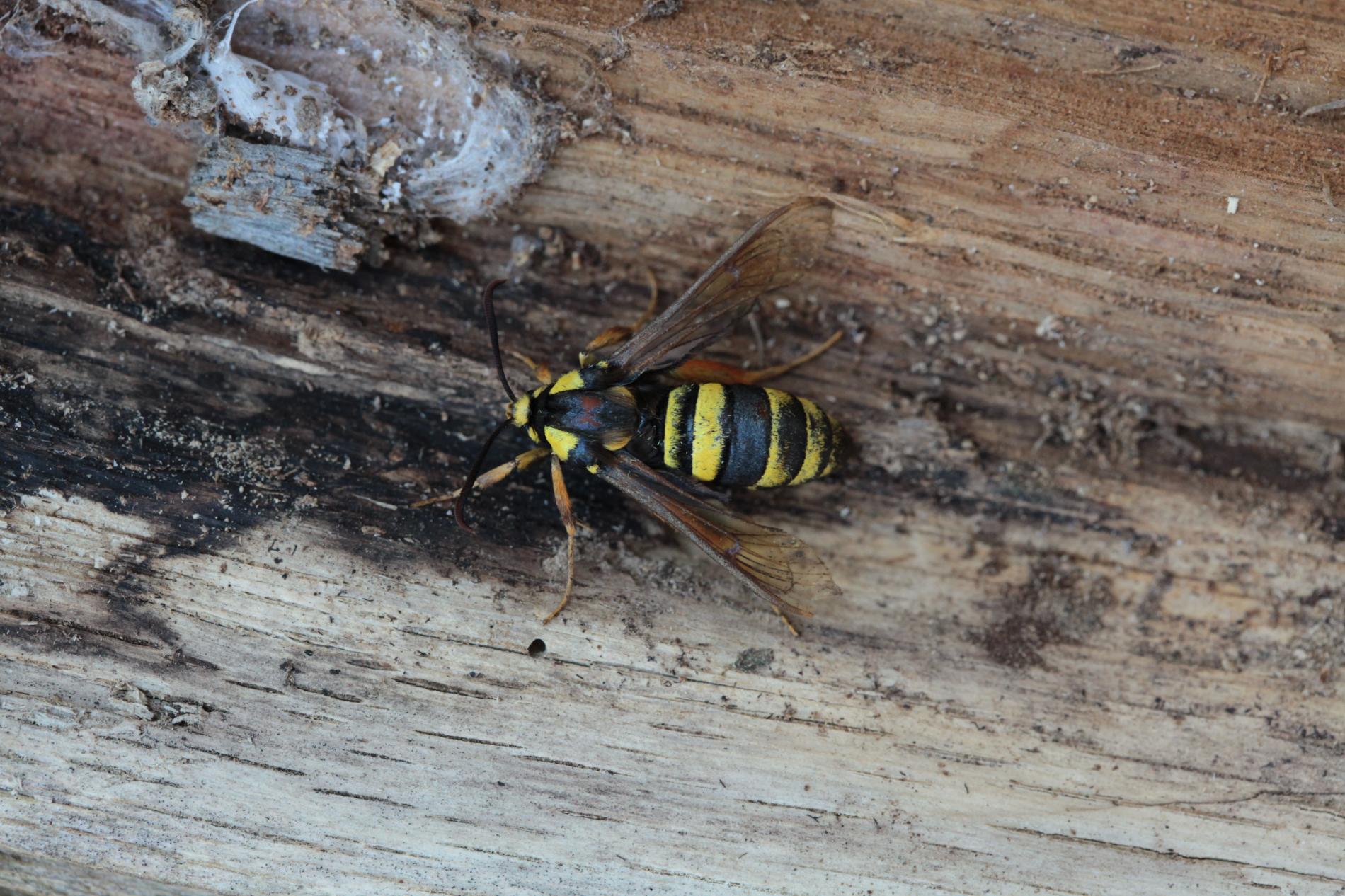
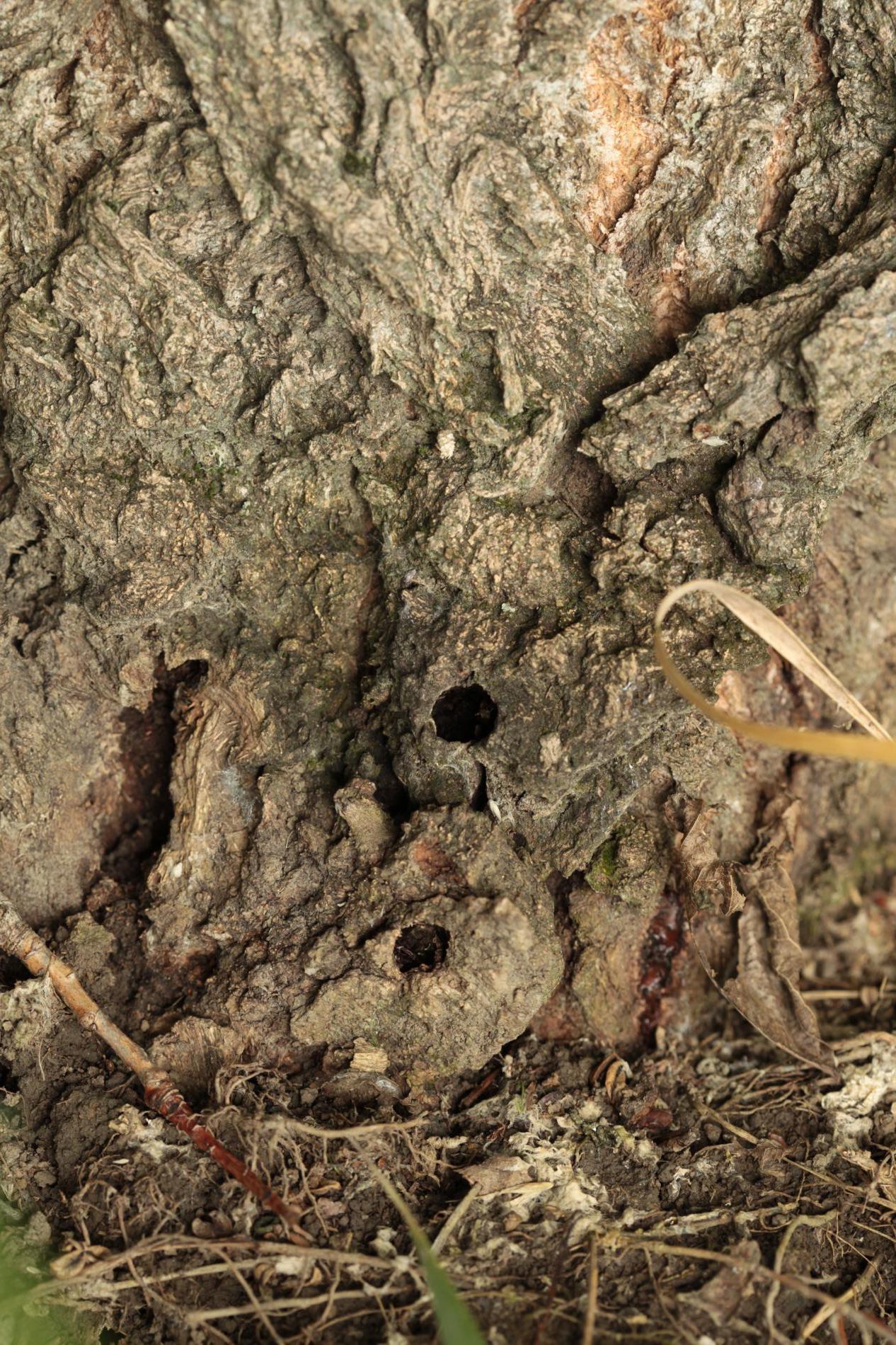
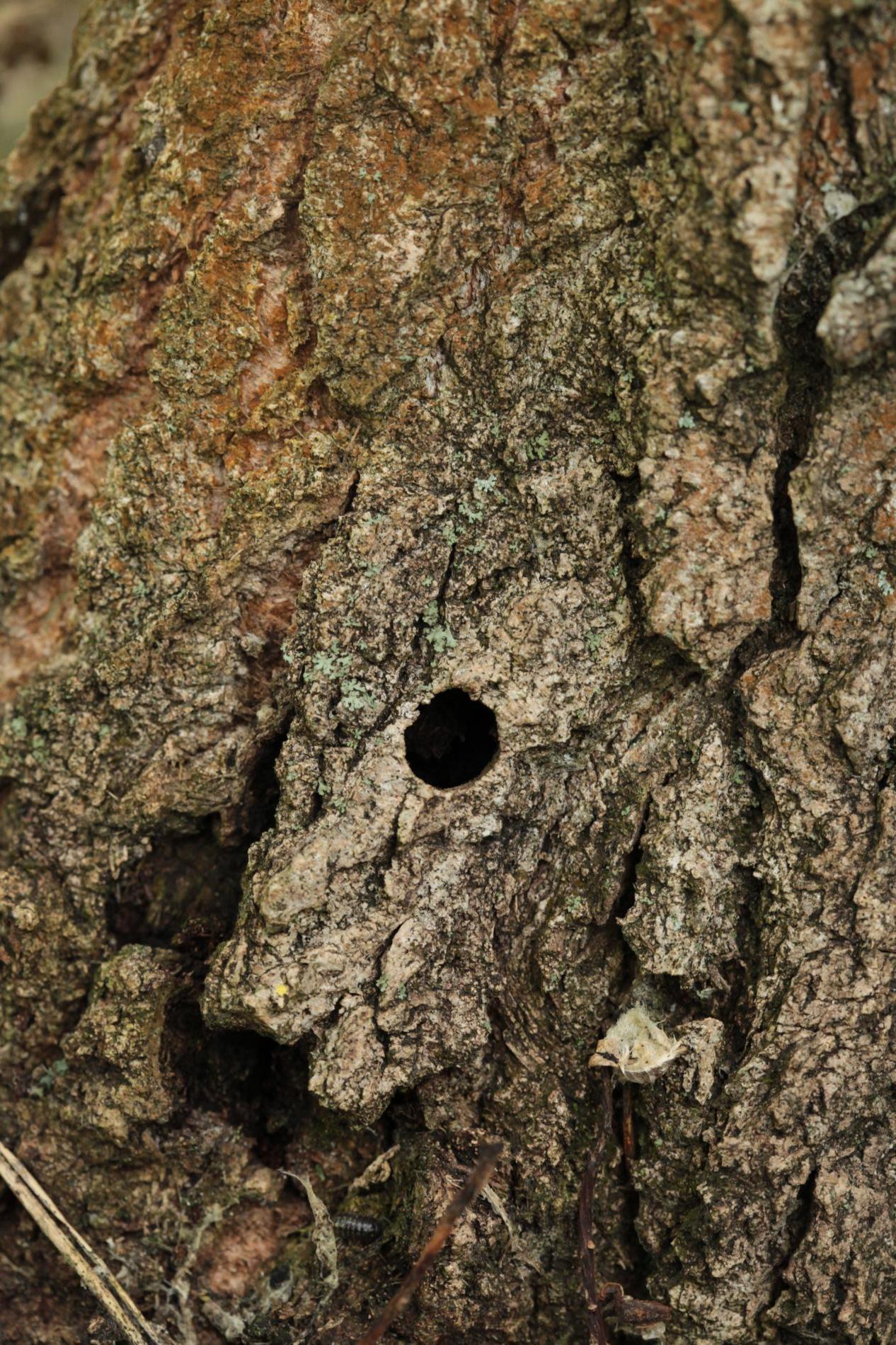
A rather large wasp-like butterfly. As the common name suggests, this moth mimics the hornet. Adults emerge in June and July. The adult female tends to be fatter in the body than the male. The adult wingspan is 30–45 mm. They are often found on poplar trees, where they sit immediately after emergence. The hornet clearwing larva feeds mainly just beneath the surface of the bark, near ground level or below. Exit holes can often be seen at the base of poplar trees. It pupates in a cocoon made of gnawed wood and silk. Damaged trees with long larval tunnels inside can die. It prefers warmer localities. Trees in open habitats with little vegetation round the base. The related species Sesia bembeciformis is very similar, however much less frequent.
A rather large wasp-like butterfly. Exit holes can often be seen at the base of poplar trees. Adults sitting on the tree trunks.
Tree Species: Poplar
Part of a plant- attacked: Tree trunk
Pest significance: Harmful
Pest Category: Insects
Invasive Species: No
Present in EU: Yes
Pest group: Insect
Affected part of wood: Heartwood, Sapwood
Depth of damages: Bark, More than 5 cm depth, Under bark only, Up to 0,5 cm depth, Up to 2 cm depth, Up to 5 cm depth
The extent of damage: Lokally
Prevalence in Europe: Common
Damaged products: Firewood, Fresh timber logs (water still in the sapwood), Furniture, Lumber, boards and prisms, Wooden house constructions
Roundwood size: Diameter 50+, Diameter from 10 up to 50 cm
Wood discoloration: No
Exit holes: Round
Pest subcategory: Wood-boring insect
Similar pests

Xiphydria prolongata

Xiphydria camelus
