


Semanotus russicus
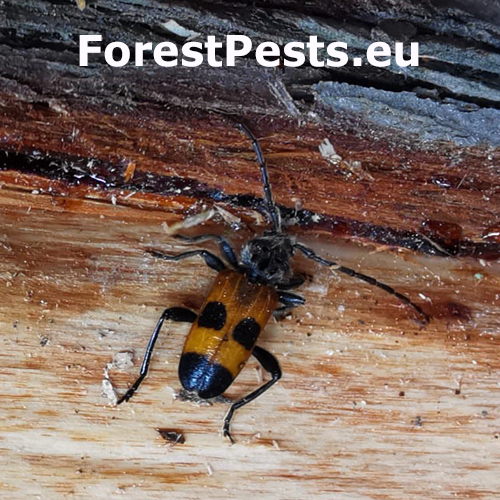
Long-horned beetle Semanotus russicus
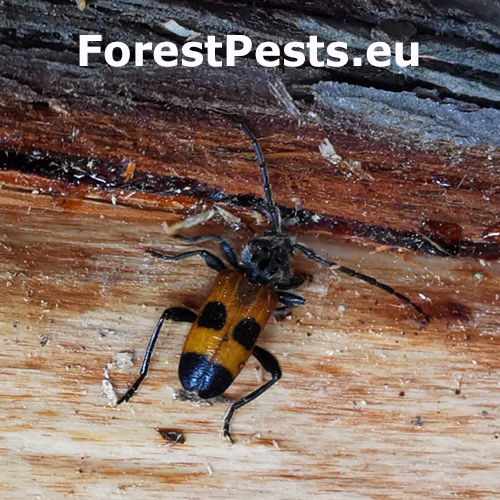
Semanotus russicus is a xylophagous beetle associated primarily with trees of the family Cupressaceae, especially Juniperus and Thuja. In Central Europe, it naturally develops in steppe juniper stands but has recently adapted to urban environments, where it colonizes decorative conifers in gardens and parks. The larvae develop under the bark of weakened or freshly dead trees and also in roots, creating relatively wide frass-filled galleries in the bark and sapwood. Pupation occurs in autumn in the wood, and adults emerge in early spring. The species is distributed in southeastern and central Europe, the Near East, and parts of Asia. Although locally abundant, its overall harmfulness is low and limited to ornamental trees in dry, stressed habitats.
Wide galleries with frass under the bark; exit holes in trunks and roots; dry or dying branches on conifers.
Tree Species: Juniper, Cypress, Thuja
Part of a plant- attacked: Tree trunk, Roots
Pest significance: Less harmful
Pest Category: Insects
Invasive Species: No
Present in EU: Yes
Pest group: Insect
Affected part of wood: Sapwood
Depth of damages: Bark, Under bark only, Up to 0,5 cm depth, Up to 2 cm depth
The extent of damage: Lokally
Prevalence in Europe: Common
Damaged products: Firewood, Furniture, Lumber, boards and prisms
Roundwood size: Branches and twigs, Diameter up to 10 cm
Wood discoloration: No
Exit holes: Oval
Pest subcategory: Bark and underbark insect
Similar pests

Tetropium castaneum

Phloeosinus aubei
