


Scolytus intricatus
European oak bark beetle
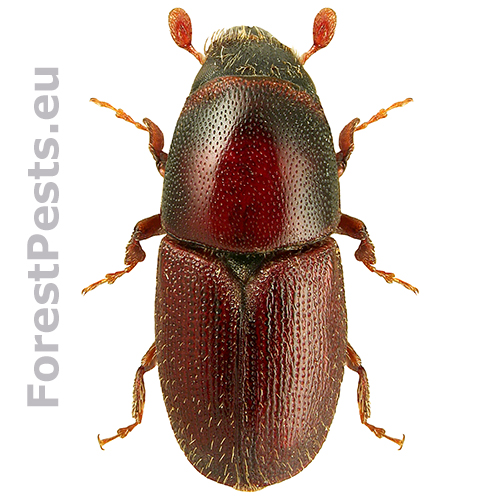
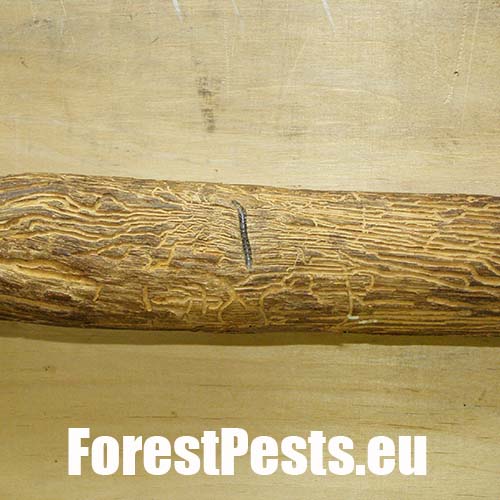
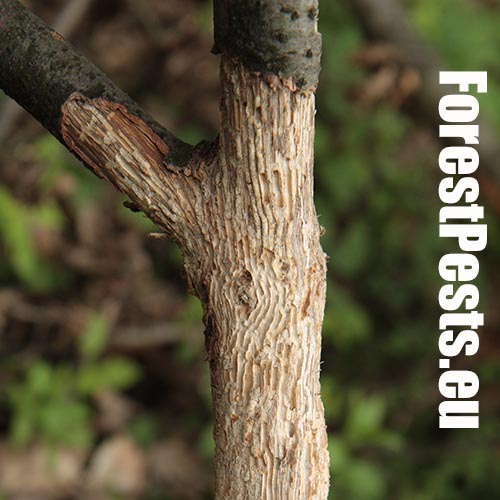
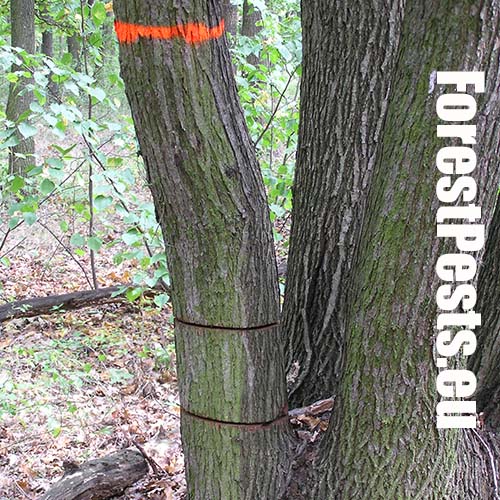
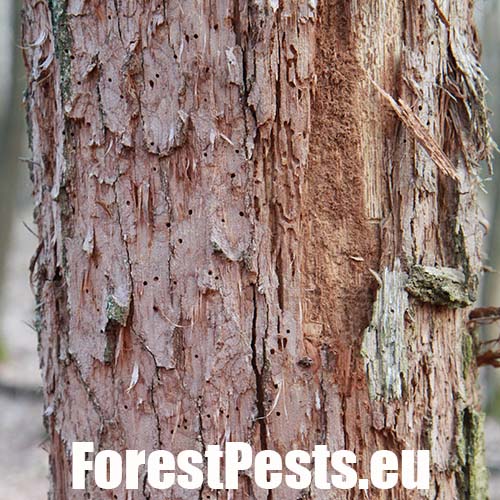
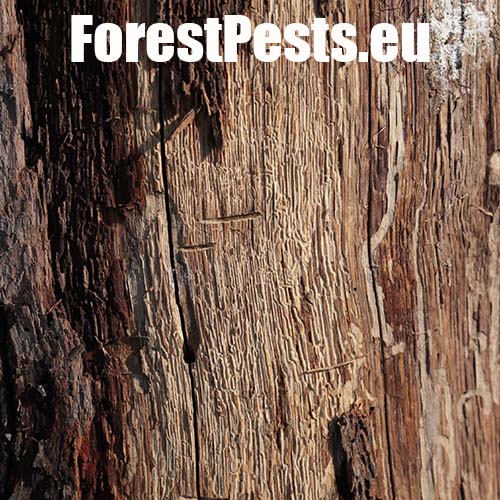
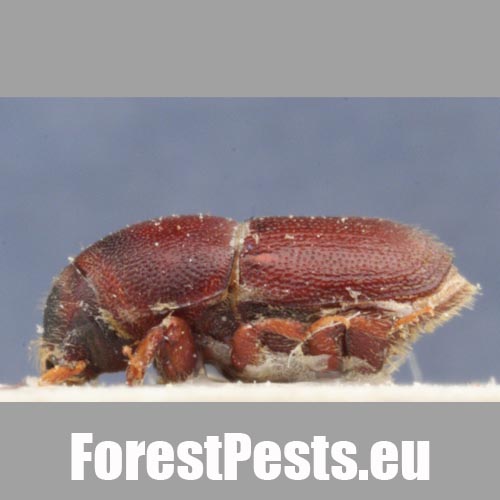
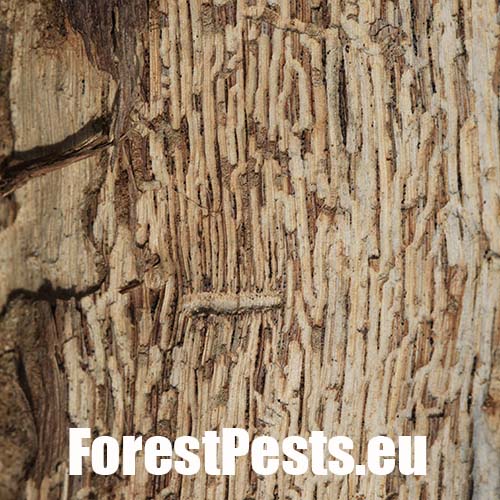
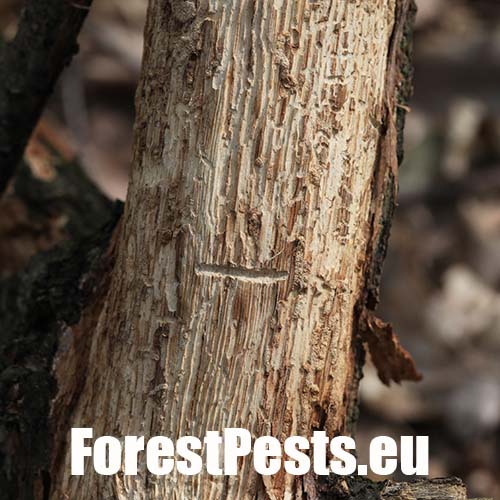
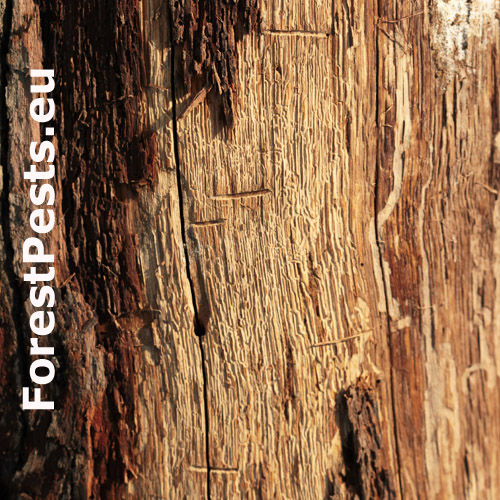
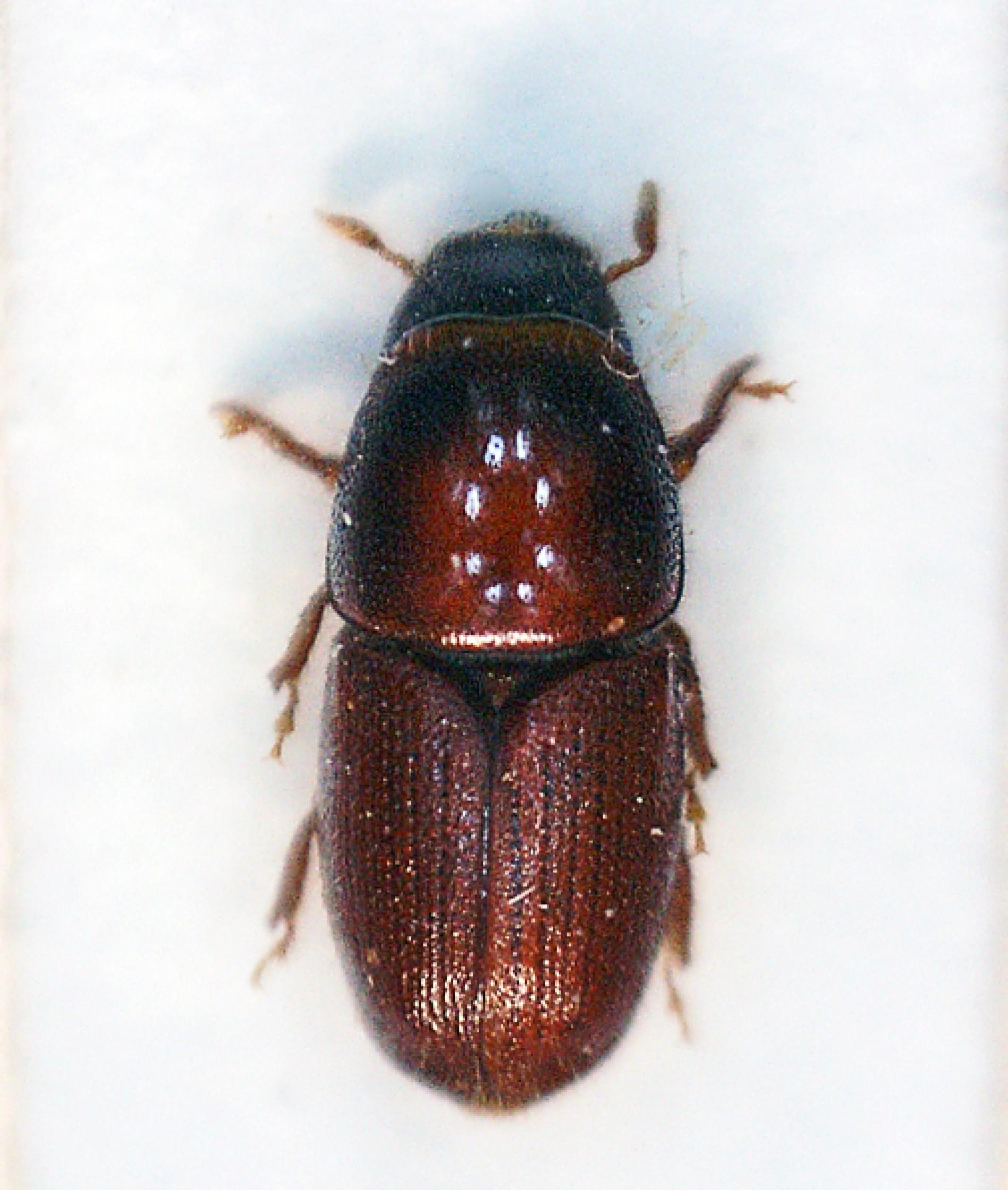
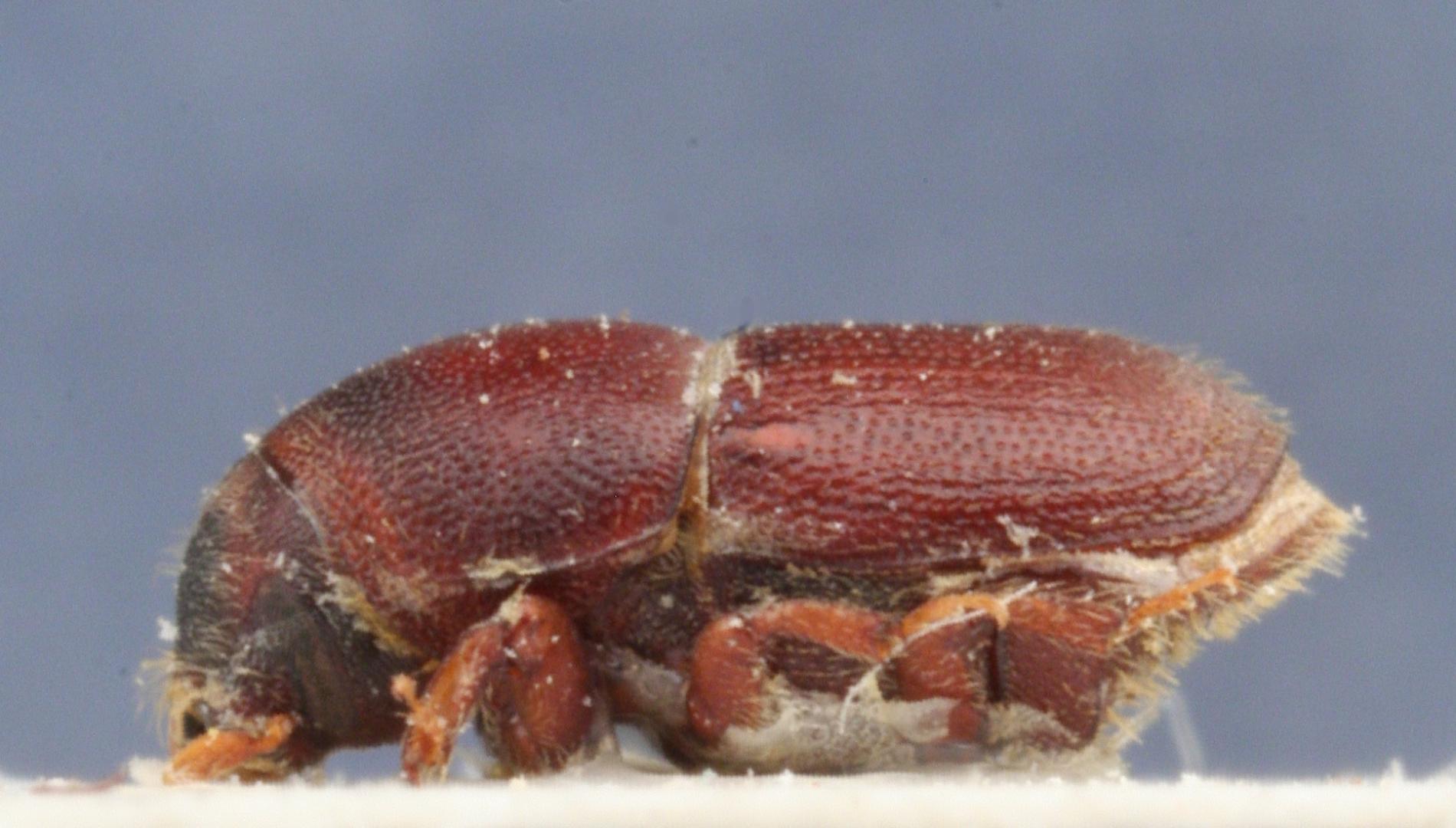
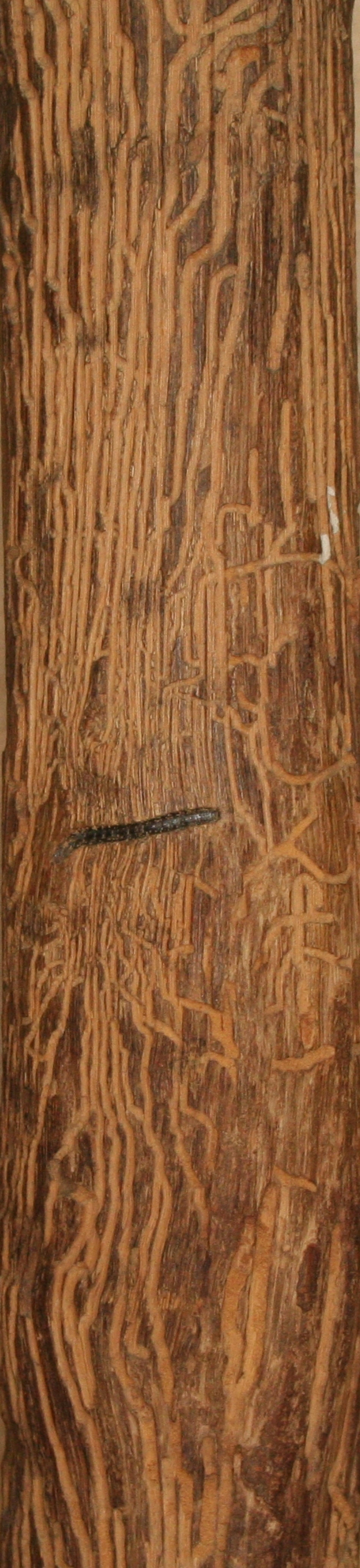
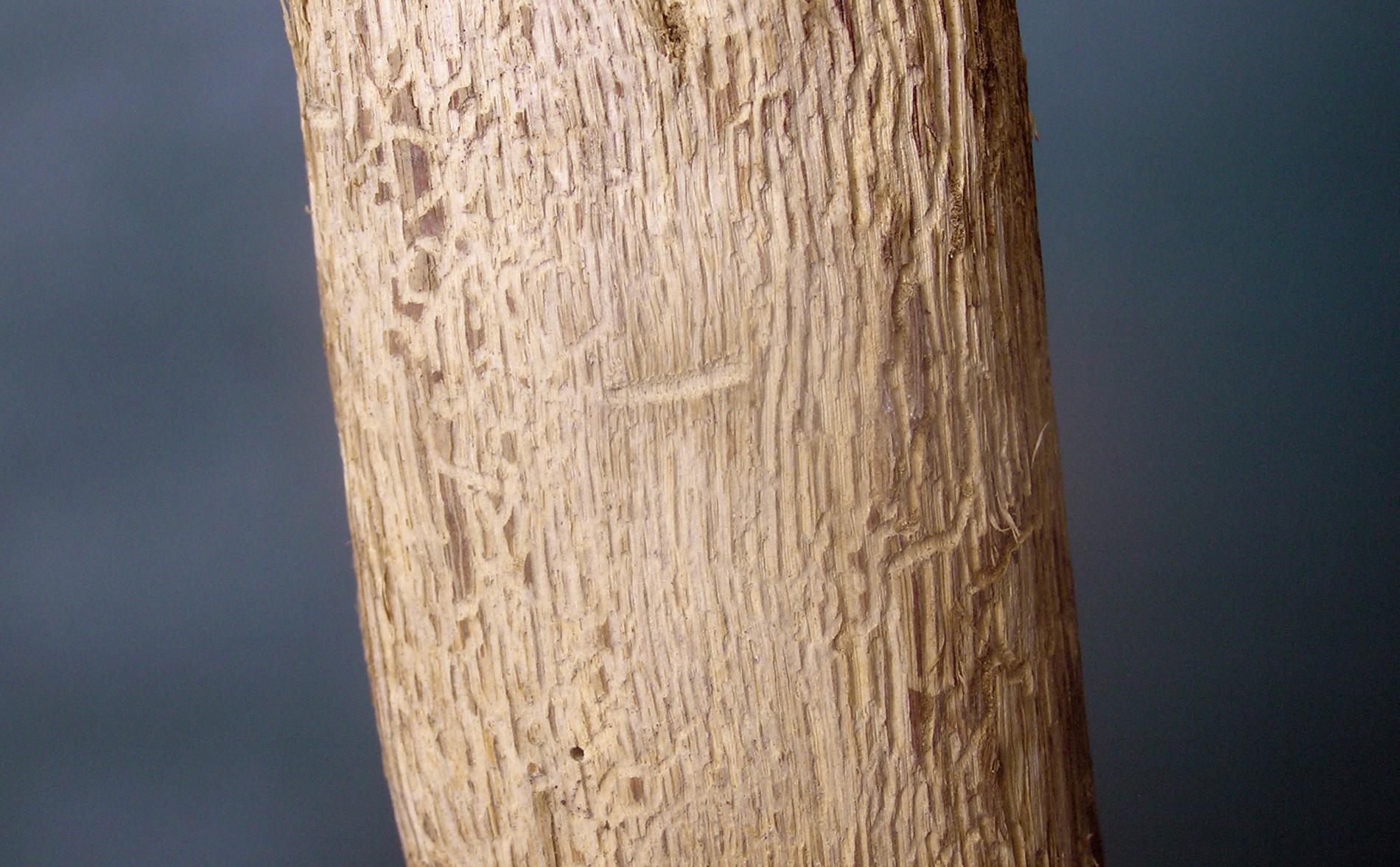
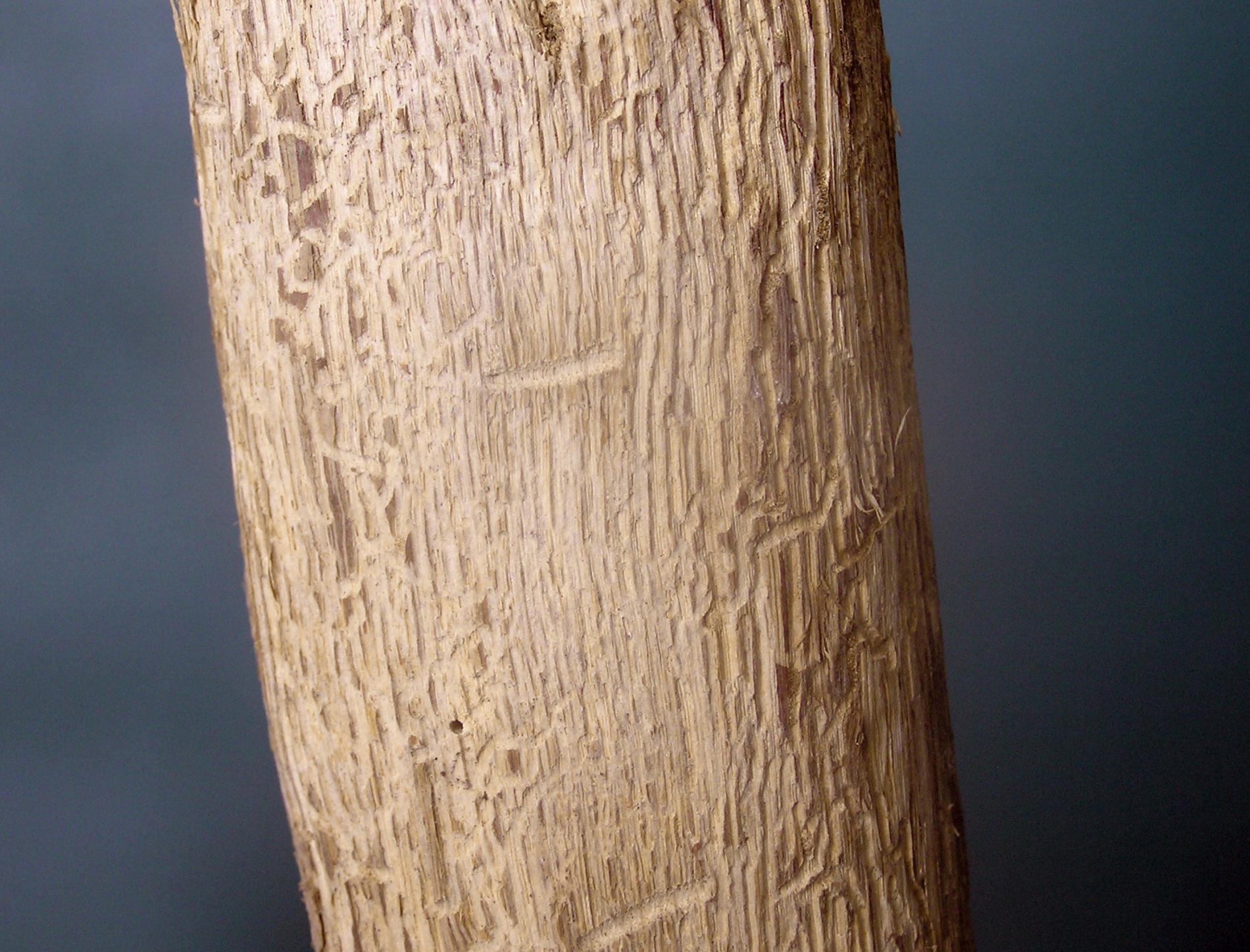
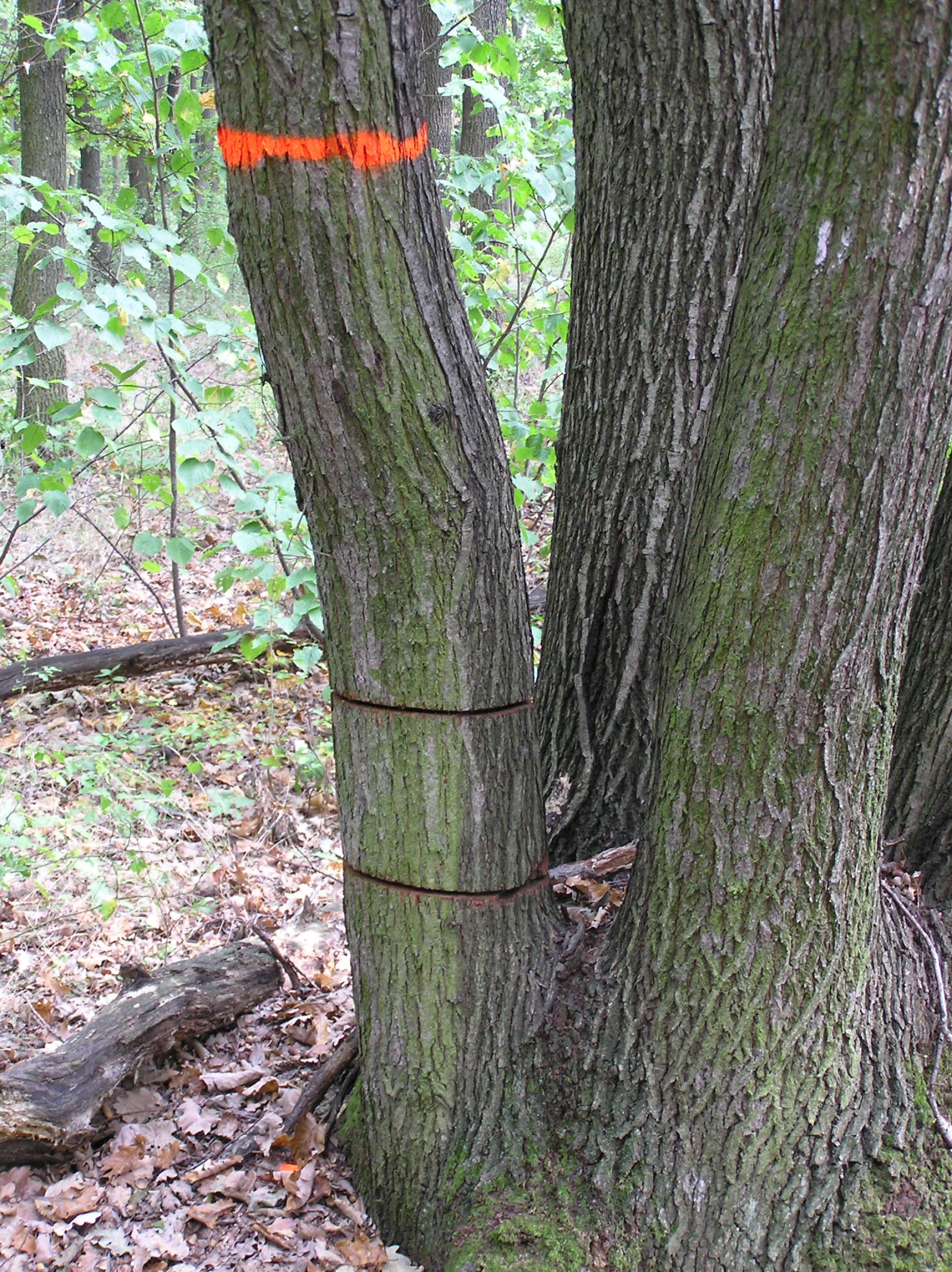
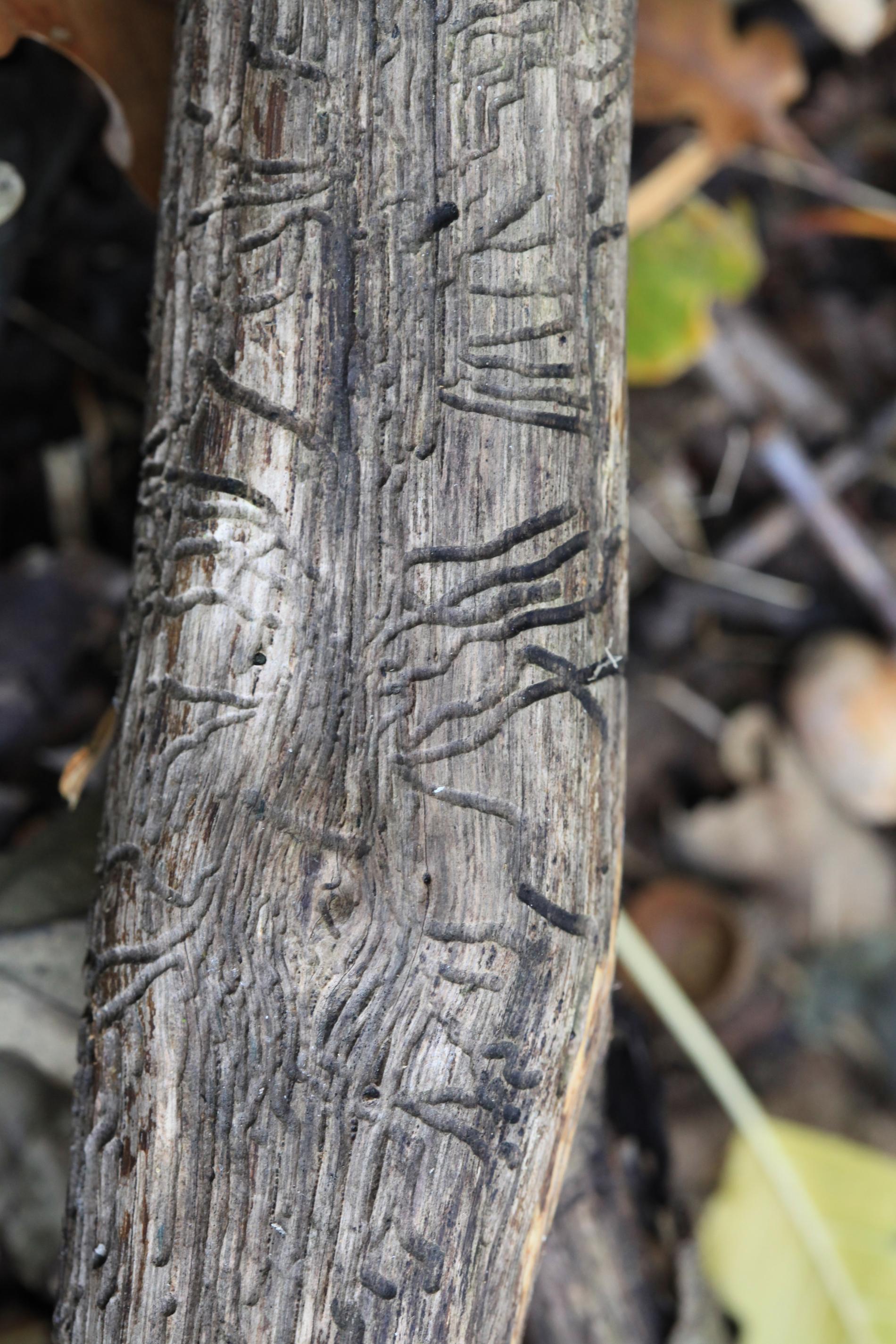
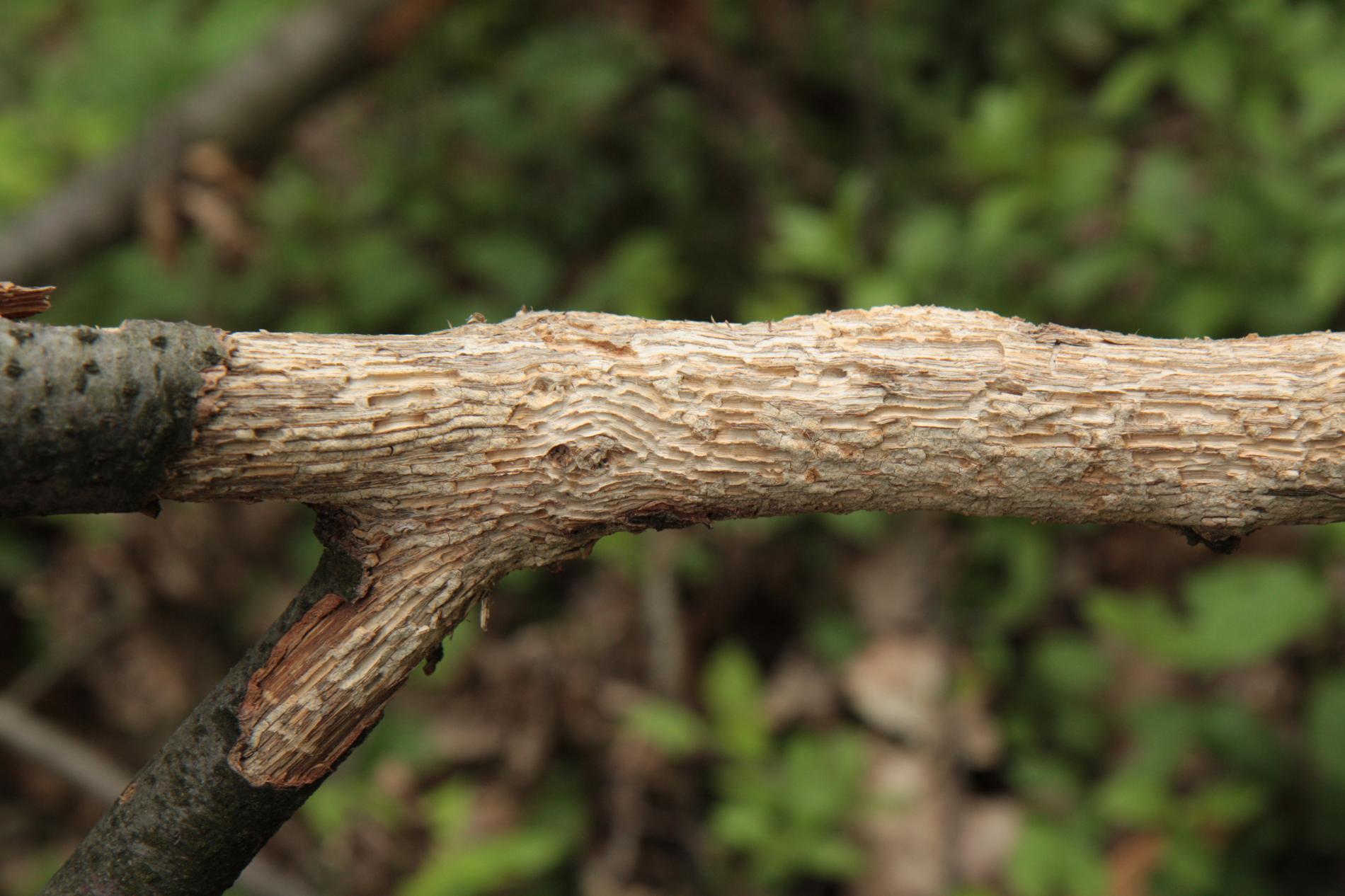
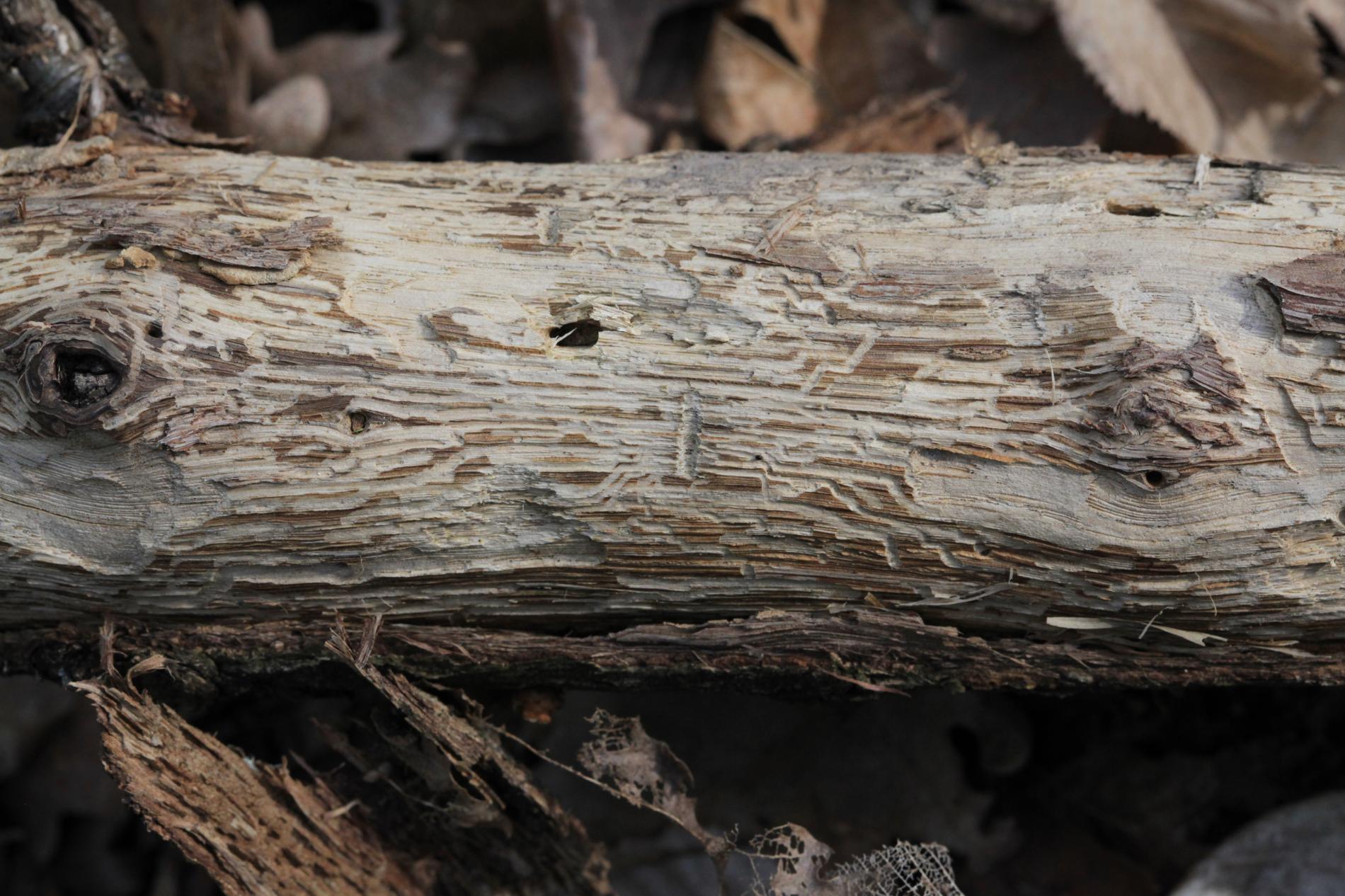
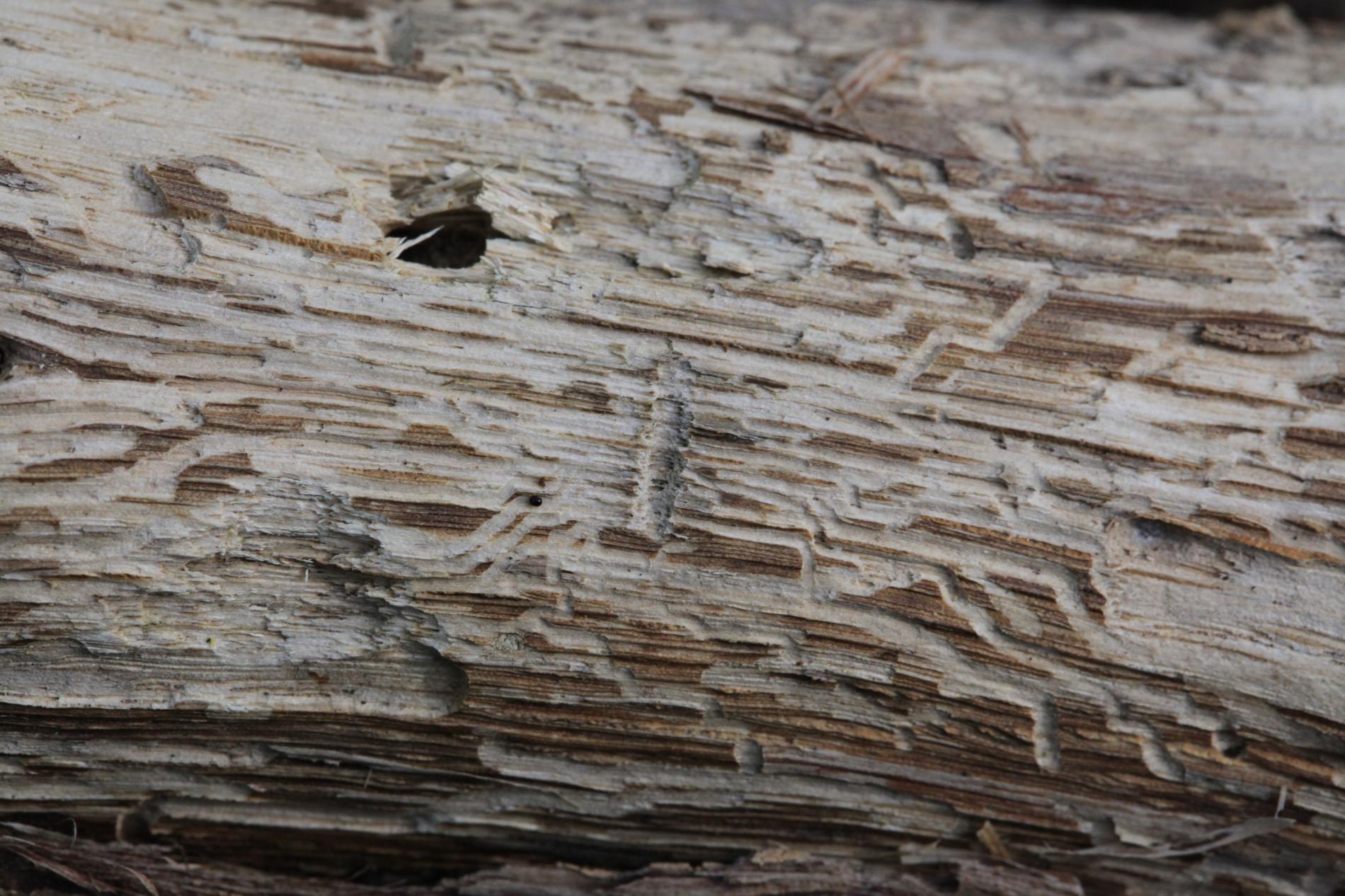
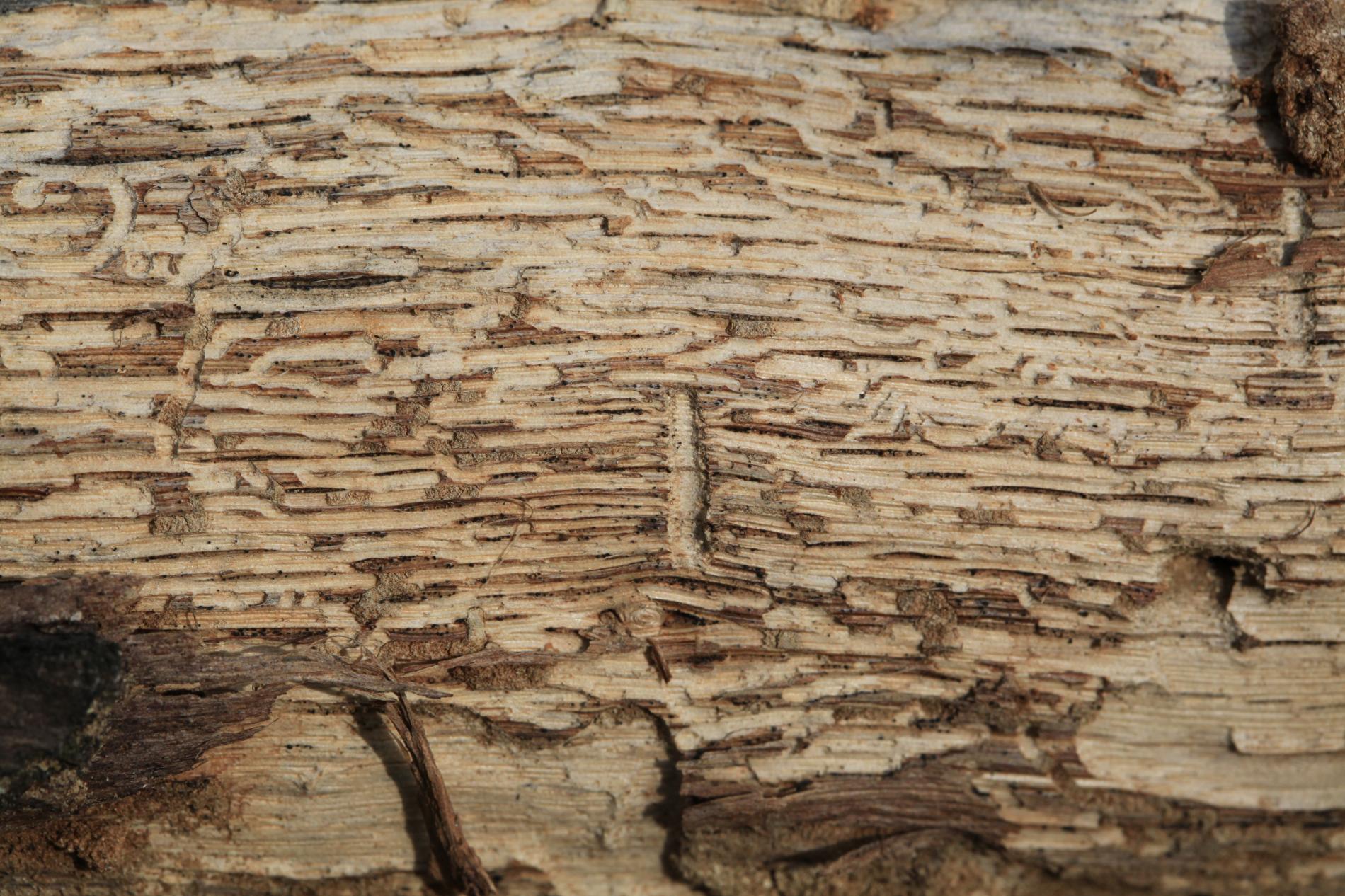
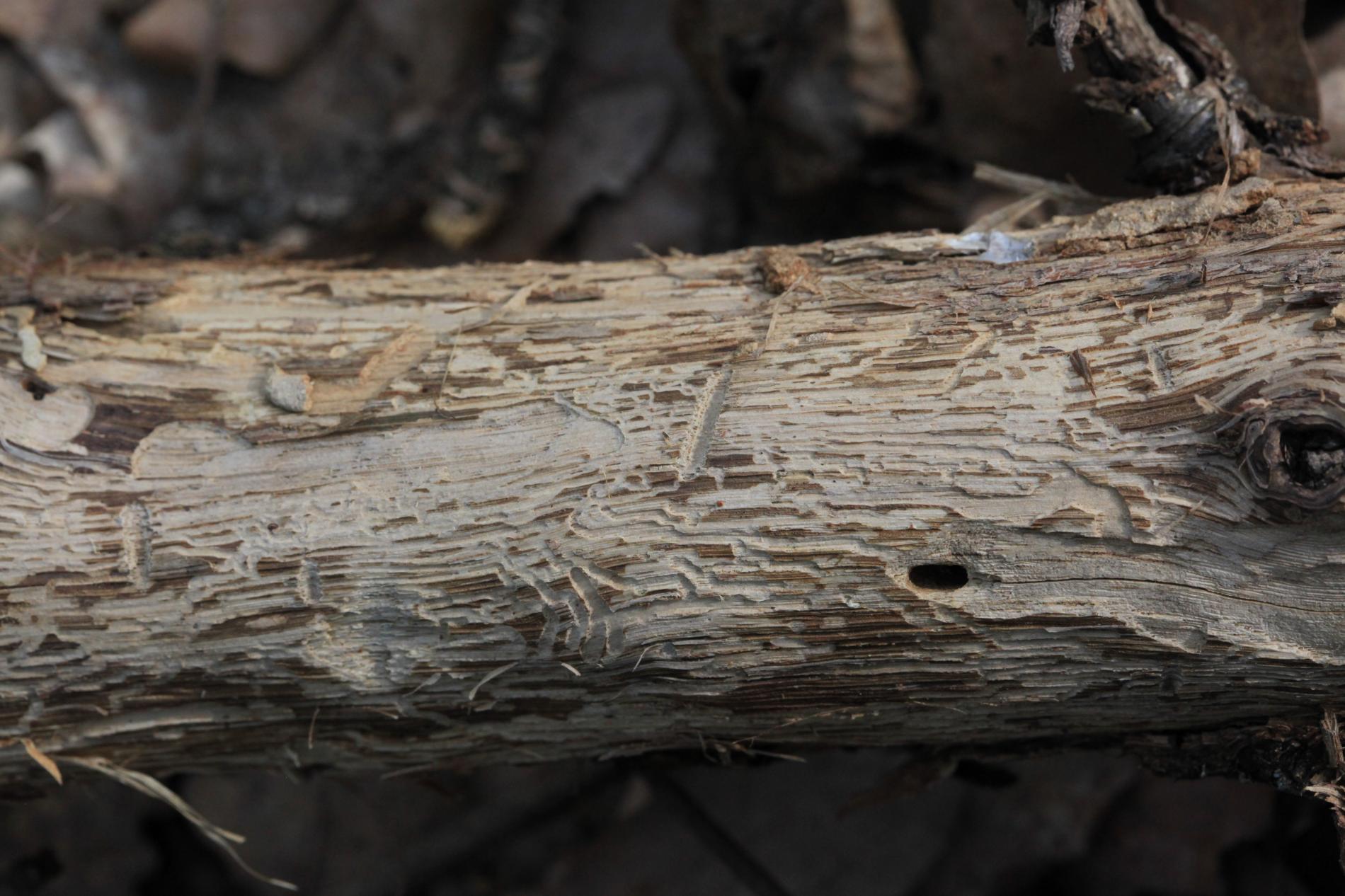
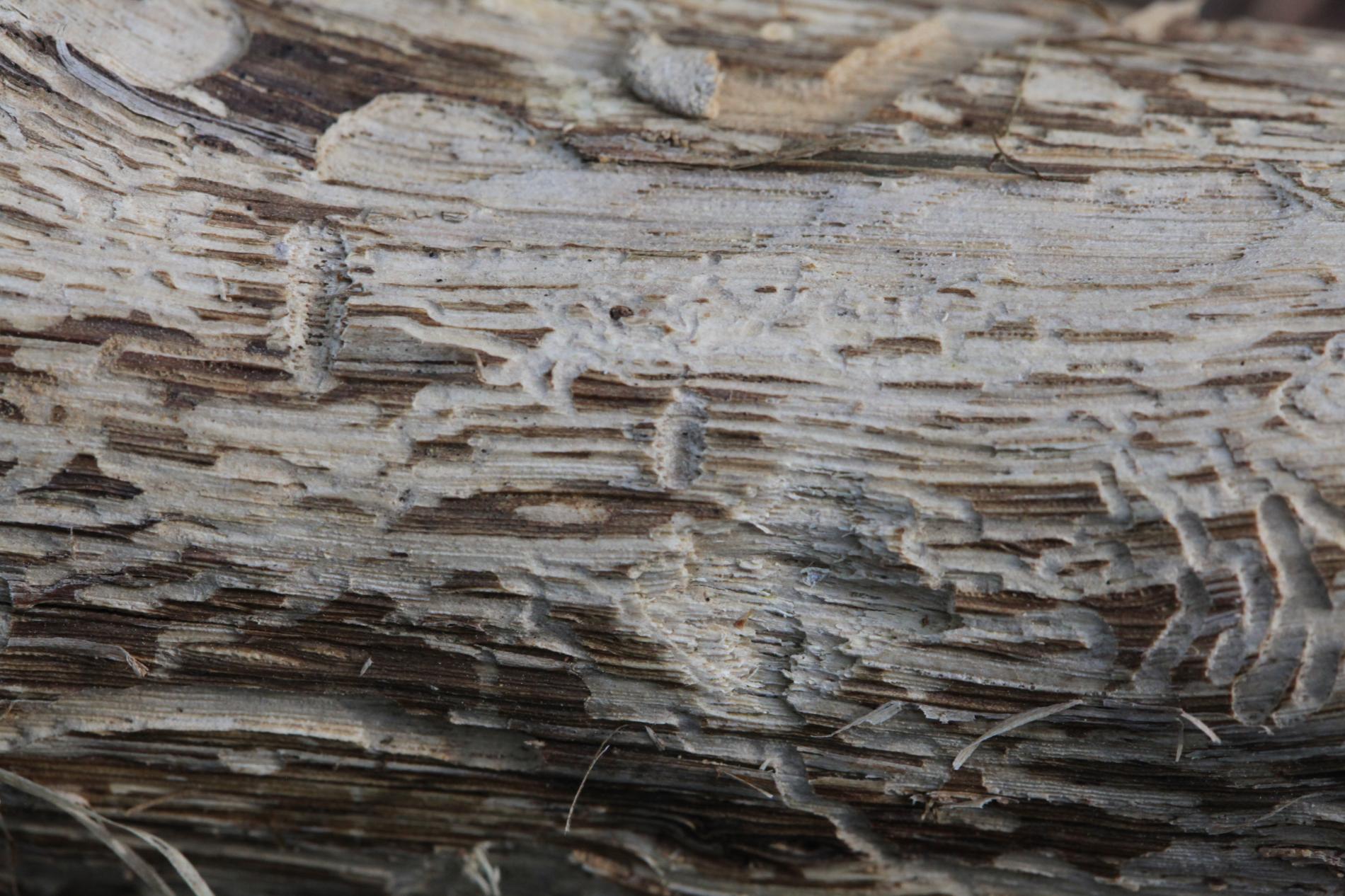
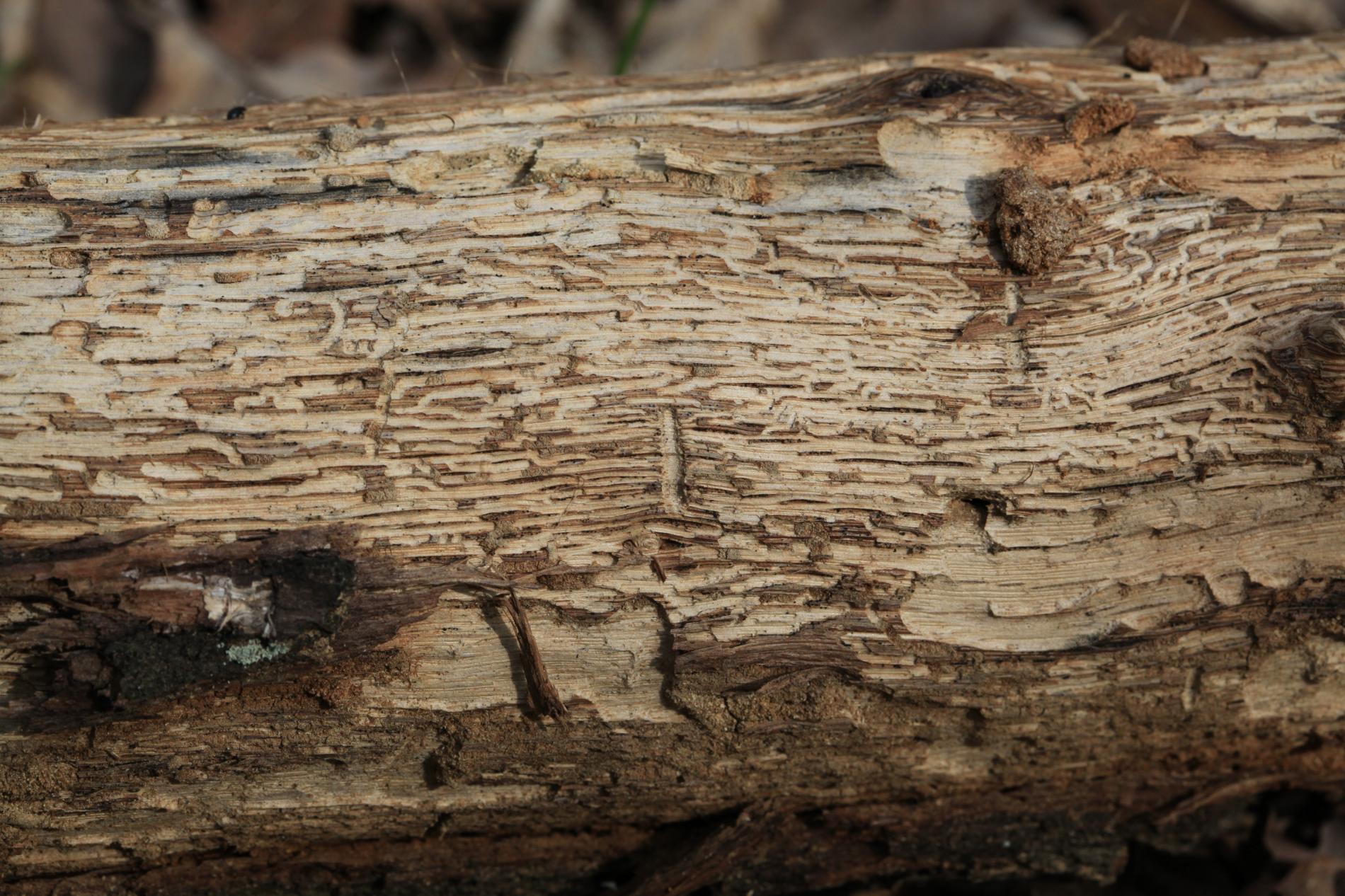
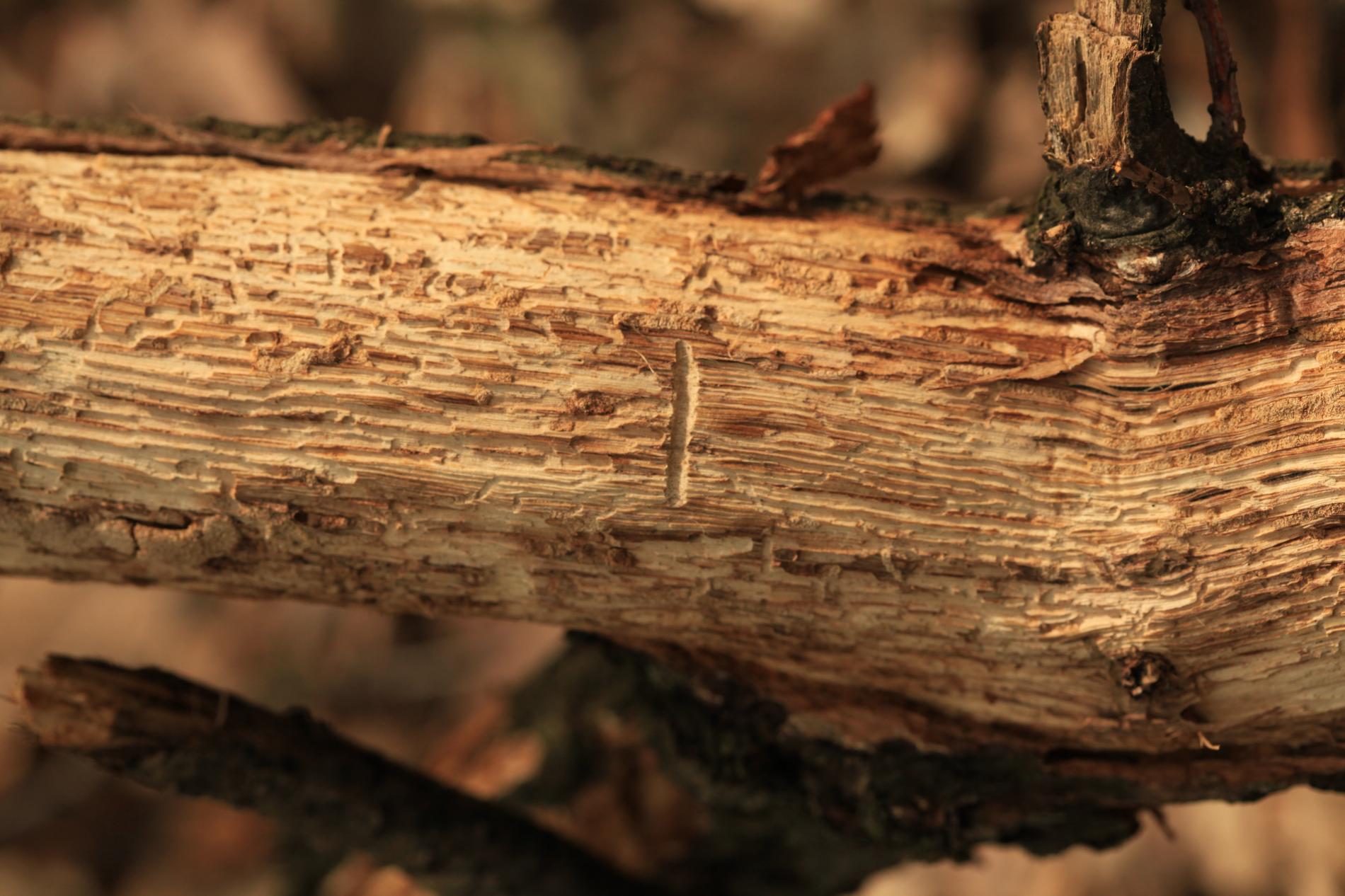
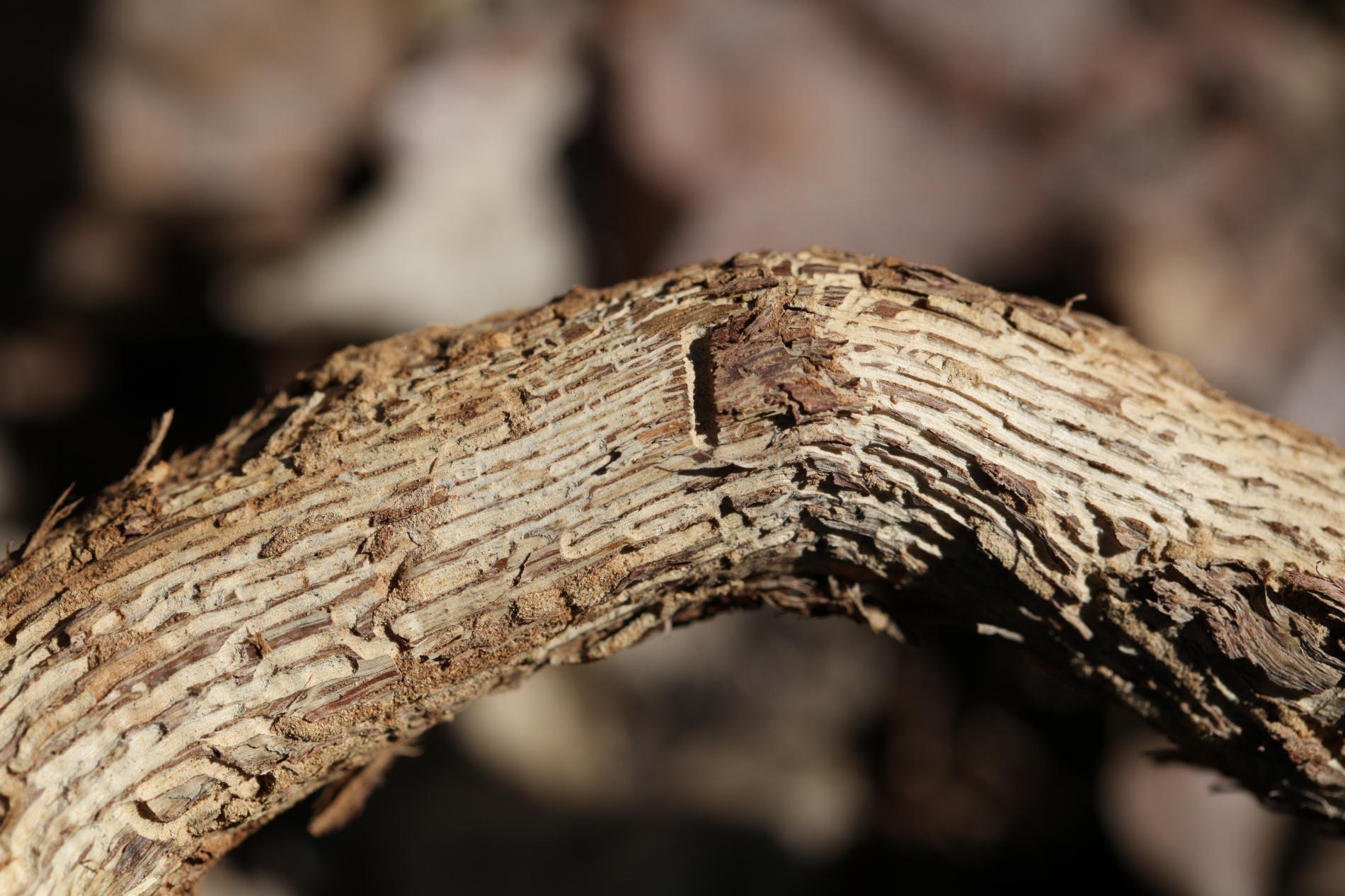
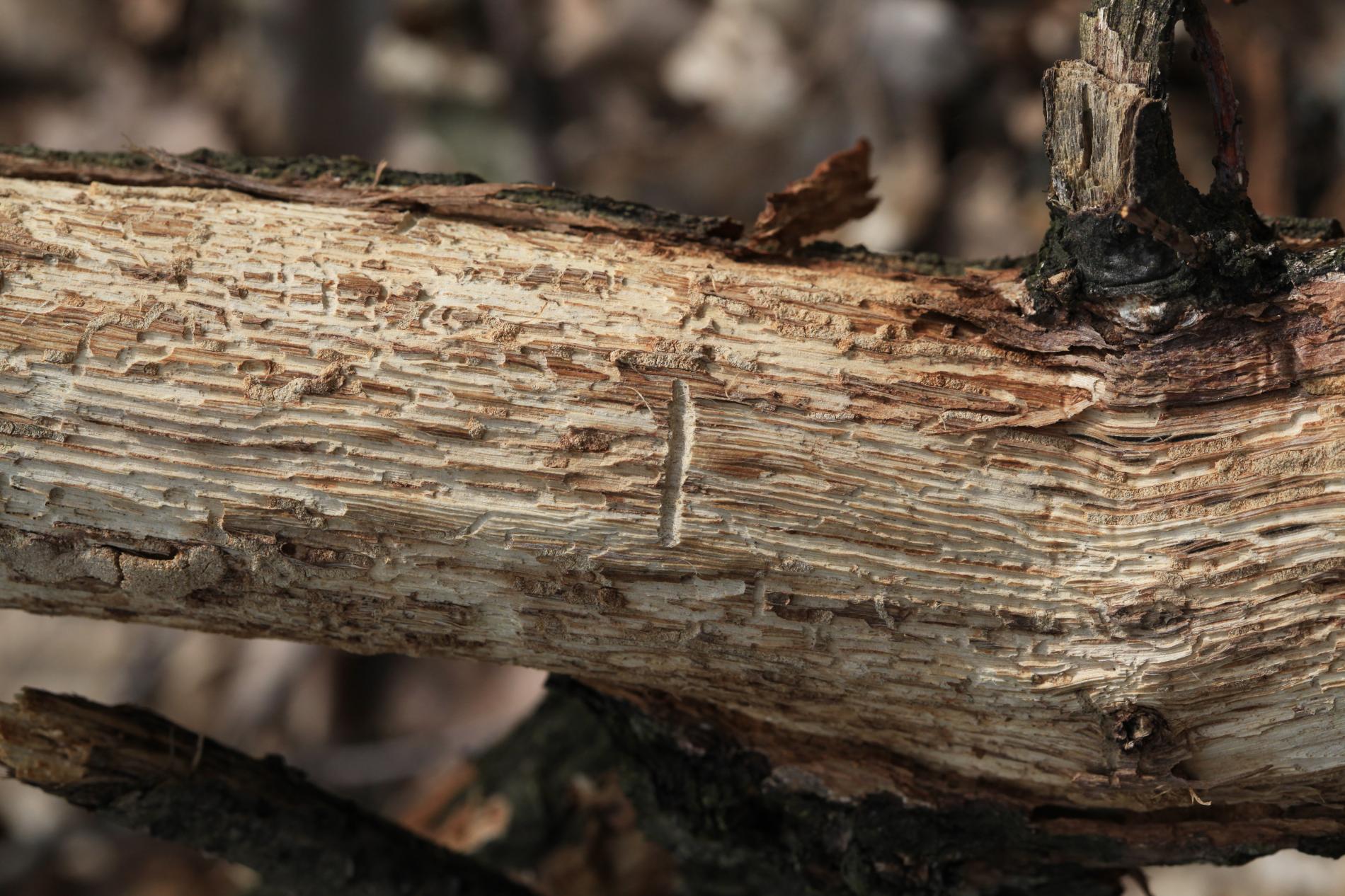
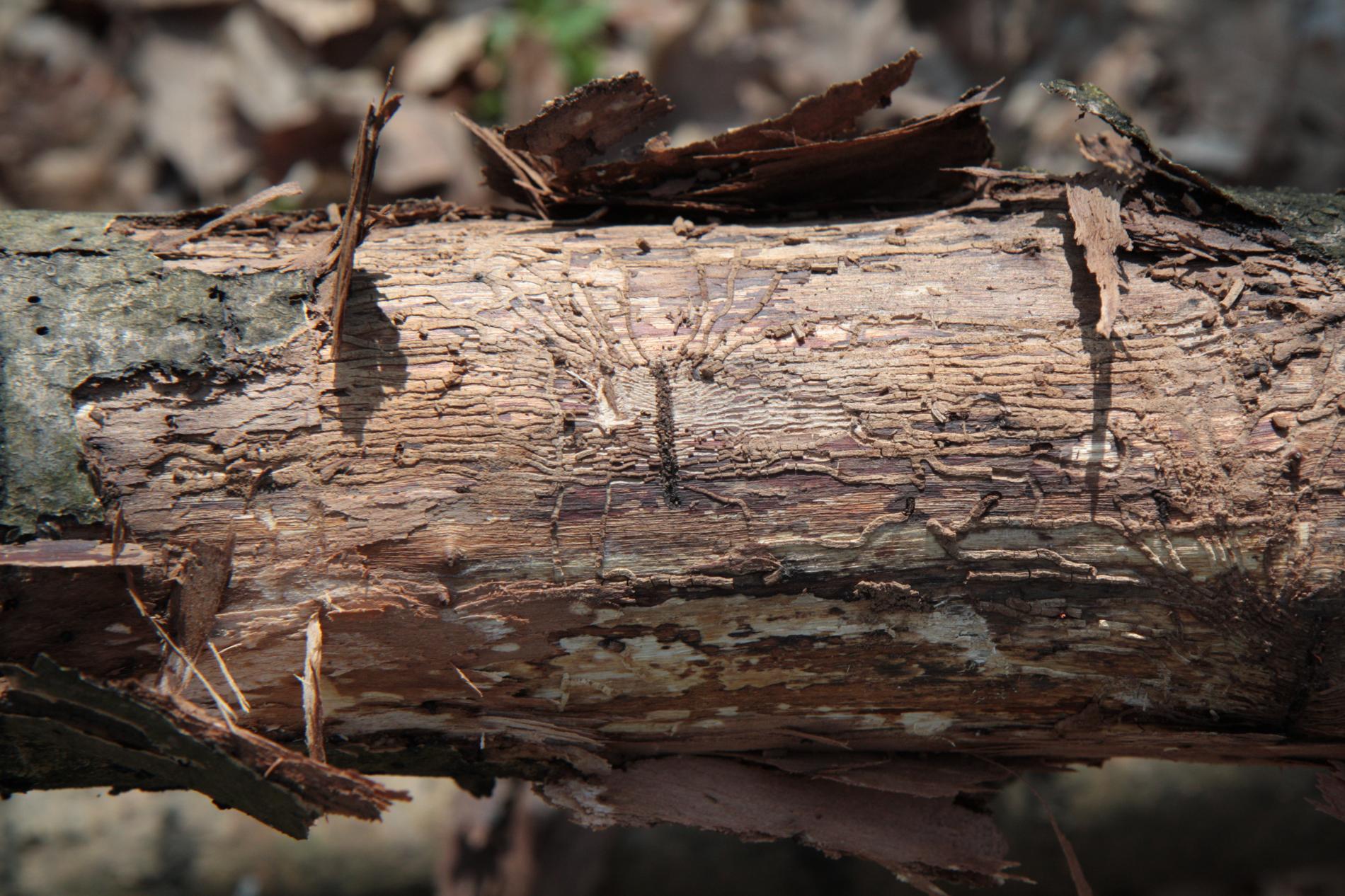
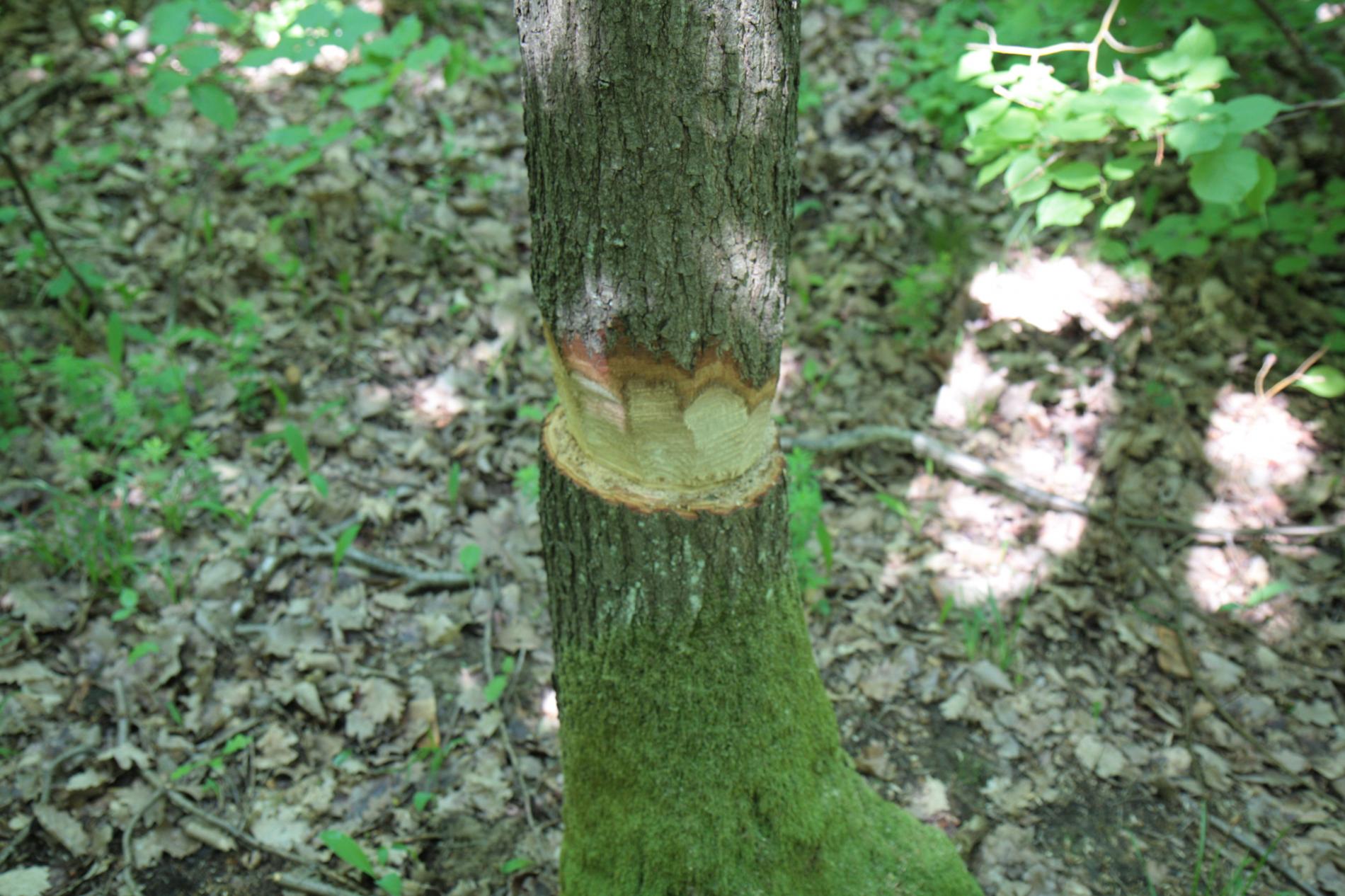
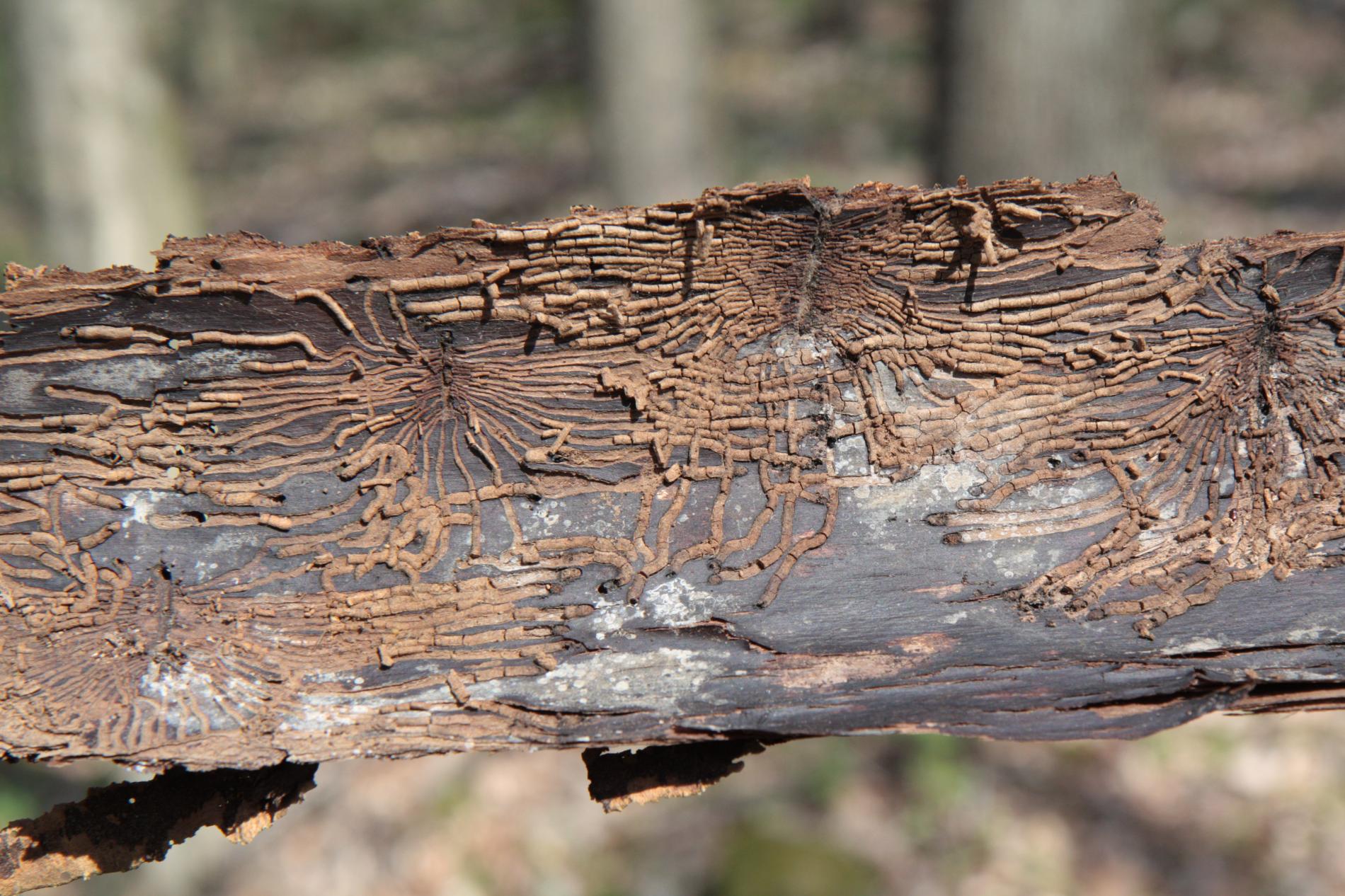
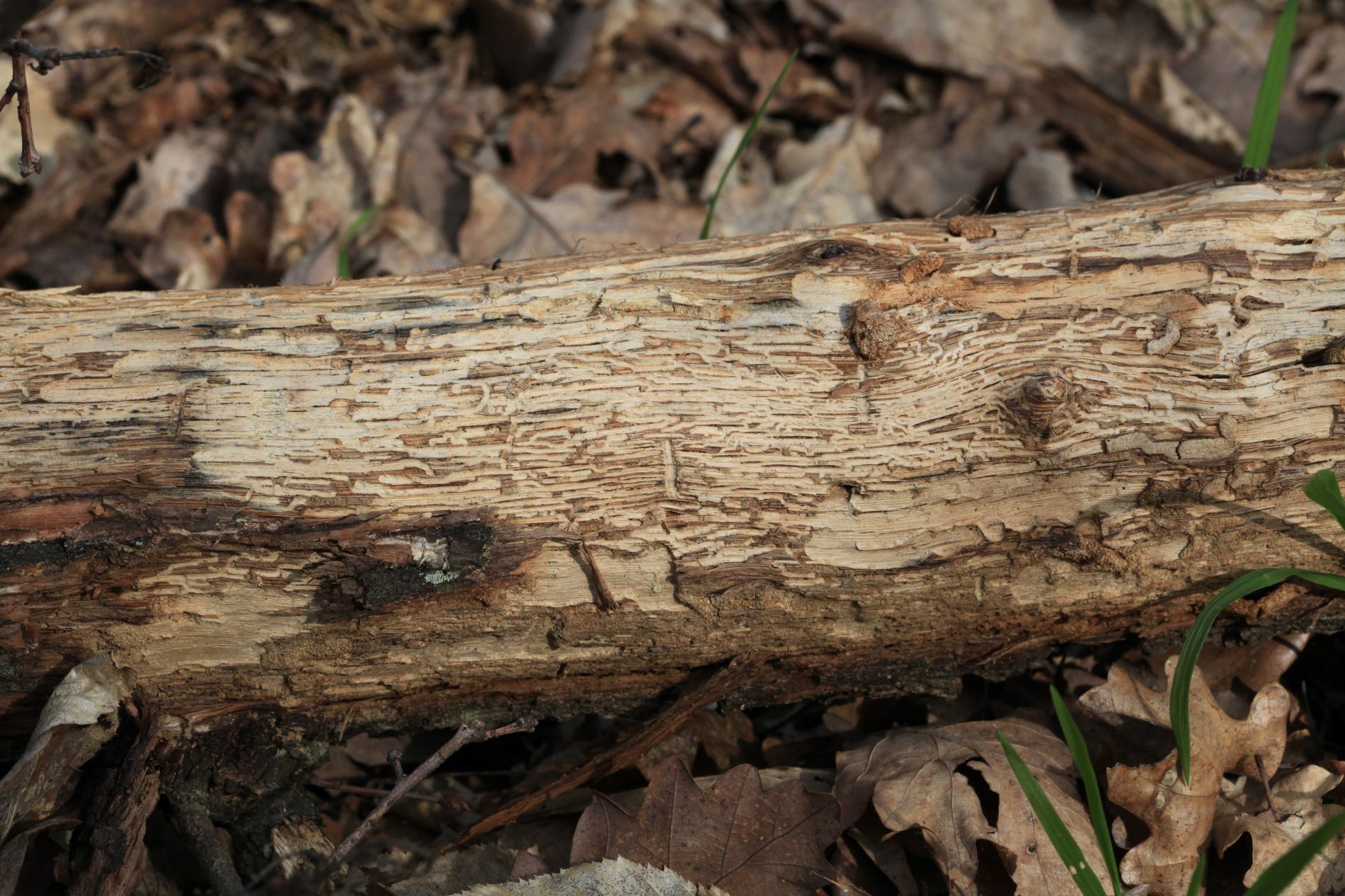
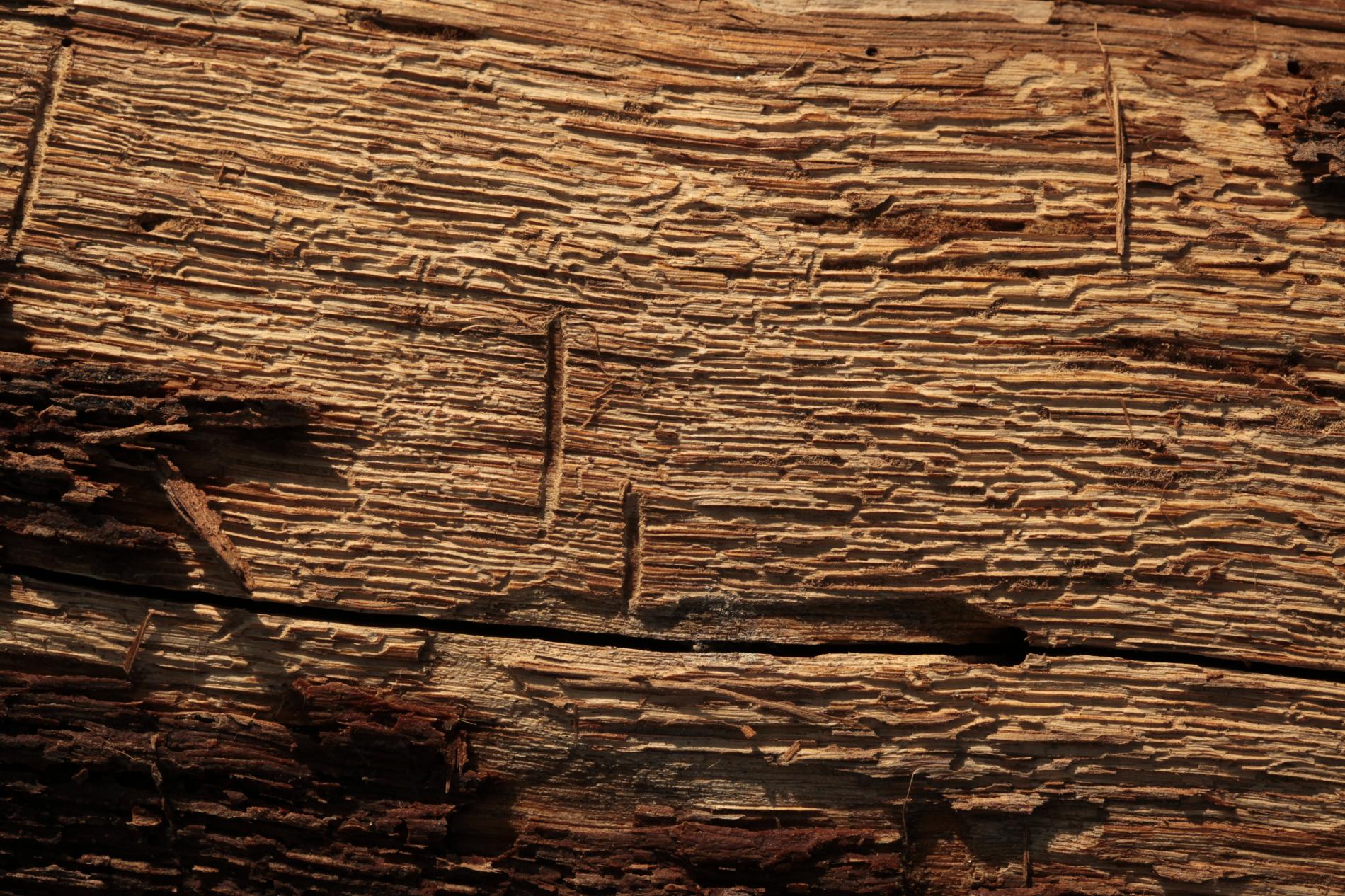
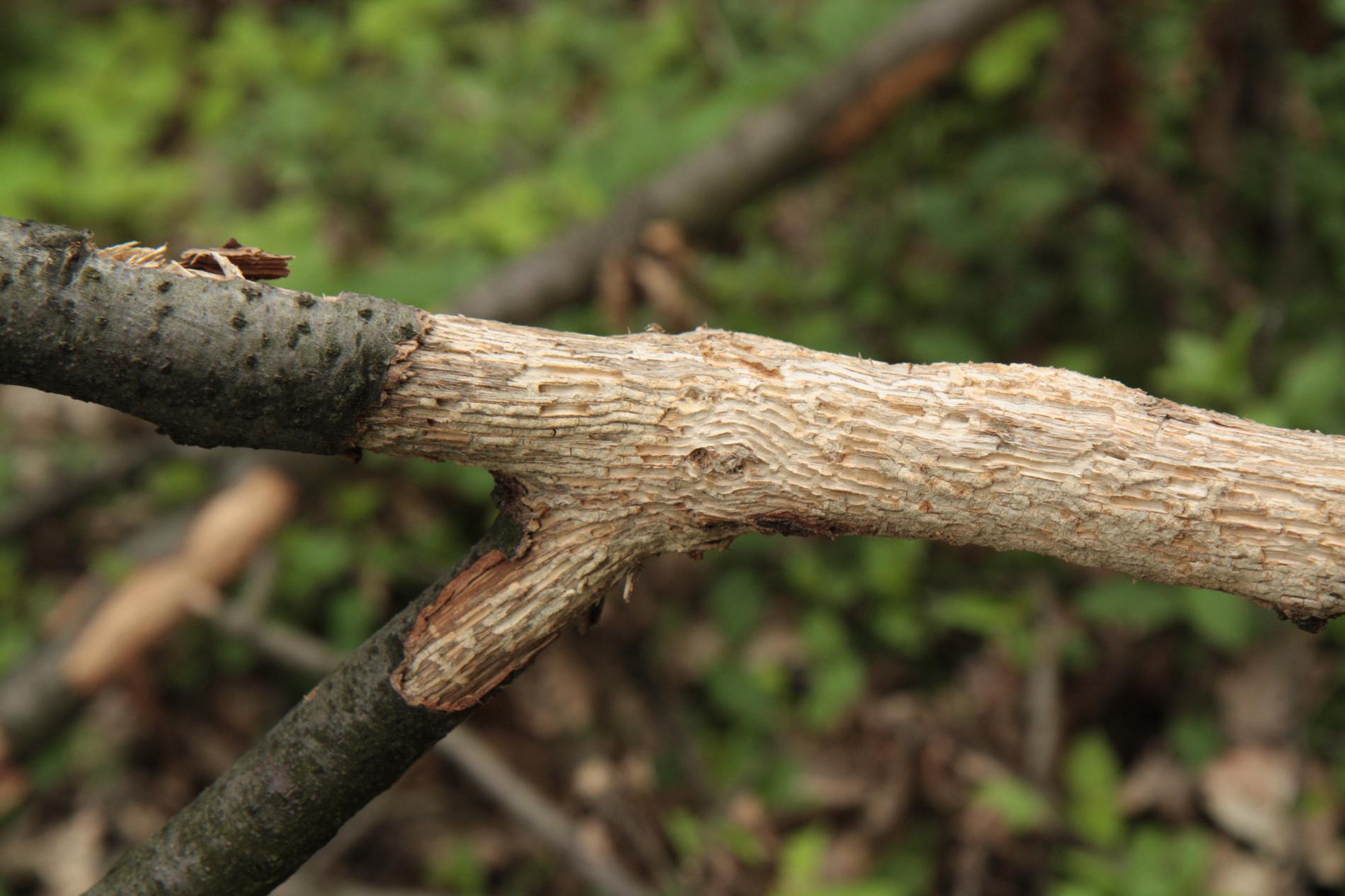
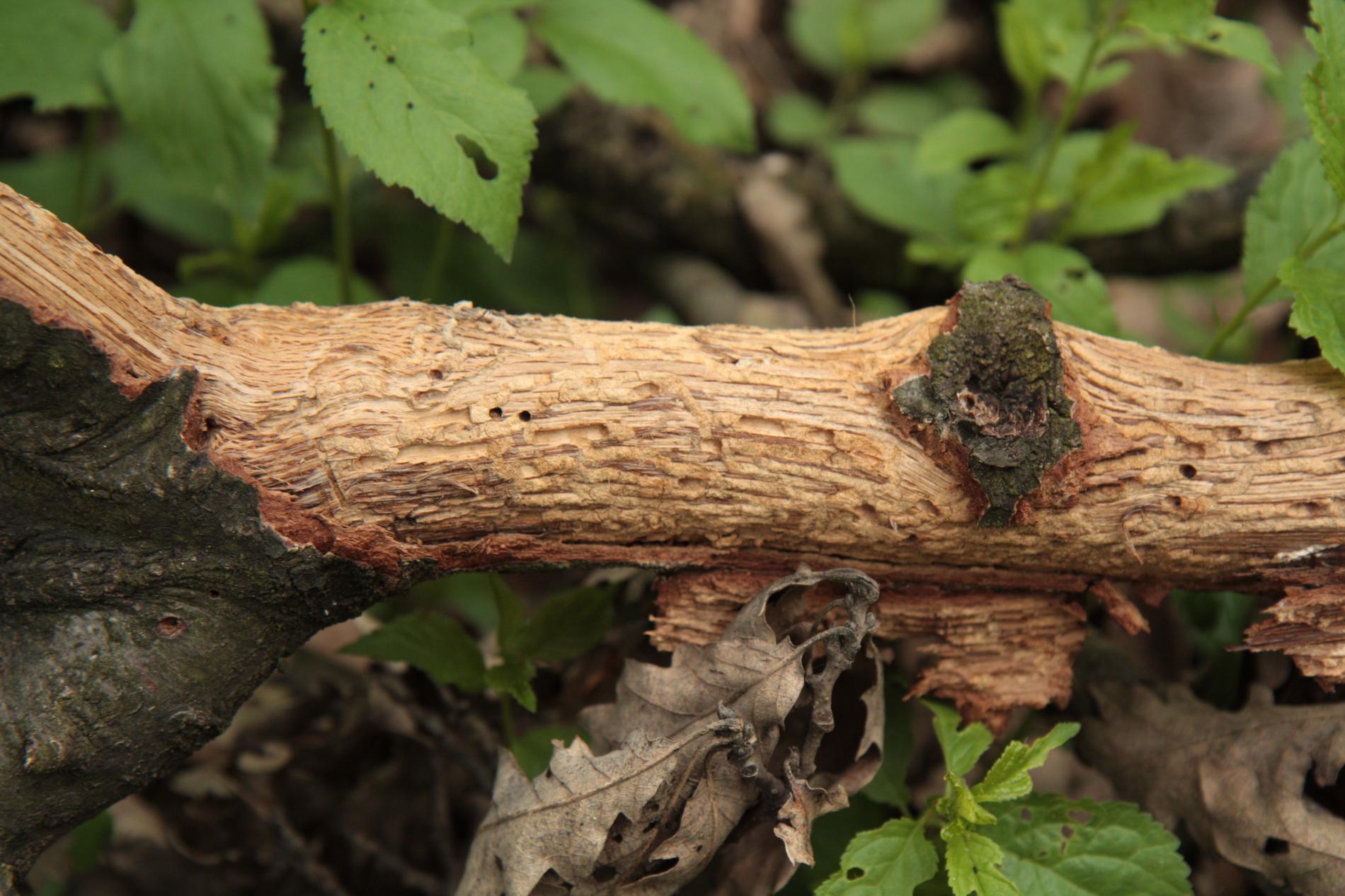
The beetle is up to 2.5–4 mm long. The female excavates a transverse egg gallery (1 – 2 cm long) under the bark of branches greater than 5 cm in diameter, but more frequently on tree trunks. Larval galleries extend parallel to the grain (perpendicular to the egg gallery) and can reach lengths of 10 to 15 cm. Swarming usually begins in late April or early May. The adults perform maturation feeding on oak twigs. As the vector of spores of vascular fungi of the genus Ophiostoma, ones from the most significant reasons of the oak forest dieback. Infested trees exhibit general symptoms of decline that include reduced growth, crown thinning (i.e. reduced foliage cover) and mortality. As a control method in the forest standing trap trees are deployed with a goal of reducing the pest population.
Gallery under the bark. Short horizontal maternal gallery, which is only 1-2 cm long.
Tree Species: Beech, Oak
Part of a plant- attacked: Tree trunk, Branch
Pest significance: Very harmful
Pest Category: Insects
Invasive Species: No
Present in EU: Yes
Pest group: Insect
Affected part of wood: Bark, Underbark area
Depth of damages: Under bark only
The extent of damage: Whole trunk
Prevalence in Europe: Very common
Damaged products: Firewood, Fresh timber logs (water still in the sapwood), Stored timber logs (dried wood)
Roundwood size: Branches and twigs, Diameter 50+, Diameter from 10 up to 50 cm, Diameter up to 10 cm
Wood discoloration: No
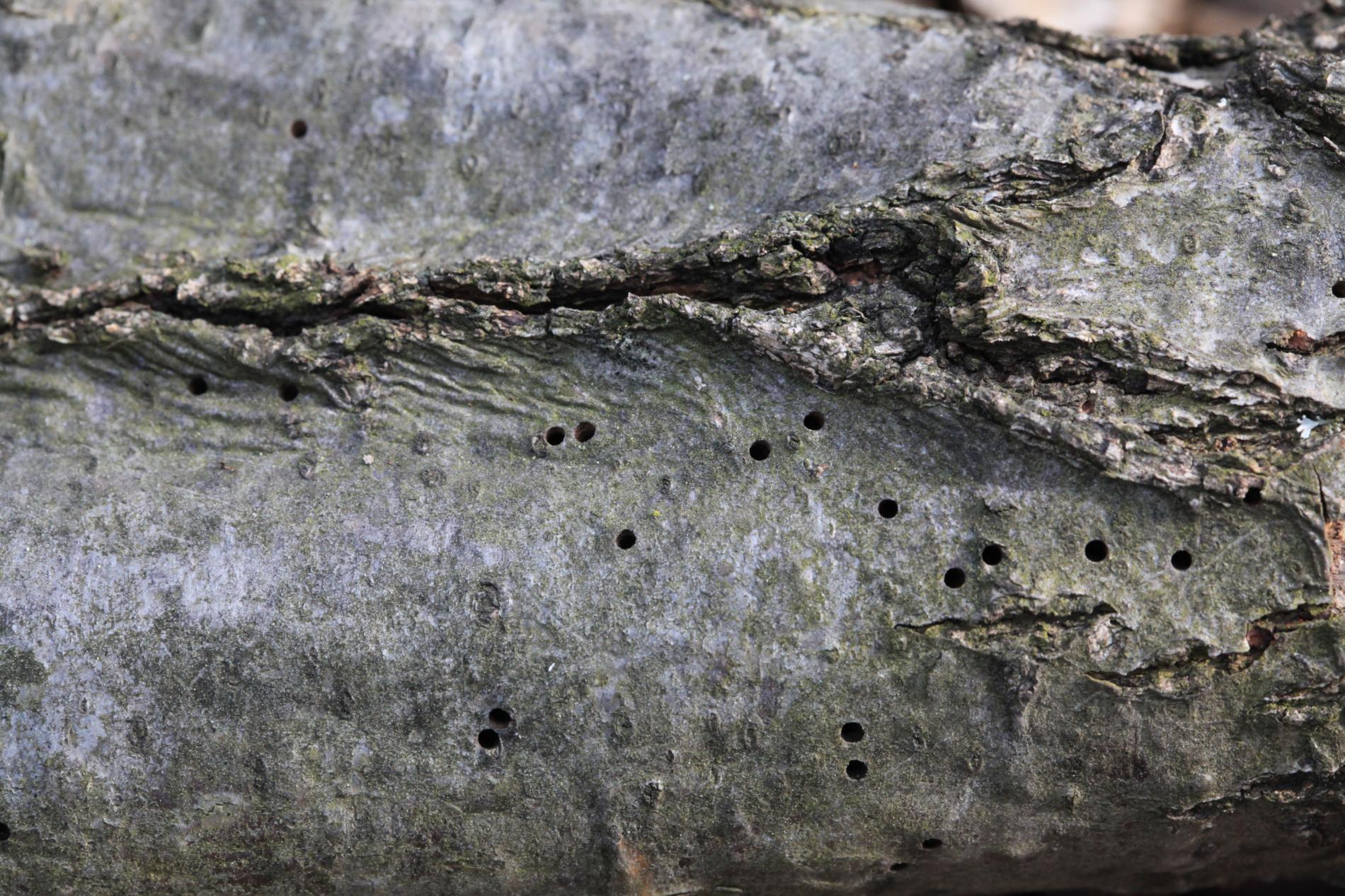
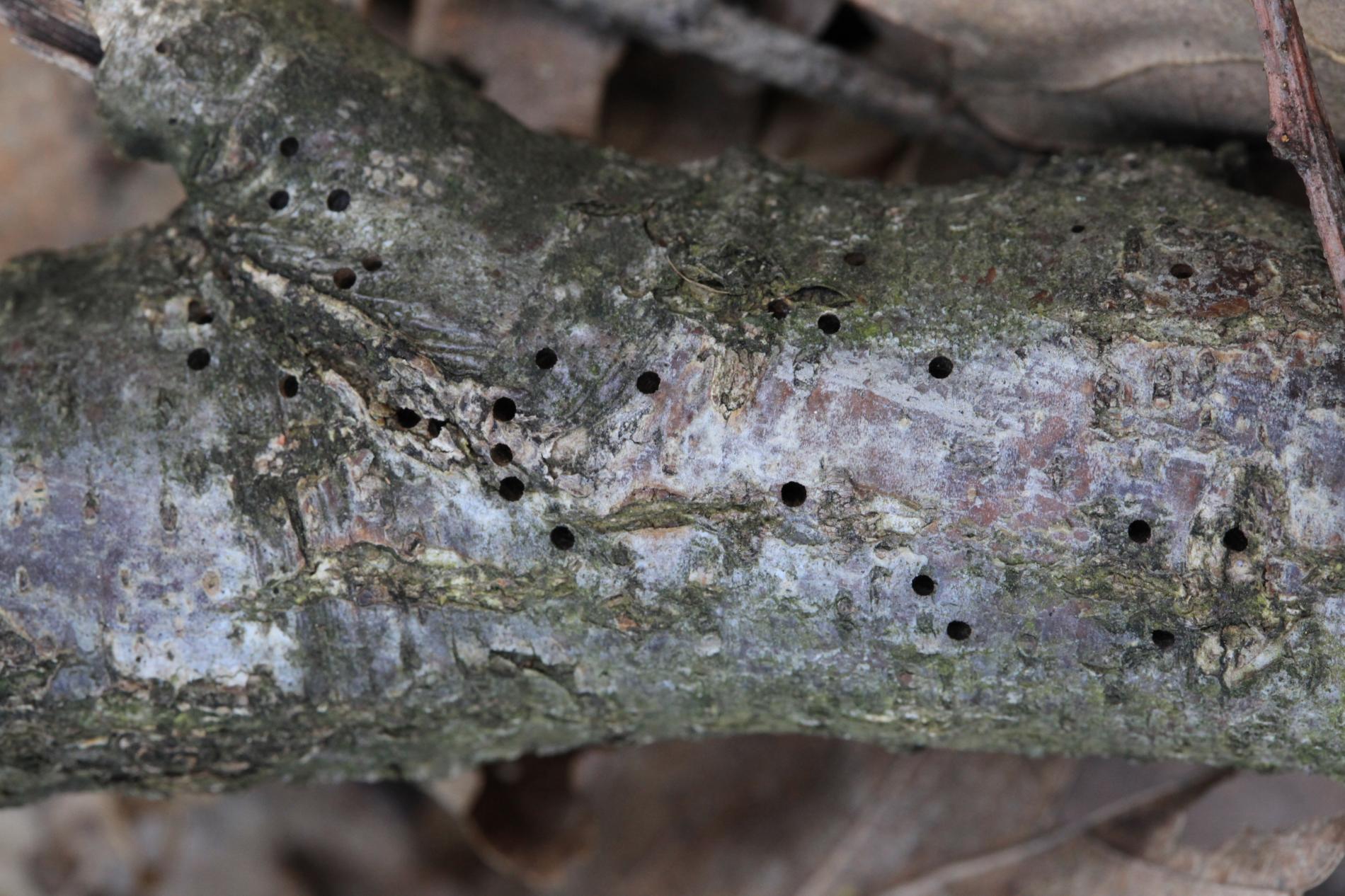
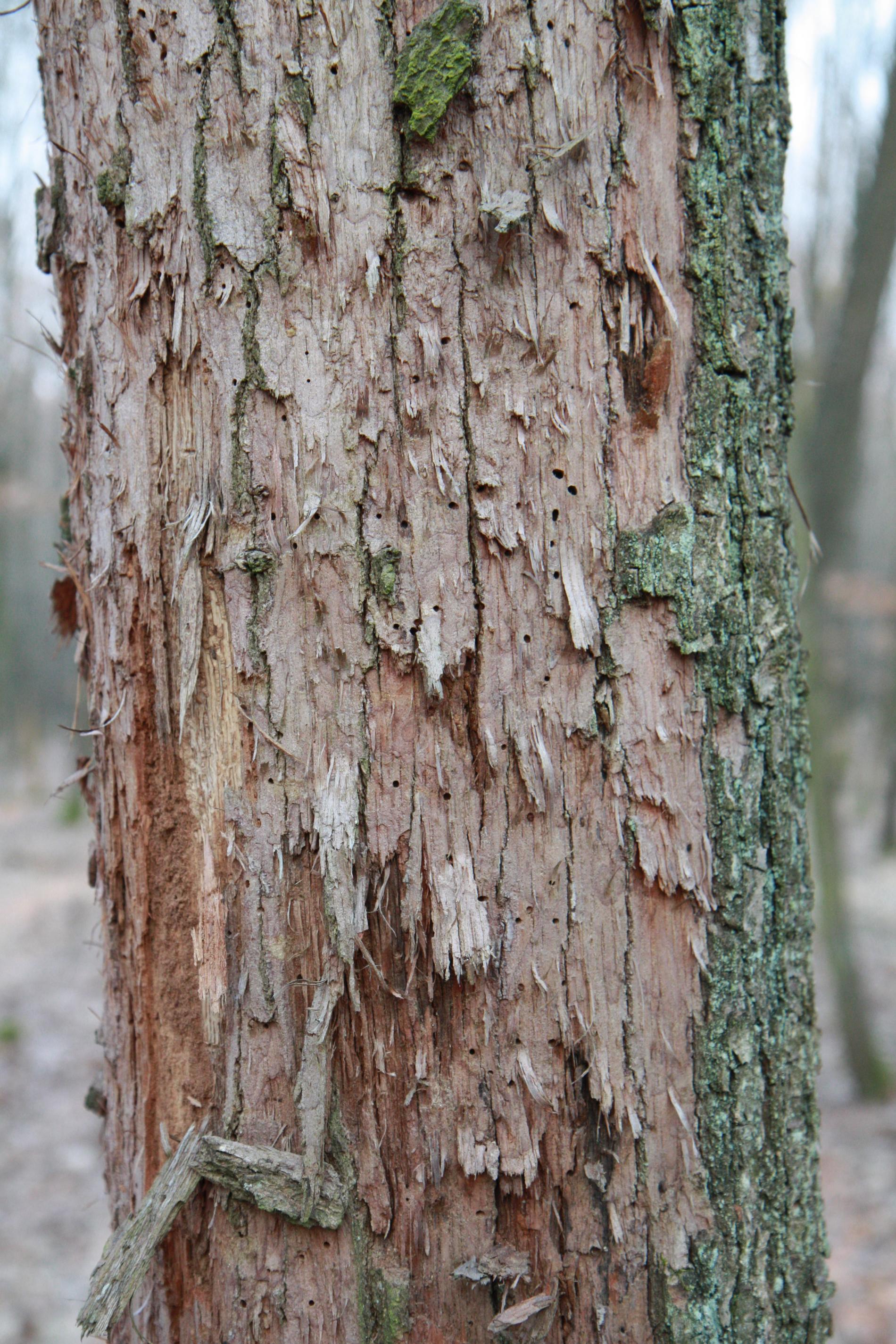
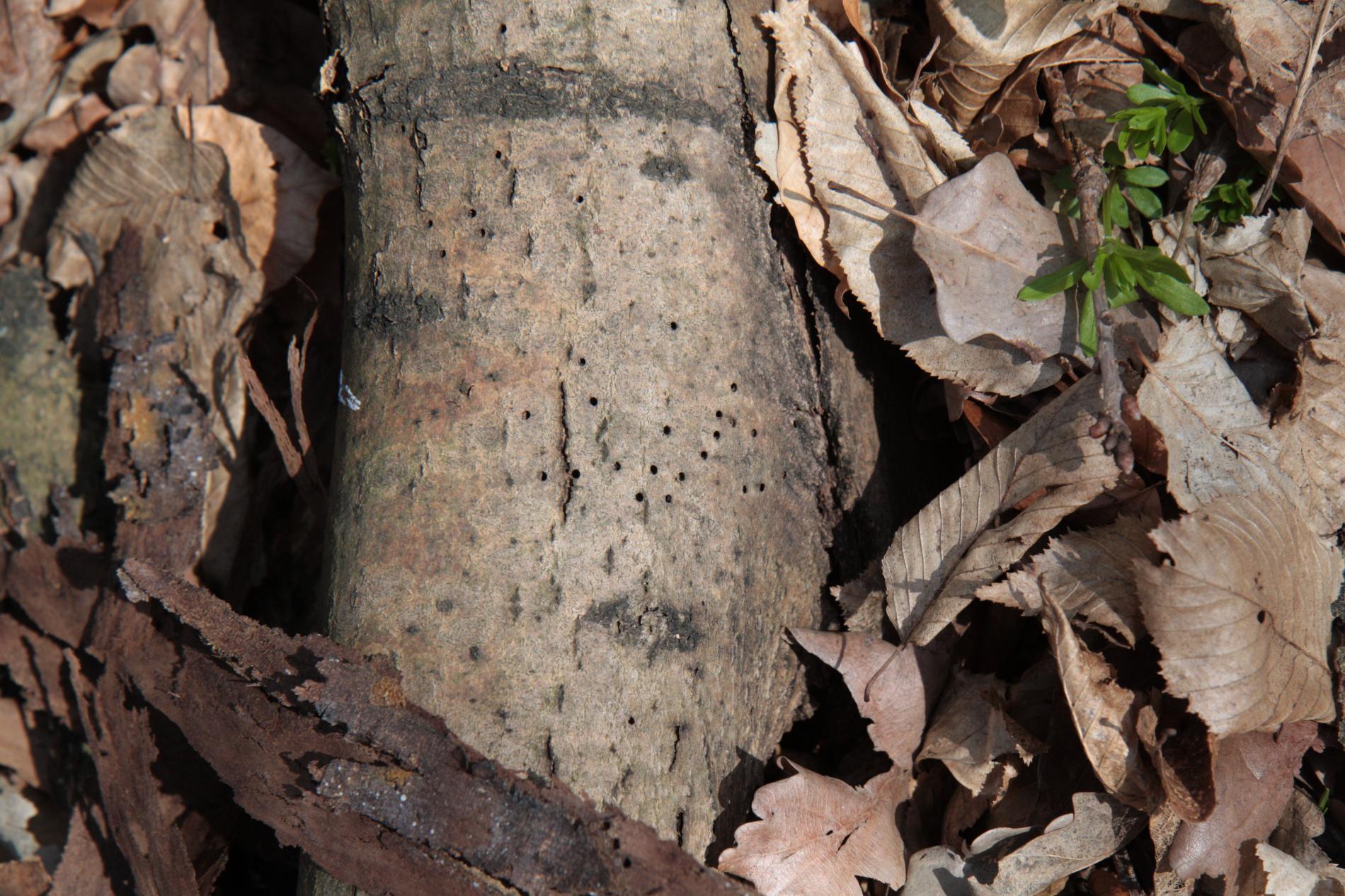
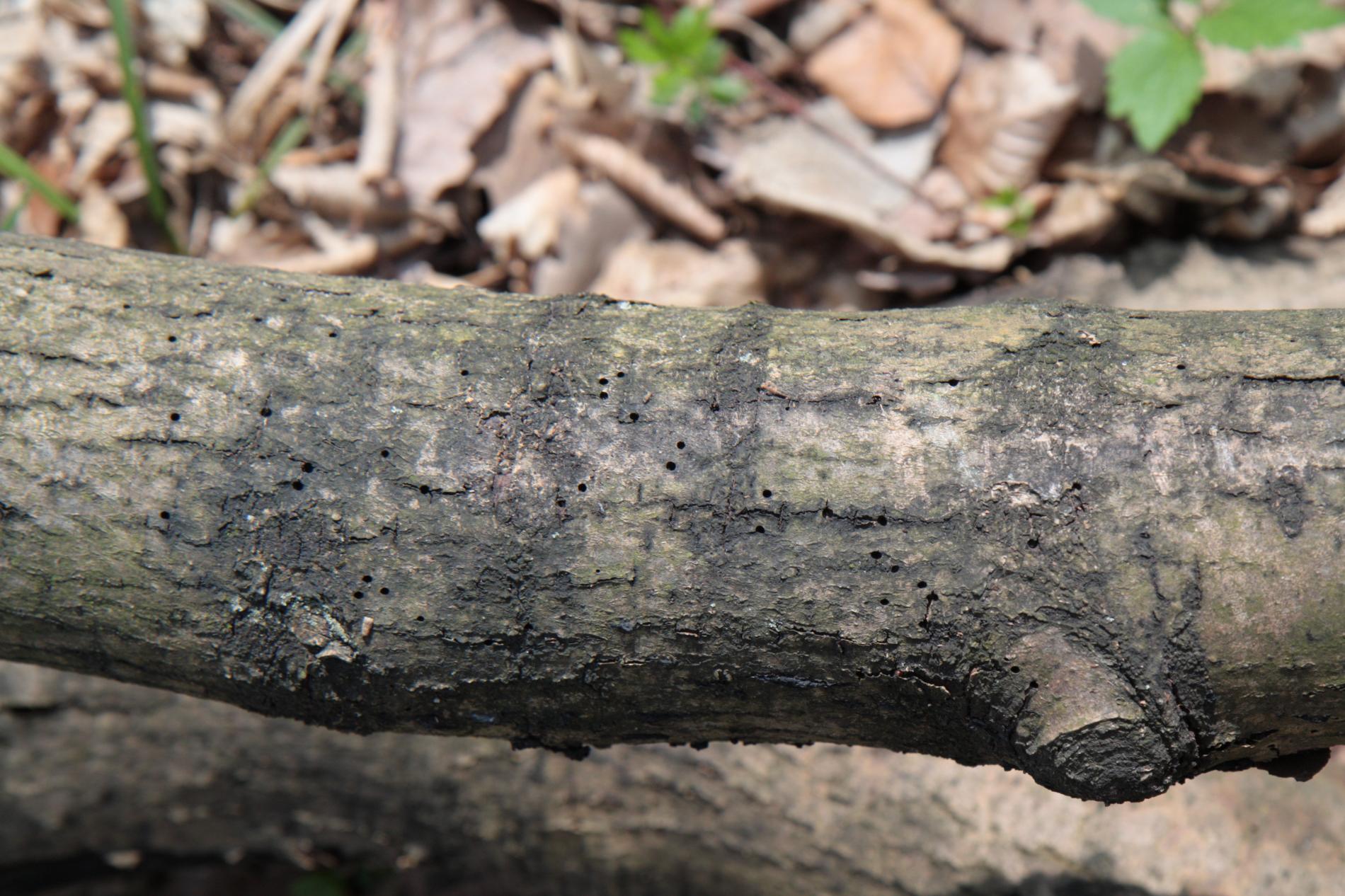
Exit holes: Round
Pest subcategory: Bark and underbark insect


Similar pests

Scolytus ratzeburgi

Agrilus biguttatus
