


Saperda populnea
Small poplar borer
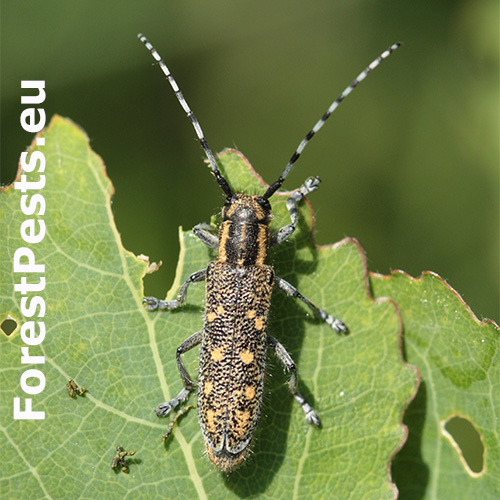
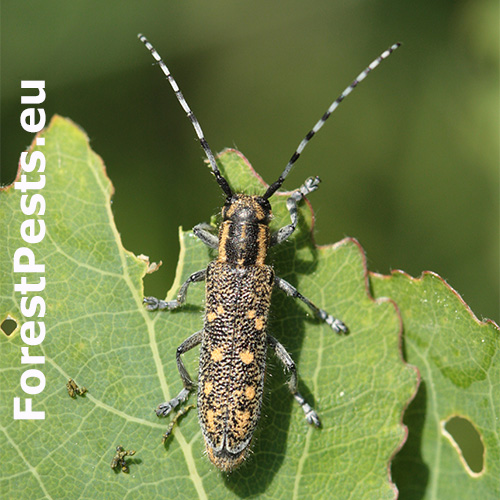
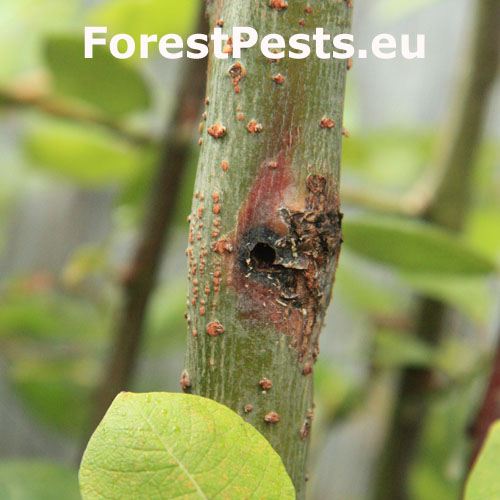
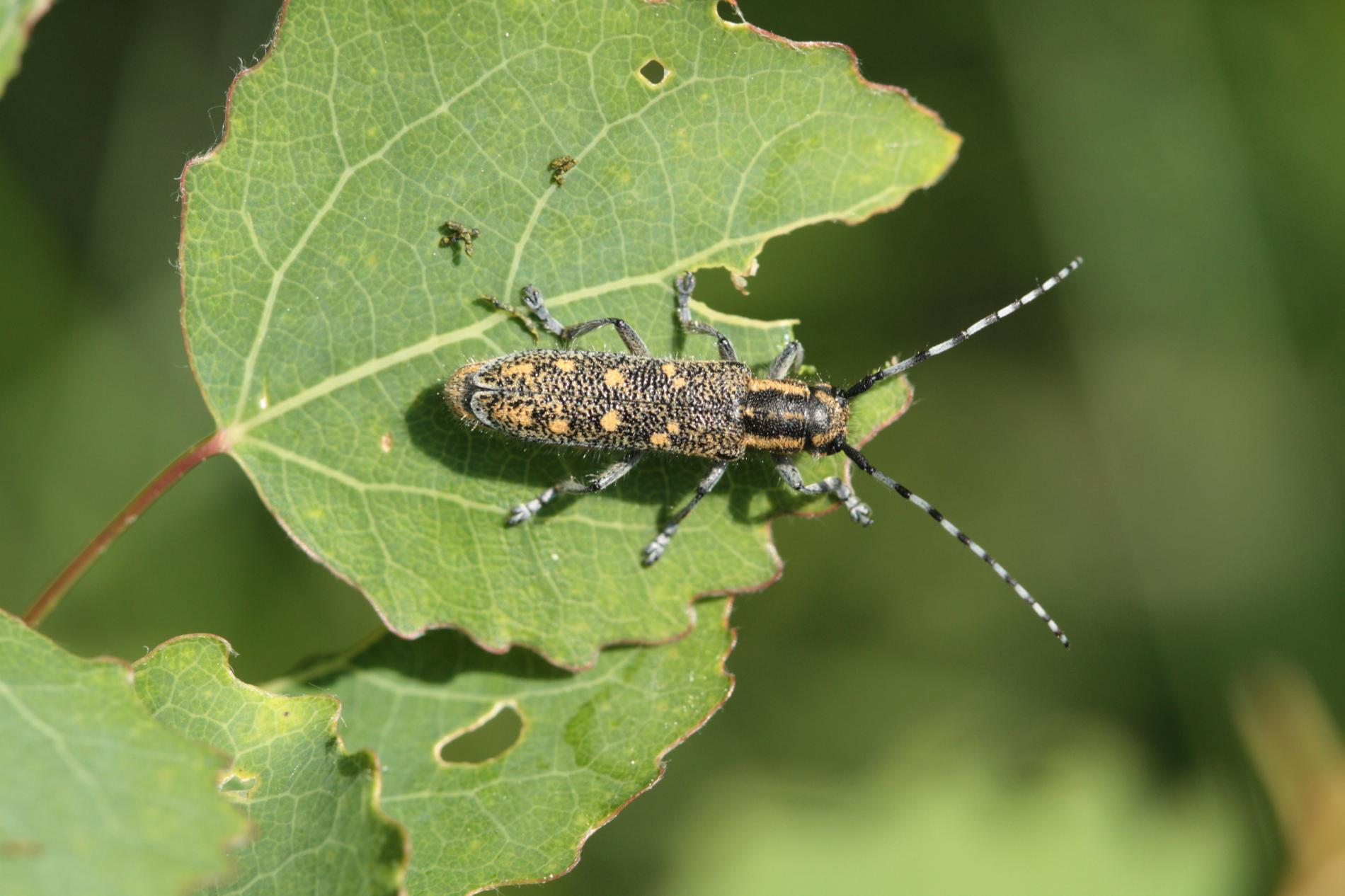
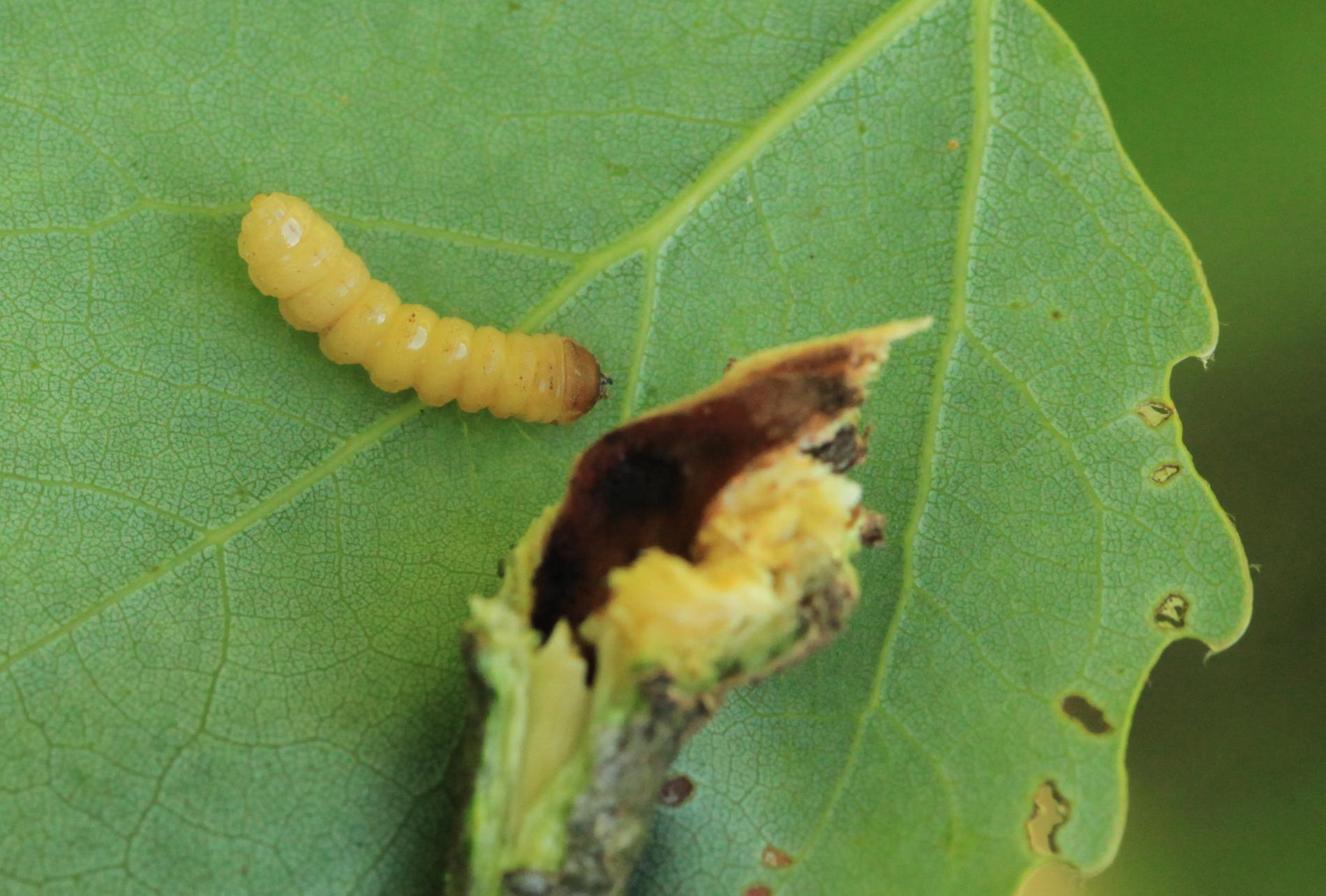
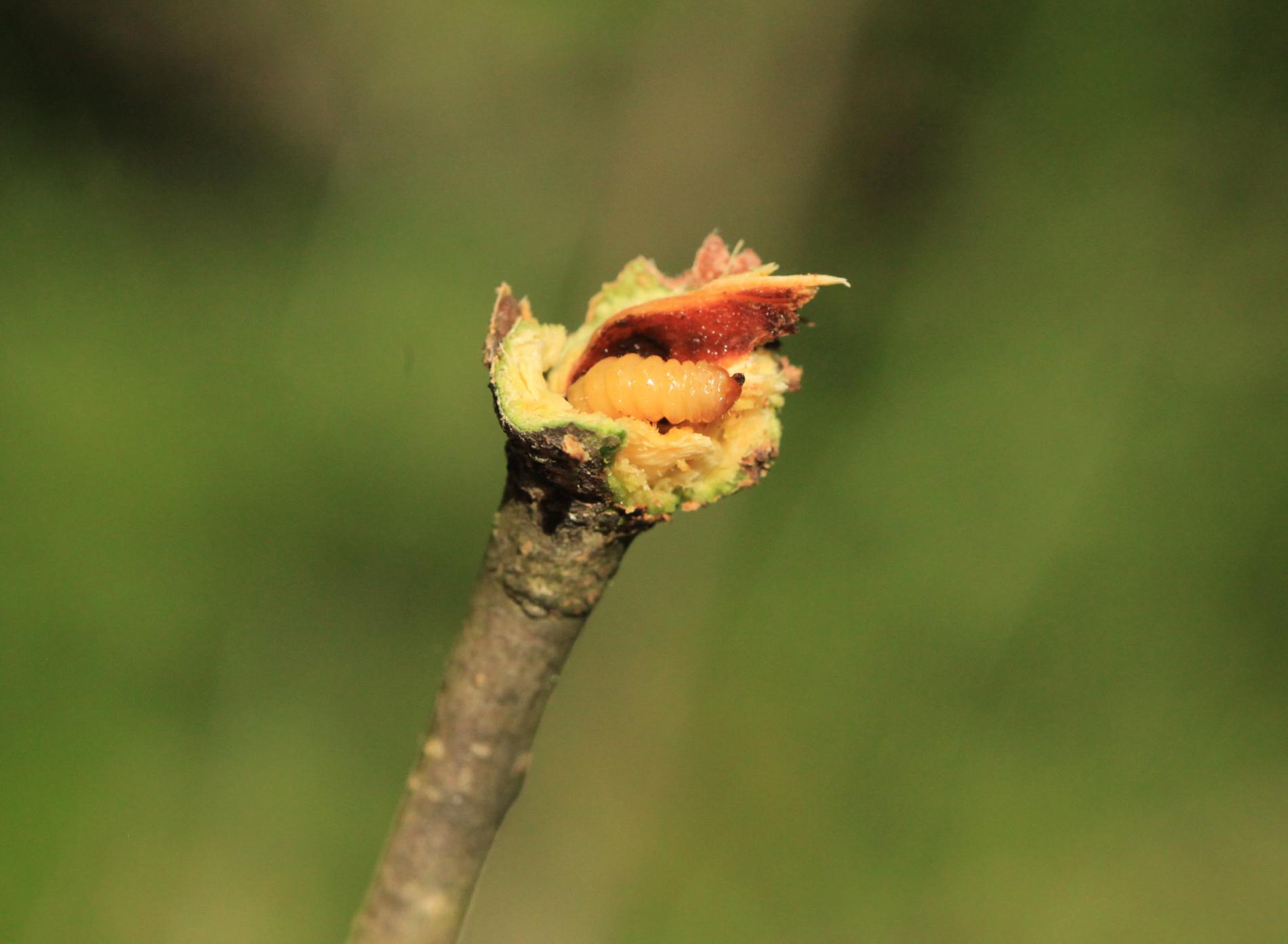
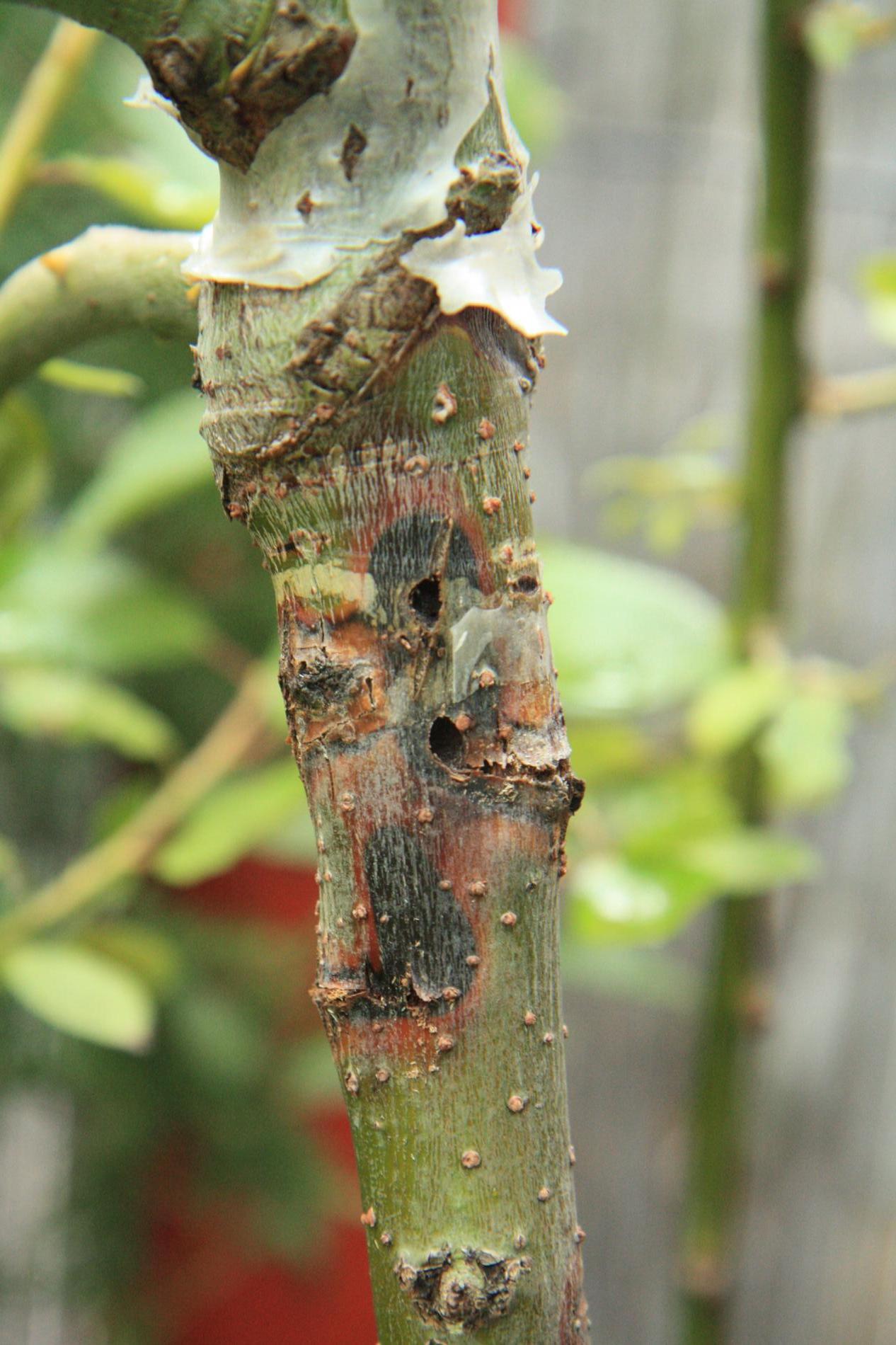
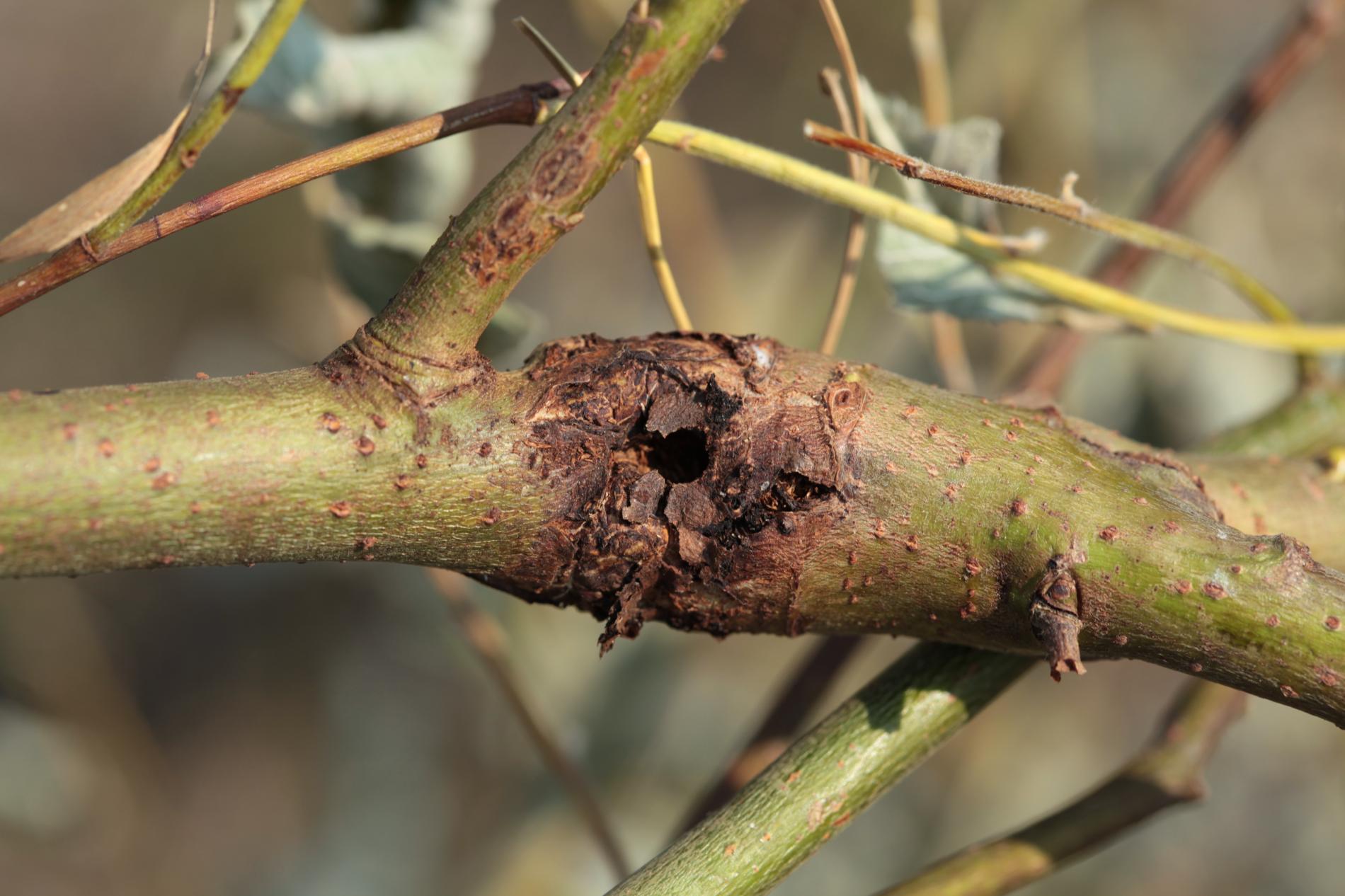
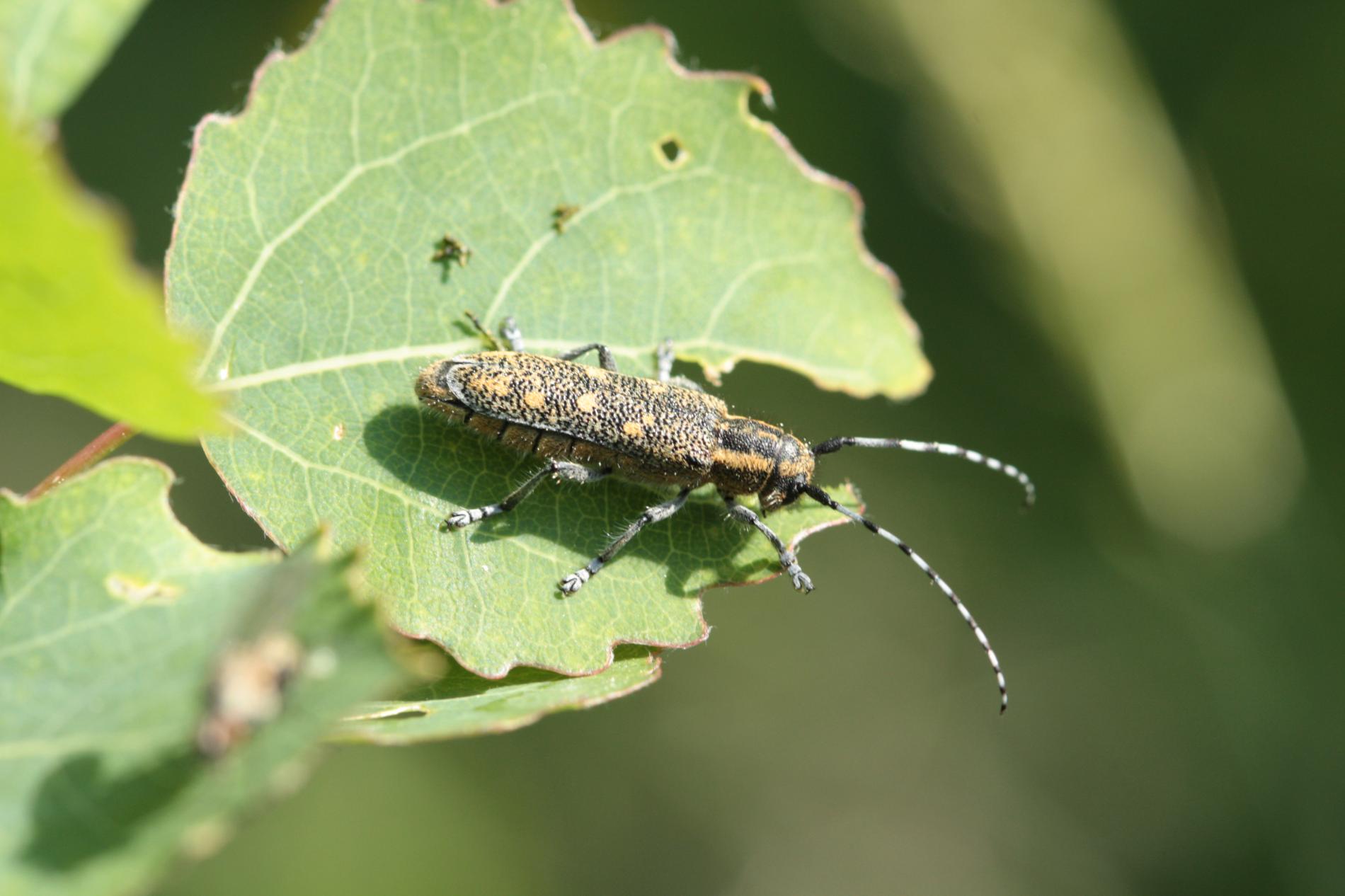
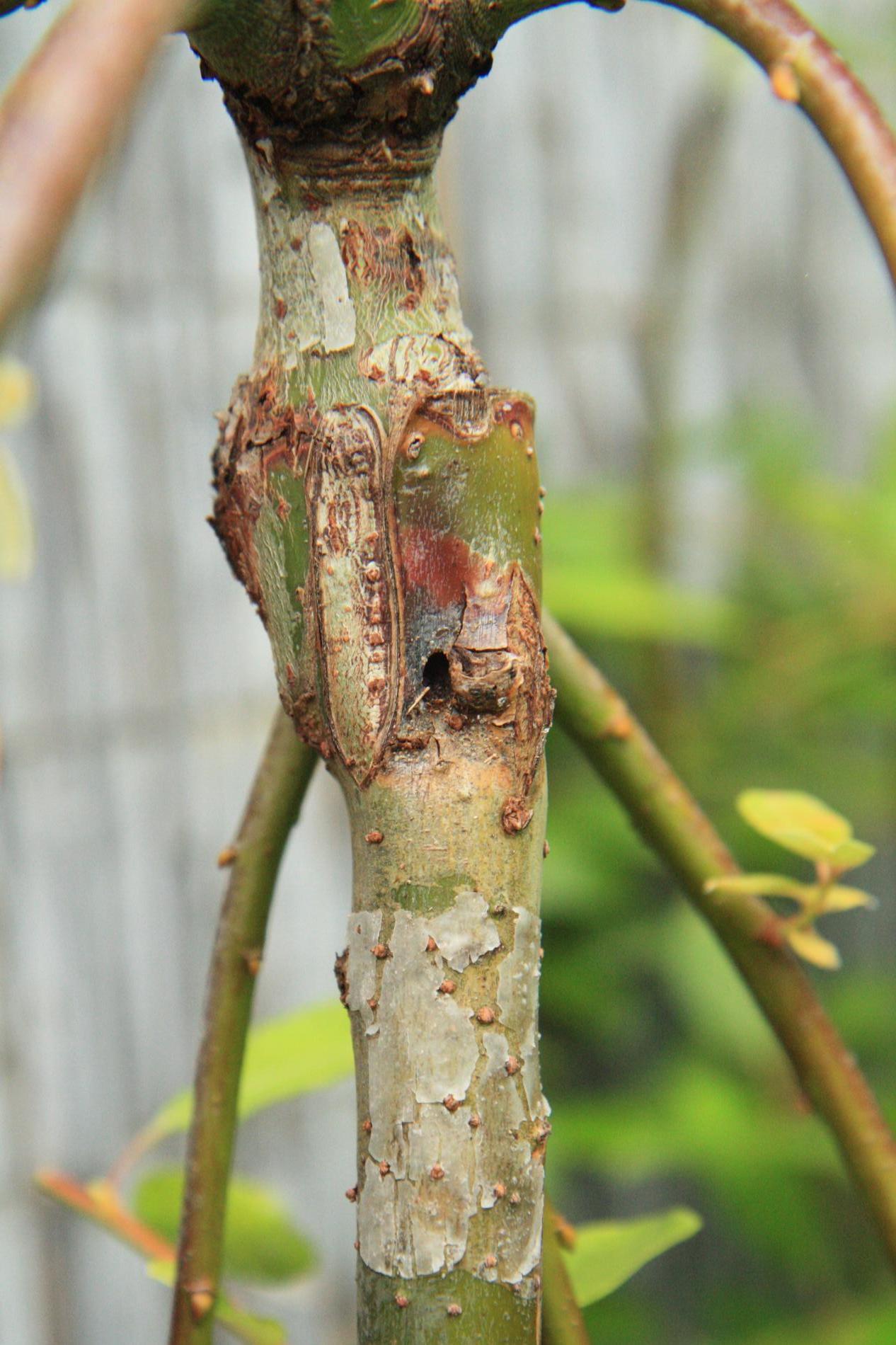
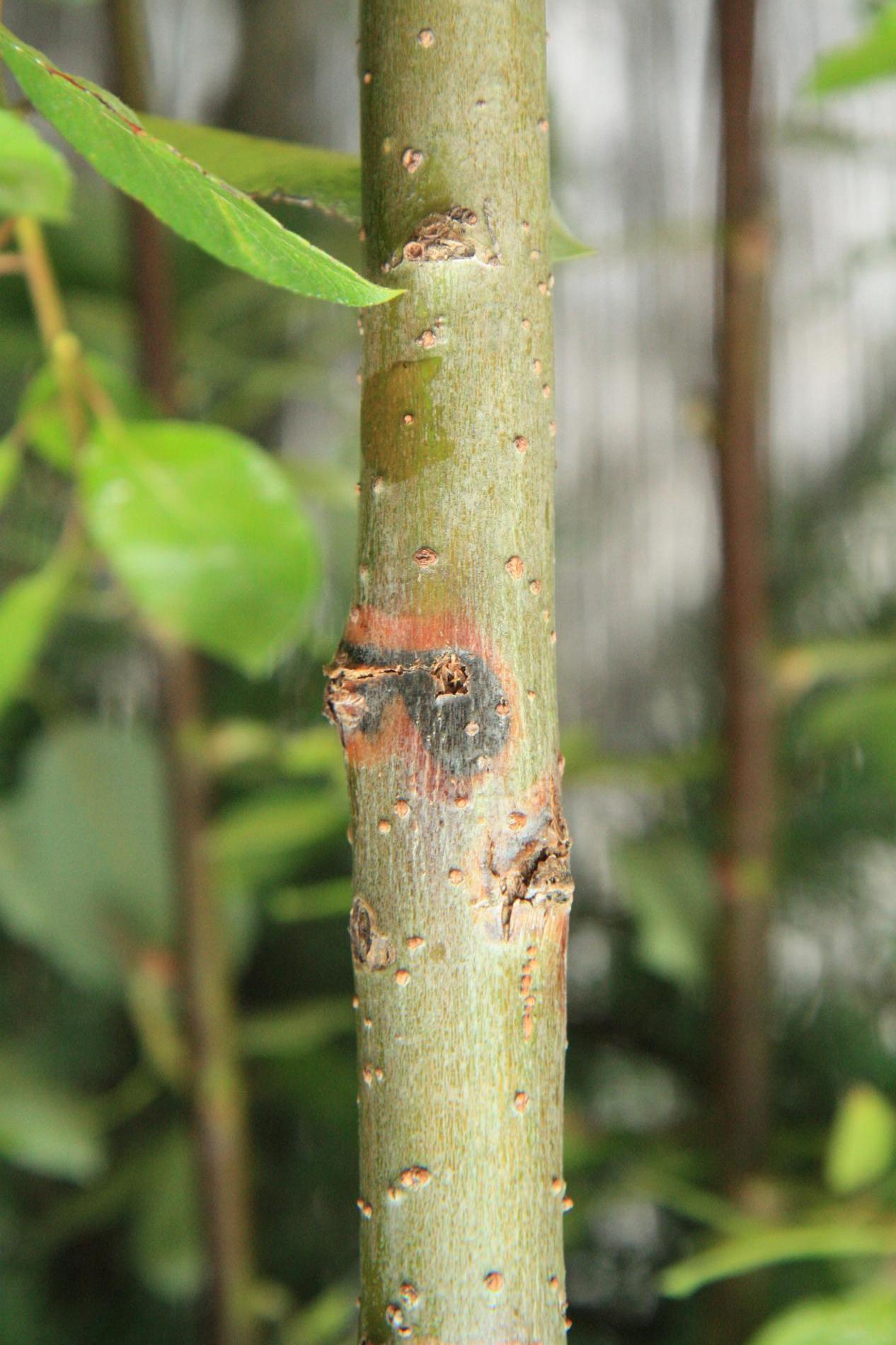
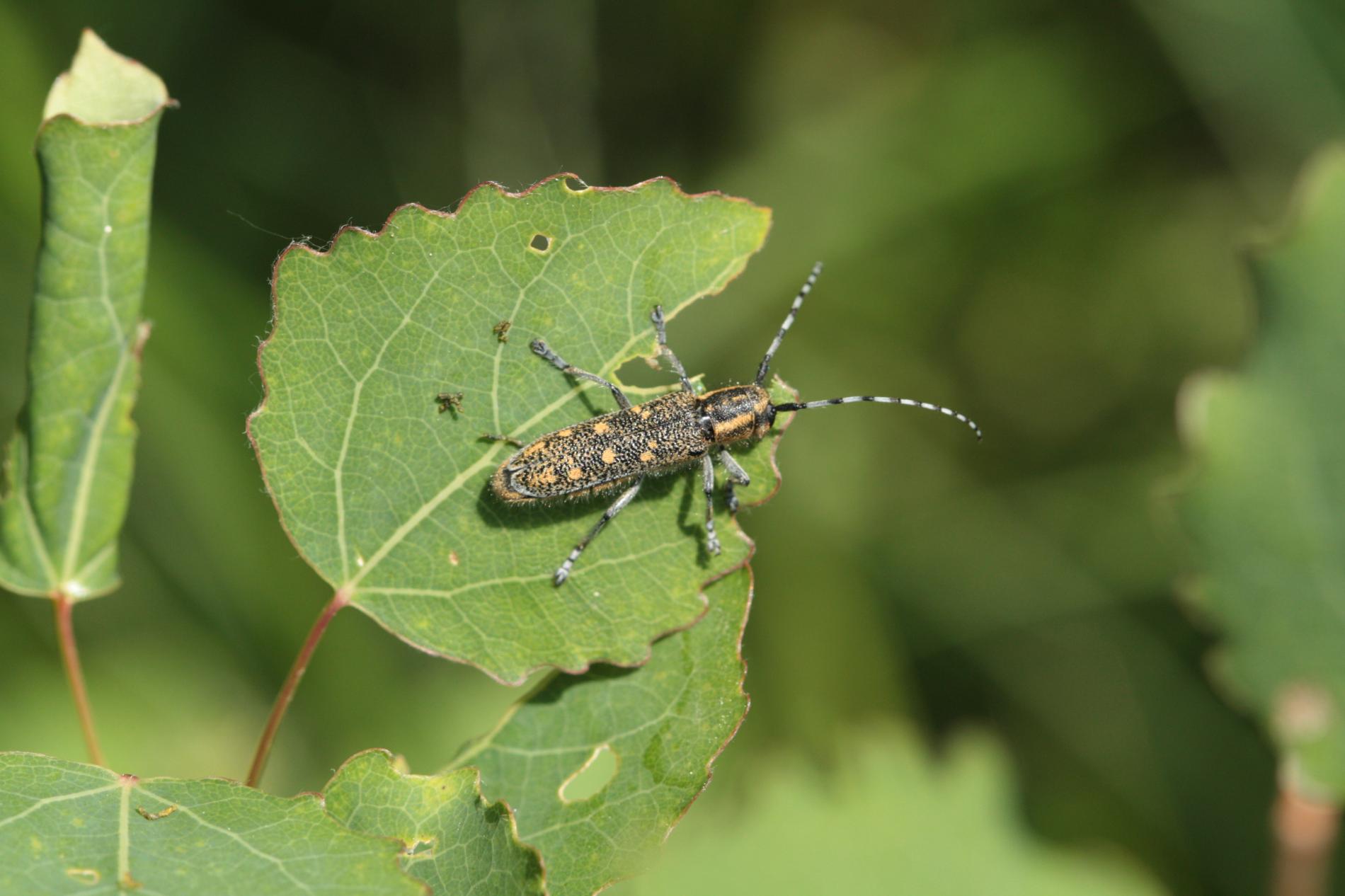
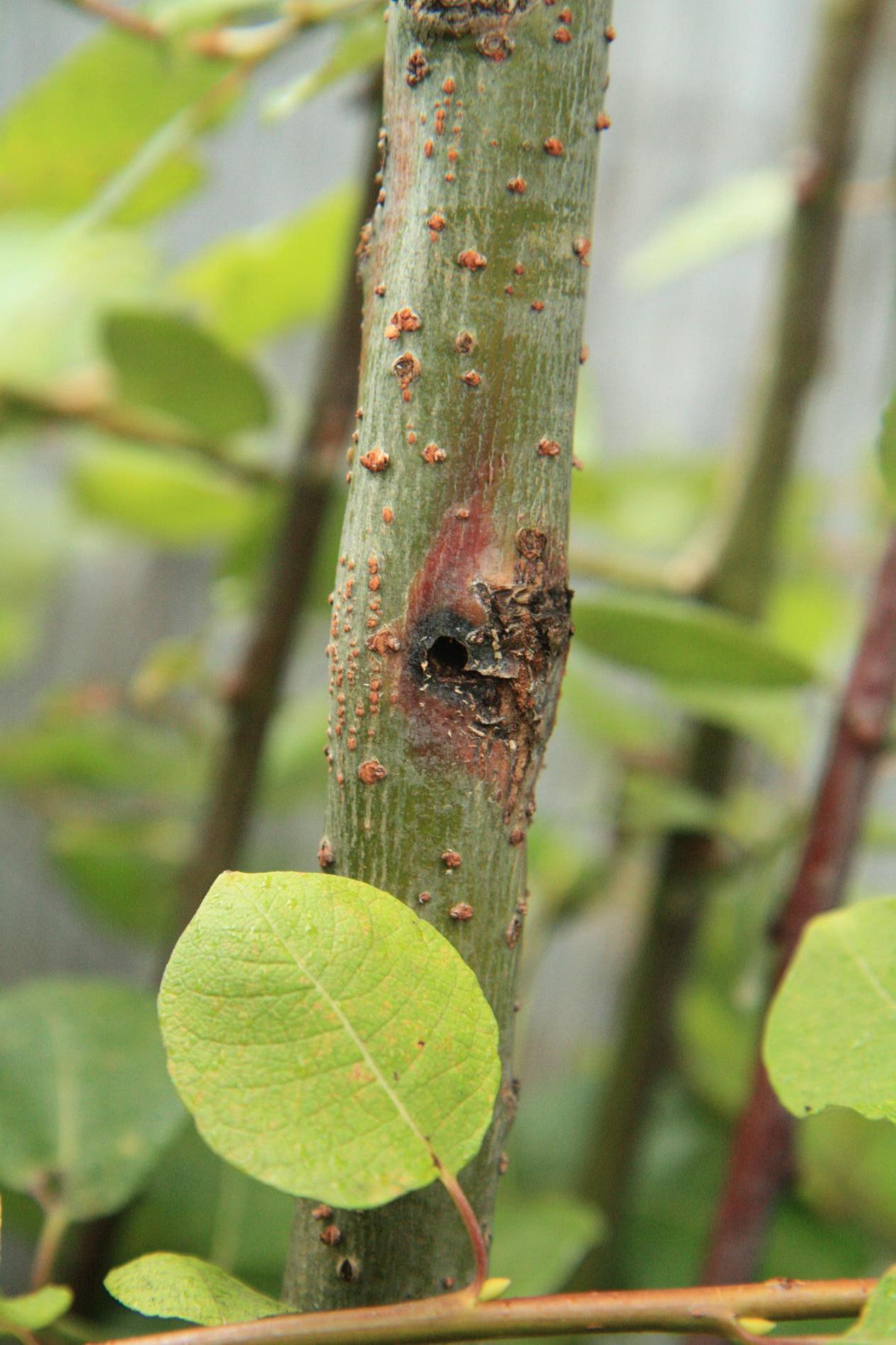
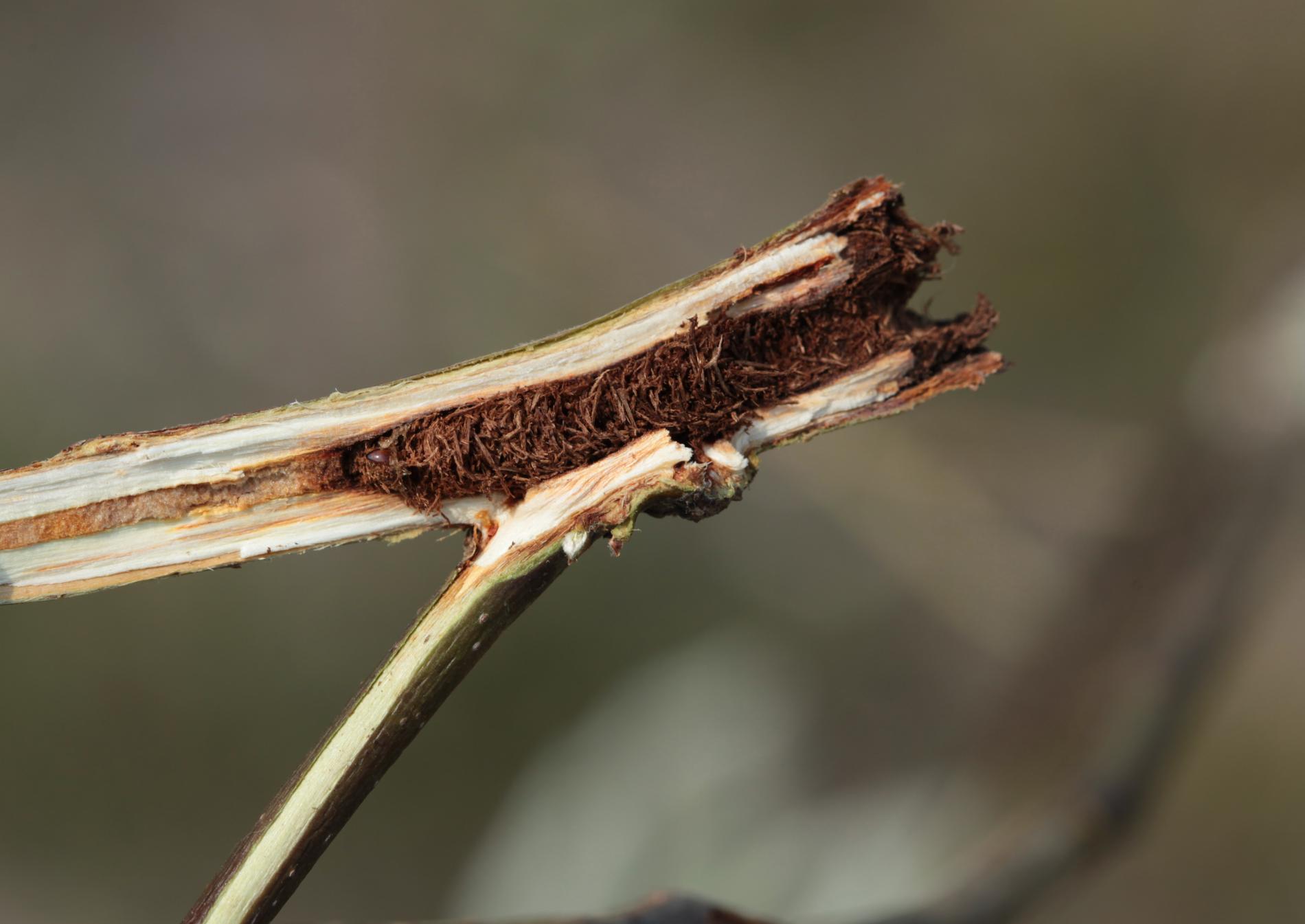
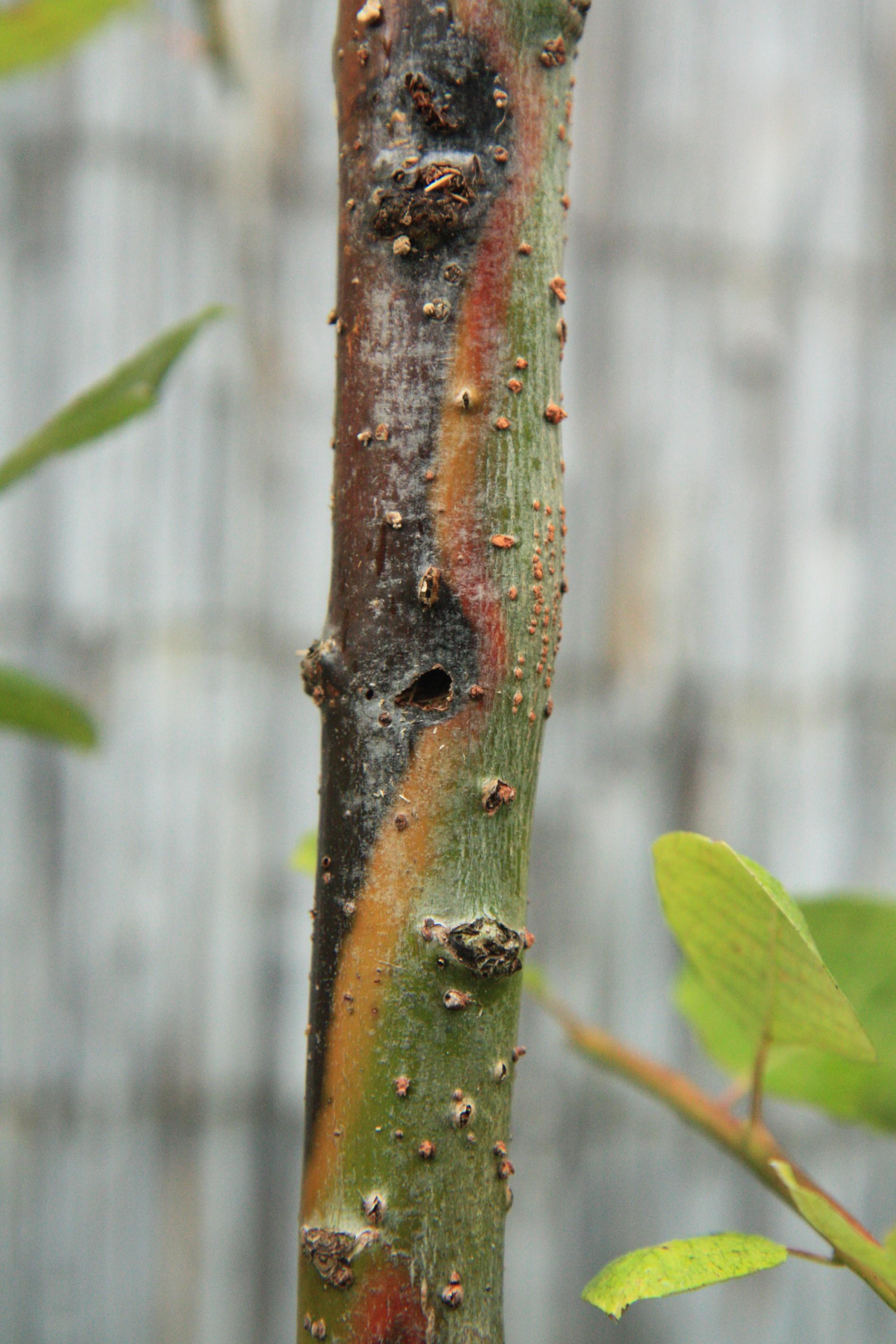
The adult is dark-coloured long-horned beetle with 5 small round yellowish orange spots on each elytra. A part of them or even all of them can miss. The body is 9-15 mm long. Larvae develop in branches and stems 1-2.5 centimetres in diameter. Female egglaying behaviour is characteristic. A horse shoe-shaped depression is cut into the bark through to the sapwood, and a single egg laid in each. These depressions may be closely grouped. This activity causes a gall-like swelling on the affected stem. The larva first feeds on the wound tissues induced by egglaying and then moves to the heartwood, where they pupate the following spring. Exit holes are round. Development takes one, respectively two year. Adult swarms in May and in June. Attacked branches easily break off under a gust of wind. It is a pest of young poplar and willow stands.
Typical swelling develops on infested shoots and trunks.
Tree Species: Poplar, Willow
Part of a plant- attacked: Tree trunk, Branch
Pest significance: Harmful
Invasive Species: No
Present in EU: Yes
Depth of damages: Bark, Under bark only, Up to 0,5 cm depth, Up to 2 cm depth, Up to 5 cm depth
The extent of damage: Whole trunk
Prevalence in Europe: Very common
Damaged products: Fresh timber logs (water still in the sapwood), Wooden rods
Roundwood size: Branches and twigs, Diameter up to 10 cm
Wood discoloration: No
Exit holes: Round
Pest subcategory: Wood-boring insect
Similar pests

Cryptorhynchus lapathi

Saperda carcharias
