


Saperda perforata
Long-horned beetle Saperda perforata
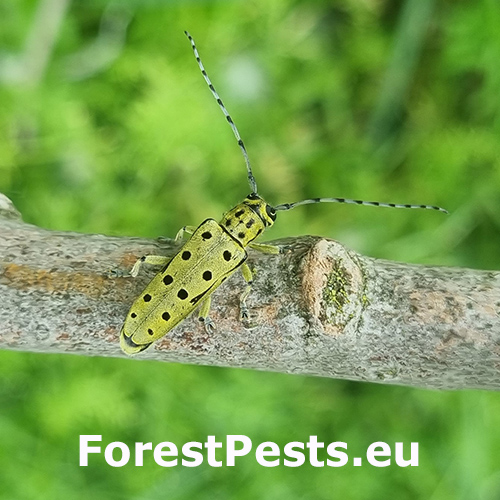
Saperda perforata is a longhorn beetle species developing mainly in poplars (Populus nigra, P. alba, P. tremula) across much of Europe and Asia. It prefers dying, freshly dead, or heavily weakened trees but may occasionally infest living ones that are stressed by drought, damage, or other pests. Females lay eggs on trunks and thick branches. Larvae first tunnel beneath the bark, then into the sapwood, where pupation occurs. The life cycle takes one to two years. Adults emerge from late May to early August and are mostly active during dusk or night. High infestation levels can worsen tree vitality and reduce wood quality, especially in poplar plantations. The beetle is distributed widely across the European continent, including Central and Eastern Europe, the Balkans, and parts of Scandinavia.
Oval emergence holes in bark and surface galleries under bark; darkened or cracked bark on trunks and branches.
Tree Species: Poplar
Part of a plant- attacked: Tree trunk, Branch
Pest significance: Less harmful
Pest Category: Insects
Present in EU: Yes
Pest group: Insect
Affected part of wood: Sapwood
Depth of damages: Bark, More than 5 cm depth, Under bark only, Up to 0,5 cm depth, Up to 2 cm depth, Up to 5 cm depth
The extent of damage: Whole trunk
Prevalence in Europe: Rare
Damaged products: Firewood, Fresh timber logs (water still in the sapwood), Furniture, Wooden house constructions
Roundwood size: Branches and twigs, Diameter 50+, Diameter from 10 up to 50 cm
Exit holes: Oval
Pest subcategory: Bark and underbark insect, Wood-boring insect
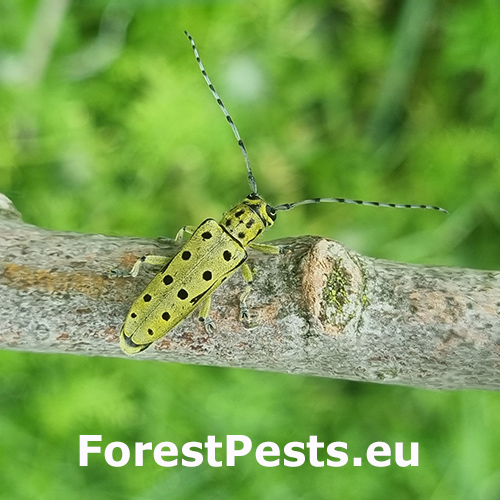
Similar pests

Monochamus sartor

Mesosa nebulosa
