


Rabdophaga saliciperda
Willow shot-hole midge
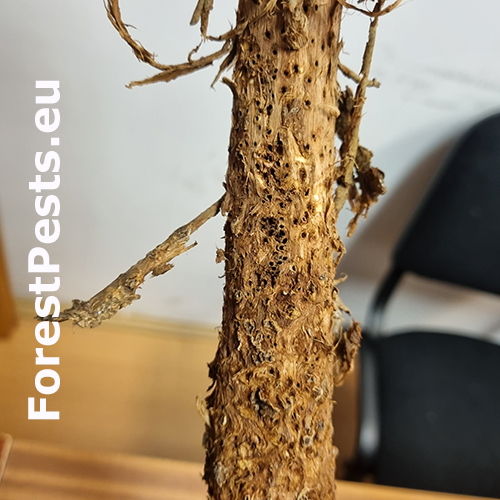
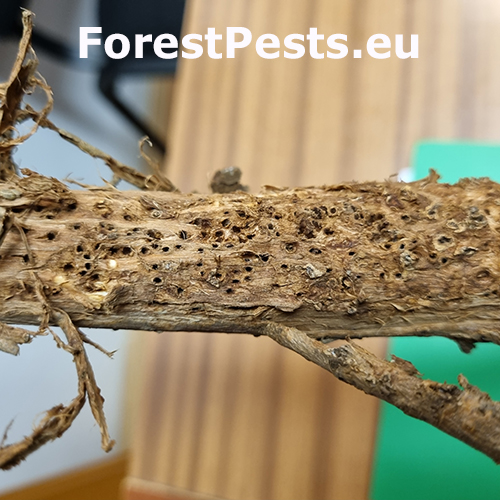
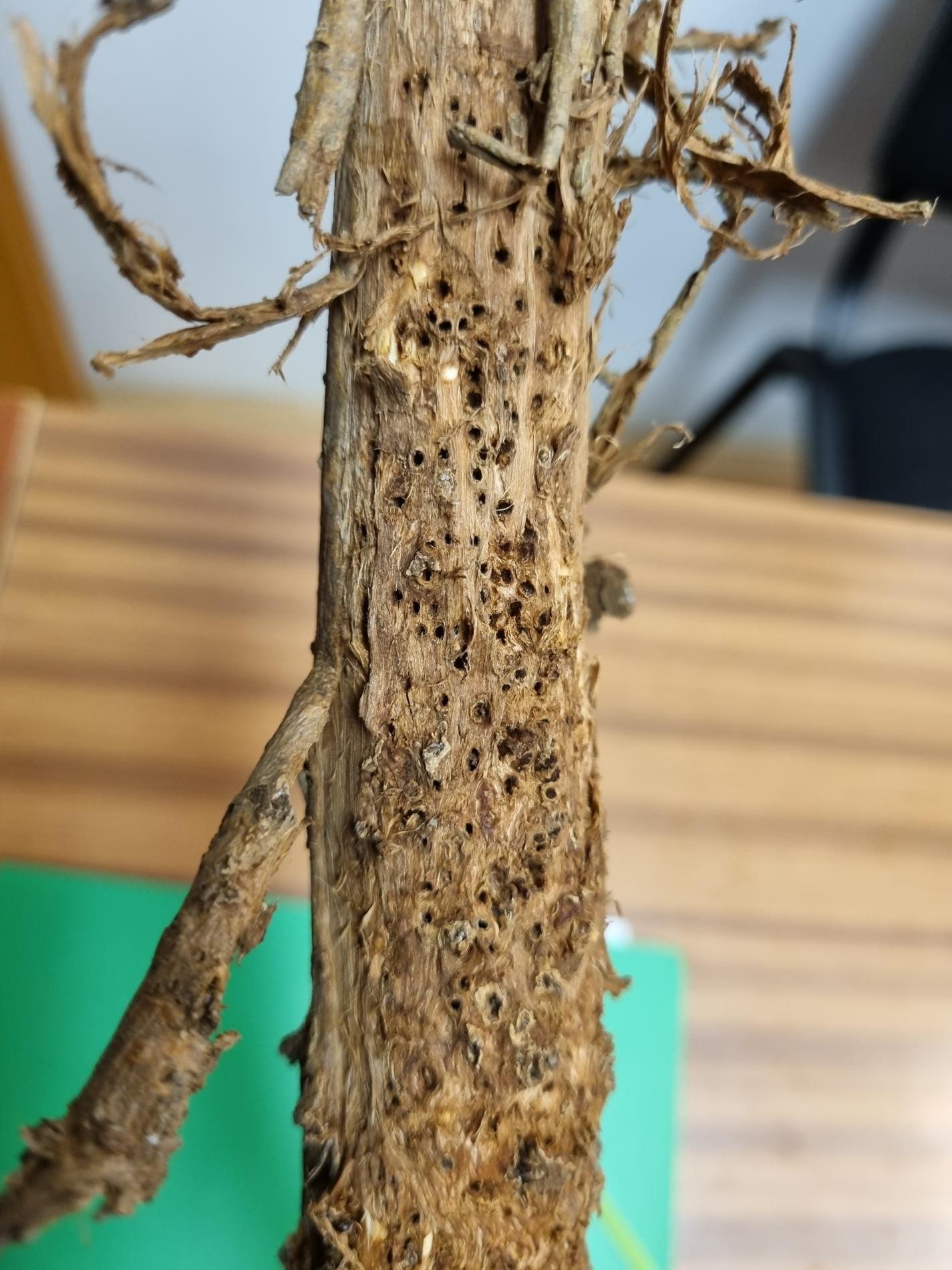
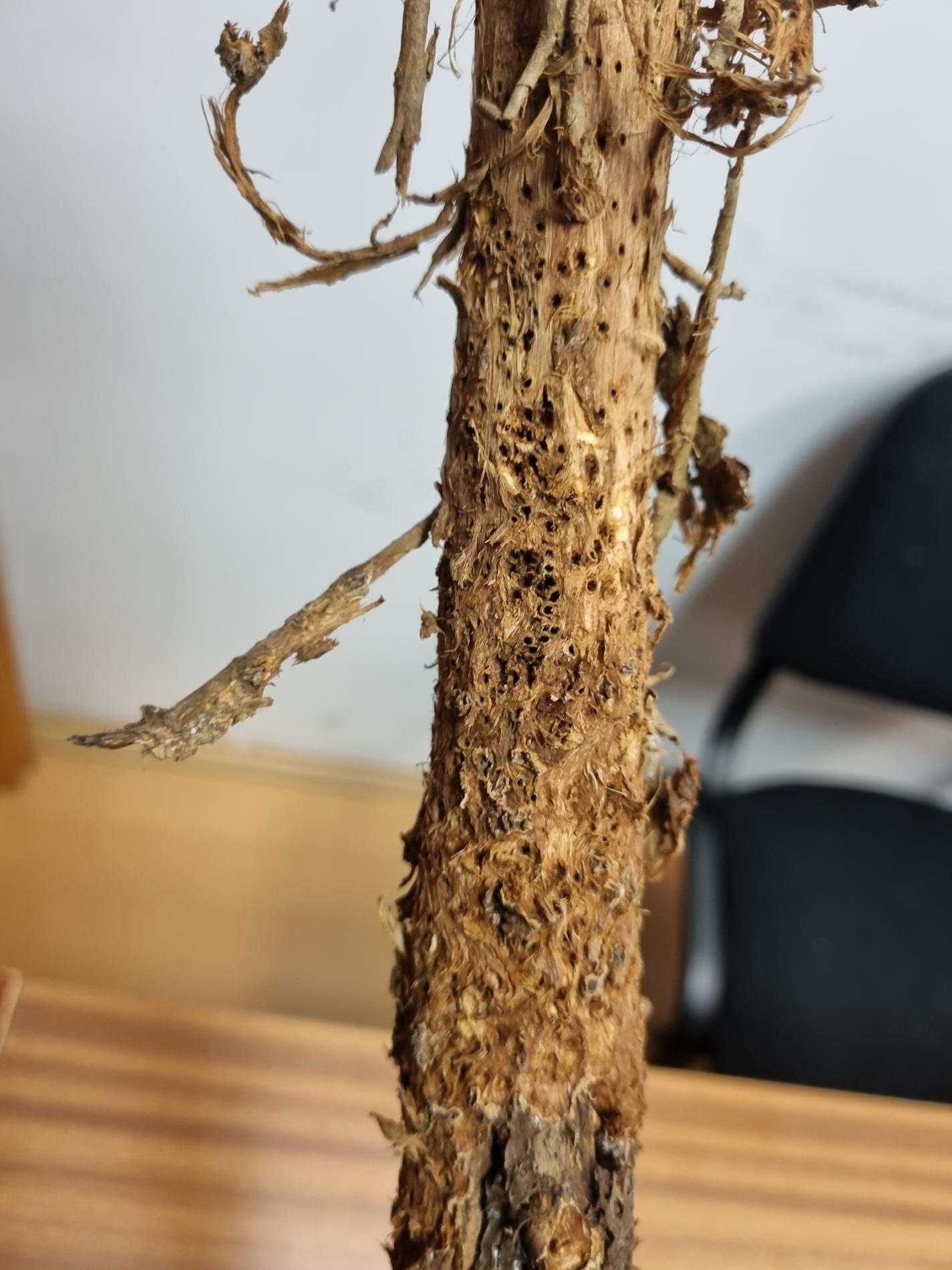
Small, tiny 2–3 mm midge - mosquito like insect. Adults have black head and thorax, reddish abdomen, markedly sharp in the females. Univoltine. The females oviposit on the bark from April to June. The young larvae bore the bark to form a cell in the wood where they develop during summer by feeding on sap. After overwintering, mature larvae move perpendicularly to stemand pupate. Adults finally emerge in great numbers from small circular holes. Since attacks may occur year by year on the same section, the trunks swell and peel, showing a typical shothole-like damage. Although young trees can dry up above the affected section at times, the pest has only a small significance. It can be found mostly in mixed riparian forests, less frequently in willow stands up to 1,500 m.
Affected trunks swell and peel, showing a typical shothole-like damage.
Tree Species: Willow
Part of a plant- attacked: Tree trunk, Branch
Pest significance: Less harmful
Pest Category: Insects
Invasive Species: No
Present in EU: Yes
Pest group: Insect
Affected part of wood: Sapwood
Depth of damages: Up to 2 cm depth
The extent of damage: Whole trunk
Prevalence in Europe: Very rare
Damaged products: Firewood, Wooden rods
Roundwood size: Branches and twigs
Wood discoloration: No
Exit holes: Round
Pest subcategory: Wood-boring insect
Similar pests

Saperda populnea

Paranthrene tabaniformis
