


Pogonocherus hispidus
Lesser thorn-tipped longhorn beetle
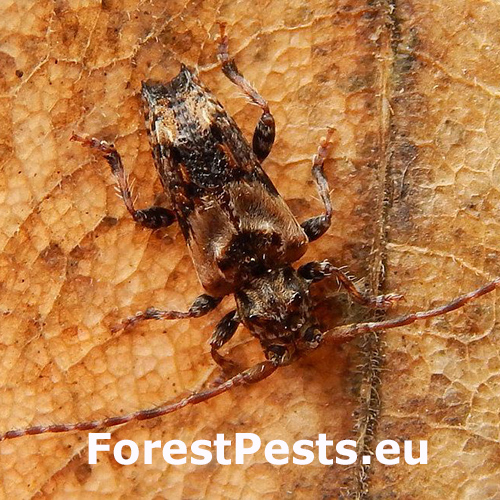
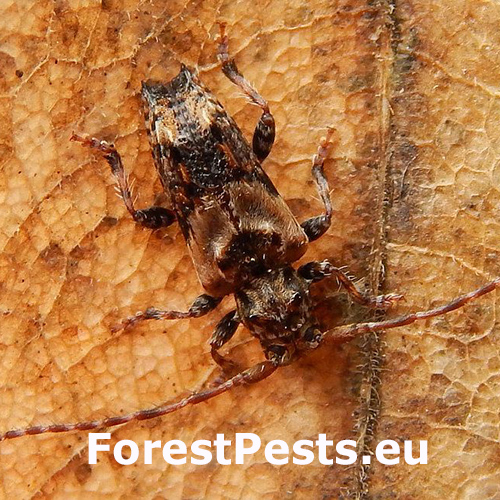
Pogonocherus hispidus, known as the lesser thorn-tipped longhorn beetle, is a species in the family Cerambycidae, measuring 4–7 mm in length. This beetle is widely distributed across Europe and parts of North Africa. It primarily inhabits deciduous forests, preferring thin, drying branches of broadleaf trees and shrubs, including Cornus sanguinea, Corylus avellana, Euonymus europaeus and many other.
Larvae develop in dying wood, creating feeding galleries that damage the structural integrity of branches. Although the beetle mainly inhabits small branches, infestations can reduce the aesthetic value of host plants and cause minor branch dieback. The species is common in lowland and hilly regions, with adults active from spring to early summer.
Affected branches display small, irregular galleries under the bark and in the wood. Visible exit holes and roughened wood surfaces are common. Bark may appear cracked or brittle.
Tree Species: Spindle, Elm, Birch, Beech, Fig tree, Hazel, Lime, Mulberry, Walnut, Rose, Poplar
Part of a plant- attacked: Branch
Pest significance: Less harmful
Pest Category: Insects
Invasive Species: No
Present in EU: Yes
Pest group: Insect
Affected part of wood: Sapwood
Depth of damages: Under bark only
The extent of damage: Individually - one place
Prevalence in Europe: Common
Damaged products: Firewood, Wood chips, Wooden rods
Roundwood size: Branches and twigs
Wood discoloration: No
Exit holes: Oval
Pest subcategory: Bark and underbark insect


Similar pests

Phymatodes testaceus

Acanthocinus reticulatus
