


Platypus cylindrus
Oak pinhole borer
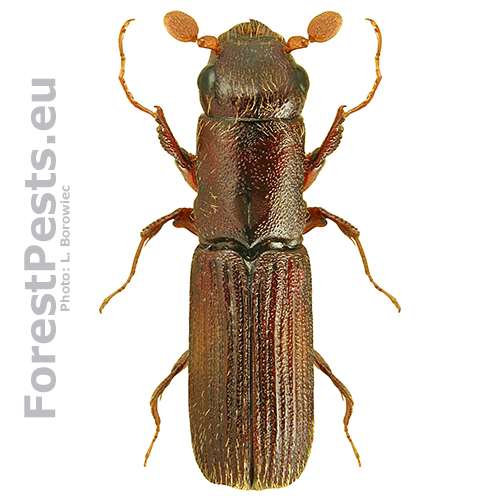
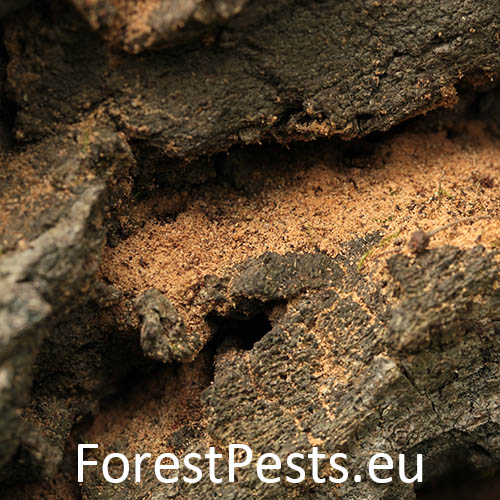
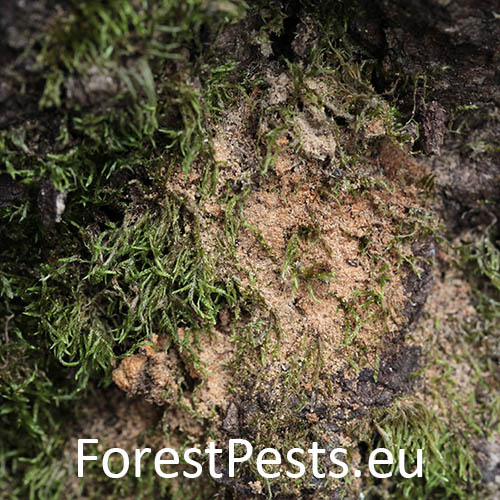
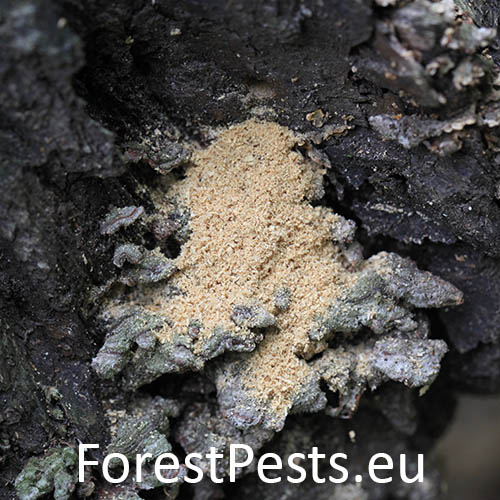
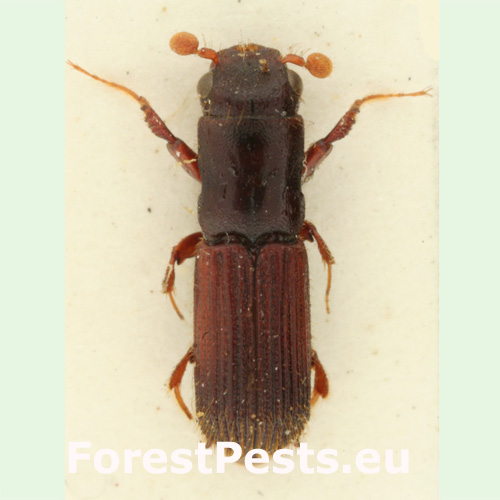
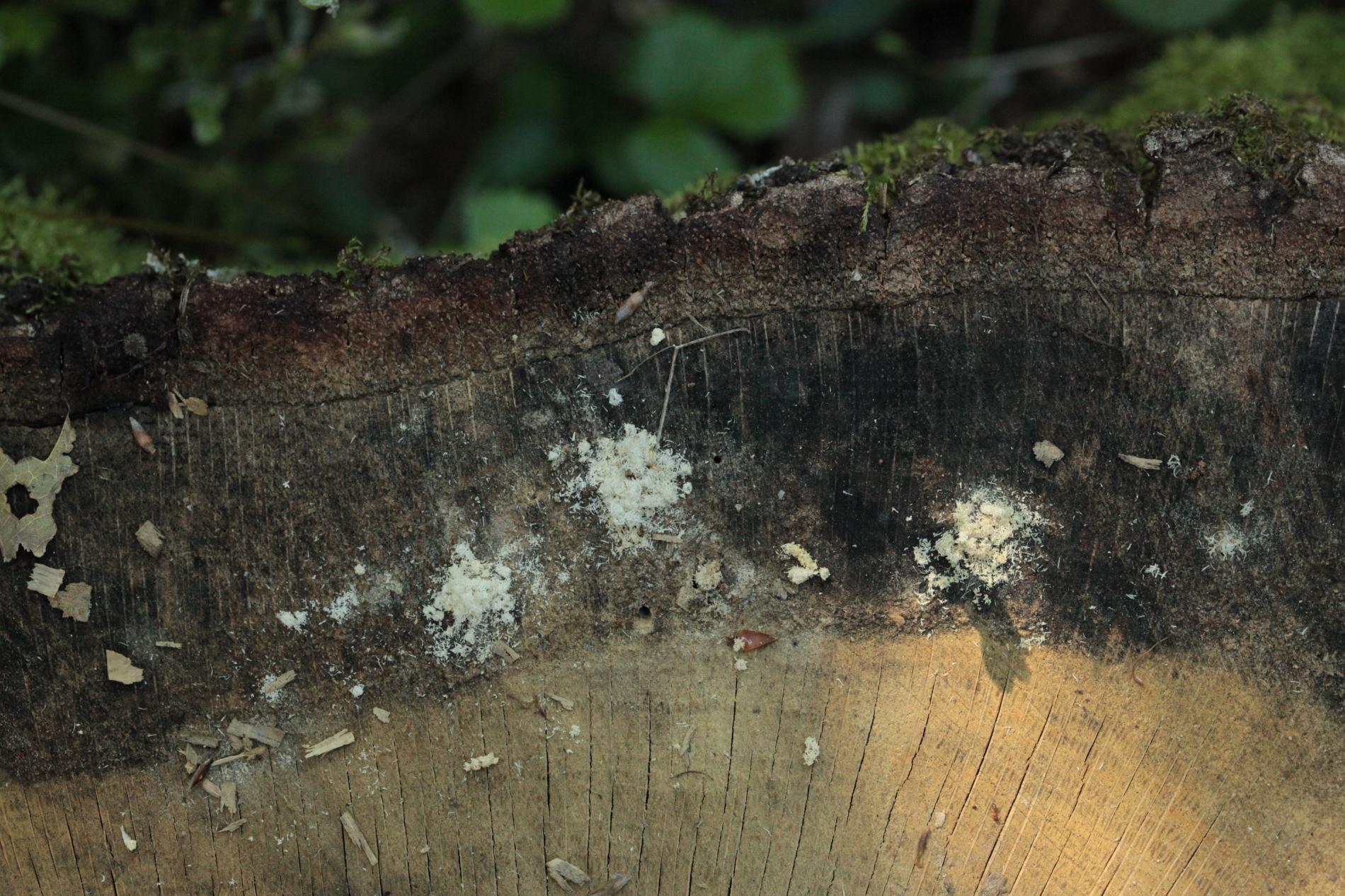
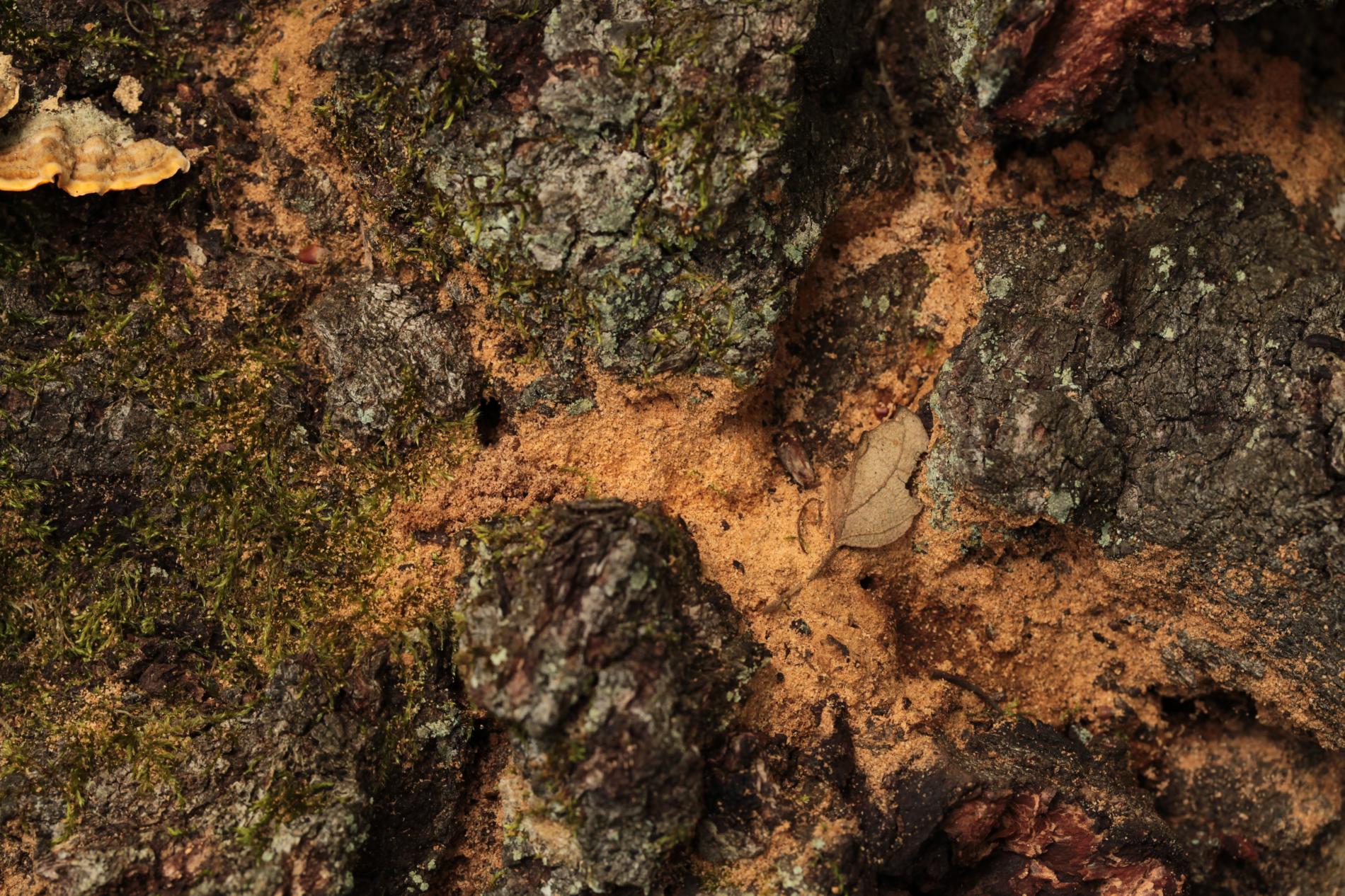
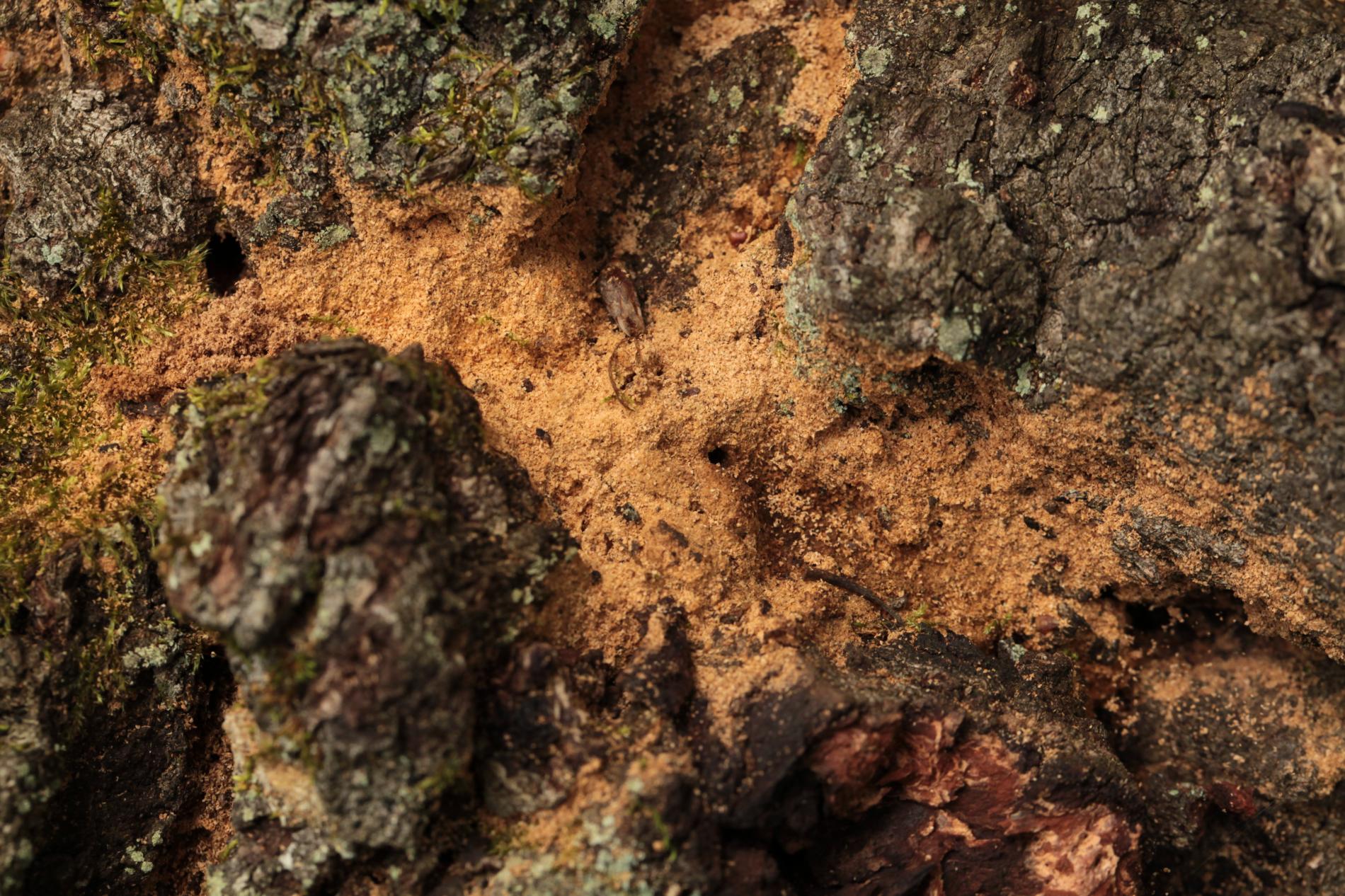
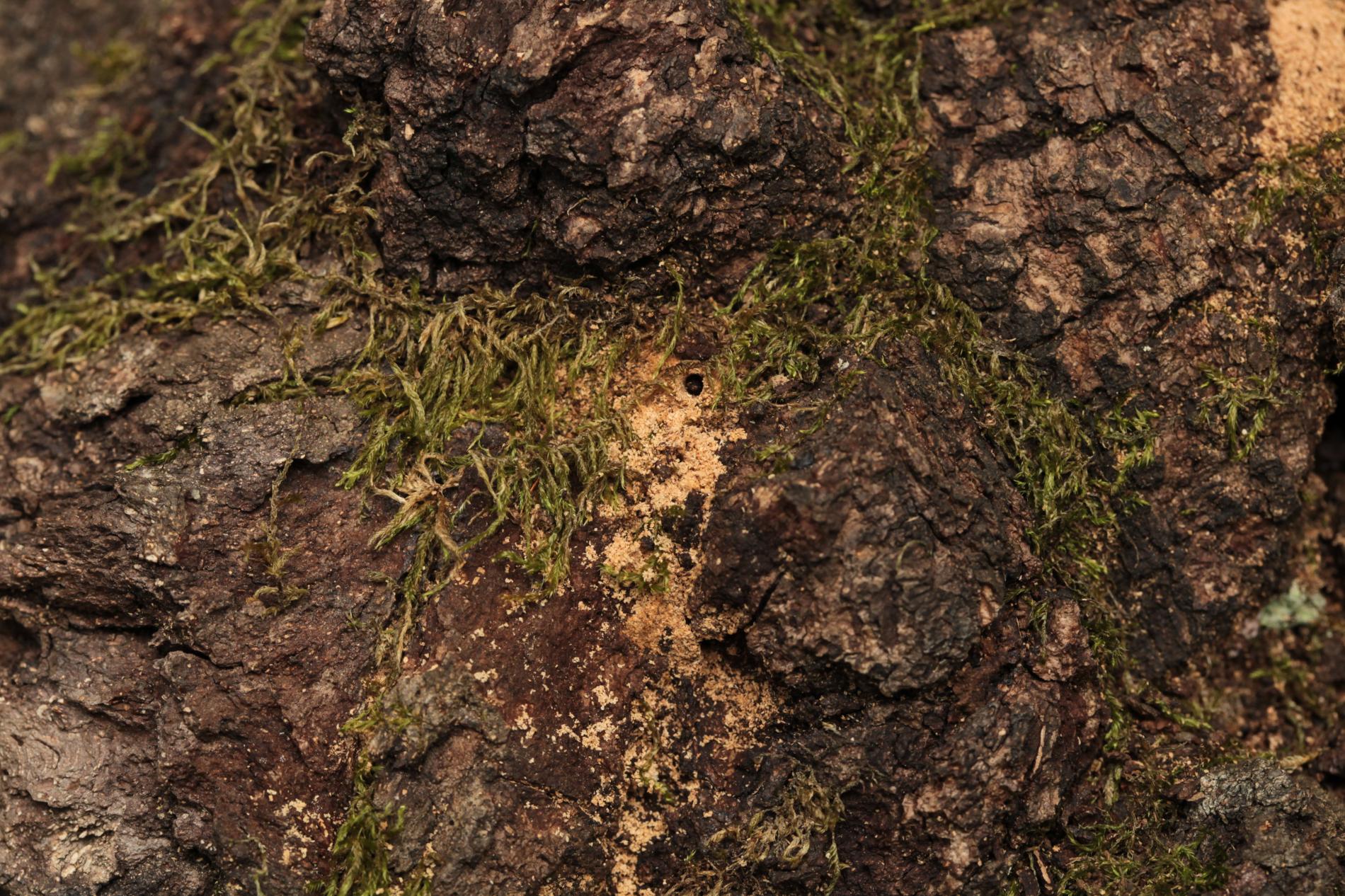
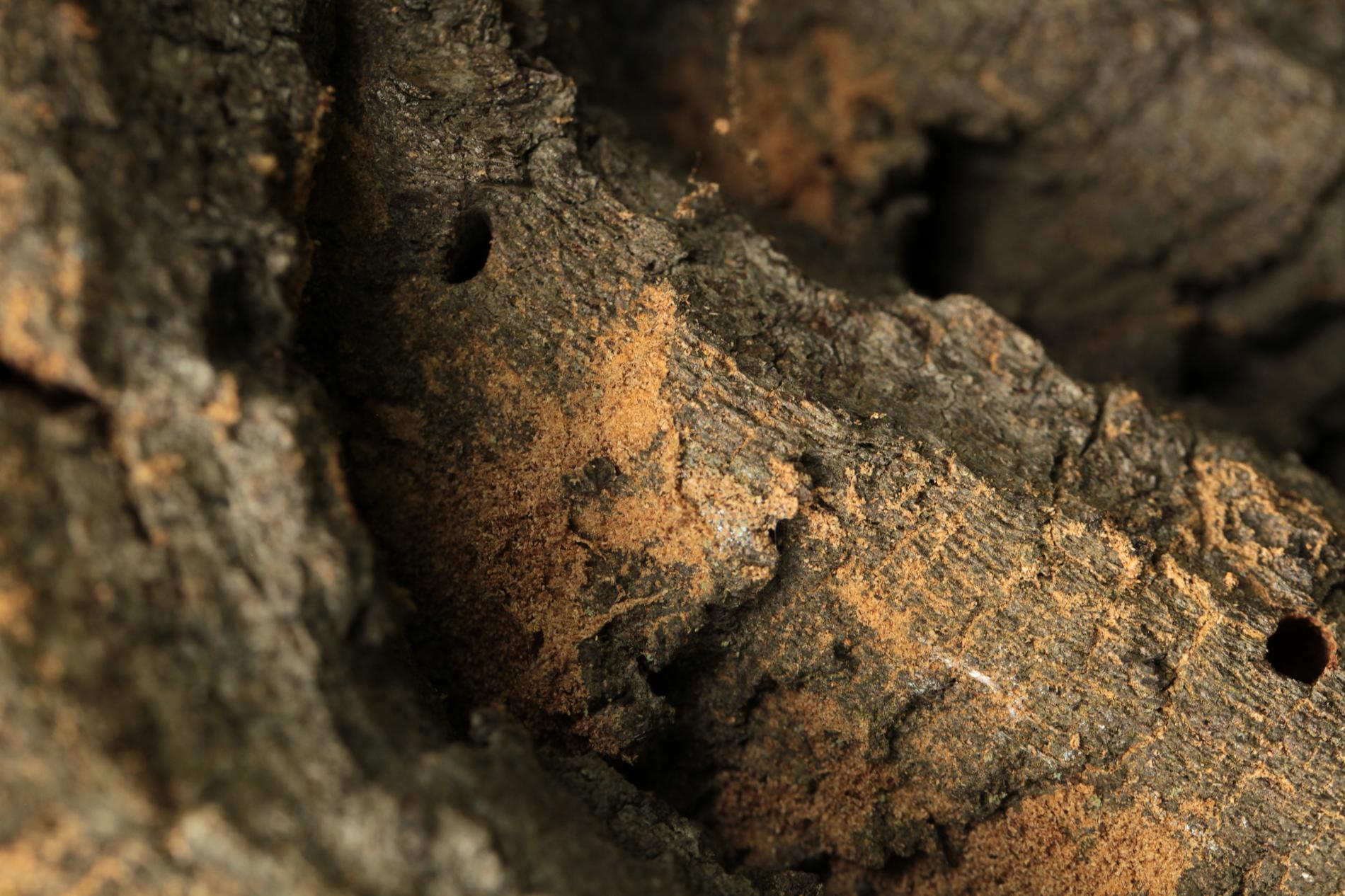
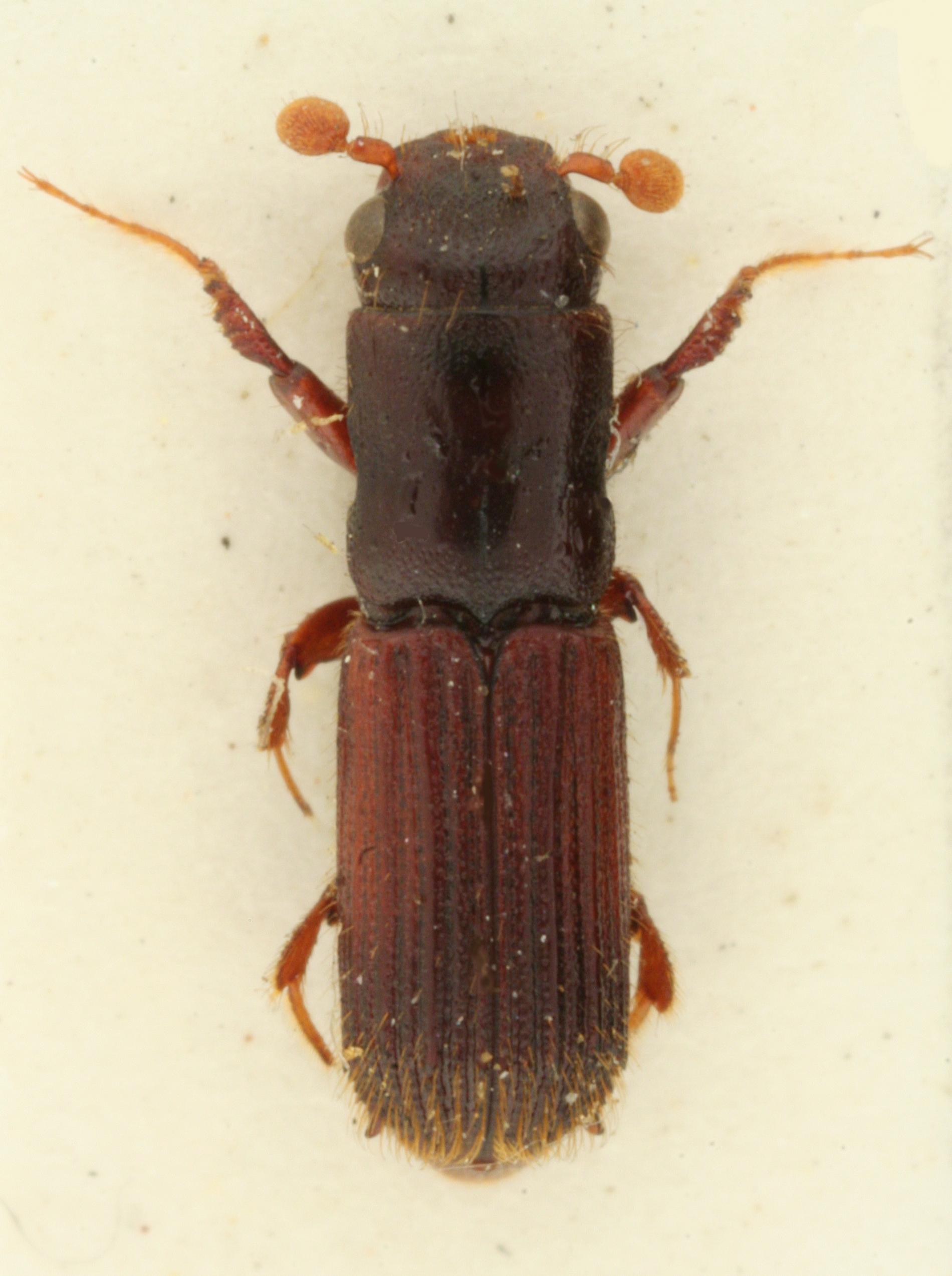
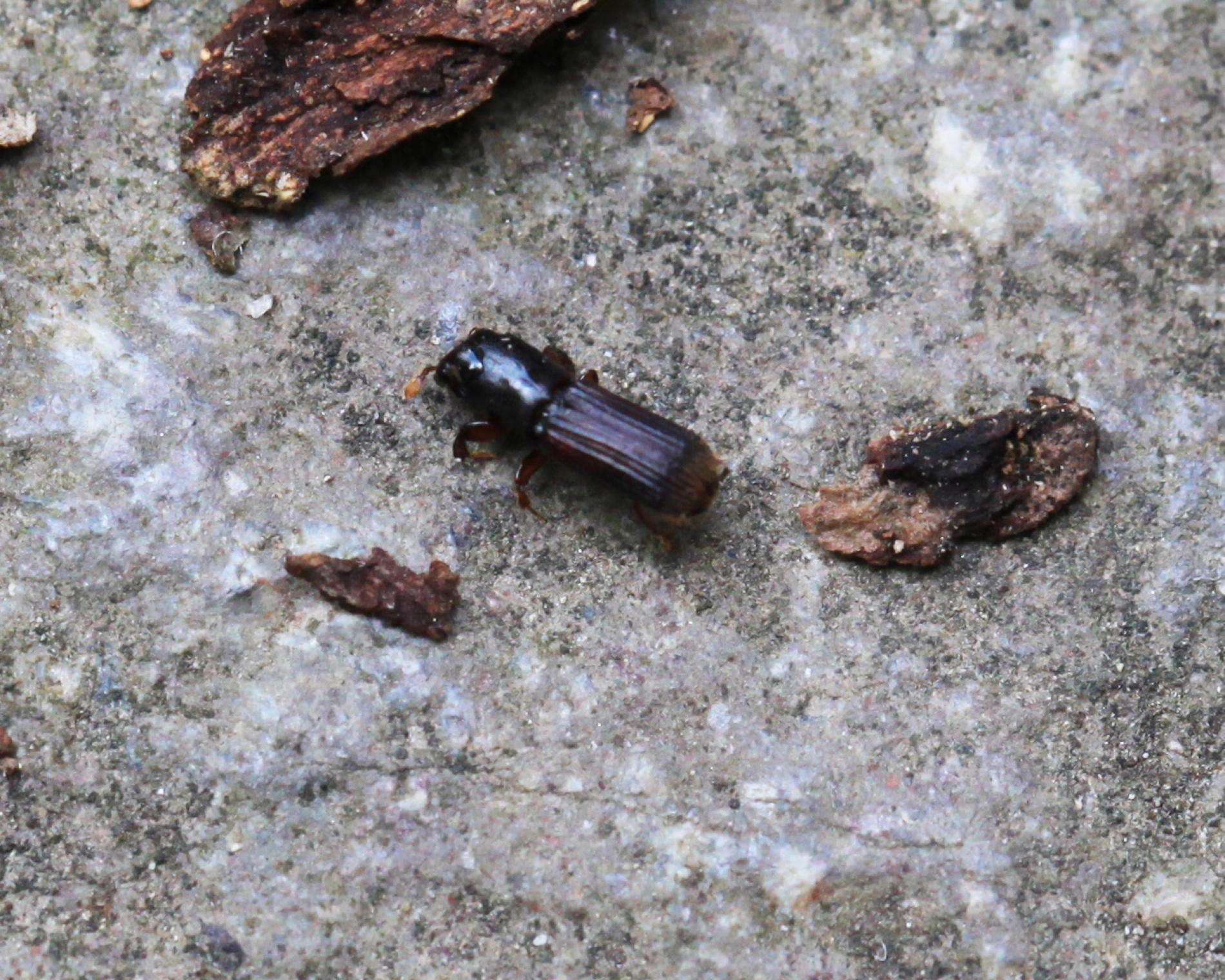
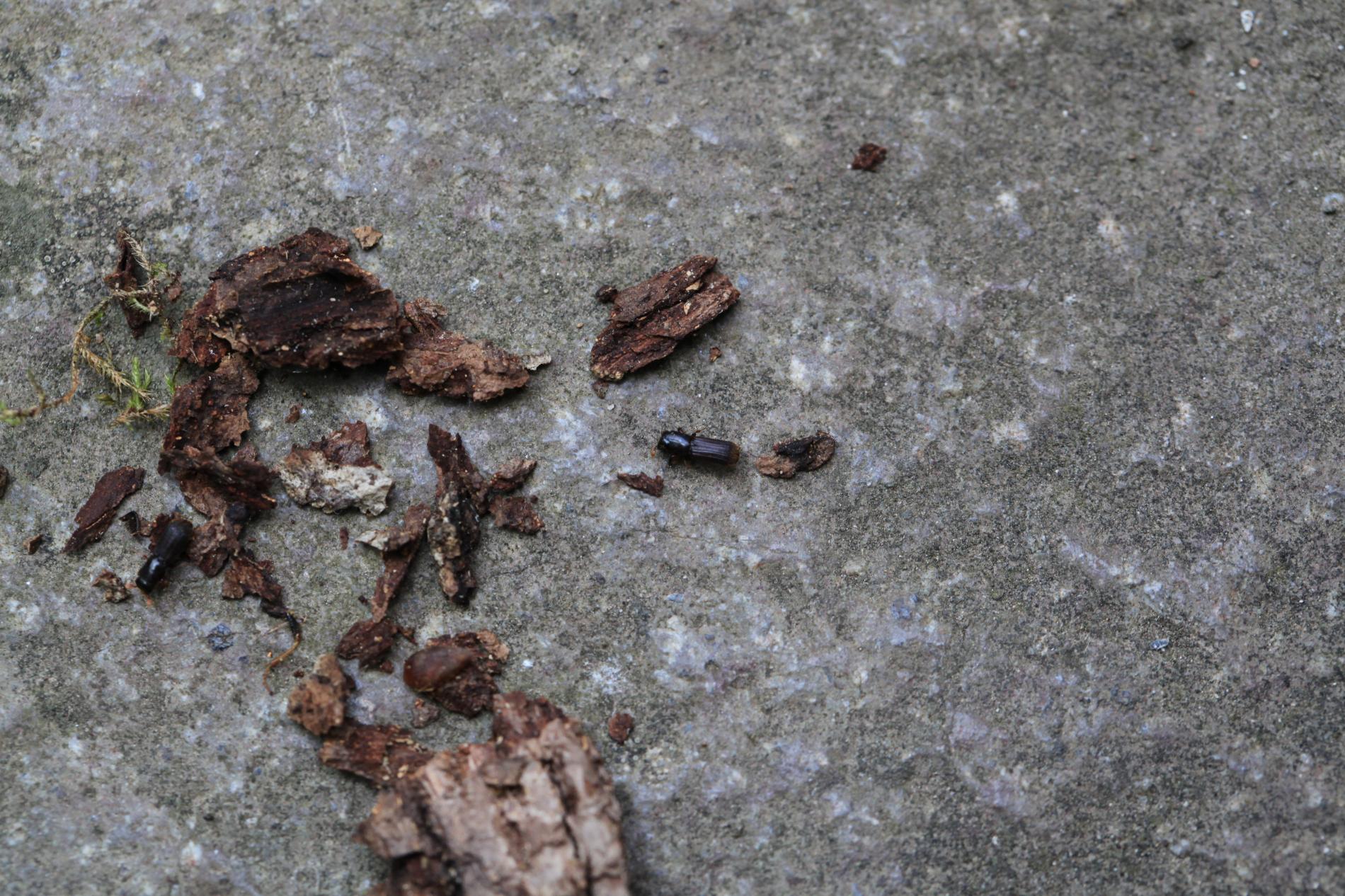
Adult beetles are 6-8 mm long. The adults are at their most active between July and September. The female bores into unbarked tree trunks or dying trees. When boring into, woodchip debris falls out of the hole. Spores of ambrosia fungi are introduced into the tunnel on the body of the beetle. The fungi quickly become established on the walls and form a thick layer that provides nourishment for the adult beetles and the developing larvae. Very characteristic, 25-30 mm long branched galleries are visible on the longitudinal wood cut. The generation is annual. It appears in any location with oak occurrence. It is a dangerous technical pest.
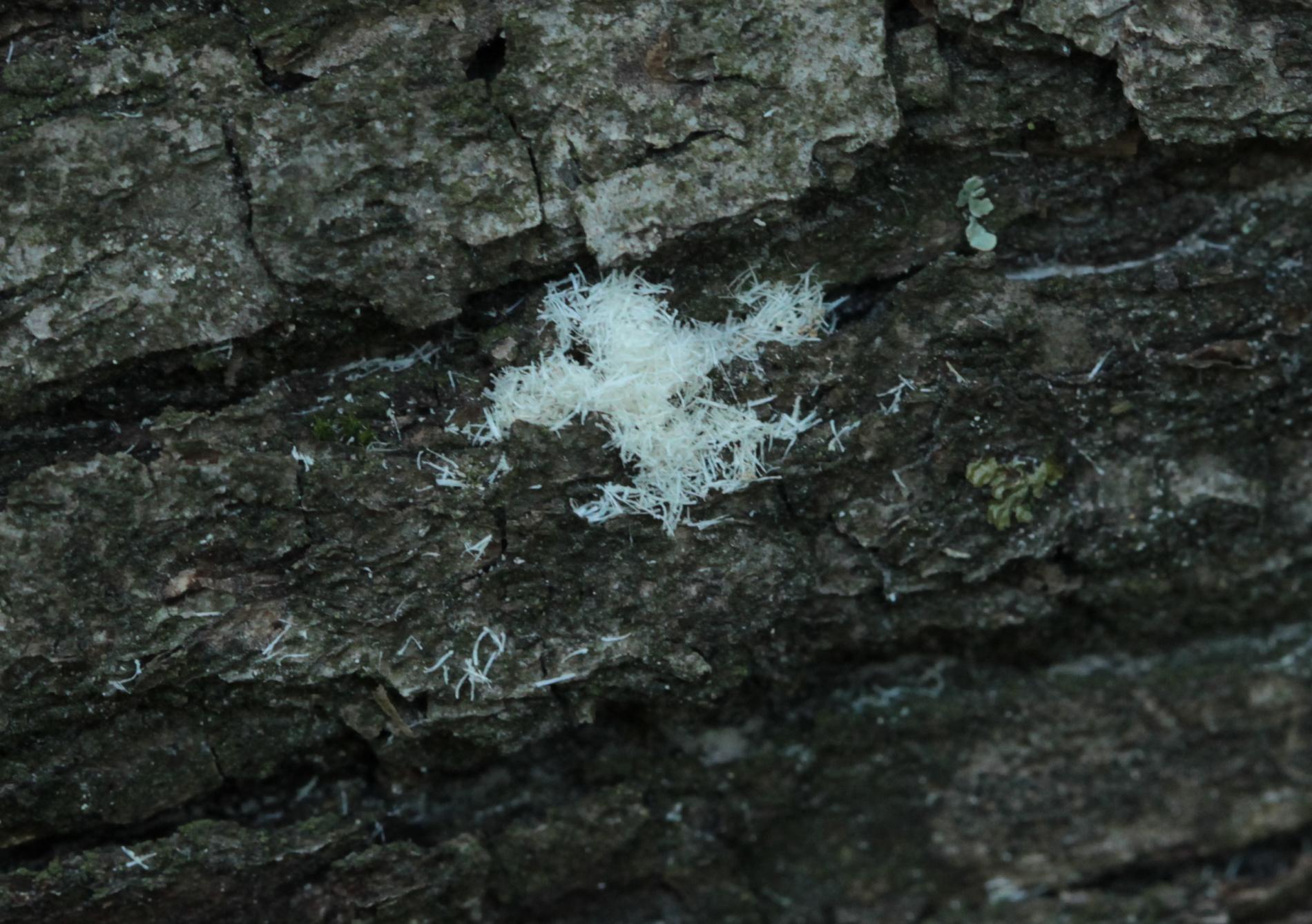
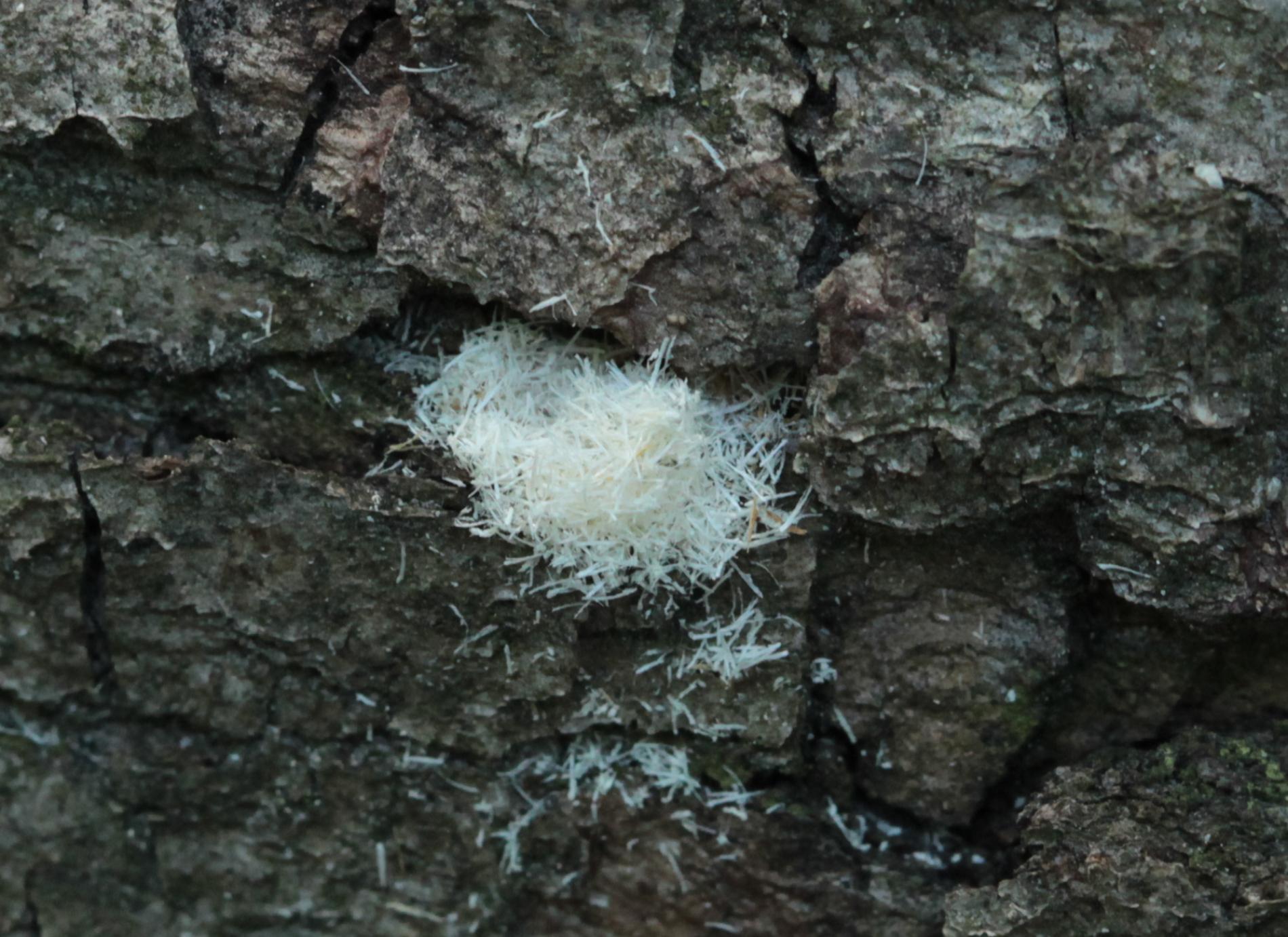
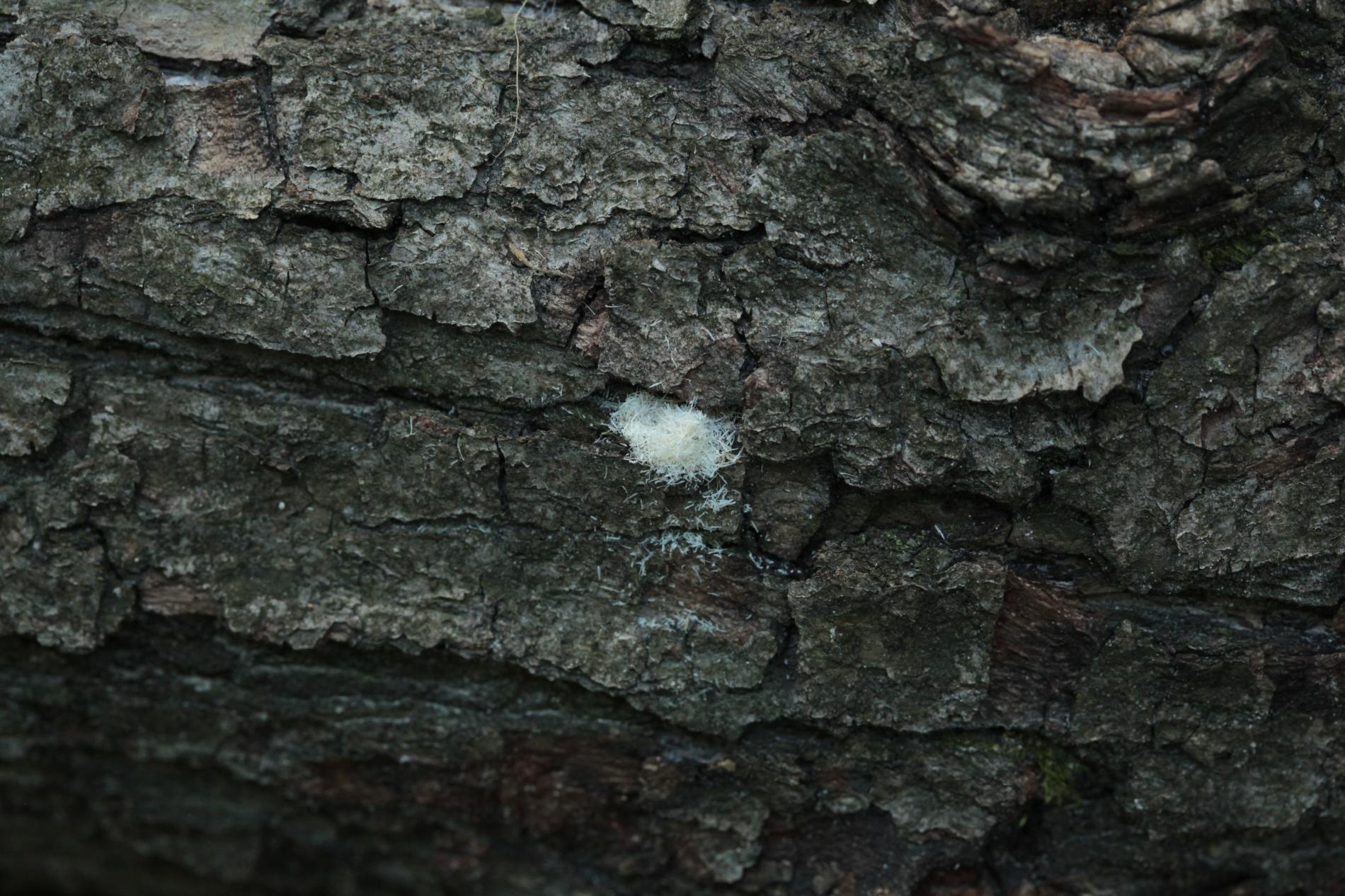
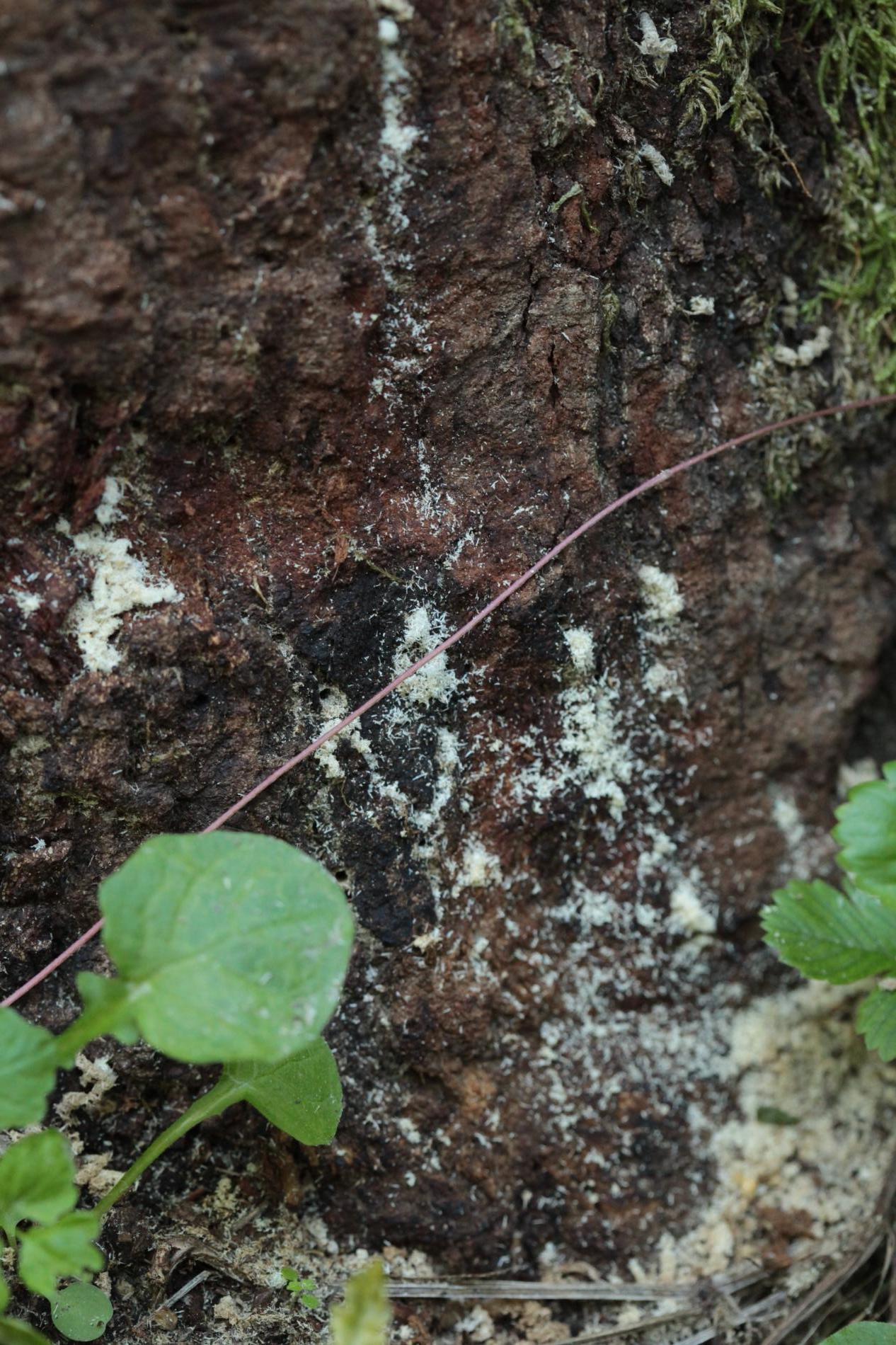
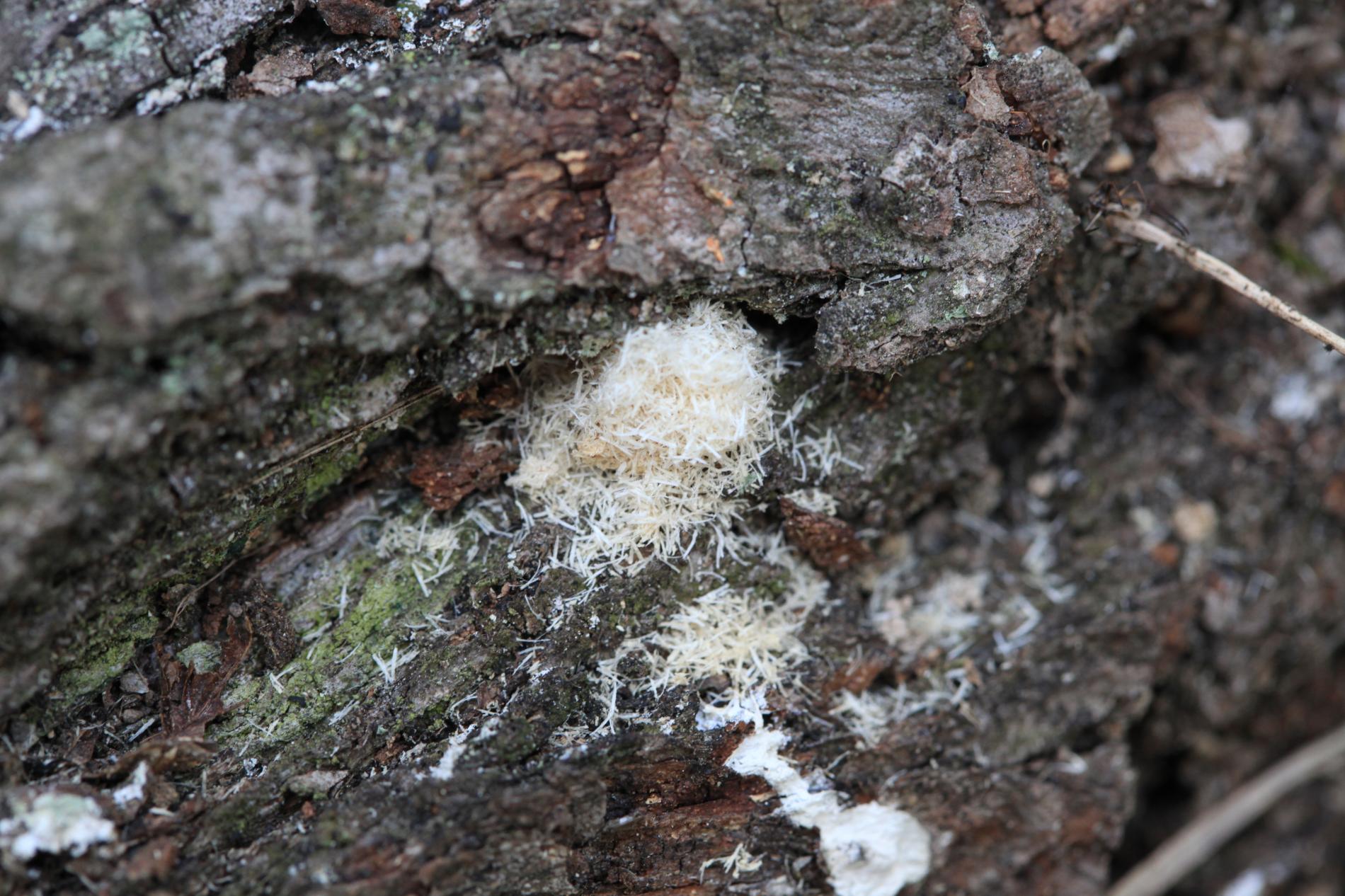
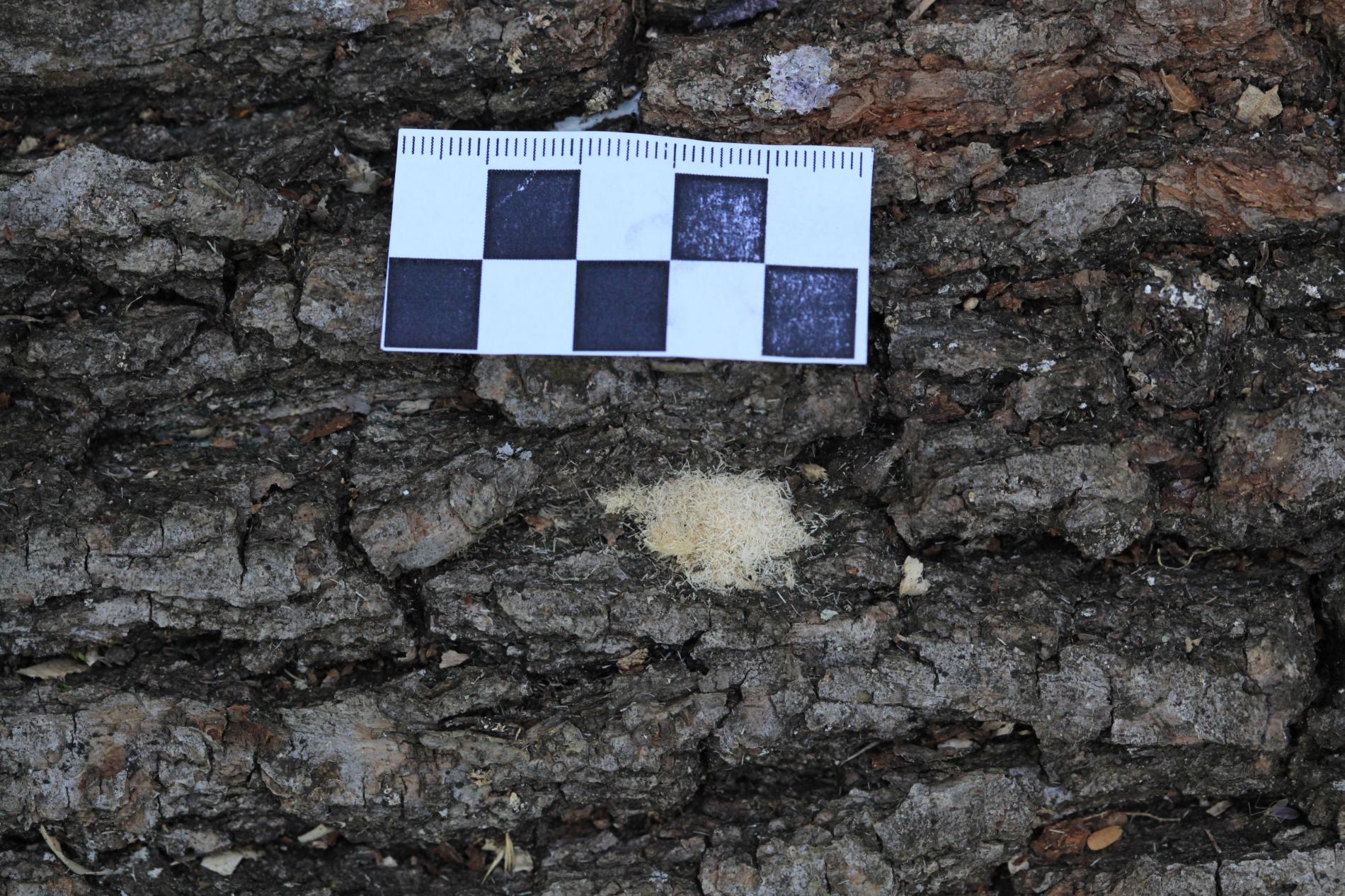
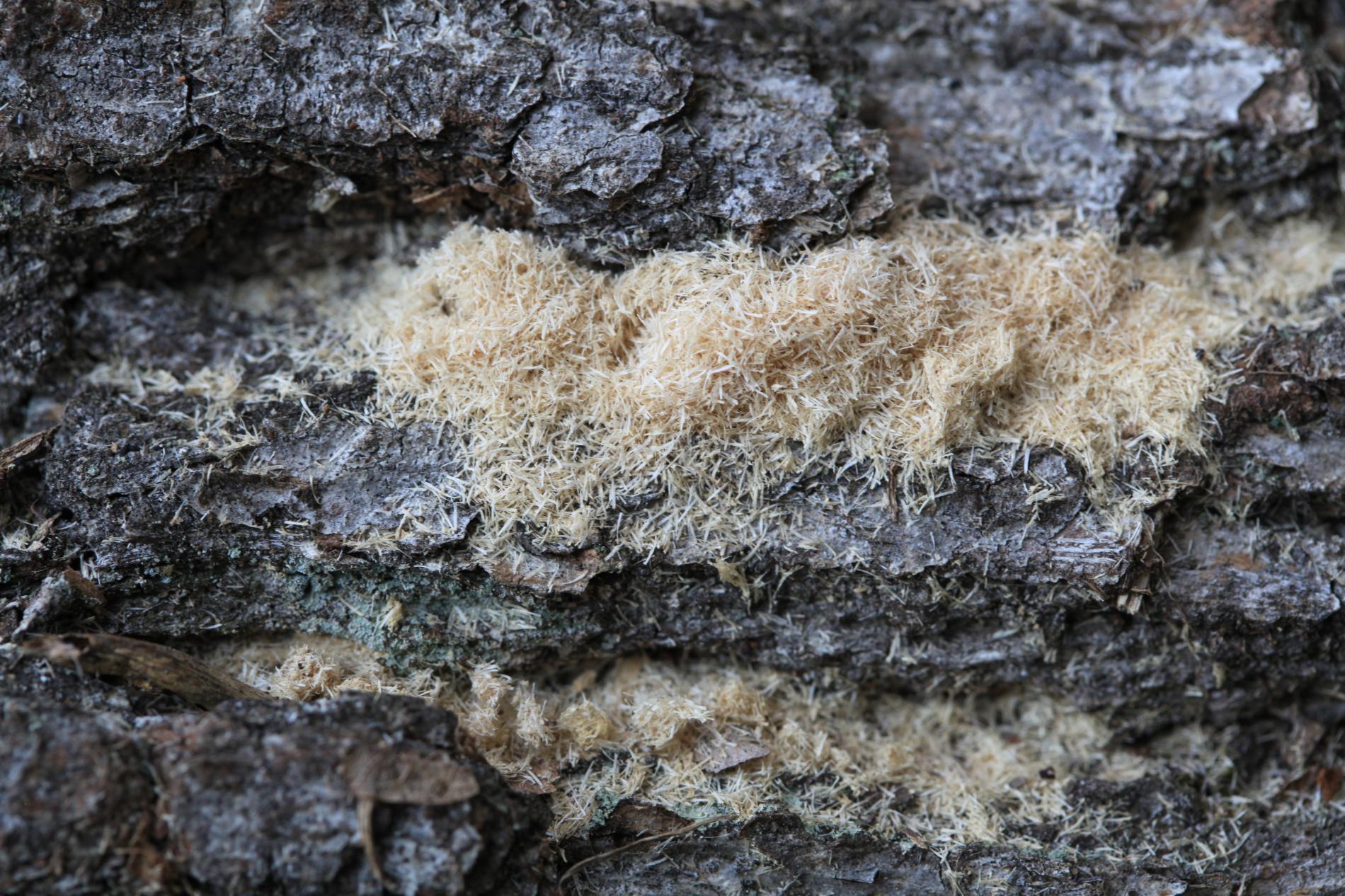
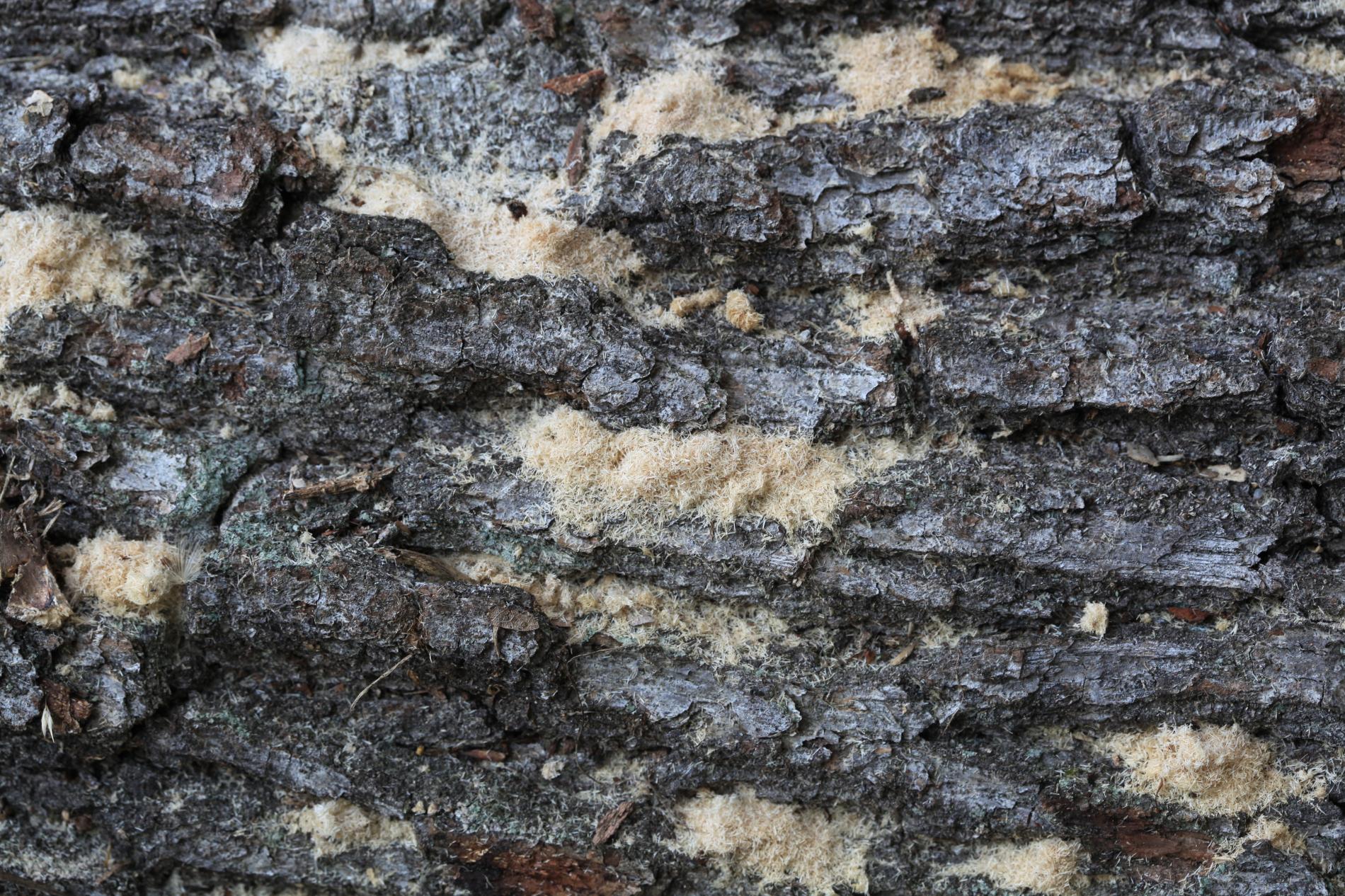
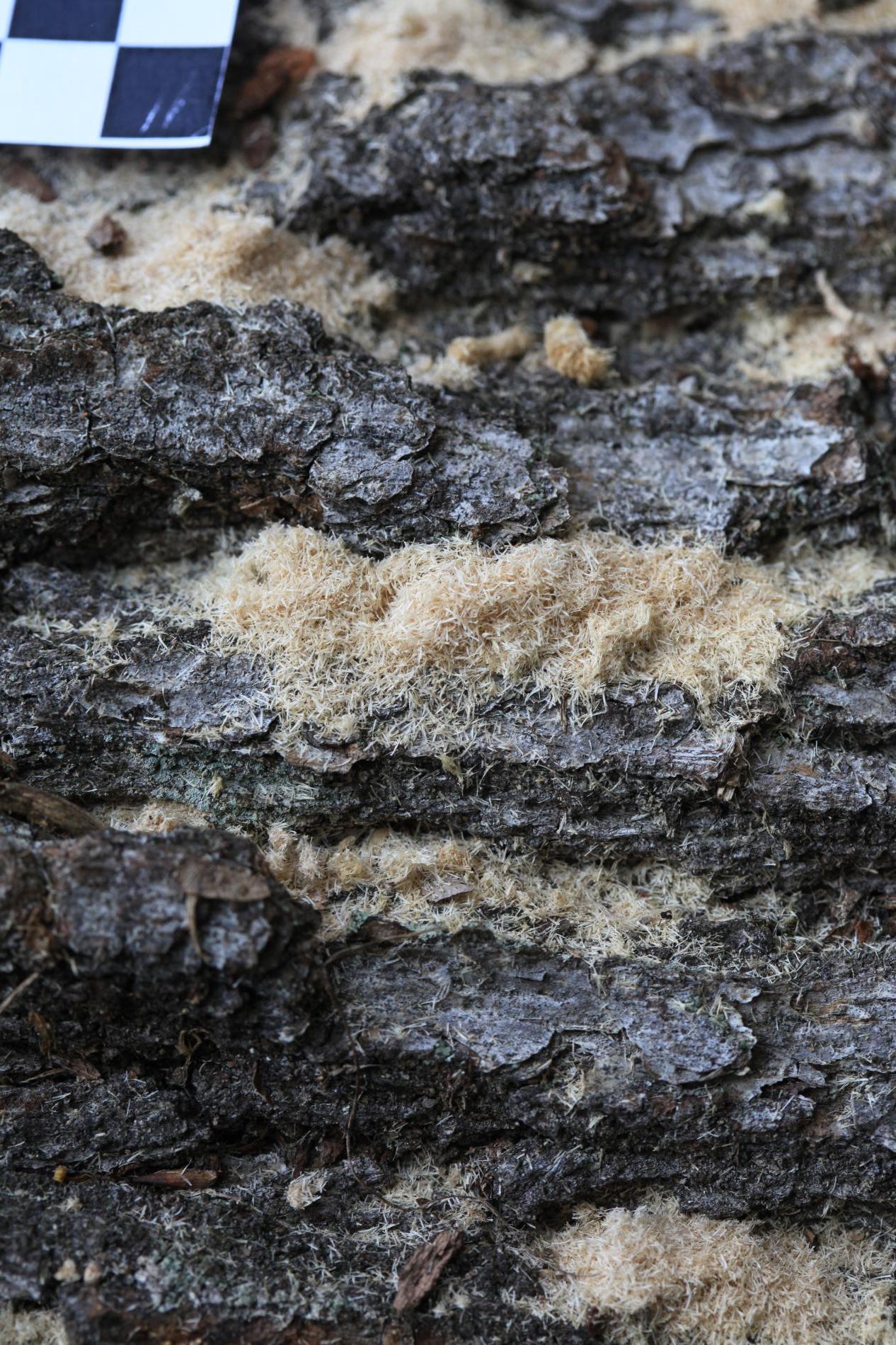
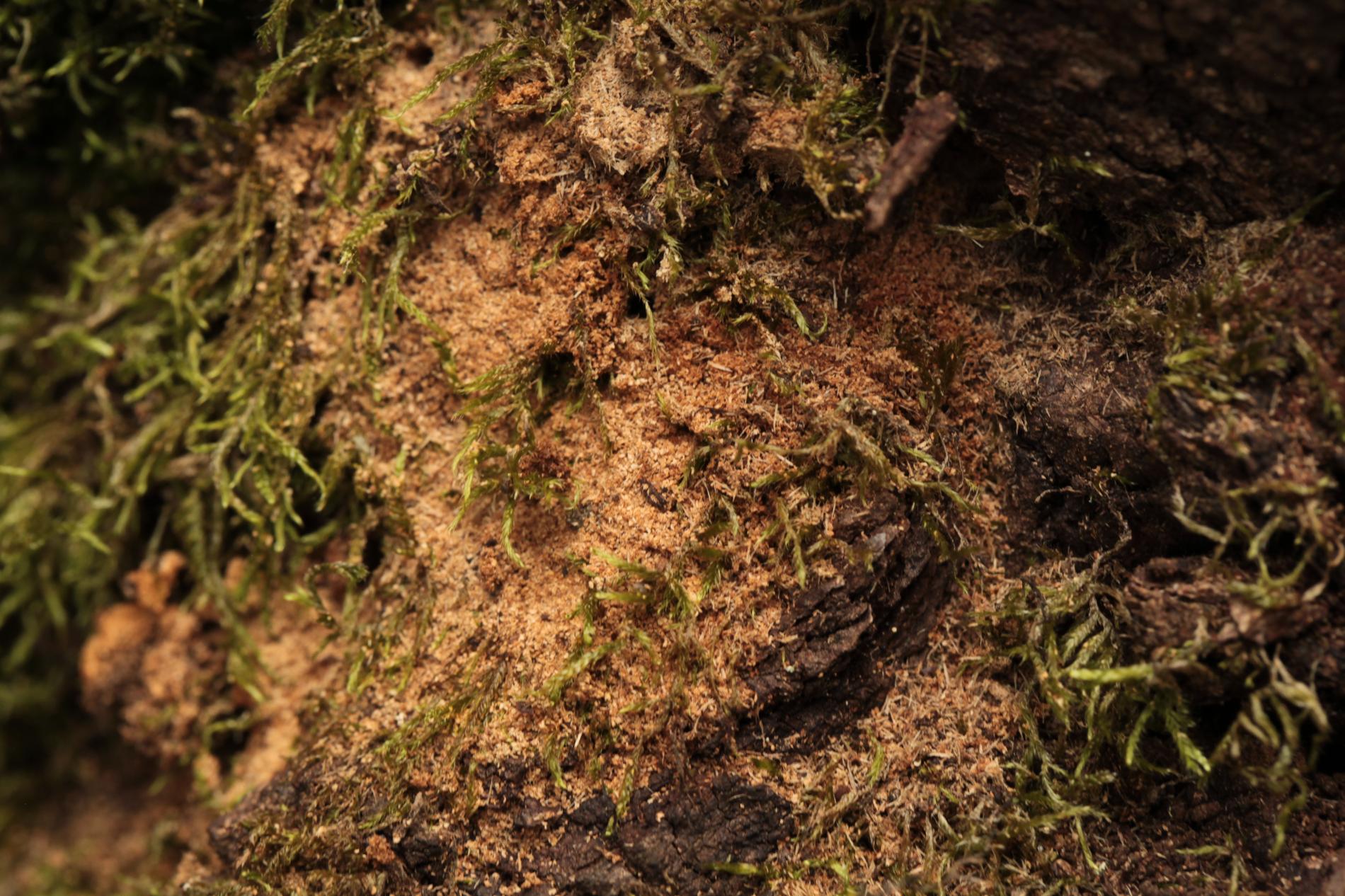
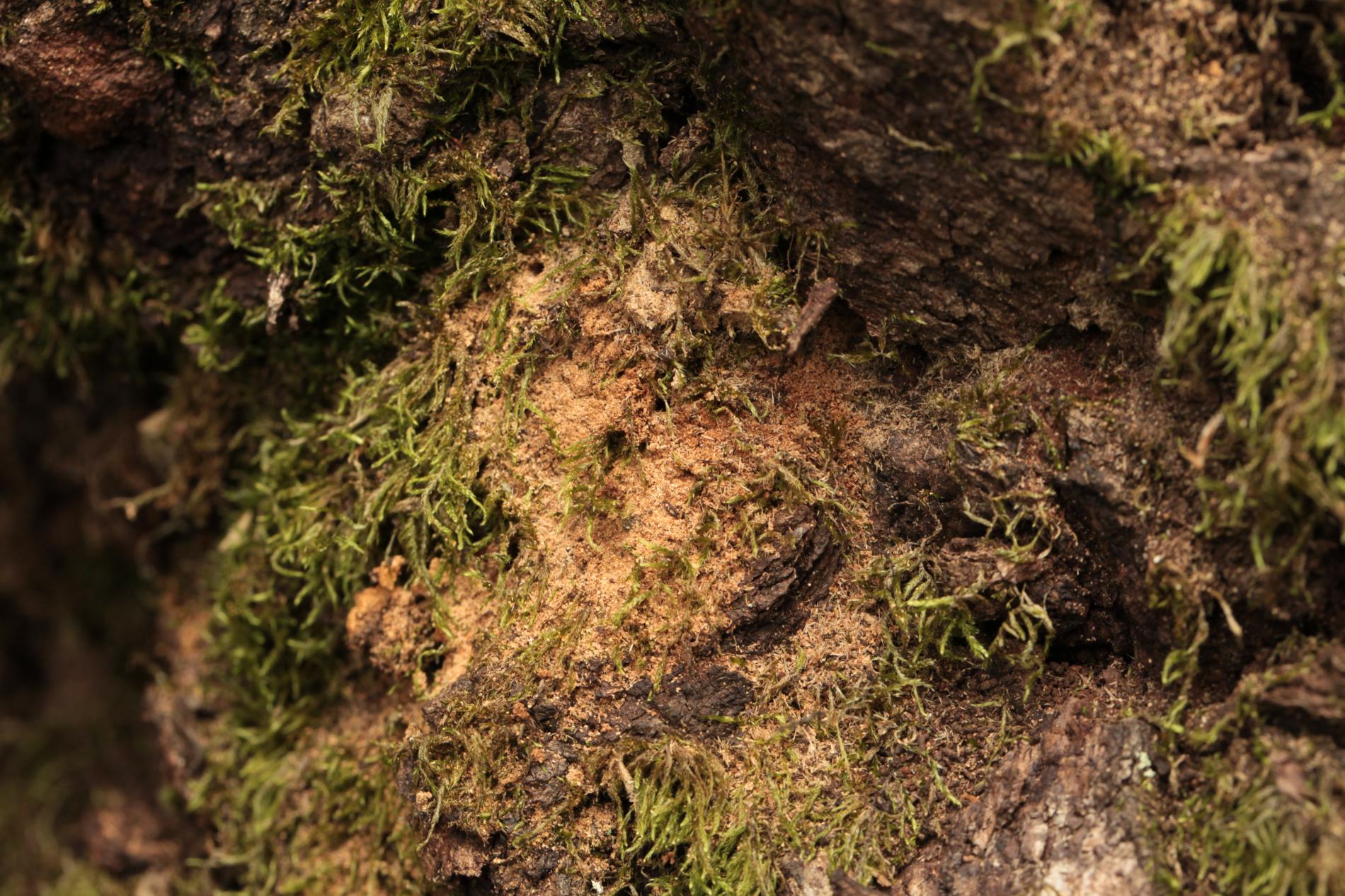
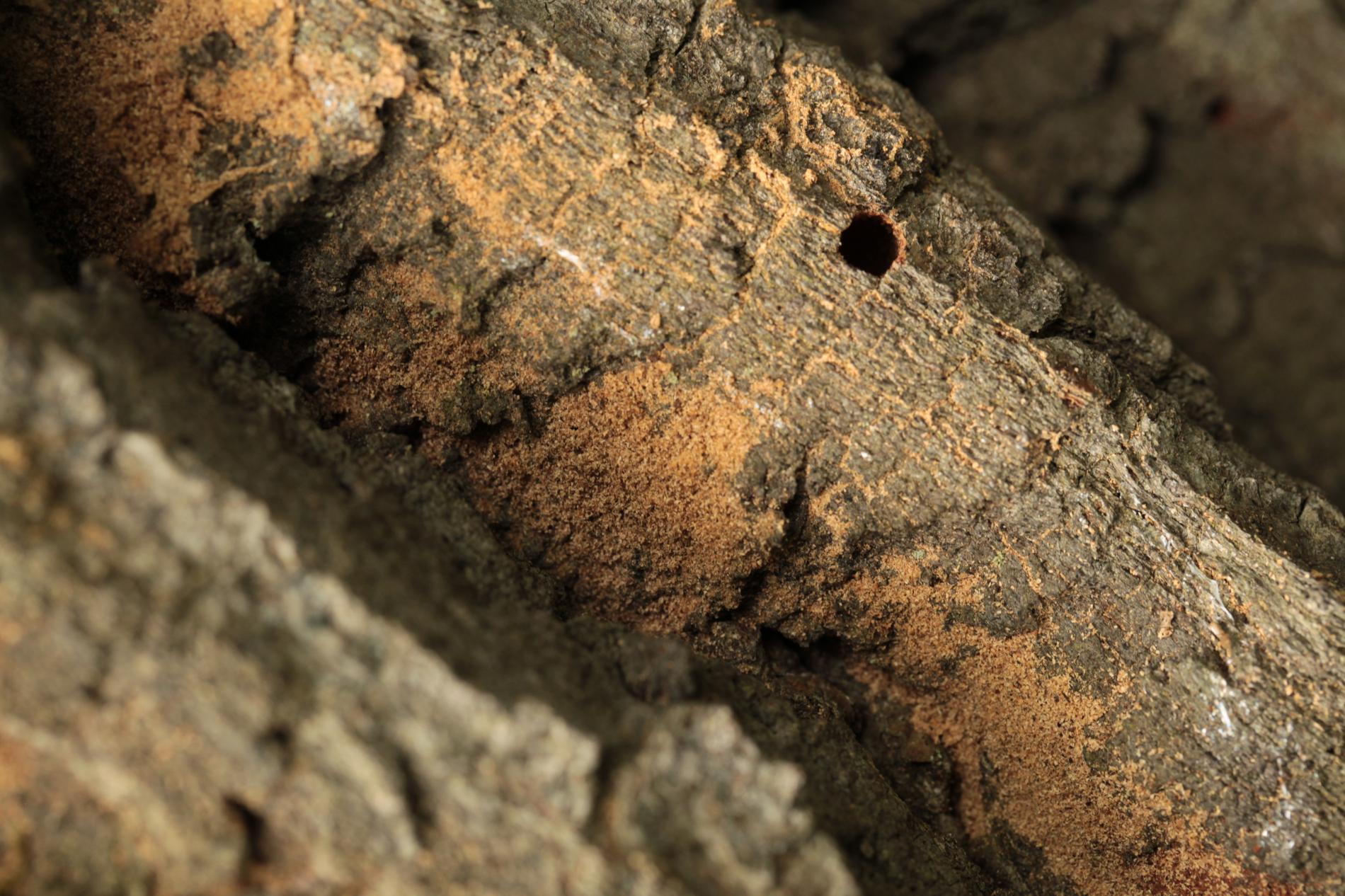
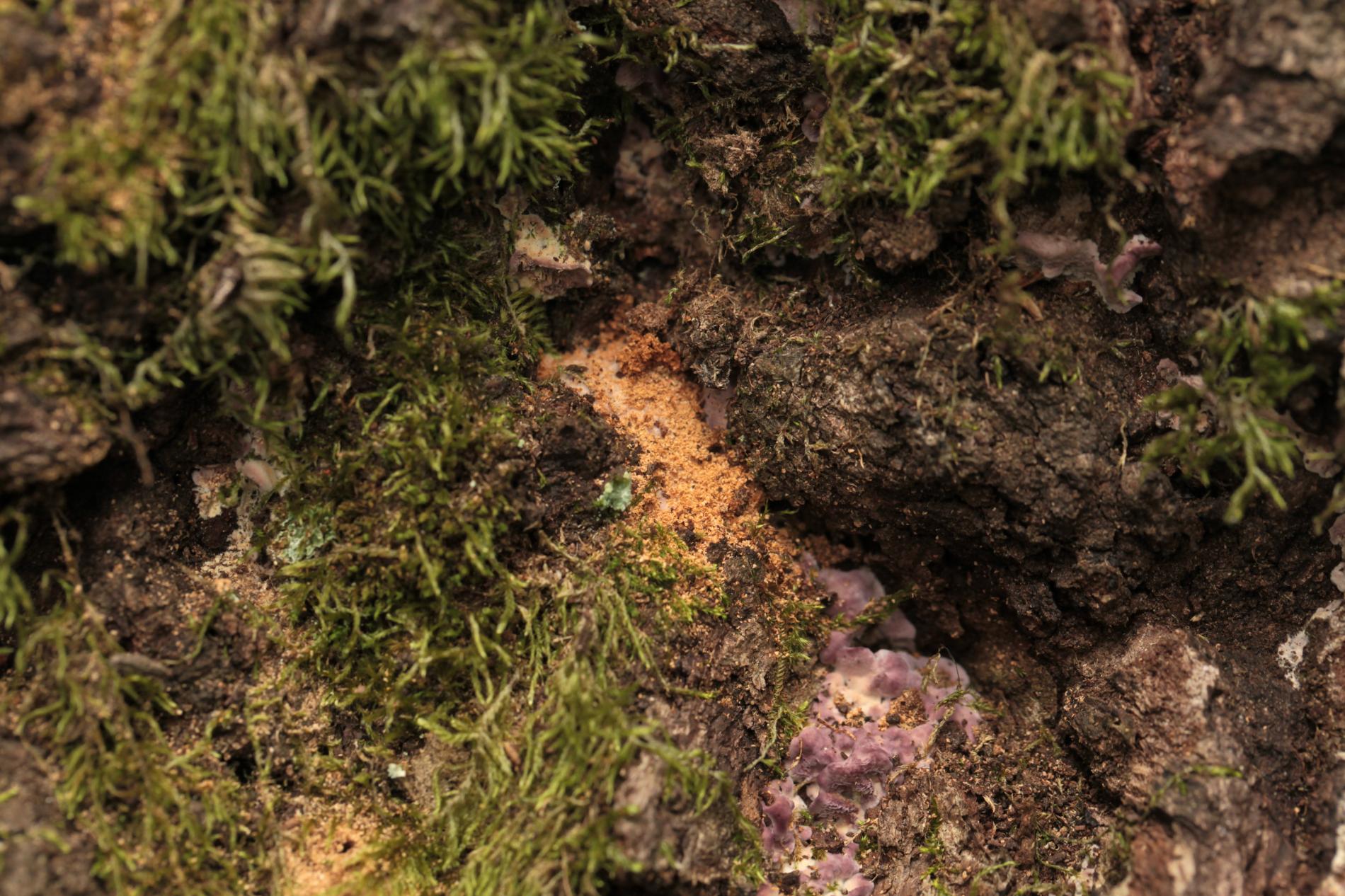
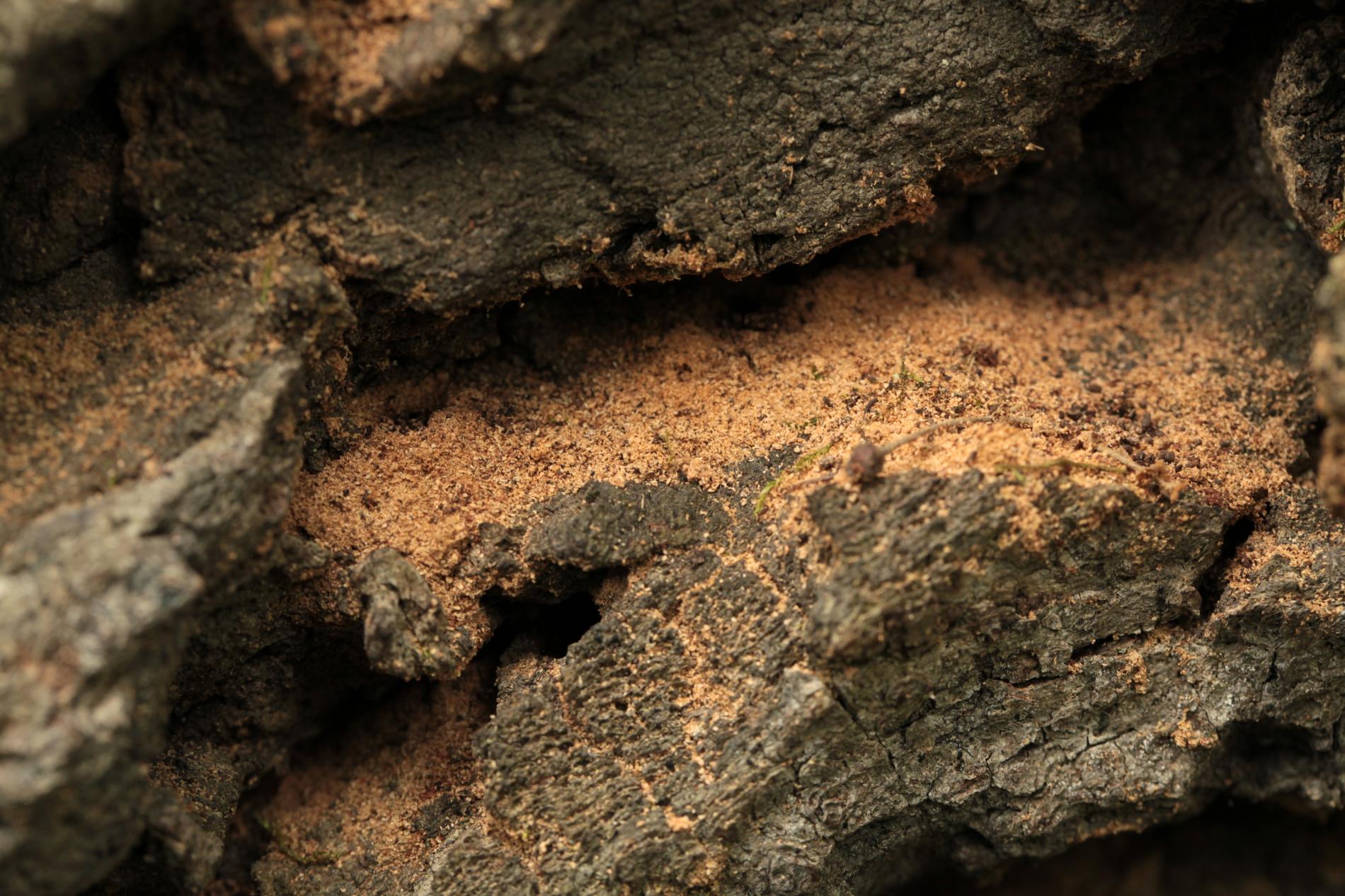
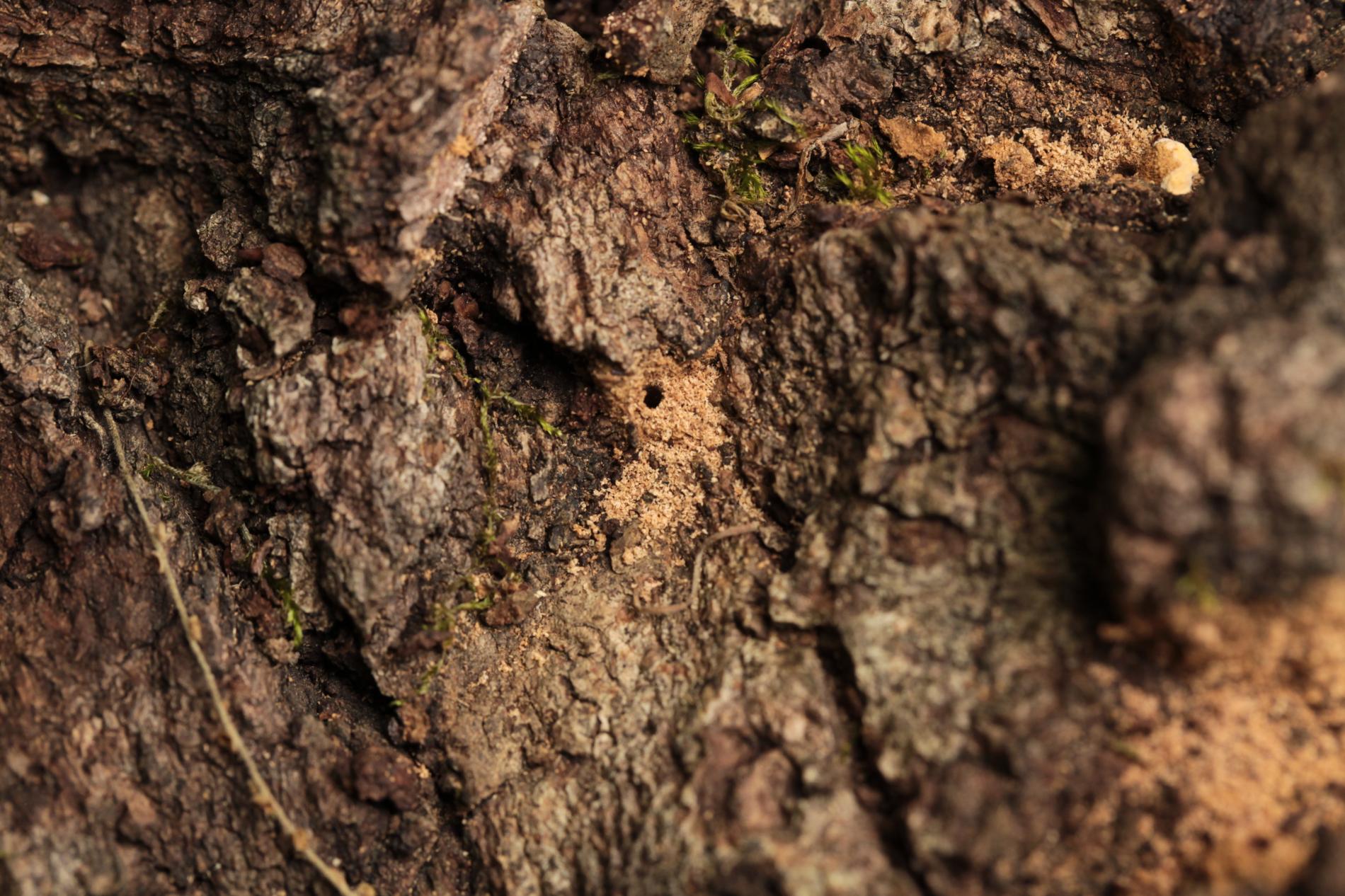
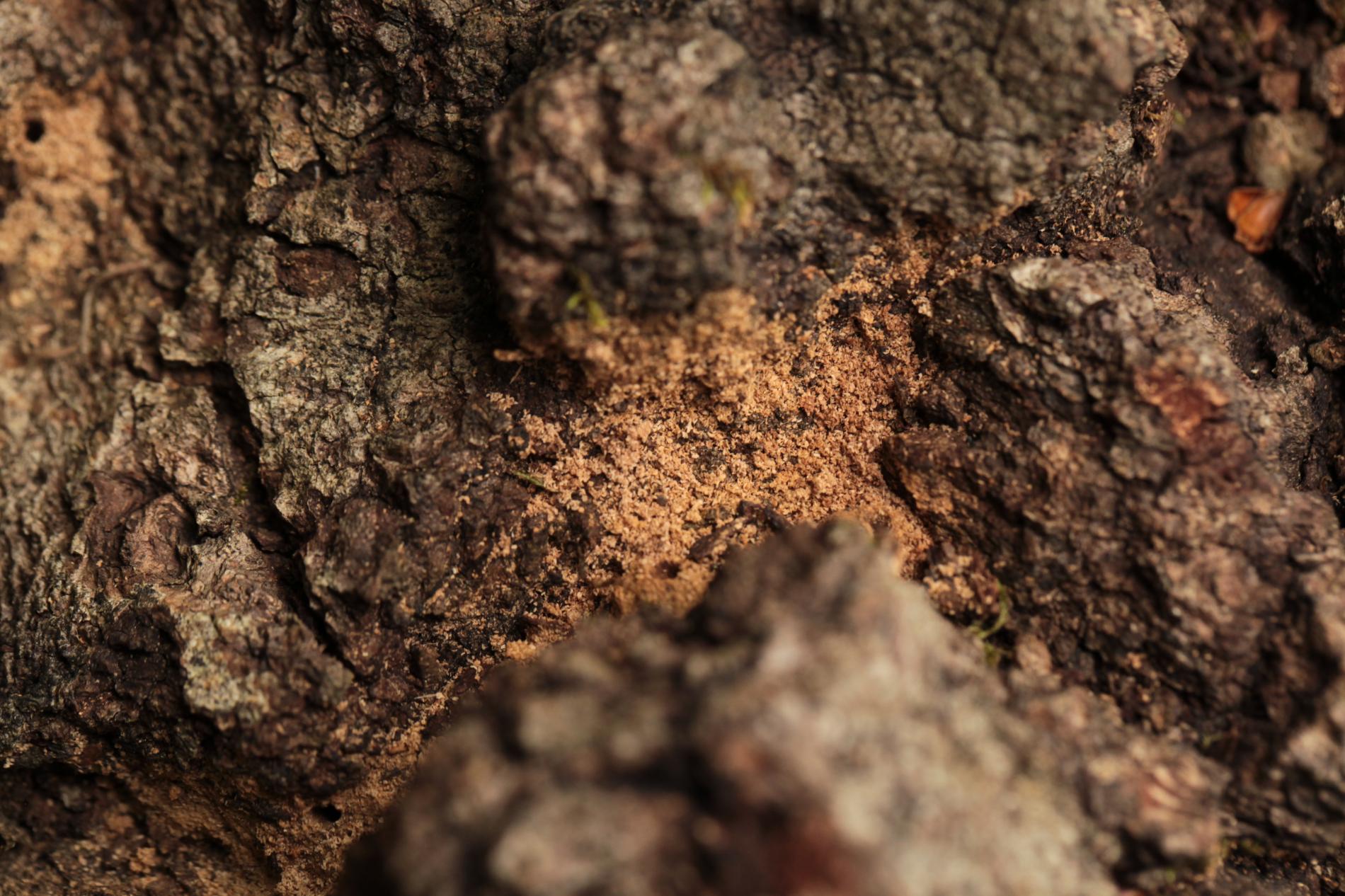
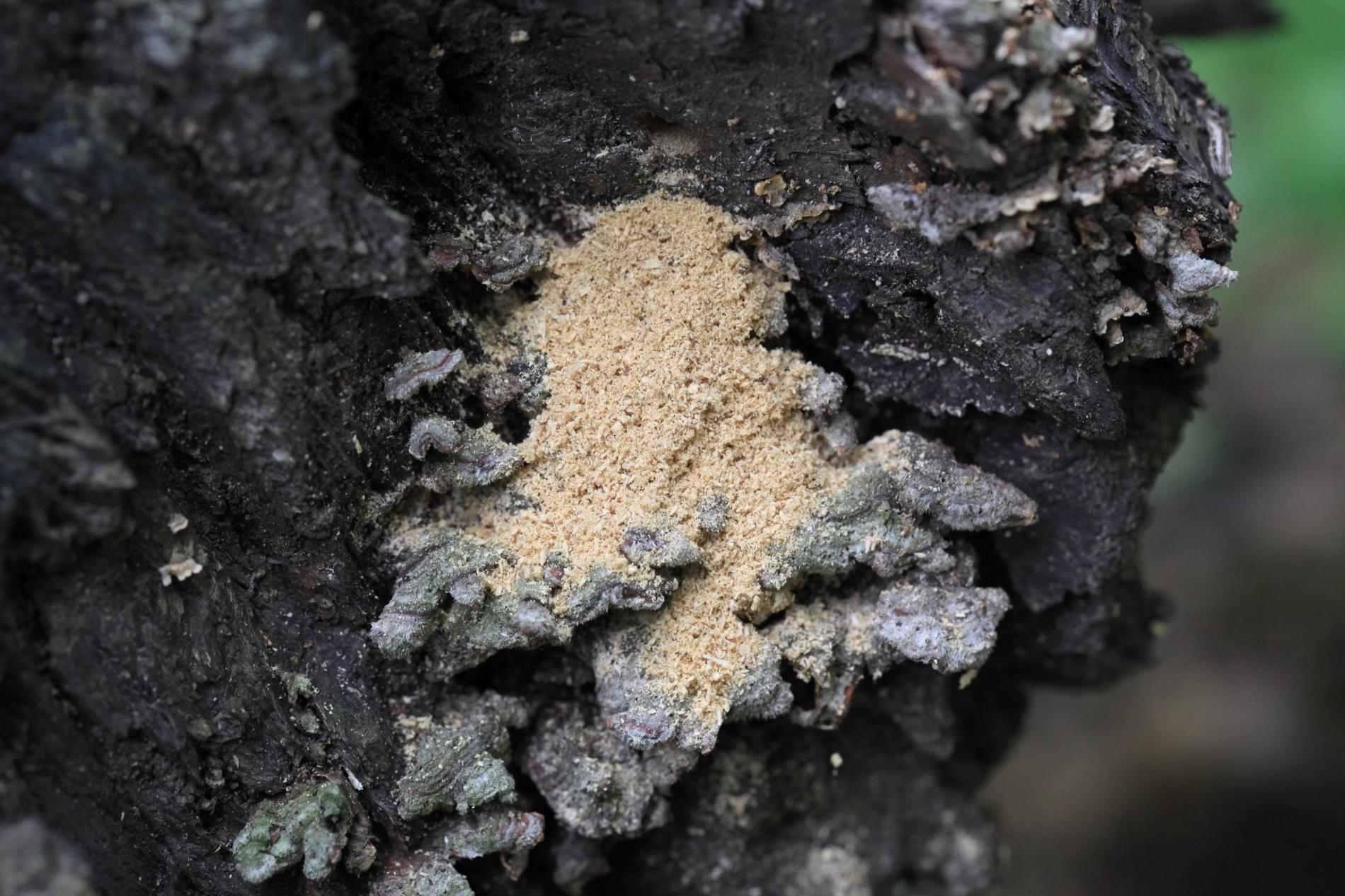
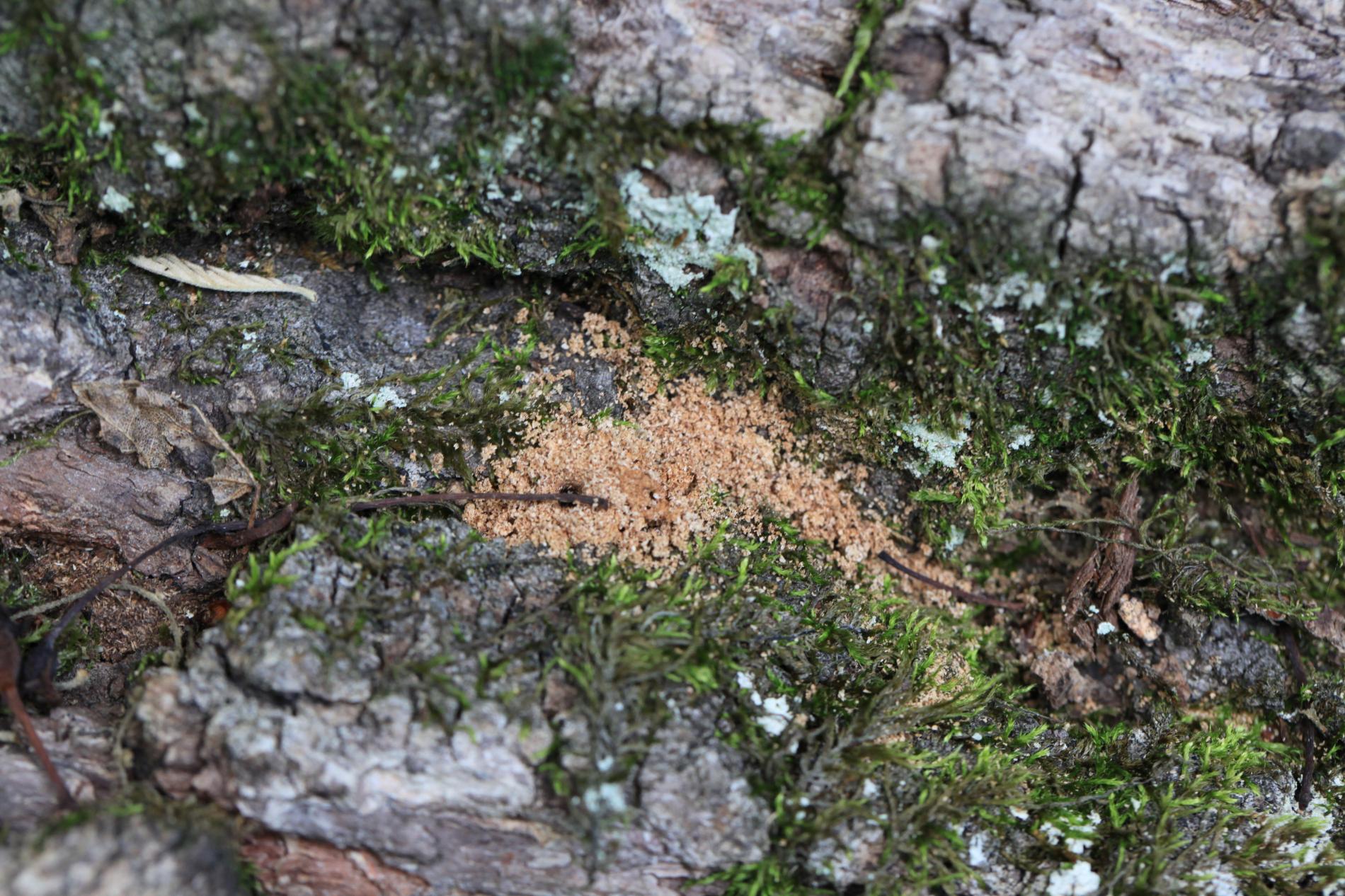
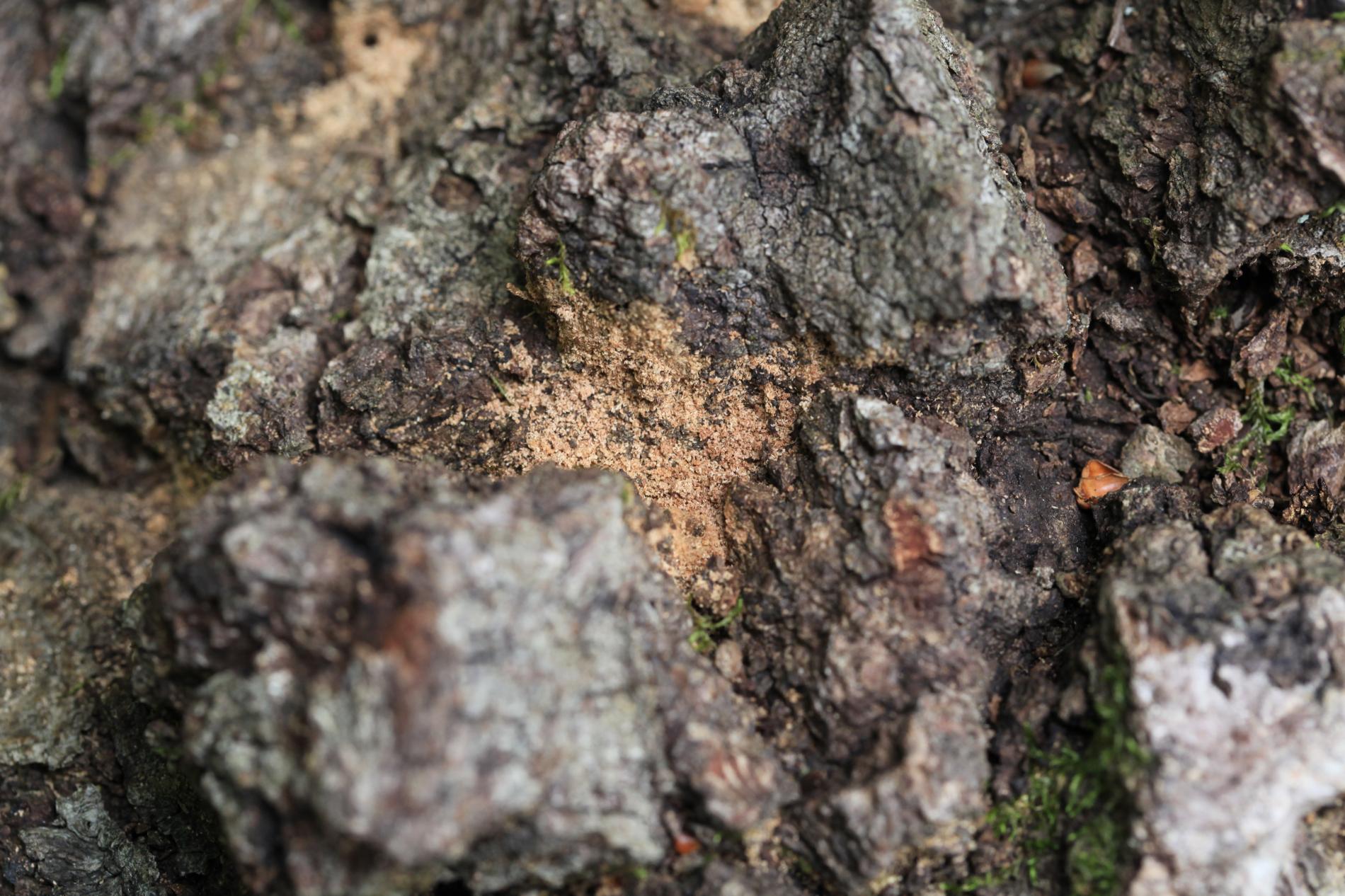
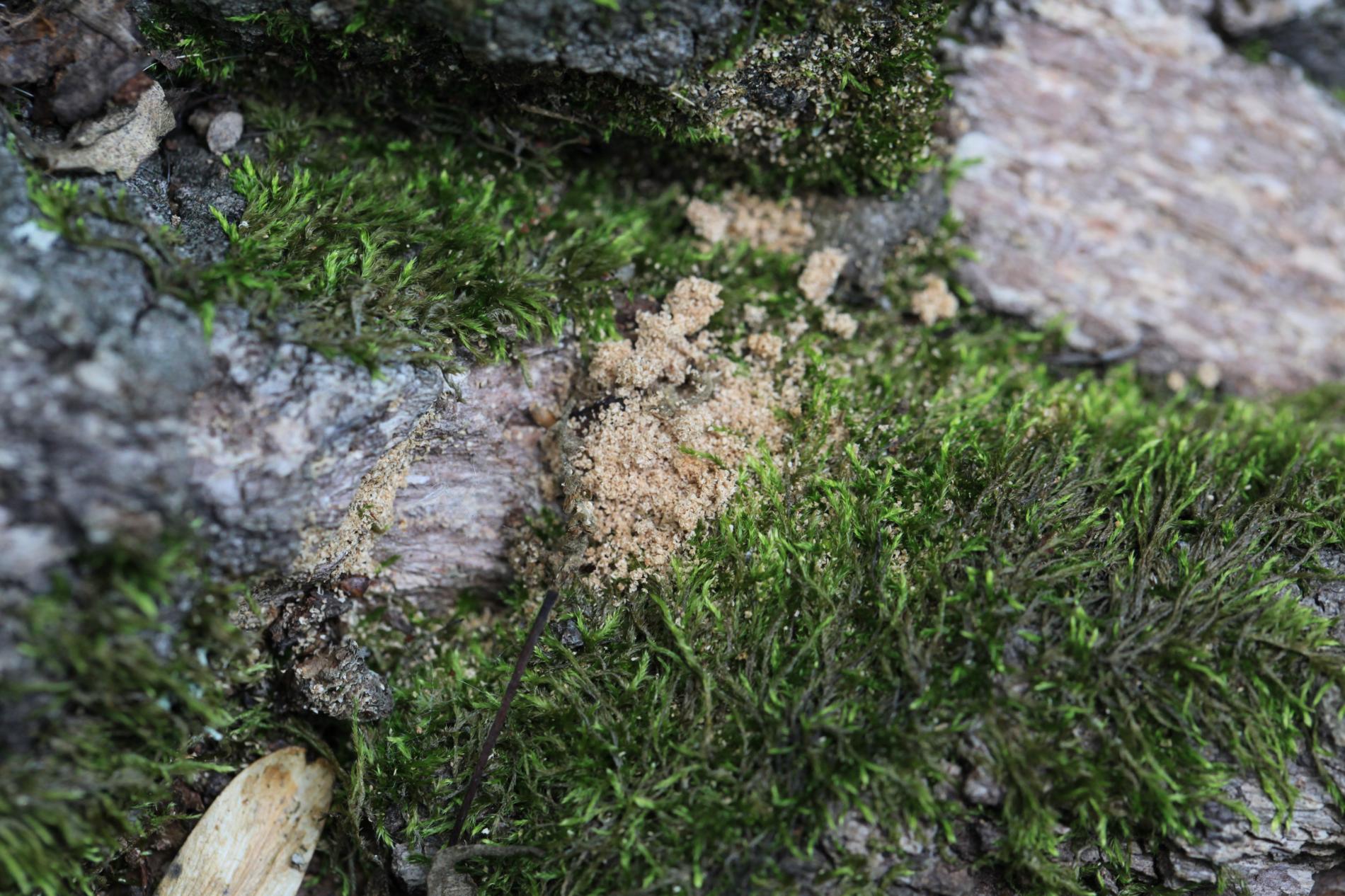
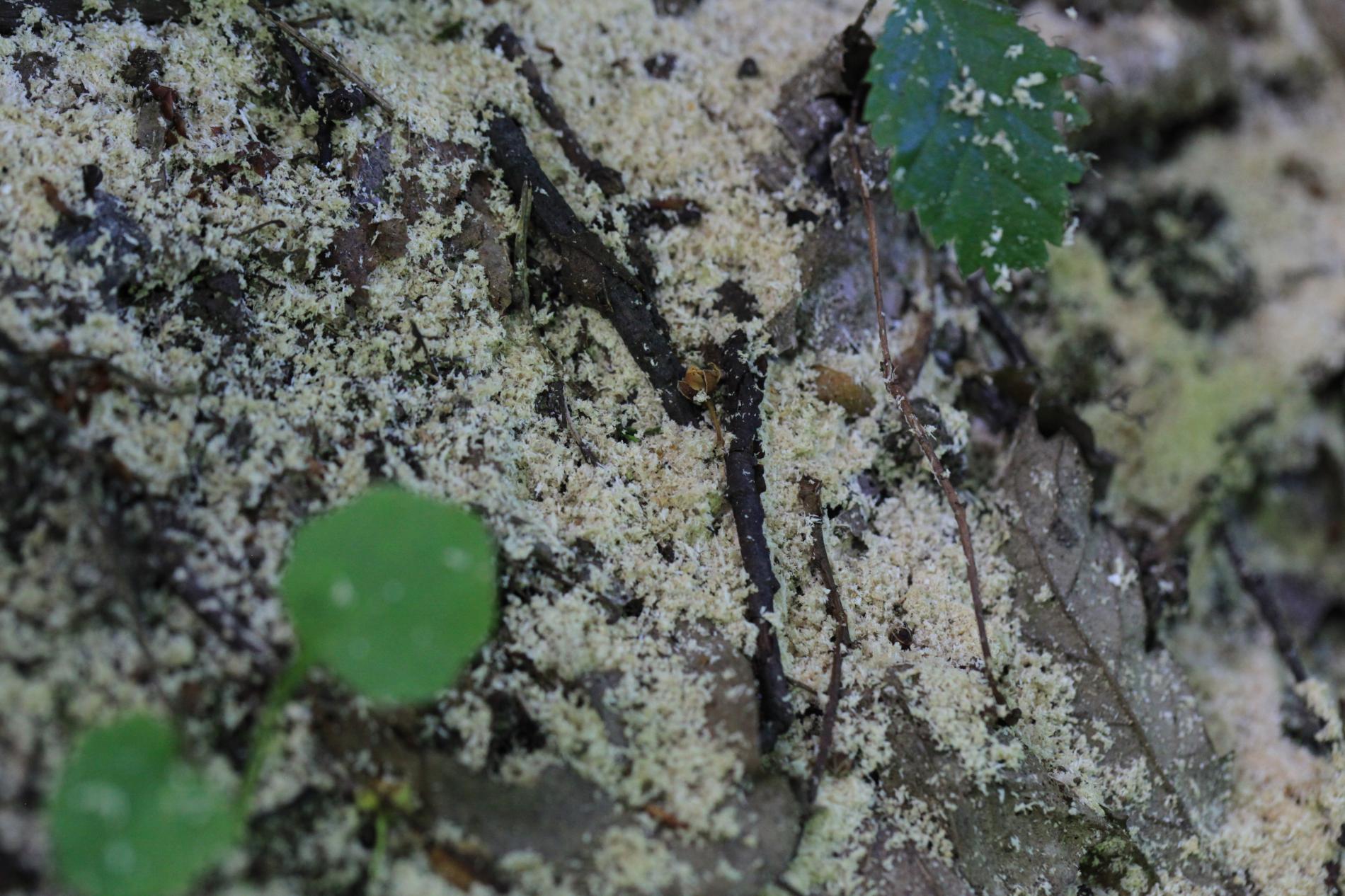
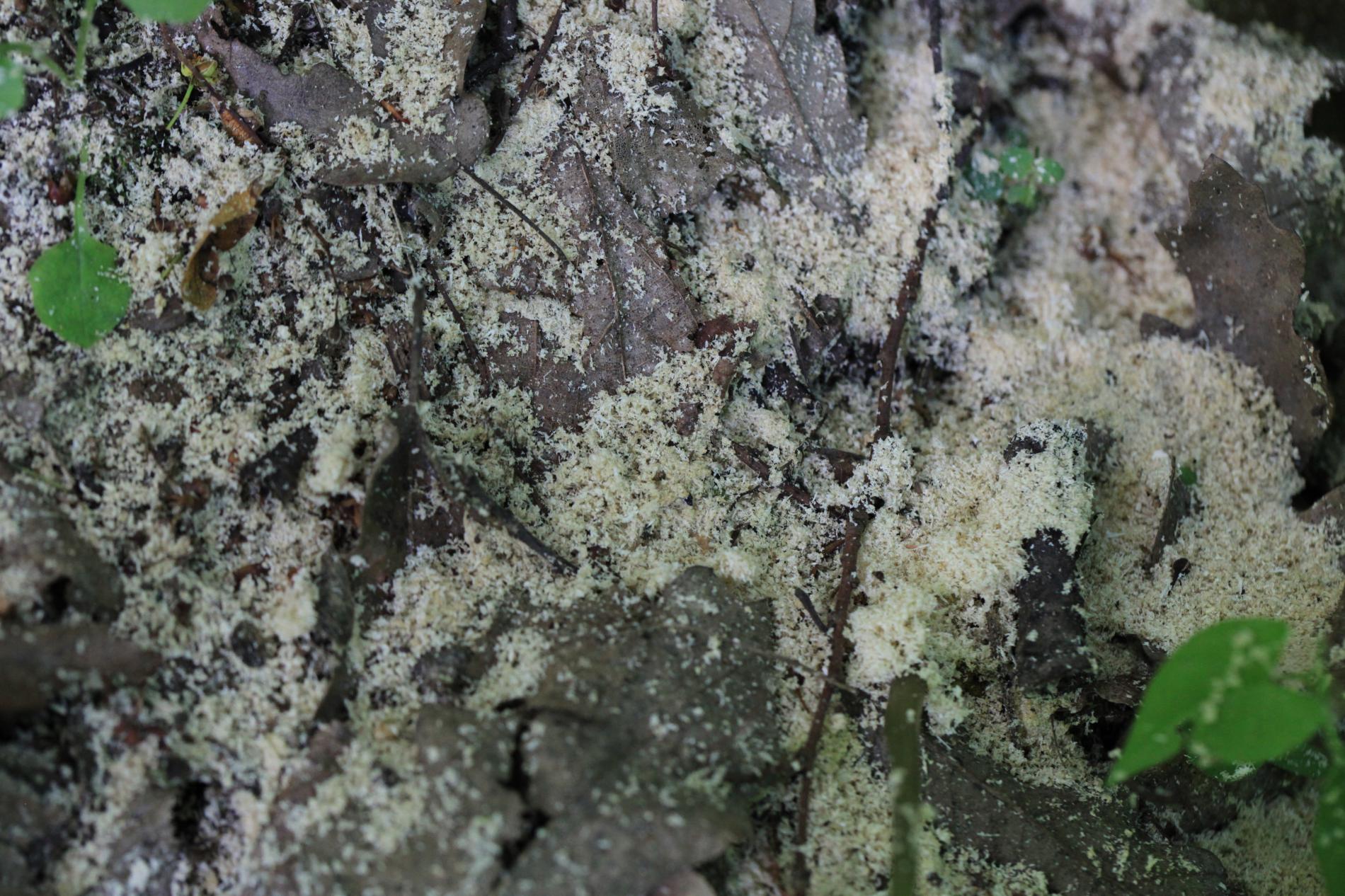
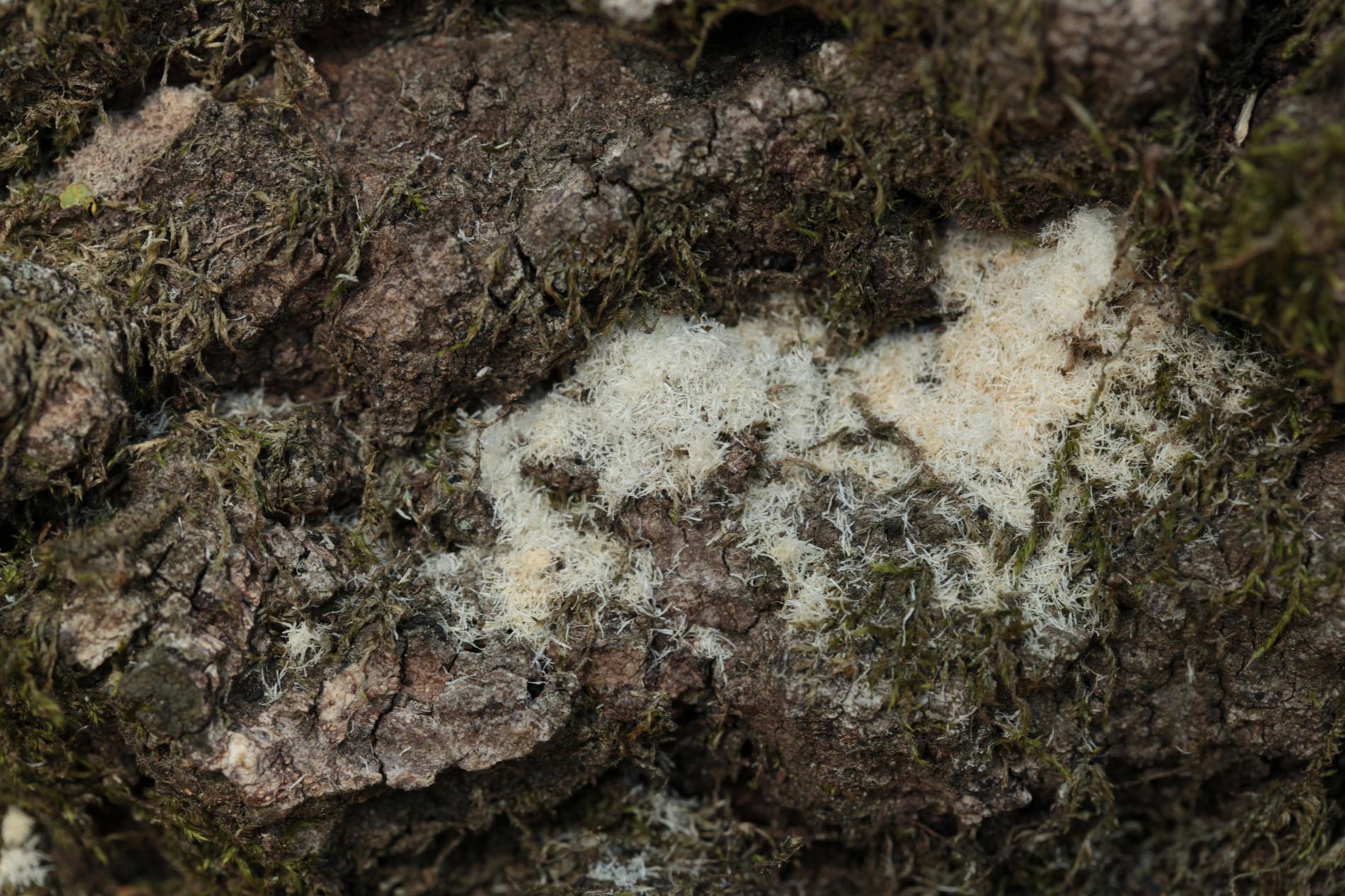
Very characteristic, 25-30 mm long branched galleries are visible on the longitudinal wood cut. This species produces two distinct types of frass. The first type is produced by the adults, which bore into the trunk. This frass consists of small, elongated, white, fibrous splinters.
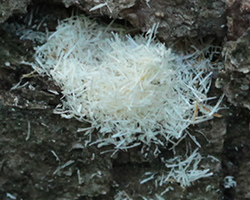
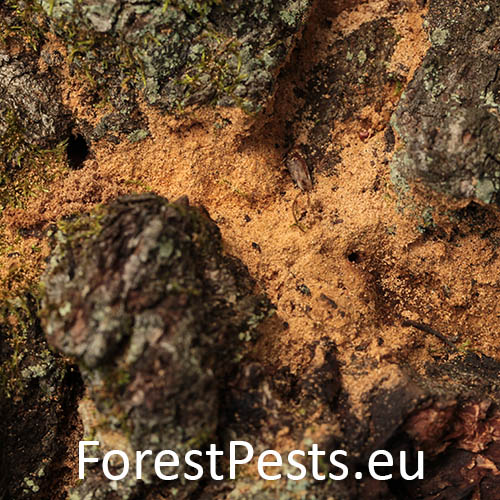
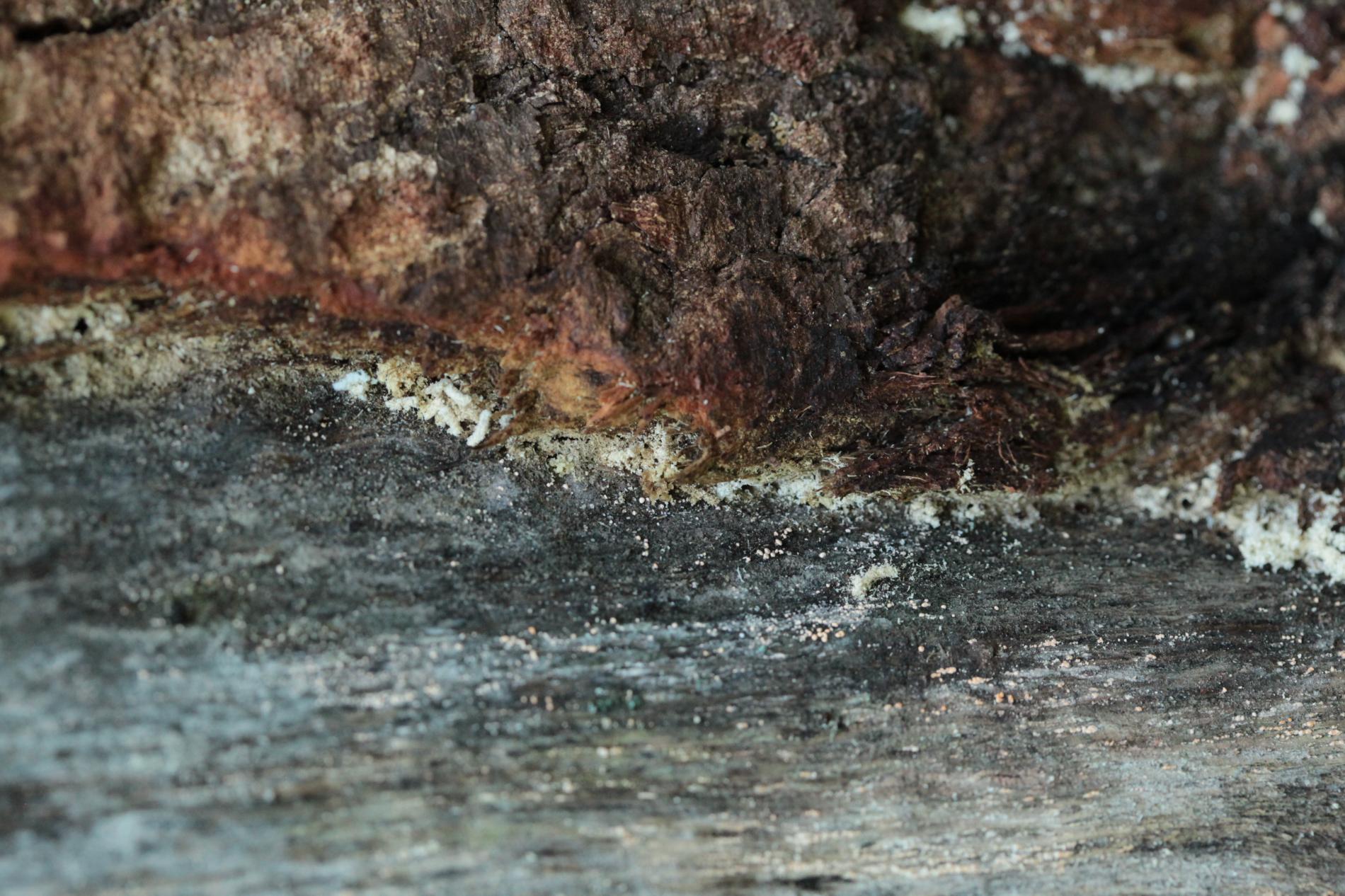
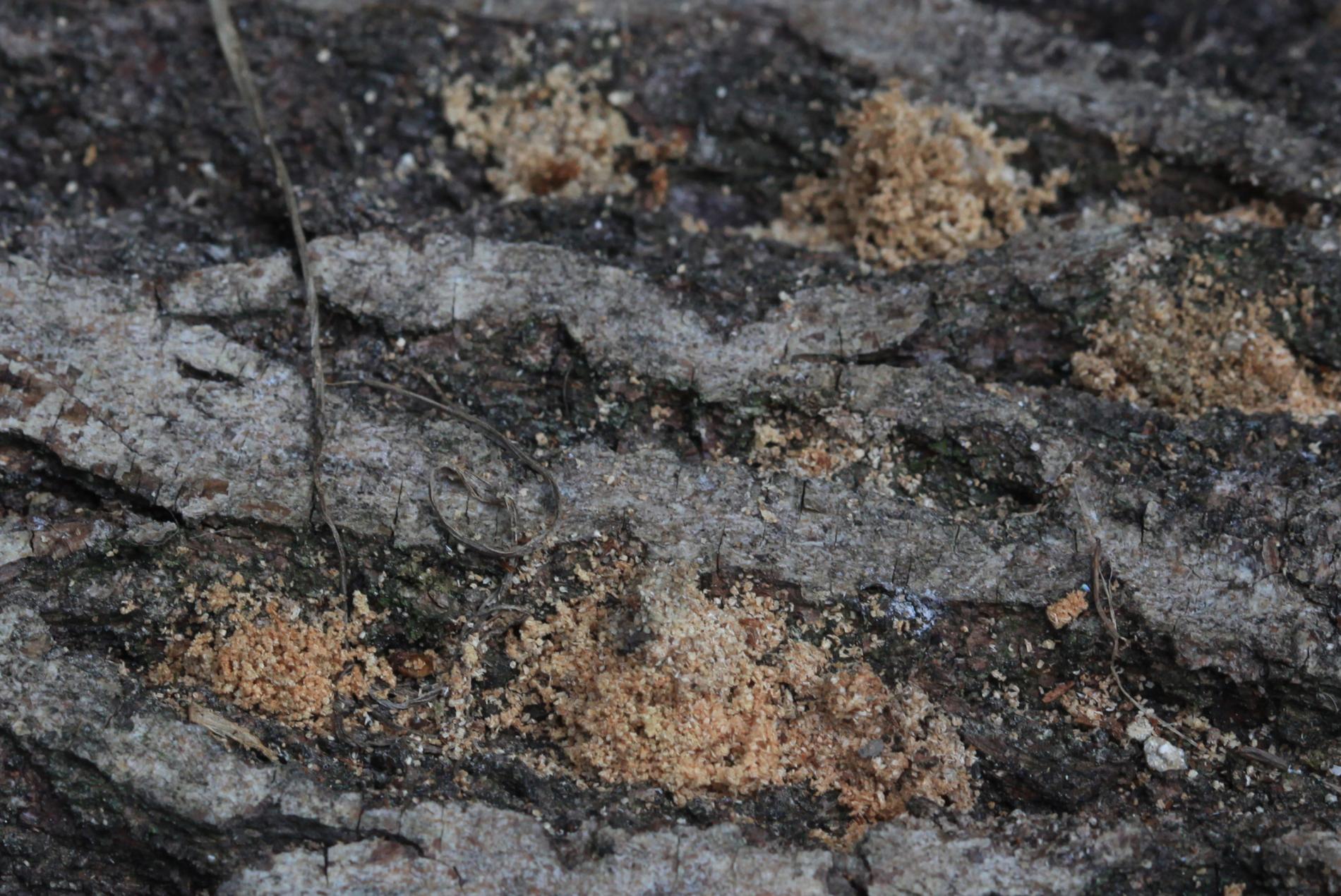
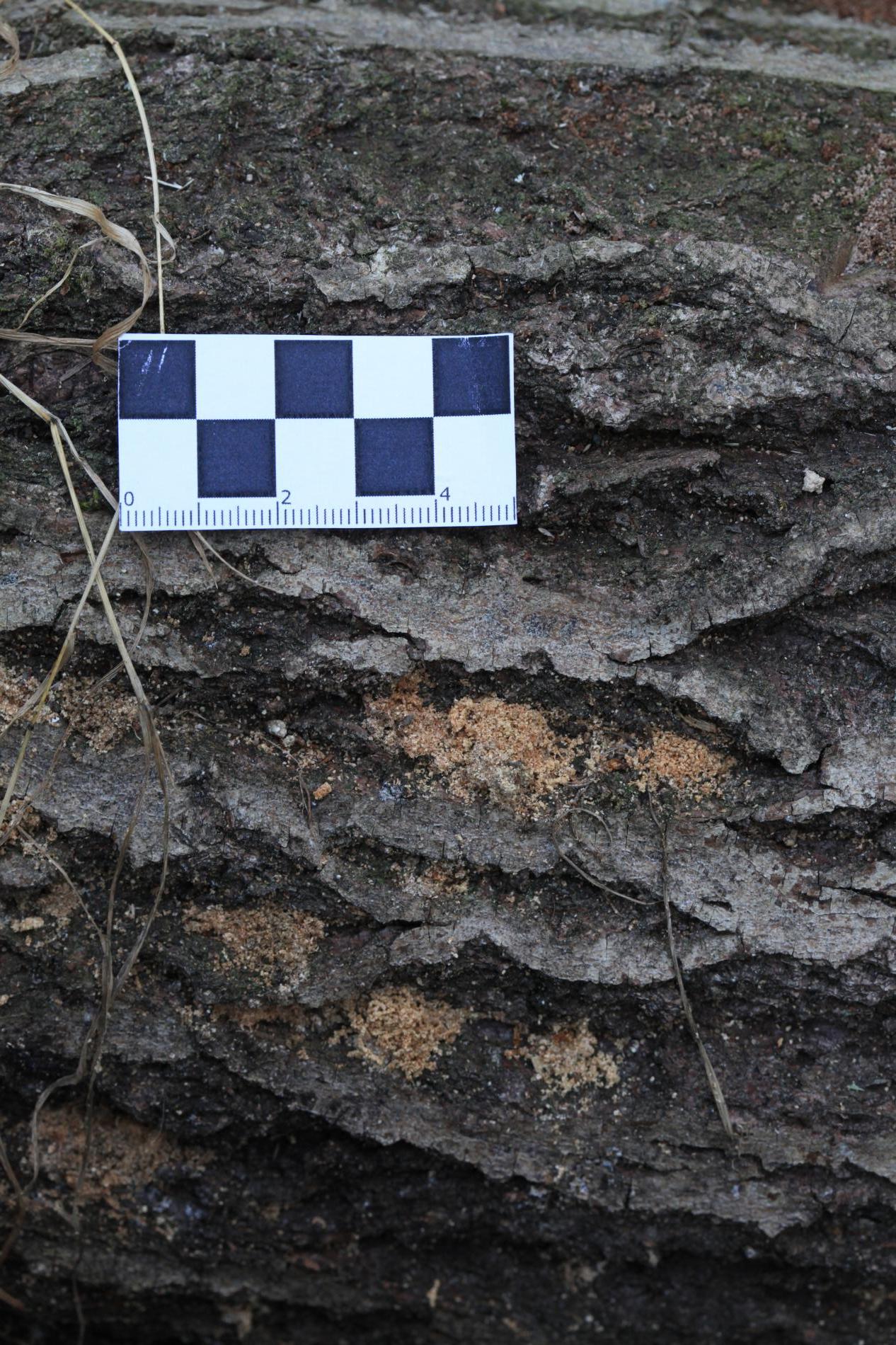
The second type of frass is produced by the larvae. They feed on ambrosia fungi, but before pupation they enlarge the galleries originally made by the adults and pupate inside them. During this activity, they expel very fine, granular frass, which often has a creamy to ochre colour.
a.jpg)
Tree Species: Oak
Part of a plant- attacked: Tree trunk
Pest significance: Harmful
Pest Category: Insects
Invasive Species: No
Present in EU: Yes
Pest group: Insect
Depth of damages: Bark, Under bark only, Up to 0,5 cm depth, Up to 2 cm depth, Up to 5 cm depth
The extent of damage: Whole trunk
Prevalence in Europe: Very common
Damaged products: Firewood, Fresh timber logs (water still in the sapwood), Furniture, Lumber, boards and prisms, Wooden house constructions
Roundwood size: Diameter 50+, Diameter from 10 up to 50 cm
Wood discoloration: No
Exit holes: Round
Pest subcategory: Wood-boring insect
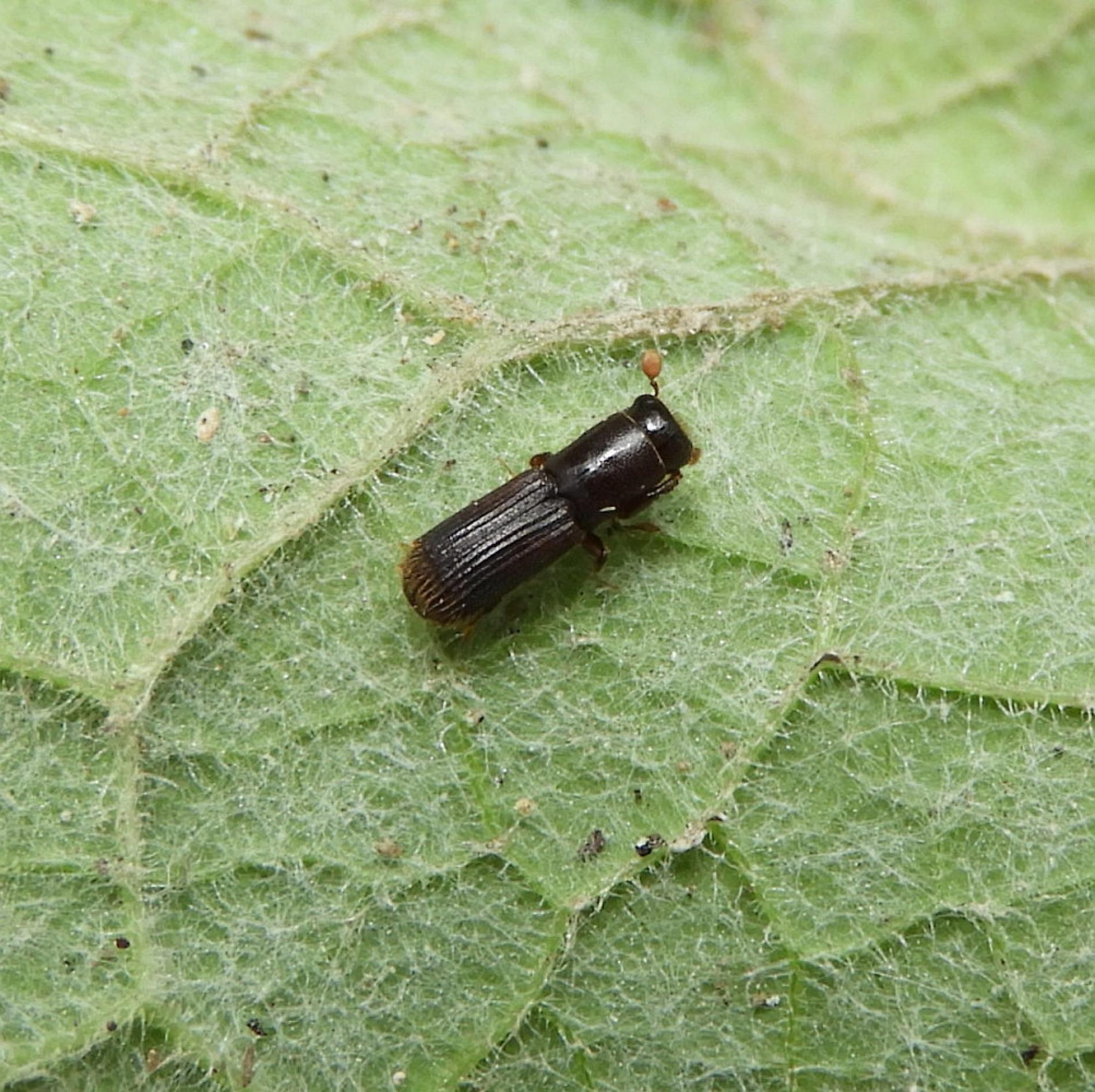
Similar pests

Trypodendron domesticum

Ptilinus pectinicornis
