


Pityogenes chalcographus
Six-toothed spruce bark beetle
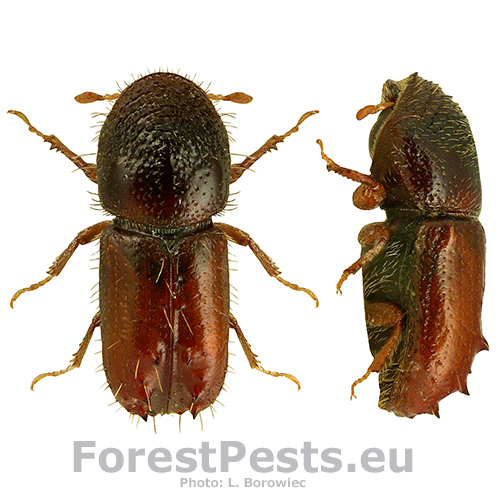
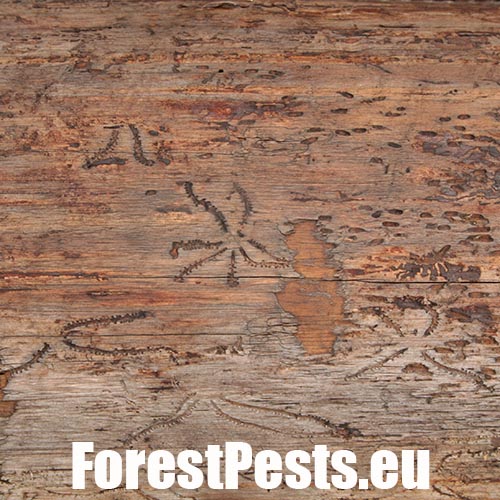
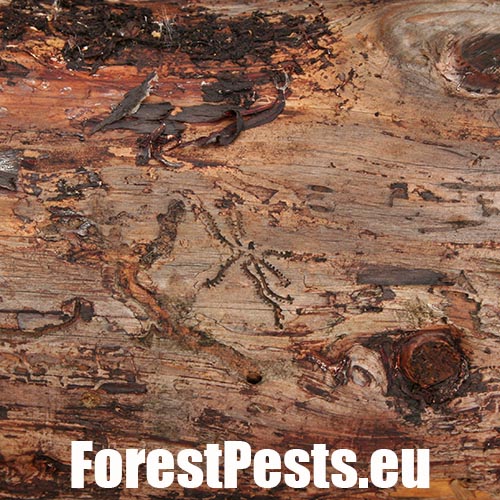
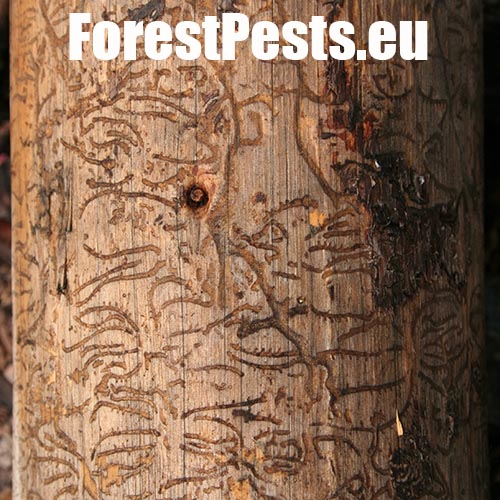
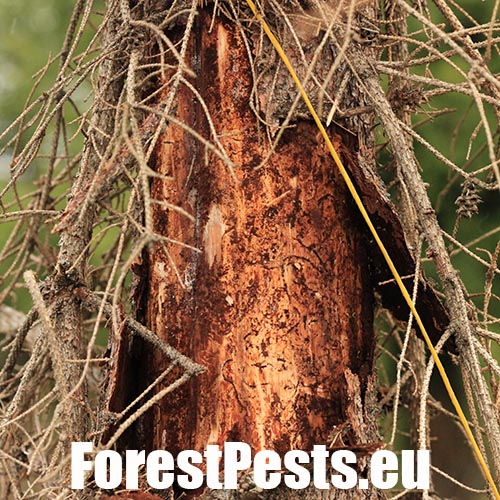
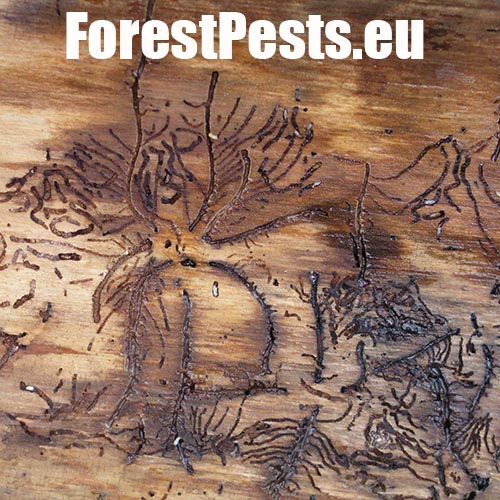
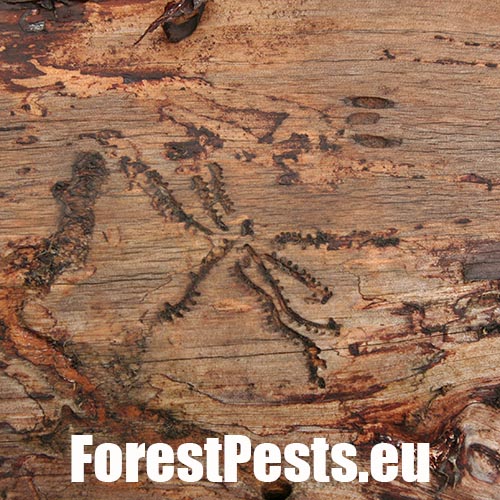
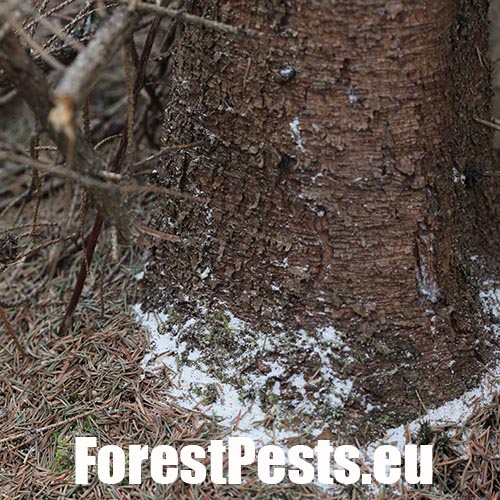
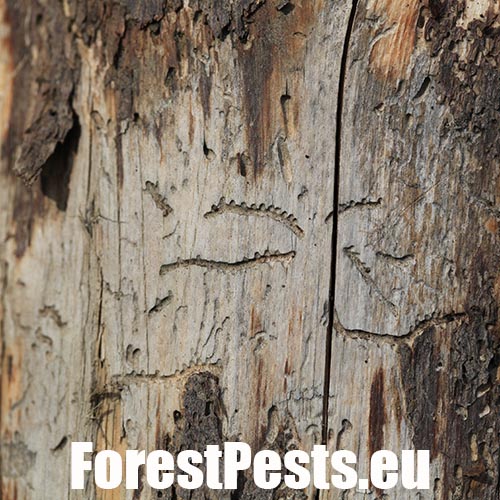
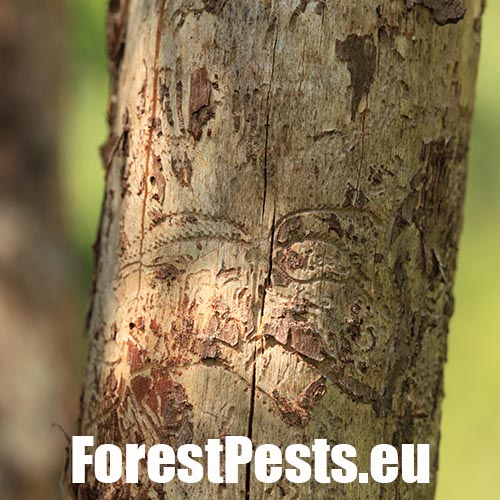
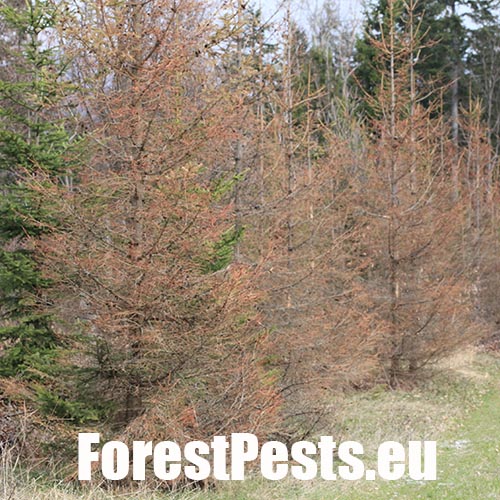
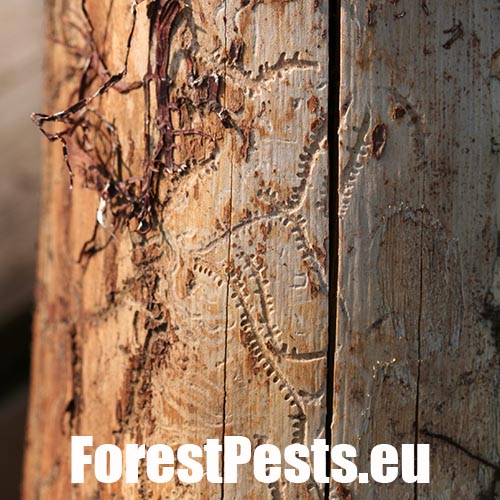
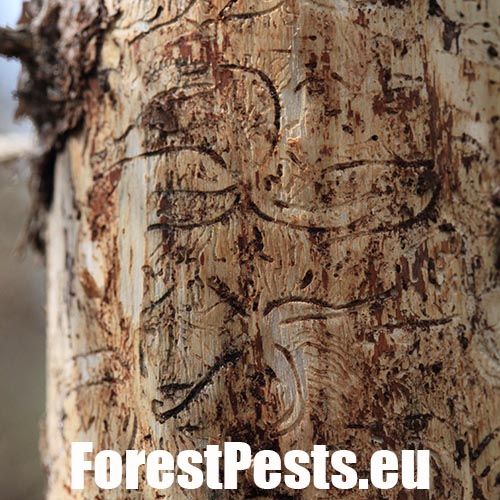
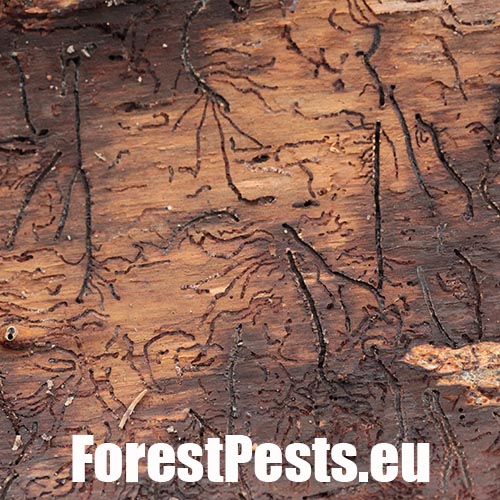
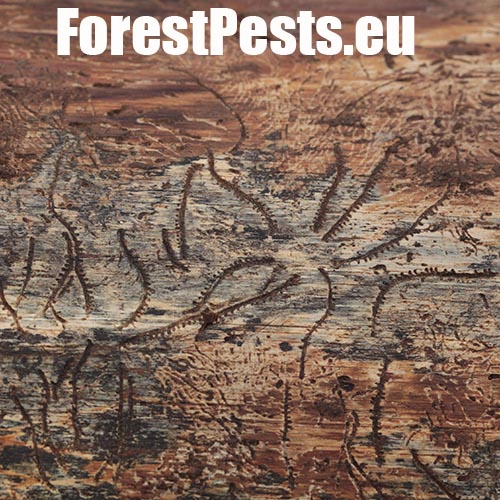
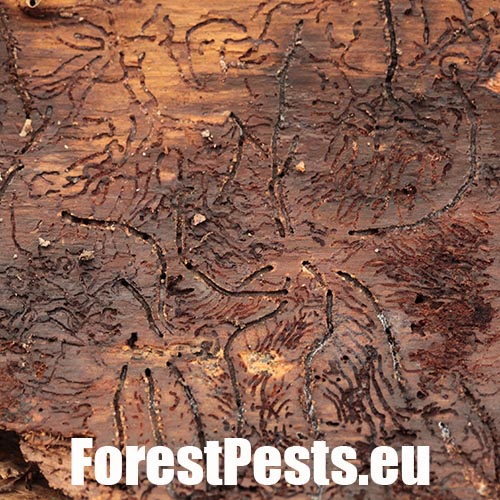
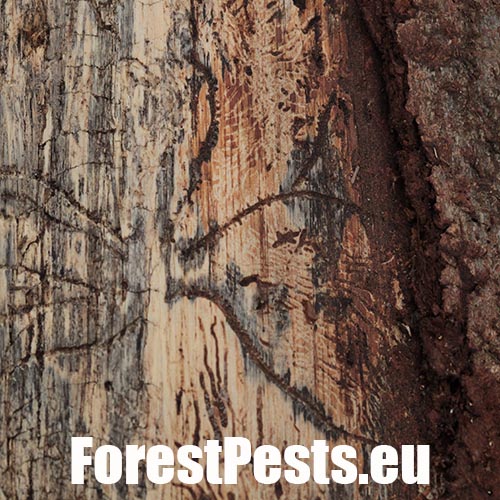
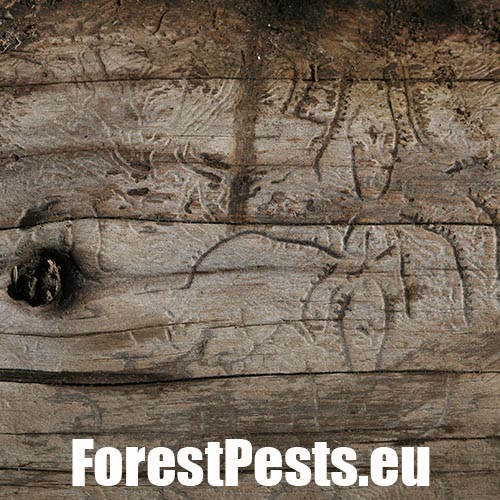
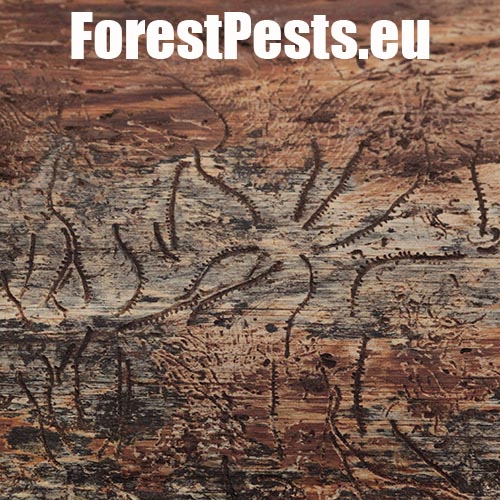
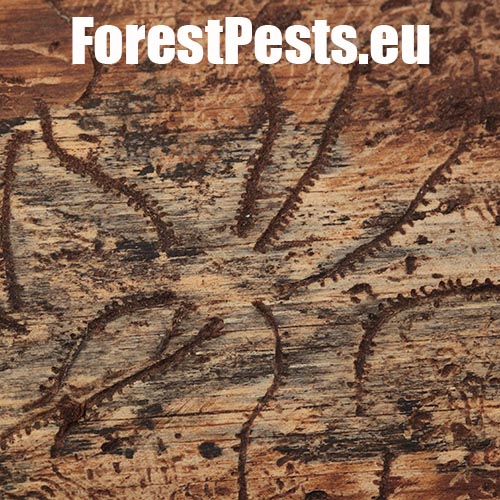
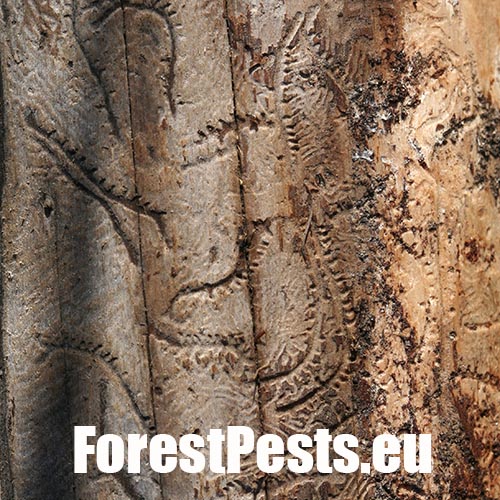
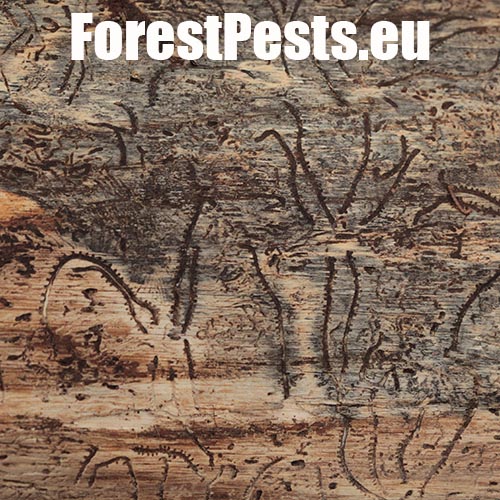
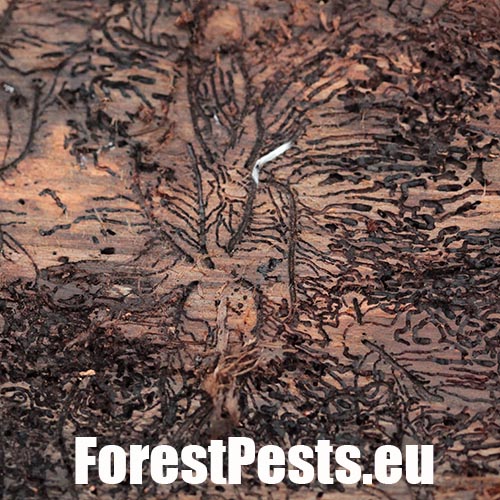
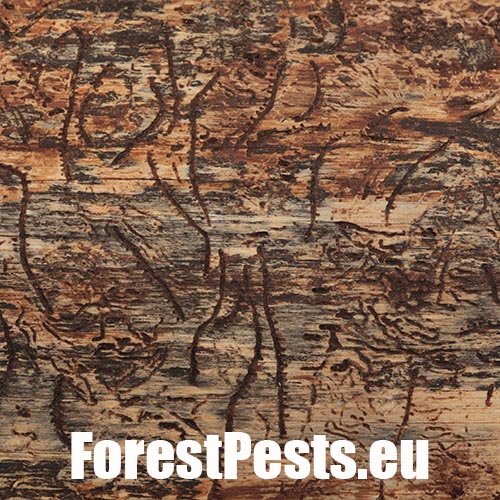
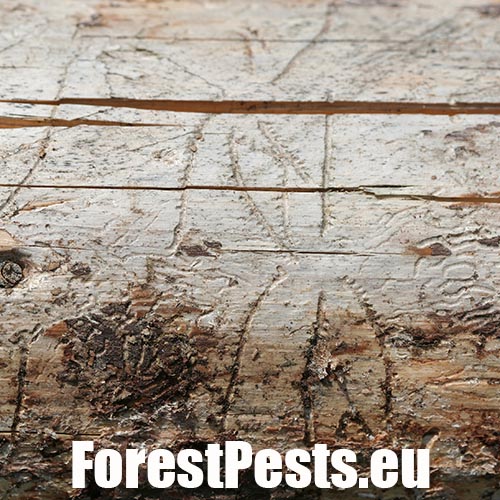
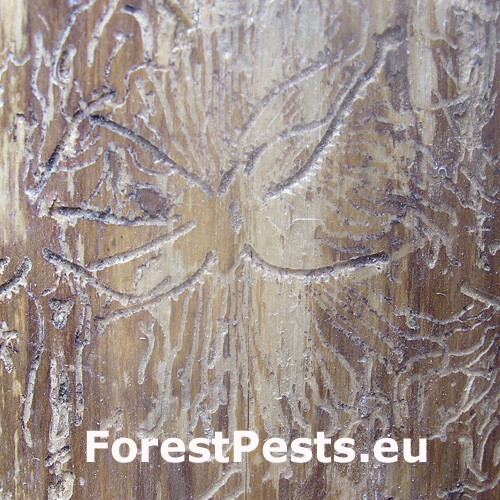
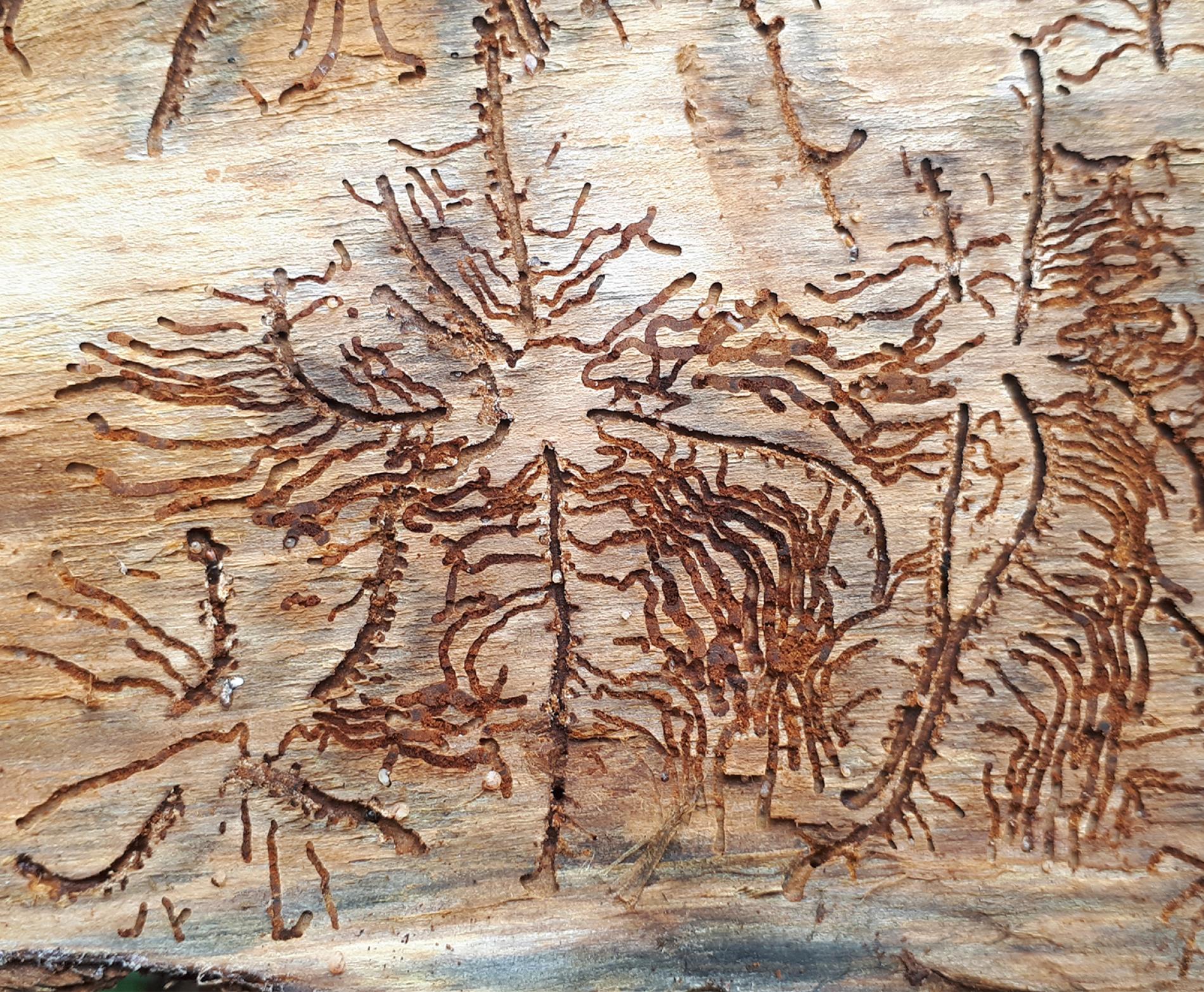
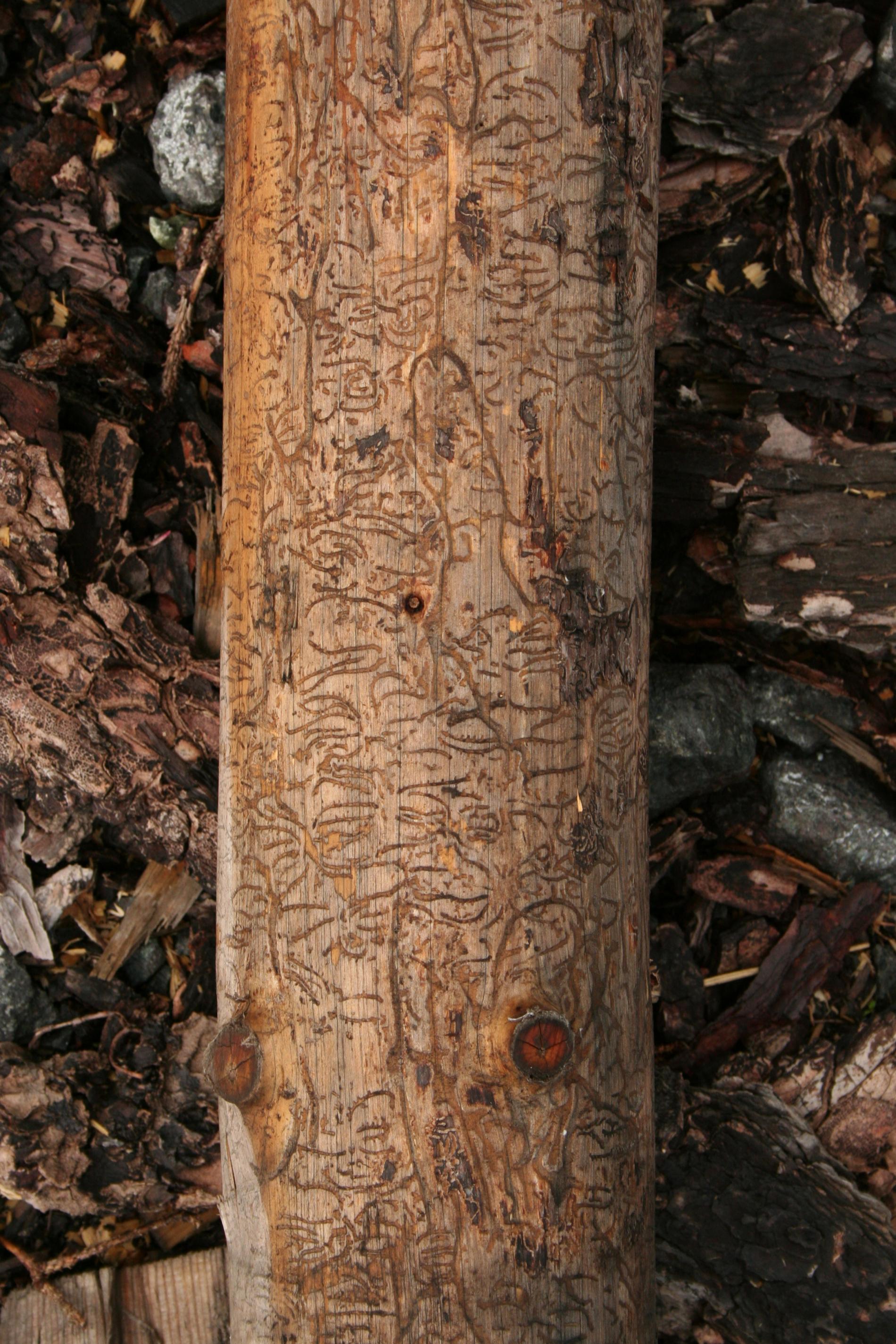
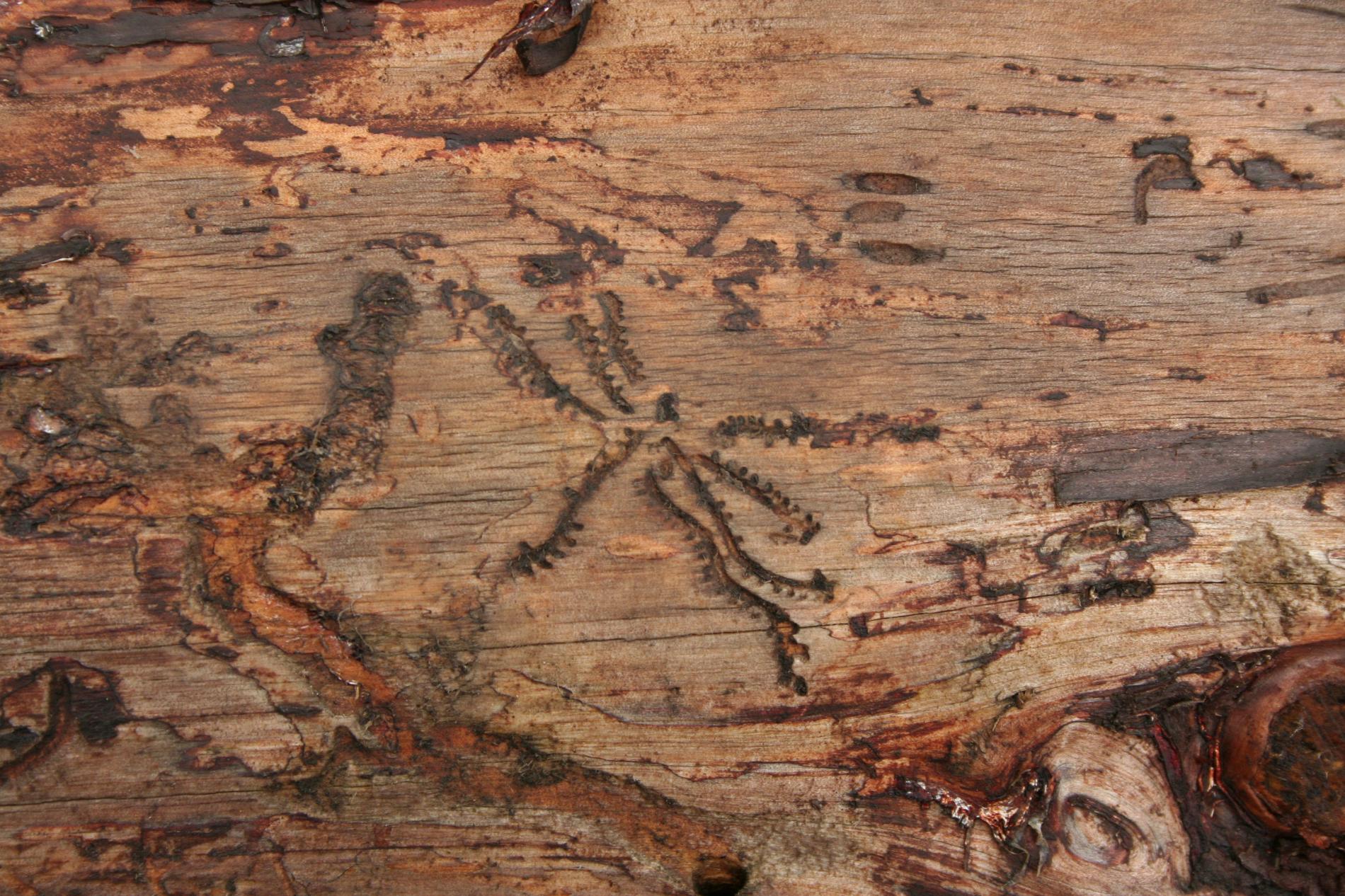
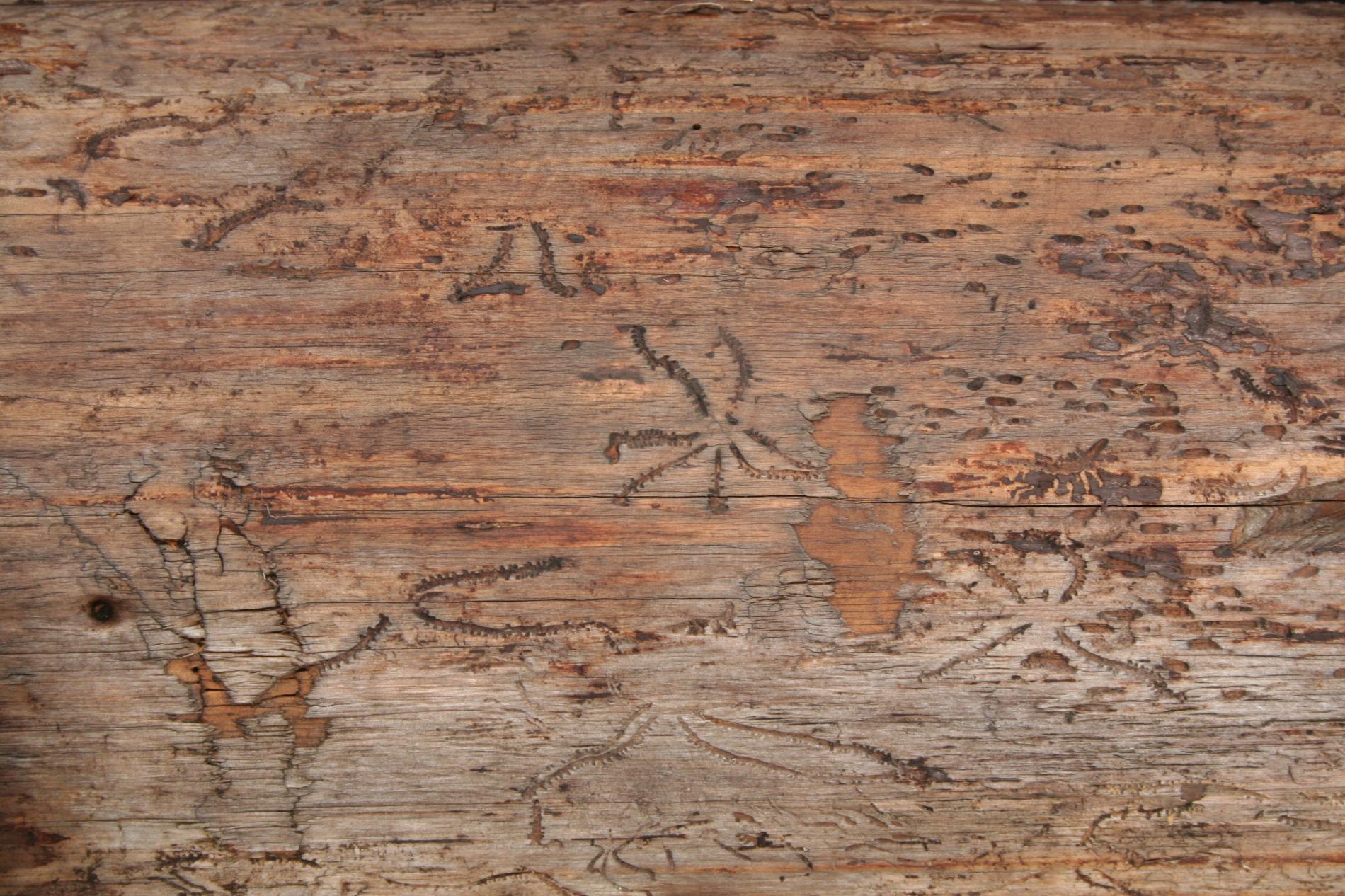
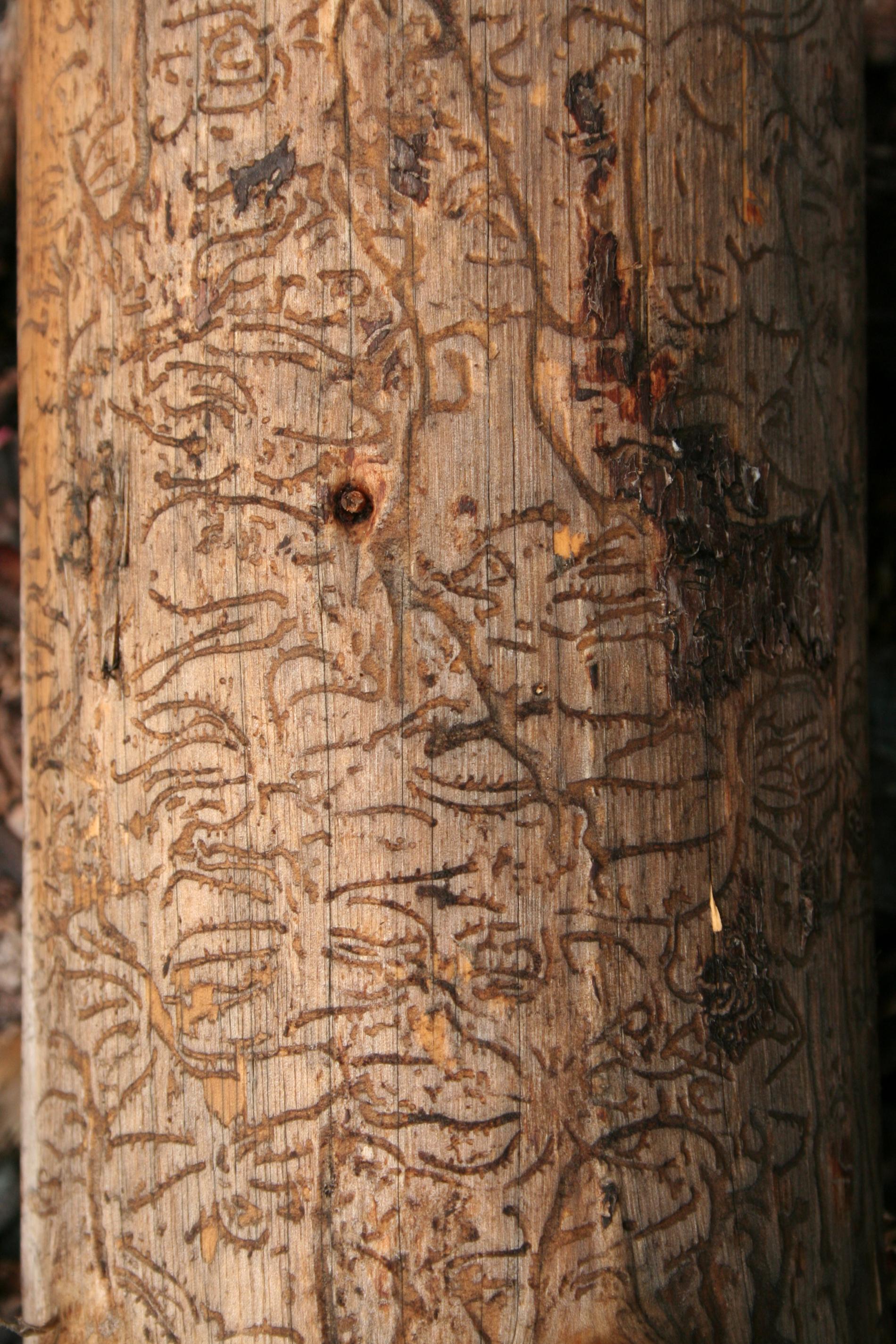
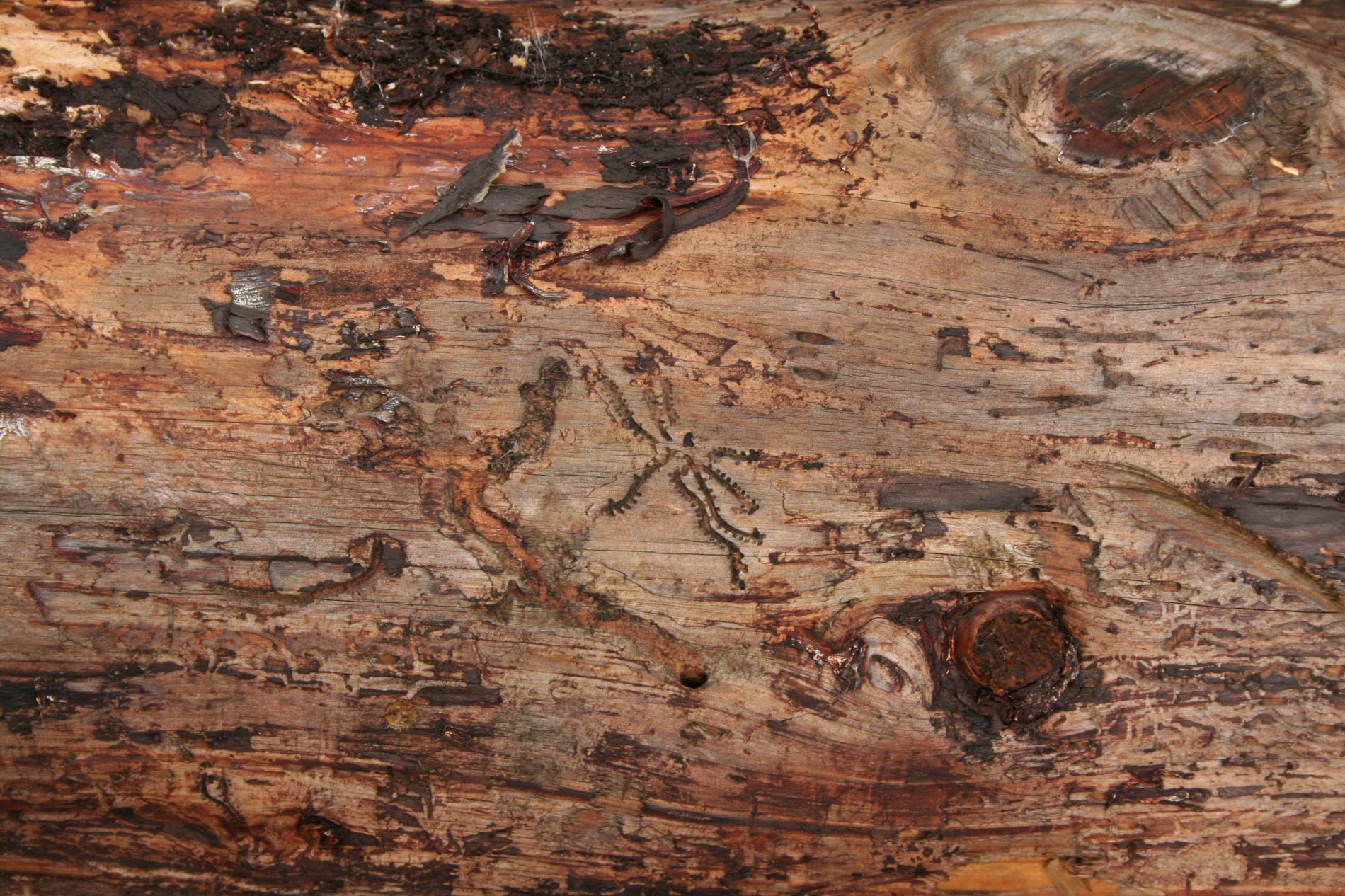
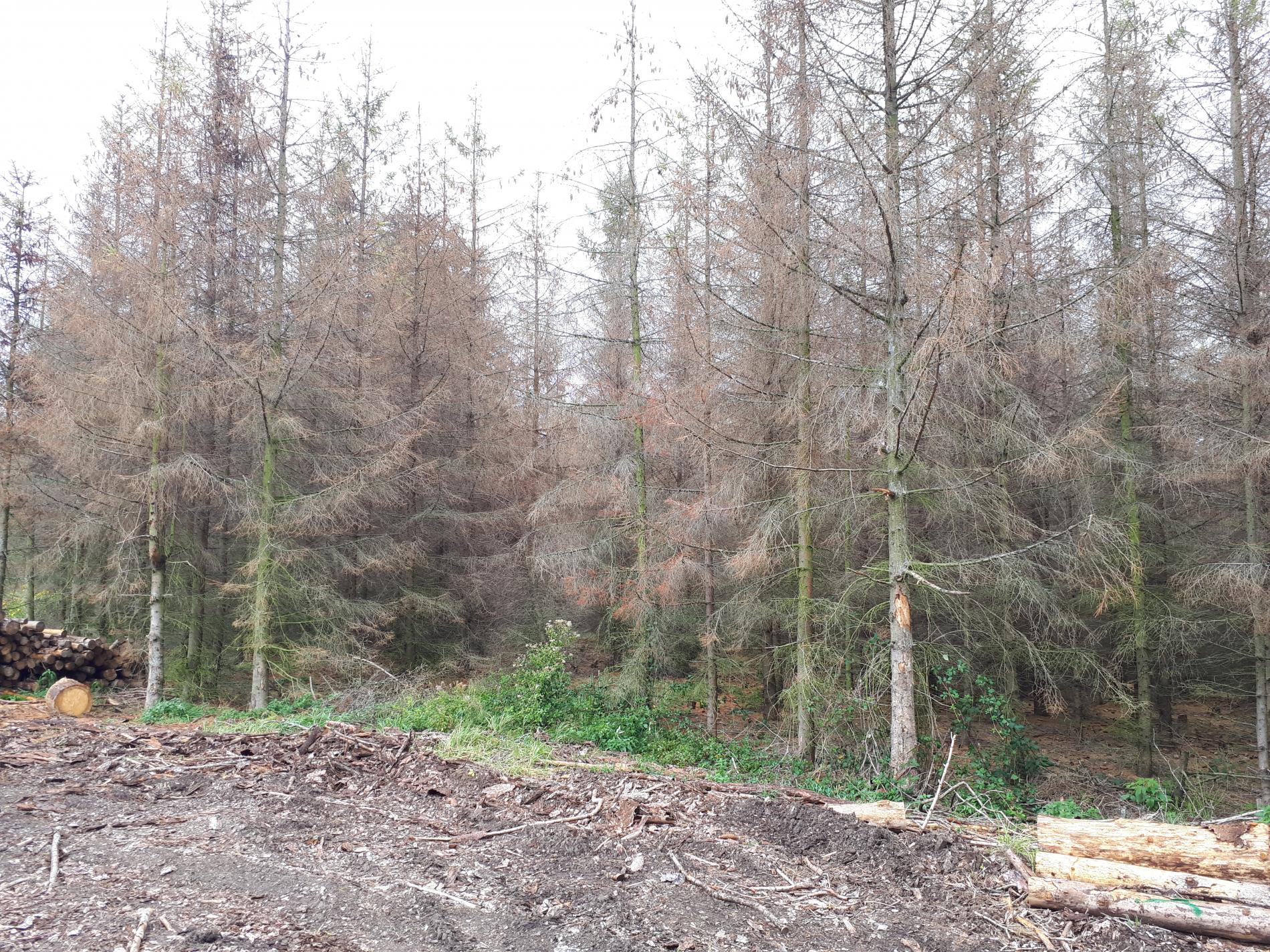
The beetle’s body is short, cylindrical, brown-black (black pronotum, brownish elytra) and glossy. This beetle is rather small for bark beetles, being only 1.6–2.8 mm long. The adults of the first generation occur in spring – April and May. The male is joined in the nuptial chamber by 3–6 females that, after mating, bore radial star shaped maternal galleries. The nuptial chamber is hidden in the bark and is not visible in the wood, which makes the insect galleries distinct from those of similar species. There are 2 or 3 generations in a year. The pest invades thinner barked trunks, branches and tops of felled, windthrown or weakened trees. In case of outbreak it may become a primary killer of even healthy trees in stands aged between 10 and 40 years. Often shares its habitat with the eighttoothed spruce bark beetle.
The nuptial chamber is hidden in the bark and is not visible in the wood which makes the insect galleries distinct from those of similar species.
Tree Species: Pine, Spruce, Larch
Part of a plant- attacked: Tree trunk, Branch
Pest significance: Very harmful
Pest Category: Insects
Invasive Species: No
Present in EU: Yes
Pest group: Insect
Depth of damages: Bark, Under bark only, Up to 0,5 cm depth
The extent of damage: Whole trunk
Prevalence in Europe: Very common
Damaged products: Firewood, Fresh timber logs (water still in the sapwood)
Roundwood size: Diameter from 10 up to 50 cm, Diameter up to 10 cm
Wood discoloration: Yes
Exit holes: Round
Pest subcategory: Bark and underbark insect
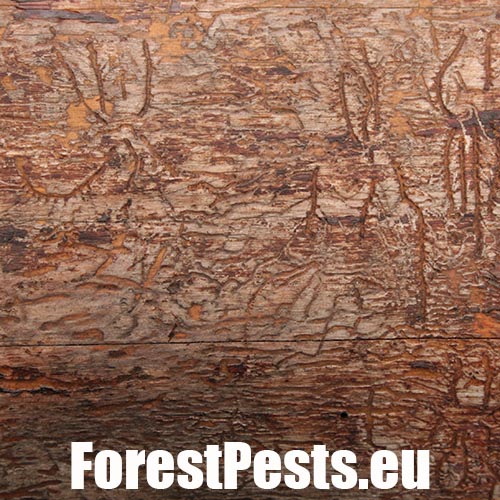
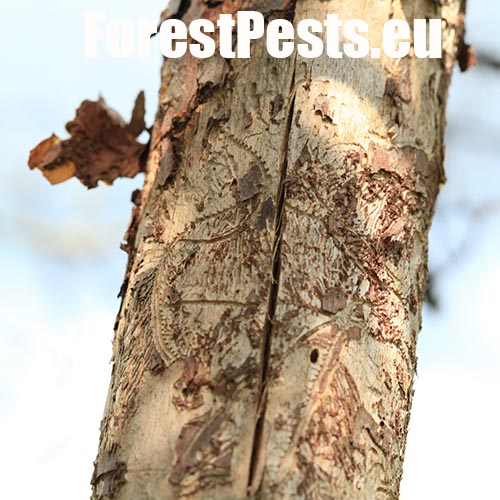

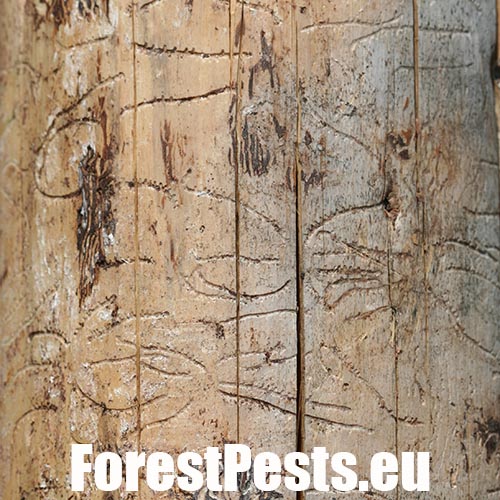



Similar pests

Pityokteines vorontzovi

Ips duplicatus
