


Phymatodes testaceus
Violet tanbark beetle
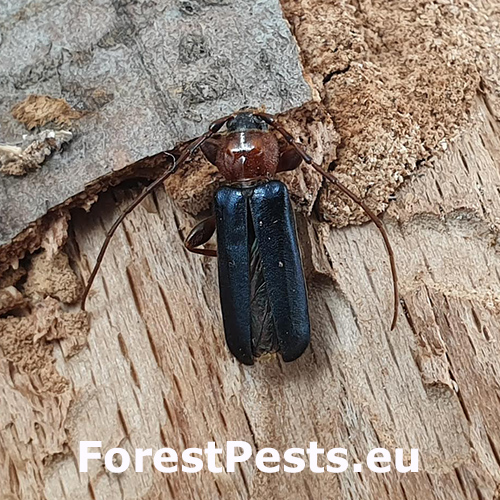
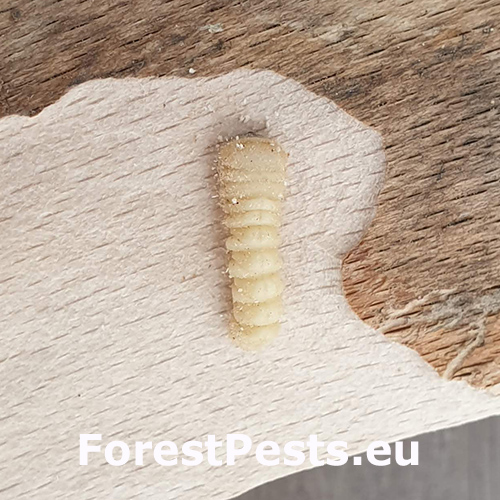
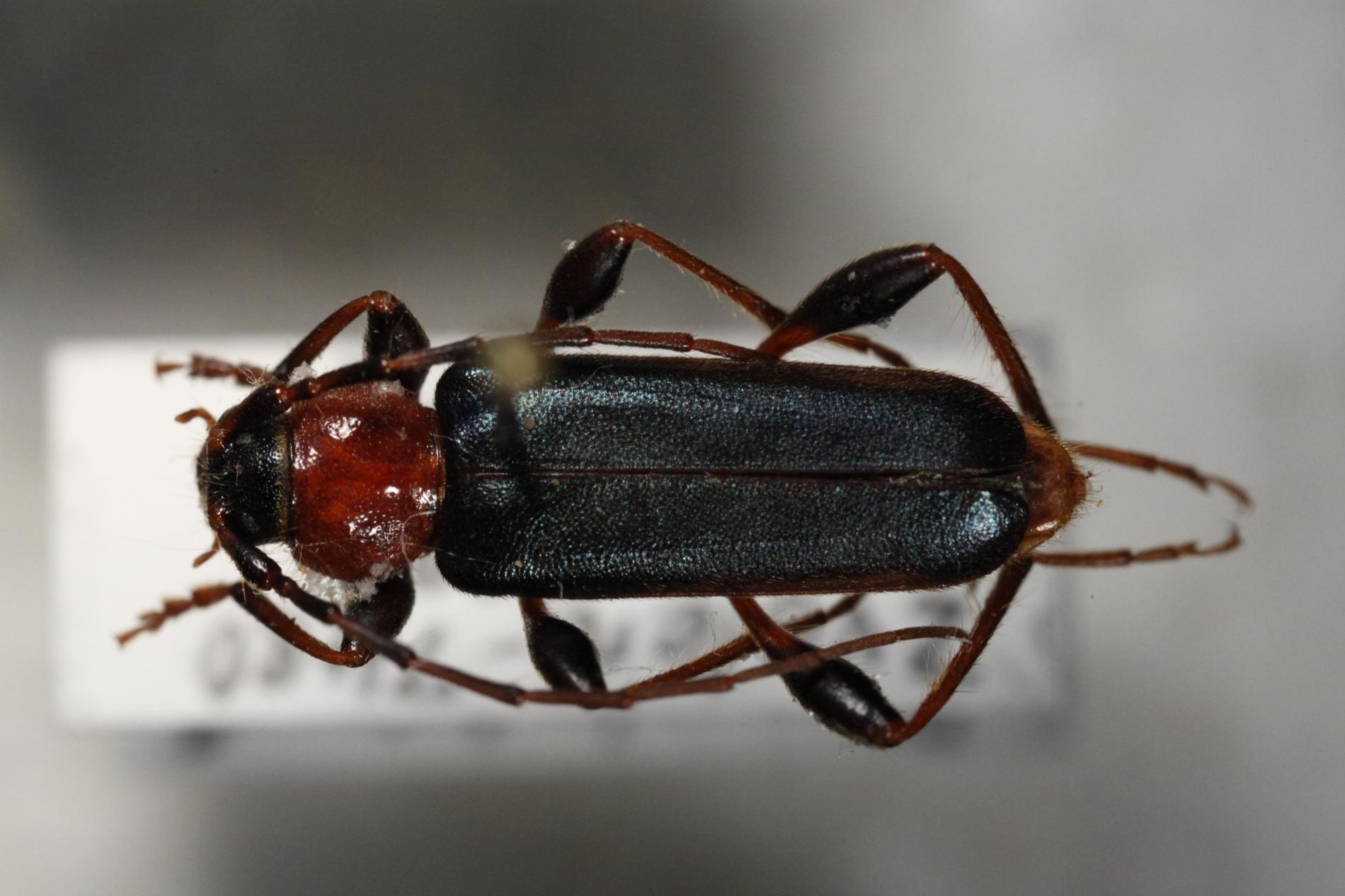
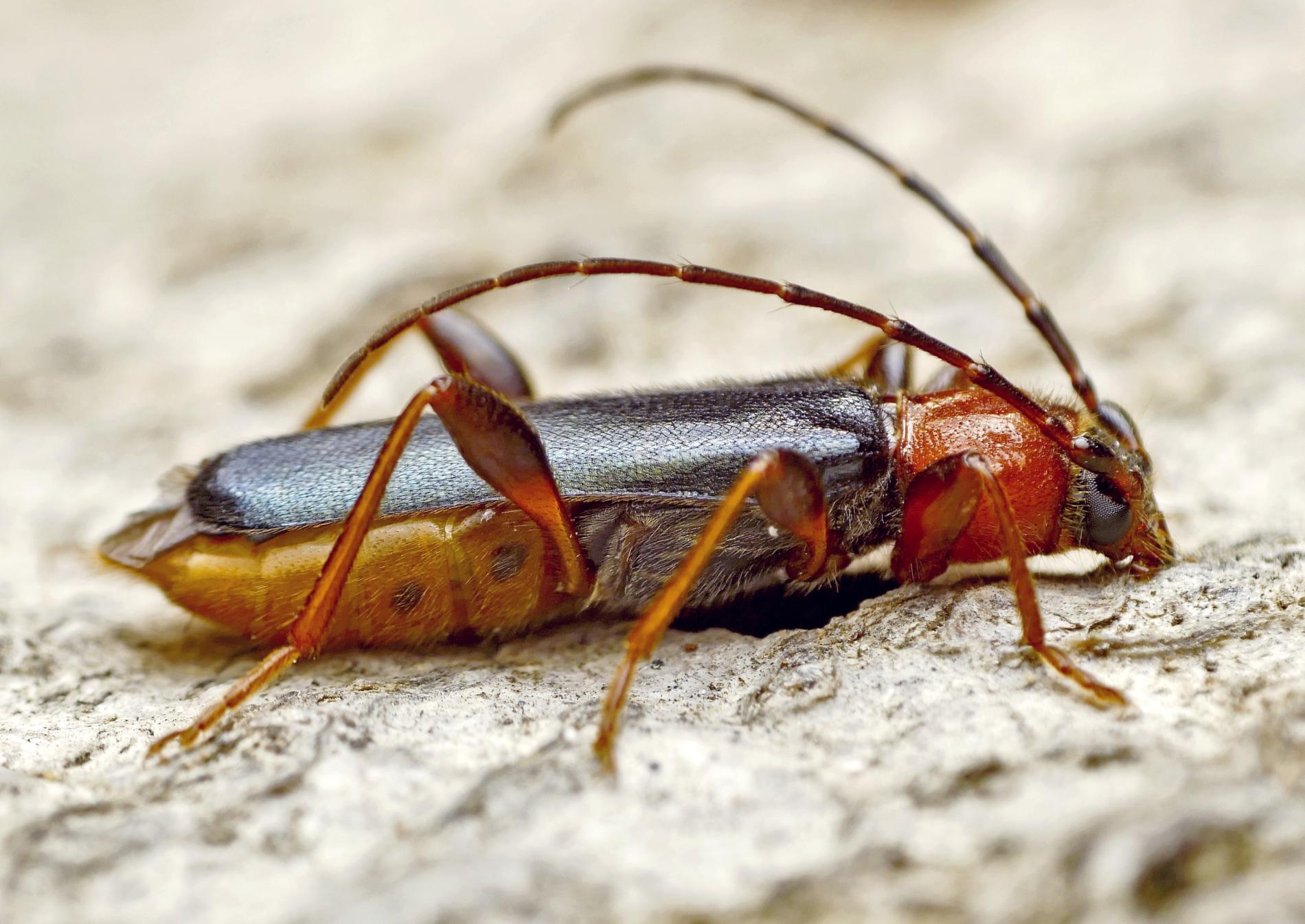
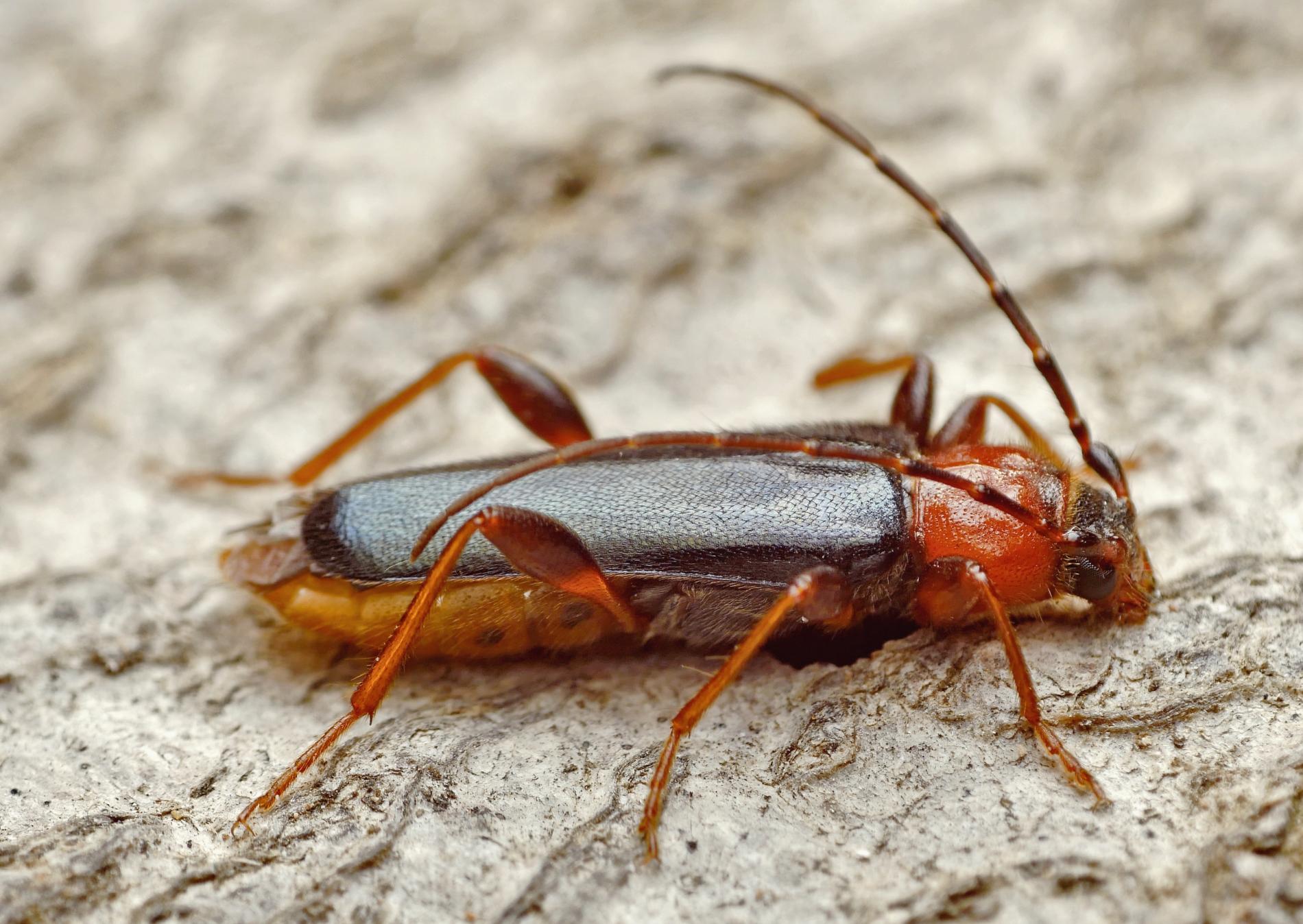
It is a relatively narrow beetle, 6 to 17 mm long. It can be very numerous and extremely variable in color. Often brown, brownish to almost black with a metallic blue sheen. The characteristic features are the thick thighs. Adults fly from June to July. Adults are very active and they are good flyers. Females lay eggs in the crevices of the bark. The larvae gnaw their corridors first under the bark, later they go 3 to 7 cm into the wood, where they pupate. Galleries can be found up to 4 cm in the wood. Excavation holes are elongate. There is one generation per year, in warm areas two generation per year.
Elliptical corridors under the bark and in wood. Excavation holes are elongate.
Tree Species: Beech, Oak, Chestnut, Hornbeam
Part of a plant- attacked: Tree trunk, Branch
Pest significance: Not harmful
Pest Category: Insects
Invasive Species: No
Present in EU: Yes
Pest group: Insect
Affected part of wood: Sapwood
Depth of damages: Bark, Under bark only, Up to 0,5 cm depth, Up to 2 cm depth, Up to 5 cm depth
The extent of damage: Whole trunk
Prevalence in Europe: Very common
Damaged products: Firewood, Fresh timber logs (water still in the sapwood), Lumber, boards and prisms
Roundwood size: Branches and twigs, Diameter 50+, Diameter from 10 up to 50 cm, Diameter up to 10 cm
Wood discoloration: No
Exit holes: Oval
Pest subcategory: Wood-boring insect
Similar pests

Hylotrupes bajulus

Clytus arietis
