


Phloeosinus aubei
Small cypress bark beetle
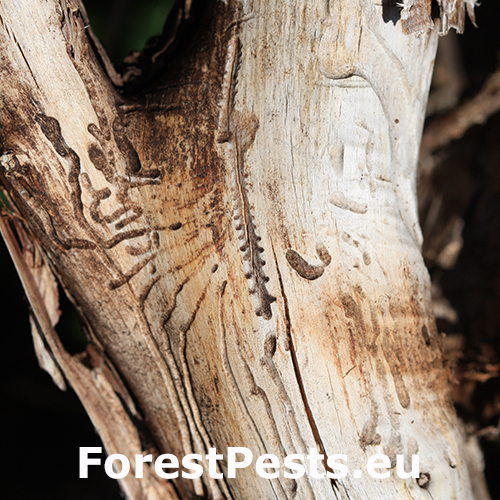
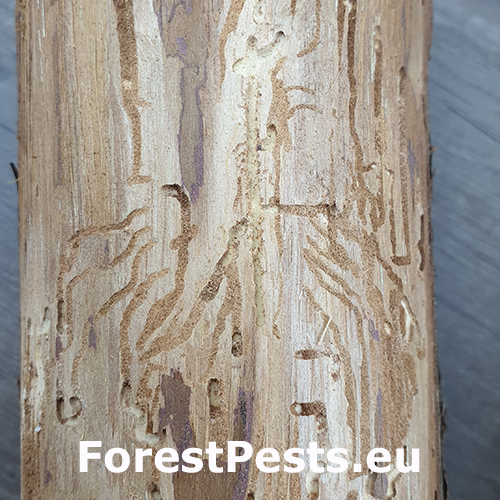
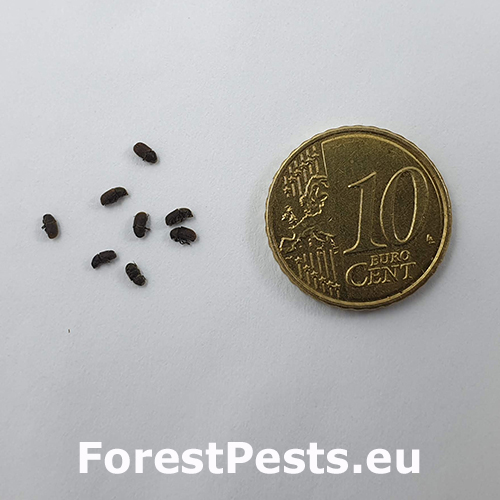
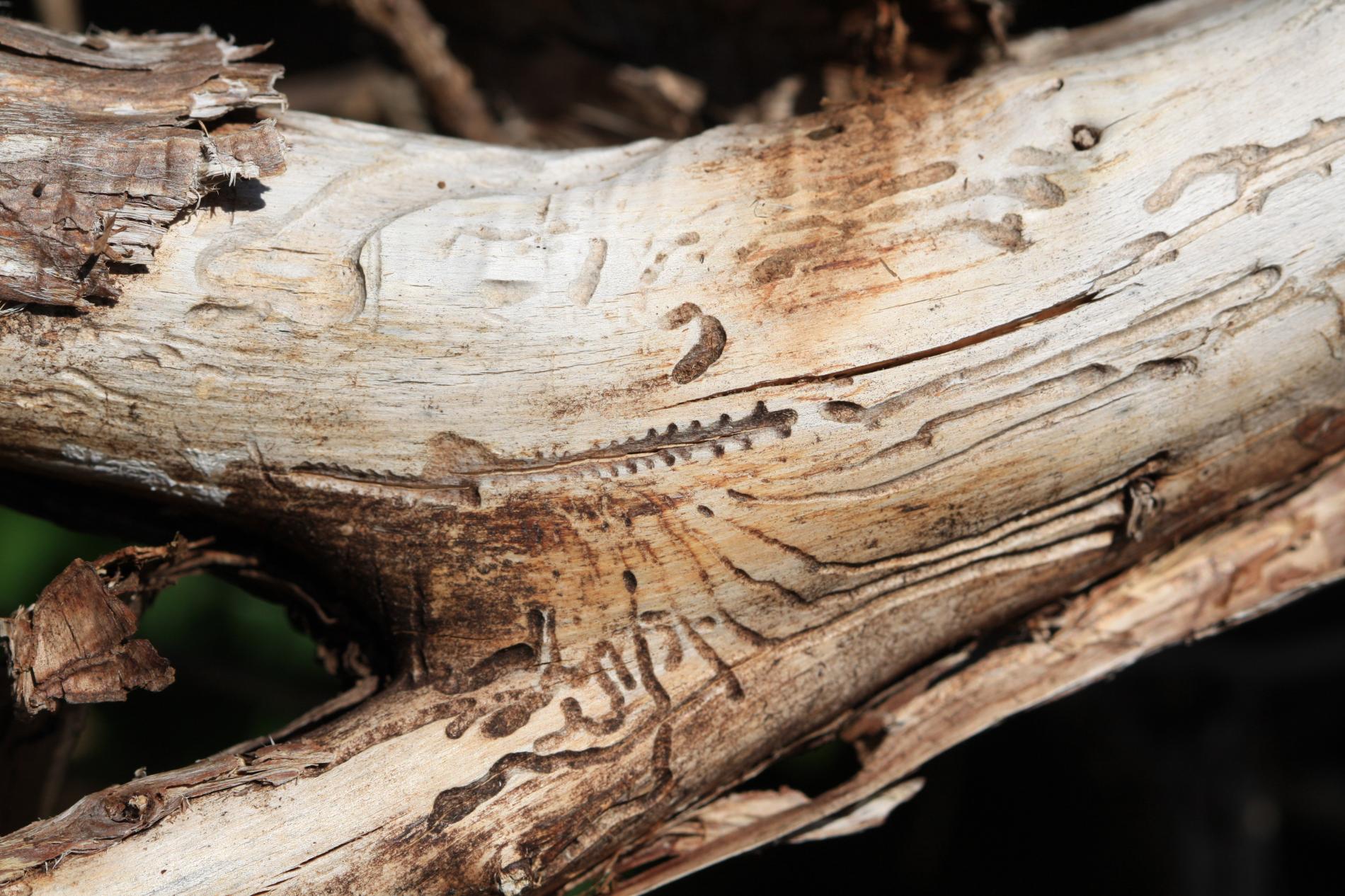
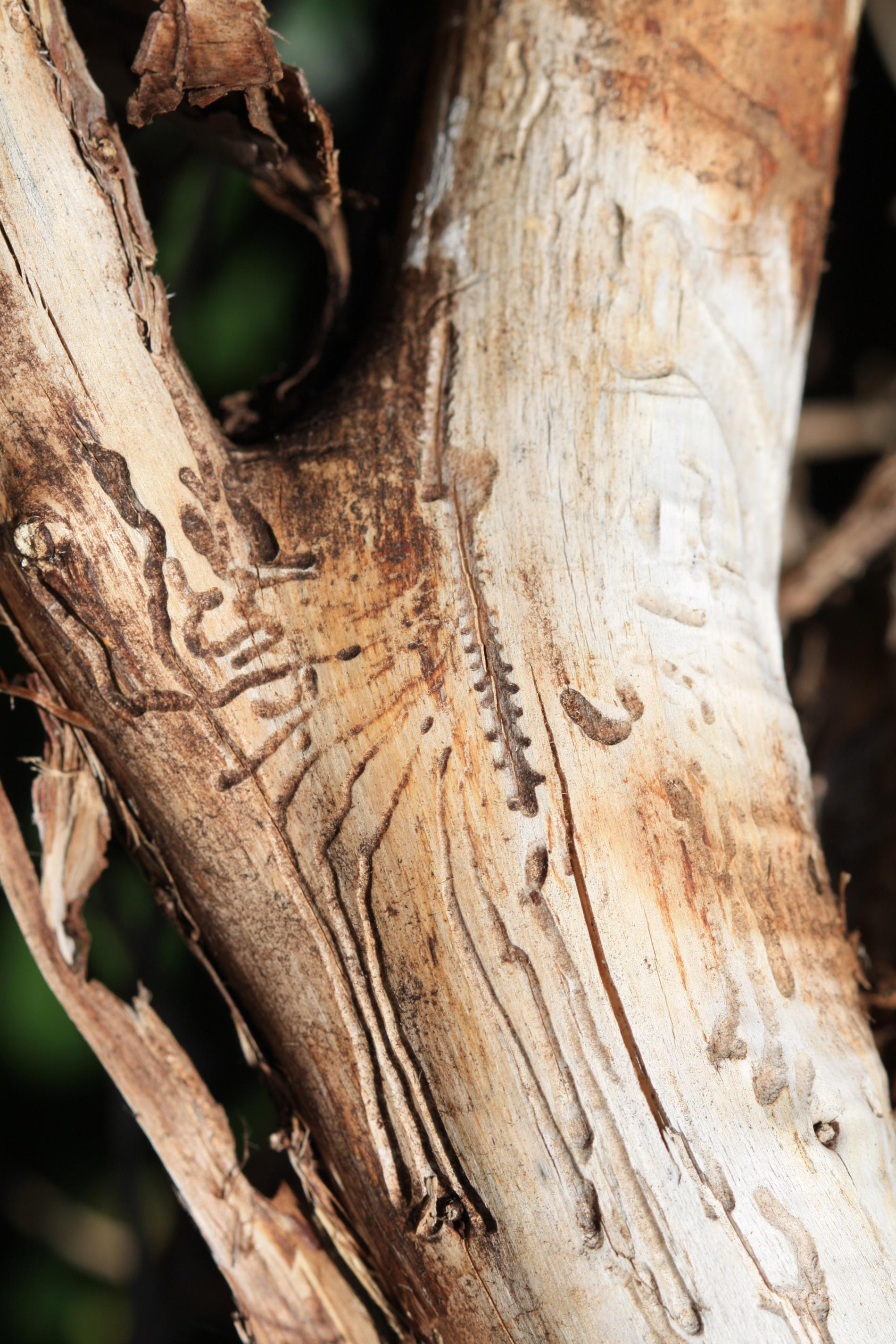
2.0–2.5 mm. Bivoltine. The vertical egg gallery is 4–8 cm long, occasionally forking. The irregularly curving larval tunnels are excavated into the sapwood. The adults feed in one-year-old shoots. The shoot above the attack fades, becomes dry and red, and later falls from the tree. Can cause severe damage (including tree death), particularly when trees are weakened by several consecutive years of drought. Parks, gardens. The related species Phloeosinus thujae is found in southern parts of Europe commonly on juniper and cedar trees.
The irregularly curving larval tunnels are excavated into the sapwood.
Tree Species: Juniper, Cypress, Thuja
Part of a plant- attacked: Tree trunk, Branch
Pest significance: Harmful
Pest Category: Insects
Invasive Species: No
Present in EU: Yes
Pest group: Insect
Depth of damages: Bark, Under bark only, Up to 0,5 cm depth
The extent of damage: Lokally
Prevalence in Europe: Common
Damaged products: Firewood, Fresh timber logs (water still in the sapwood)
Roundwood size: Diameter from 10 up to 50 cm, Diameter up to 10 cm
Wood discoloration: No
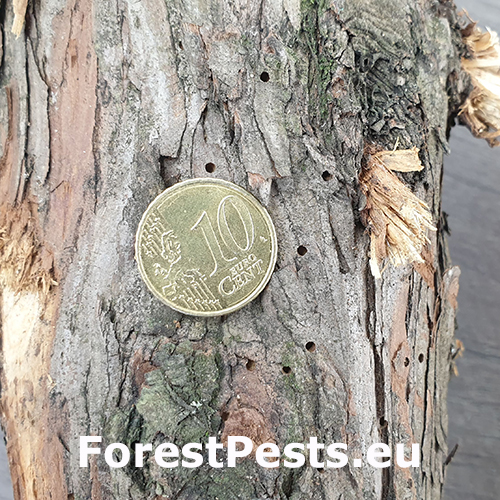
Exit holes: Round
Pest subcategory: Bark and underbark insect
Similar pests

Buprestidae

Taphrorychus bicolor
