


Phellinus chrysoloma
Phellinus chrysoloma
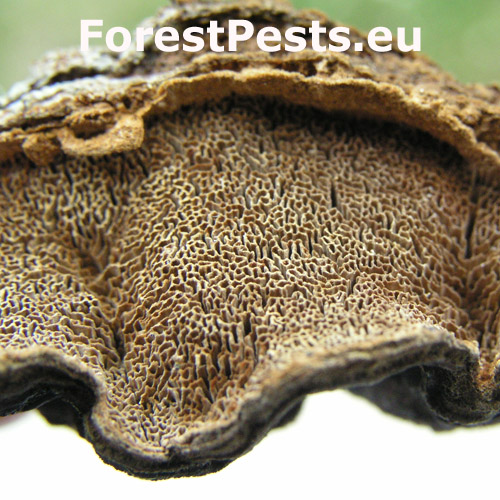
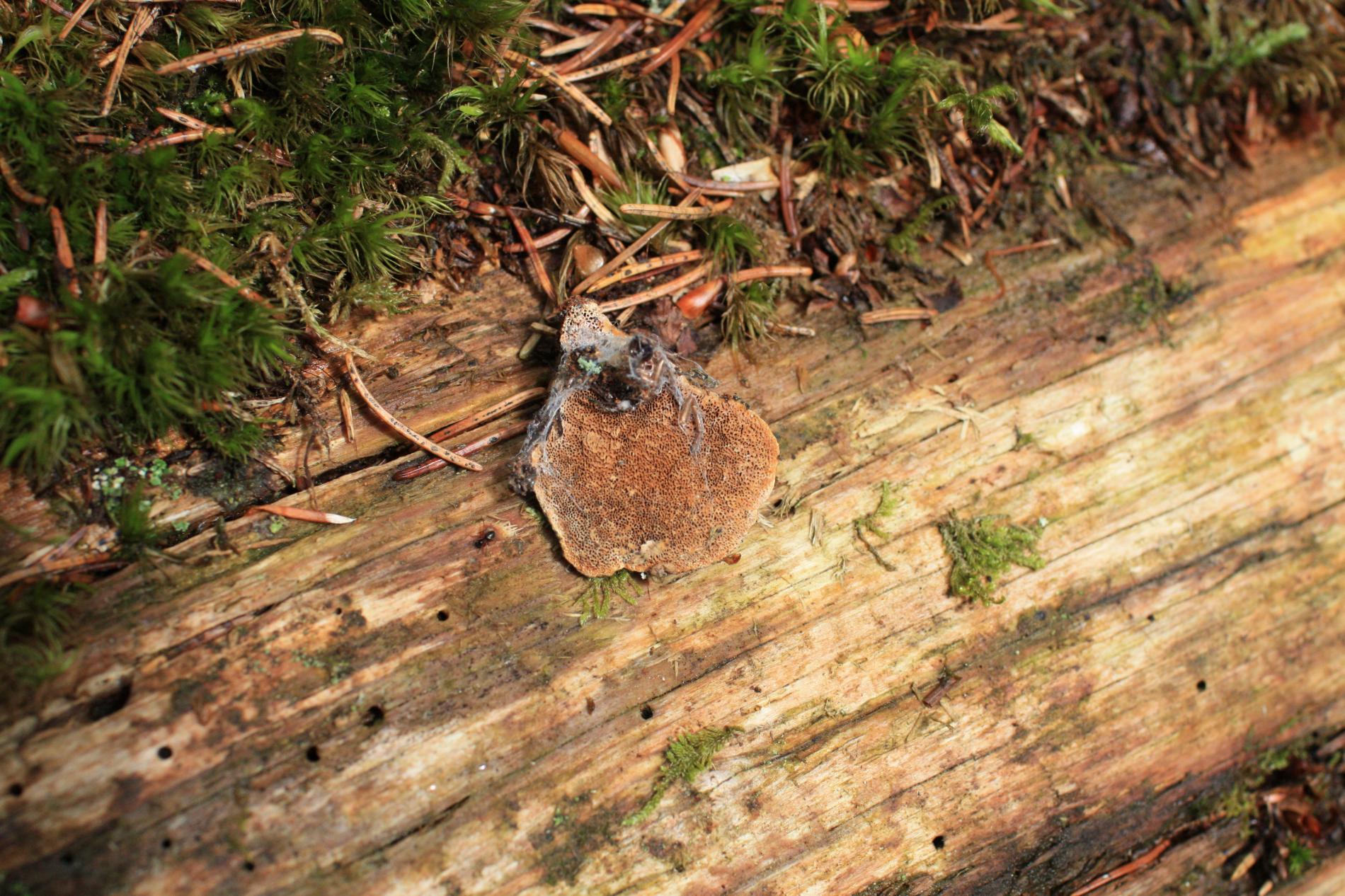
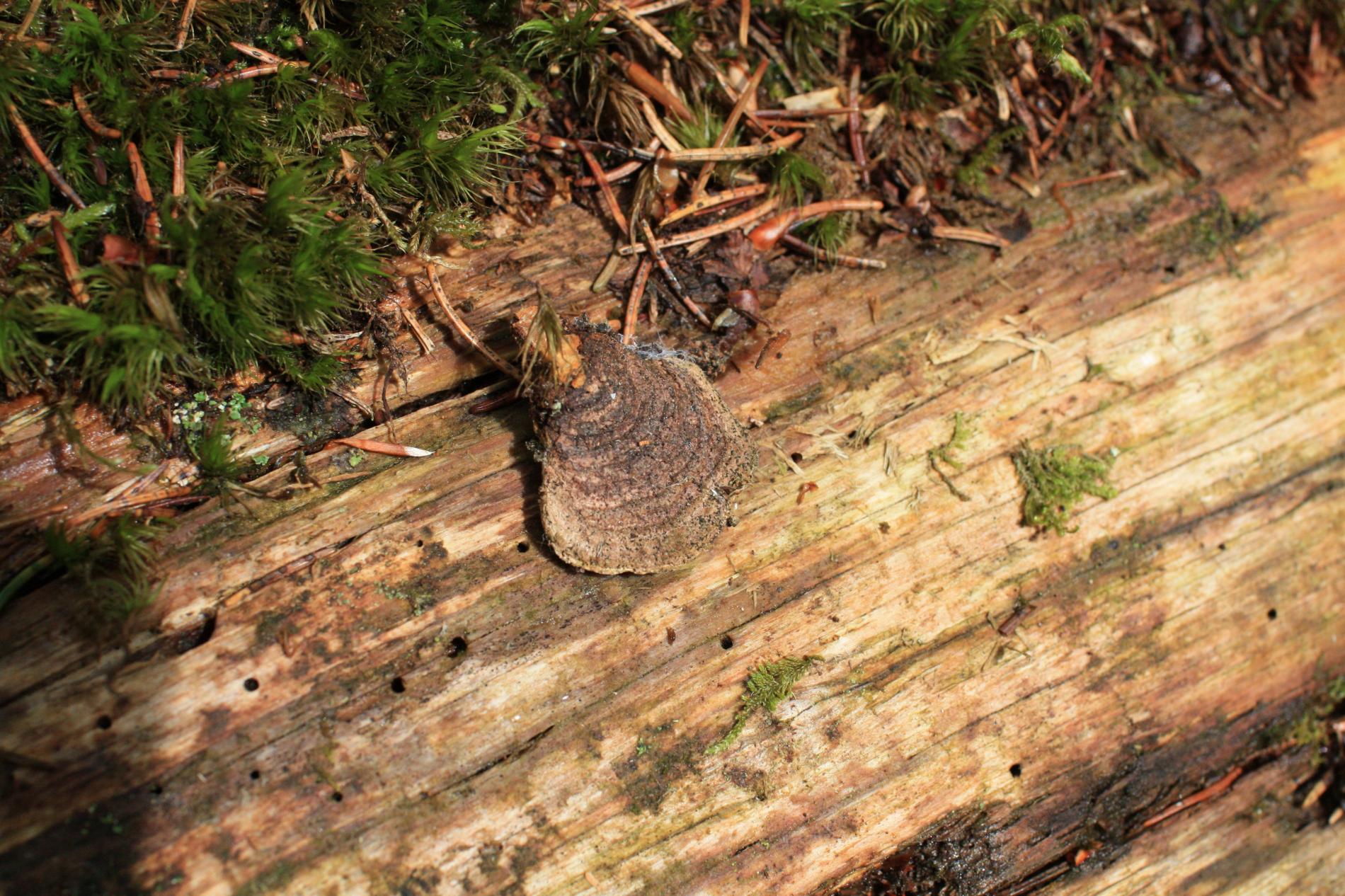
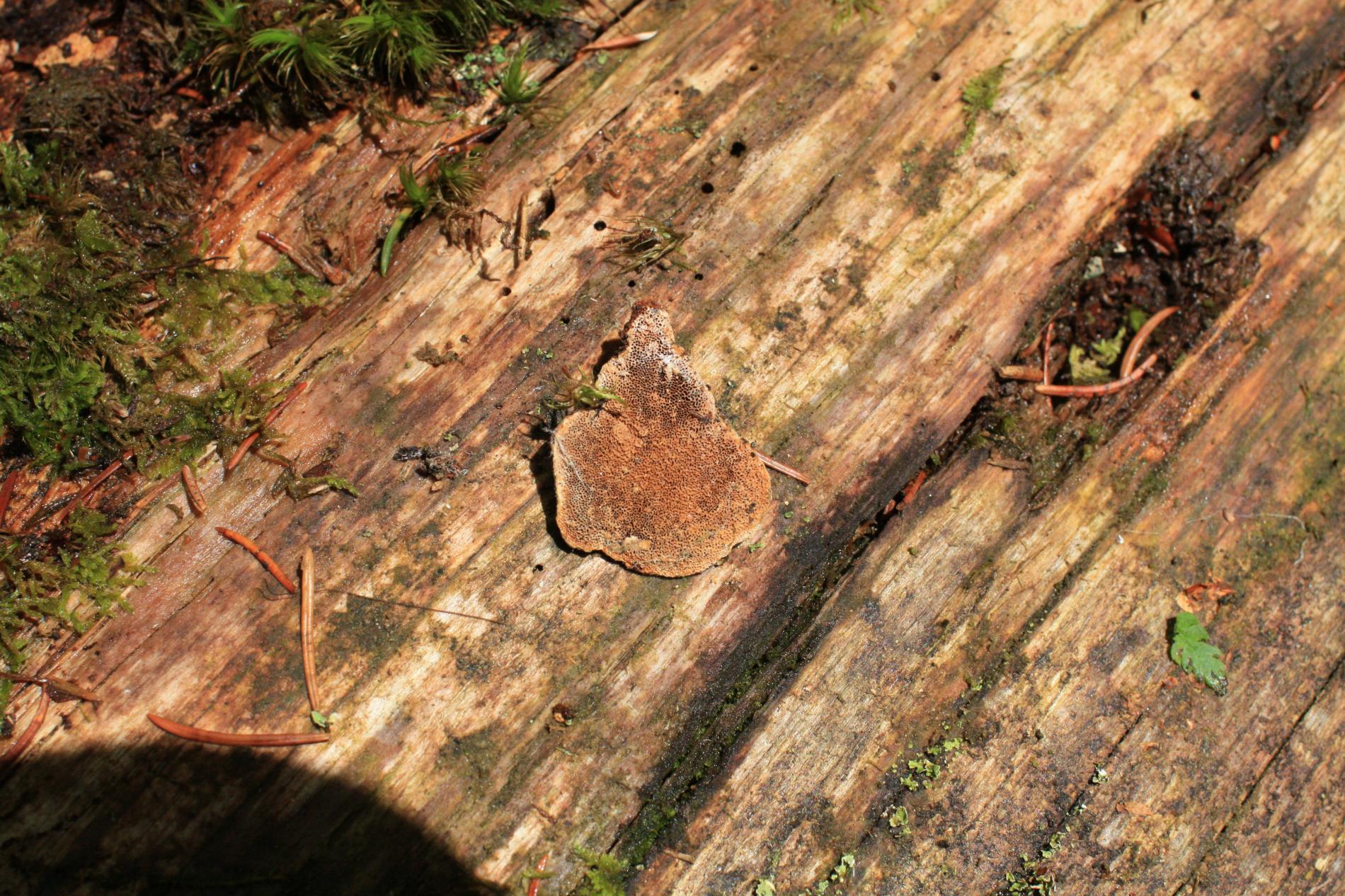
The only fungus habitat is natural spruce woodland in mountain areas. Its biology is both saprophytic and parasitic. Living trees are infected by spores released from sporocarps through trunk or branch injuries. The fruiting bodies are perennial, growing as brackets in a linear or tiered arrangement. They are thin, with felty upper side, of cinnamon colour, later brown to blackish grey, concentrically zoned. The underside is composed of tiny dense tubes of cinnamon brown colour. A characteristic feature of the rot is formation of 5 mm long and 3 mm wide cavities, filled by the intensive wood decomposition with ochre mycelium and later with clusters of white cellulose. The wood in the last decomposition stage breaks easily along the annual rings.
A characteristic feature of the rot is formation of 5 mm long and 3 mm wide cavities, filled by the intensive wood decomposition with ochre mycelium and later with clusters of white cellulose.
Tree Species: Spruce
Part of a plant- attacked: Tree trunk
Pest significance: Harmful
Pest Category: Fungi
Invasive Species: No
Present in EU: Yes
Pest group: Fungi
Affected part of wood: Heartwood, Sapwood
Depth of damages: More than 5 cm depth, Under bark only, Up to 0,5 cm depth, Up to 2 cm depth, Up to 5 cm depth
Prevalence in Europe: Common
Damaged products: Firewood, Fresh timber logs (water still in the sapwood), Furniture, Lumber, boards and prisms, Wooden house constructions
Roundwood size: Branches and twigs, Diameter up to 10 cm
Wood discoloration: Yes
Pest subcategory: White-rot
Similar pests

Phellinus pomaceus

Phellinus ferruginosus
