


Phaeolus schweinitzii
Schweinitzii root and butt rot
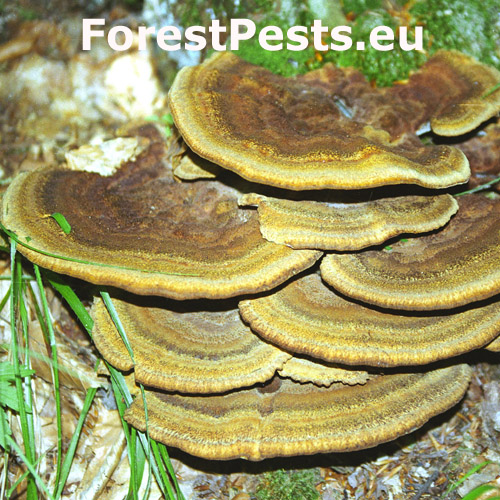
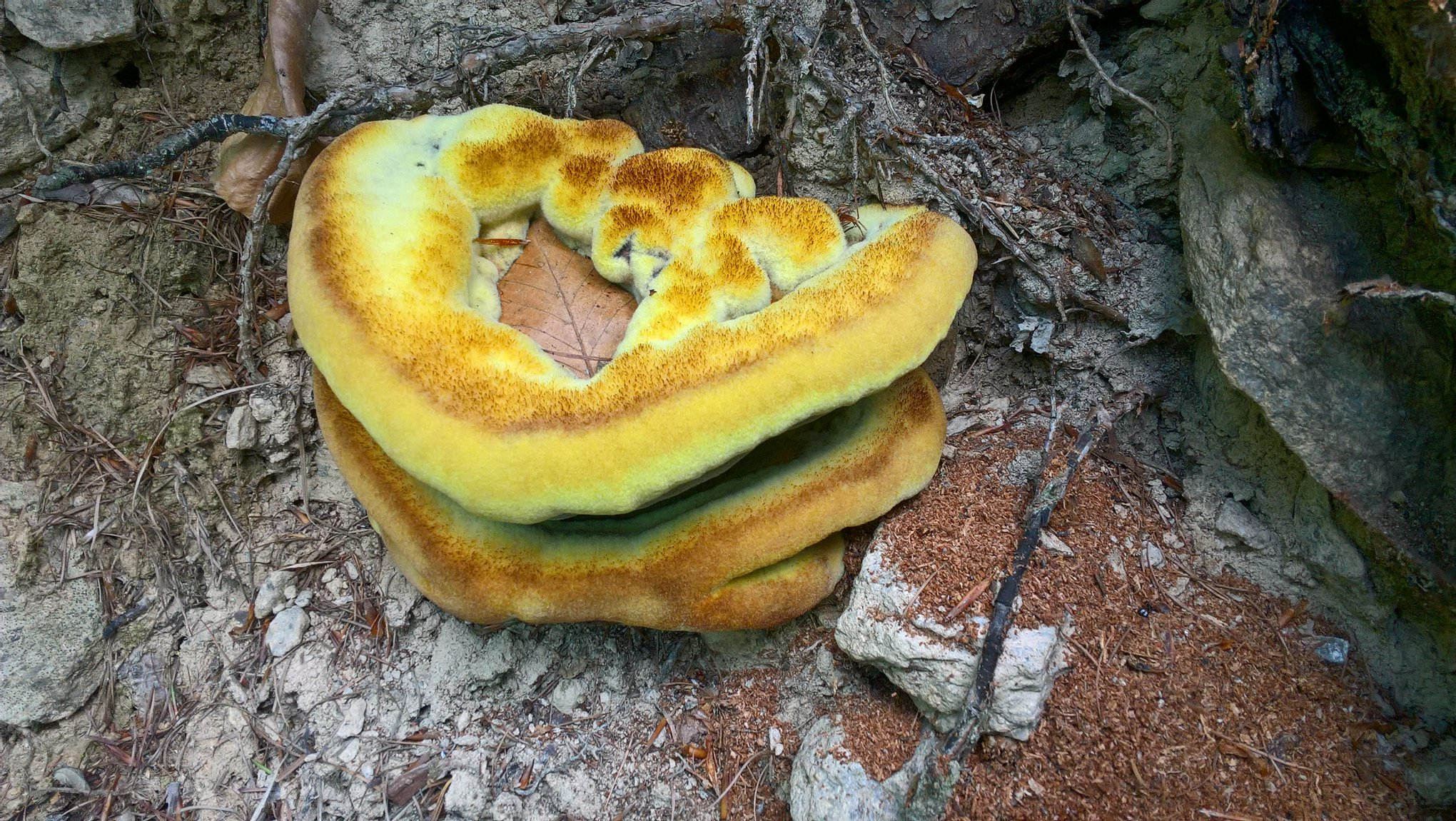
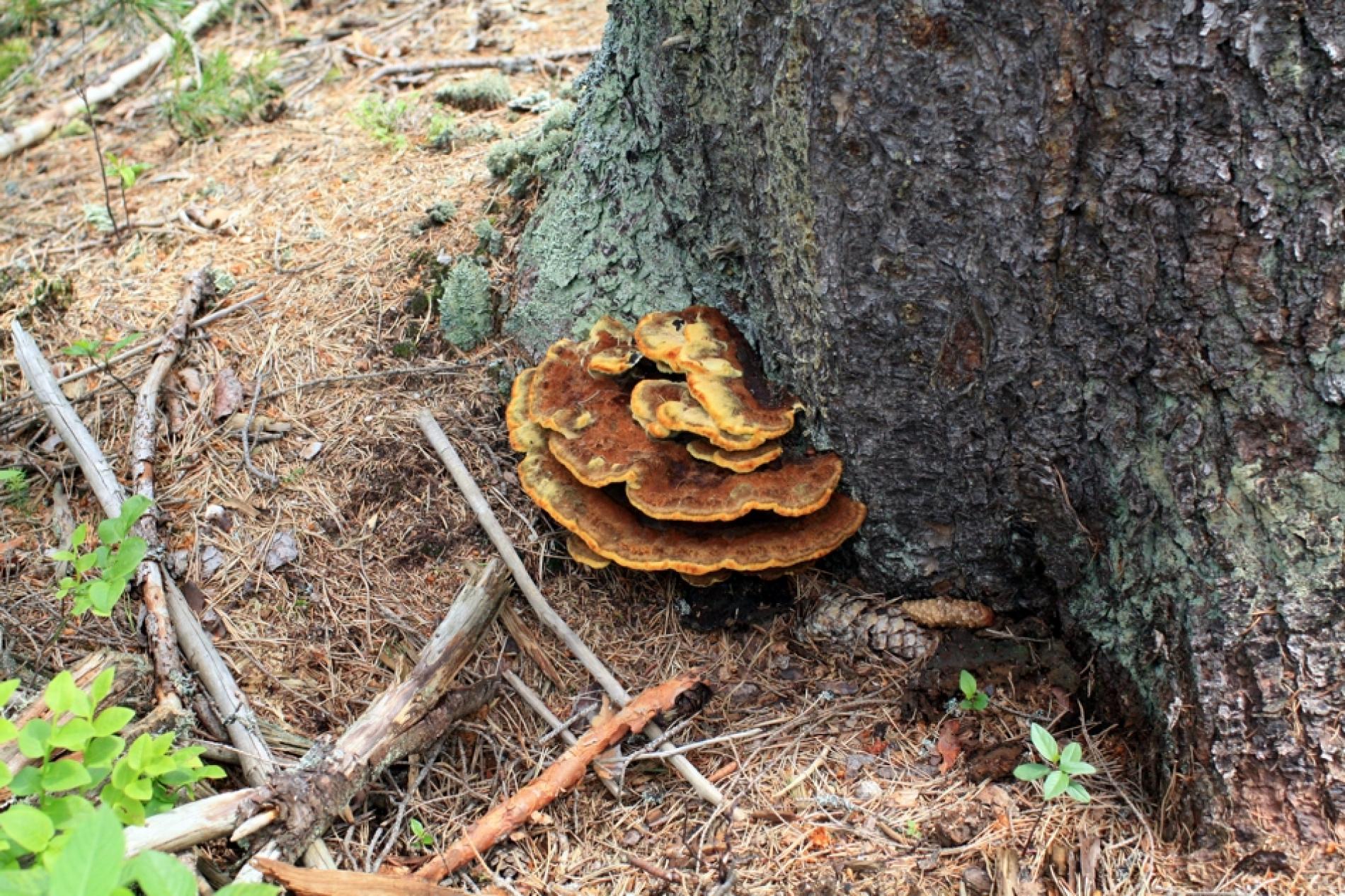
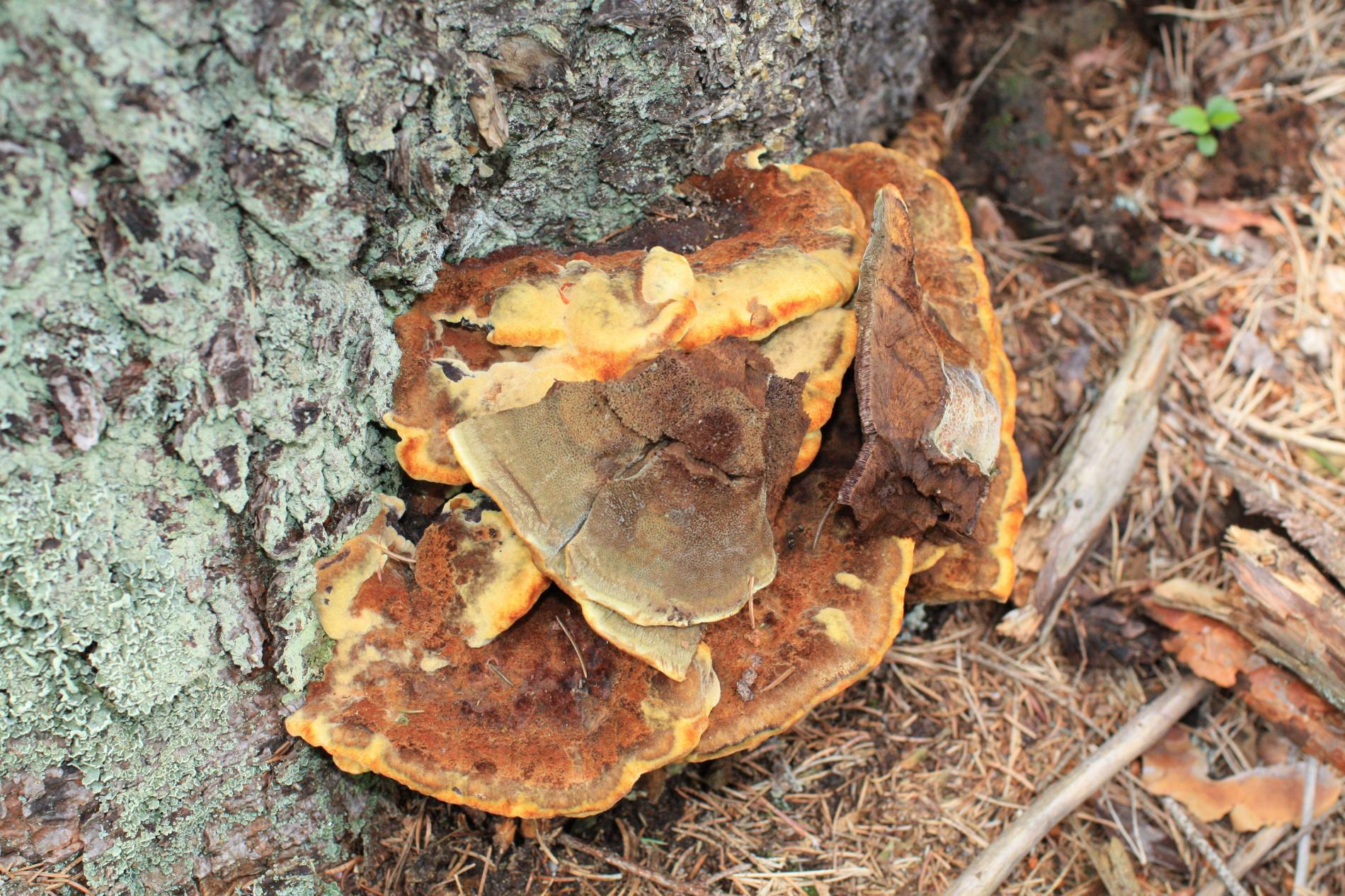
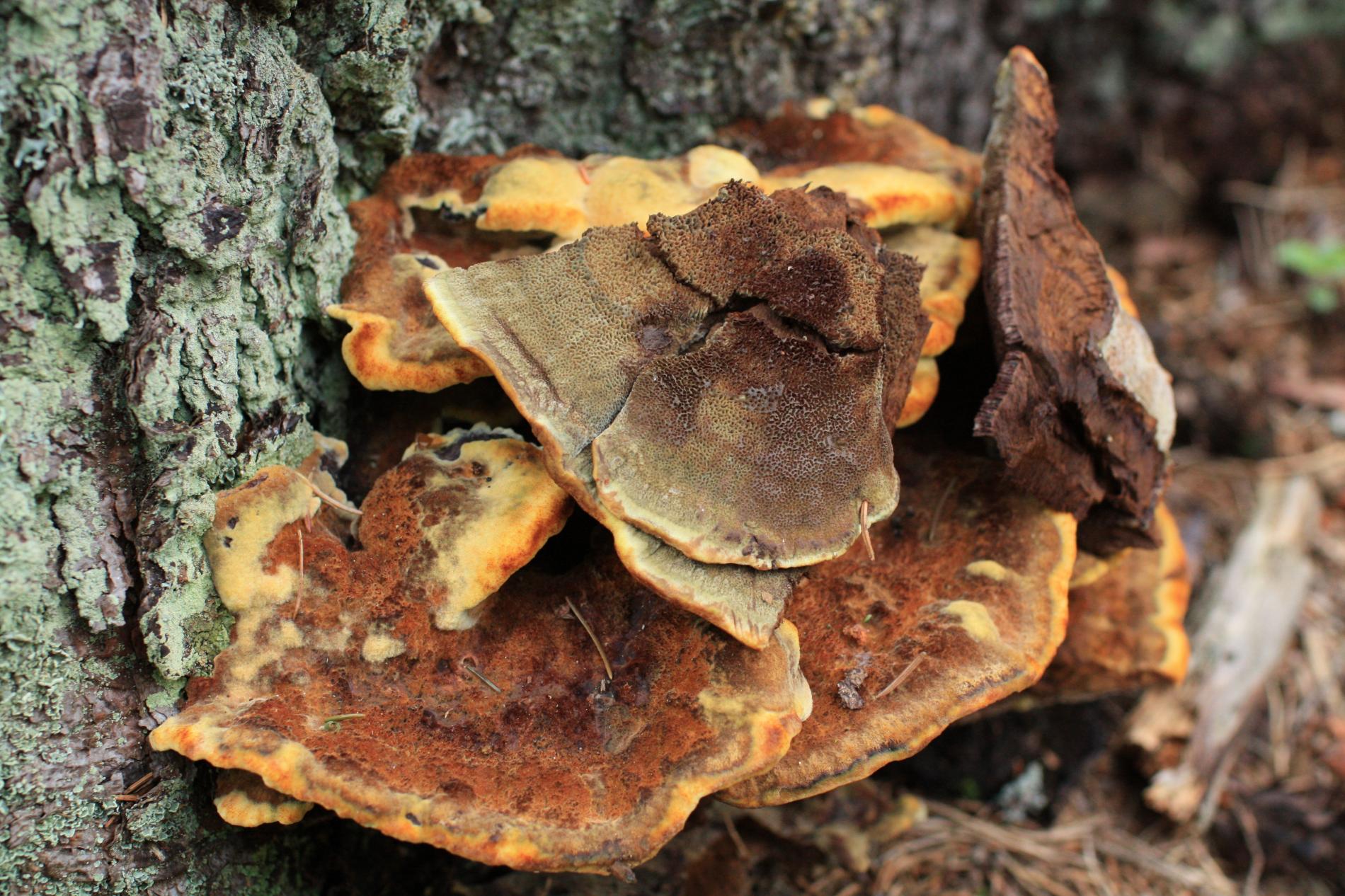
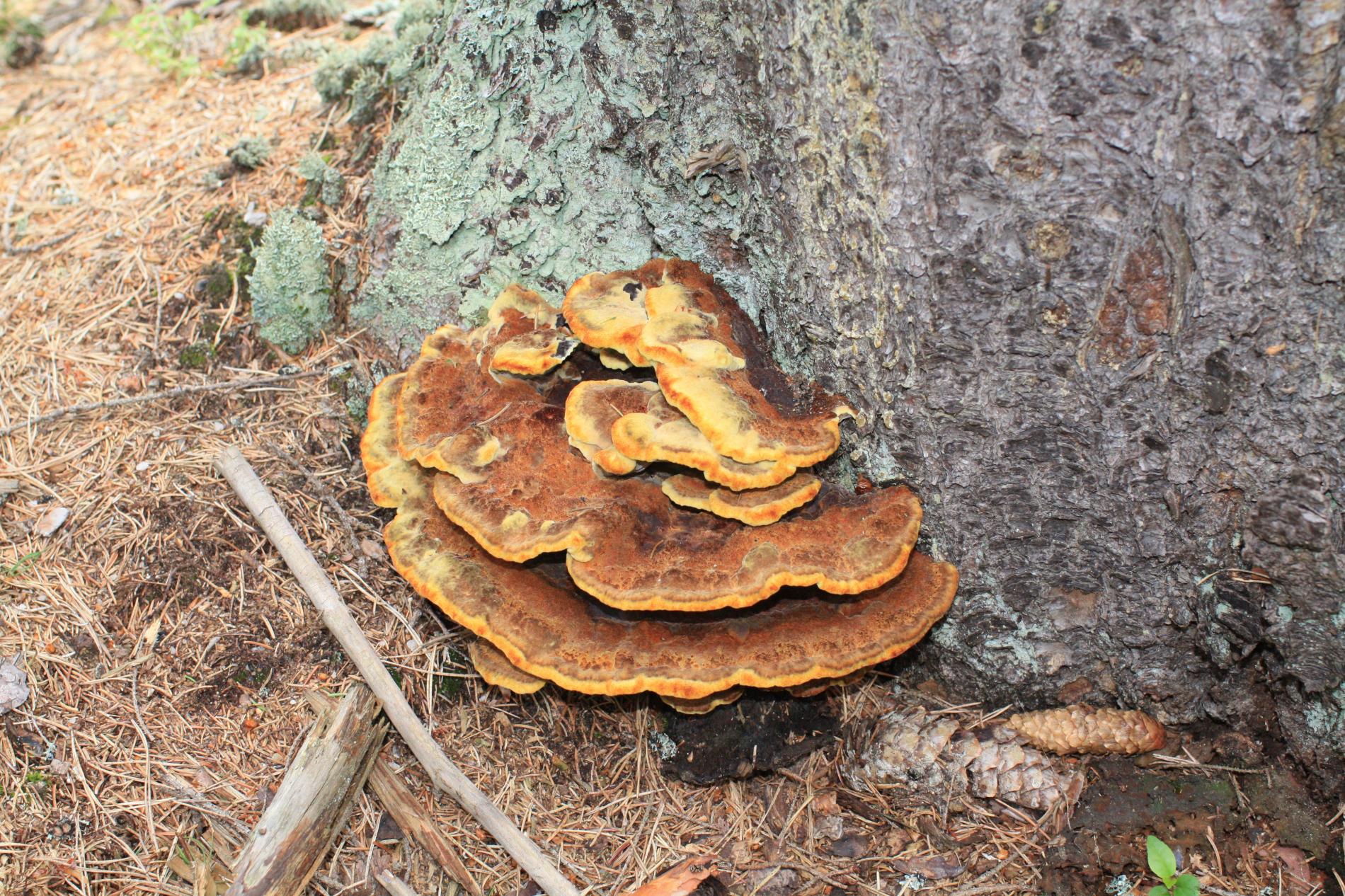
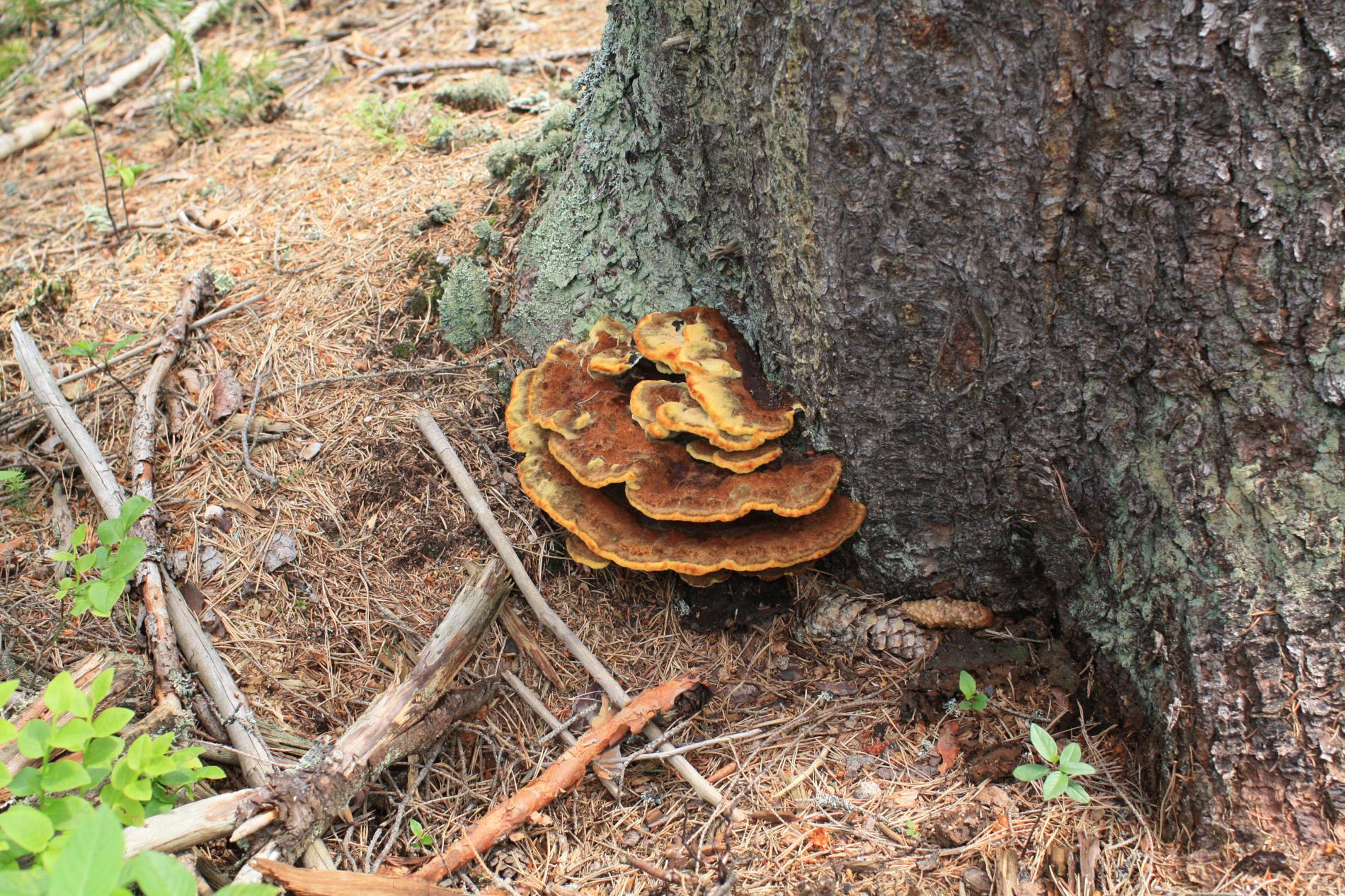
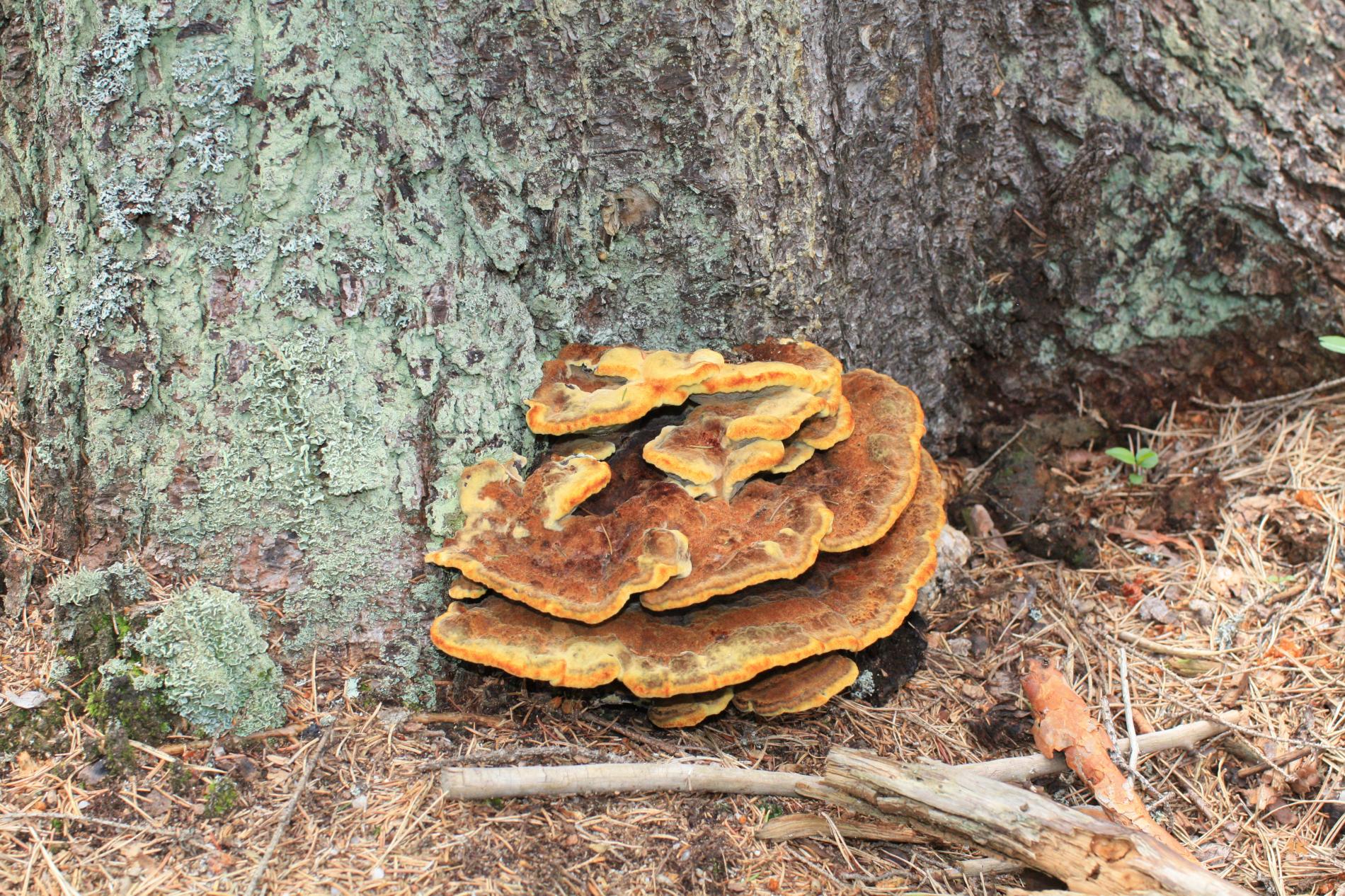
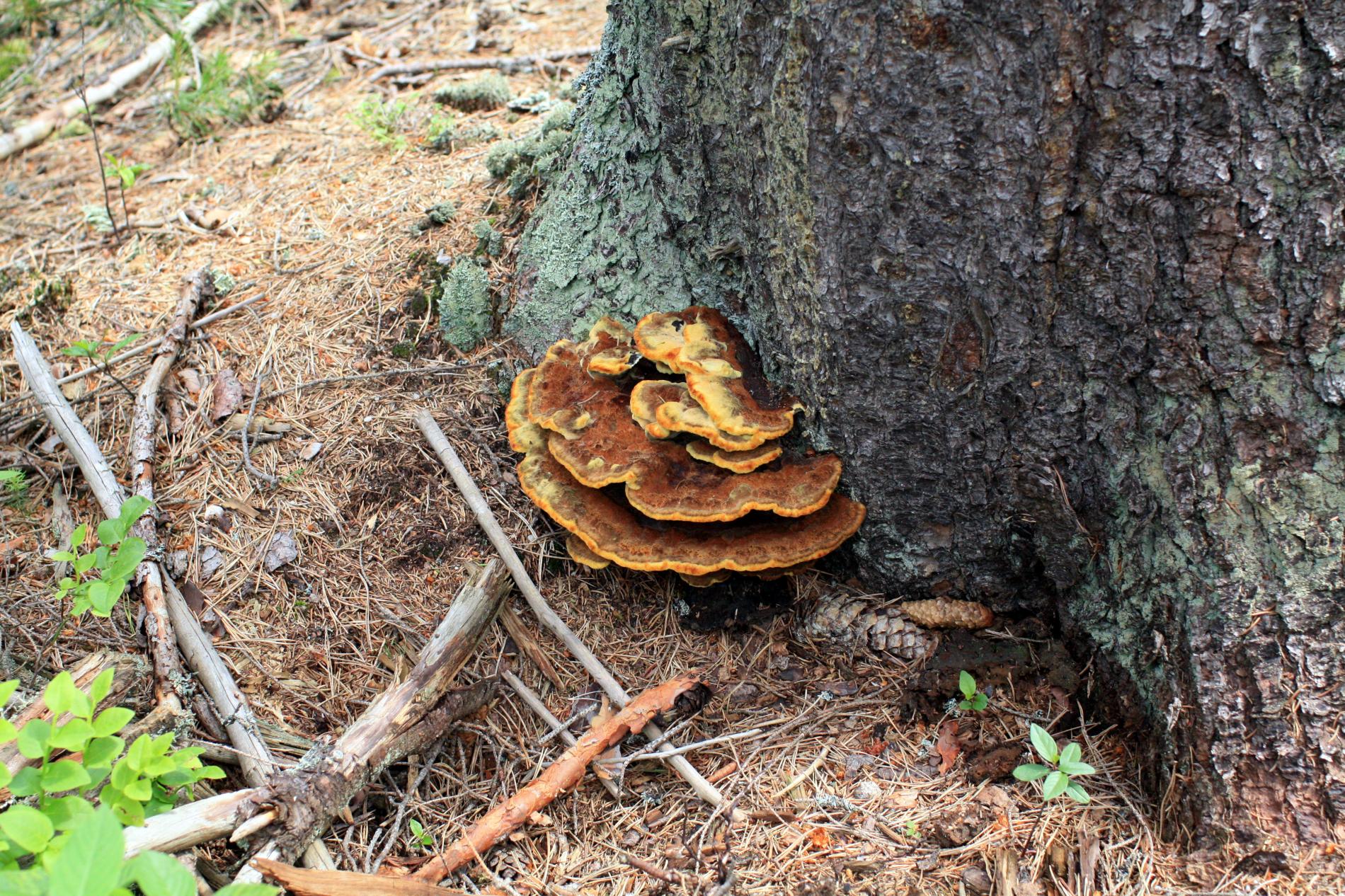
Fruiting bodies are bulky, 10-30 cm wide, annual, growing commonly on both older and young trees from June until October. The surface is irregularly bumpy, finely pubescent, sulphur-yellow at first, later brownish orange, rusty-brown to blackish brown. The pores are sulphur-yellow, later greenish yellow, rusty to brown. Young fruiting bodies turn brown when pushed down. They do not grow in litterfall or mineral soil, instead they grow on decaying as well as on living roots, stumps and trunks. The mycelium causes intense red-brown heartwood rot producing a strong turpentine scent.
Fruiting body on the trunk. The surface is irregularly bumpy, finely pubescent, sulphur-yellow at first, later brownish orange, rusty-brown to blackish brown. The pores are sulphur-yellow, later greenish yellow, rusty to brown. Young fruiting bodies turn brown when pushed down.
Tree Species: Pine, Douglas Fir, Spruce, Larch
Part of a plant- attacked: Tree trunk, Roots
Pest significance: Harmful
Pest Category: Fungi
Invasive Species: No
Present in EU: Yes
Pest group: Fungi
Affected part of wood: Heartwood, Sapwood
Depth of damages: More than 5 cm depth, Under bark only, Up to 0,5 cm depth, Up to 2 cm depth, Up to 5 cm depth
The extent of damage: Whole trunk
Prevalence in Europe: Common
Damaged products: Firewood, Fresh timber logs (water still in the sapwood), Furniture, Lumber, boards and prisms, Wooden house constructions
Roundwood size: Diameter 50+, Diameter from 10 up to 50 cm, Diameter up to 10 cm
Wood discoloration: Yes
Pest subcategory: Brown-rot
Similar pests

Armillaria ostoyae

Trametes hirsuta
