


Pezicula cinnamomea
Pezicula fungus
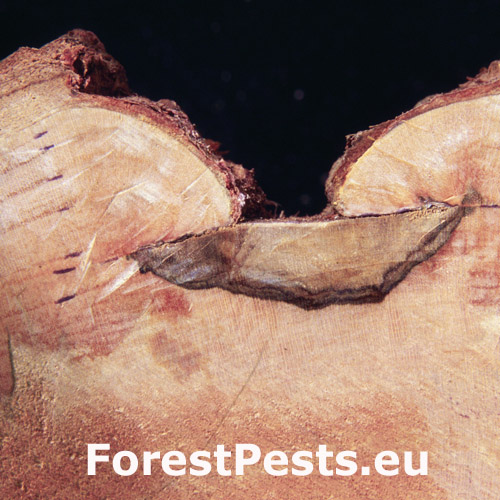
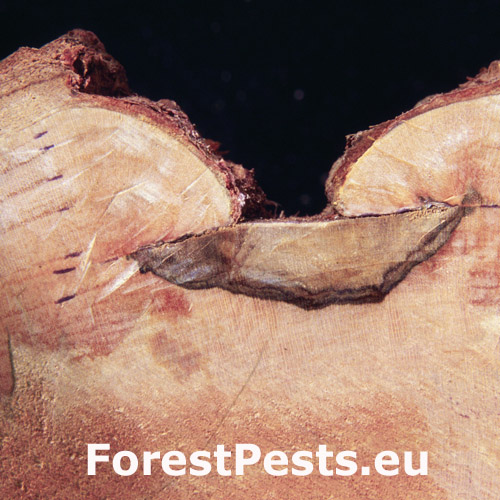
One of the main features of tree infection caused by the cankerous fungus is bottle-like coarsening of the trunk base and necrosis of large bark plates. The infected bark is necrotized, tongue-shaped and spreads up to 2 m in height above ground. The attacked bark is sunken, there are formed cracks in it and finally the bark falls off in scales. The fungus often cannot break tree defense mechanism and it does not attack cambium. In case of potential attack of cambium, the tree resists by intense making callus. The fruiting bodies are tiny, 1 mm disc-like cinnamon-coloured apothecia.
One of the main features of tree infection caused by the cankerous fungus is bottle-like coarsening of the trunk base and necrosis of large bark plates. The infected bark is necrotized, tongue-shaped and spreads up to 2 m in height above ground.
Tree Species: Beech, Oak
Part of a plant- attacked: Tree trunk
Pest significance: Less harmful
Pest Category: Fungi
Invasive Species: No
Present in EU: Yes
Pest group: Fungi
Affected part of wood: Heartwood, Sapwood
Depth of damages: More than 5 cm depth, Under bark only, Up to 0,5 cm depth, Up to 2 cm depth, Up to 5 cm depth
The extent of damage: Whole trunk
Prevalence in Europe: Common
Damaged products: Firewood, Fresh timber logs (water still in the sapwood), Furniture, Lumber, boards and prisms, Wooden house constructions
Roundwood size: Diameter from 10 up to 50 cm, Diameter up to 10 cm
Similar pests

Nectria fuckeliana

Neonectria coccinea
