


Pesotum piceae
Oak wilt
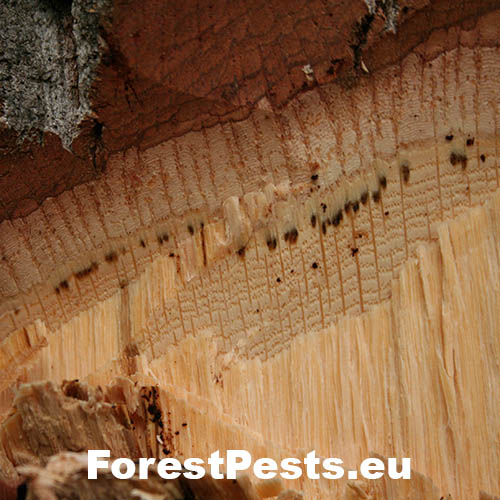
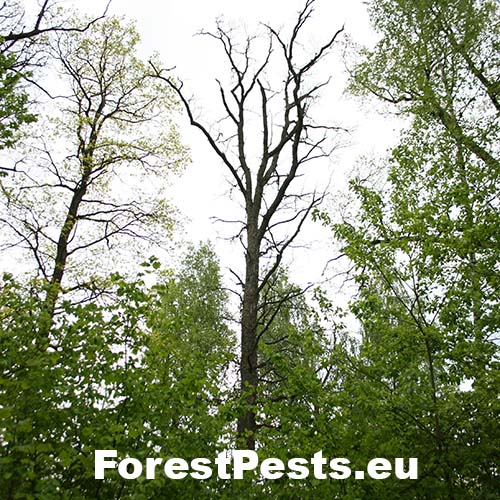
The mass die-back of oaks, also known as oak graphiosis, caused the death of oak stands throughout Europe from the mid-1970s to the end of the 1980s. The disease is caused by tracheomycosis fungi from the genera Ophiostoma spp. and Ceratocystis spp., the currently valid name of the fungus is Pesotum ssp. The main symptoms of infection include the death thin branches, later also side branches and all parts of the crown. Dark spots appear on the cross section of the trunk. The oak bark beetle Scolytus intricatus is probably involved in the transmission of spores. The fungus also infects acorns, which become a source of infection in new locations.
Death thin branches, later also side branches and all parts of the crown. Dark spots appear on the cross section of the trunk.
Tree Species: Oak
Part of a plant- attacked: Tree trunk
Pest significance: Very harmful
Pest Category: Fungi
Invasive Species: No
Present in EU: Yes
Pest group: Fungi
Affected part of wood: Heartwood, Sapwood
Depth of damages: More than 5 cm depth, Under bark only, Up to 0,5 cm depth, Up to 2 cm depth, Up to 5 cm depth
Prevalence in Europe: Common
Damaged products: Firewood, Fresh timber logs (water still in the sapwood), Furniture, Lumber, boards and prisms, Wooden house constructions
Roundwood size: Branches and twigs, Diameter up to 10 cm
Wood discoloration: Yes
Similar pests

Pleurotus pulmonarius

Polyporus squamosus
