


Peniophora incarnata
Rosy crust
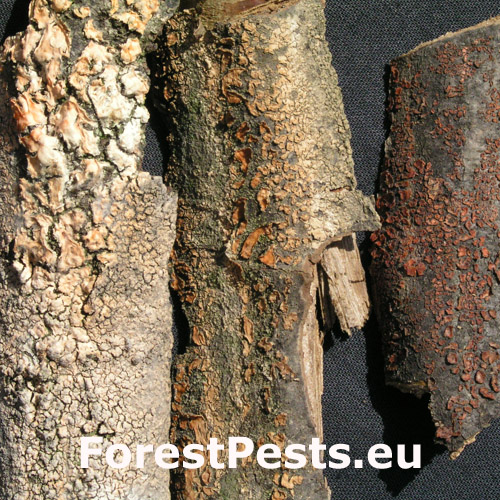
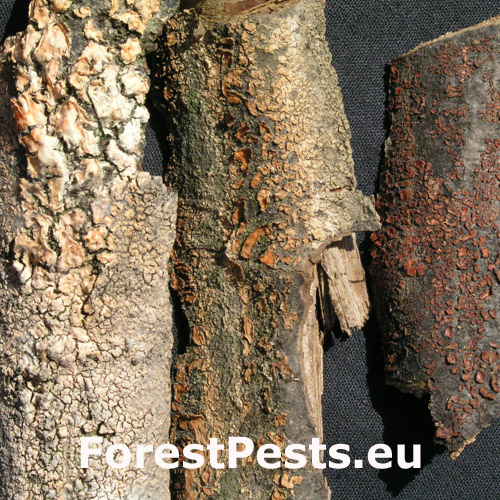
Rosy crust has an effuse fruiting body covering several decimeters. The surface is smooth to bumpy, pale to bright orange, possibly salmon-pink. The fungus is common on branches and trunks of various broadleaved trees, mainly alders. Species of this genus are saprophytes and do not influence the trees condition significantly. Related to this fungus is Phlebiopsis gigantea which is used as a biological protection of conifers against infection of fresh stumps caused by Heterobasidion annosum.
The fruiting body is thin and resupinate at the area up to several decimetres. The surface is smooth to rough, pale to bright orange, possibly salmon pink.
Tree Species: Elm, Beech, Oak, Chestnut, Alder, Poplar, Willow
Part of a plant- attacked: Tree trunk
Pest significance: Less harmful
Pest Category: Fungi
Invasive Species: No
Present in EU: Yes
Pest group: Fungi
Affected part of wood: Heartwood, Sapwood
Depth of damages: More than 5 cm depth, Under bark only, Up to 0,5 cm depth, Up to 2 cm depth, Up to 5 cm depth
Prevalence in Europe: Rare
Damaged products: Firewood, Fresh timber logs (water still in the sapwood), Furniture, Lumber, boards and prisms, Wooden house constructions
Roundwood size: Diameter 50+, Diameter from 10 up to 50 cm
Wood discoloration: Yes
Pest subcategory: White-rot
Similar pests

Stereum sanguinolentum

Ophiostoma piceae
