


Paysandisia (Castnia) archon
Palm borer moth
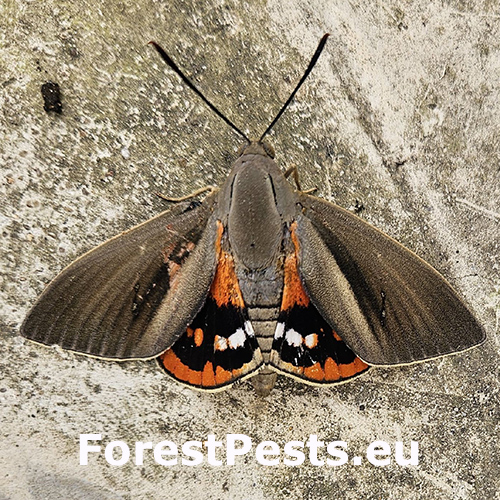
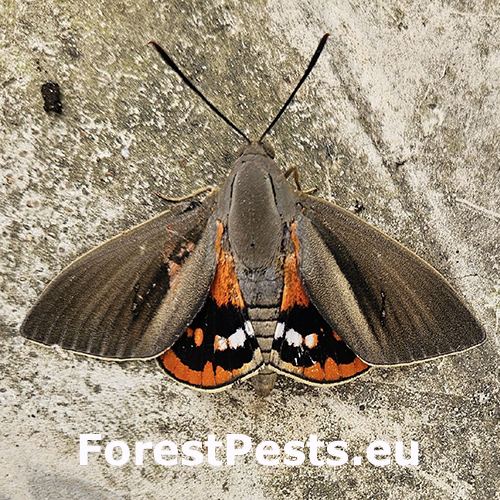
The palm borer moth Paysandisia (Castnia) archon is a species of moth originating from South America. I tis a large species – wingspan often more than 10 cm. This moth was introduced to Europe in 2000 through ornamental palms. Since its accidental introduction, it has become a major threat for natural stands of native palms, as well as for nurseries and gardens in the Mediterranean basin, where it causes significant damage to palm trees. Adult moths, which are strong fliers, emerge from mid-May to late September, mate, and female laying eggs on palm trees. After 12-21 days, the larvae hatch and burrow into the trunk, where they feed and grow through nine instars over 10 to 19 months. The larvae then pupate inside cocoons within the palms. The entire cycle taking approximately 13 to 22 months. The larvae of Paysandisia (Castnia) archon burrow into the trunks and crowns of various palm species, leading to their decline and eventual death. This pest poses a major threat to both ornamental and commercially important palms in affected areas.
Infestation can be identified by several symptoms: sawdust on the palm crown or trunk, gallery holes within the trunk, visible when the trunk is sliced. Other signs include abnormal development of axillary leaf buds, deformation, and twisting of palm trunks, as well as abnormal drying, particularly of the core leaves.
Tree Species: Palm Tree
Part of a plant- attacked: Tree trunk, Leaf / Needle
Pest significance: Very harmful
Pest Category: Insects
Invasive Species: Yes
Present in EU: Yes
Pest group: Insect
Affected part of wood: Heartwood, Sapwood
Depth of damages: More than 5 cm depth, Up to 0,5 cm depth, Up to 2 cm depth, Up to 5 cm depth
The extent of damage: Whole trunk
Prevalence in Europe: Common
Damaged products: Firewood, Fresh timber logs (water still in the sapwood)
Roundwood size: Diameter 50+, Diameter up to 10 cm
Exit holes: Oval, Round
Pest subcategory: Wood-boring insect
Similar pests

Lamprodila rutilans

Zeuzera pyrina
