


Oligoporus ptychogaster
Fungus Oligoporus ptychogaster
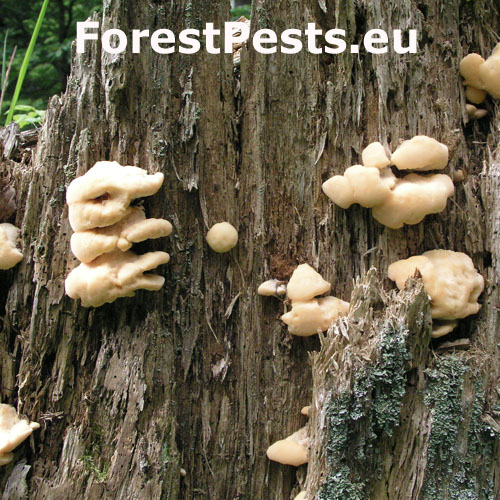
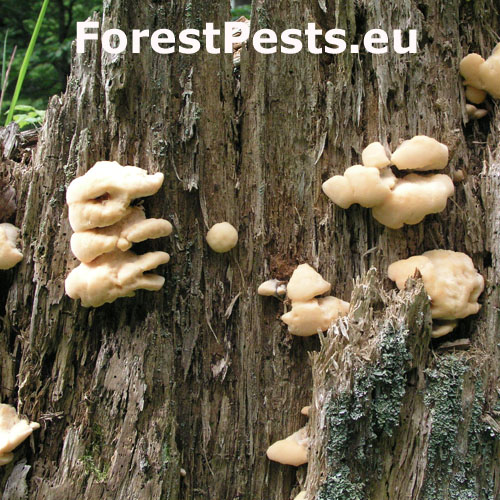
The asexual stage of the Ptychogaster albus creates knob- or pillow-shaped fruiting bodies, 4 cm across, soft, thickly pelted, first white, then aging to pink and brownish colour, sometimes exuding water drops. In old age the fungus disintegrates to brown powder (chlamydospores) like a puffball. Under favourable conditions the fungus develops tubbed sexual fruiting bodies. These may be resupinate or pileate and grow from July till November. The cap is 1–4 cm across; shaped as an irregular semicircle, fleshy soft when young, covered with pressed pelt, white. The pores are white; later turning creamy. The mycelium is a causal agent of brown rot.
The fruiting bodies are spilled to hat-shaped, irregularly semicircular, freshly fleshy, covered with pressed hairs, white.
Tree Species: Spruce
Part of a plant- attacked: Tree trunk
Pest significance: Harmful
Pest Category: Fungi
Present in EU: Yes
Pest group: Fungi
Affected part of wood: Heartwood, Sapwood
Depth of damages: More than 5 cm depth, Under bark only, Up to 0,5 cm depth, Up to 2 cm depth, Up to 5 cm depth
The extent of damage: Whole trunk
Prevalence in Europe: Common
Damaged products: Firewood, Fresh timber logs (water still in the sapwood), Furniture, Lumber, boards and prisms, Wooden house constructions
Roundwood size: Diameter 50+, Diameter from 10 up to 50 cm
Wood discoloration: Yes
Pest subcategory: White-rot
Similar pests

Gloeophyllum odoratum

Trichaptum abietinum
