


Oberea oculata
Willow borer Oberea oculata
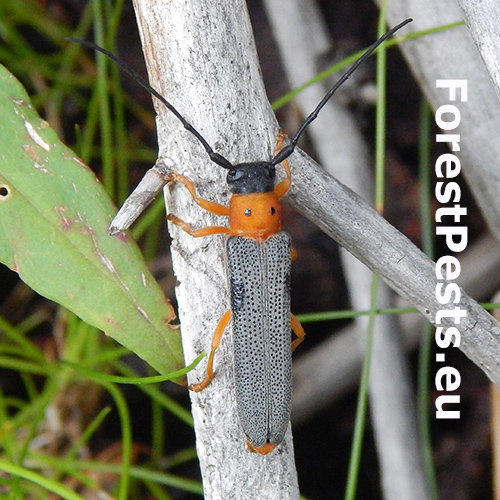
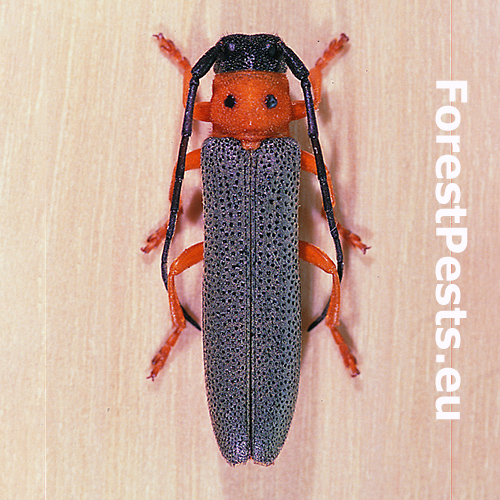
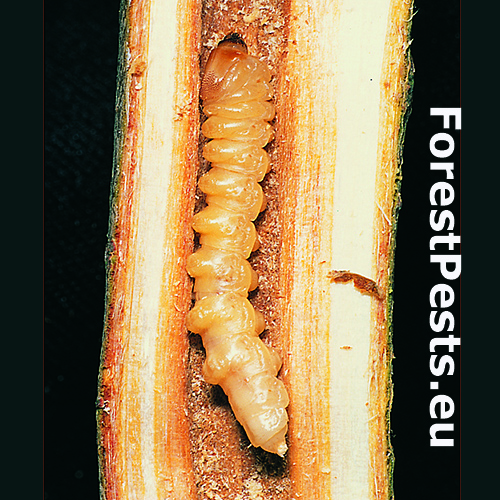
Oberea oculata is a widely distributed Palaearctic beetle species. This species is commonly found in riparian stands, forest edges, road edges, and ruderal plant communities, with a particular preference for goat willow (Salix caprea) in Europe, although it can be found on various broad-leaved willows.The adult beetles are active from June to August, during which time they can be found on leaves and twigs, feeding on leaf tissue and young bark. Females lay their eggs on live twigs or thin trunks, where the larvae later create longitudinal galleries under the bark, eventually boring into the pith wood. This tunneling can cause significant damage to the host trees, evidenced by the presence of exit holes left by emerging adults. The larval development typically spans two years, although the exact duration can vary depending on local environmental conditions.
Dying branches, eating galleries under the bark and in the wood, exit holes.
Tree Species: Willow
Part of a plant- attacked: Tree trunk, Branch
Pest significance: Less harmful
Pest Category: Insects
Invasive Species: No
Present in EU: Yes
Pest group: Insect
Affected part of wood: Heartwood, Sapwood, Underbark area
Depth of damages: Bark, More than 5 cm depth, Under bark only, Up to 0,5 cm depth, Up to 2 cm depth, Up to 5 cm depth
The extent of damage: Individually - one place
Prevalence in Europe: Rare
Damaged products: Firewood, Fresh timber logs (water still in the sapwood), Wooden rods
Roundwood size: Branches and twigs, Diameter up to 10 cm
Wood discoloration: No
Exit holes: Round
Pest subcategory: Bark and underbark insect, Wood-boring insect
Similar pests

Rosalia alpina

Cerambyx cerdo
