


Neonectria coccinea
Beech bark disease
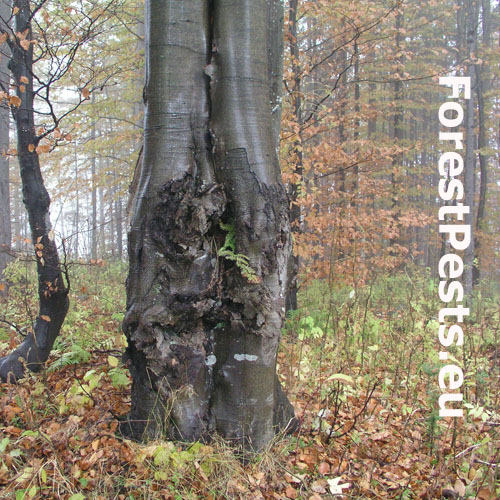
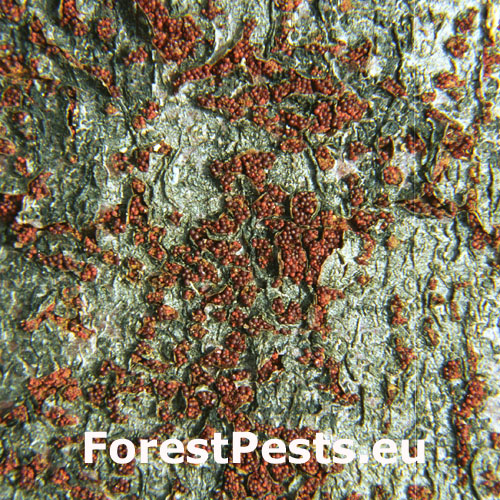
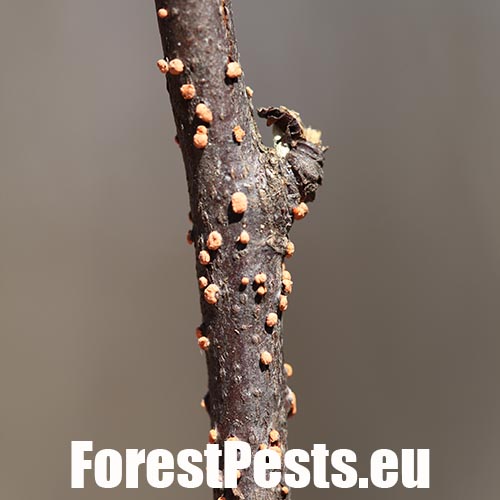
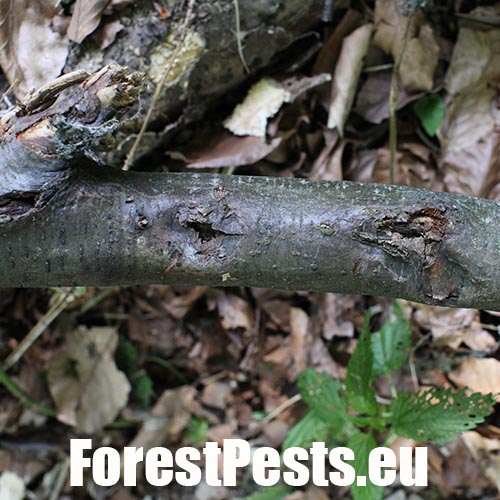
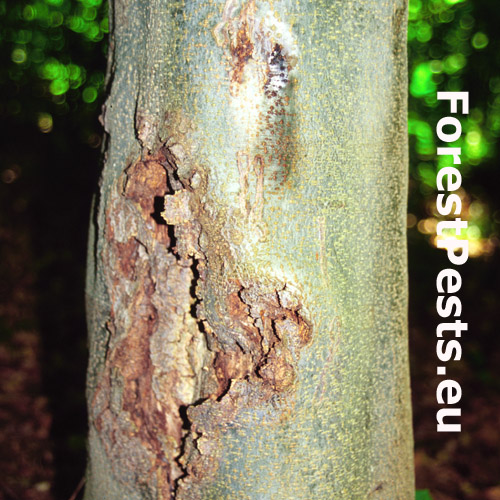
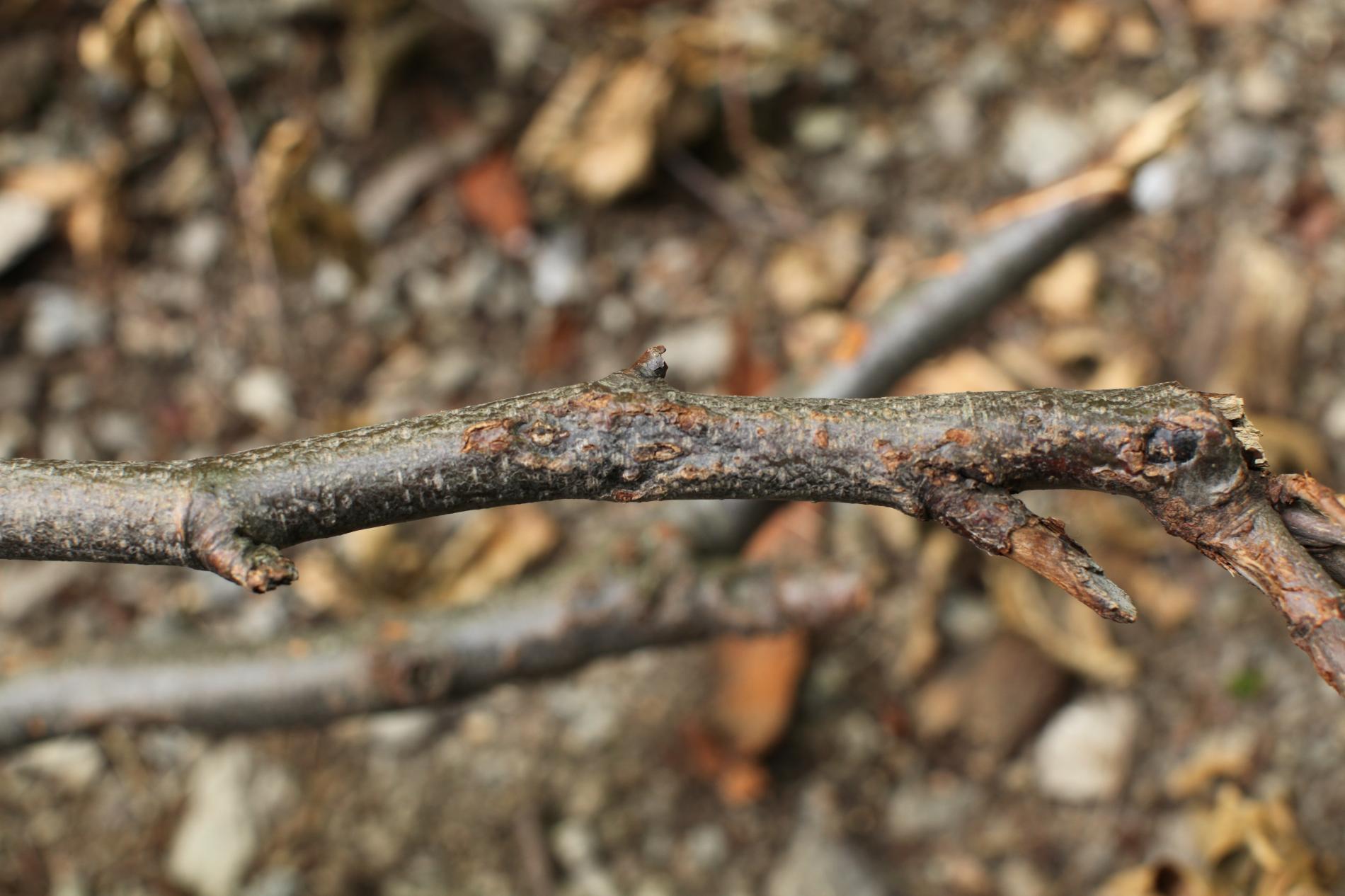
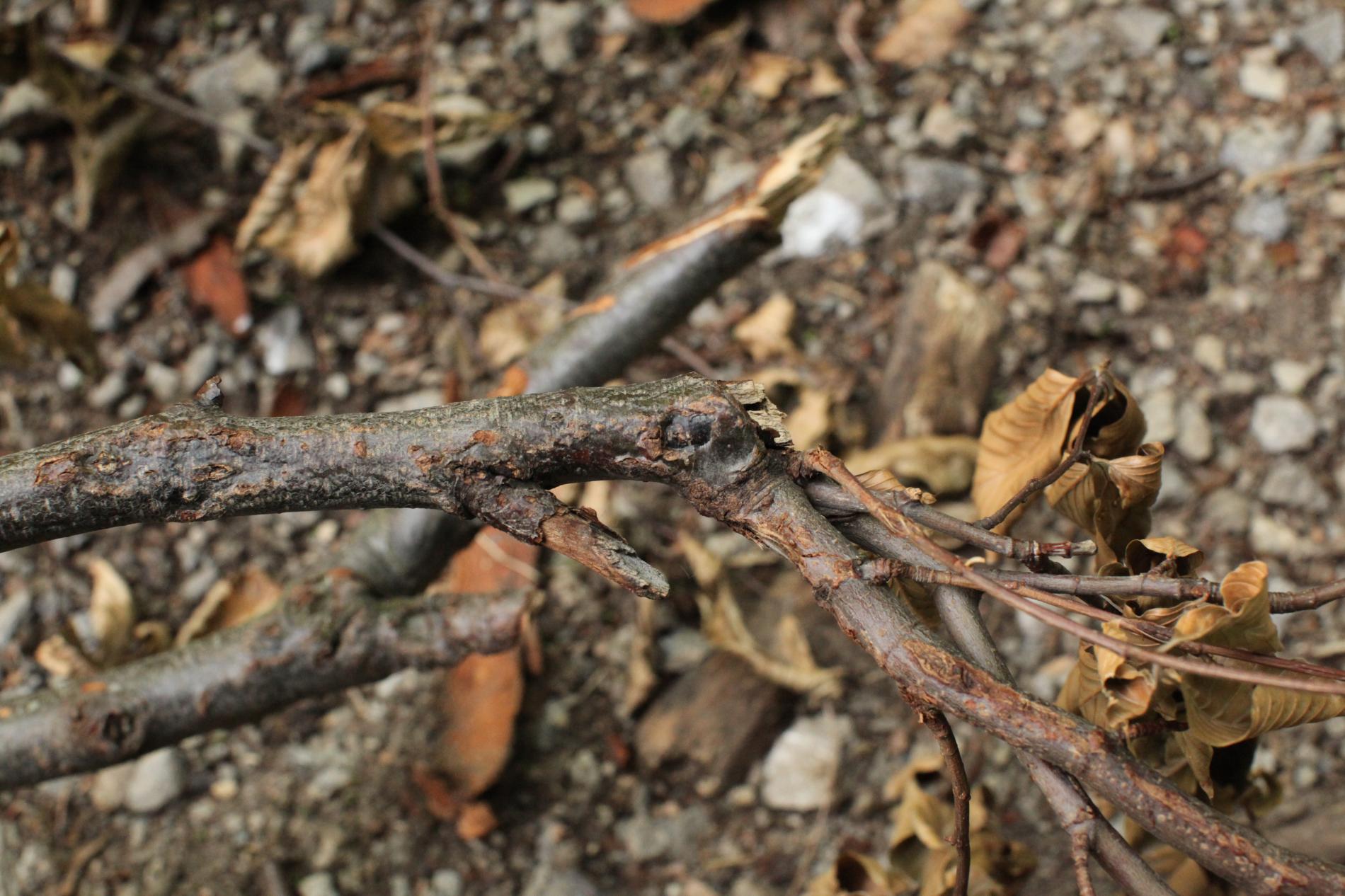
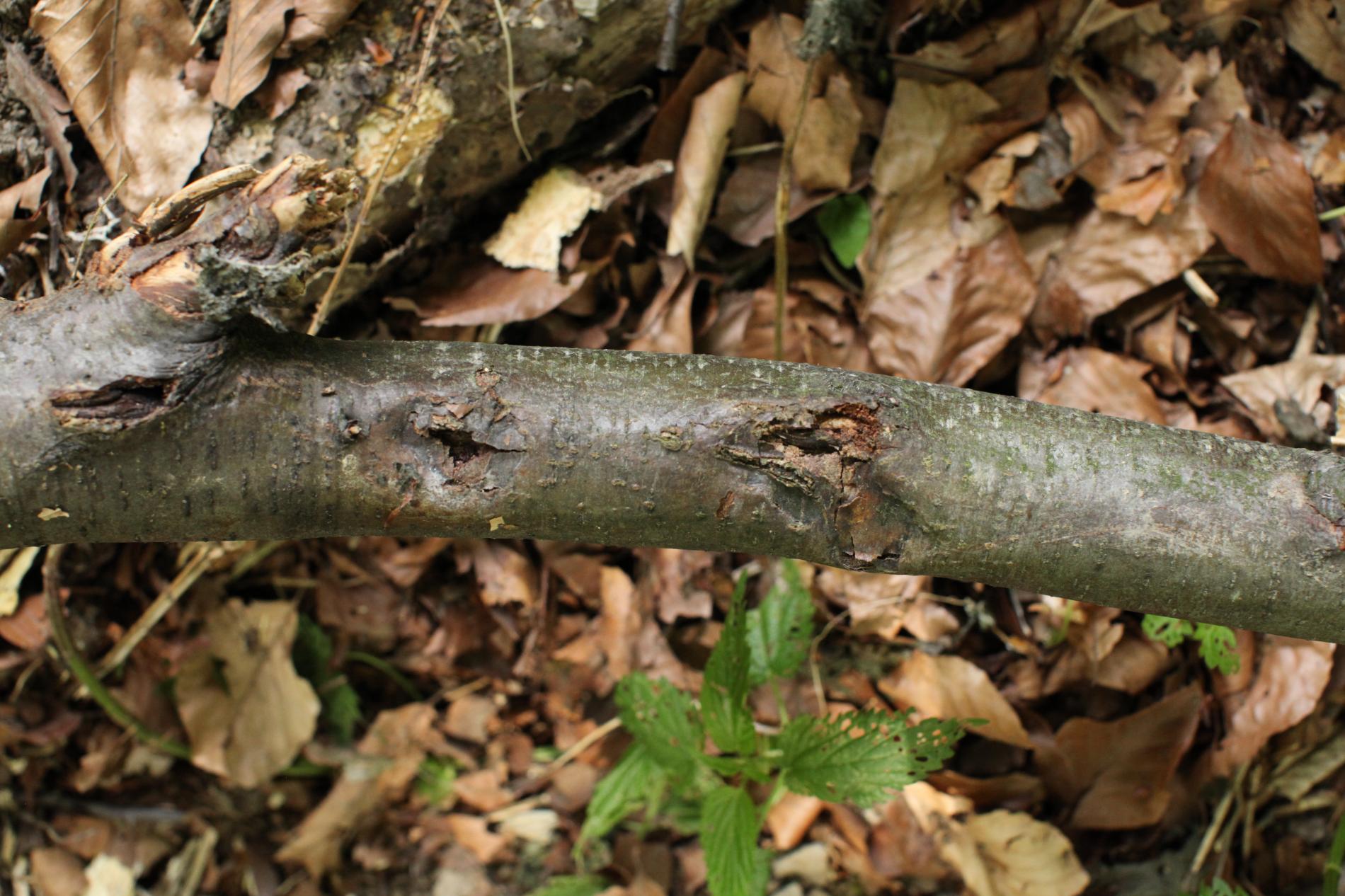
The bark is infected through wounds. Black tarry spots and orange-reddish fruiting bodies of the fungus are often found in the place of infection. The mycelium causes dying off of the bark and cambium cells. The tree defends itself by forming a callus, thus creating a canker tumor. Leaves above the place of infection are smaller and have symptoms of chlorosis. After girdling, the whole part above the infected place dies off. Attacked trees are necessary to be continuously removed from the stand.
Black tarry spots and orange-reddish fruiting bodies of the fungus are often found in the place of infection. Leaves above the place of infection are smaller and have symptoms of chlorosis.
Tree Species: Beech, Maple
Part of a plant- attacked: Tree trunk, Branch
Pest significance: Very harmful
Pest Category: Fungi
Invasive Species: No
Present in EU: Yes
Pest group: Fungi
Affected part of wood: Heartwood, Sapwood
Depth of damages: More than 5 cm depth, Under bark only, Up to 0,5 cm depth, Up to 2 cm depth, Up to 5 cm depth
The extent of damage: Whole trunk
Prevalence in Europe: Very common
Damaged products: Firewood, Fresh timber logs (water still in the sapwood), Furniture, Lumber, boards and prisms, Wooden house constructions
Roundwood size: Branches and twigs, Diameter up to 10 cm
Similar pests

Pleurotus pulmonarius

Kretzschmaria deusta
