


Neoclytus acuminatus
Redheaded ash borer
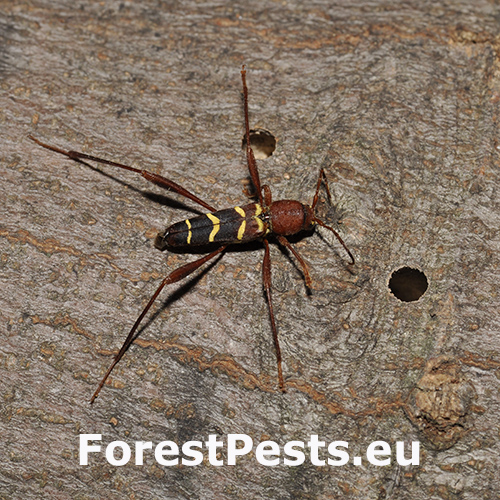
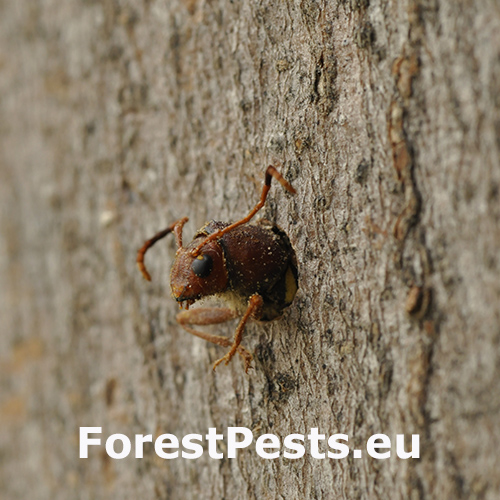
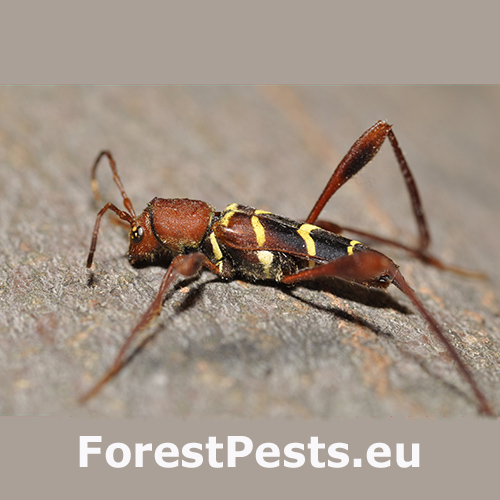
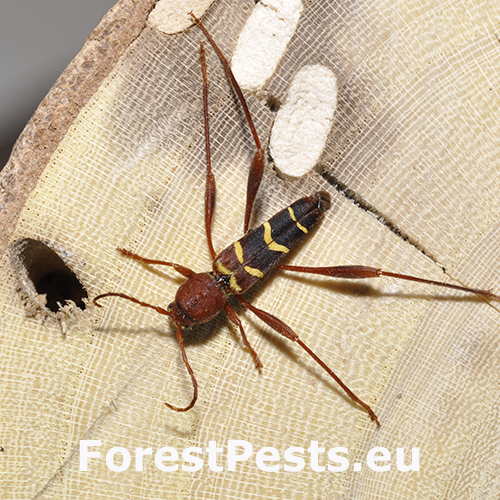
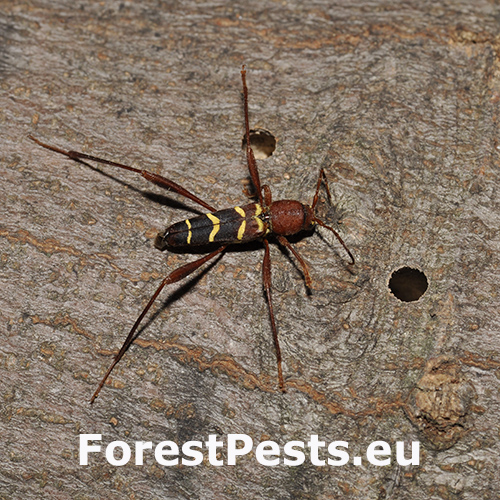
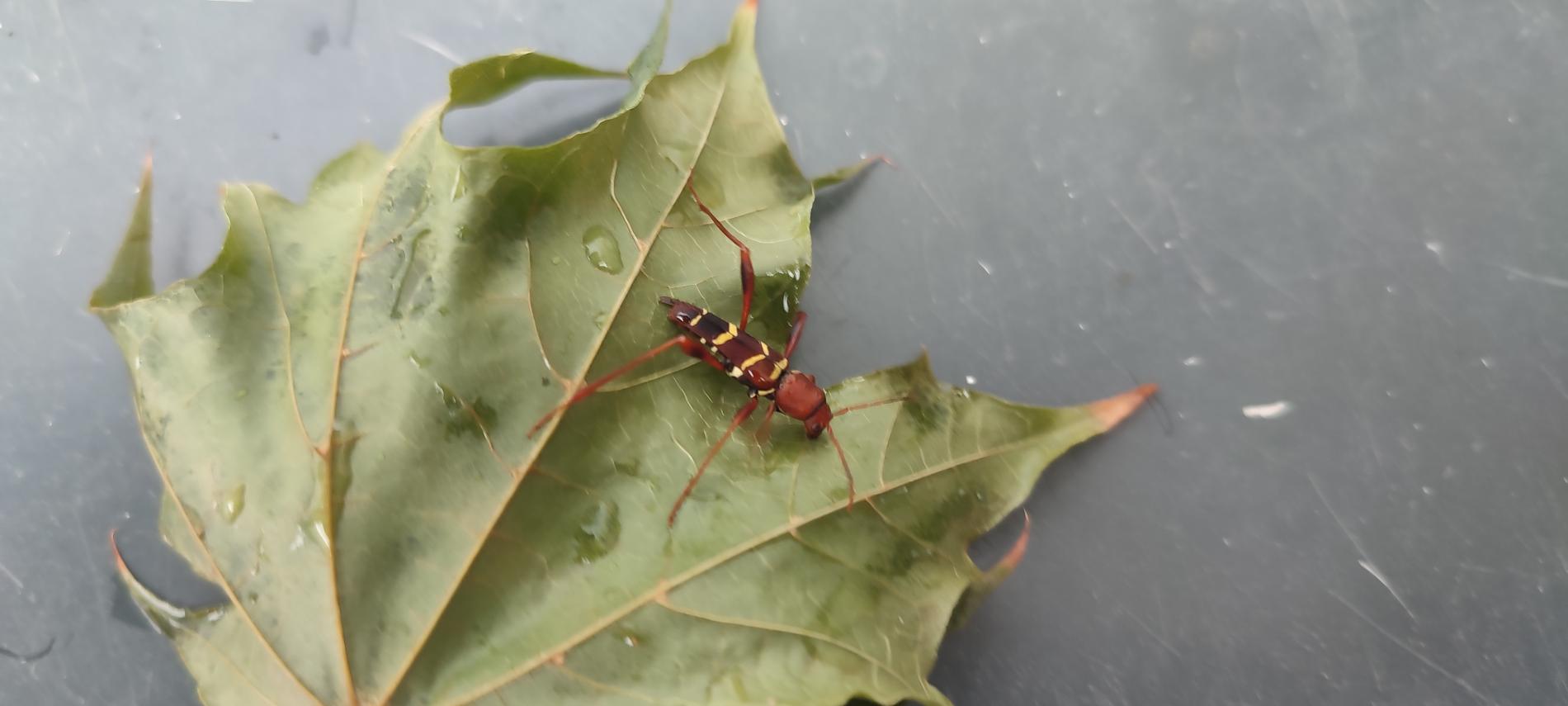
Neoclytus acuminatus, commonly known as the redheaded ash borer, is a species native to North America, including the United States and Canada. It is not native to Europe. This beetle is part of the Cerambycidae family and is known for its distinctive appearance and its larvae, which bore into dead or dying hardwood trees. Neoclytus acuminatus, or the red-headed ash borer, was first reported in Europe around 2008. It has been introduced accidentally, likely through the international trade of wood products. Since then, it has been observed in several European countries, where it has adapted to local environments and is considered an invasive species. Neoclytus acuminatus is aroung 8–16 mm long beetle. The redheaded ash borer is a slender, agile beetle with long legs. Head and thorax brick-red colour, elytrae reddish-brown with 4 slim transversal yellow bands. Adults are easy to spot moving on timber stacks, but leave quickly if disturbed. They attack only declining or freshly dead/felled trees. Healthy trees, as well as dried wood, are neglected. Larvae feed initially under bark; later excavate tunnels in the wood. Adults emerge from circular holes, often in great numbers. It feeds on a wide spectrum of tree species in fruit orchards, parks, plantations, pure and mixed broadleaved forests.
Collorfull, active beetles on trees, galleries in the wood.
Tree Species: Black Locust, Spindle, Elm, Cherry, Oak, Hornbeam, Pear, Ash, Maple, Hazel, Lime, Mulberry, Walnut, Poplar, Willow
Part of a plant- attacked: Tree trunk, Branch
Pest significance: Harmful
Pest Category: Insects
Invasive Species: Yes
Present in EU: Yes
Pest group: Insect
Affected part of wood: Sapwood
Depth of damages: Bark, Under bark only, Up to 0,5 cm depth, Up to 2 cm depth, Up to 5 cm depth
The extent of damage: Lokally
Prevalence in Europe: Rare
Damaged products: Firewood, Fresh timber logs (water still in the sapwood), Furniture, Wooden house constructions
Roundwood size: Branches and twigs, Diameter 50+, Diameter from 10 up to 50 cm, Diameter up to 10 cm
Wood discoloration: No
Exit holes: Oval, Round
Pest subcategory: Bark and underbark insect, Wood-boring insect


Similar pests

Plagionotus arcuatus

Plagionotus detritus
