


Monochamus sutor
Small white-marmorated longicorn
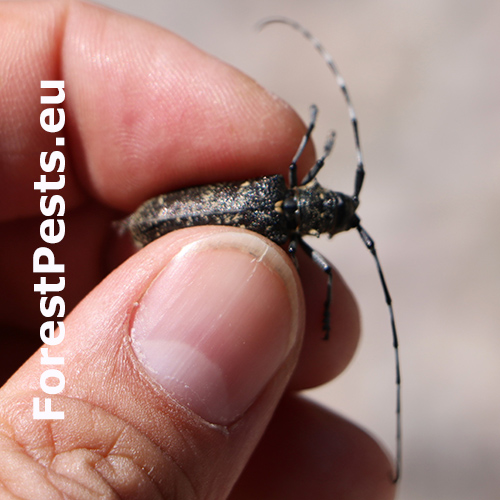
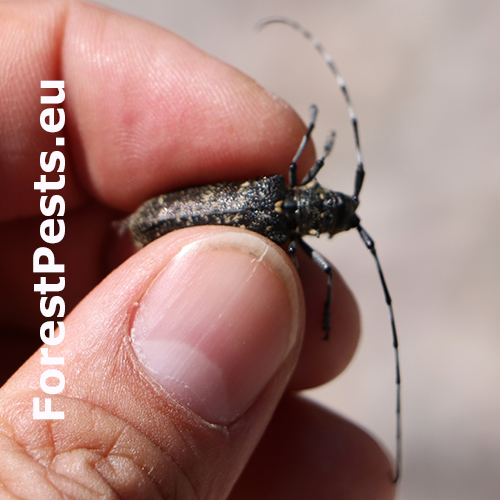
Small white-marmorated longicorn Monochamus sutor is a longhorn beetle native to Eurasia's coniferous forests, from the Atlantic coast to West Siberia. This species primarily infests Norway spruce (Picea abies), in northern or mountaneous regions. I may also inhabit pines (Pinus spp.). The beetles target referebly weakened, dying, or freshly fallen trees, particularly larger or older trunks. Young larvae feed under the bark, while older larvae bore deeper into the wood, creating irregular tunnels. The larvae overwinter twice and than pupate near the wood surface. Adults, active from June to September with a peak in July, feed on the bark of thin twigs. Life cycles typically last two years but can vary.
Infestation symptoms include circular exit holes on the wood surface and irregular tunnels filled with wood shavings under the bark and in the wood. Unlike other similar species, M. sutor tunnels deeply into the wood.
Tree Species: Pine, Spruce
Part of a plant- attacked: Tree trunk, Branch
Pest significance: Harmful
Pest Category: Insects
Invasive Species: No
Present in EU: Yes
Pest group: Insect
Affected part of wood: Sapwood
Depth of damages: Bark, More than 5 cm depth, Under bark only, Up to 0,5 cm depth, Up to 2 cm depth, Up to 5 cm depth
The extent of damage: Lokally
Prevalence in Europe: Common
Damaged products: Firewood, Fresh timber logs (water still in the sapwood)
Roundwood size: Branches and twigs, Diameter 50+, Diameter from 10 up to 50 cm
Wood discoloration: No
Exit holes: Round
Pest subcategory: Bark and underbark insect, Wood-boring insect
Similar pests

Saperda populnea

Rhagium mordax
