


Monochamus sartor
Long-horned beetle
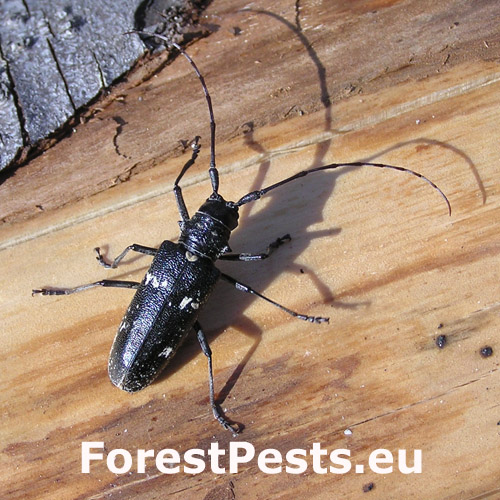
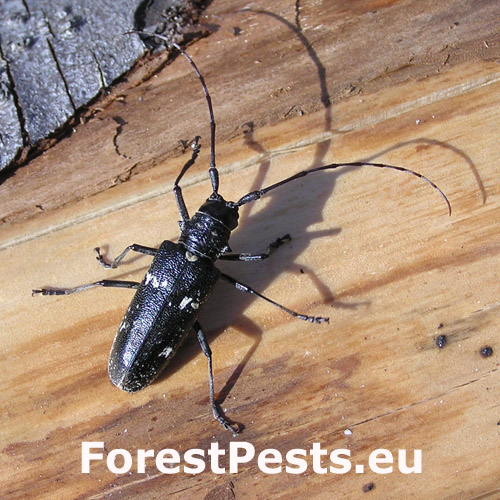
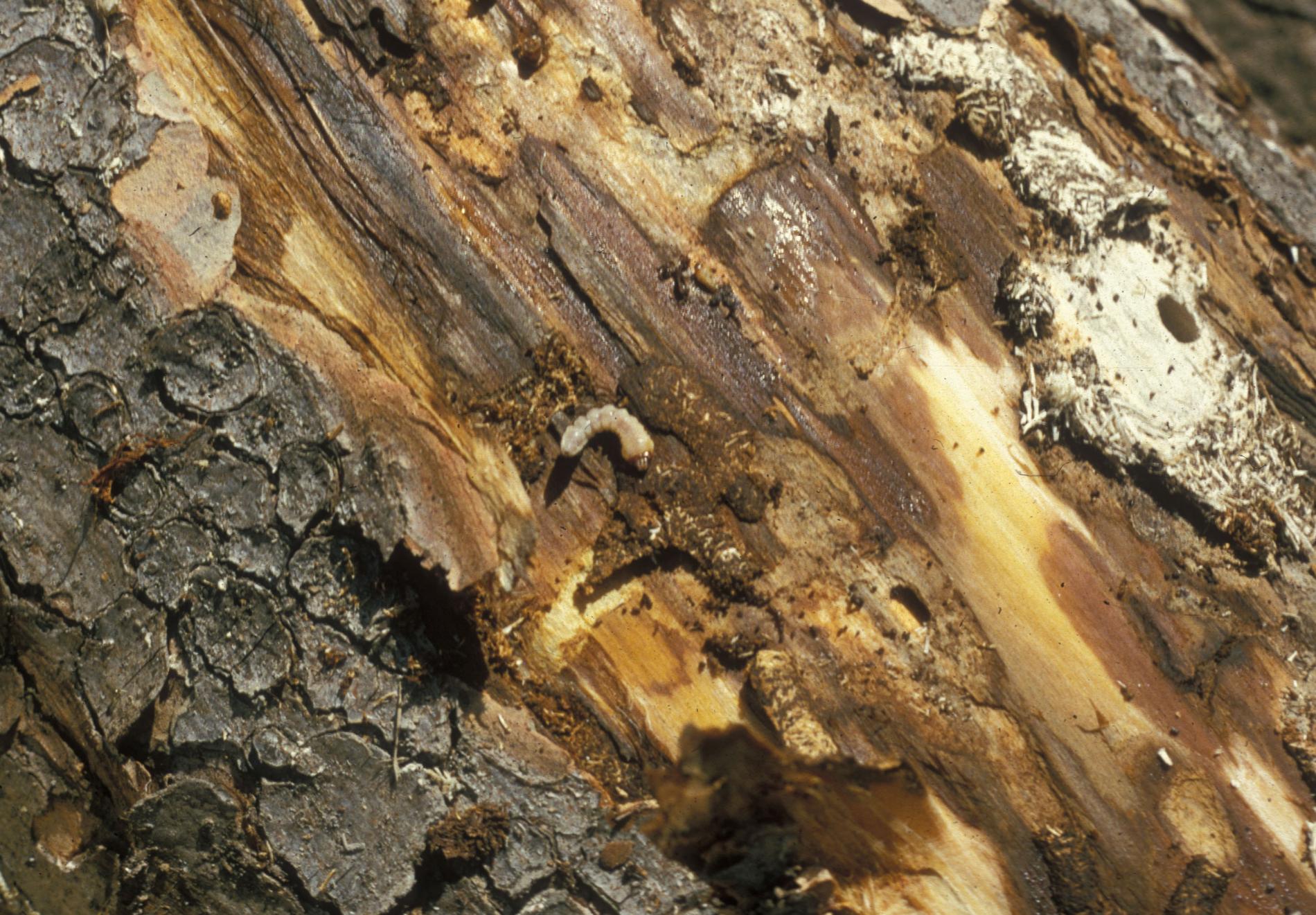
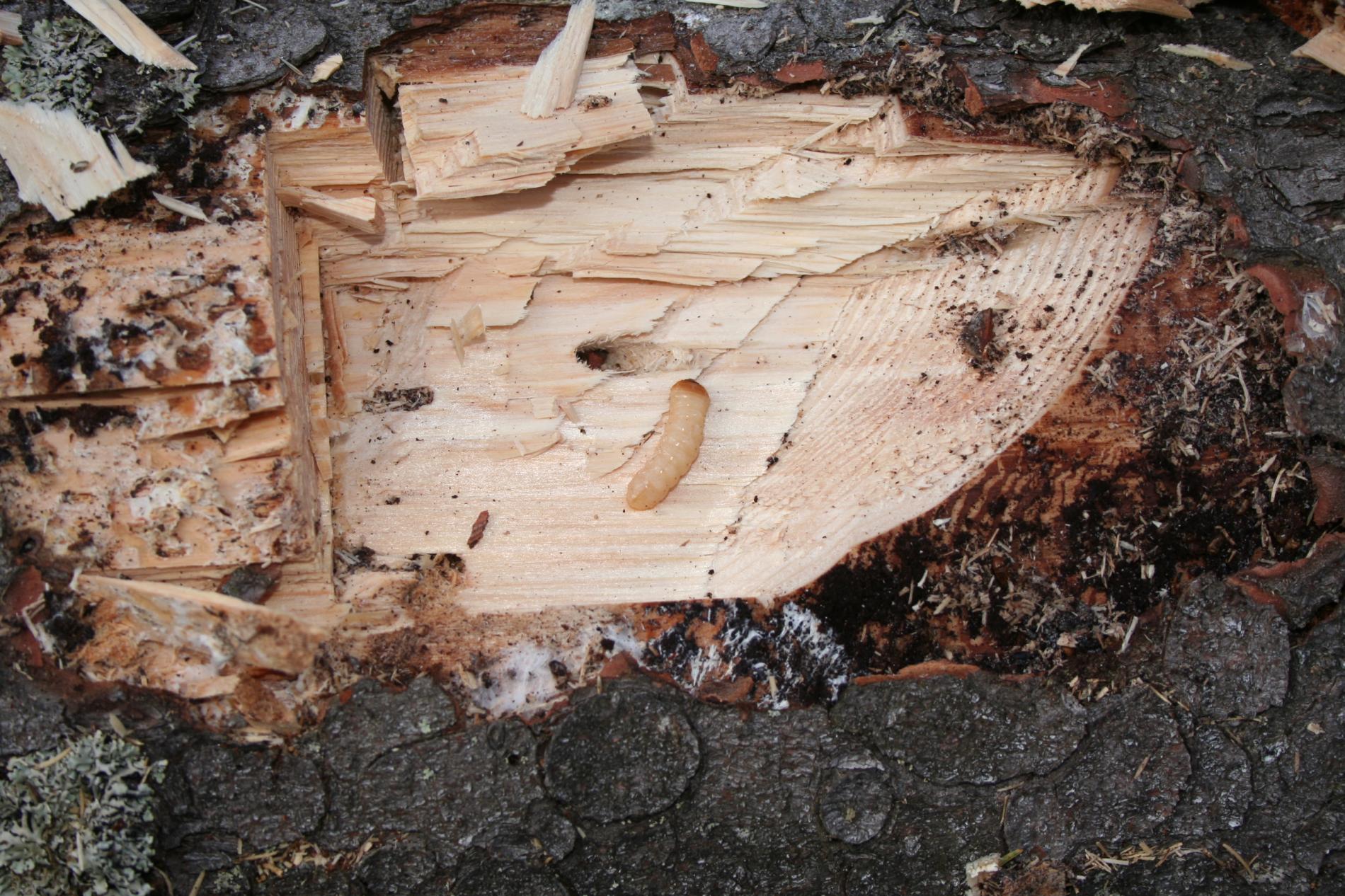
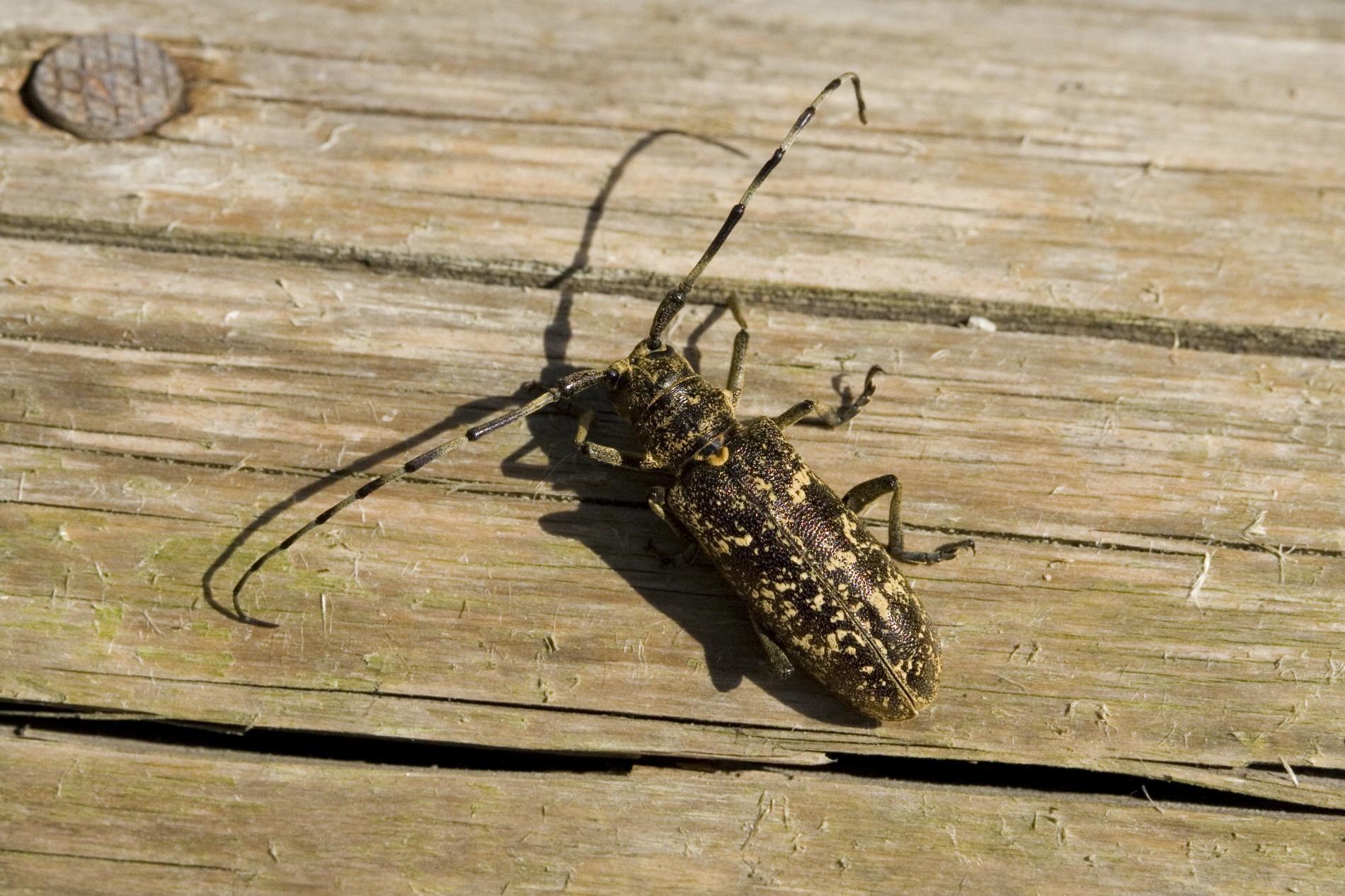
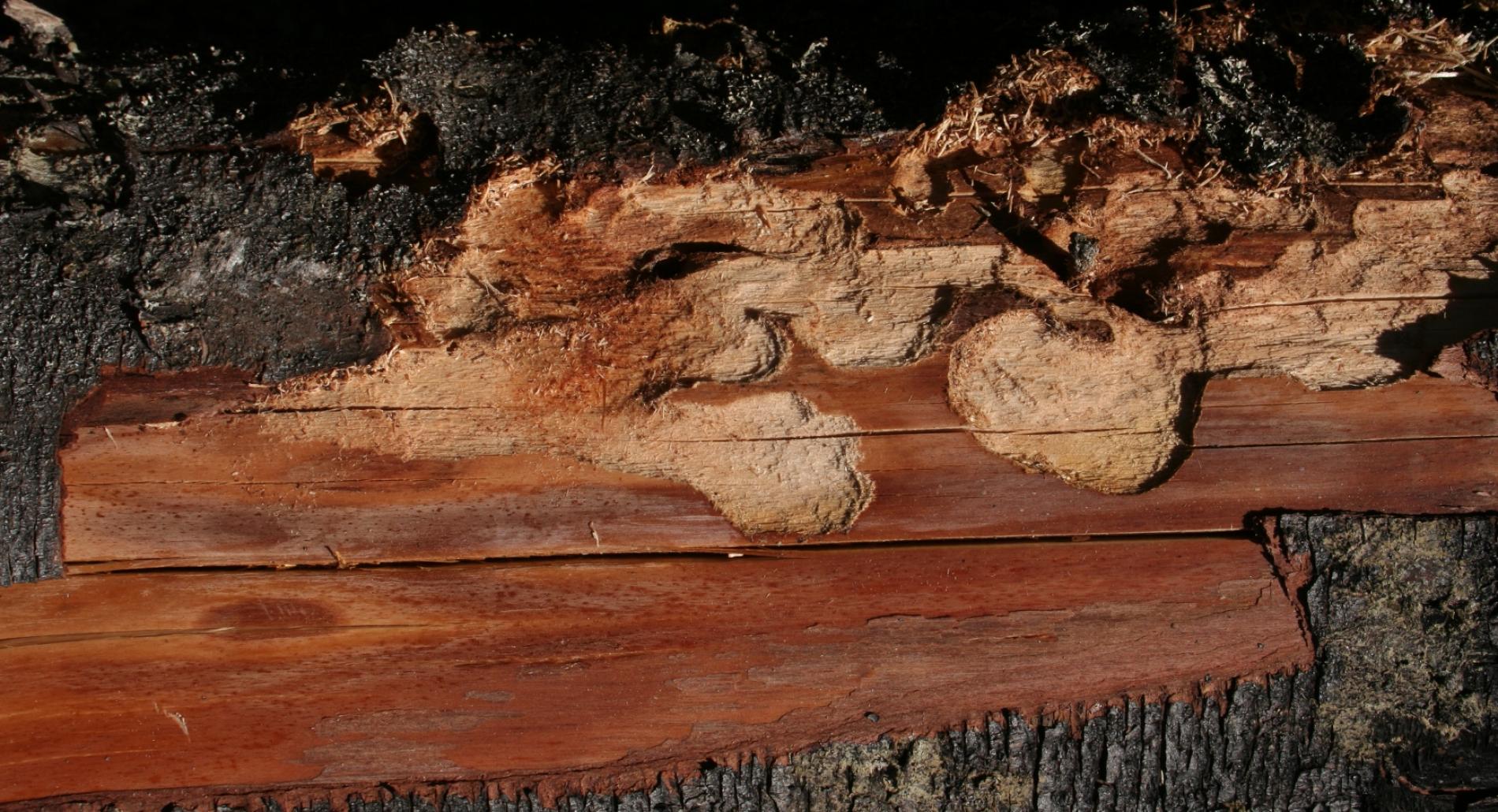
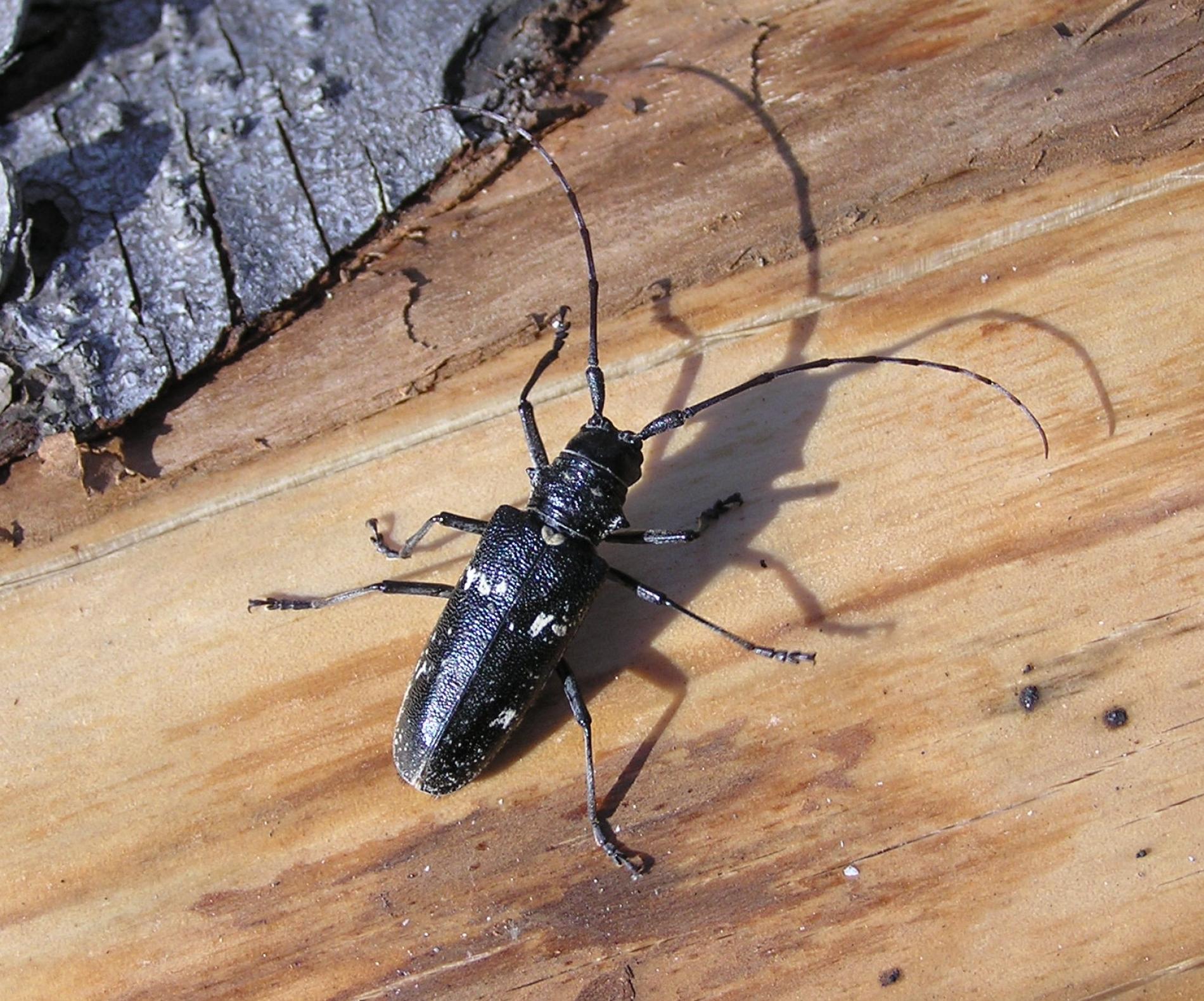
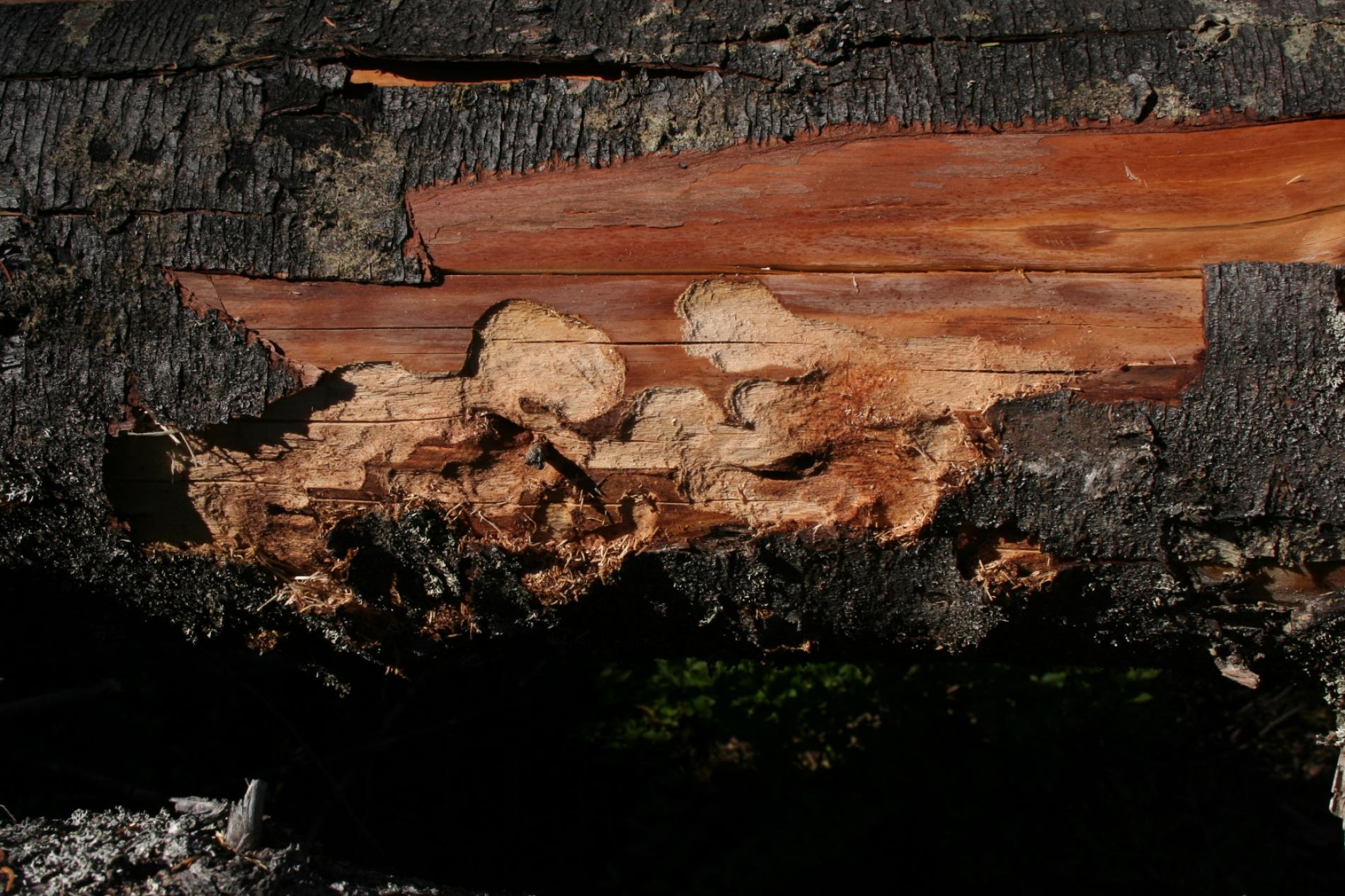
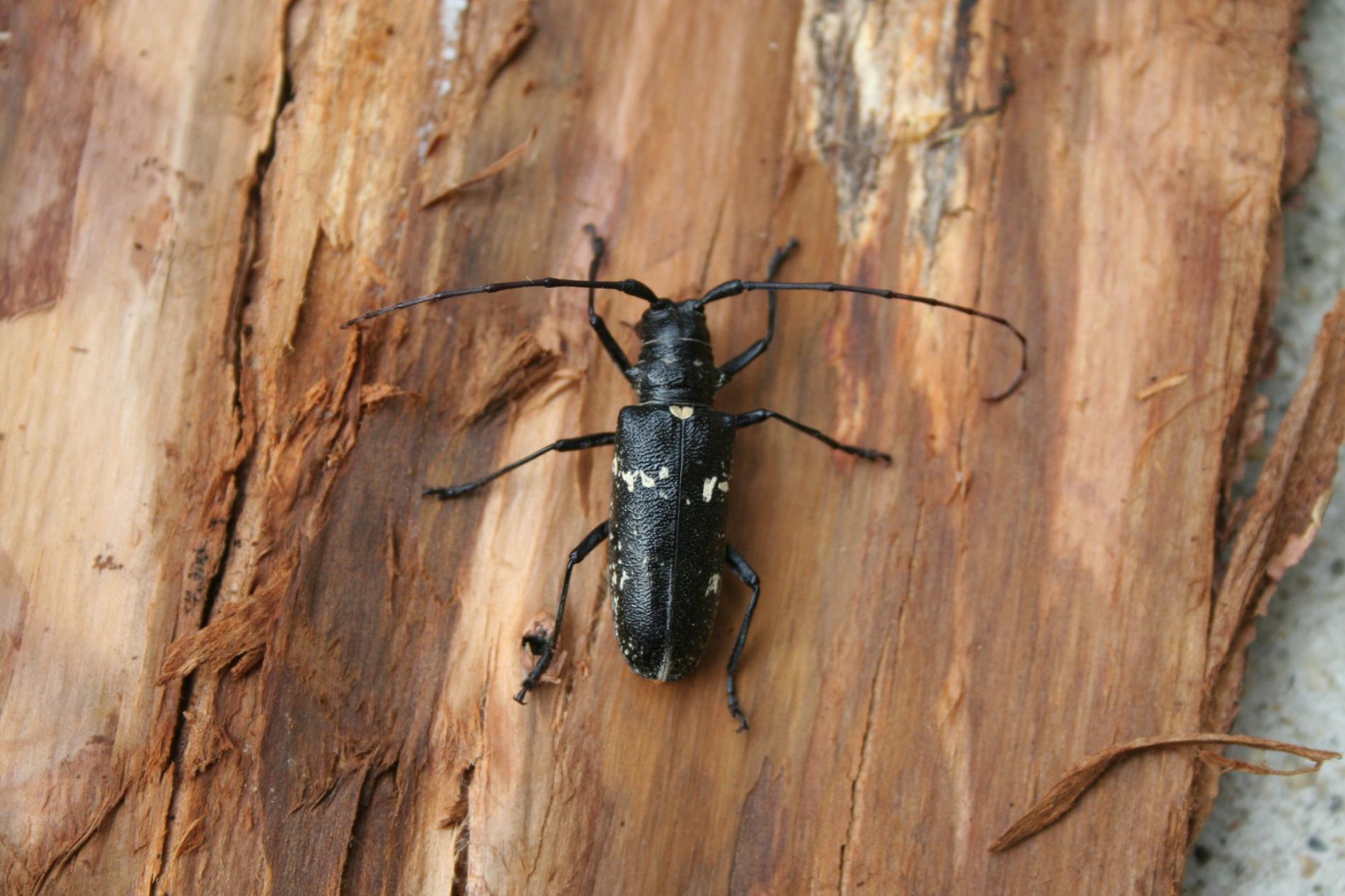
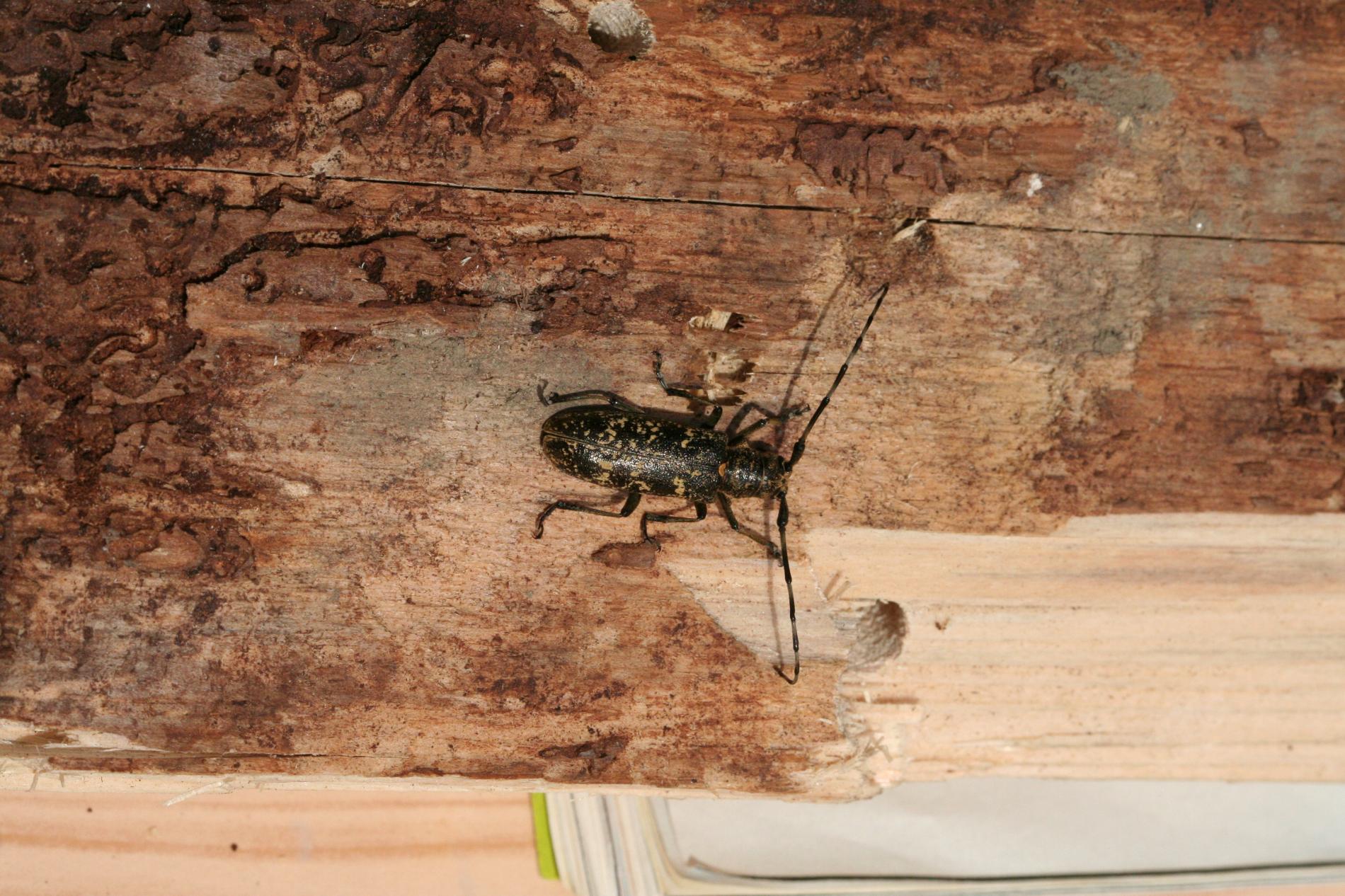
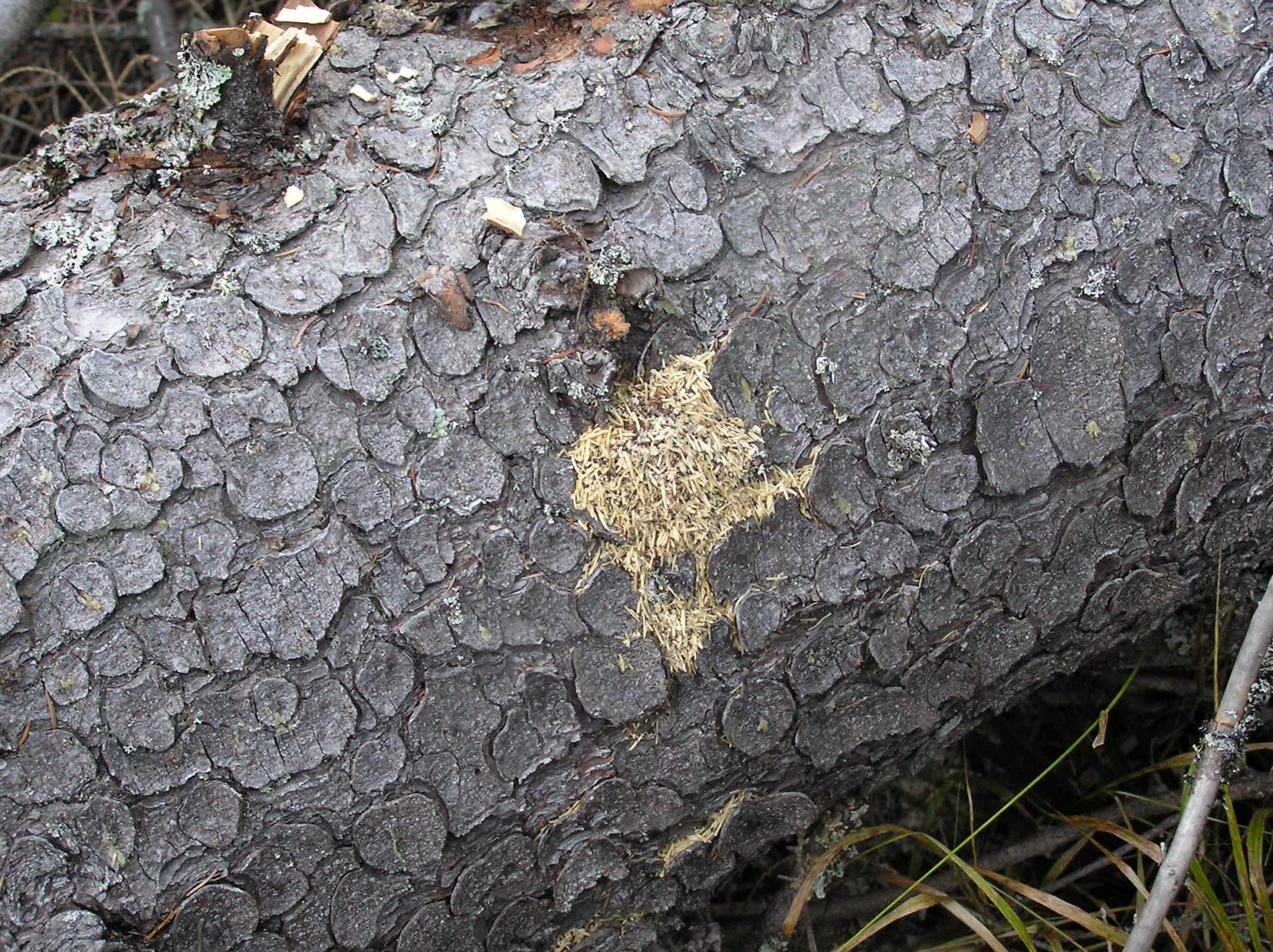
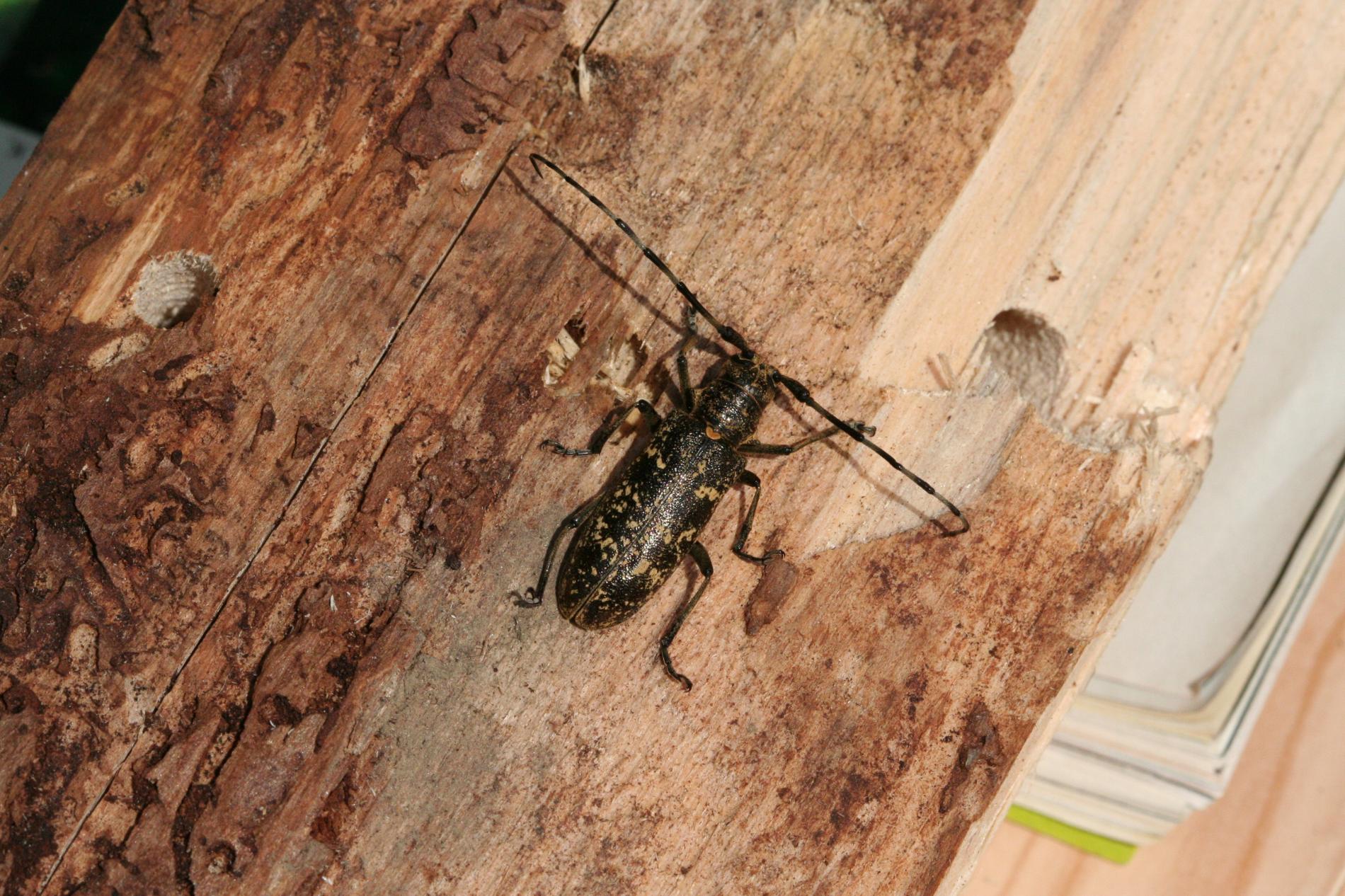
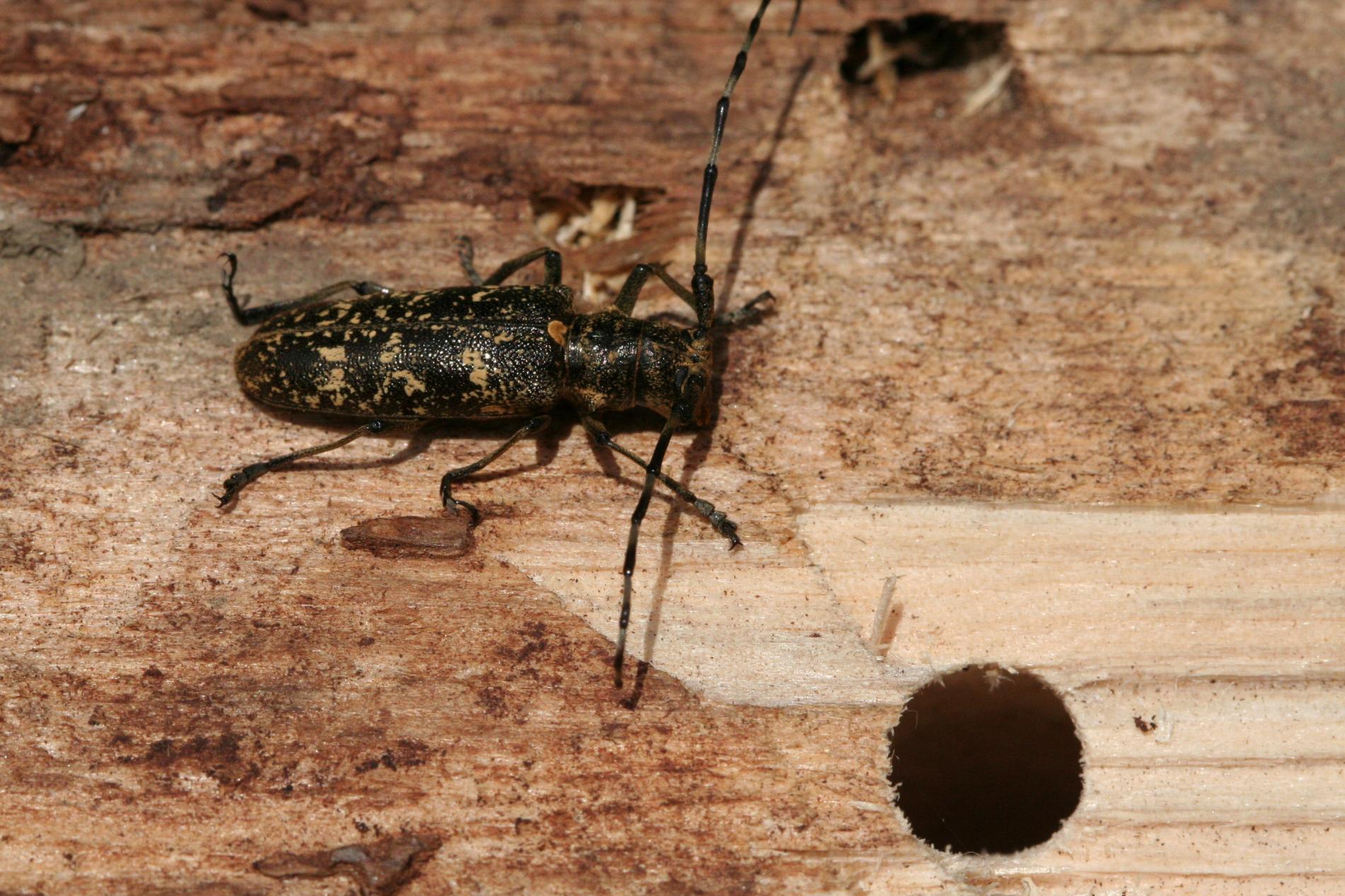
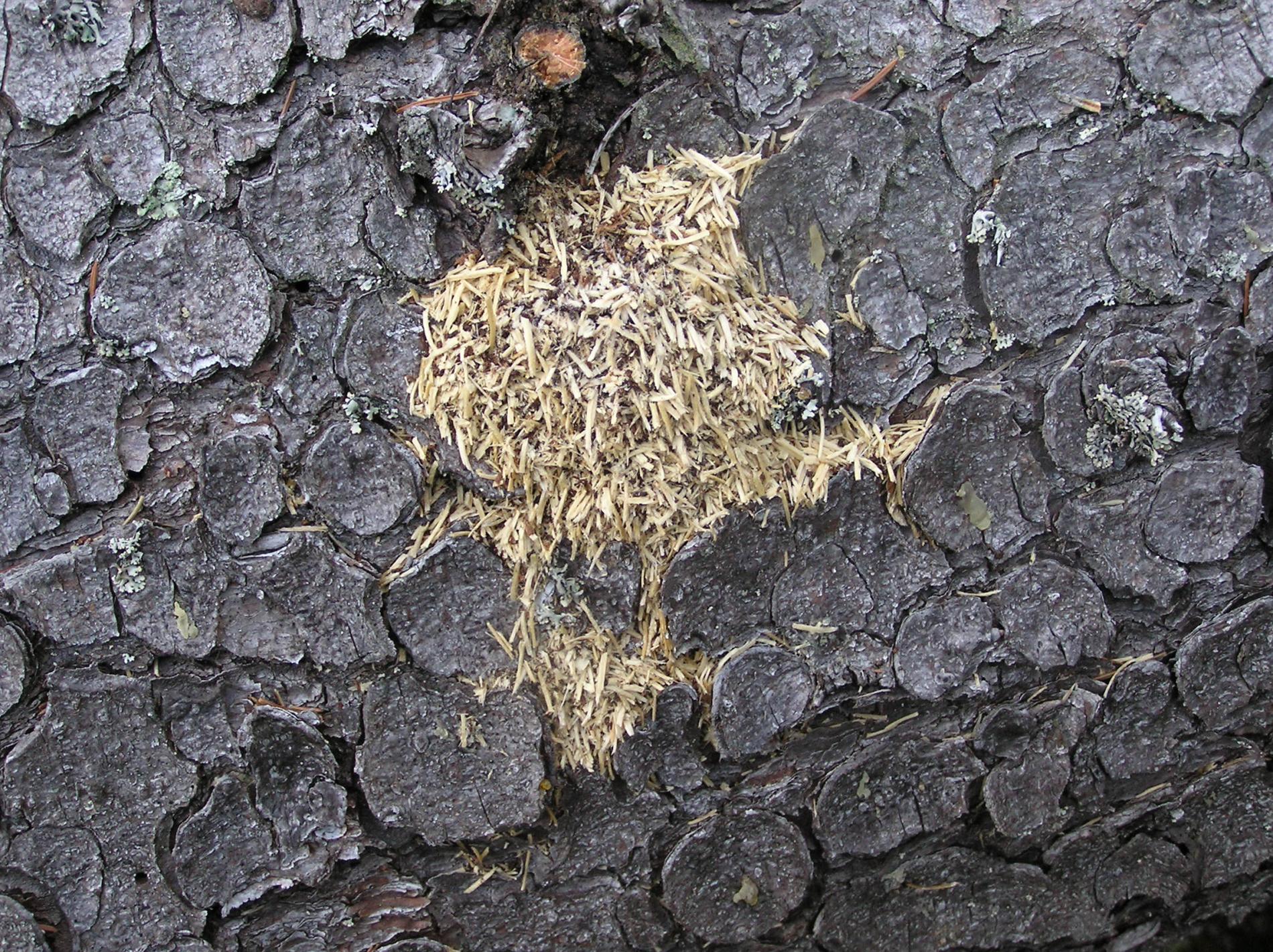
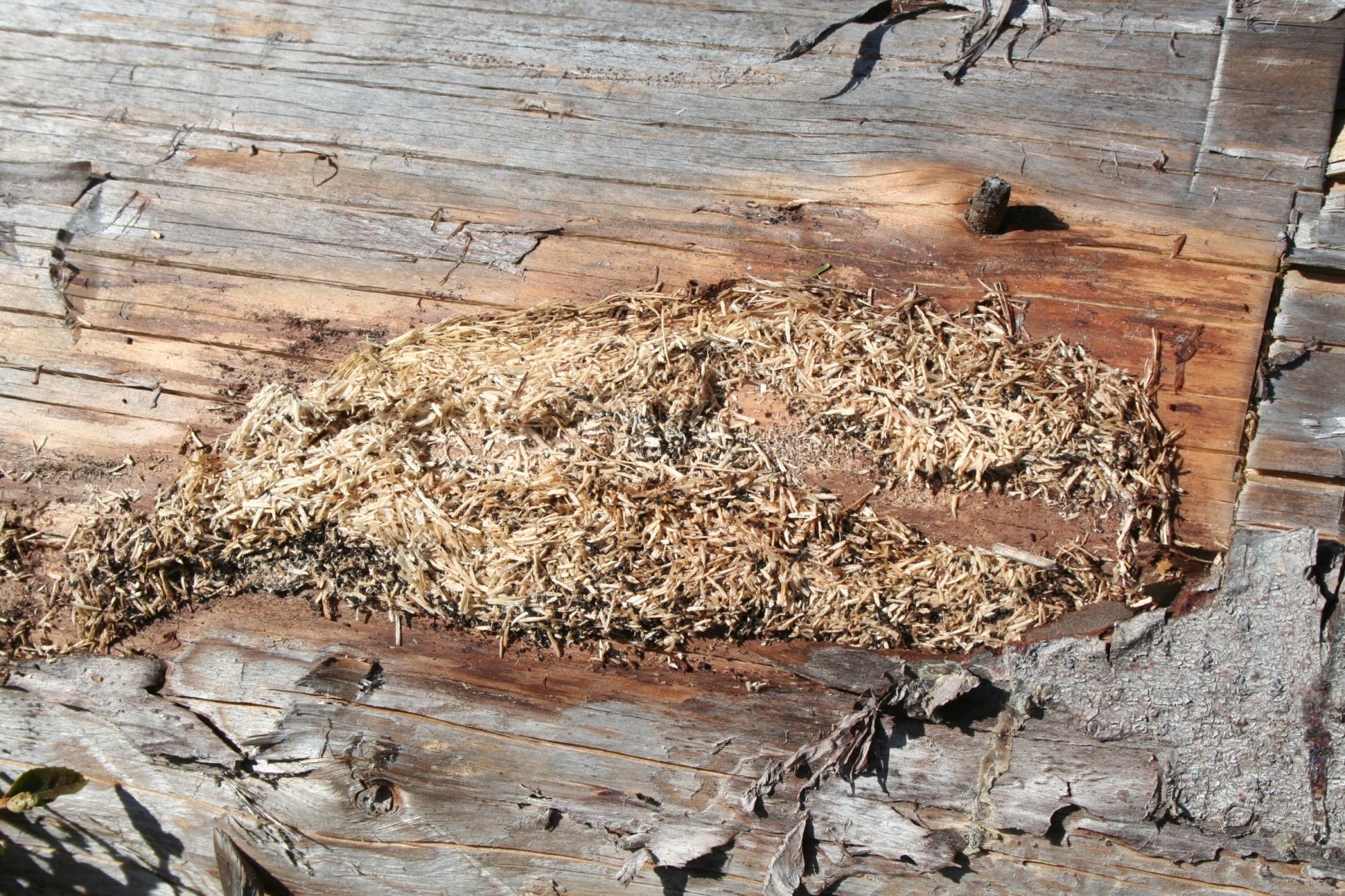
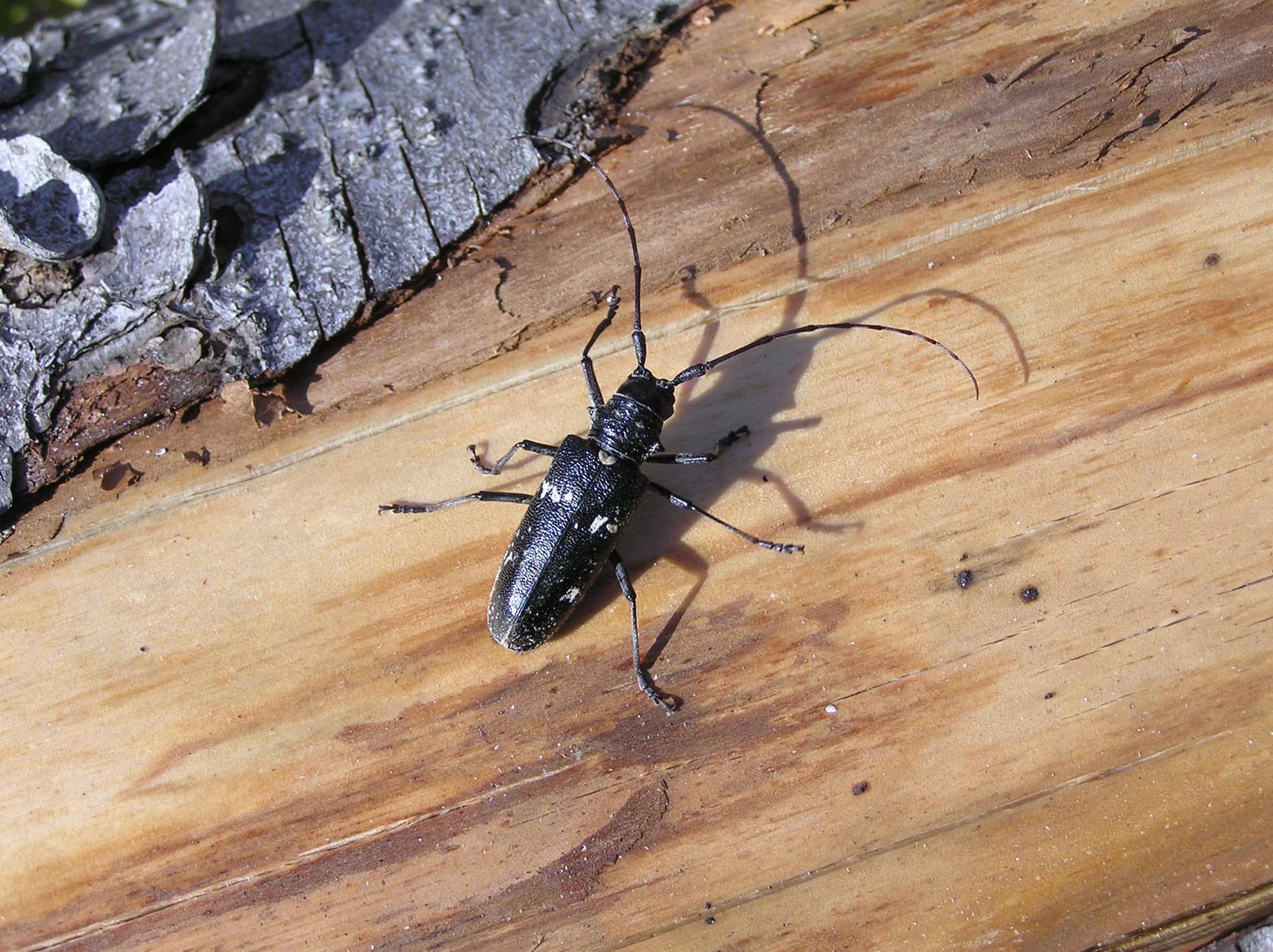
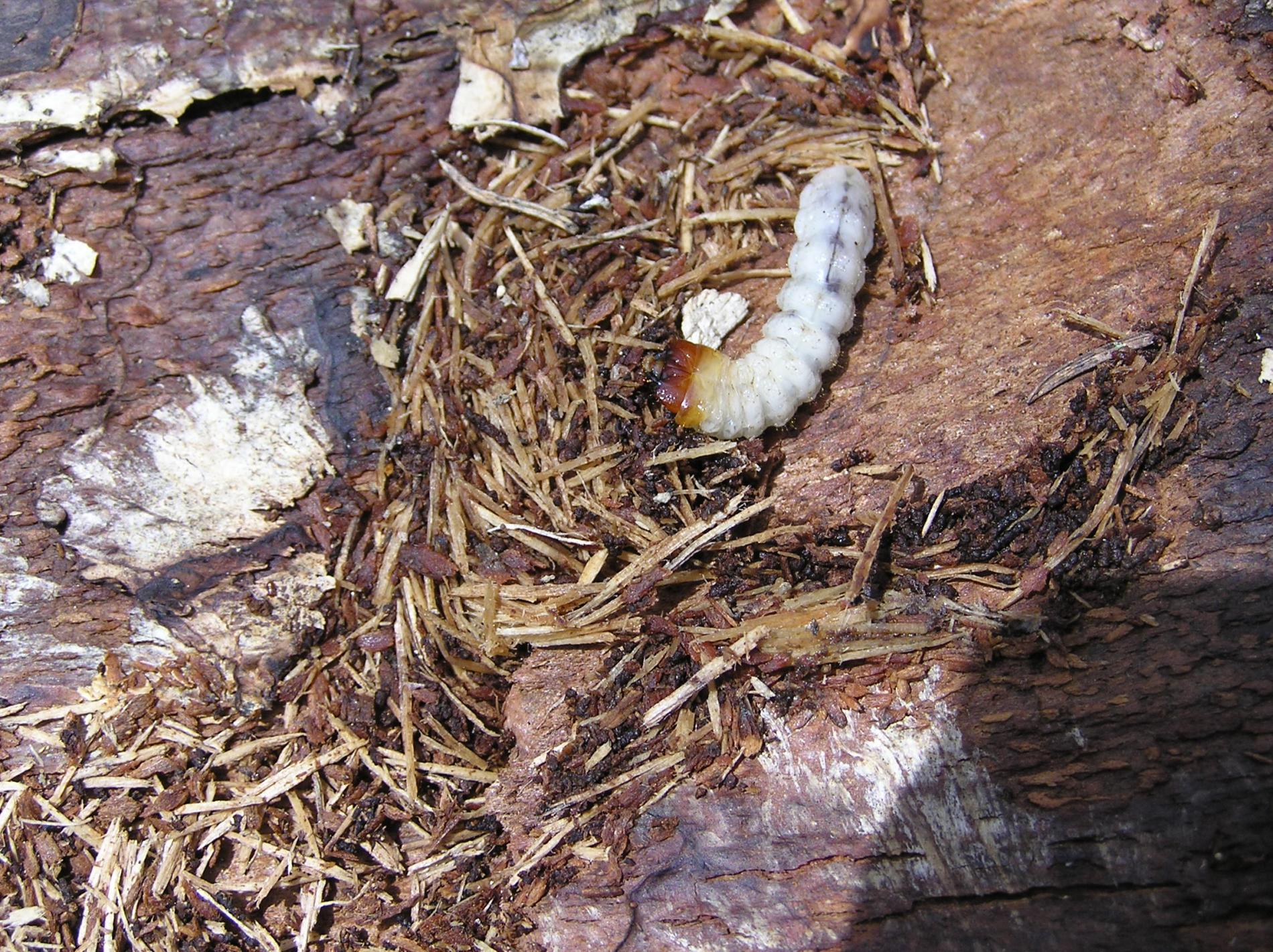
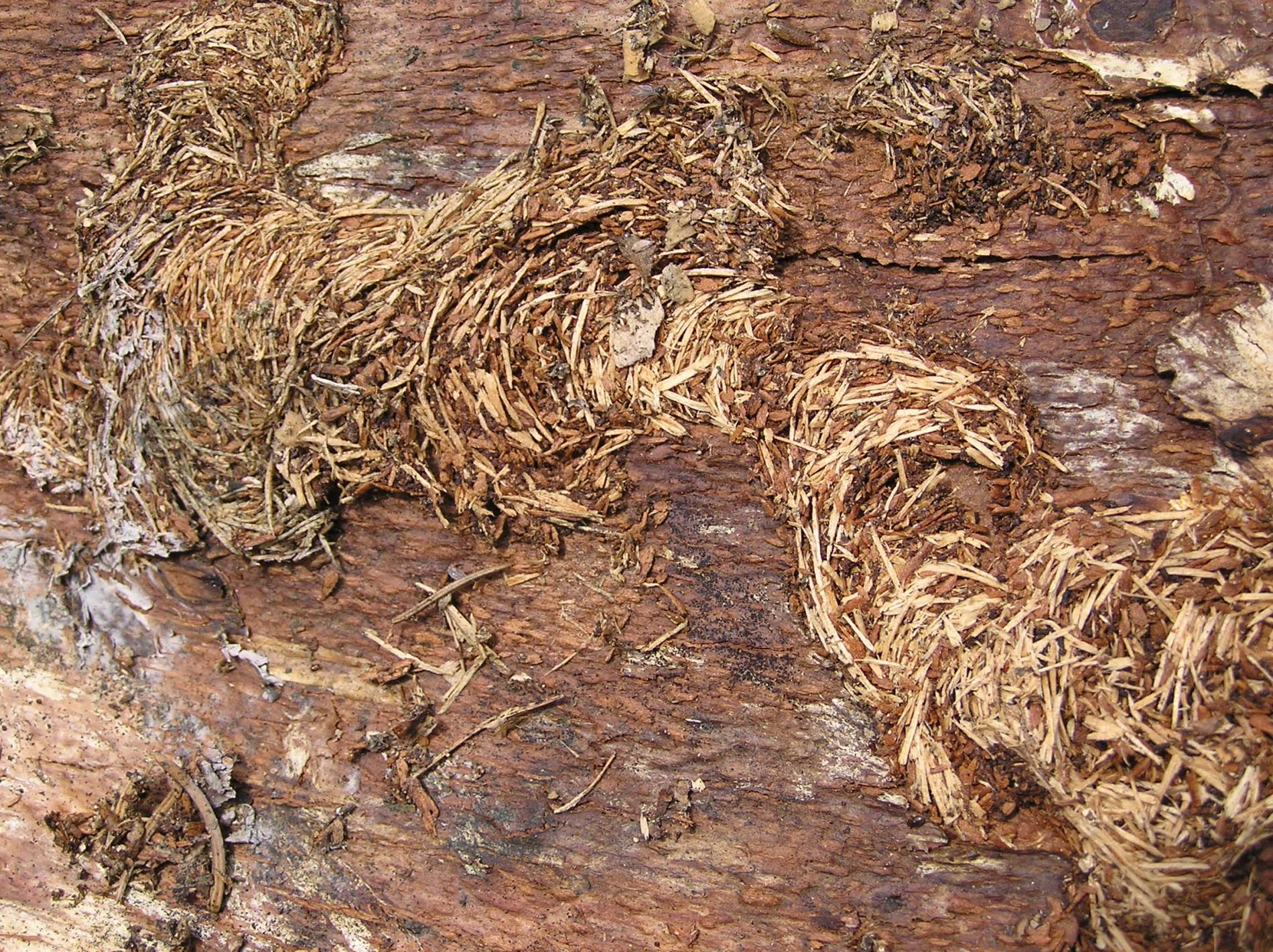
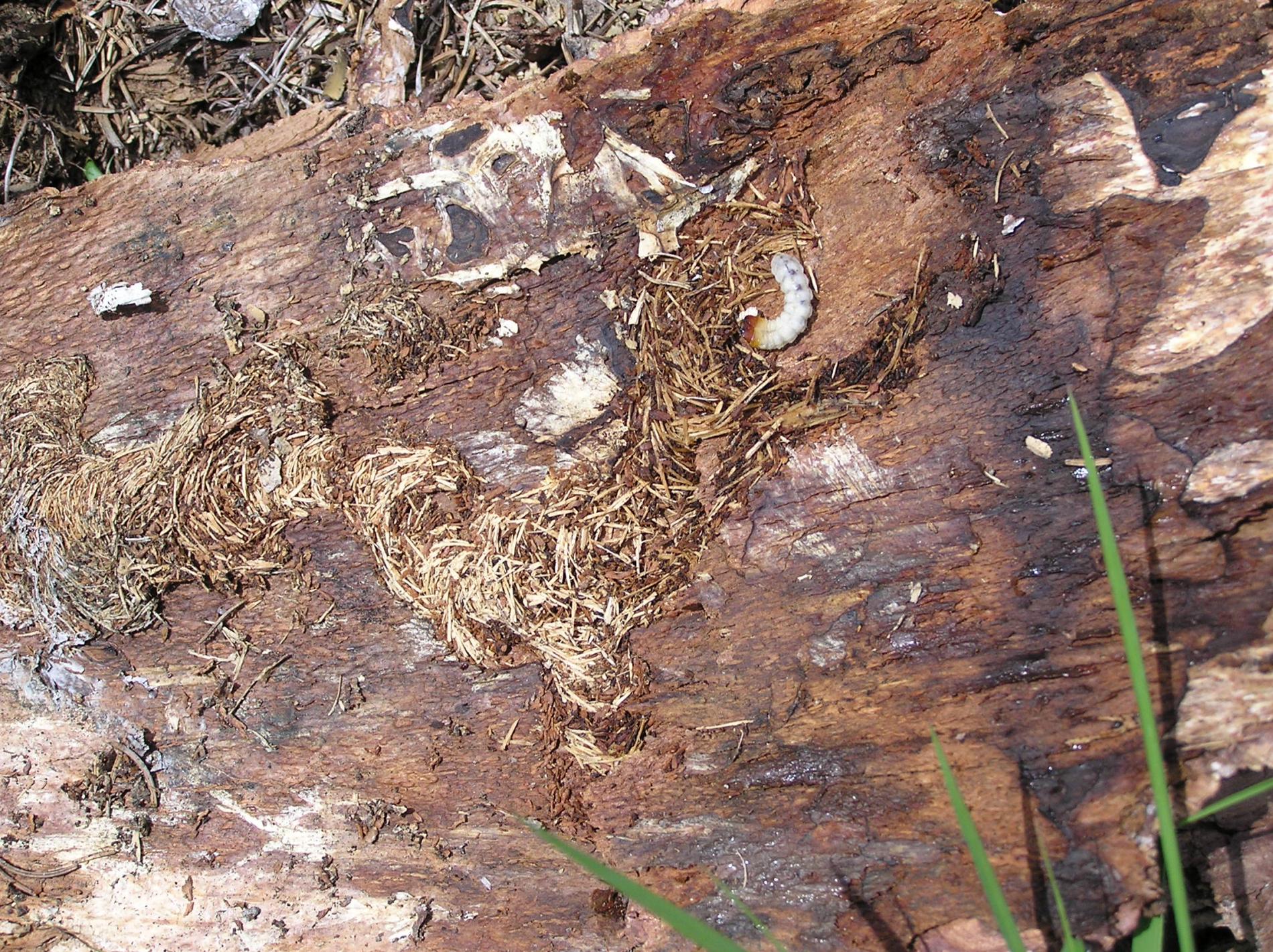
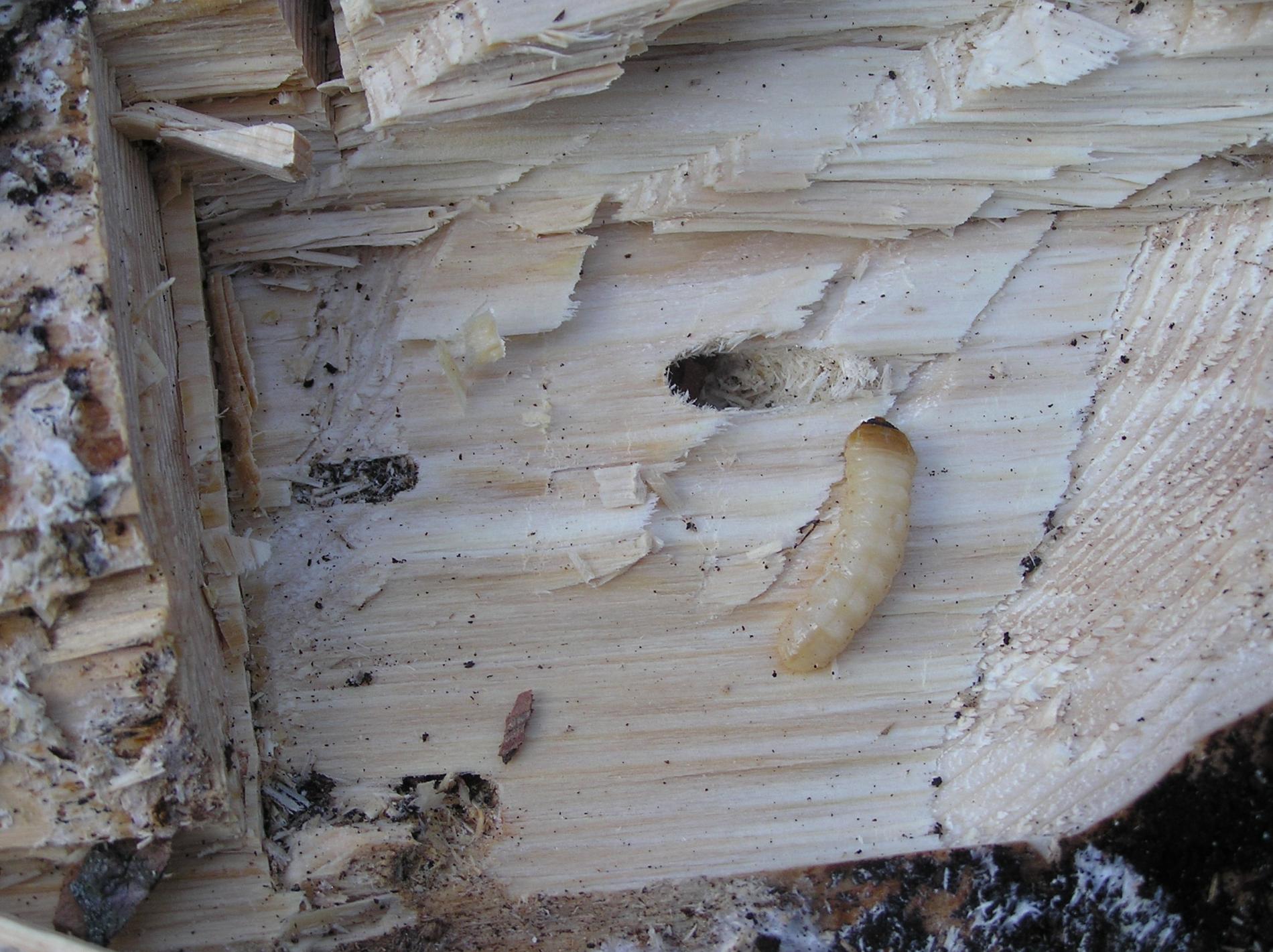
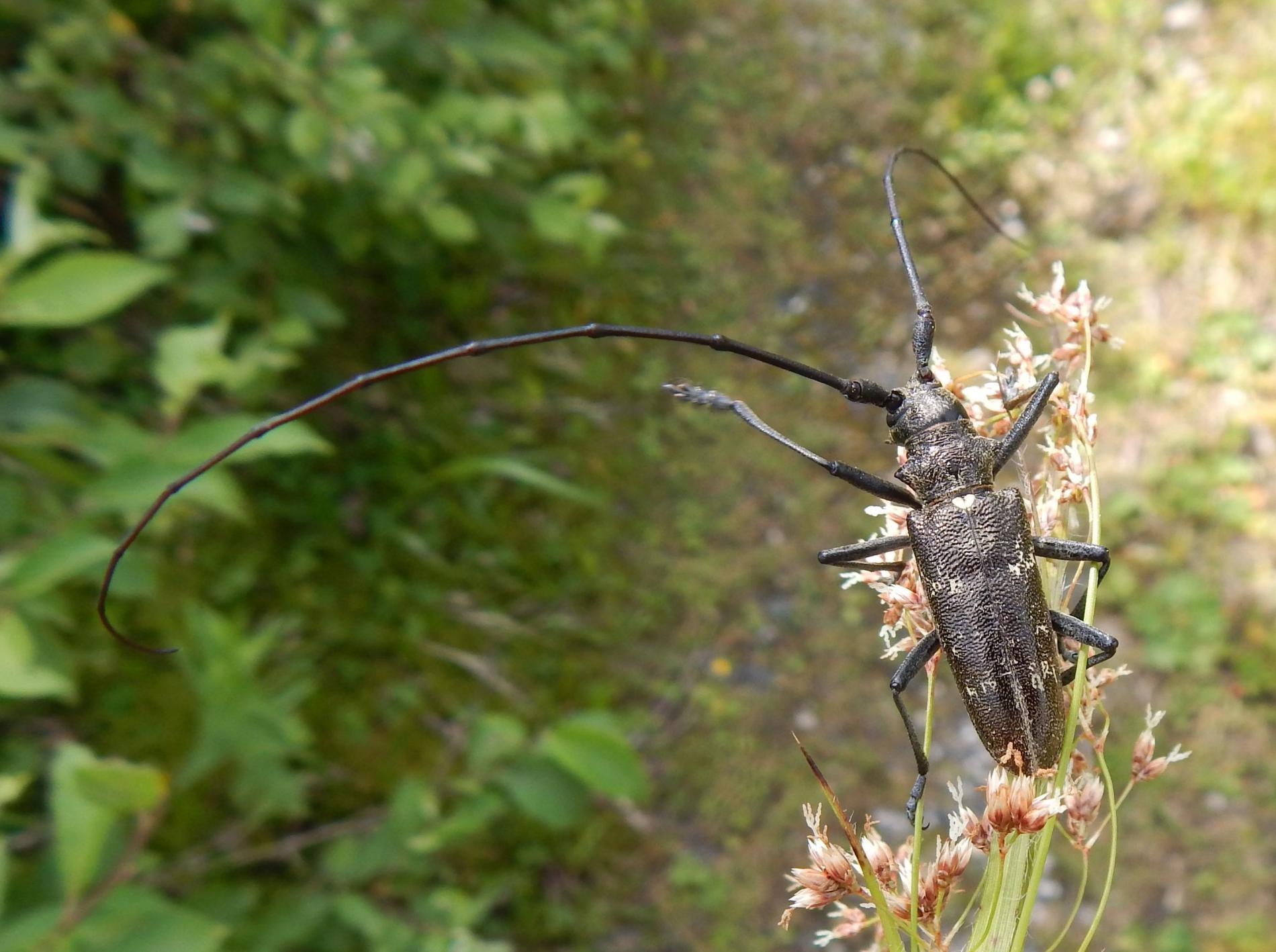
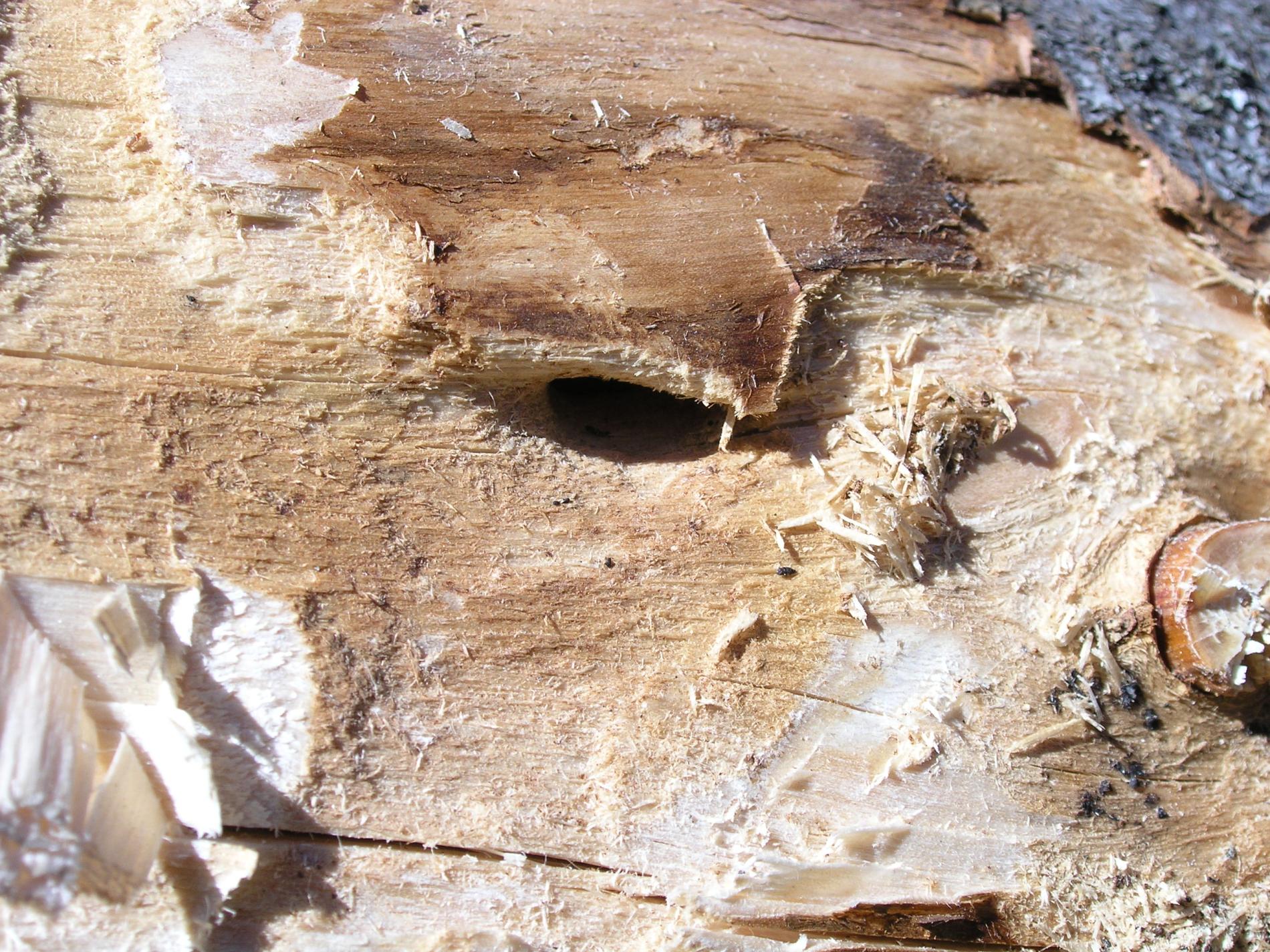
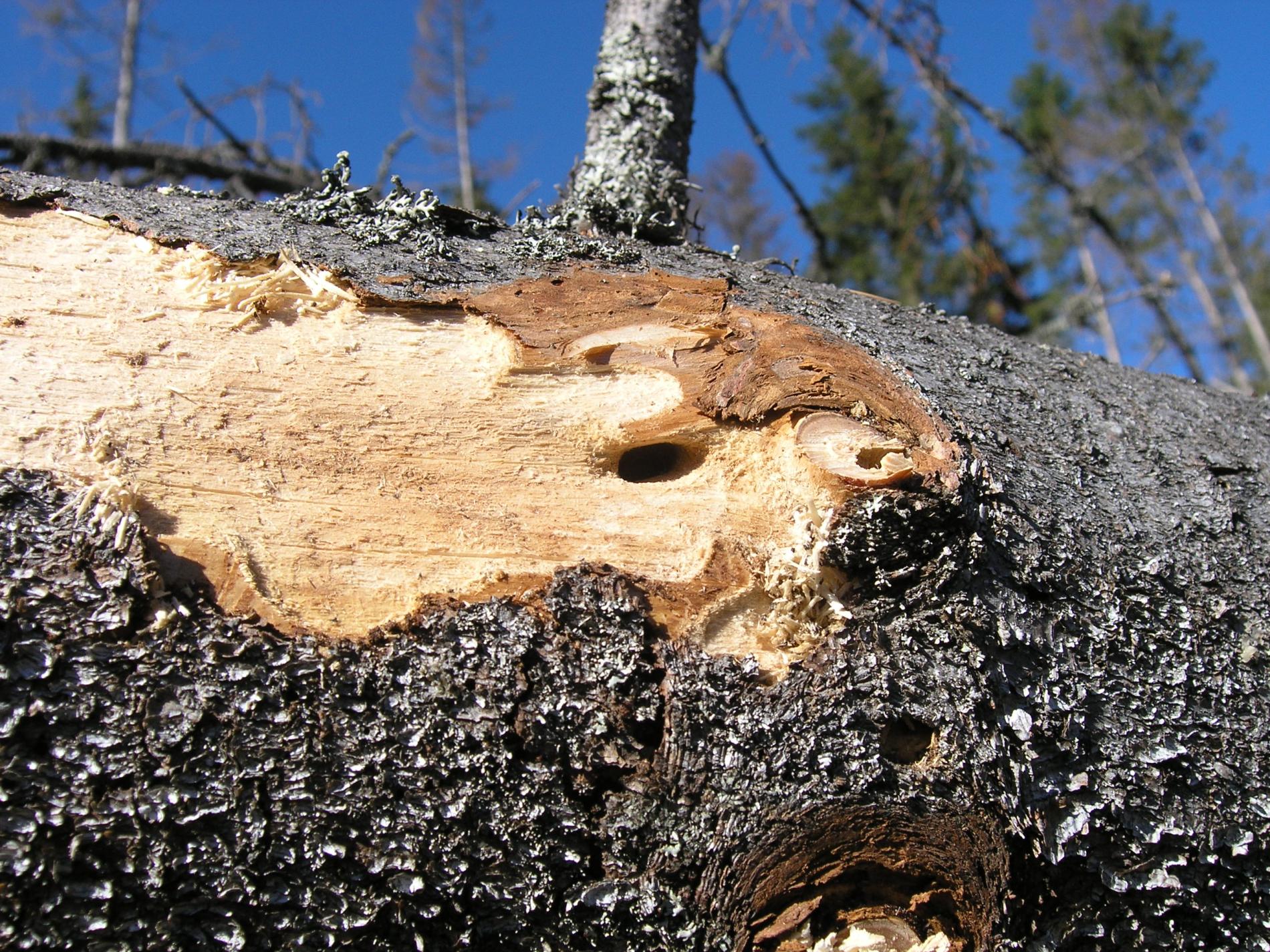
The beetle is 19-35 mm long. Its life cycle takes 1-2 years, with the adult stage occurring from July till August. The male is grey-black and its antennae are twice the female antennae length. The pronotum and elytra of females have a few white spots, but these are absent or indistinct on males. The females lay eggs into holes chewed in the bark of declining or recently felled trees. First, the larvae feed under the bark, later at the end of the year they mine deeper in the sapwood to pupate. Pupation chambers are plugged with wooden fibres and occur at a depth of 10 to 12 mm. The galleries between phloem and wood are filled with coarse wood residue. Adults emerge from round exit holes 8 to 12 mm in diameter. The pest occurs more frequent in mountain areas. Large diameter stems are preferred. As populations increase during an outbreak, attacks can occur on healthy trees. Its relative M. sutor is a spruce pest too.
The galleries between phloem and wood are filled with coarse wood residue.
Tree Species: Pine, Fir, Spruce
Part of a plant- attacked: Tree trunk
Pest significance: Very harmful
Pest Category: Insects
Invasive Species: No
Present in EU: Yes
Pest group: Insect
Depth of damages: Bark, Under bark only, Up to 0,5 cm depth, Up to 2 cm depth, Up to 5 cm depth
The extent of damage: Whole trunk
Prevalence in Europe: Very common
Damaged products: Firewood, Fresh timber logs (water still in the sapwood), Furniture, Lumber, boards and prisms, Wooden house constructions
Roundwood size: Diameter from 10 up to 50 cm
Wood discoloration: No
Exit holes: Round
Pest subcategory: Wood-boring insect

Similar pests

Acanthocinus aedilis

Monochamus galloprovincialis
