


Mesosa nebulosa
Longhorn beetle Mesosa nebulosa
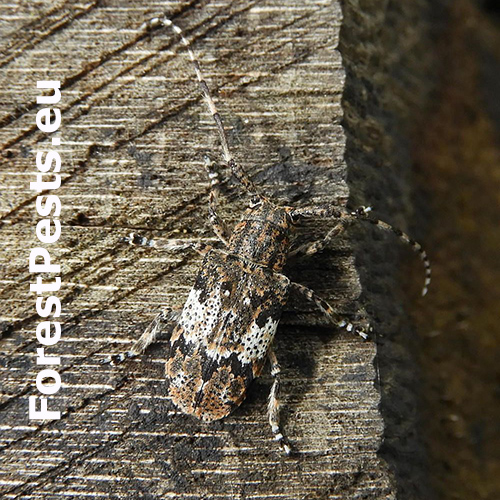
Mesosa nebulosa is a species of longhorn beetle in the family Cerambycidae, measuring 9–15 mm in length. It has a distinctive black body with brownish-yellow patterns and light transverse bands on the elytra. This species inhabits deciduous trees, including oaks (Quercus), hazels (Corylus), and walnuts (Juglans), and is distributed throughout Europe, the Caucasus, and parts of North Africa.
Larvae develop dying wood or in dead wood, especially branches still attached to trees. They create galleries under the bark and in the wood. The life cycle lasts 2–3 years, with adults emerging from April to August, peaking in May and June. Infestations are common in warmer, lowland areas and can lead to branch dieback and increased susceptibility to secondary pests or pathogens.
Affected branches display irregular galleries under the bark, often accompanied by cracking. Exit holes are visible, and wood surfaces may appear rough and damaged.
Tree Species: Beech, Cherry, Oak, Hazel
Part of a plant- attacked: Branch
Pest significance: Less harmful
Pest Category: Insects
Invasive Species: No
Present in EU: Yes
Pest group: Insect
Affected part of wood: Sapwood
Depth of damages: Bark, Under bark only
The extent of damage: Lokally
Prevalence in Europe: Common
Damaged products: Firewood
Roundwood size: Branches and twigs
Wood discoloration: No
Exit holes: Oval
Pest subcategory: Bark and underbark insect
Similar pests

Callidium violaceum

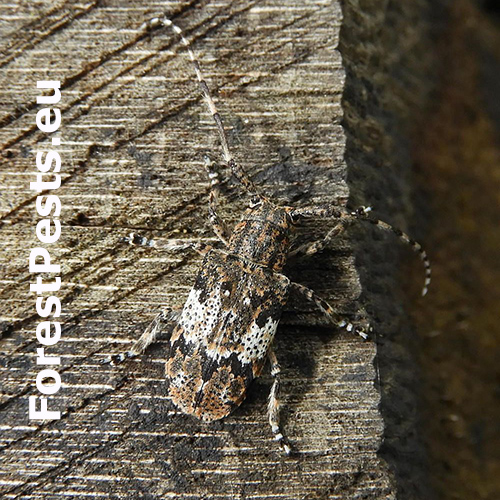
Mesosa nebulosa
