


Mesosa curculionoides
Long-horned beetle Mesosa curculionoides
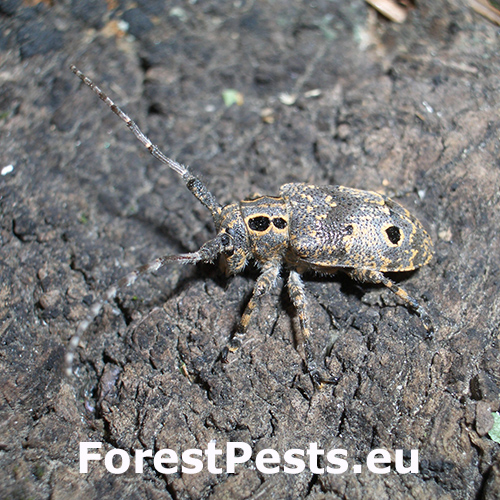
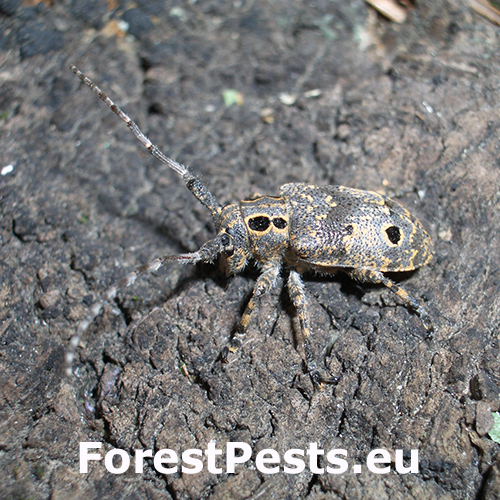
Mesosa curculionoides is a saproxylic longhorn beetle whose larvae develop in dead wood or thick branches of deciduous trees such as oak, hornbeam, walnut, lime, hazel, or elm. Occasionally, it can also colonize weakened or stressed trees, especially those with bark damage or signs of decline. This mostly occurs in localities that are particularly favorable to the species, where increased population density may result in higher aggressiveness. However, its role as a pest is minimal or questionable in most areas where it occurs. The larvae feed subcortically, creating irregular galleries and sometimes penetrating shallowly into the sapwood. The life cycle takes 2–3 years. Adults appear from May to August and are active during twilight. Infestation levels are usually low, but in some cases, the species may accelerate wood degradation or affect tree aesthetics. It is widely distributed in Europe, especially in warmer areas.
Irregular galleries under the bark, exit holes, and peeling or cracked bark on weakened branches or trunks.
Tree Species: Elm, Oak, Hornbeam, Hazel, Lime, Walnut
Part of a plant- attacked: Tree trunk, Branch
Pest significance: Less harmful
Pest Category: Insects
Invasive Species: No
Present in EU: Yes
Pest group: Insect
Affected part of wood: Sapwood
Depth of damages: Bark, Under bark only, Up to 0,5 cm depth, Up to 2 cm depth
The extent of damage: Individually - one place
Prevalence in Europe: Rare
Damaged products: Firewood
Roundwood size: Branches and twigs, Diameter from 10 up to 50 cm, Diameter up to 10 cm
Wood discoloration: No
Exit holes: Oval
Pest subcategory: Wood-boring insect
Similar pests

Plagionotus arcuatus

Saperda populnea
