


Meripilus giganteus
The giant polypore
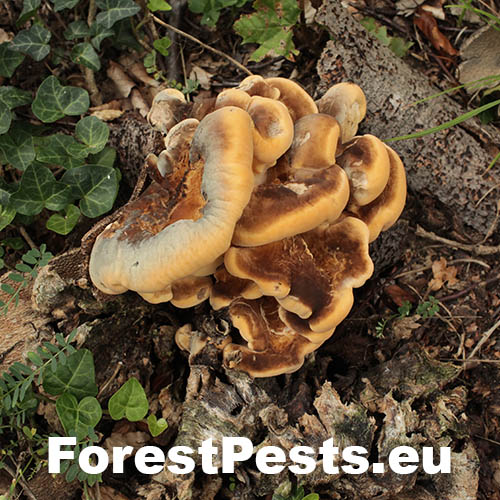
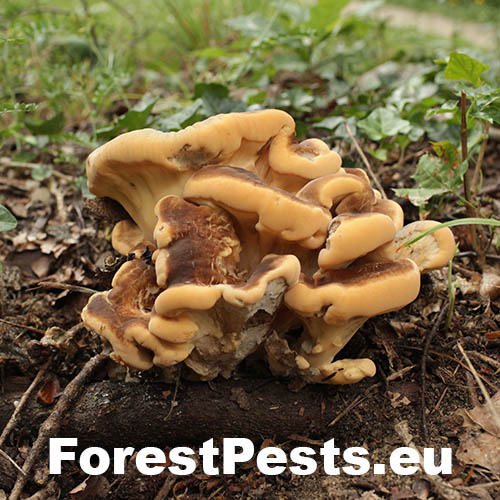
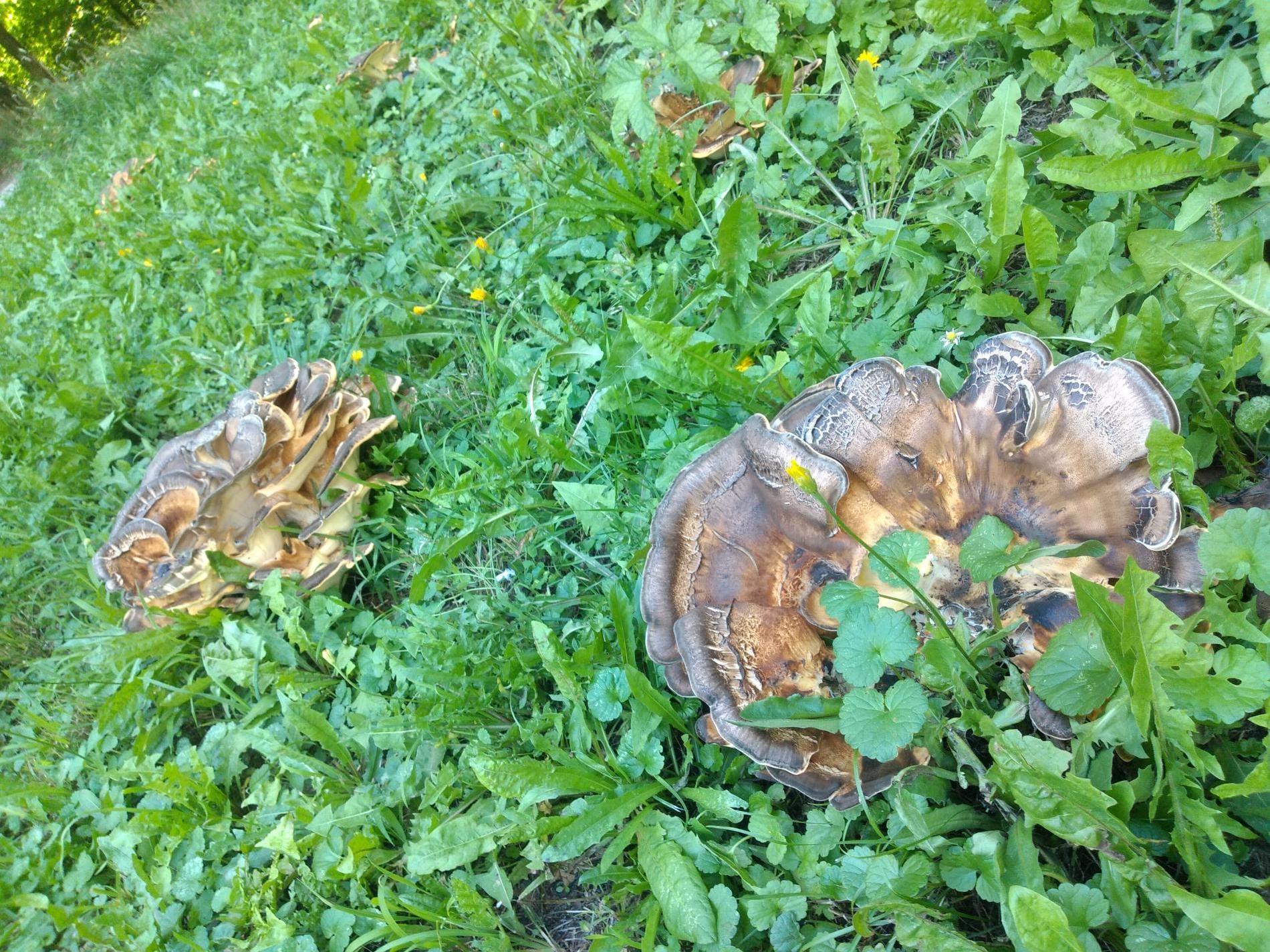
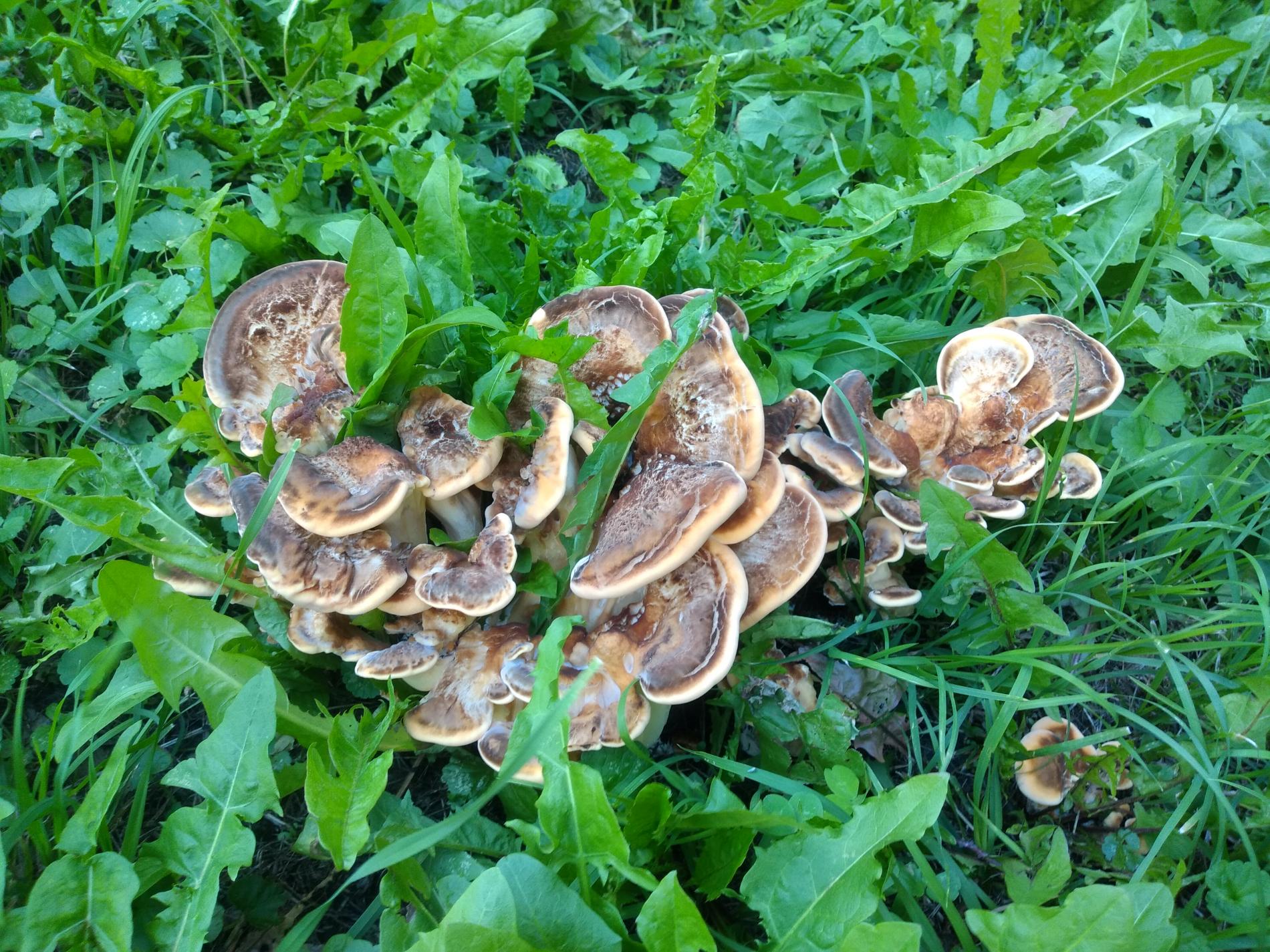
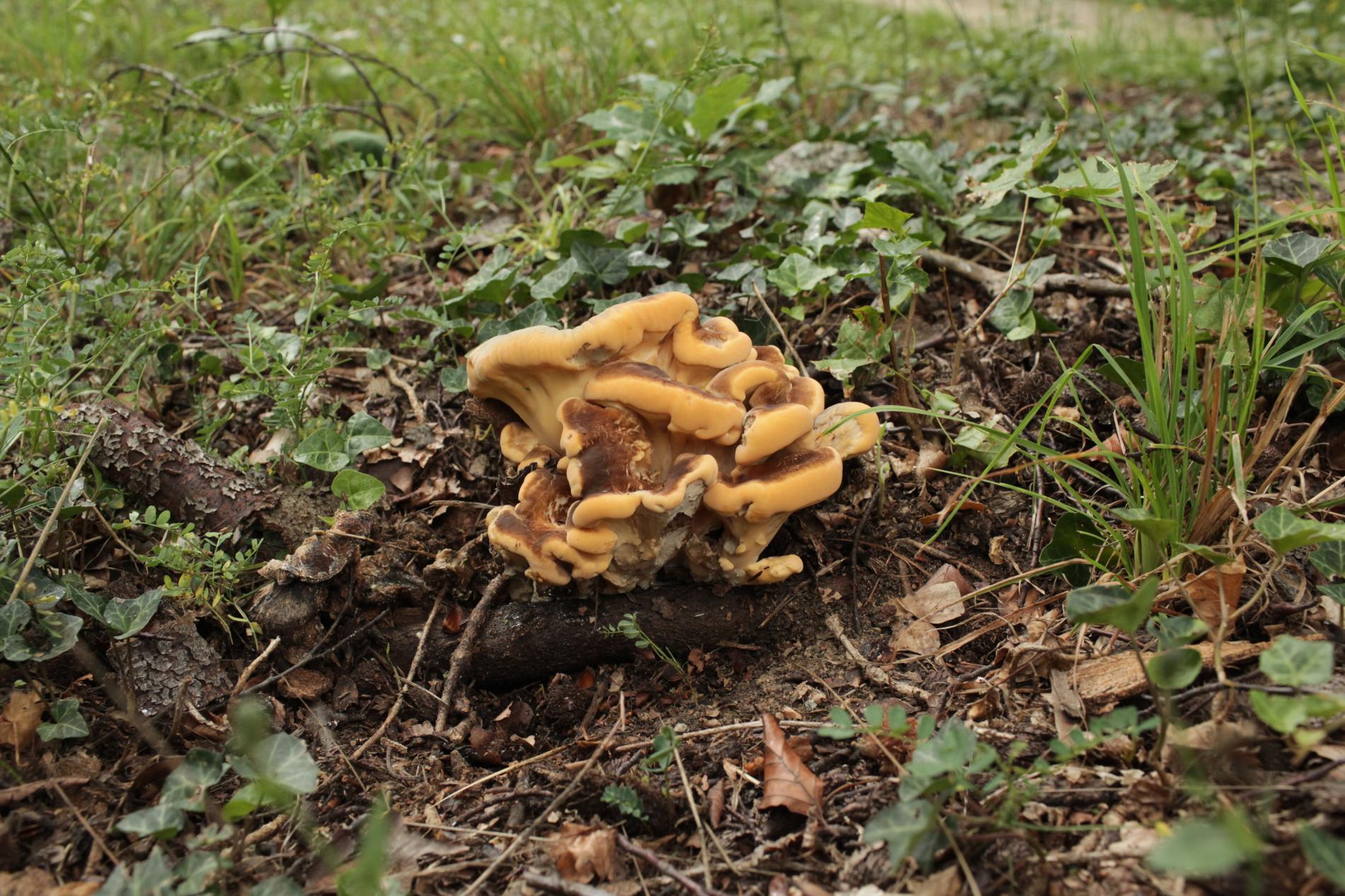
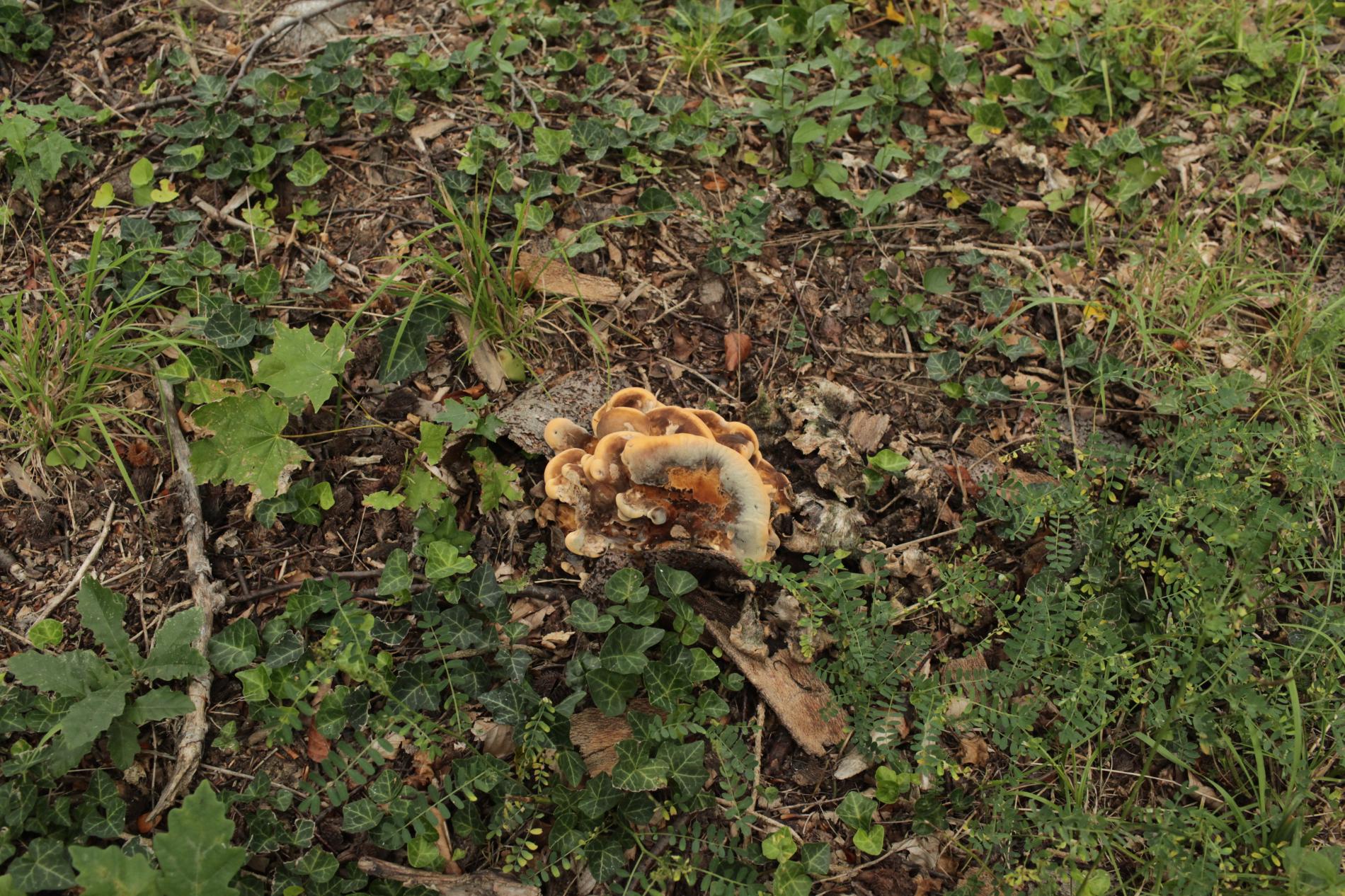
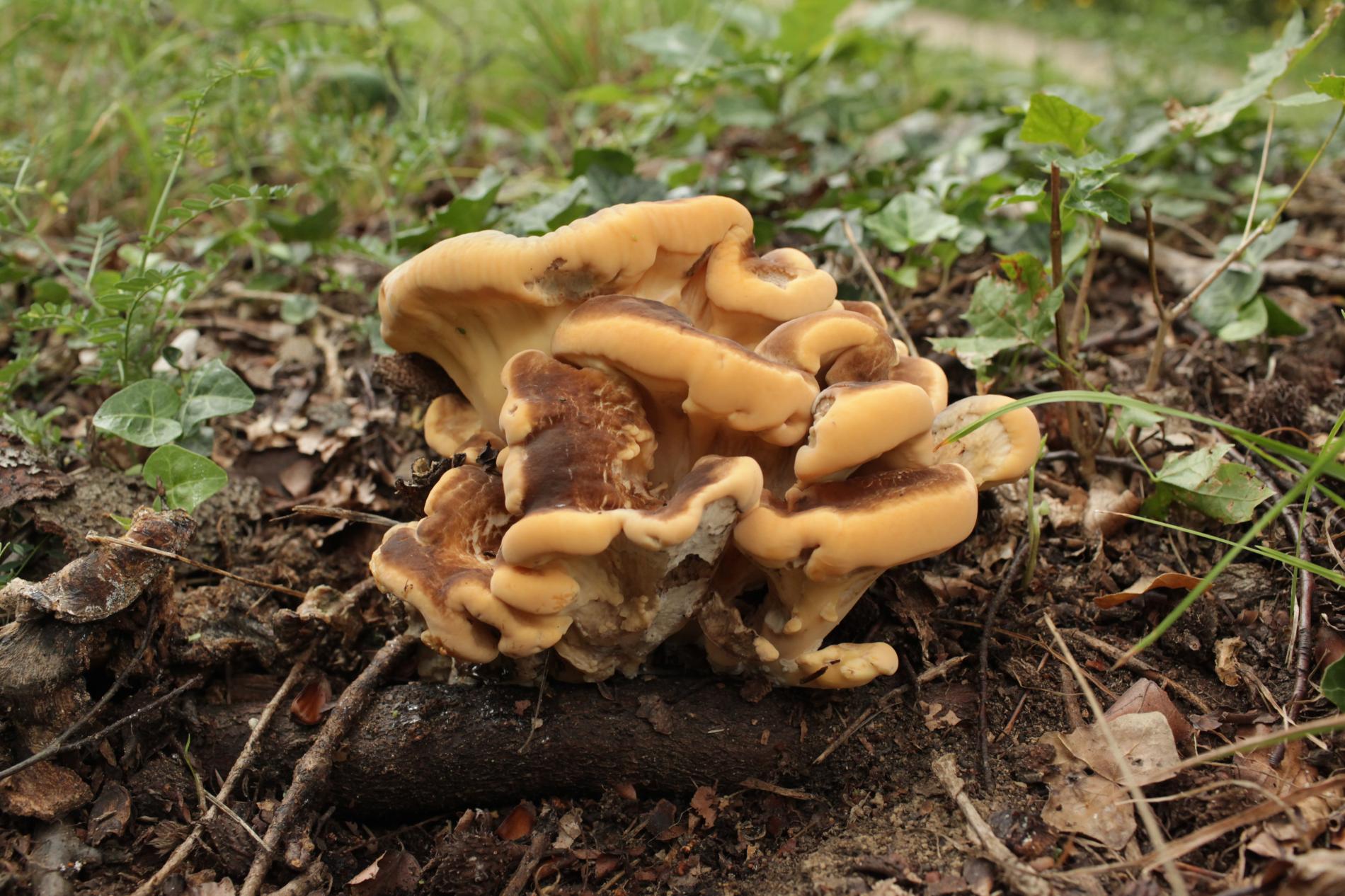
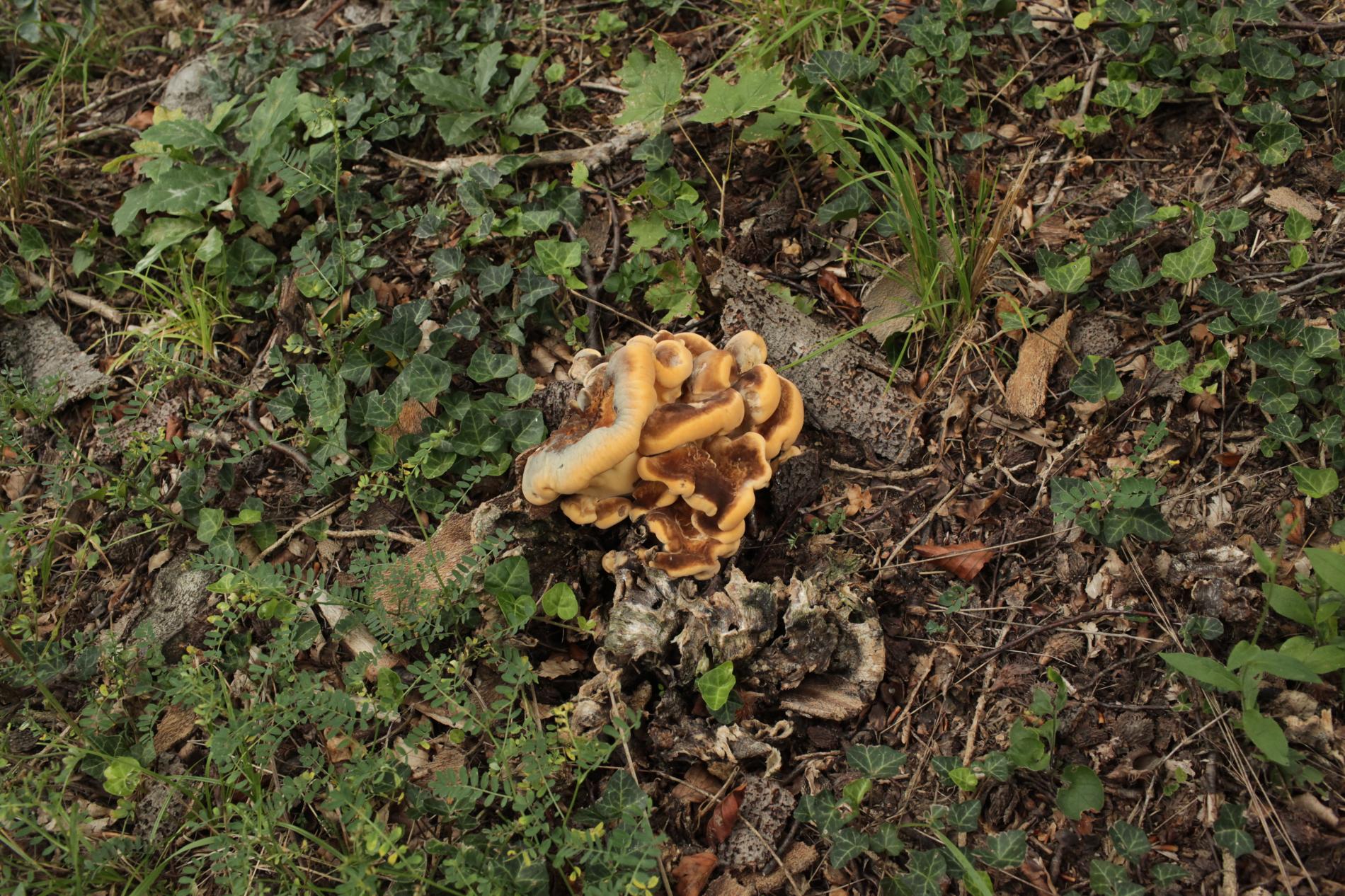
Fruiting bodies are up to 30 cm across or more, composed of multiple caps sharing a branched, stemlike base. Caps are 5–20 cm across; fan-shaped; finely velvety or bald; whitish becoming brownish with age; often radially streaked and concentrically zoned; the margin thin, bruising and aging black. Pore surface is whitish, becoming dirty tan; bruising dark brown to black when fresh; with 6–8 round to angular pores per mm; tubes are up to 8 mm deep. It is parasitic on living oaks and other hardwoods causing a white rot. It grows in large clusters of rosettes near the bases of trees, often reappearing in the same place in subsequent years in summer and fall.
The individual hats are 8 - 30 cm wide, at first roughly fleshy with a conspicuous edge wall, later they are thinned with a sharp edge.
Tree Species: Beech
Part of a plant- attacked: Roots
Pest significance: Harmful
Pest Category: Fungi
Invasive Species: No
Present in EU: Yes
Pest group: Fungi
Affected part of wood: Heartwood, Sapwood
Depth of damages: More than 5 cm depth, Under bark only, Up to 0,5 cm depth, Up to 2 cm depth, Up to 5 cm depth
The extent of damage: Whole trunk
Prevalence in Europe: Common
Damaged products: Firewood, Fresh timber logs (water still in the sapwood), Furniture, Lumber, boards and prisms, Wooden house constructions
Roundwood size: Branches and twigs, Diameter 50+, Diameter from 10 up to 50 cm, Diameter up to 10 cm
Wood discoloration: Yes
Pest subcategory: White-rot
Similar pests

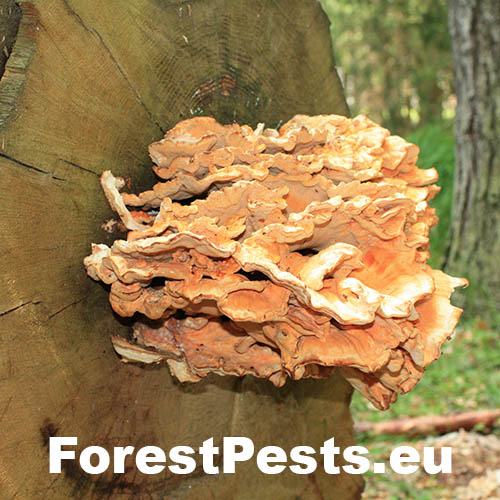
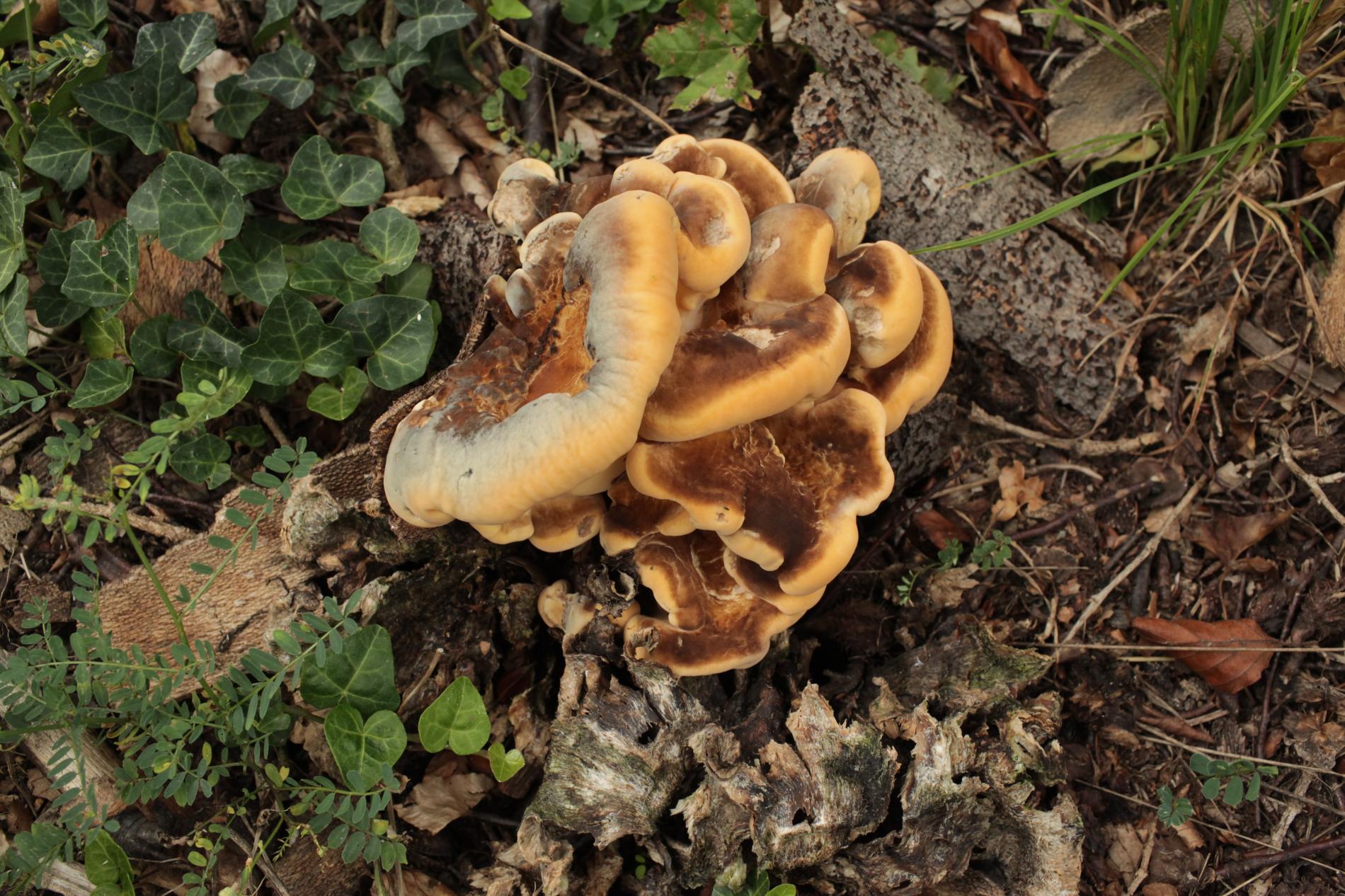
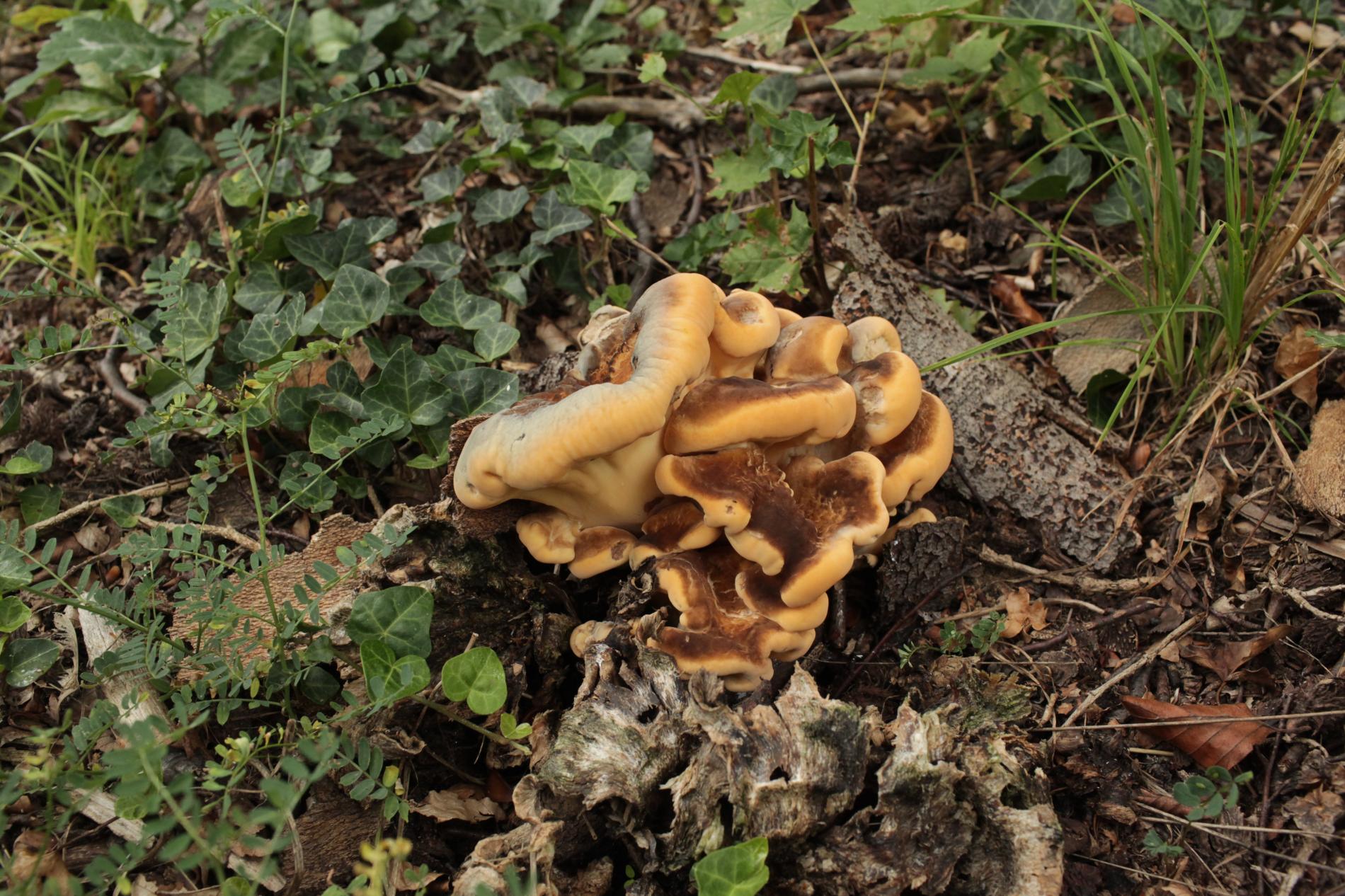
Laetiporus sulphureus

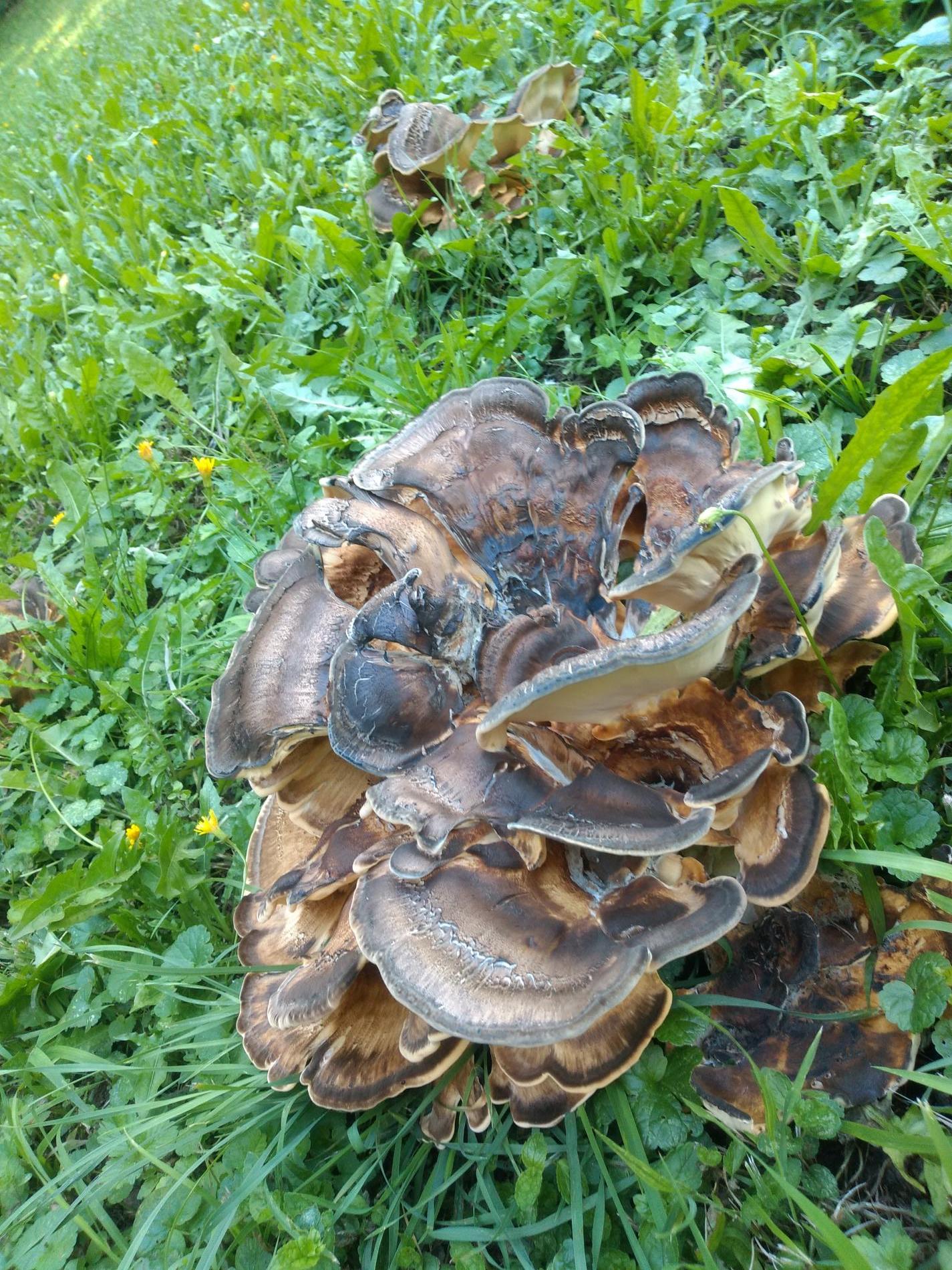
Inonotus dryadeus
