


Lyctus brunneus
Powderpost beetle
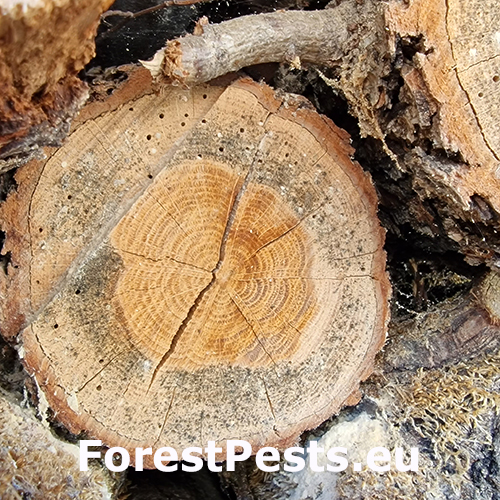
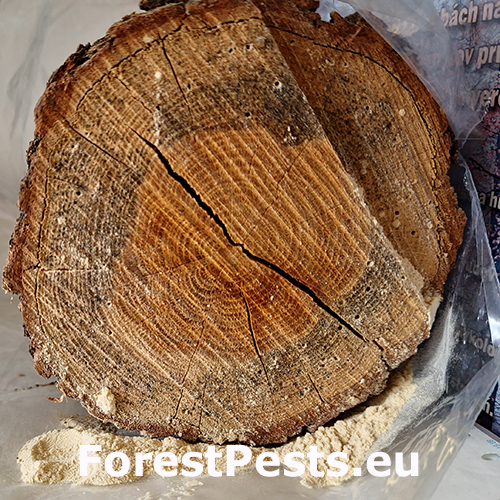
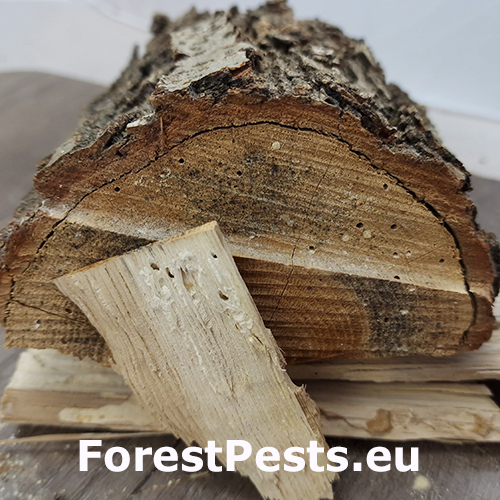
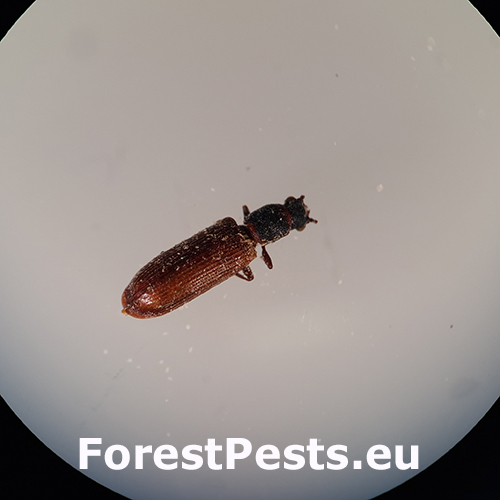
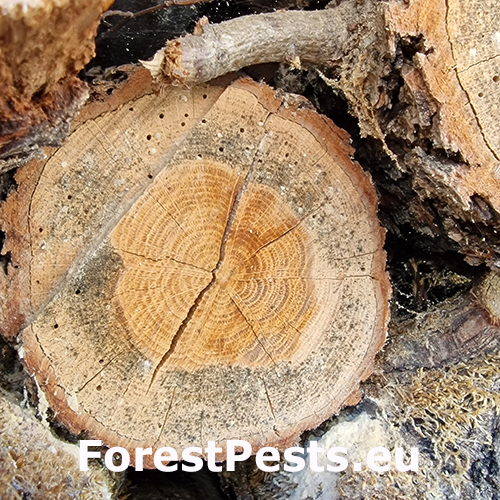
This species originates from tropical and subtropical regions and has been spreading in Europe for more than 100 years. It is a economical pest that primarily attacks the hardwoods such as oak, ash, elm, walnut, etc. The adult beetle is elongated-cylindrical in shape, brown in color (or in shades thereof), with a length of approximately 4 to 6 mm (exceptionally up to 8 mm).After mating, females lay eggs into cracks or into the pores of partially dried wood. The larvae feed mainly in the sapwood, are C-shaped, and have legs, unlike the larvae of bark beetles. The mature larva is about 5 mm long. They are capable of completely consuming the sapwood, which can be entirely degraded and damaged, resembling the work of Anobids. The frass is white and extremely fine, like smooth flour. The speed at which the larvae eat through the wood depends on the conditions and can take a few months to 2 years. A new generation of beetles then emerges through circular exit holes 1.5 to 2 mm in diameter, sometimes from May to September.It is a secondary pest that attacks weakened trees or wood in storage, even parquet floors, similar to its relative, the Lyctus linearis. It can be a serious technical (economical) pest of hardwood, so it is good to know at least these basic facts about it.
Circular exit holes, very fine white sawdust.
Tree Species: Black Locust, Elm, Oak, Ash, Walnut
Part of a plant- attacked: Tree trunk, Branch
Pest significance: Harmful
Pest Category: Insects
Invasive Species: No
Present in EU: Yes
Pest group: Insect
Affected part of wood: Heartwood, Sapwood
Depth of damages: Under bark only, Up to 0,5 cm depth, Up to 2 cm depth, Up to 5 cm depth
The extent of damage: Whole trunk
Prevalence in Europe: Common
Damaged products: Firewood, Fresh timber logs (water still in the sapwood), Furniture, Lumber, boards and prisms, Wooden house constructions
Roundwood size: Diameter 50+, Diameter from 10 up to 50 cm
Wood discoloration: No
Exit holes: Round
Pest subcategory: Wood-boring insect
Similar pests

Tomicus piniperda

Cryphalus piceae
