


Kretzschmaria deusta
Carbon cushion
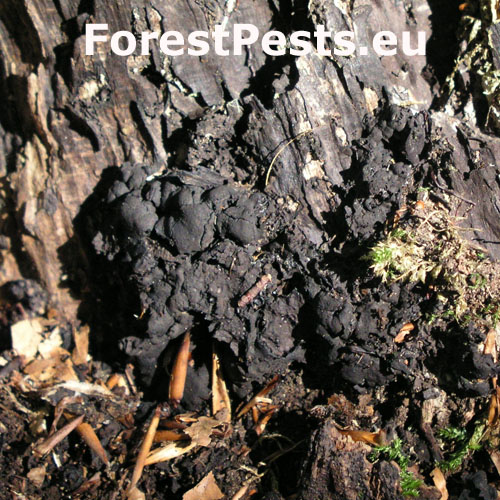
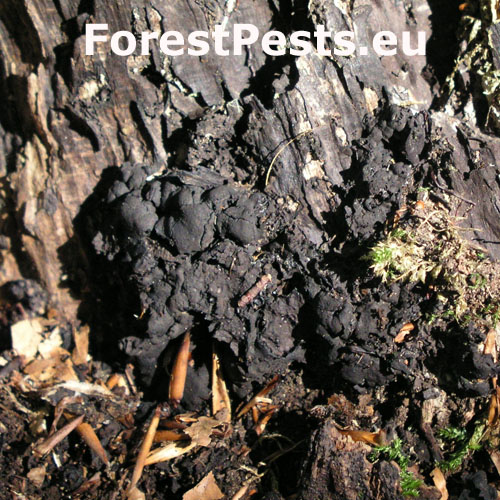
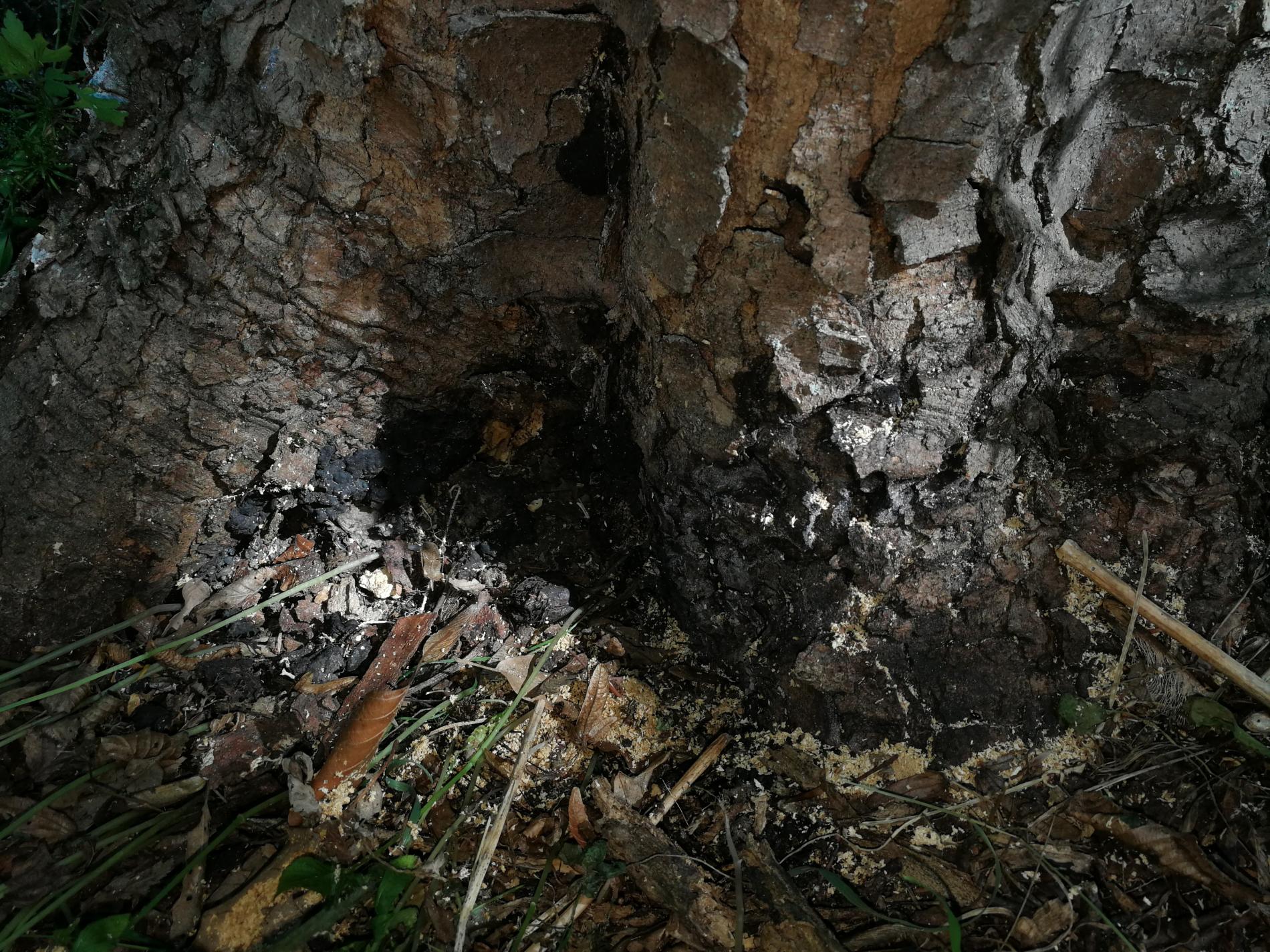
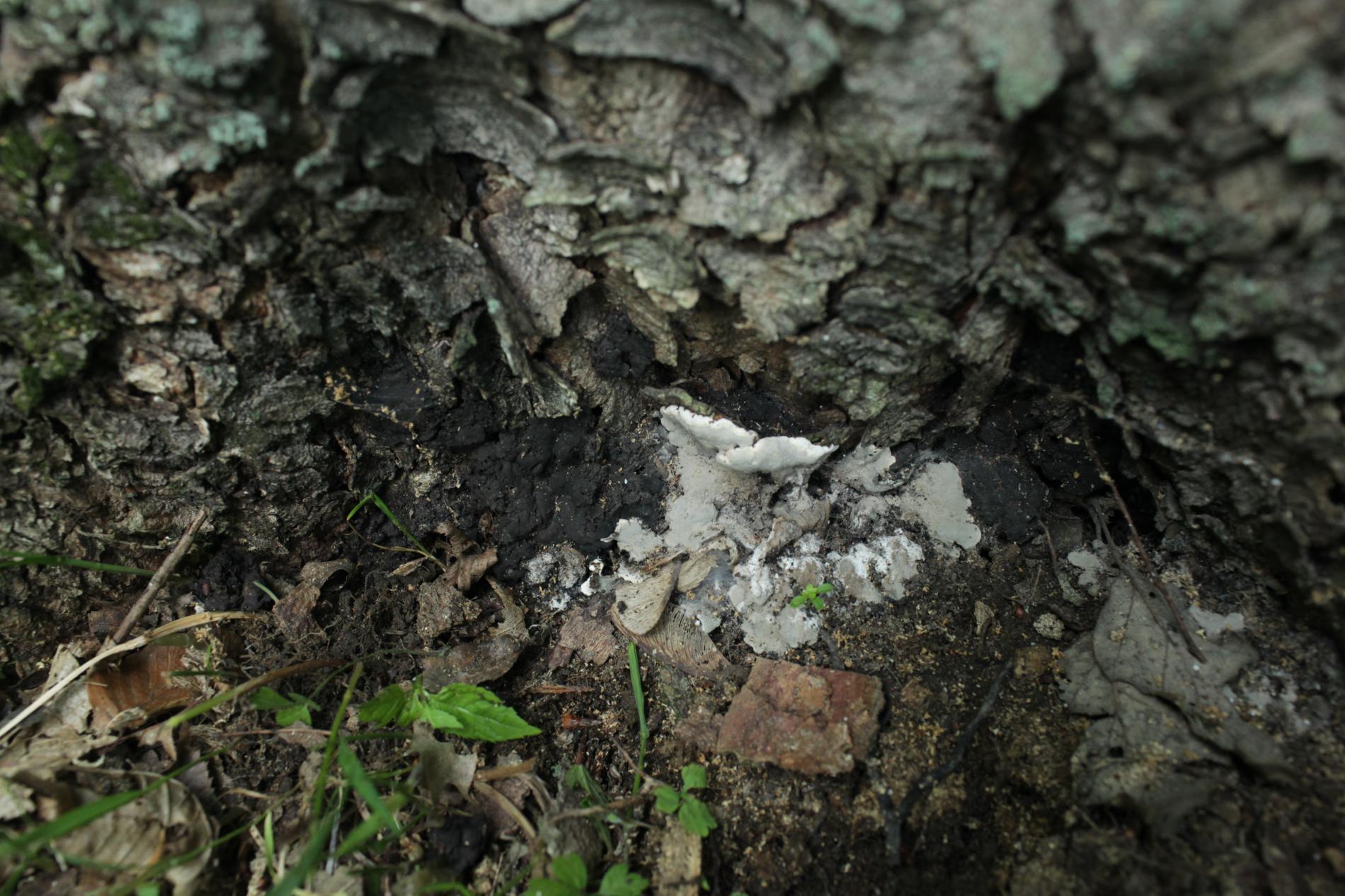
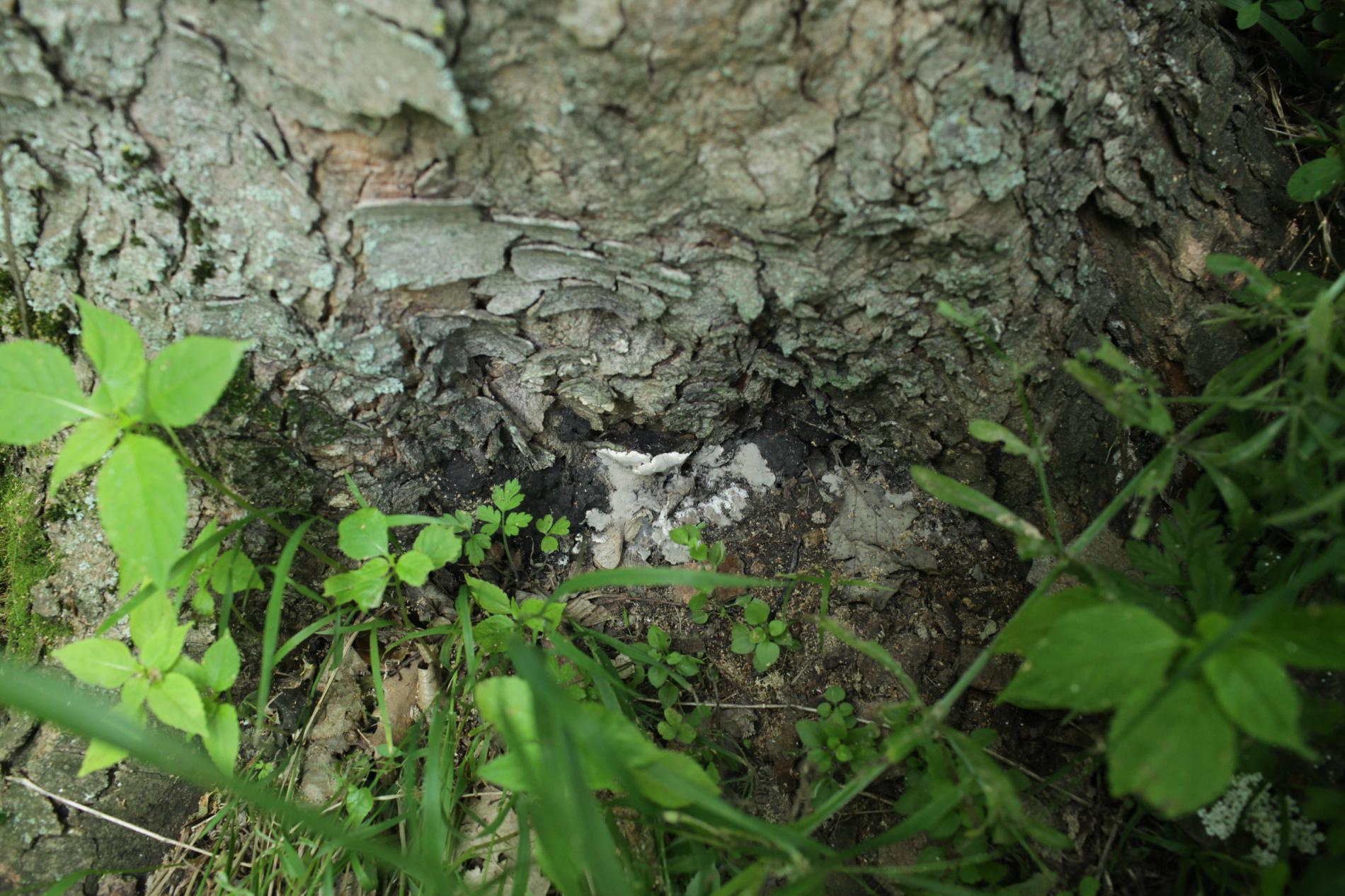
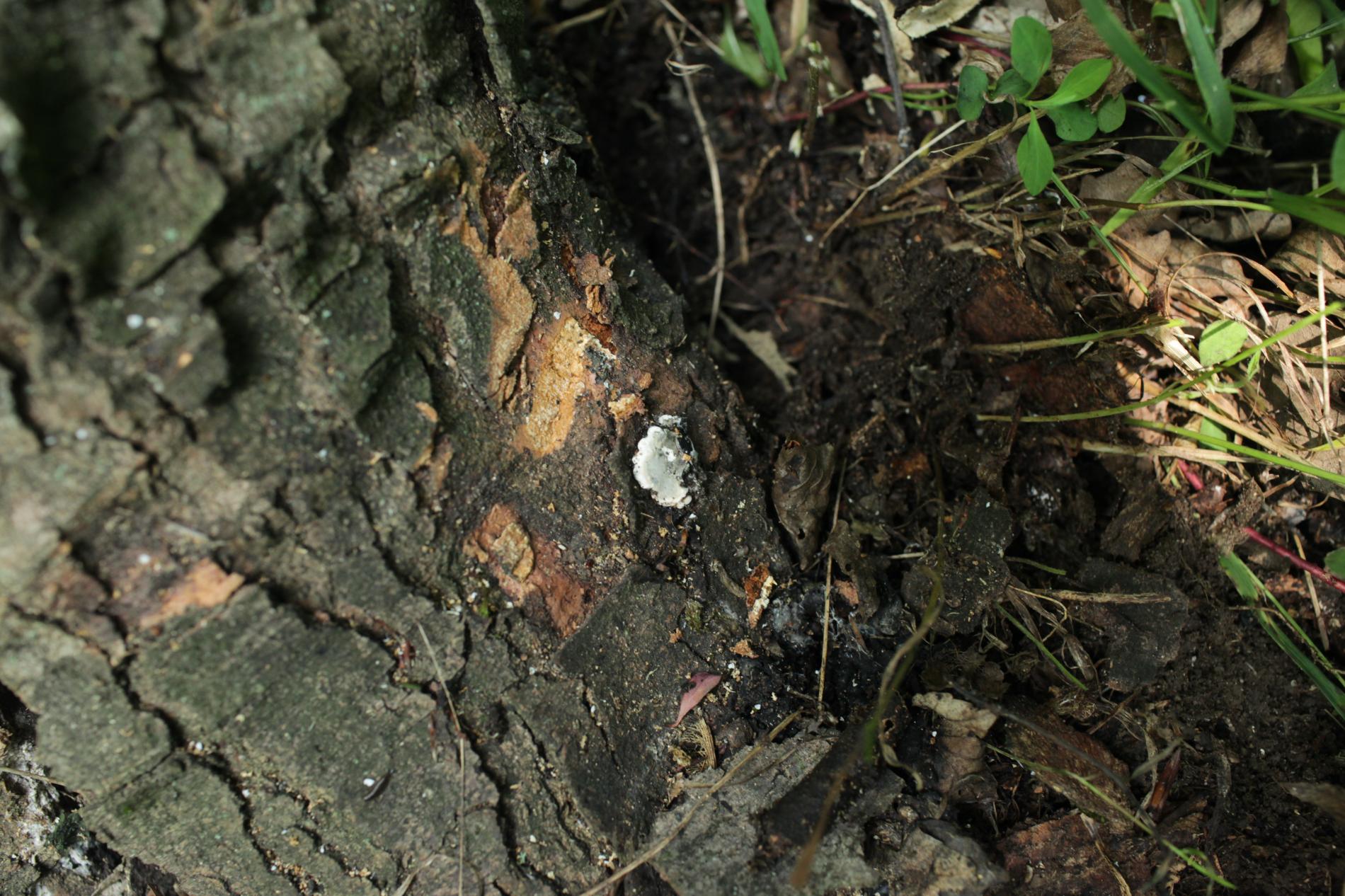
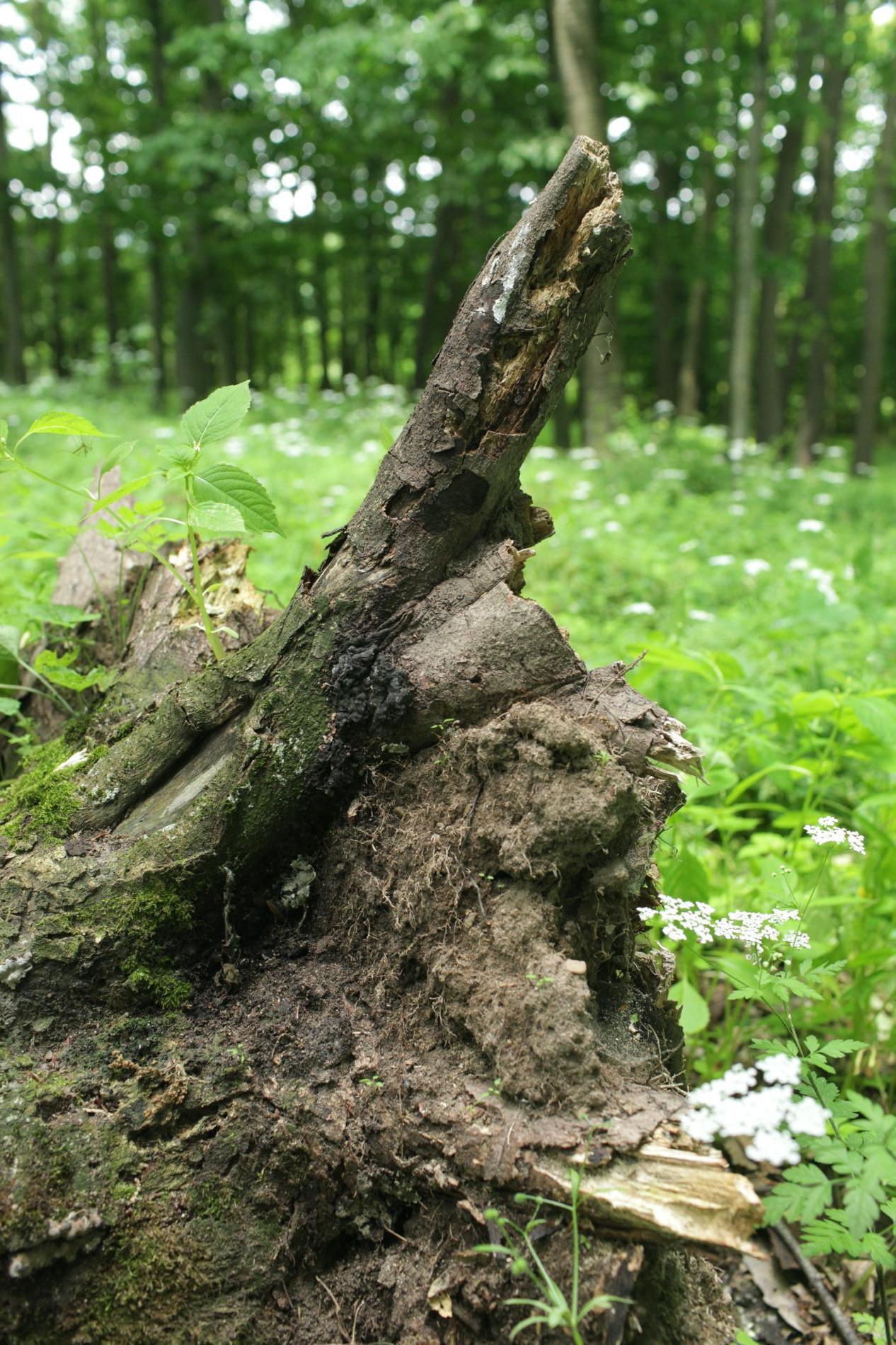
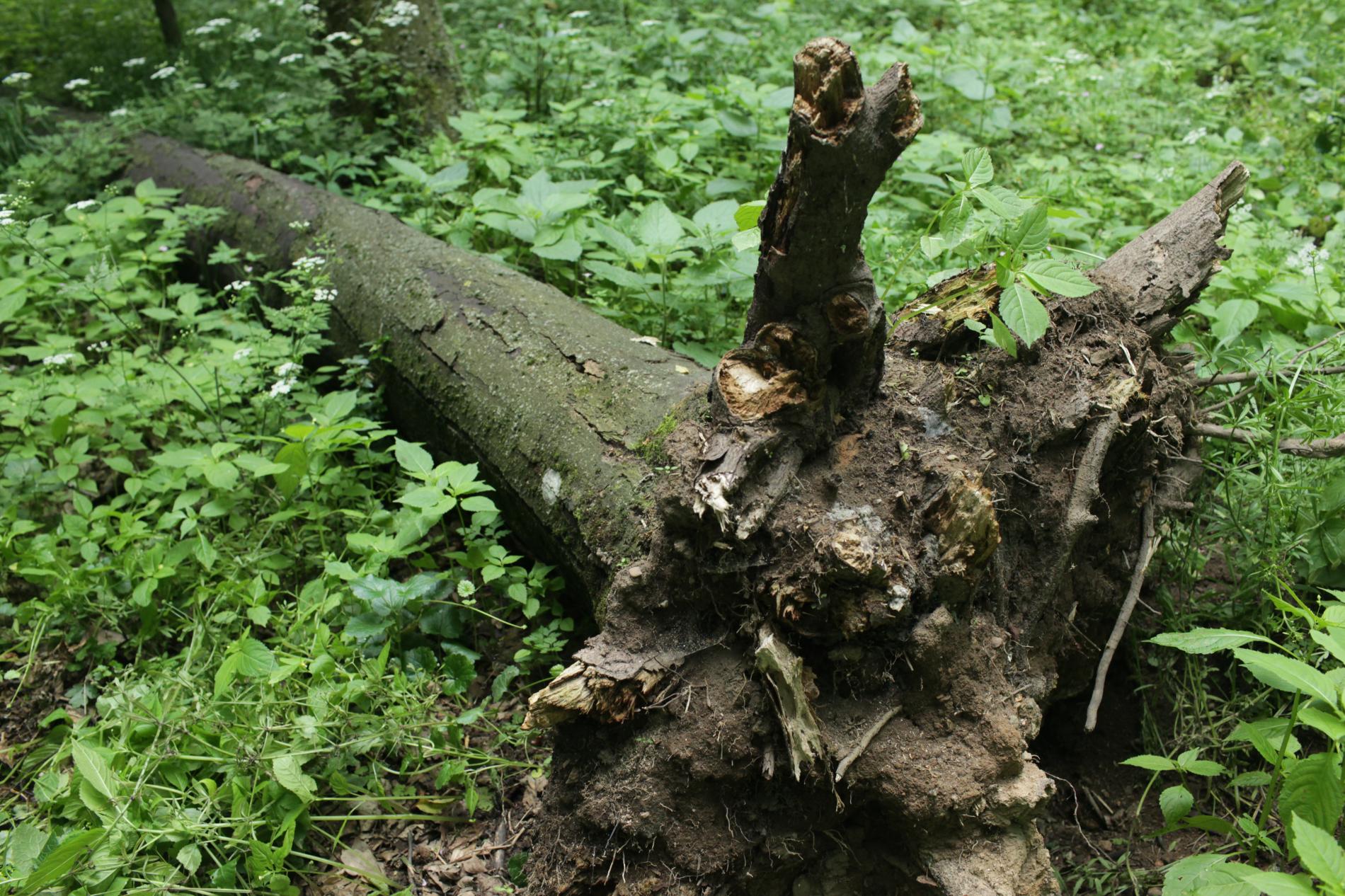
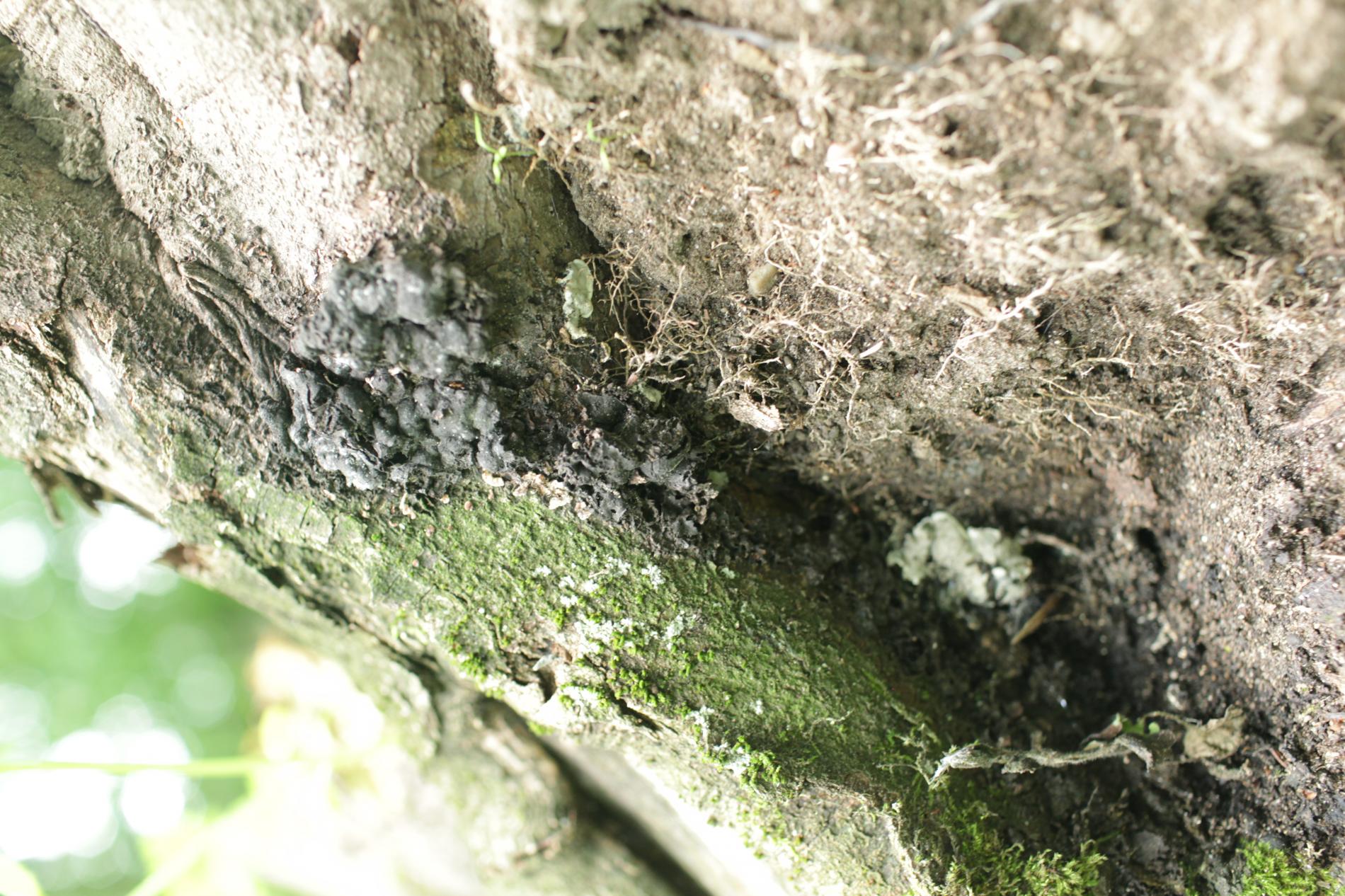
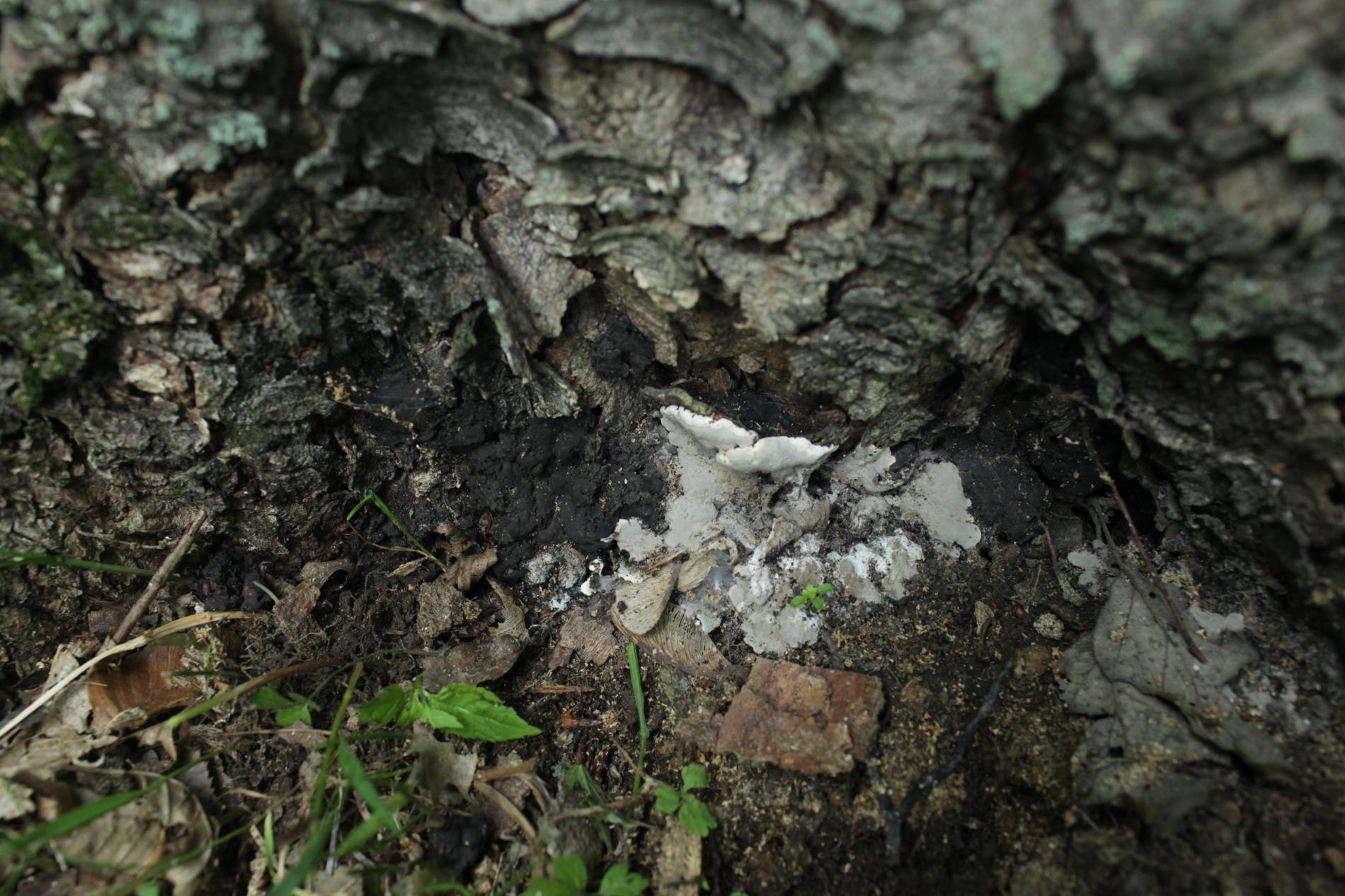
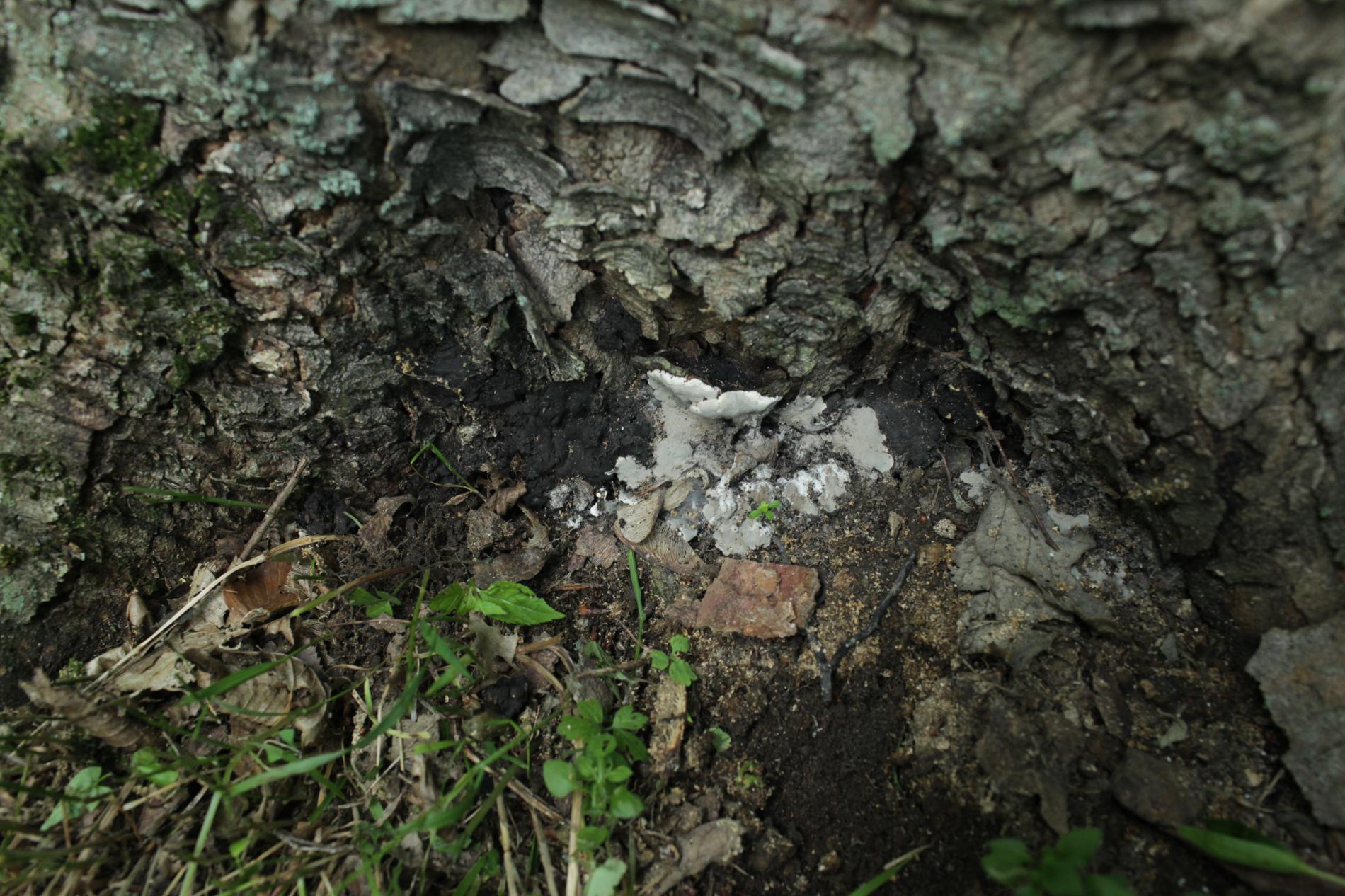
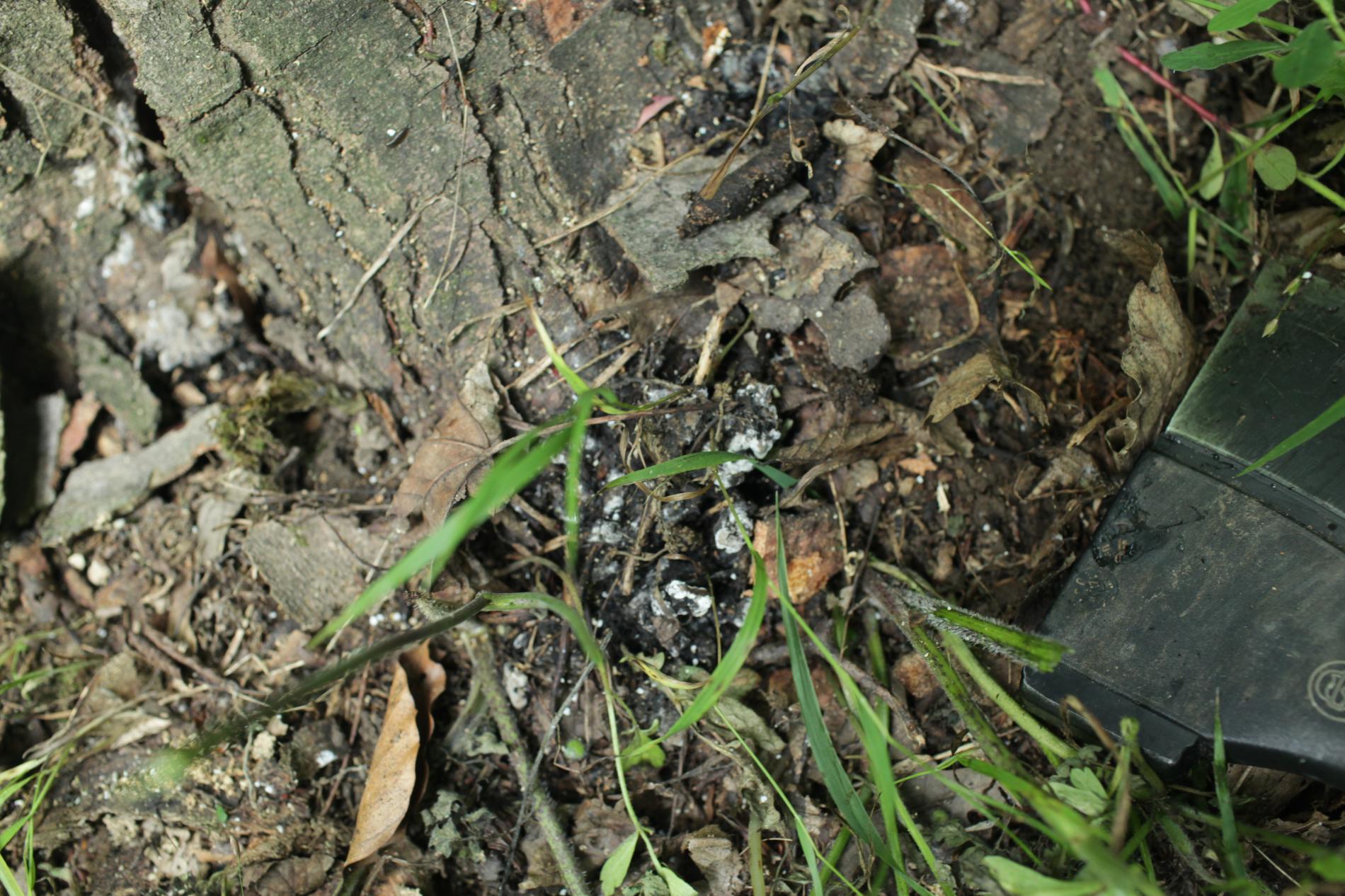
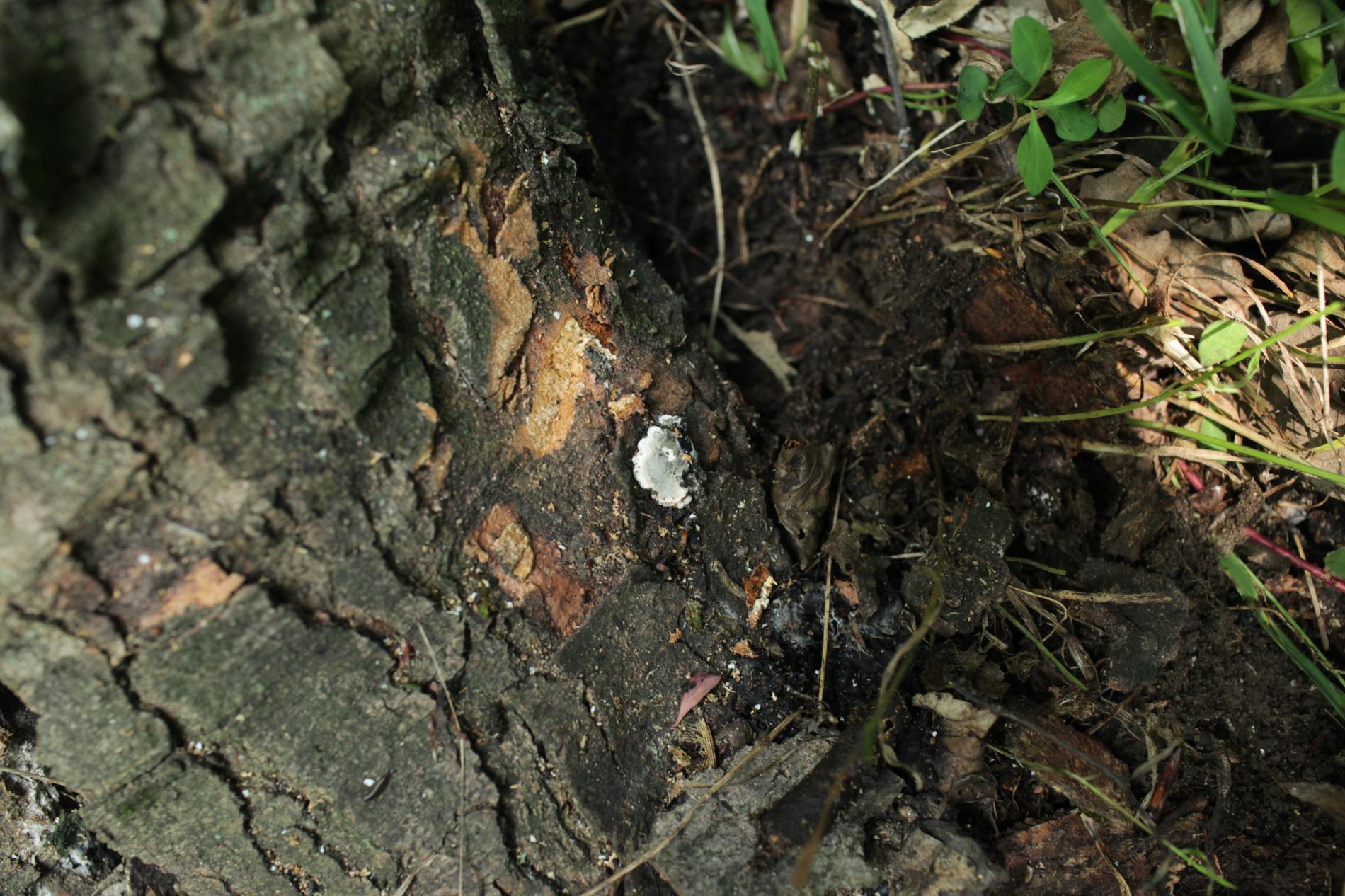
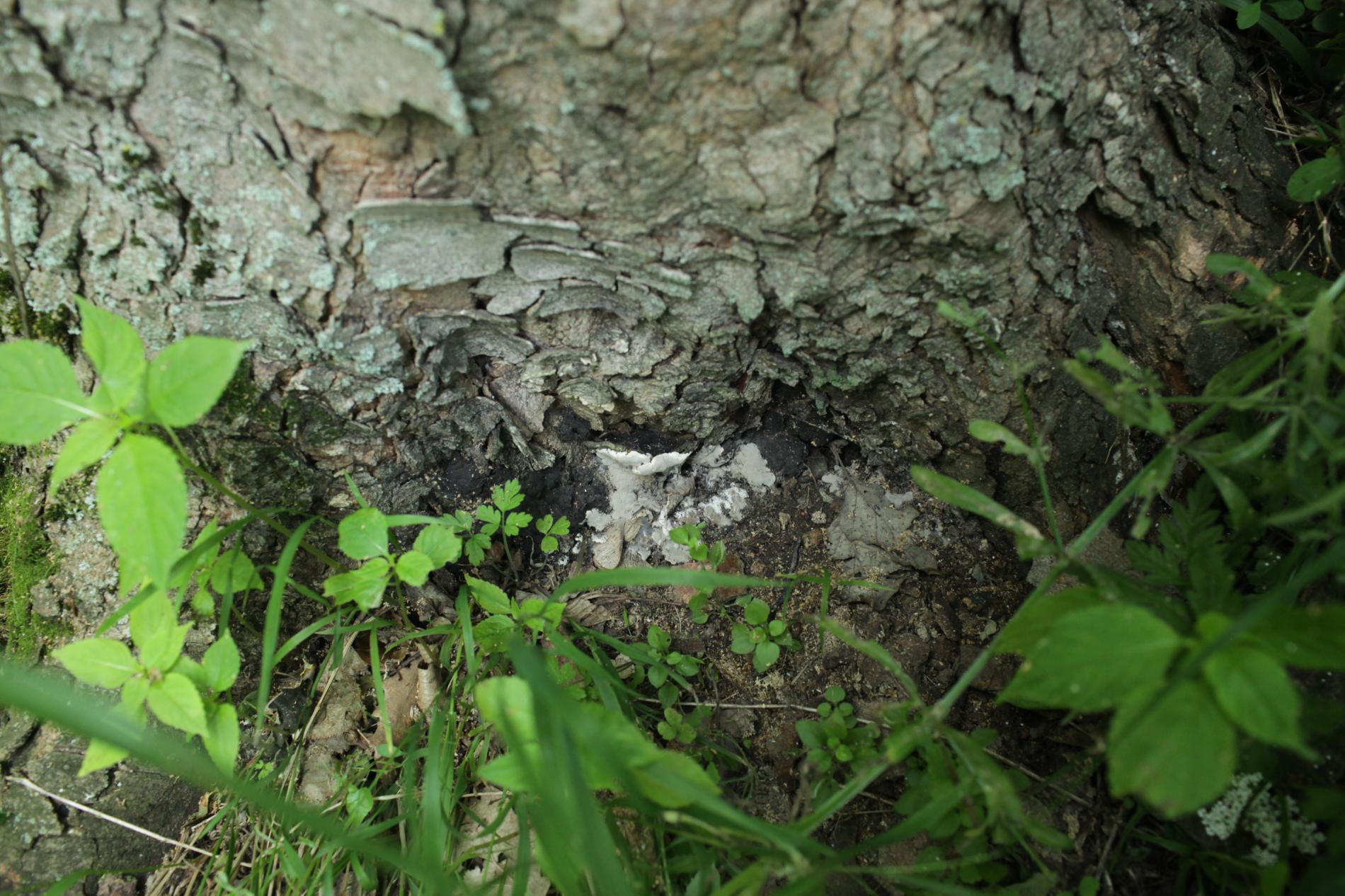
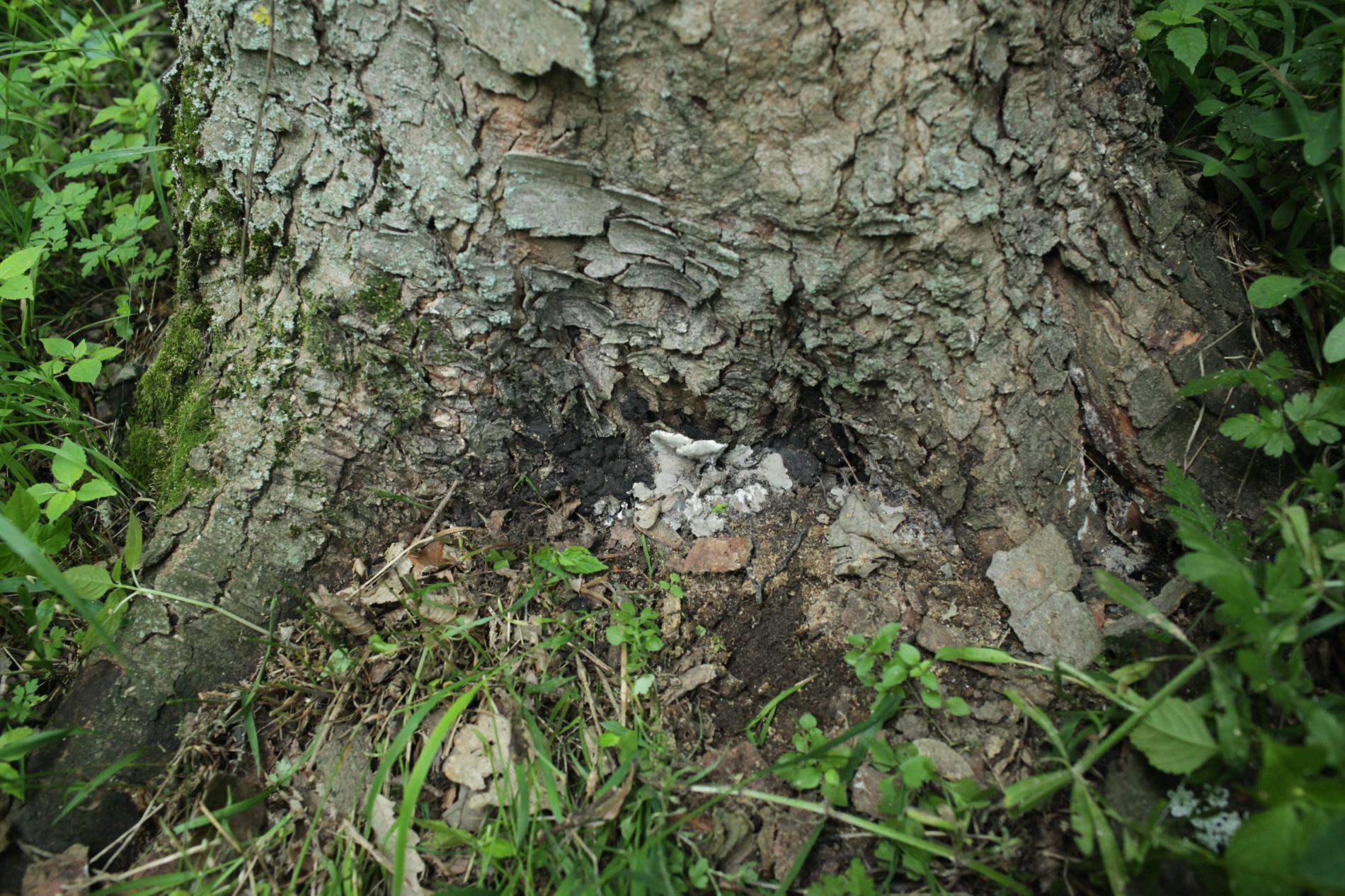
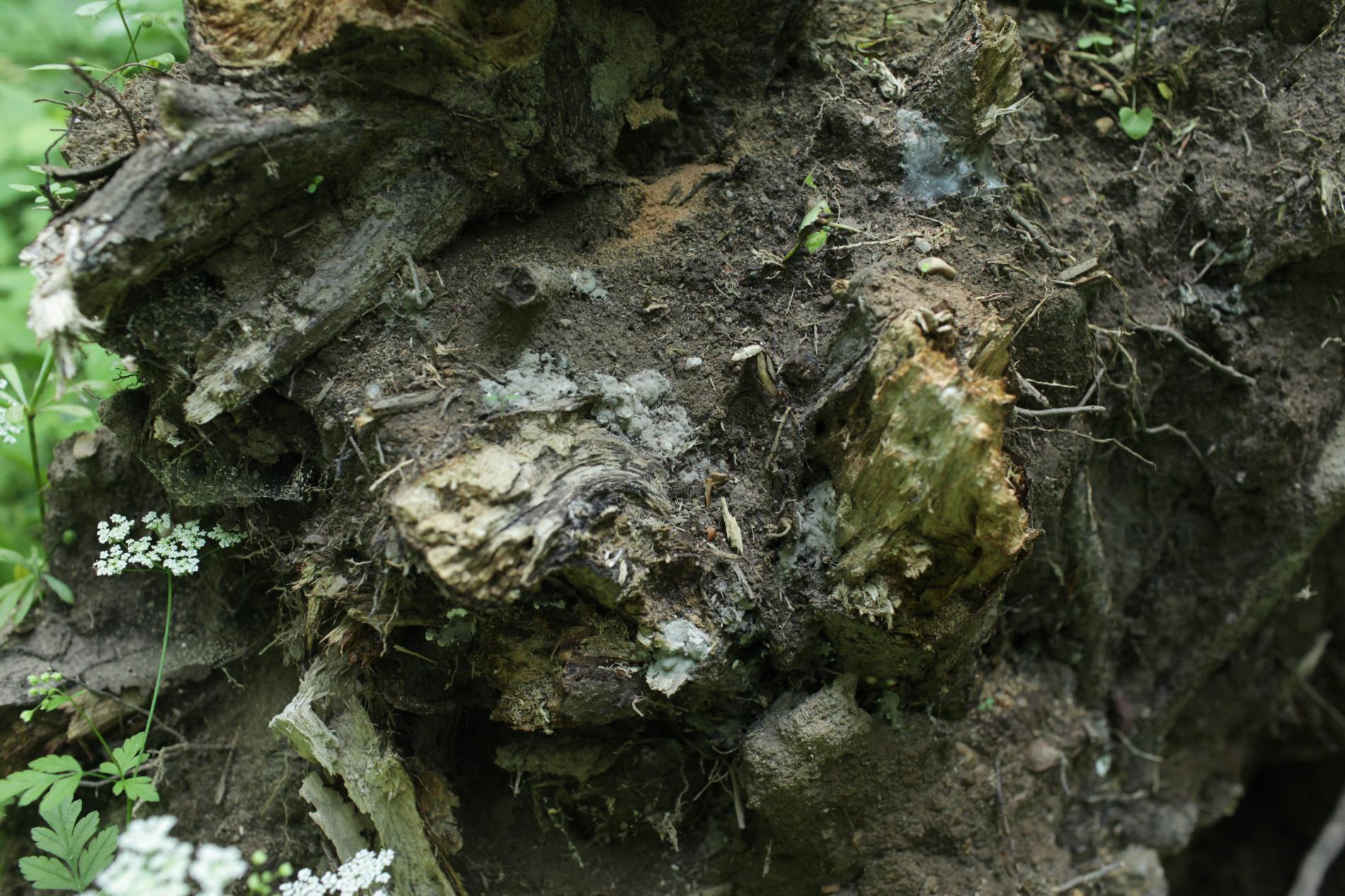
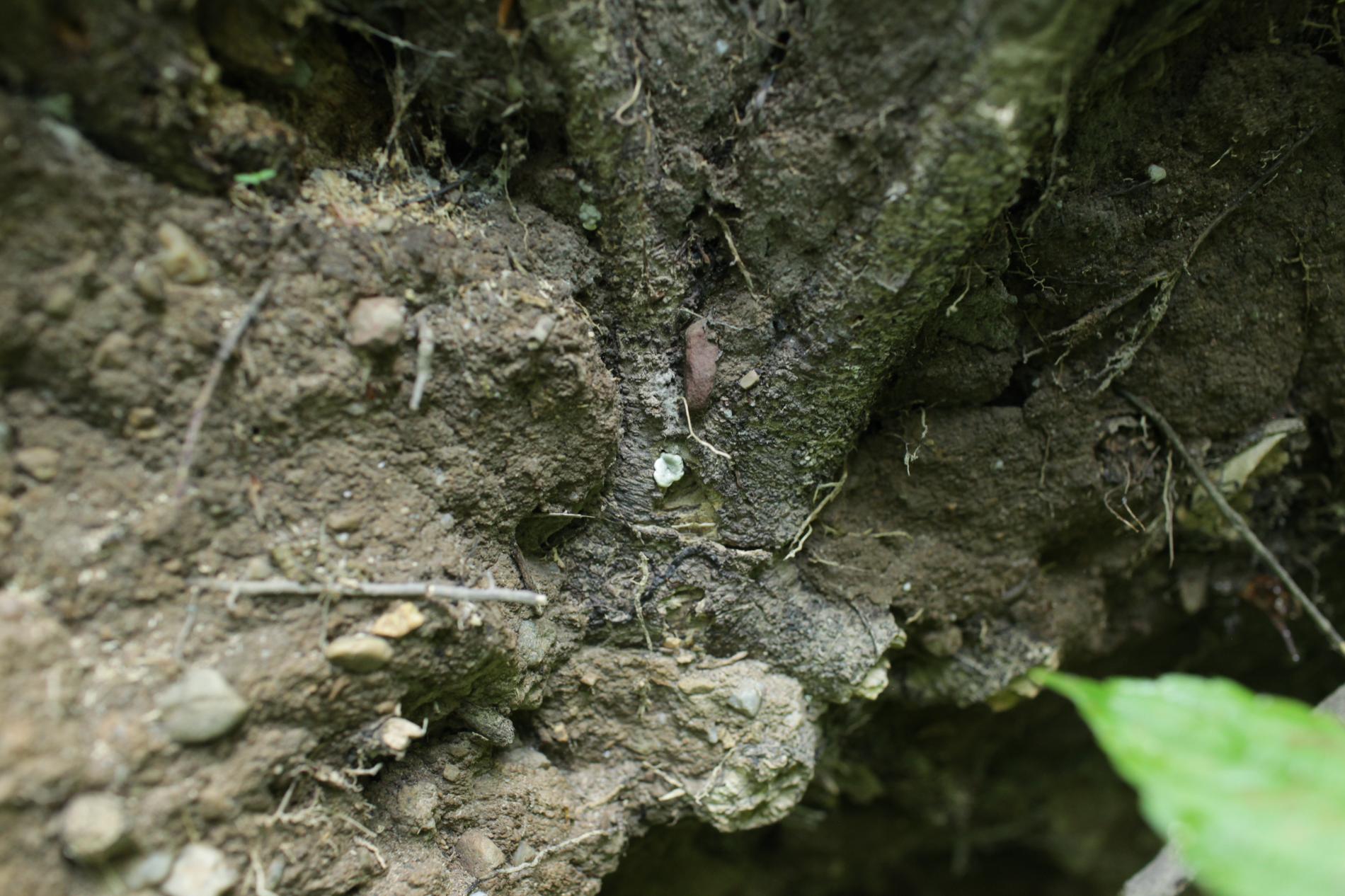
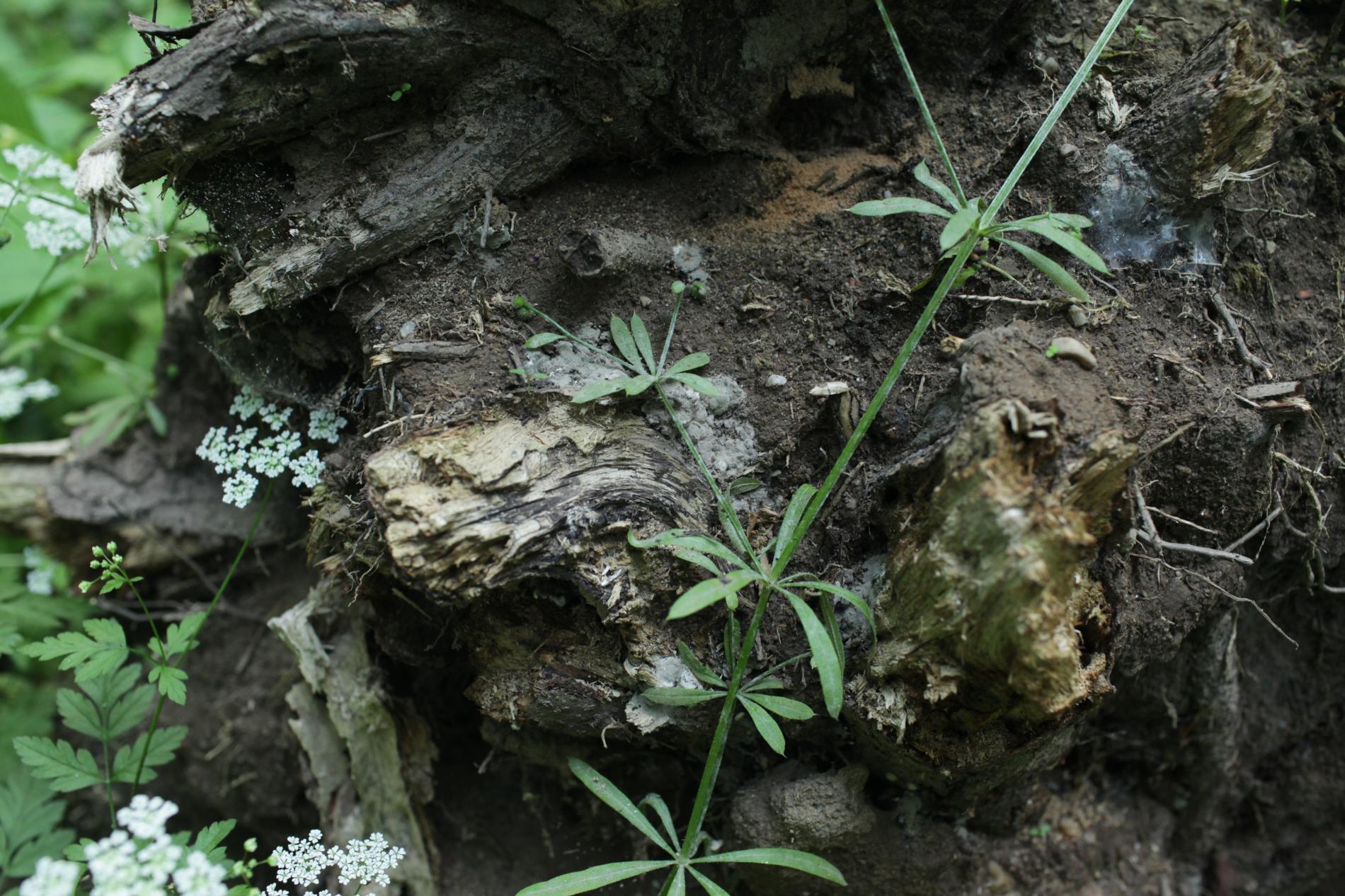
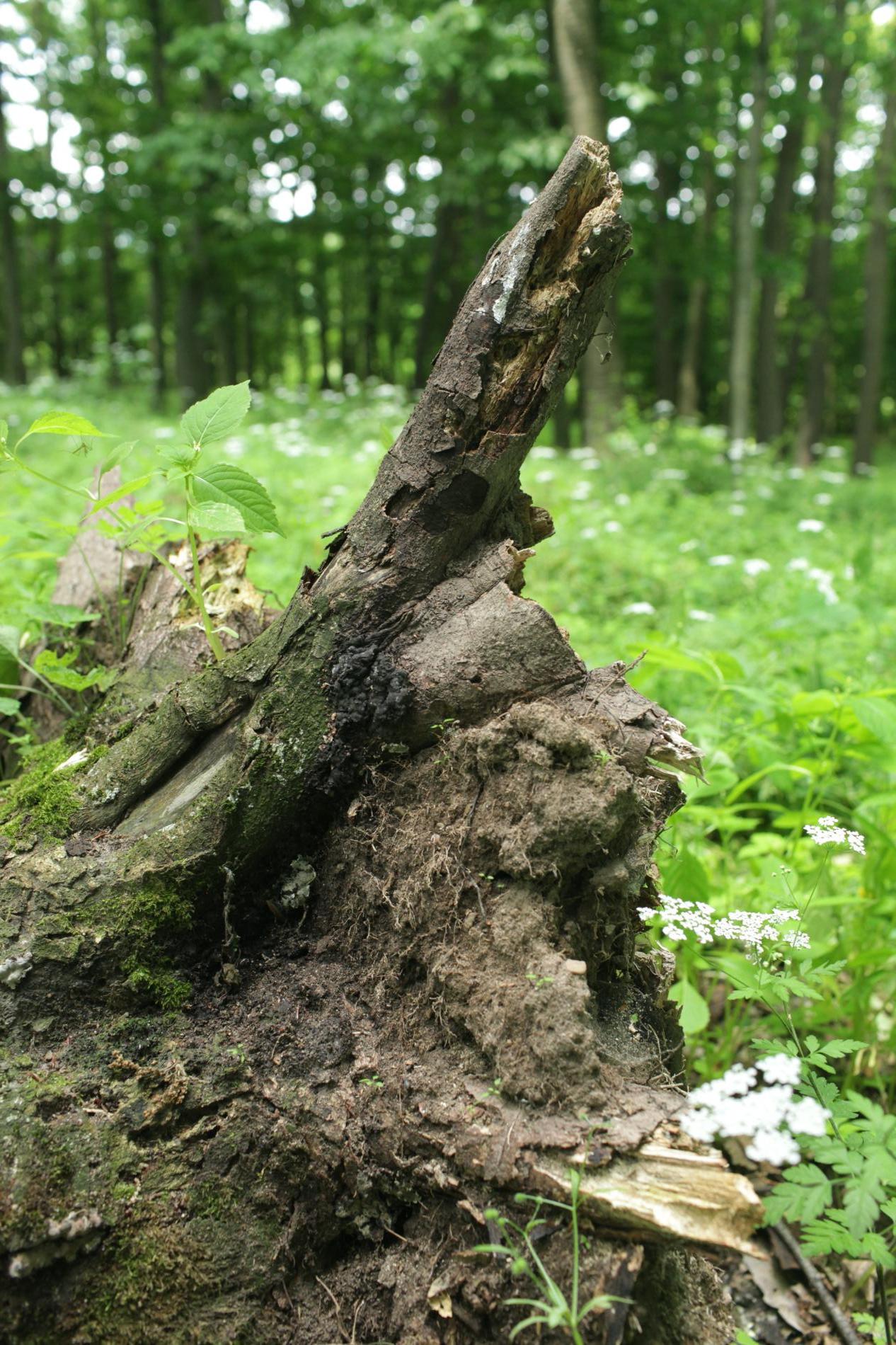
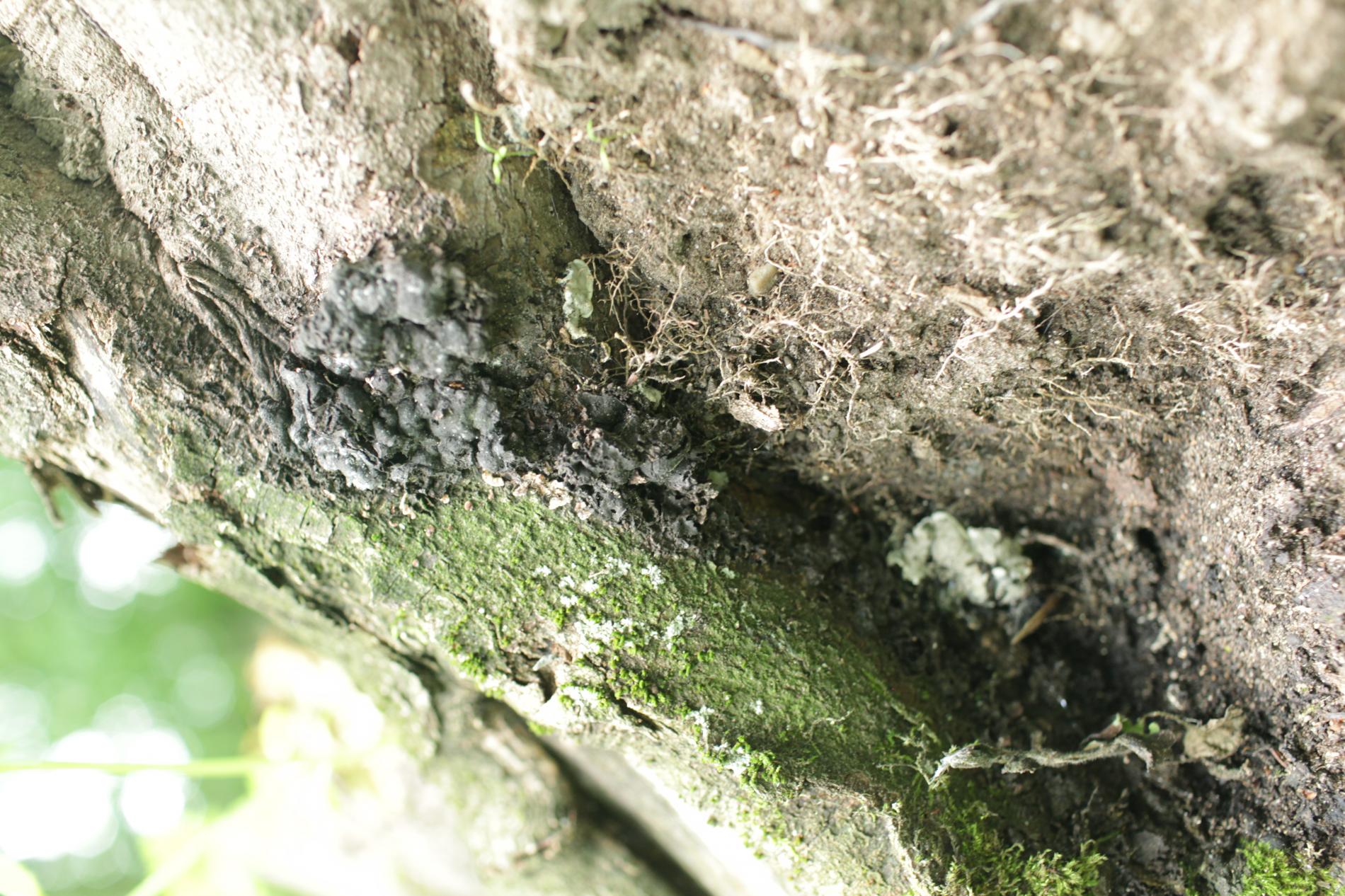
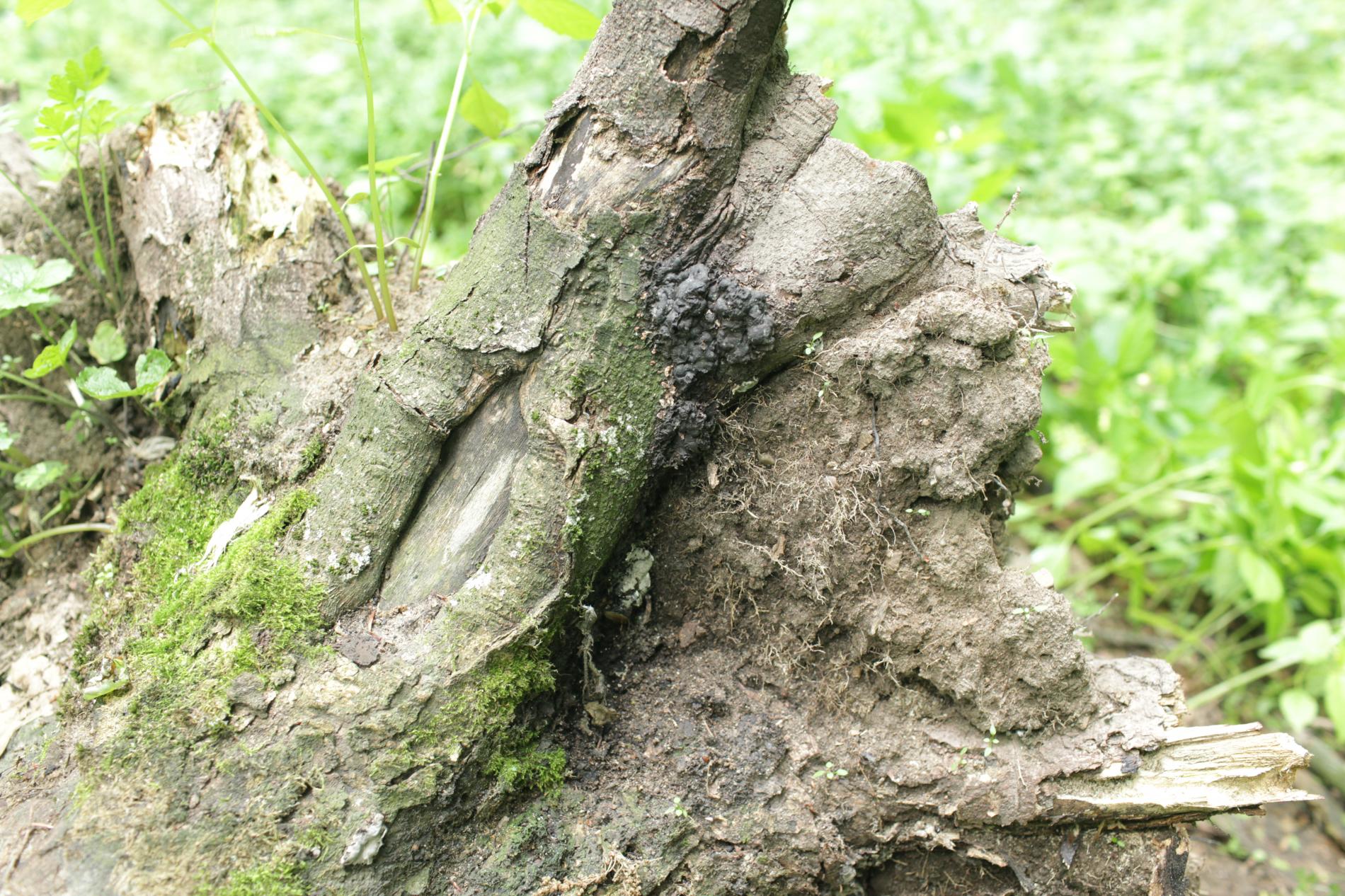
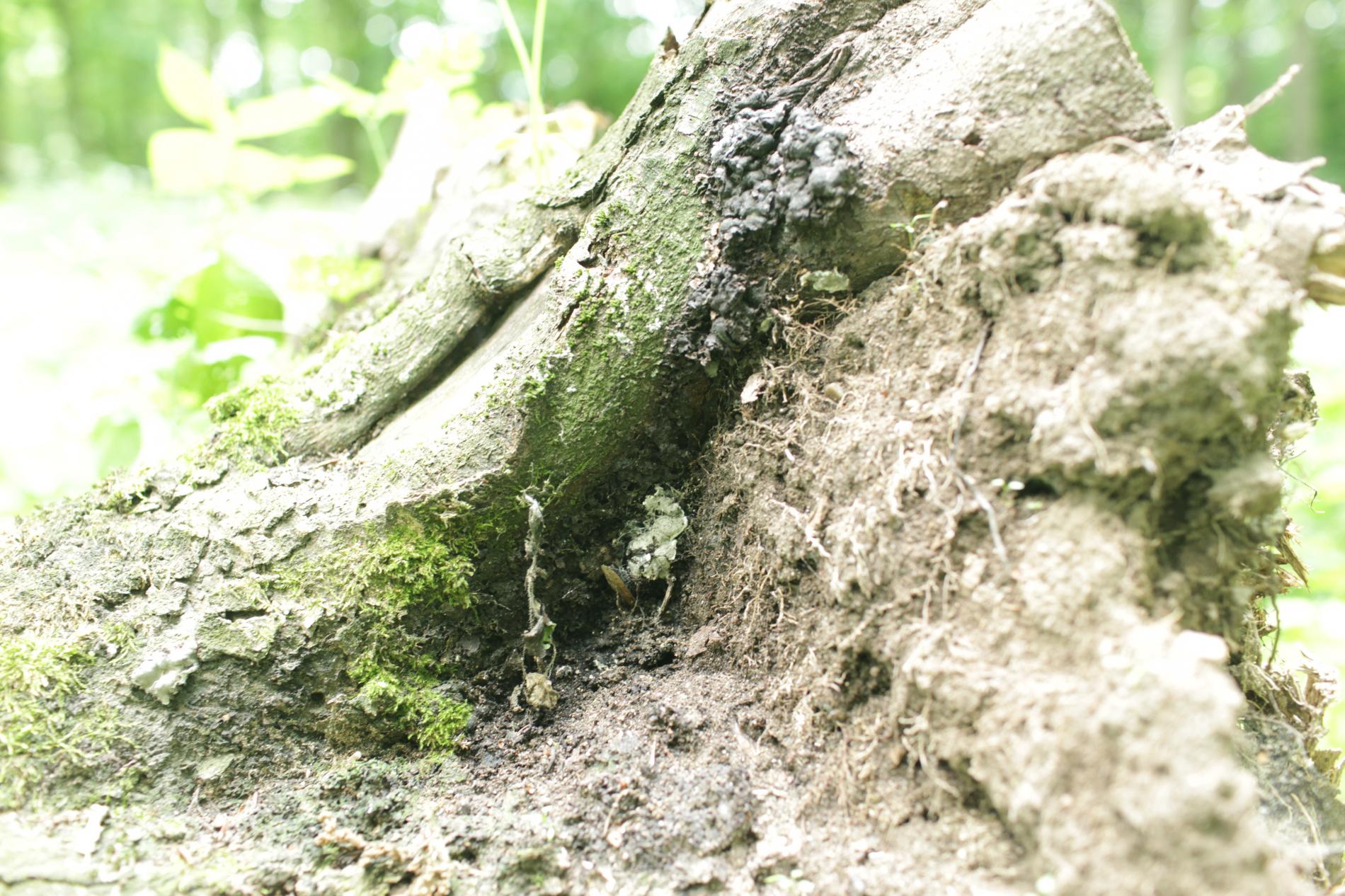
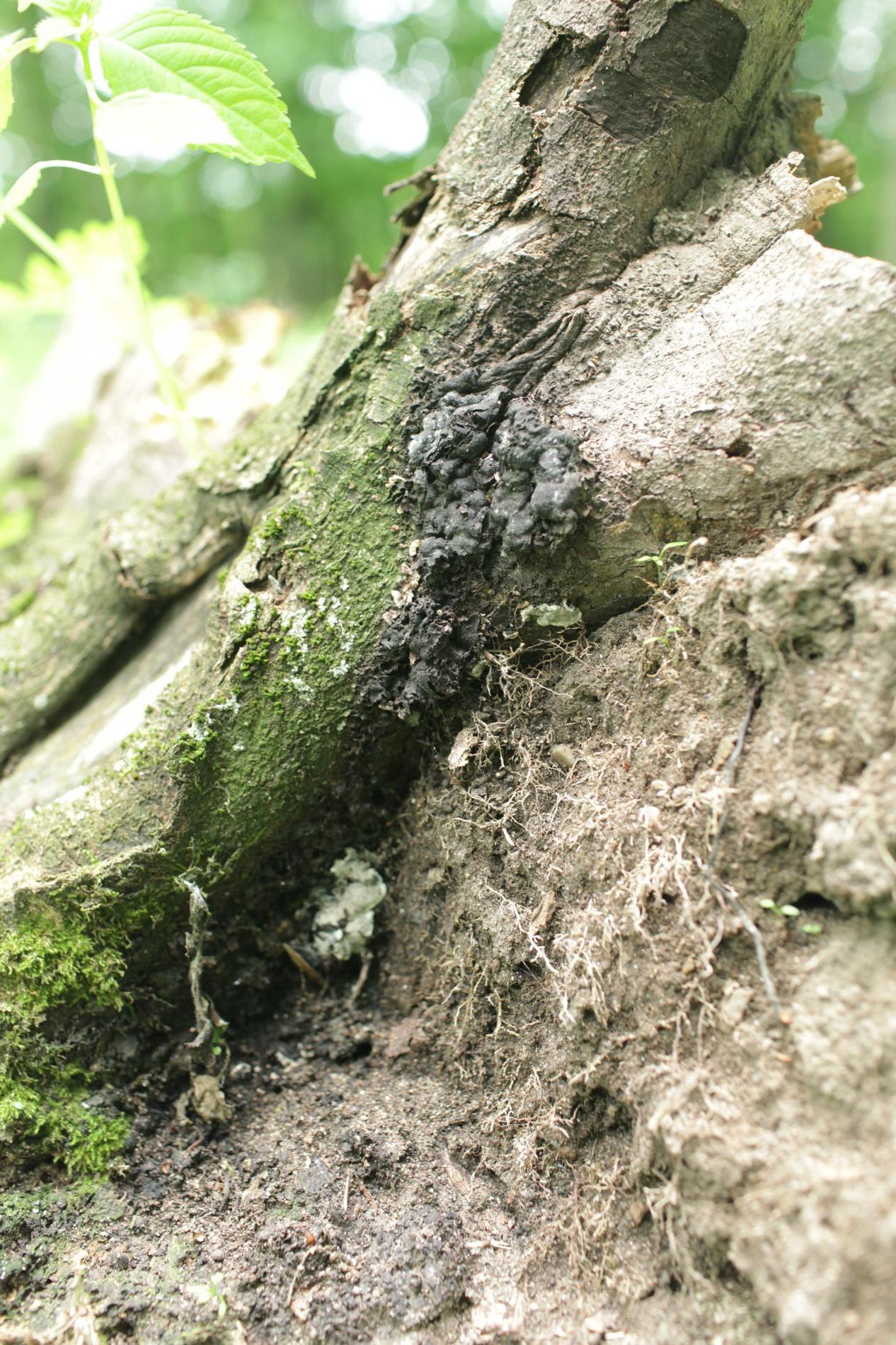
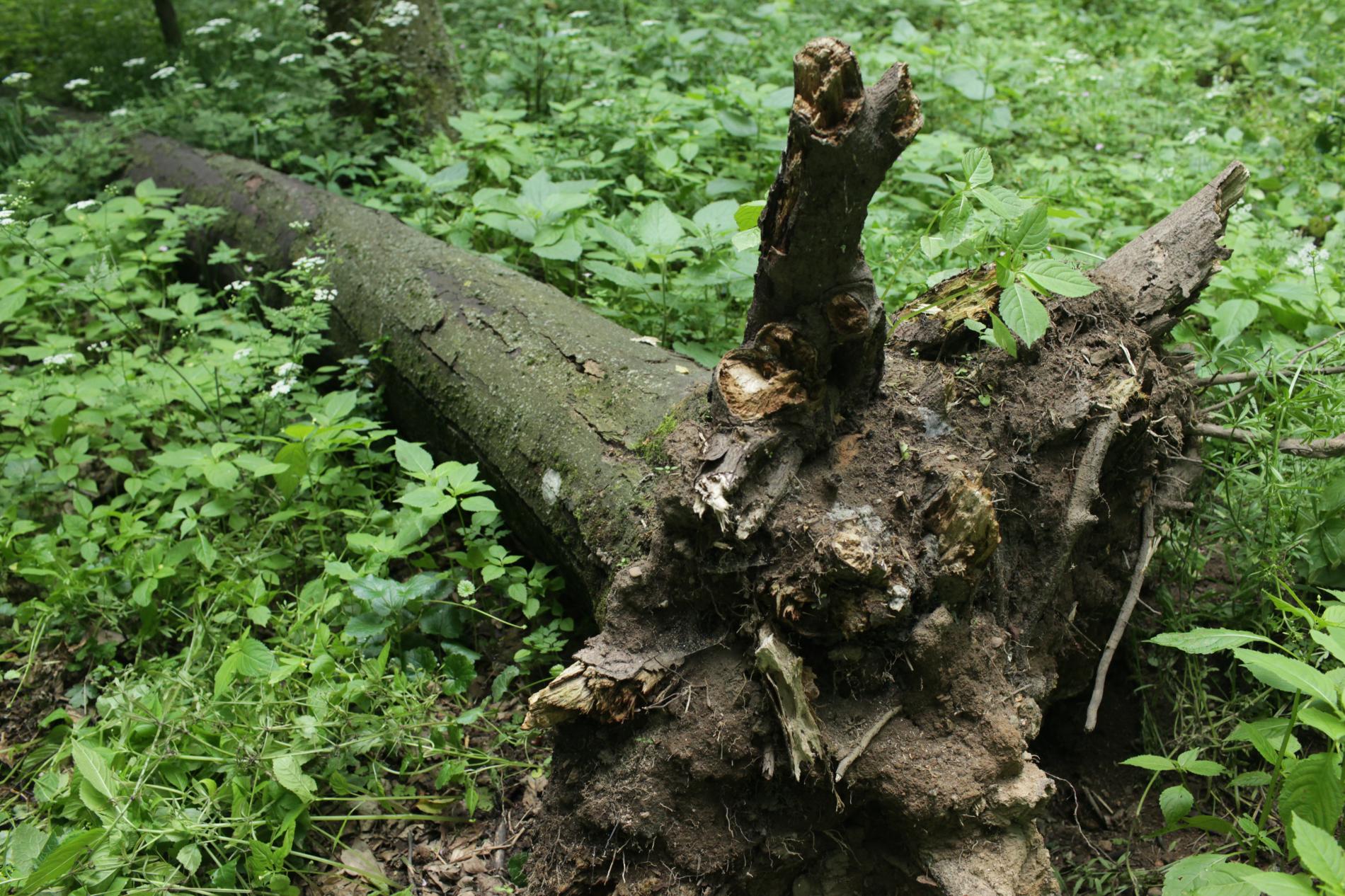
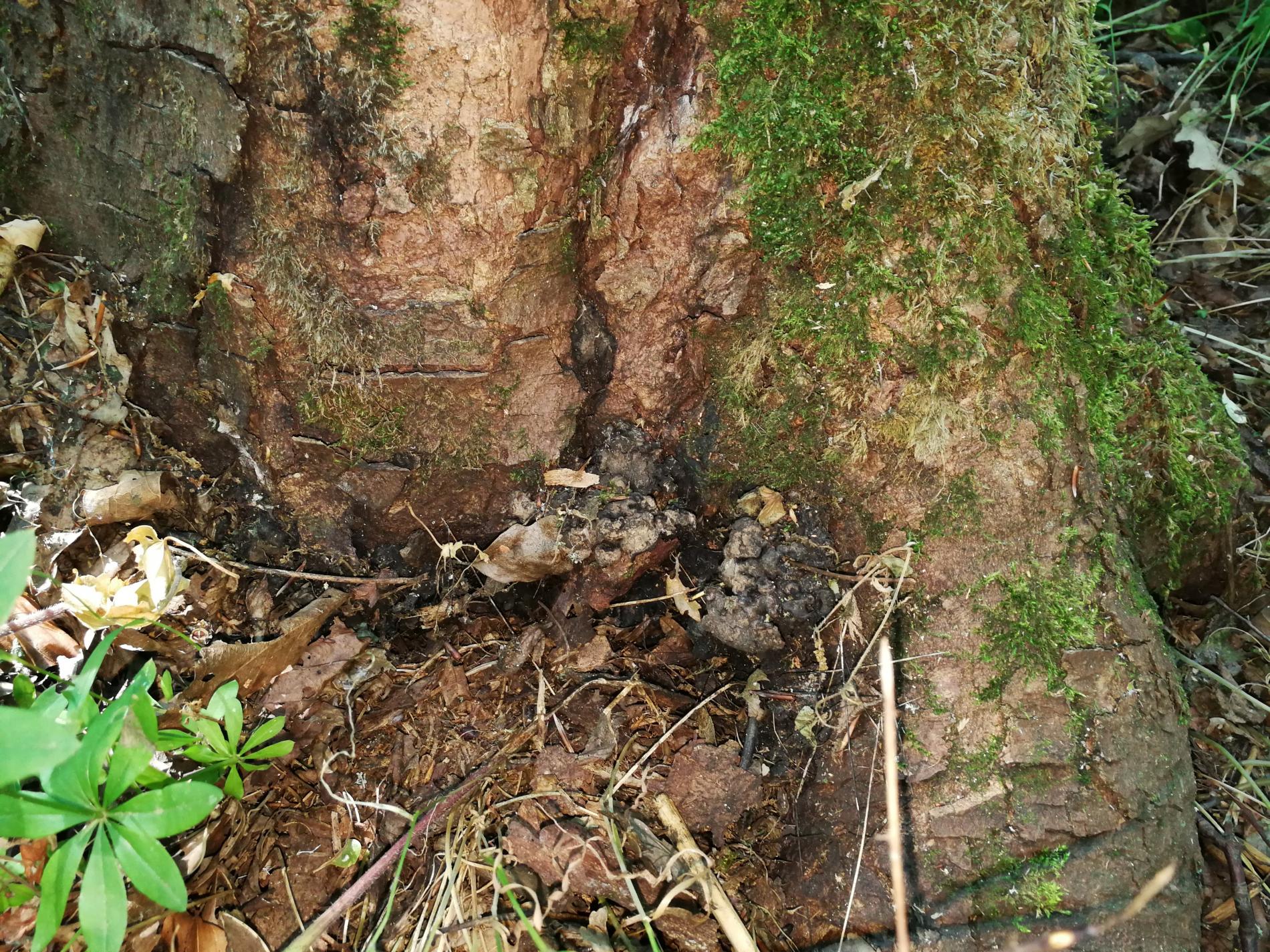
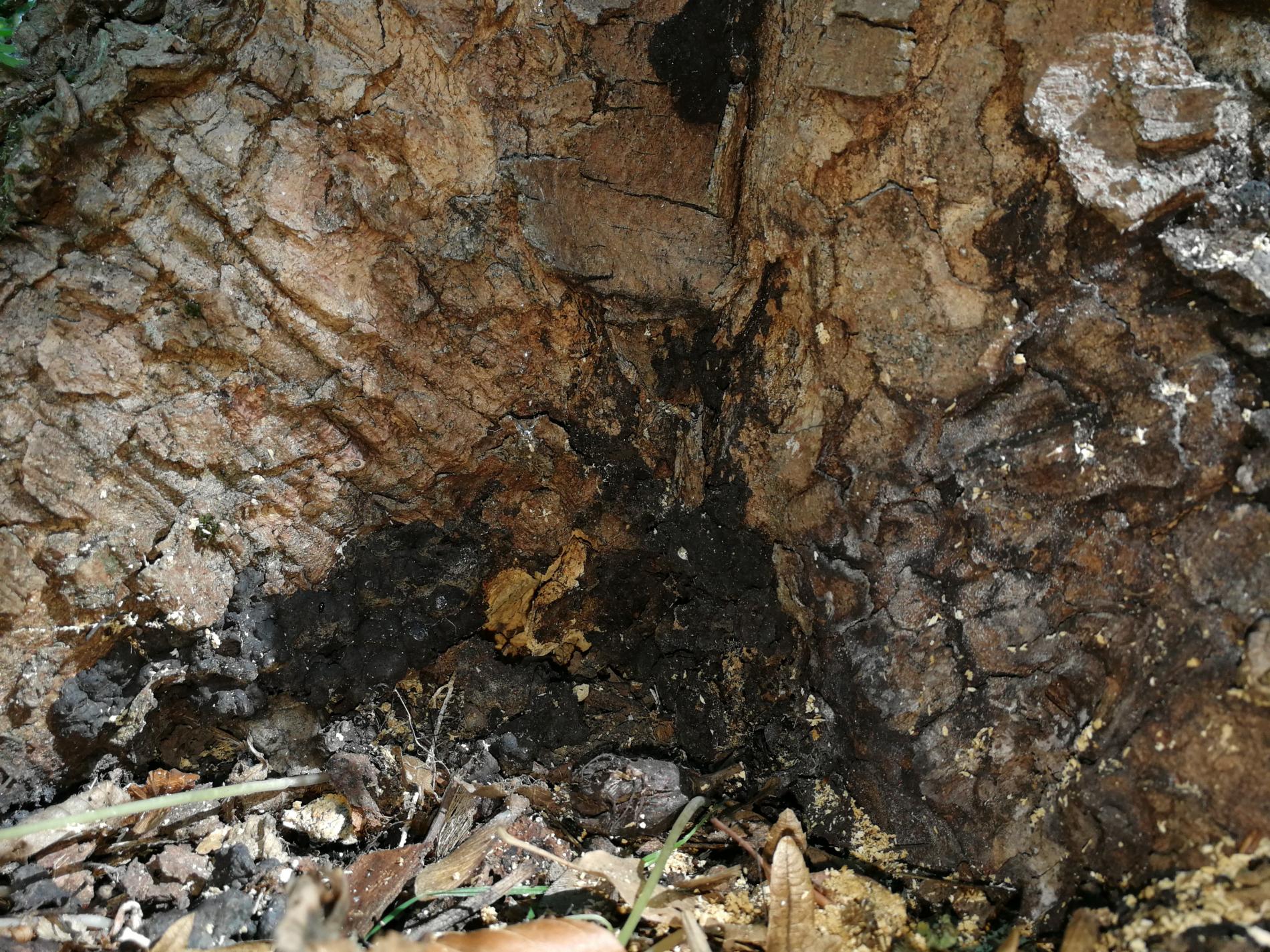
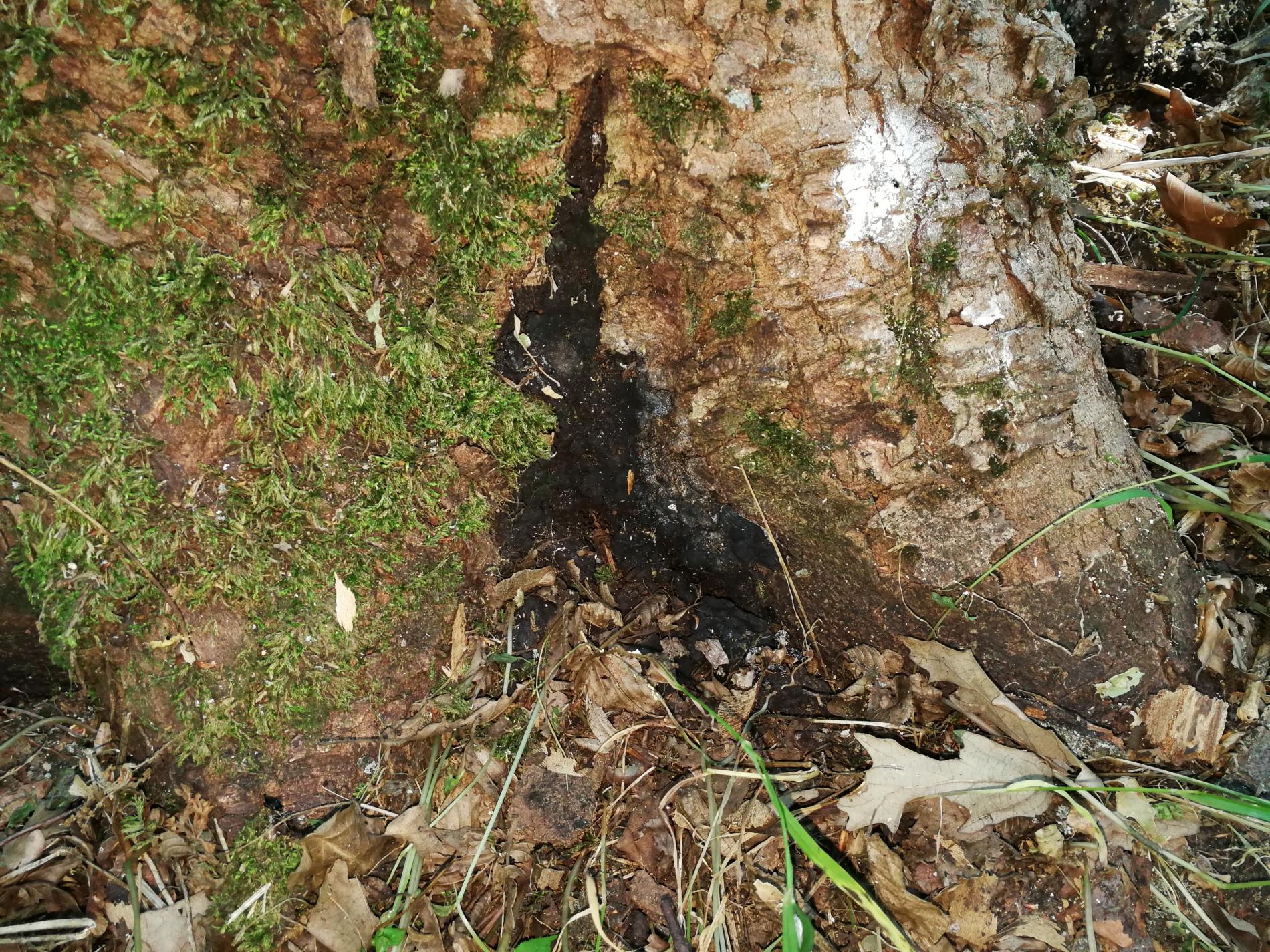
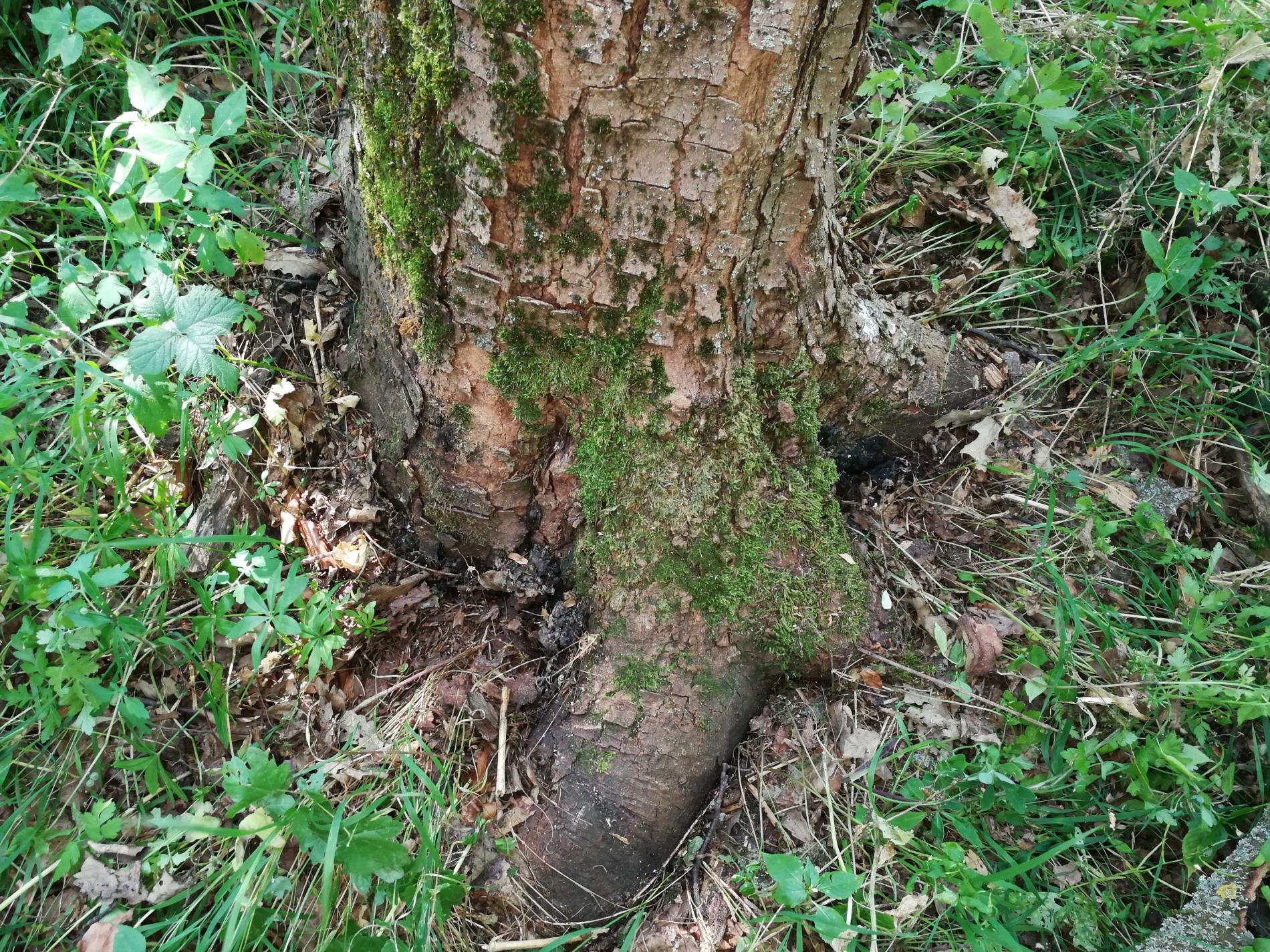
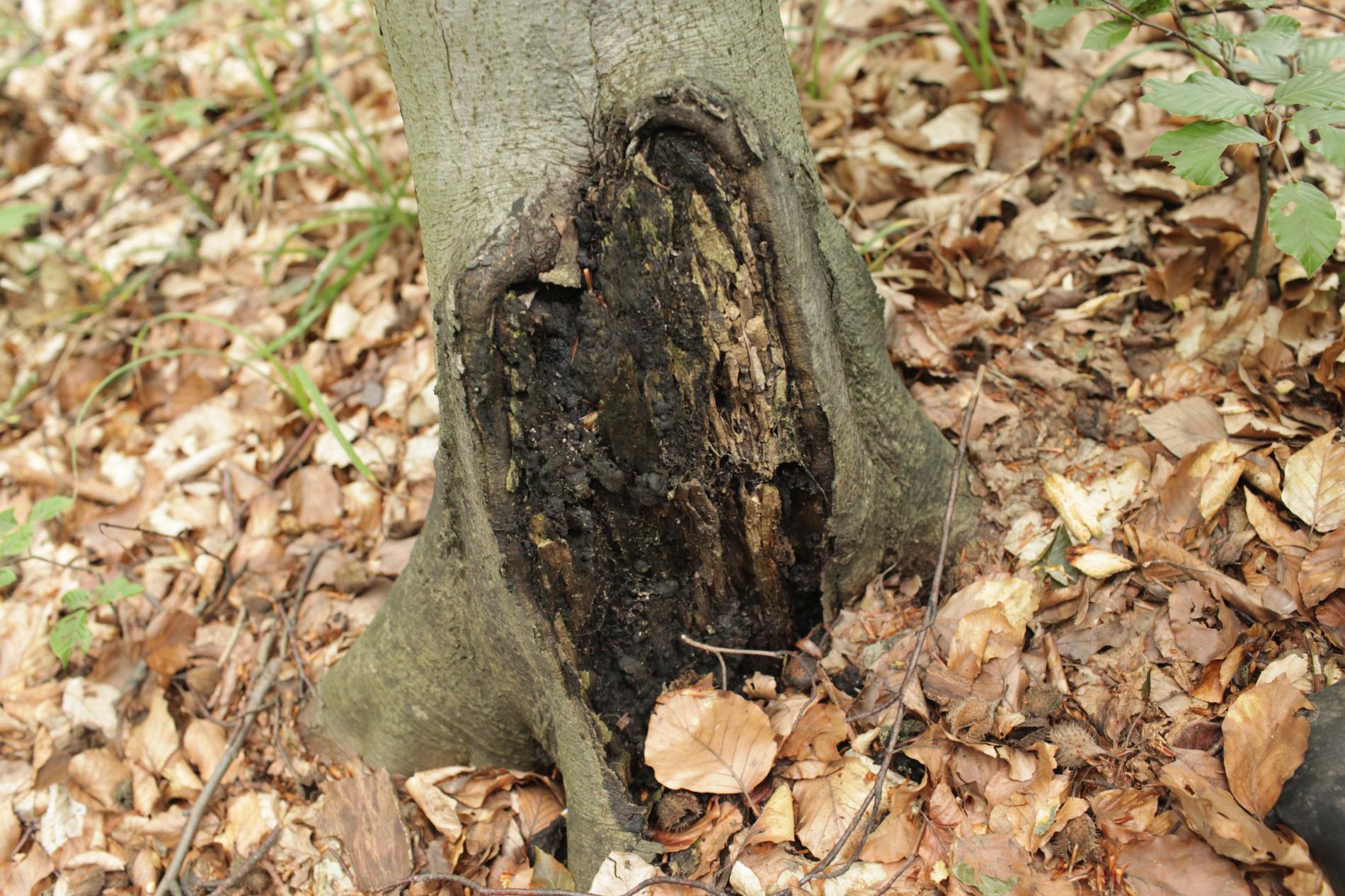
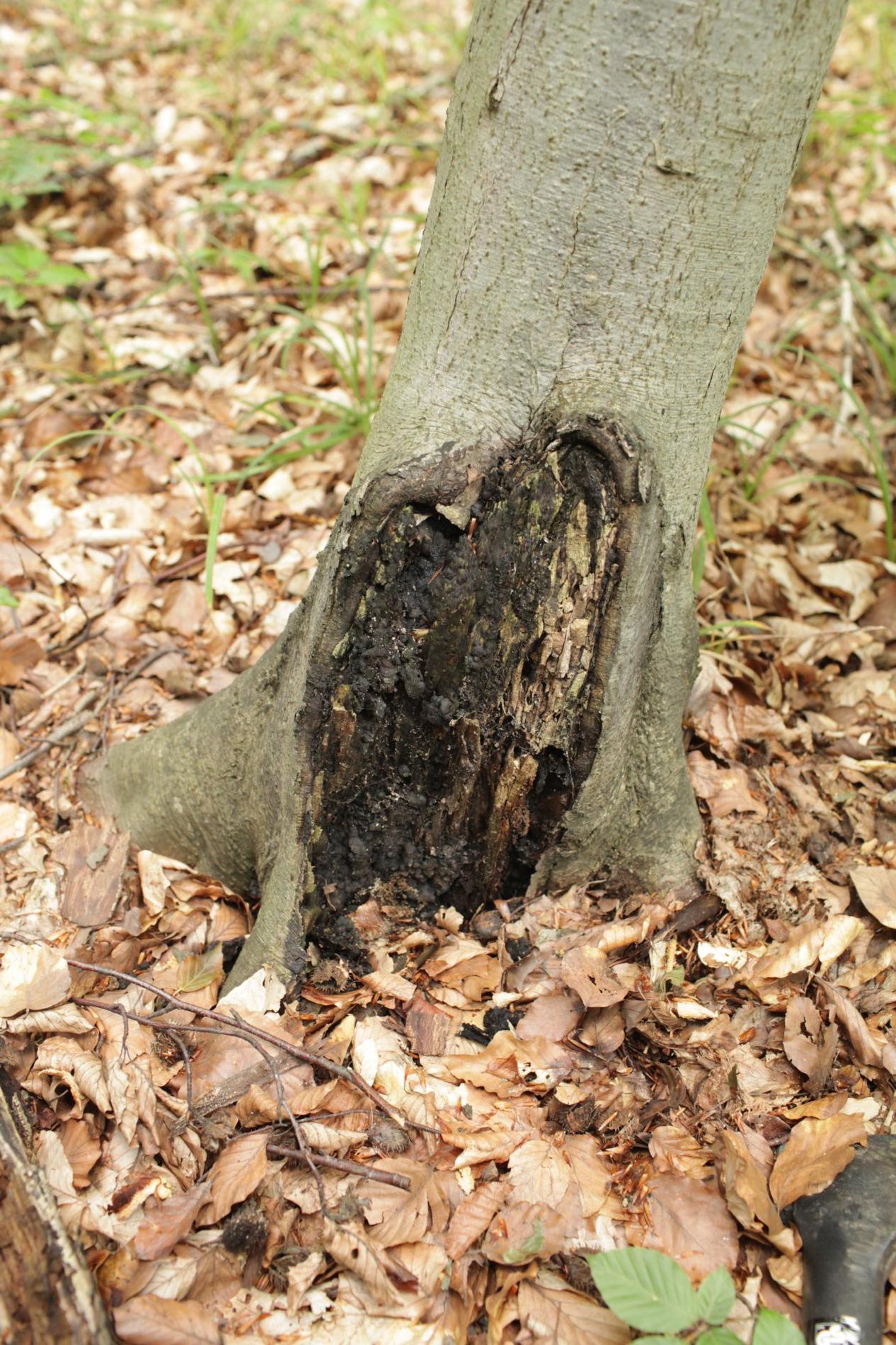
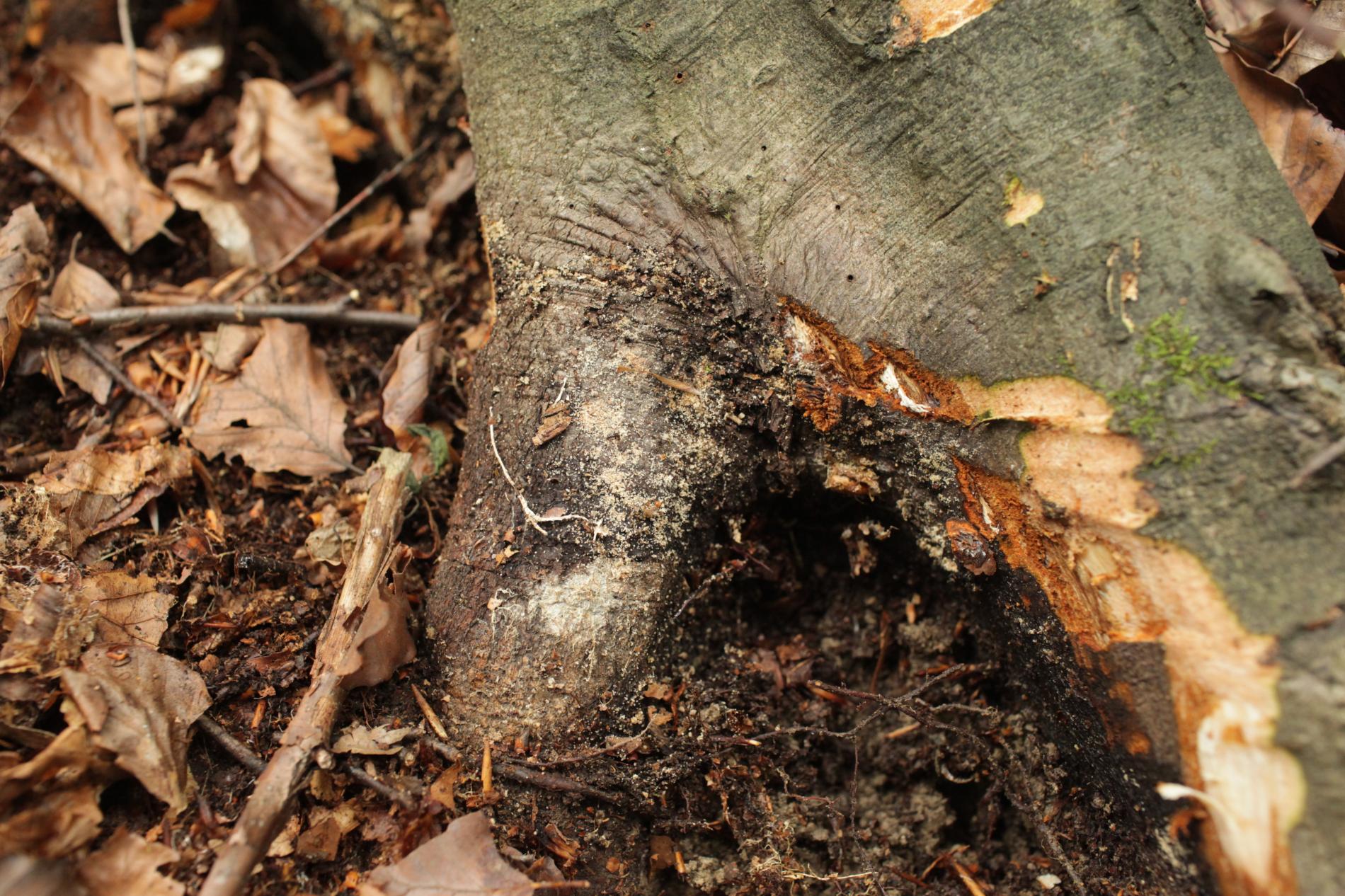
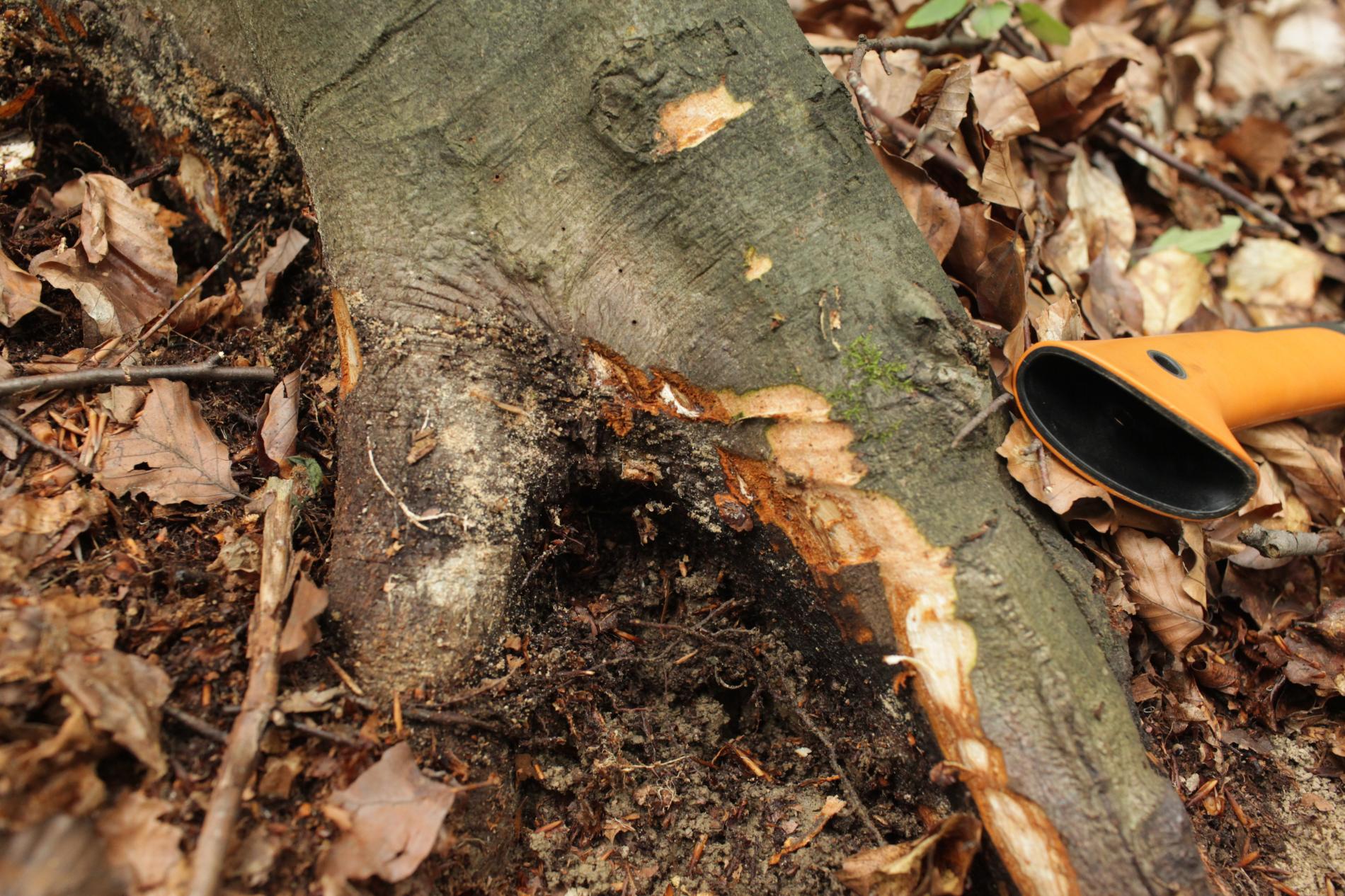
In spring, the fruiting bodies (stromata) are flat, crusty, round or elliptic, with a white edge and grey-green centrein which conidia are formed. In summer the fruiting body transforms into a black lumpy structure of a brittle charcoal-like consistency. In its surface, bottle-shaped perithecia are sunk, containing a gelatinous mass with asci and ascospores. Above the decayed area the affected trunk or thick branches develop false heartwood of noticeable red-brown discolouration. As a result of advanced decay, the tree trunks often break in roots or at the trunk base. The older name of the fungus is Ustulina deusta.
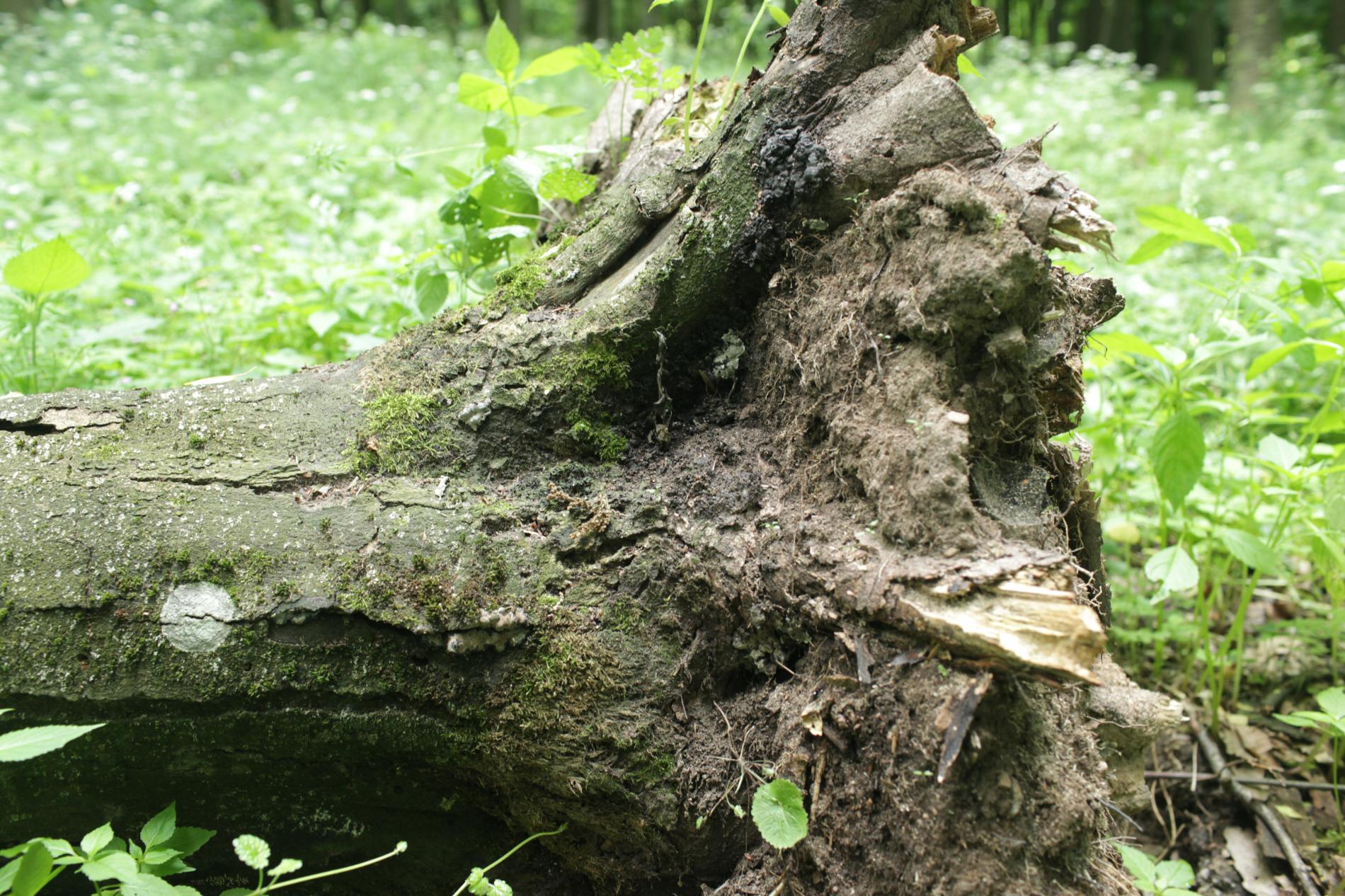
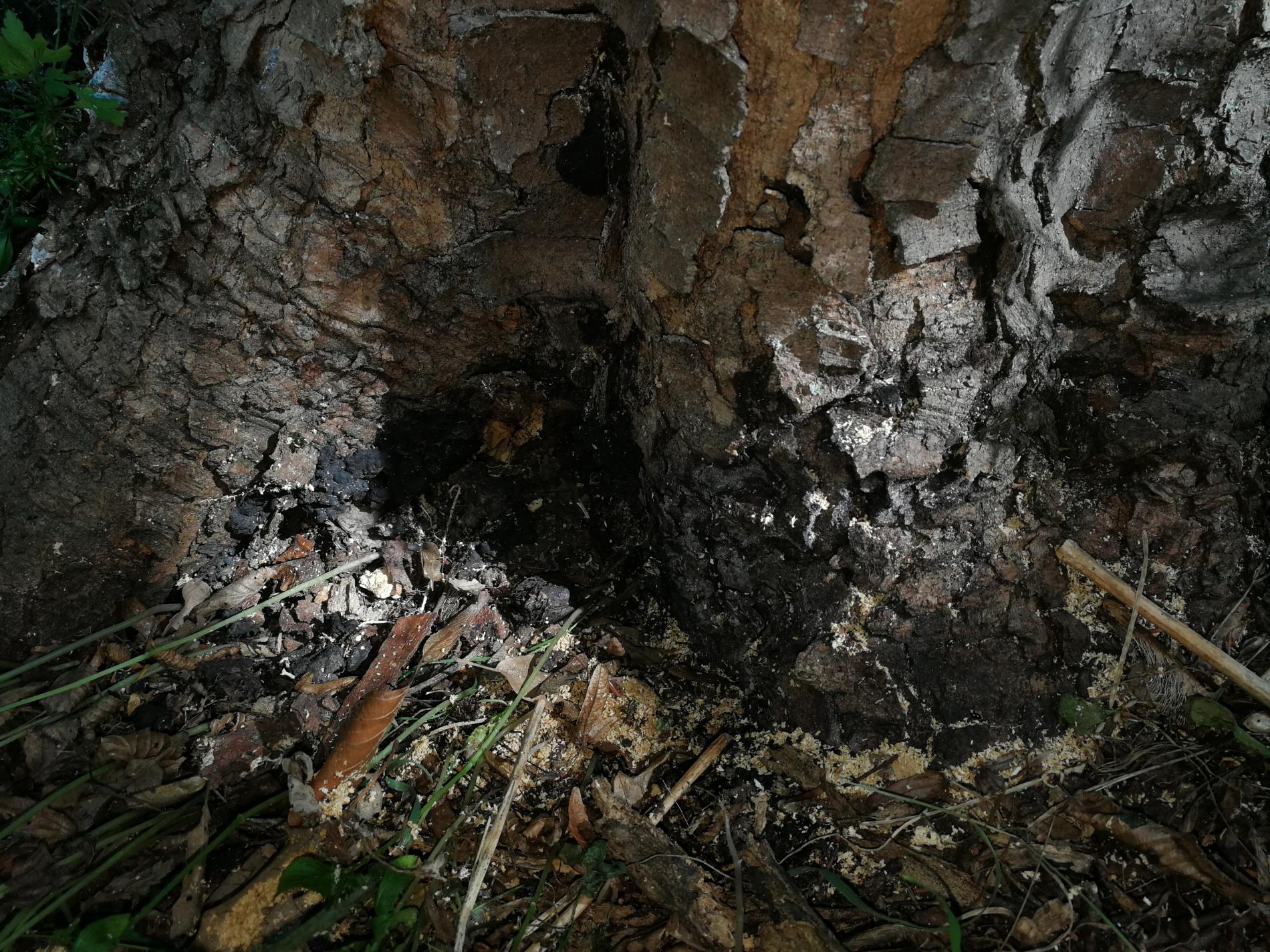
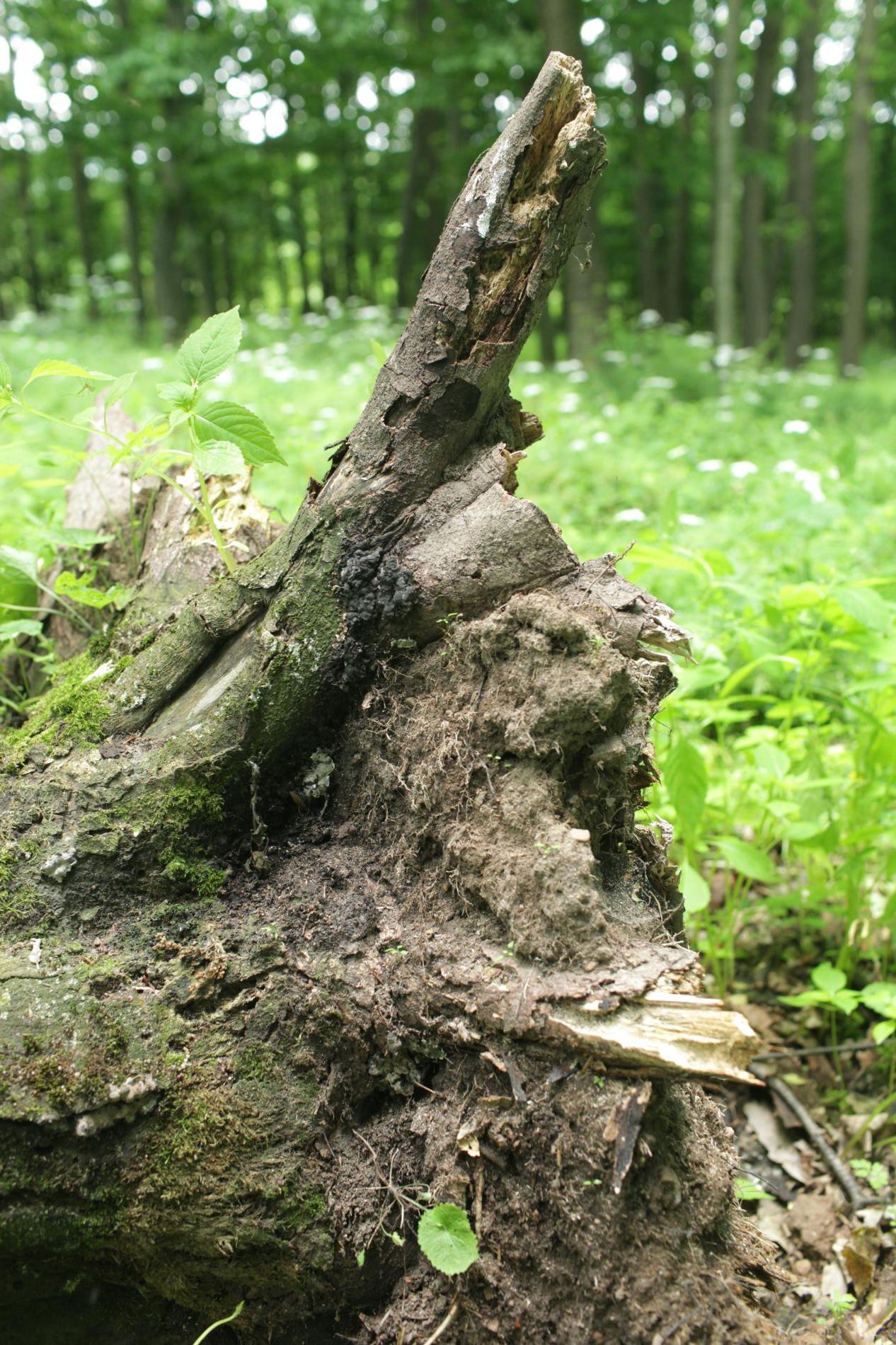
A dry black formation on a trunk similar to charcoal.
Tree Species: Elm, Beech, Maple, Lime, Horse Chestnut
Part of a plant- attacked: Tree trunk
Pest significance: Very harmful
Pest Category: Fungi
Invasive Species: No
Present in EU: Yes
Pest group: Fungi
Affected part of wood: Heartwood, Sapwood
Depth of damages: More than 5 cm depth, Under bark only, Up to 2 cm depth, Up to 5 cm depth
The extent of damage: Lokally
Prevalence in Europe: Common
Damaged products: Firewood, Fresh timber logs (water still in the sapwood), Furniture, Lumber, boards and prisms, Wooden house constructions
Roundwood size: Diameter 50+, Diameter from 10 up to 50 cm
Wood discoloration: Yes
Pest subcategory: White-rot
Similar pests

Phytophthora cambivora

Neonectria coccinea
