


Isotomus speciosus
Longhorn beetle Isotomus speciosus
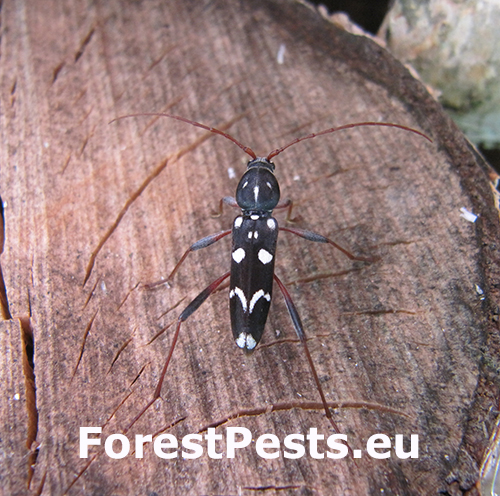
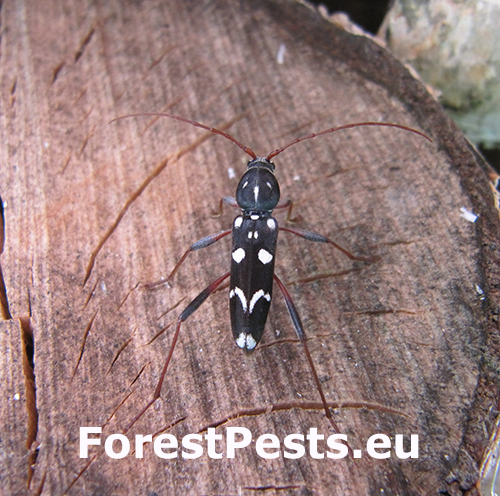
Fuzáč Isotomus speciosus is a longhorn beetle developing in the dry wood of deciduous trees, with a preference for hornbeam (Carpinus betulus) but also occurring in oak, chestnut, beech, elm, and maple. Females often lay their eggs repeatedly in the same wood, leading to complete internal destruction over time. Larvae first feed in the outer layers and later burrow deep into the heartwood. The development lasts at least two years and is influenced by wood moisture. Adults are active from June to August and can be seen both during the day and at night. The species is widely distributed across Europe and the Caucasus, although it is becoming rare in parts of Central Europe due to habitat loss. The damage reduces the structural and aesthetic value of standing or stored hardwood.
On exposed wood, oval exit holes and deep larval galleries extending into the heartwood are visible.
Tree Species: Elm, Beech, Oak, Maple
Part of a plant- attacked: Tree trunk, Branch
Pest significance: Not harmful
Pest Category: Insects
Invasive Species: No
Present in EU: Yes
Pest group: Insect
Affected part of wood: Heartwood, Sapwood
Depth of damages: Bark, More than 5 cm depth, Under bark only, Up to 0,5 cm depth, Up to 2 cm depth, Up to 5 cm depth
The extent of damage: Individually - one place
Prevalence in Europe: Rare
Damaged products: Firewood, Lumber, boards and prisms, Stored timber logs (dried wood)
Roundwood size: Branches and twigs, Diameter from 10 up to 50 cm, Diameter up to 10 cm
Wood discoloration: No
Exit holes: Oval
Pest subcategory: Wood-boring insect
Similar pests

Phymatodes testaceus

Plagionotus detritus
