


Ips typographus
European spruce bark beetle
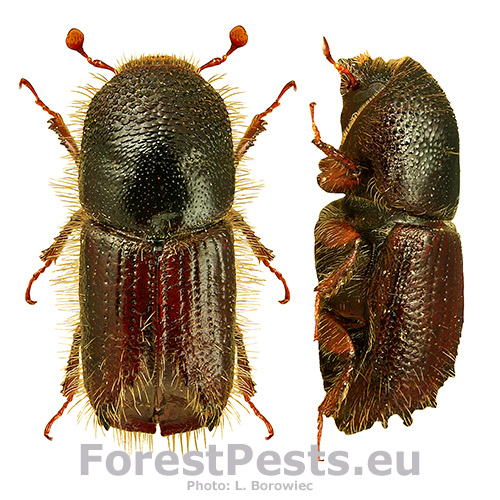
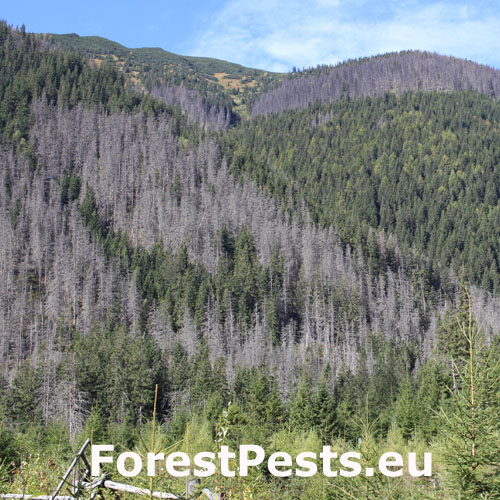
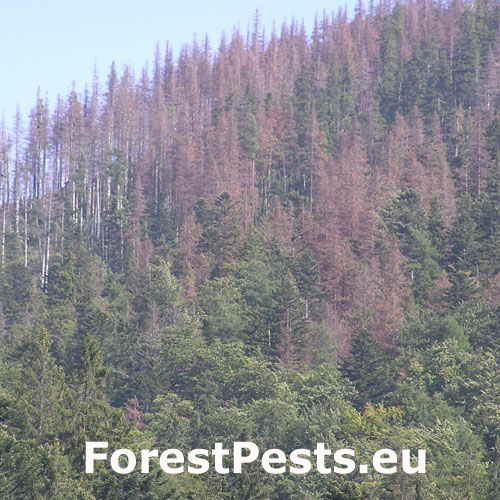
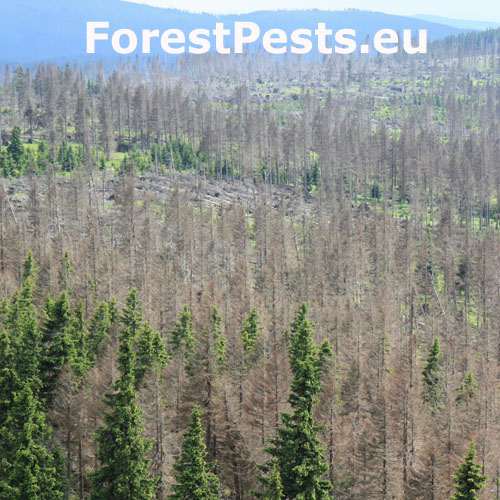

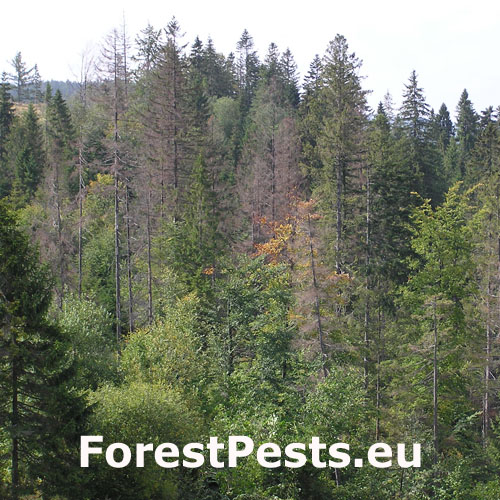
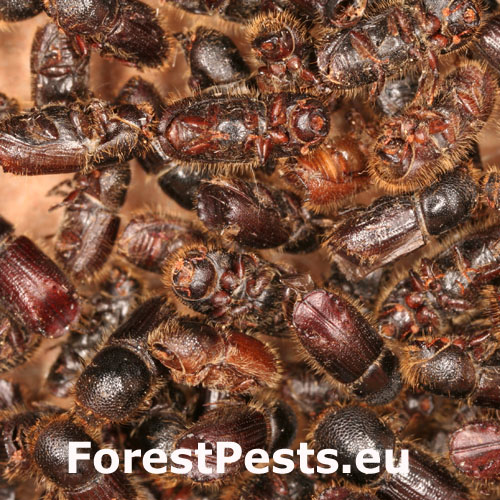
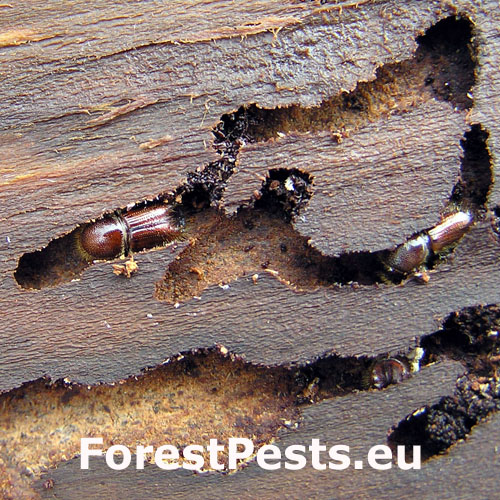
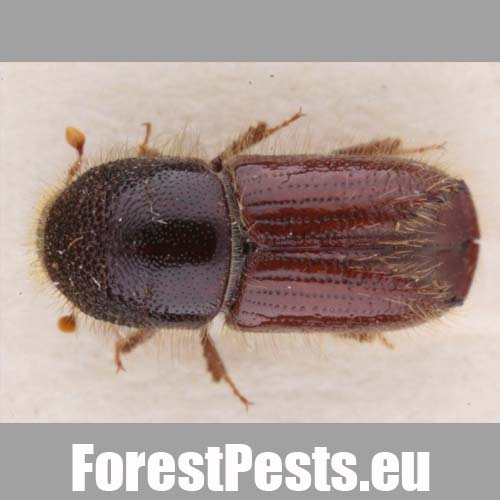
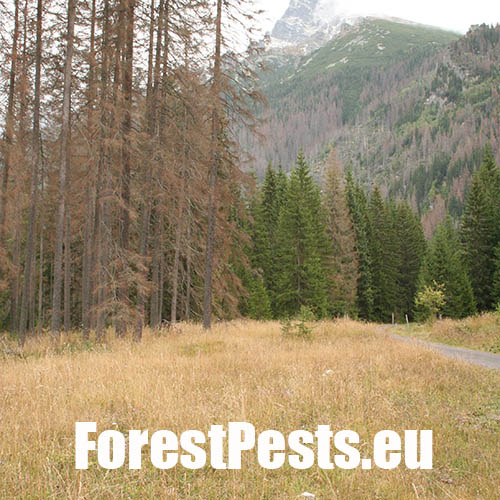
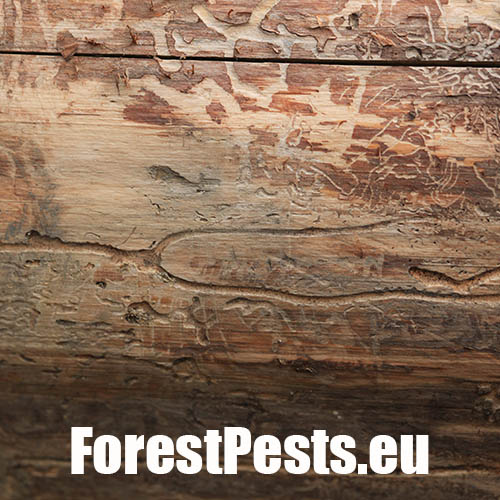
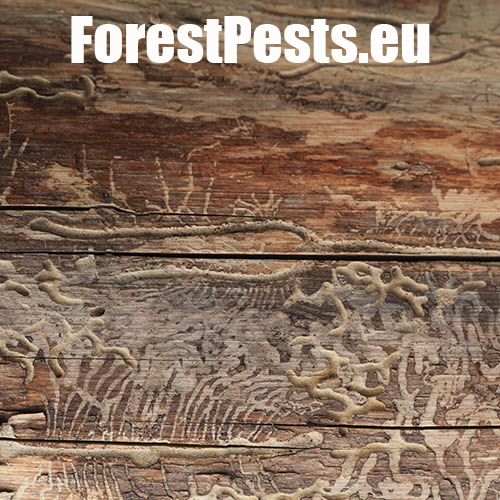

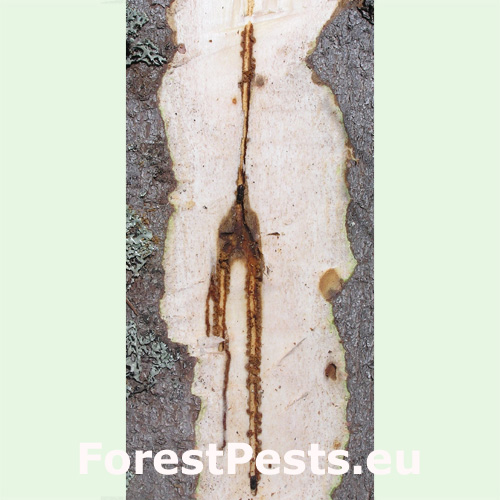
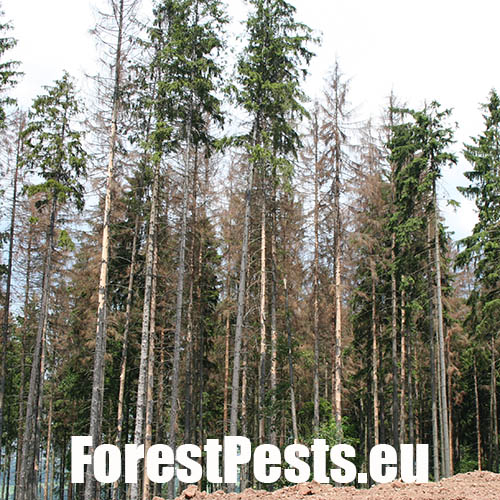
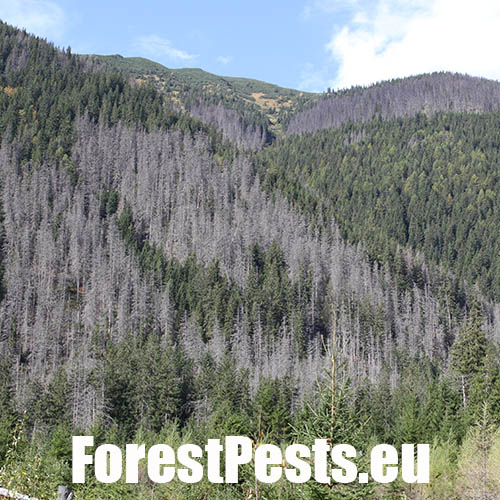
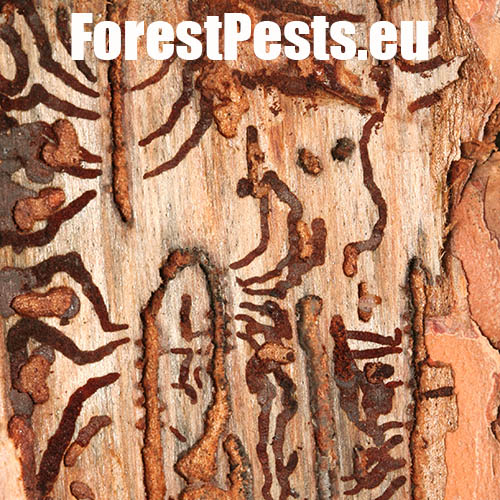
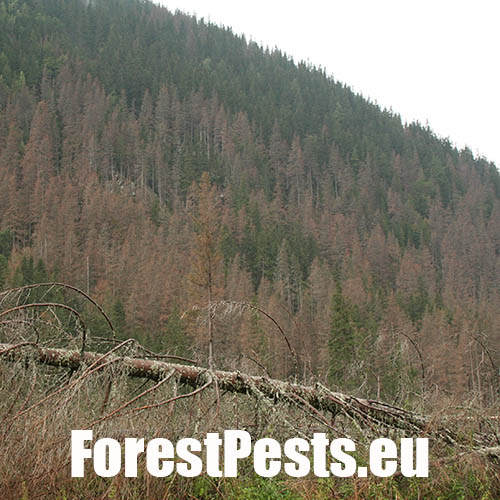
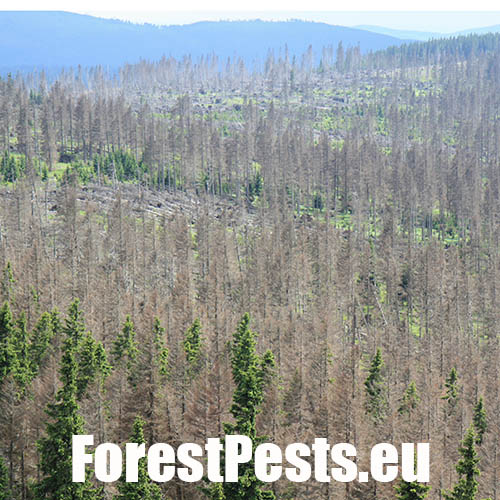
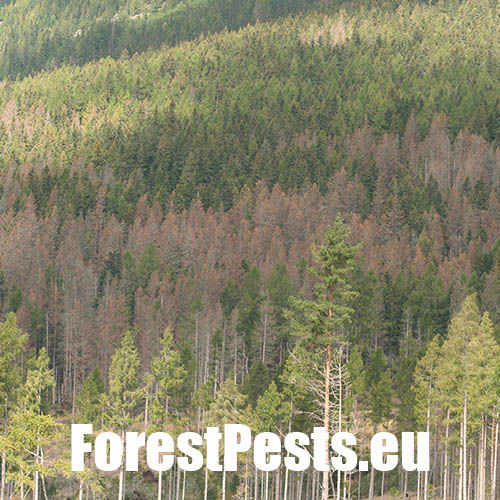
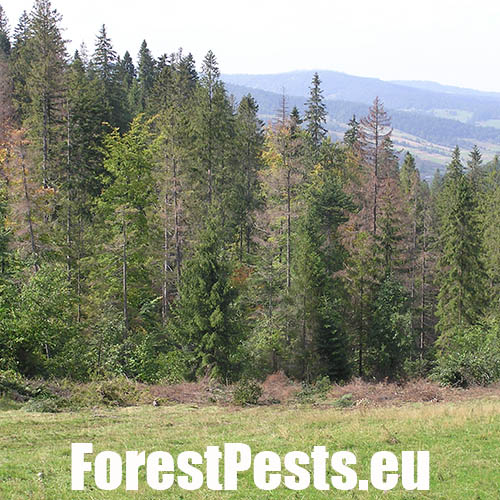
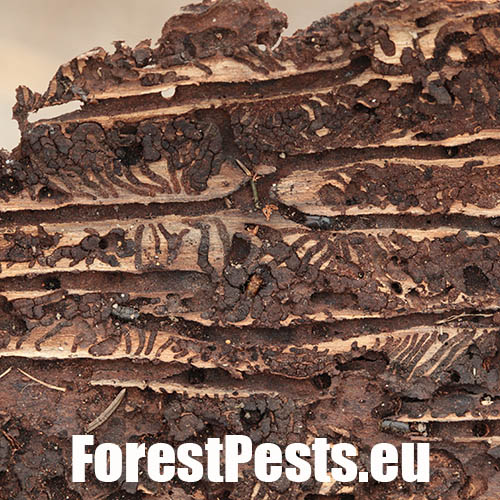
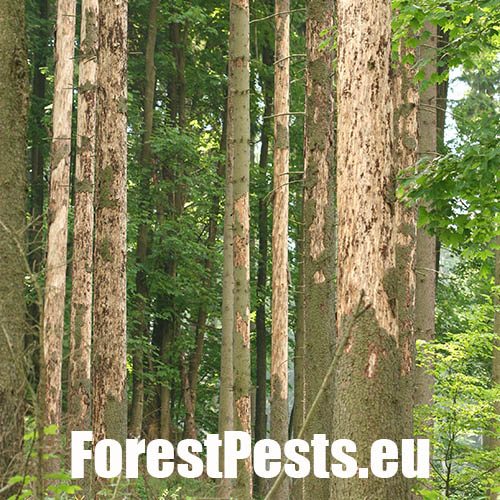
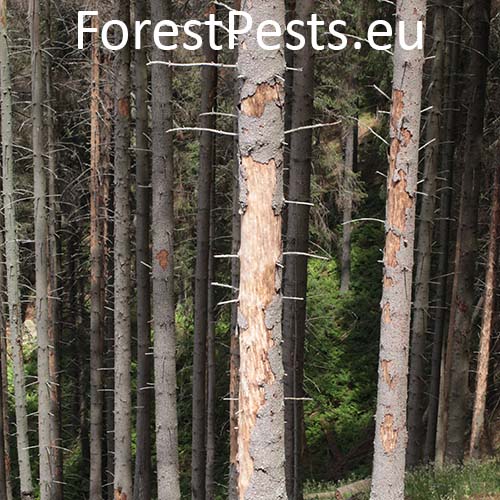
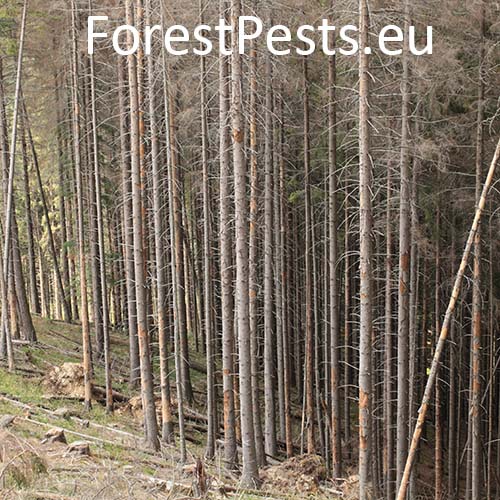
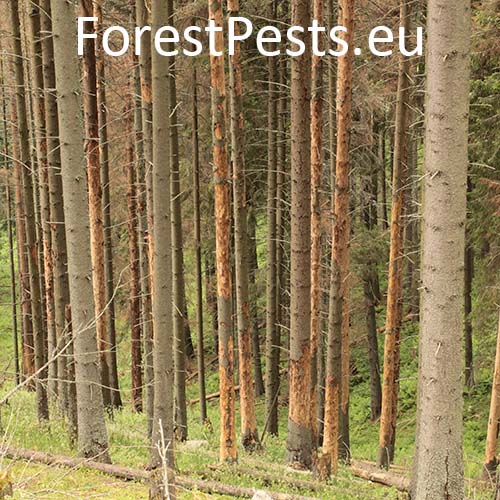
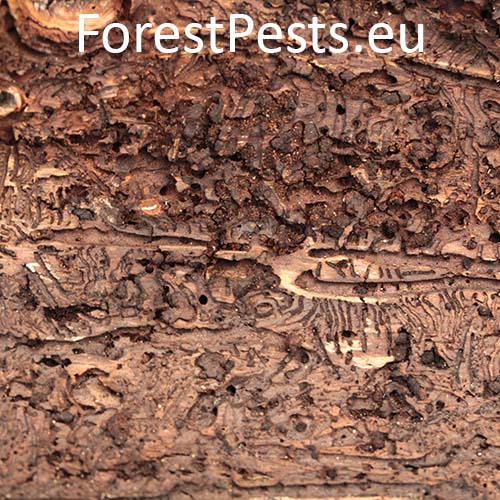
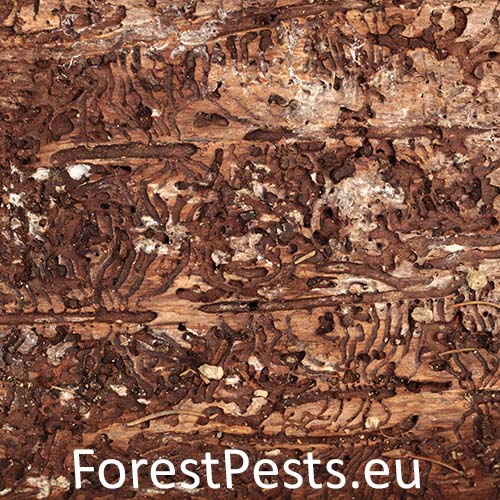
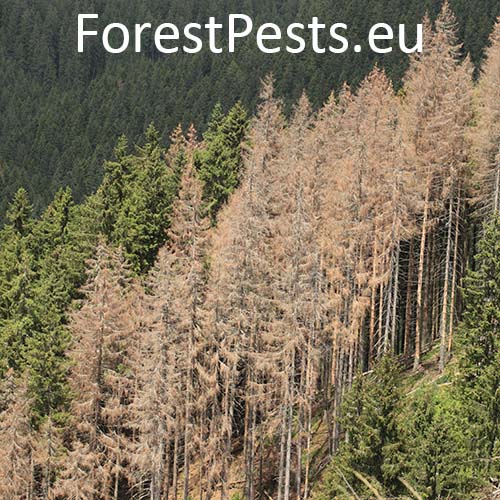
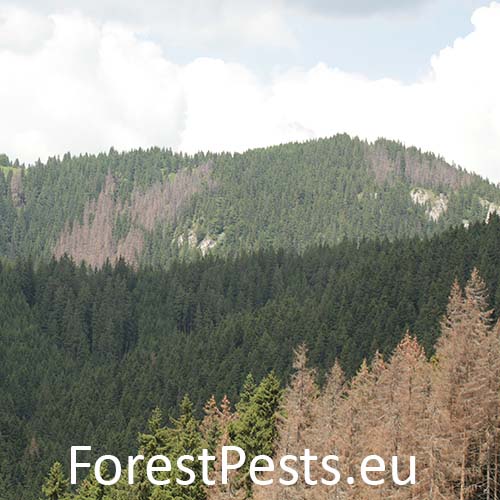
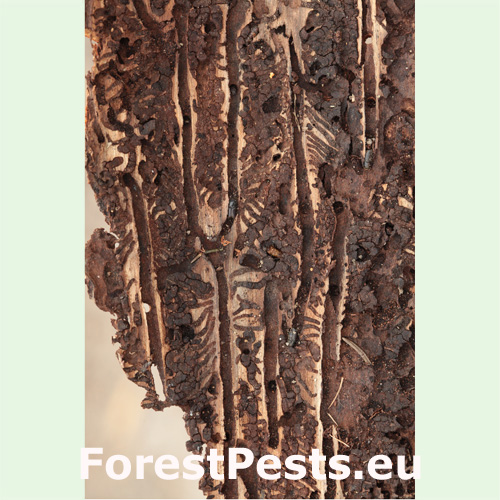
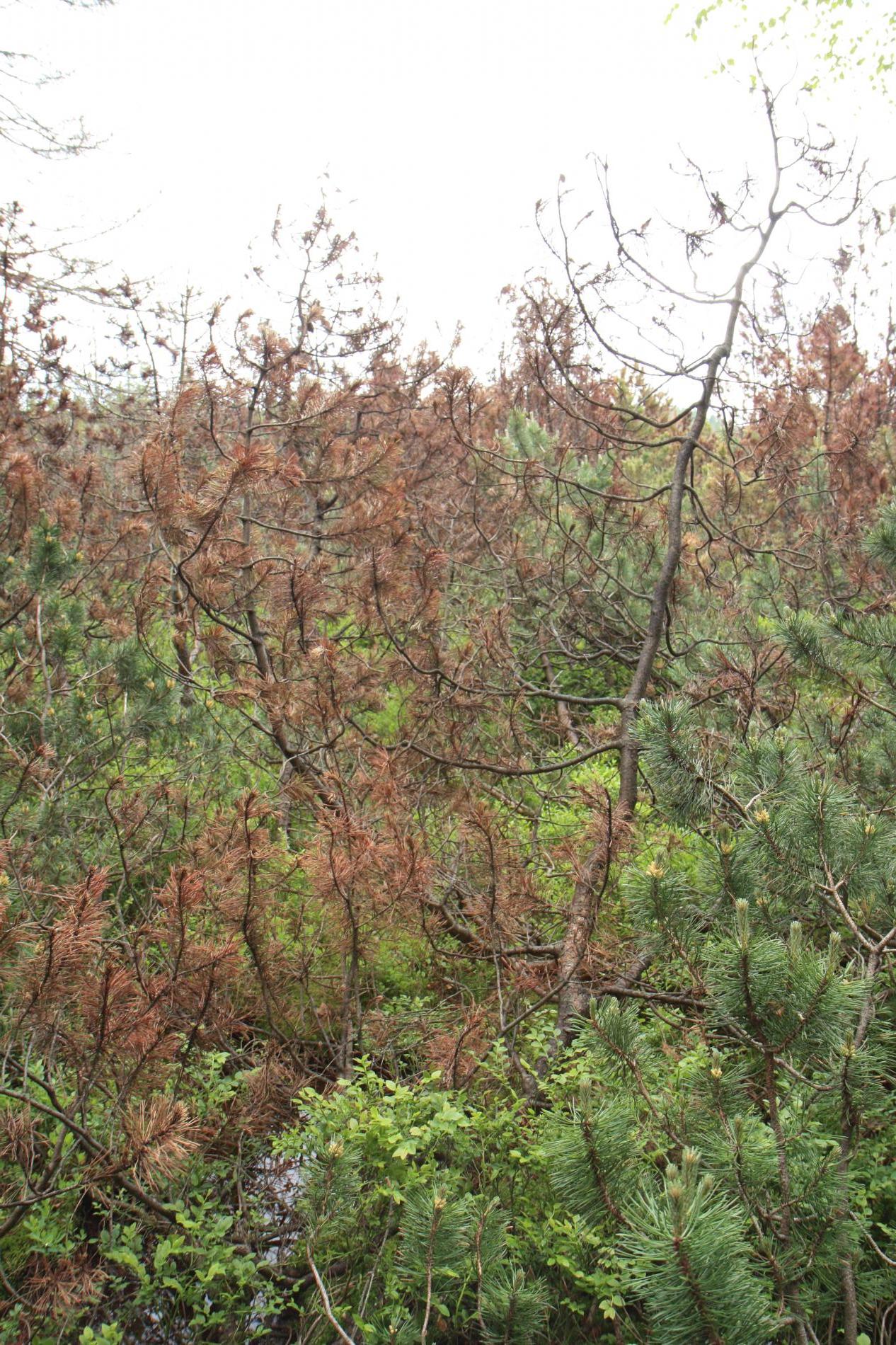
The adult has a cylindrical body of brownish black colour, 4.2–5.5 mm long. The elytra have a matte declivity at the end, with 4 spines on the edge. Adults overwinter in litter or under the bark. First, a male bores under bark. It is followed by 2–3 females boring a 6–12 cm long maternal gallery in the phloem parallel with the trunk axis. The hatched larvae mine their feeding tunnels at a right angle to the egg gallery. It has one, two, or three generations per year. Most at risk are spruce stands aged 60 plus, affected by wind and snowbreak damage or weakened by drought. The beetles damage spruce canopies also with their adult feeding, mining antler-shaped galleries in the phloem. It infests mainly lower and middle parts of stems. It is one of the most serious pests of Norway spruce in Europe.
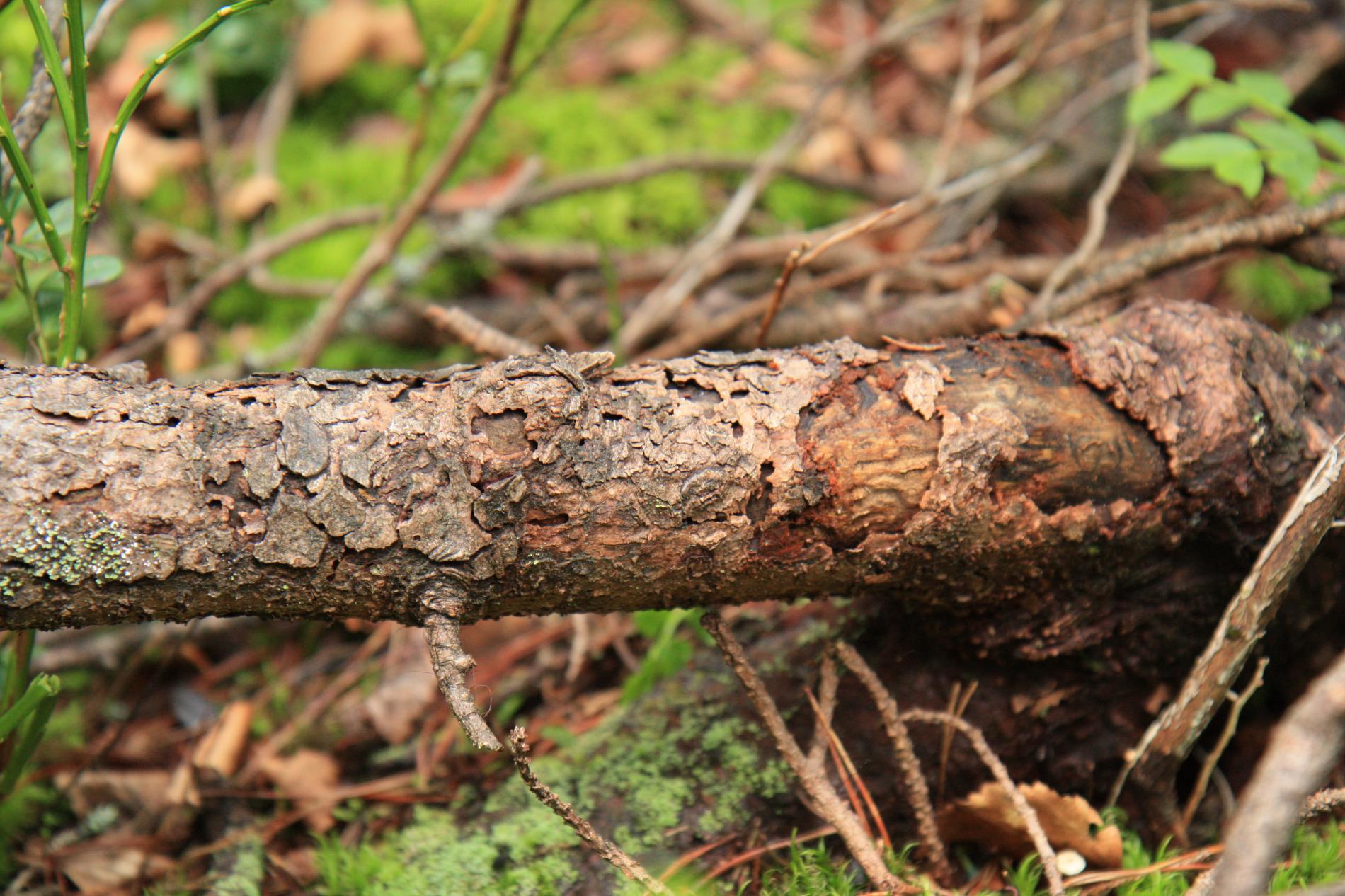
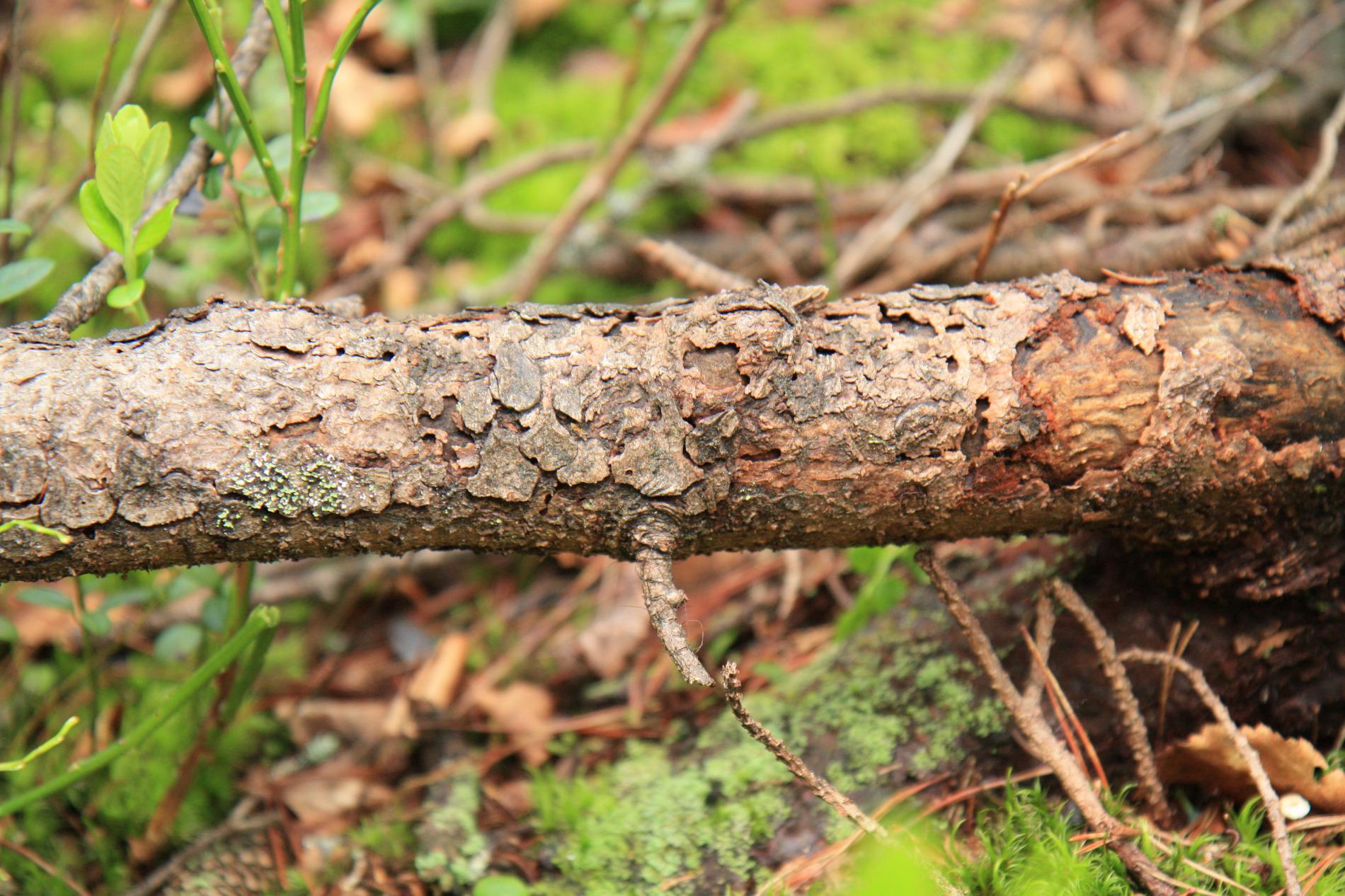
6–12 cm long maternal gallery in the phloem parallel with the trunk axis. Attacked trees are easy to recognize by brown dust coming out of the bark and concentrating at the basal parts of stems.
Tree Species: Spruce
Part of a plant- attacked: Tree trunk
Pest significance: Very harmful
Pest Category: Insects
Invasive Species: No
Present in EU: Yes
Pest group: Insect
Affected part of wood: Bark, Underbark area
Depth of damages: Under bark only
The extent of damage: Lokally
Prevalence in Europe: Very common
Damaged products: Stored timber logs (dried wood)
Roundwood size: Diameter 50+, Diameter from 10 up to 50 cm
Wood discoloration: No
Exit holes: Round
Pest subcategory: Bark and underbark insect
Similar pests

Ips amitinus

Ips acuminatus
