


Ips cembrae
Large larch bark beetle
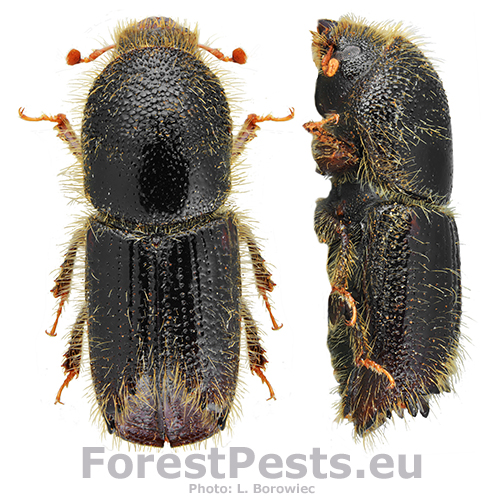
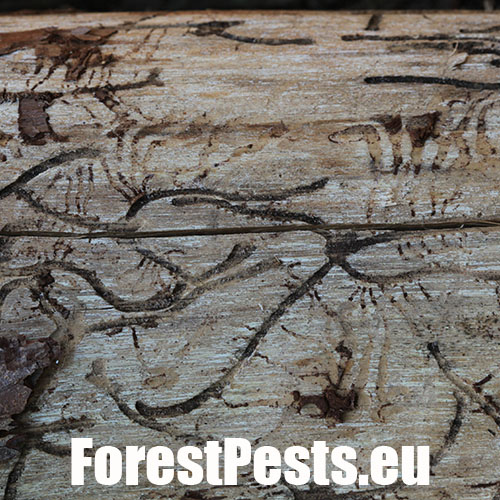
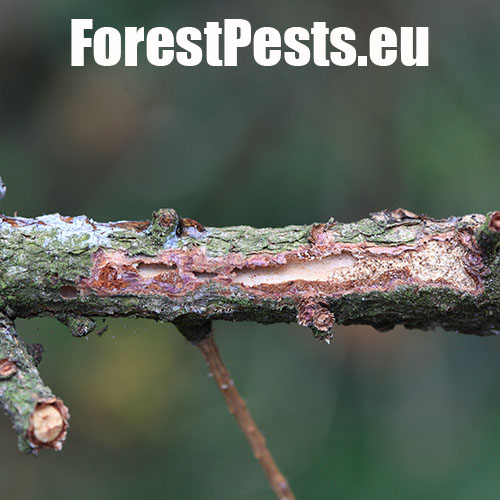
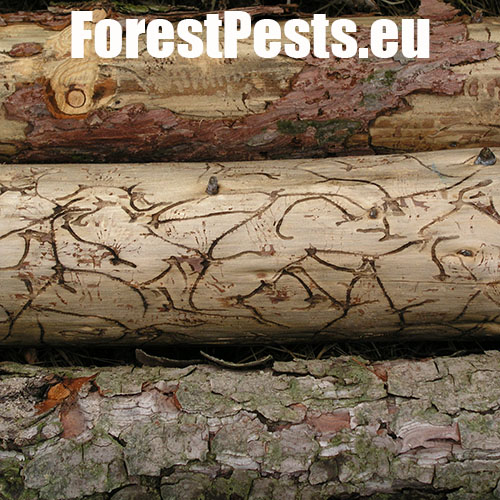
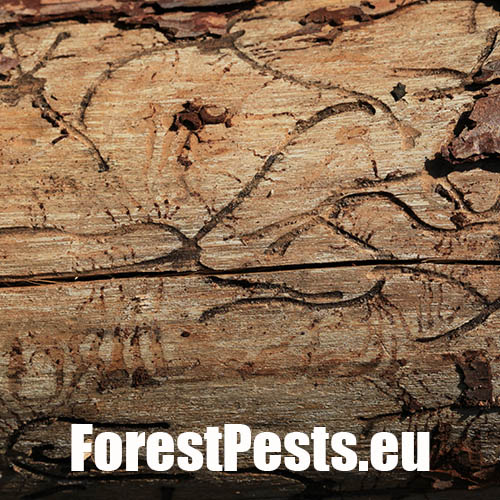
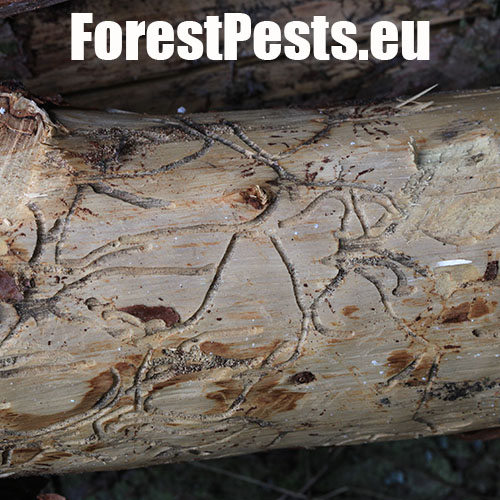
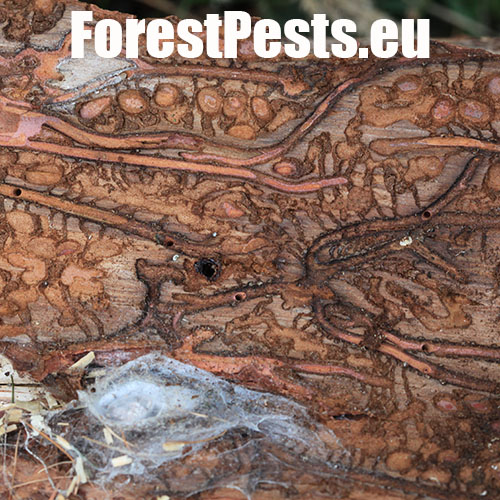
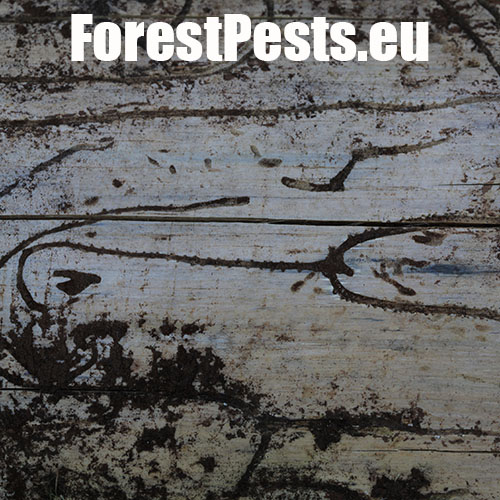
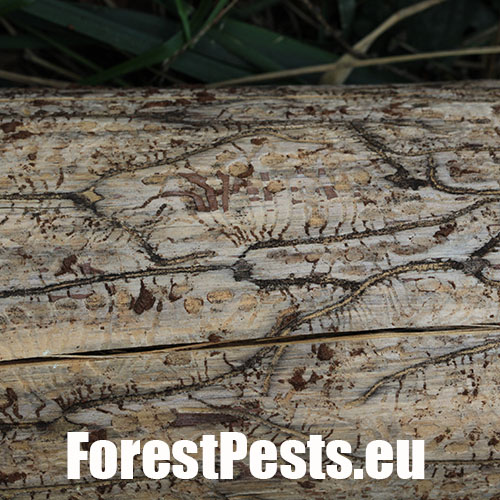
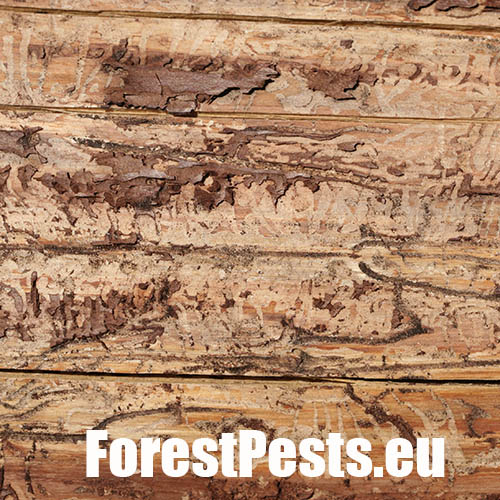
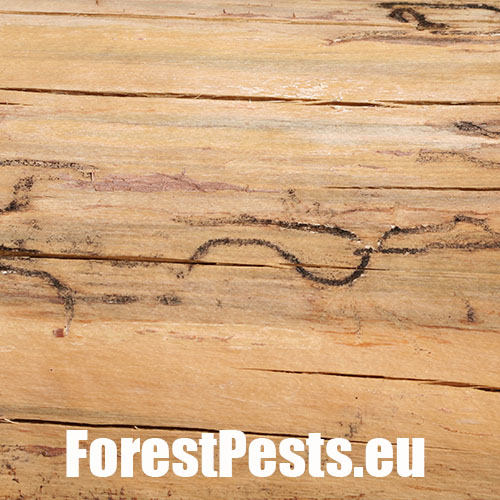
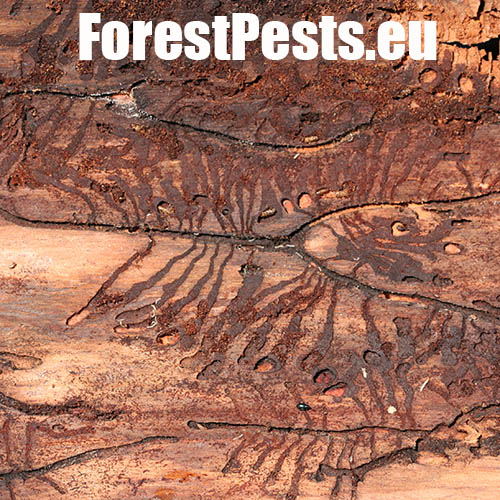
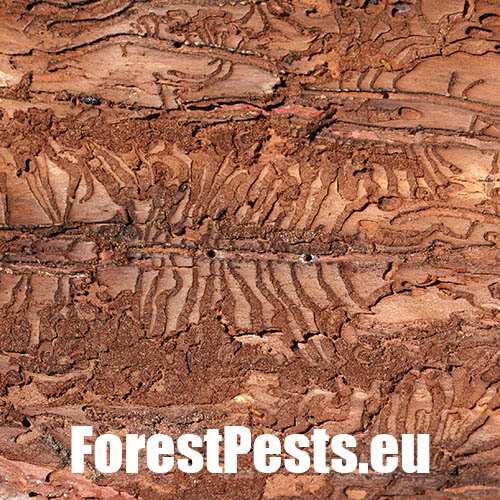
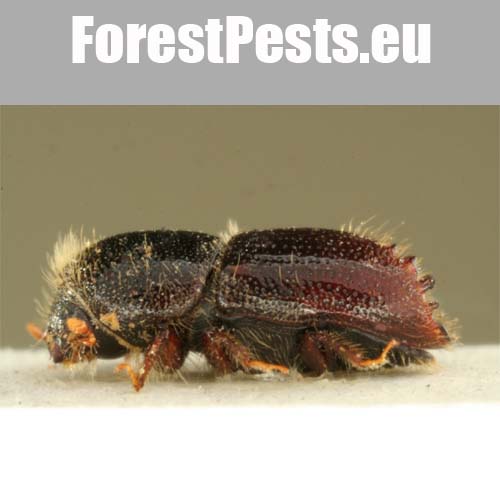
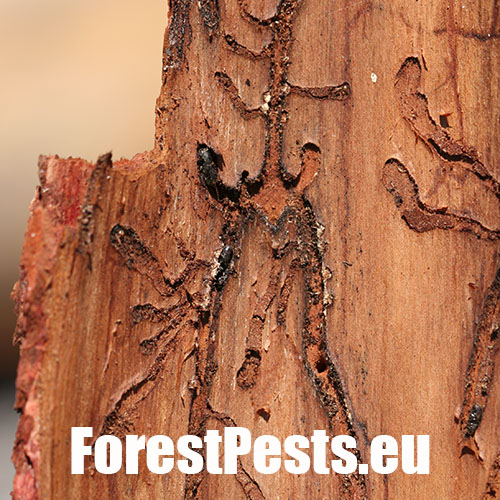
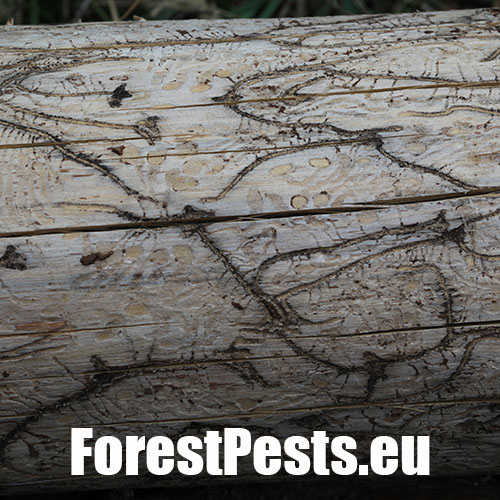
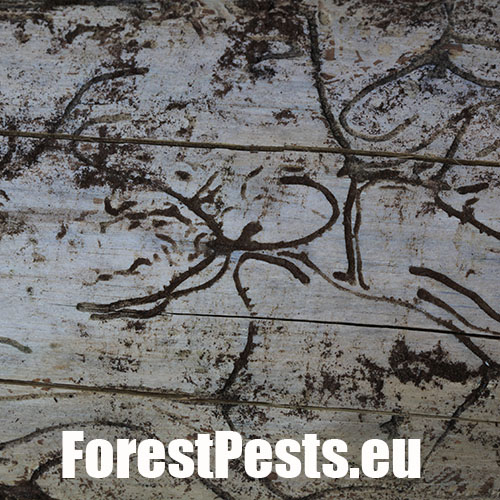
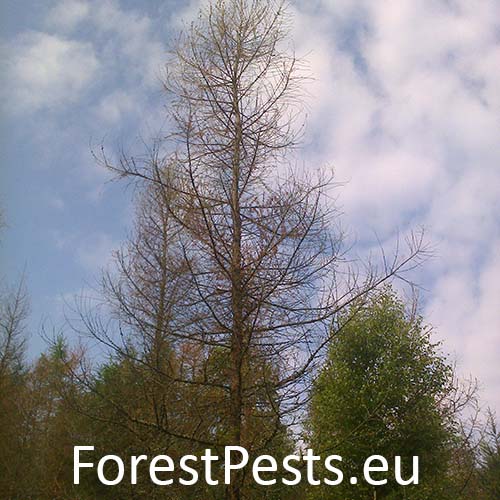
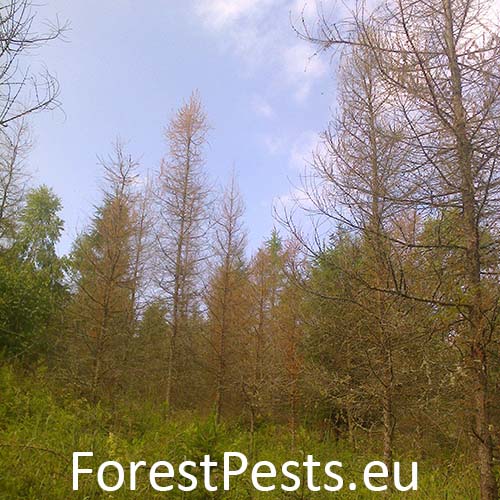
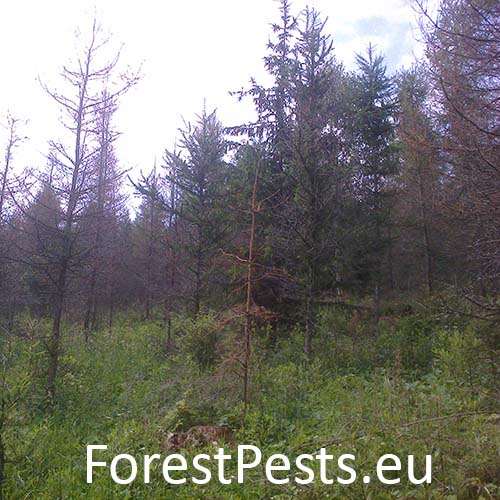
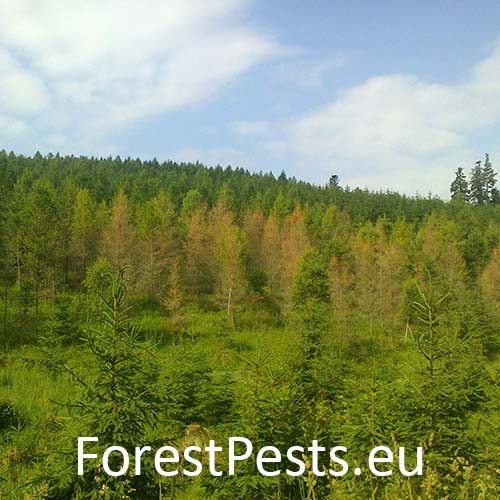
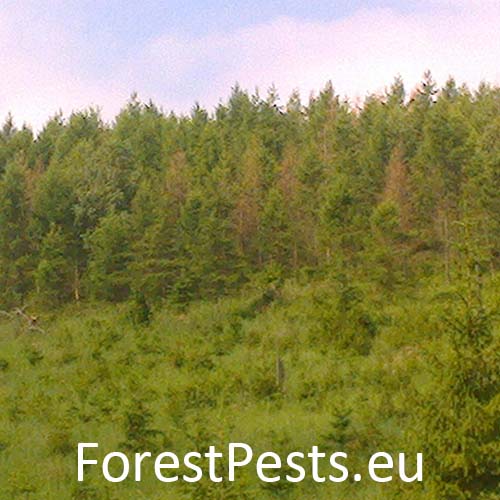
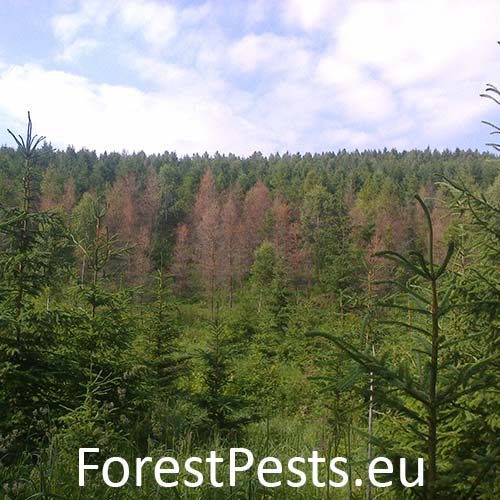
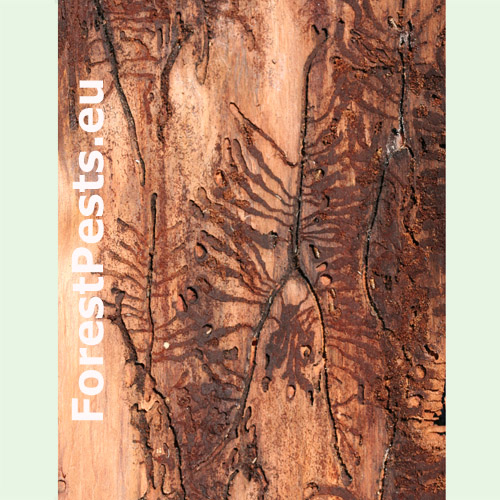
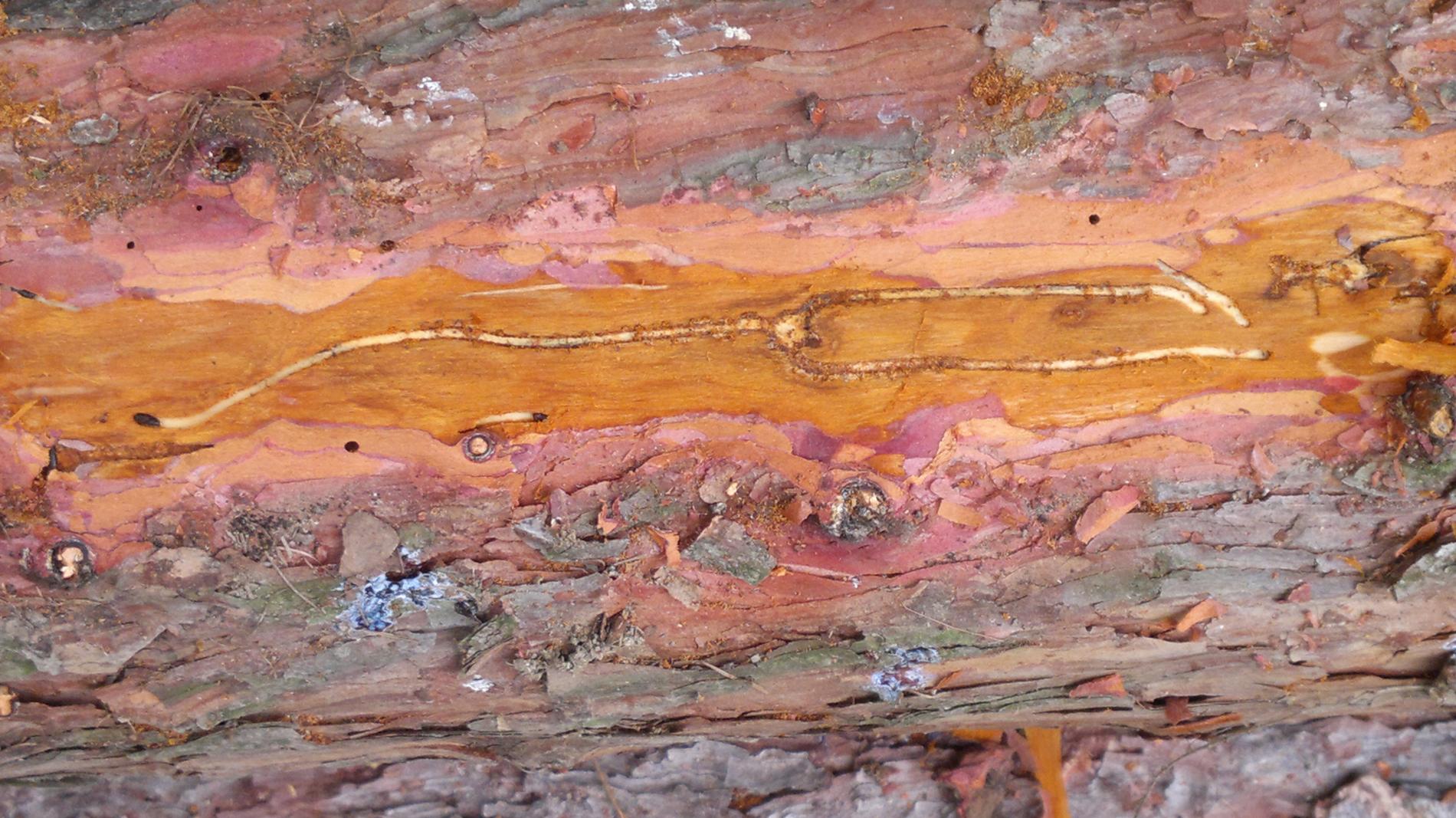
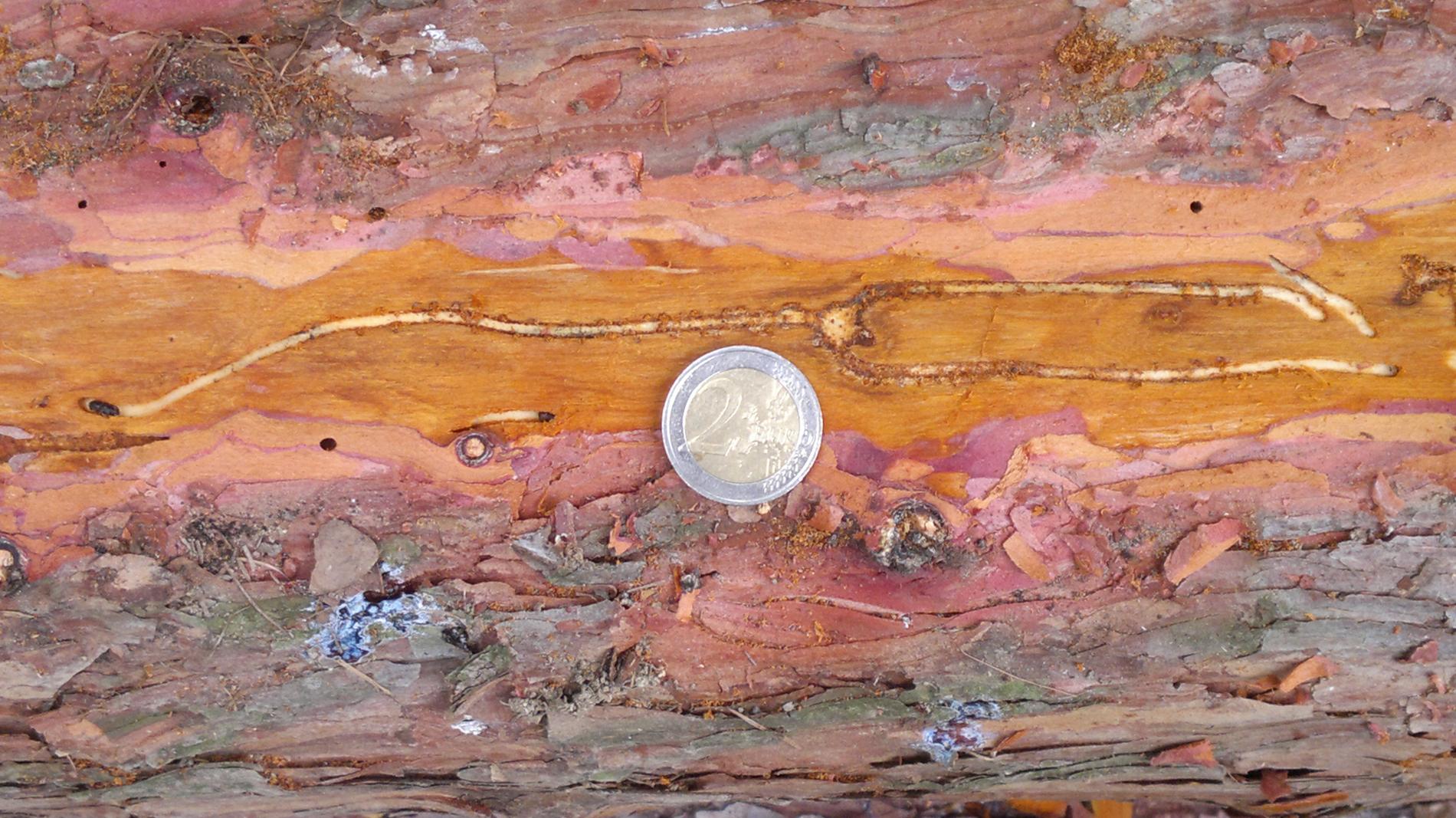
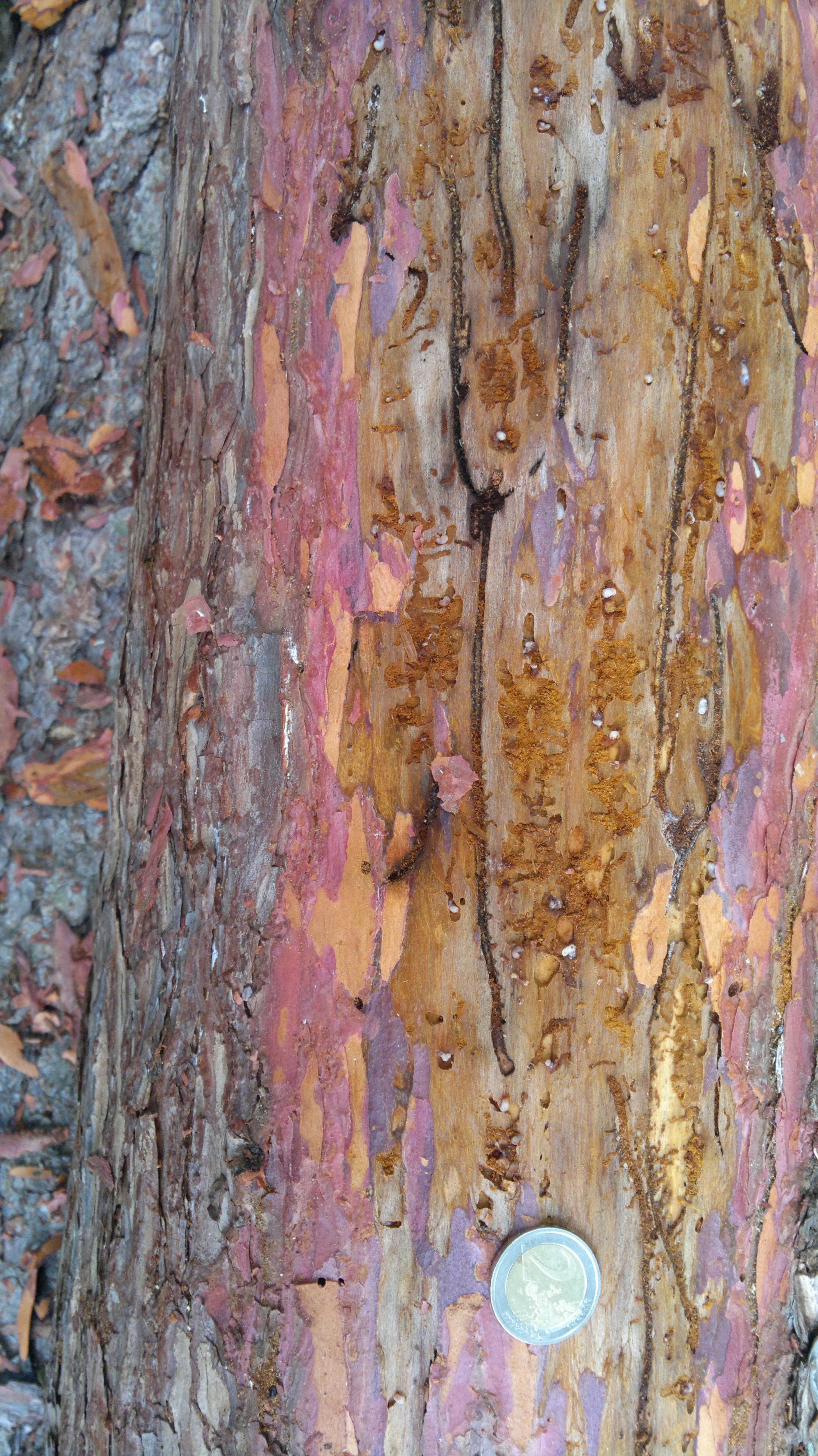
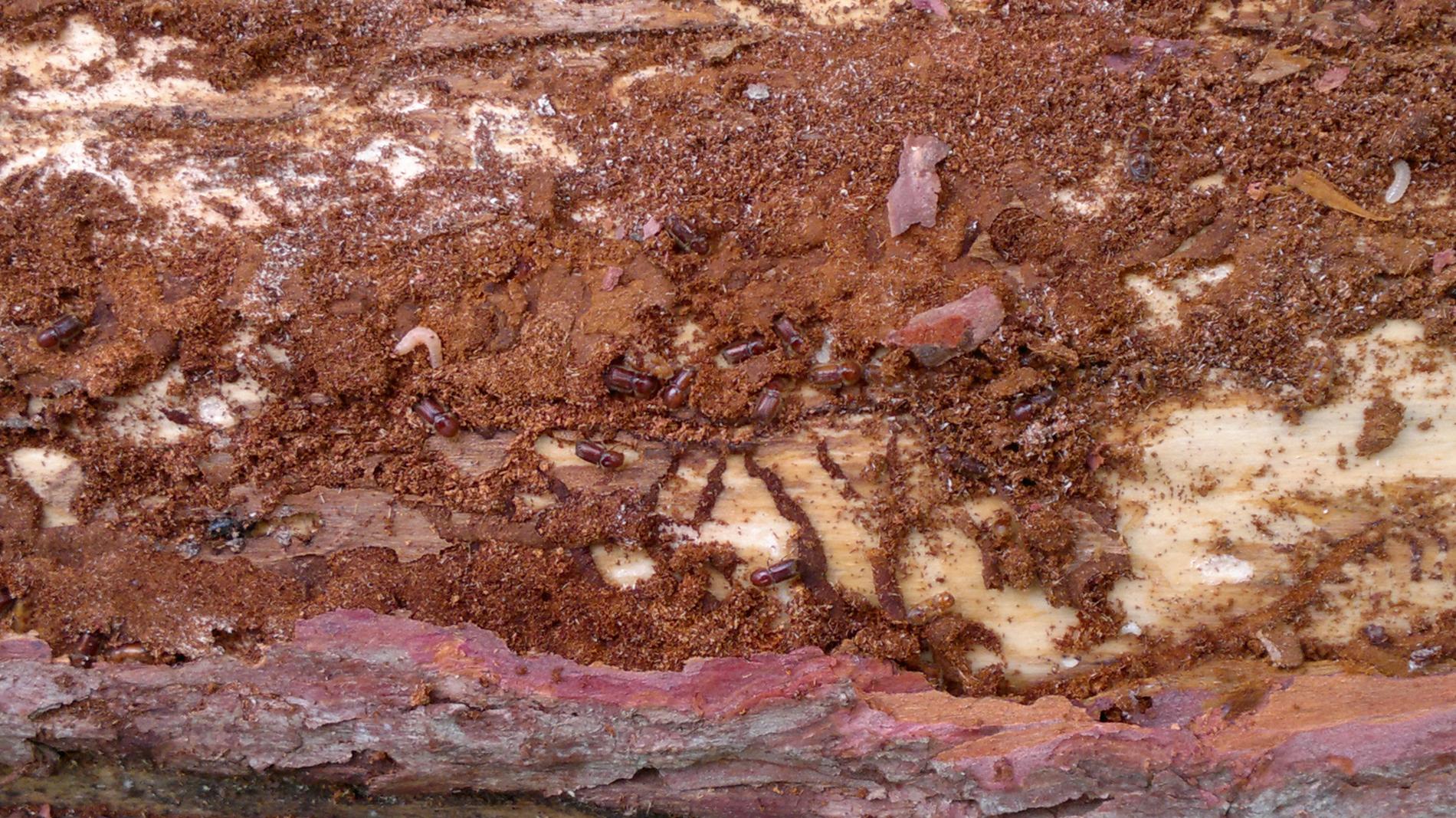
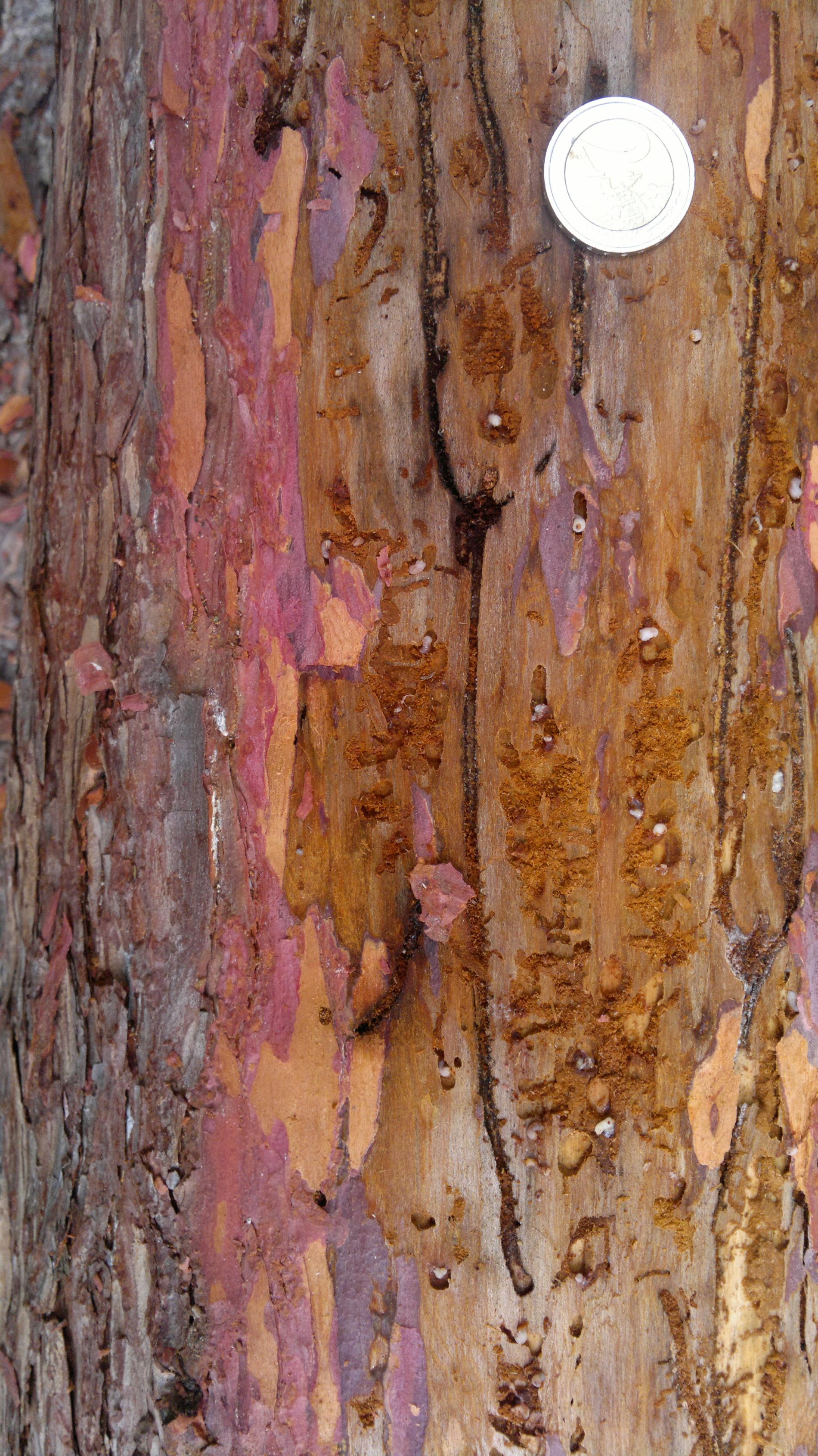
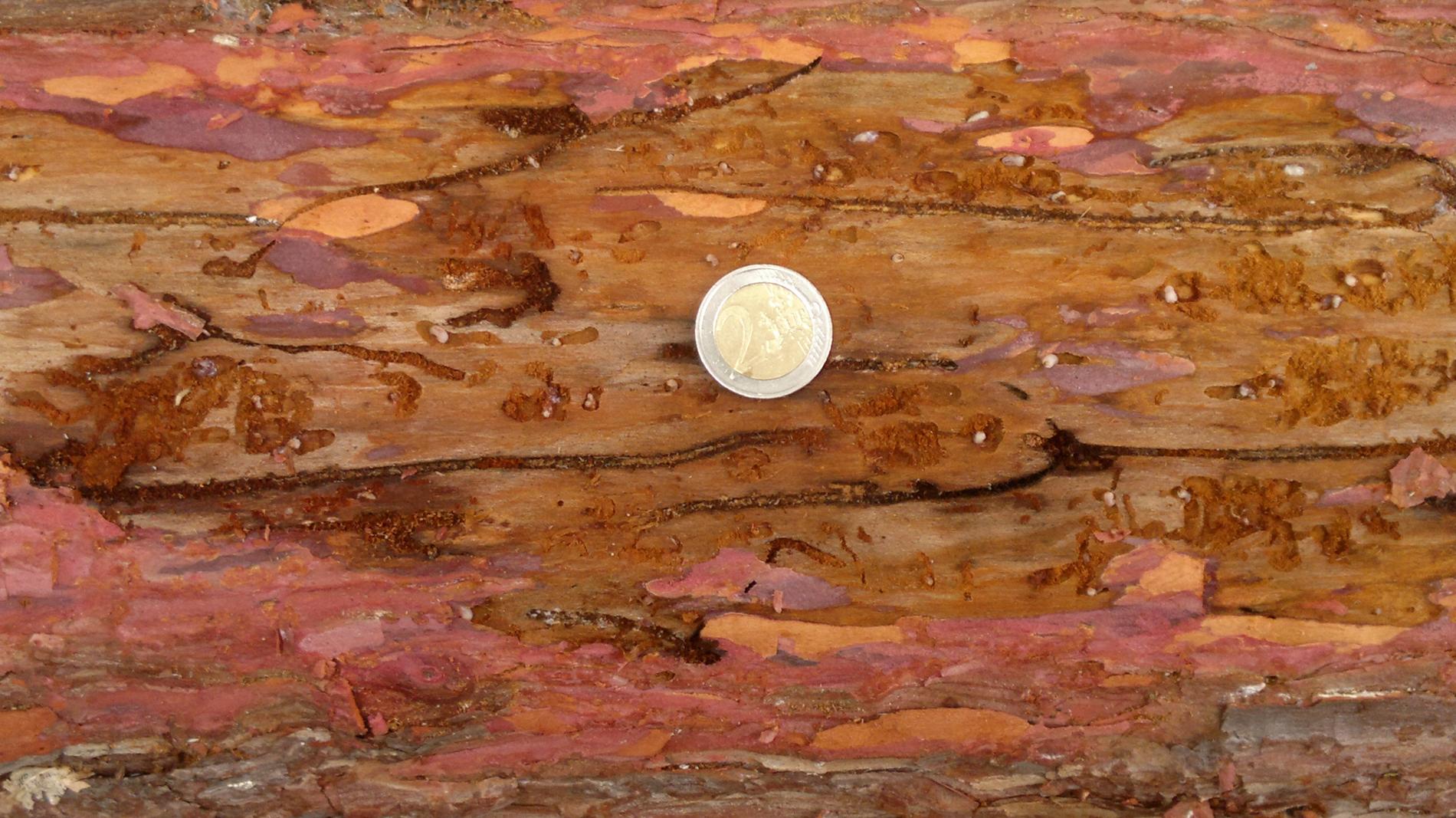
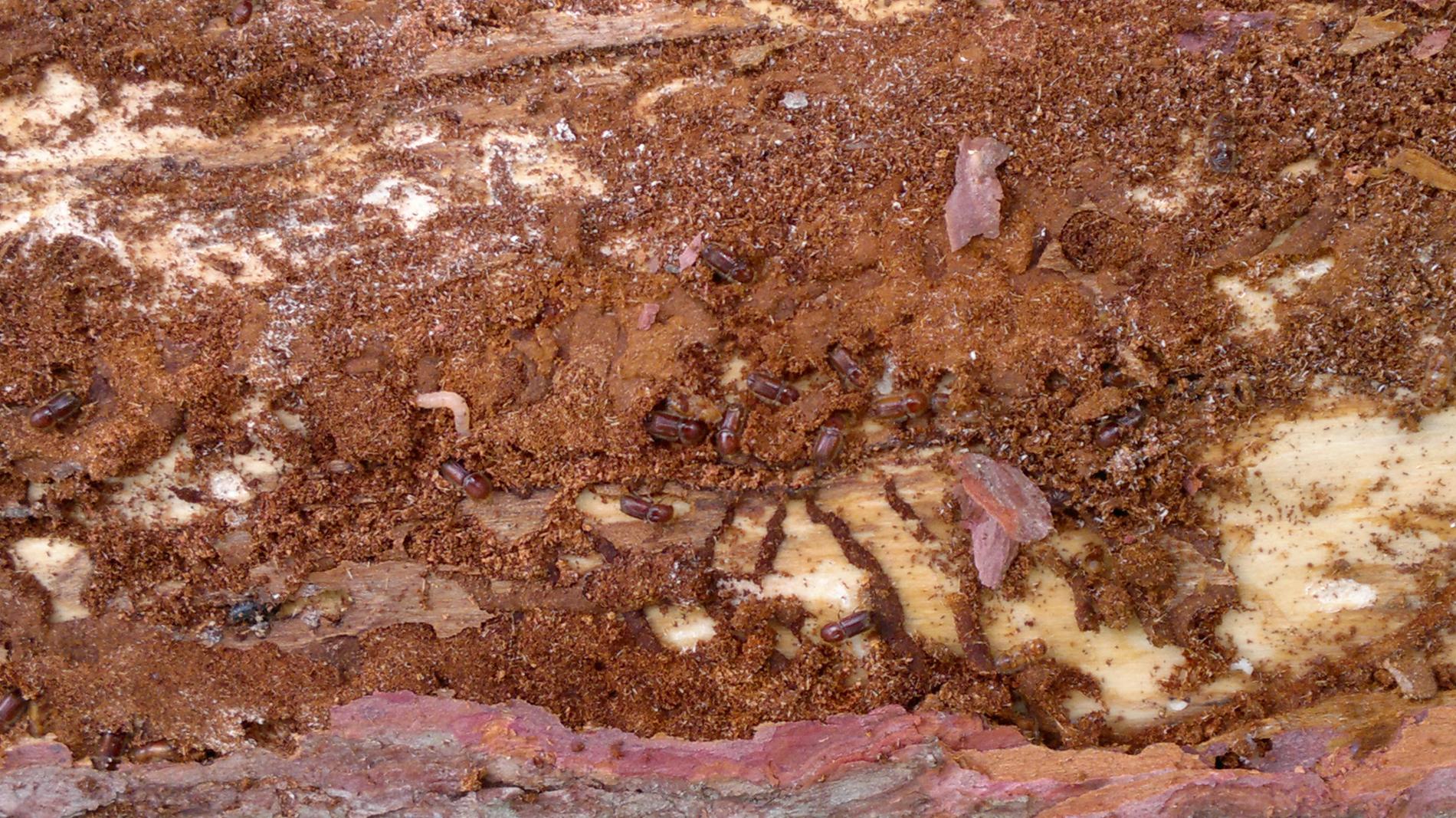
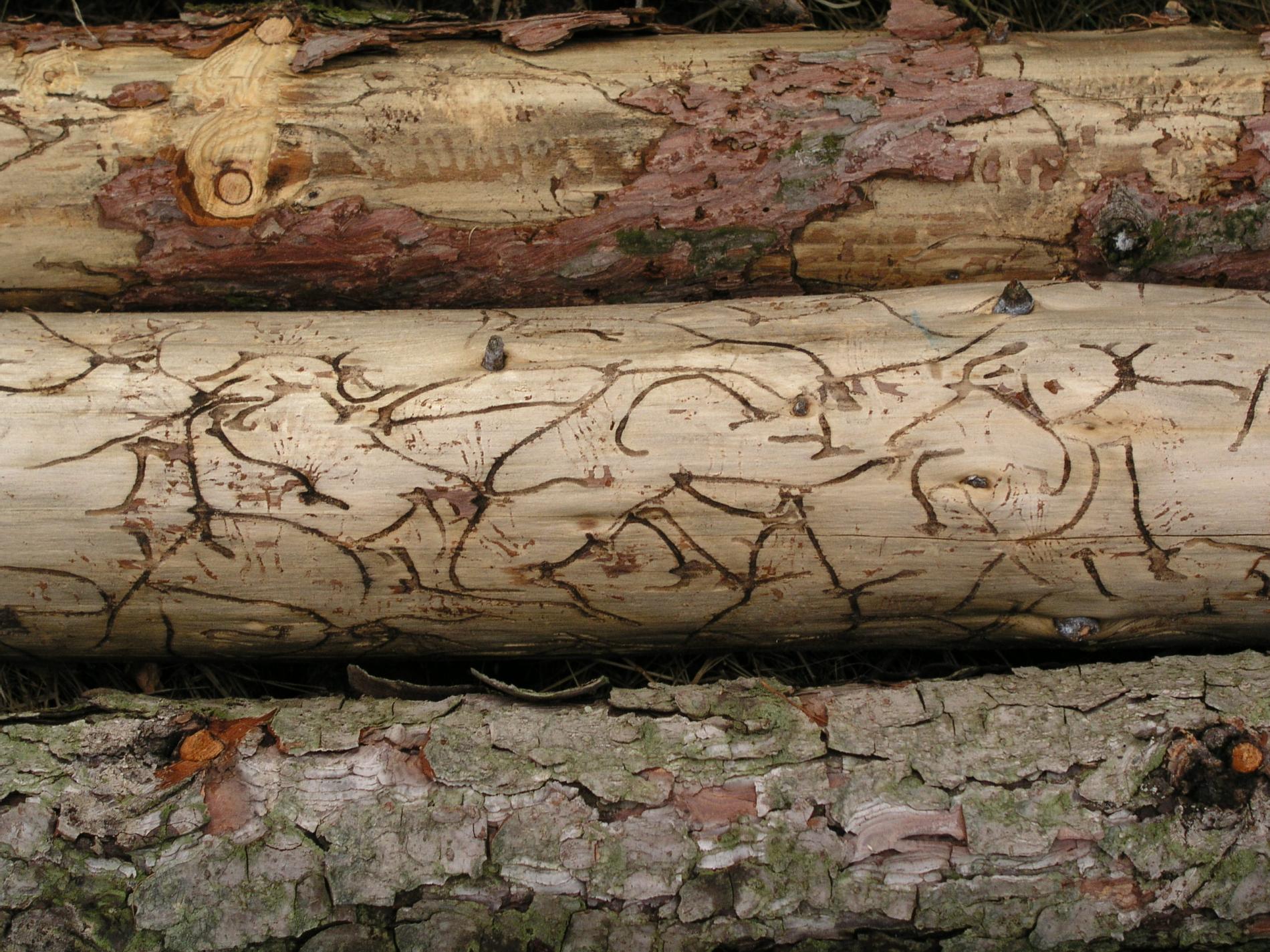
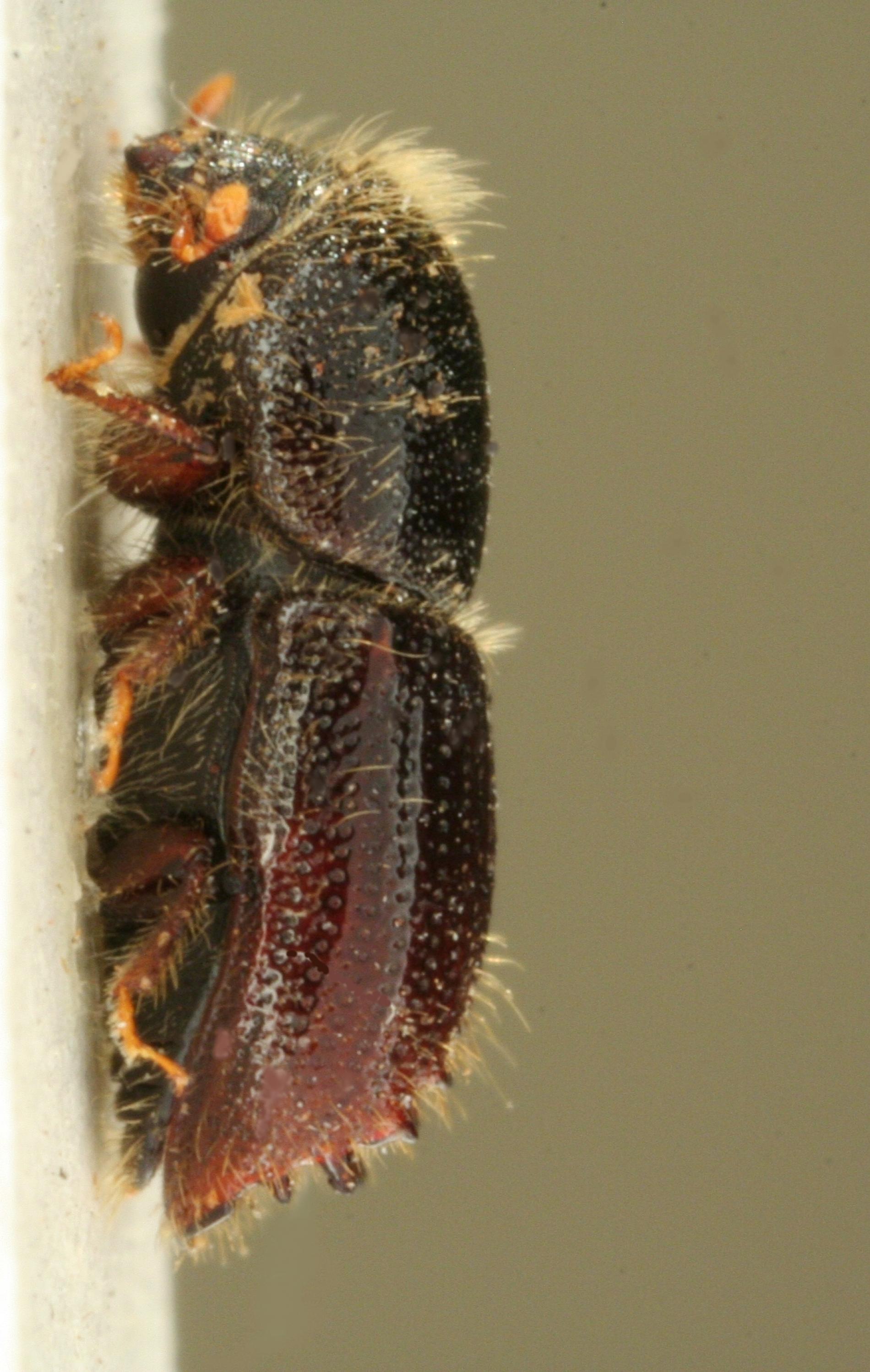
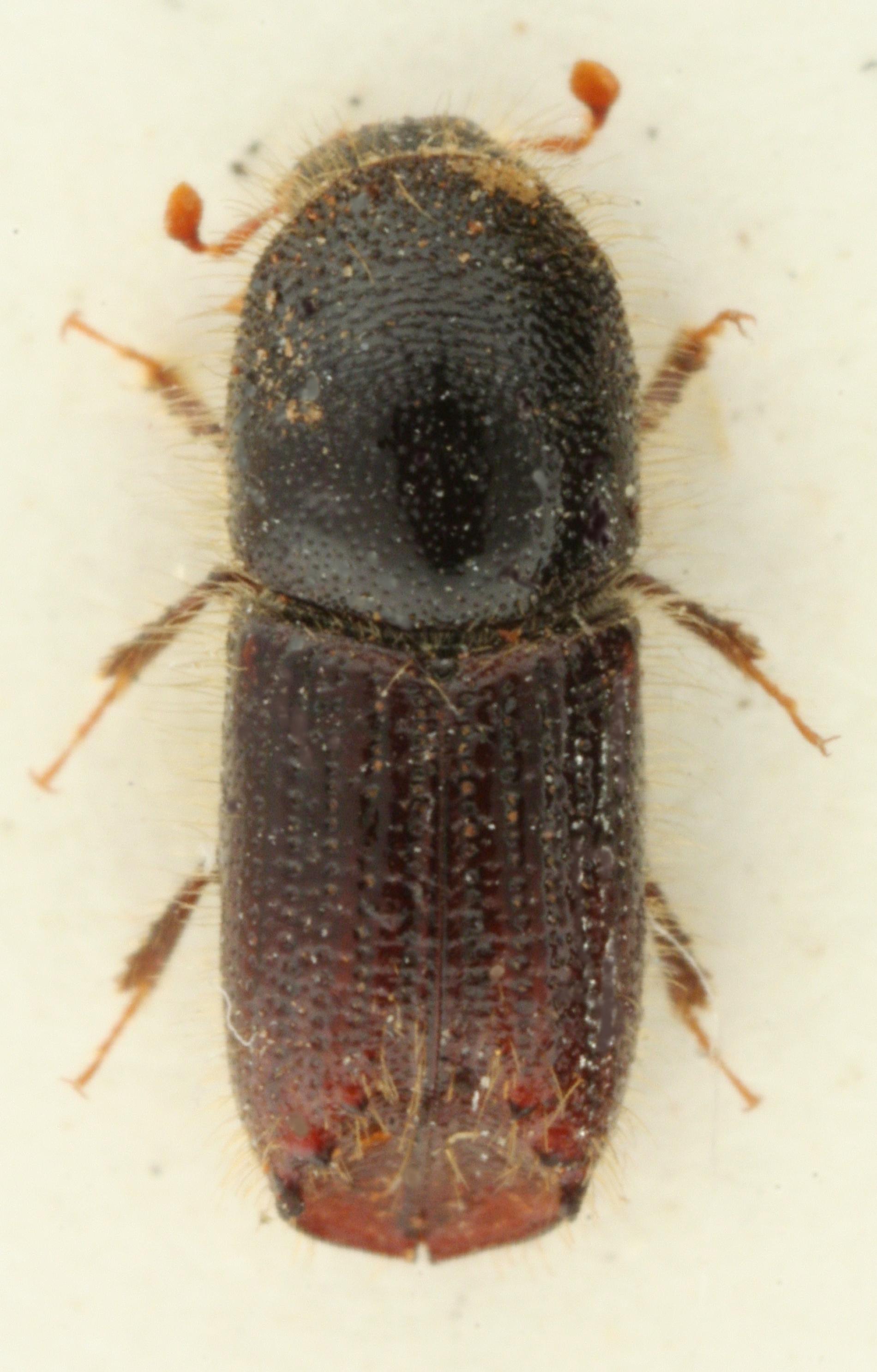
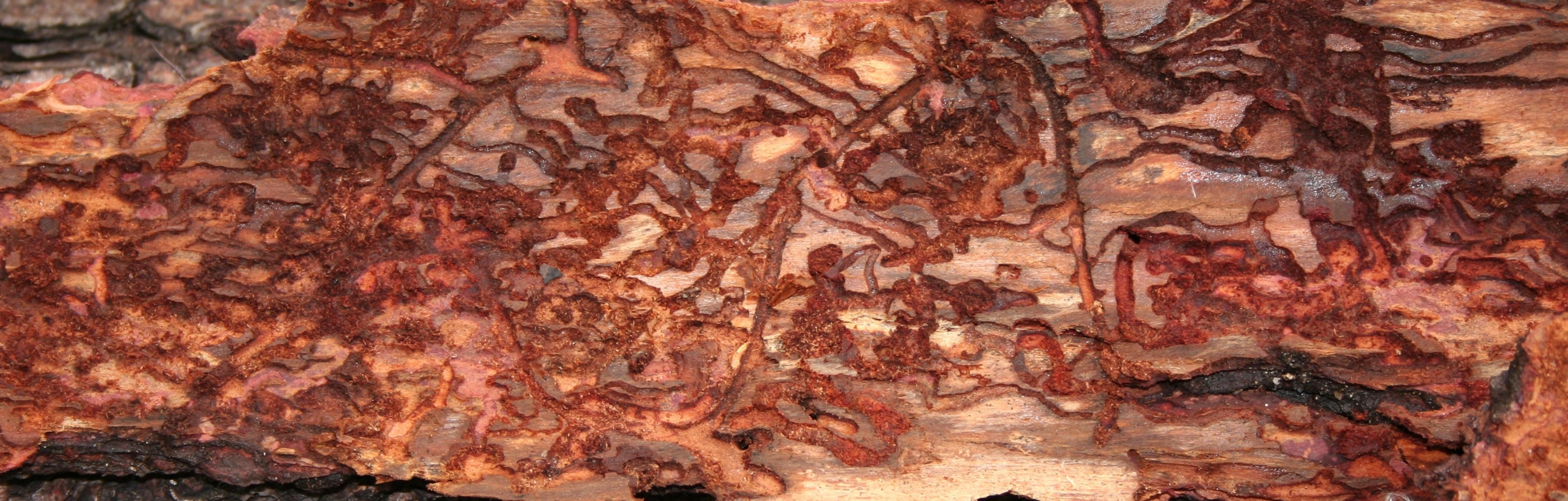
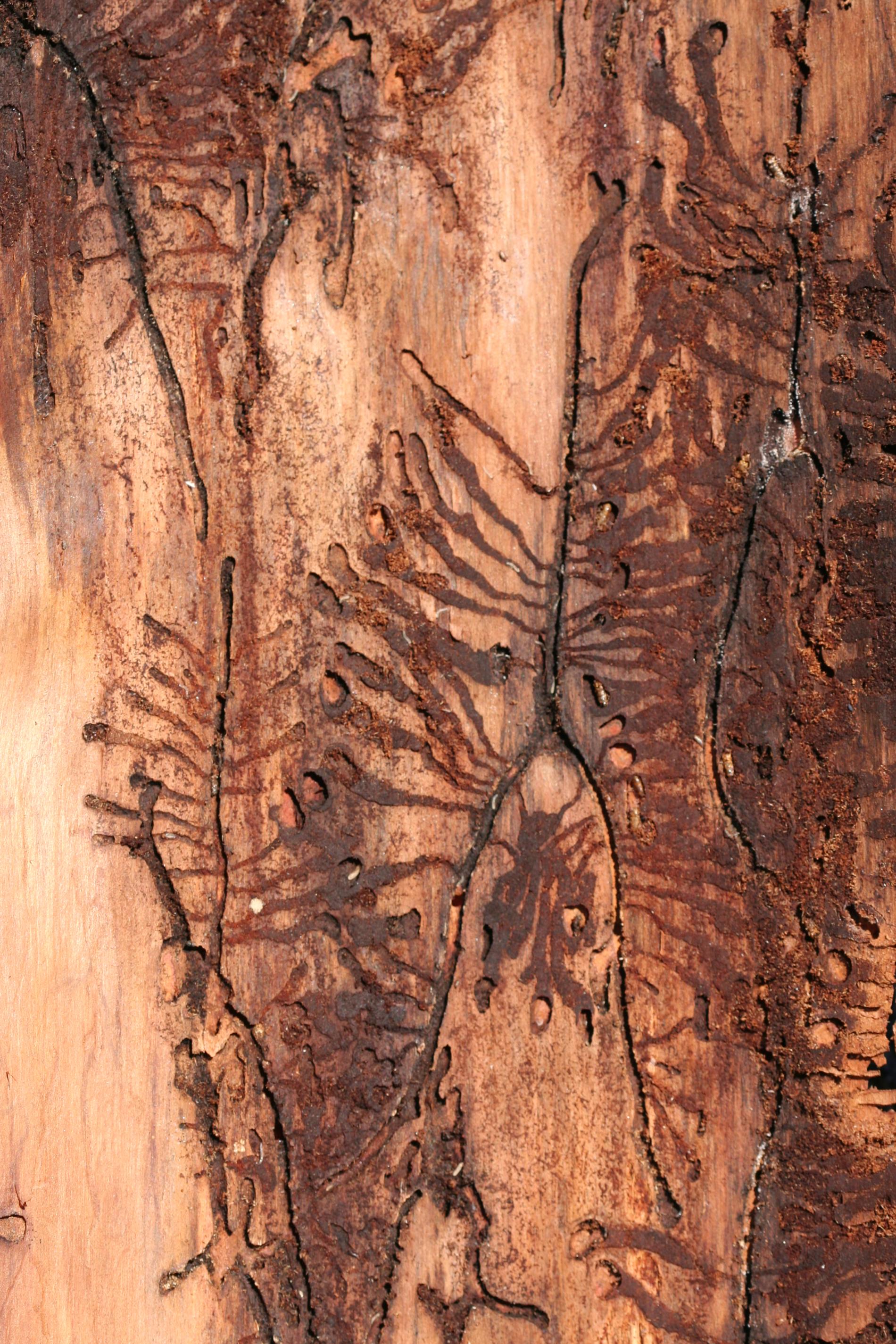
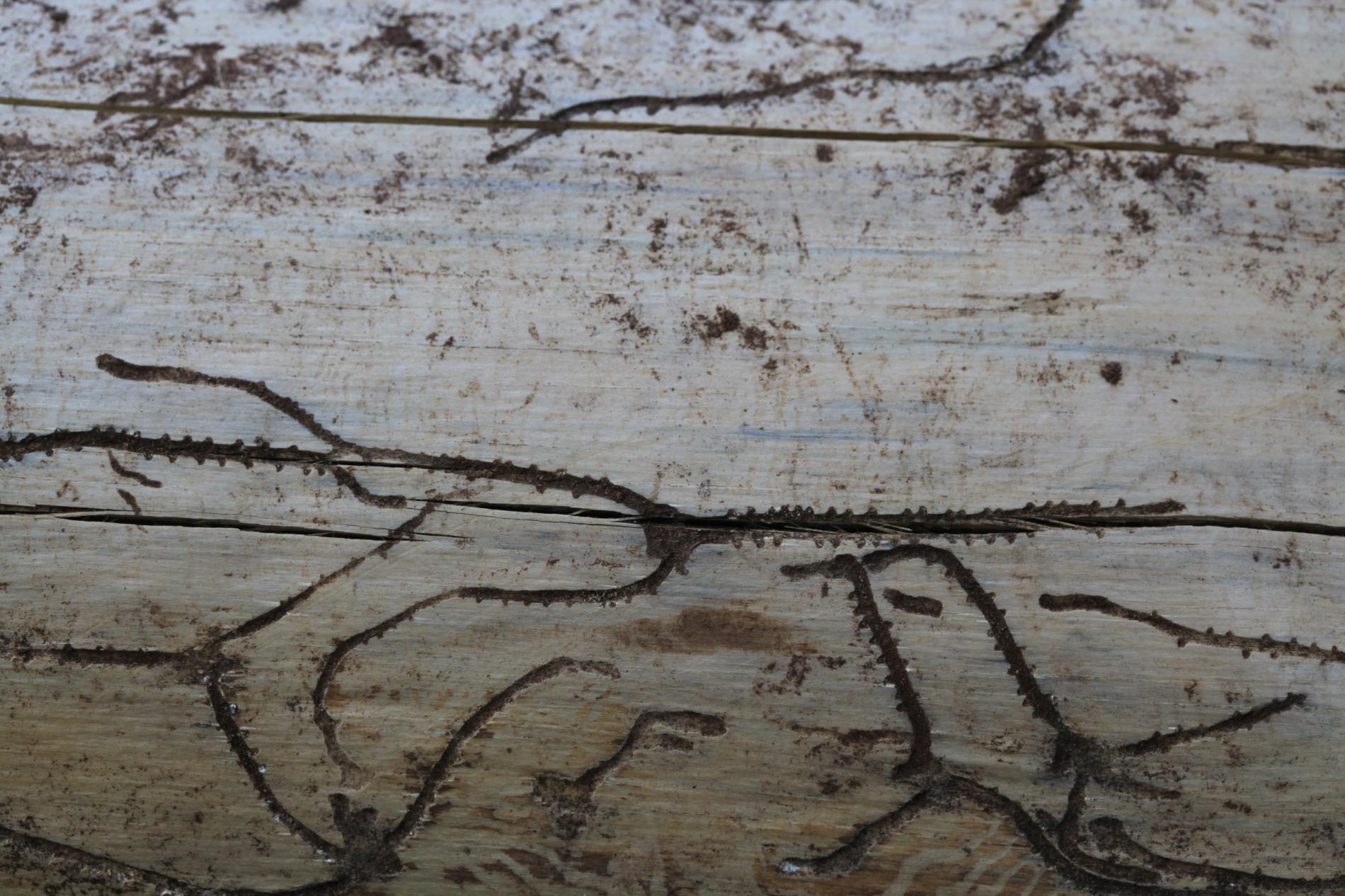
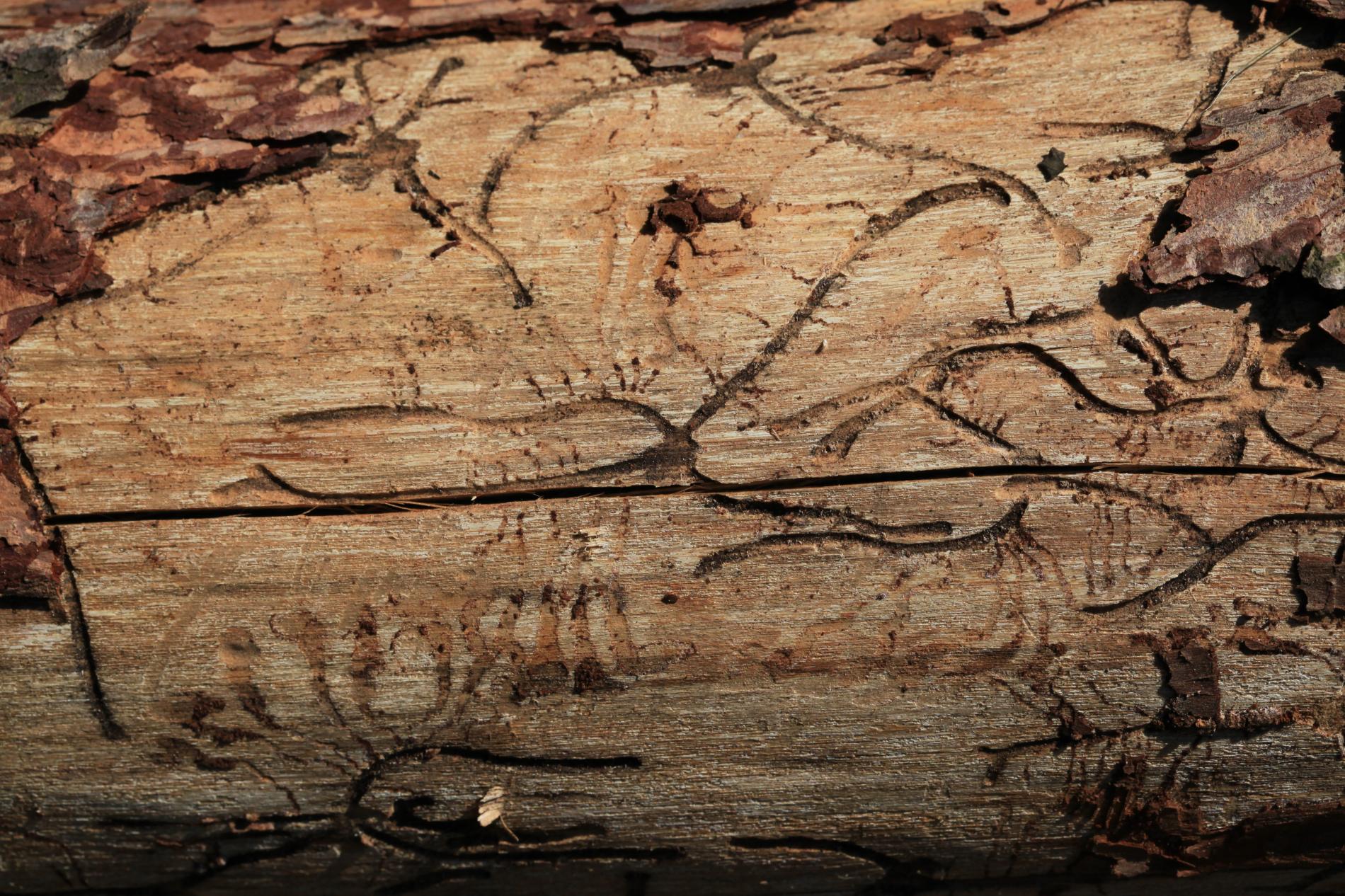
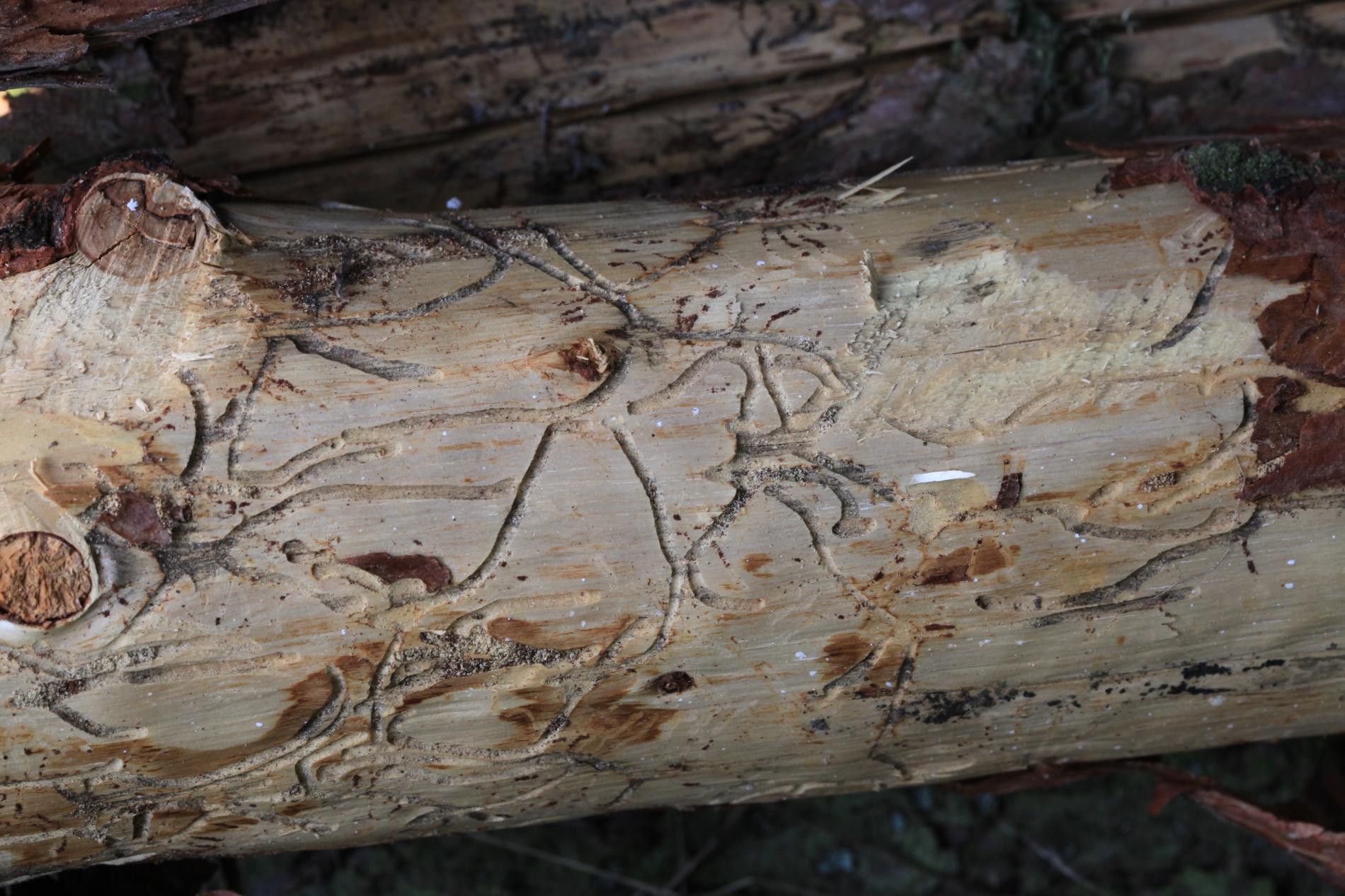
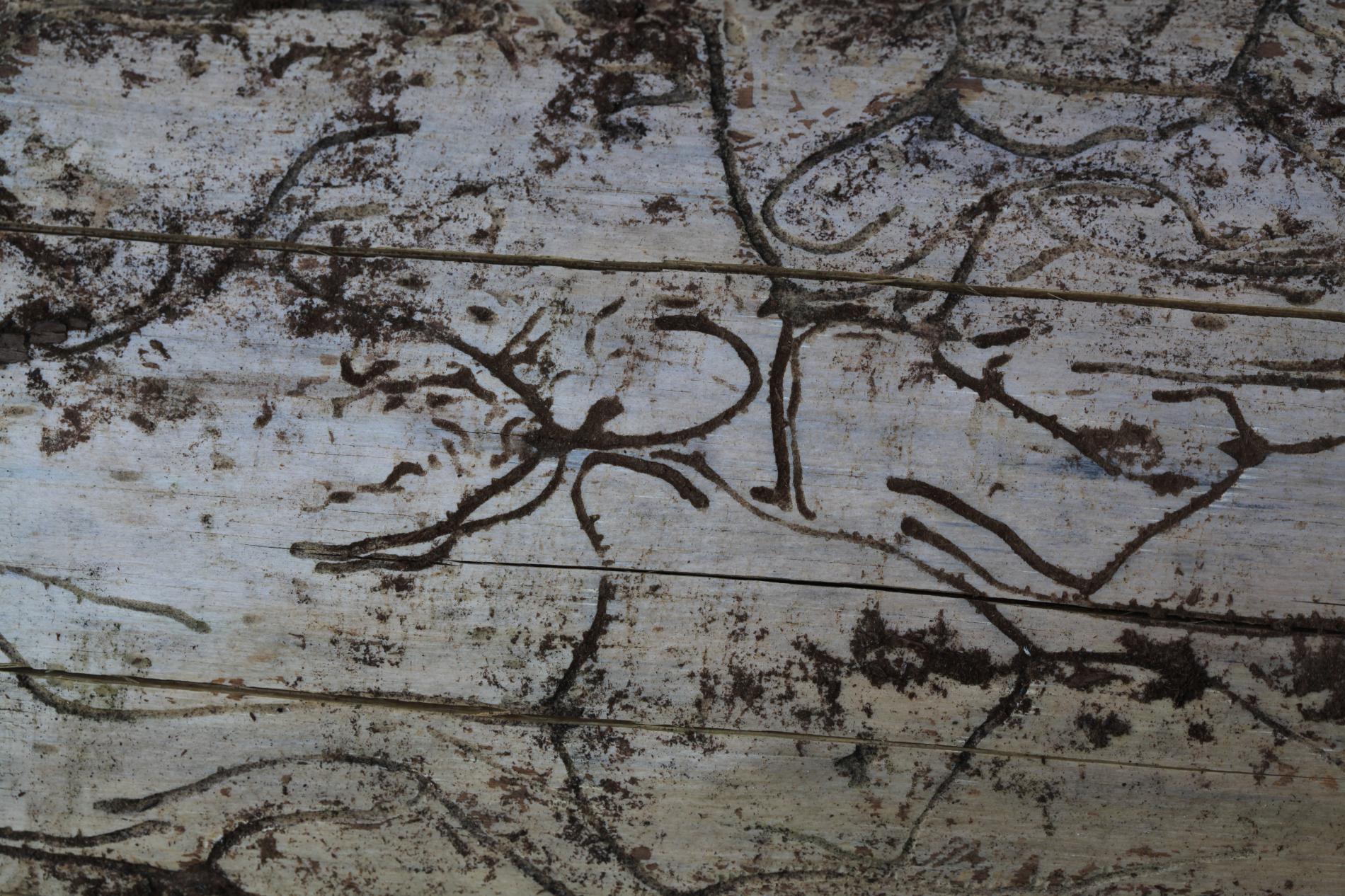
The adult’s body is cylindrical, 4.0-5.5 mm long, of brown-black colour. The first generation is active in April-May, and the second one in August-September. The male bores the nuptial chamber, where mates with 2 up to 5 females. Maternal galleries are irregular, longer than 10-12 cm. Larval galleries are dense, irregular and short. Larvae pupate in the bark and sapwood. After hatching, young adults have a maturation feeding in 1-3 year old shoots in the crowns of older larches, causing a severe defoliation. With a physiology rather similar to the spruce bark beetle, it is a polygamous species prefers larch. It attacks weakened or wind broken trees. Tends to outbreaks. Several other bark beetles species live on larch, including Cryphalus intermedius, C. abietis, C. saltuarius, Xyloterus lineatus and Pityophthorus pityographus.
Maternal galleries are irregular, longer than 10-12 cm. Larval galleries are dense, irregular and short.
Tree Species: Spruce, Larch
Part of a plant- attacked: Tree trunk
Pest significance: Very harmful
Pest Category: Insects
Invasive Species: No
Present in EU: Yes
Pest group: Insect
Affected part of wood: Bark, Underbark area
Depth of damages: Under bark only
The extent of damage: Lokally
Prevalence in Europe: Common
Damaged products: Stored timber logs (dried wood)
Roundwood size: Diameter 50+, Diameter from 10 up to 50 cm
Wood discoloration: No
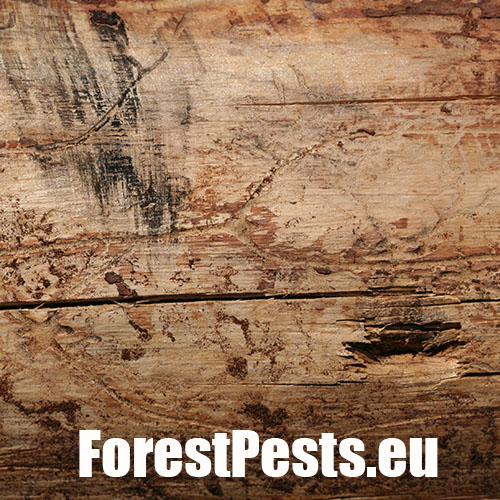
Exit holes: Round
Pest subcategory: Bark and underbark insect
Similar pests

Ips amitinus

Ips acuminatus
