


Inonotus obliquus
Clinker polypore
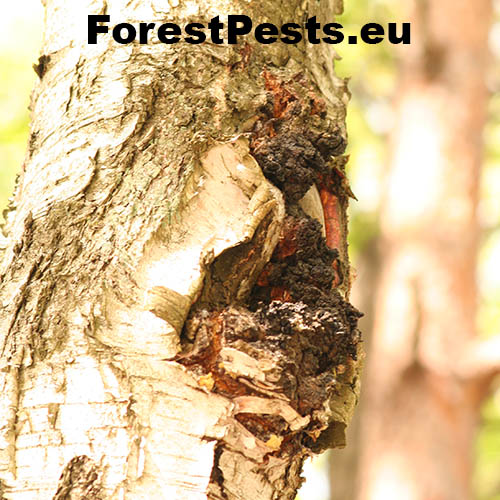
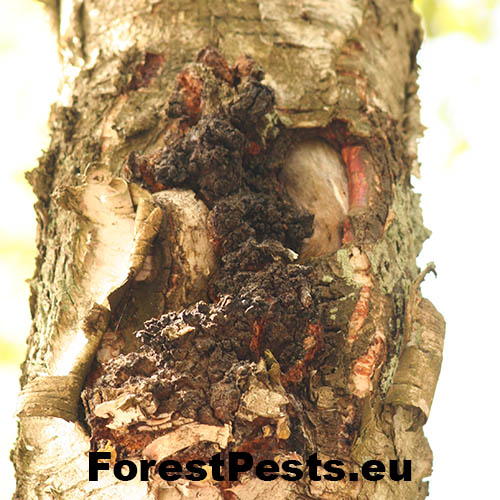
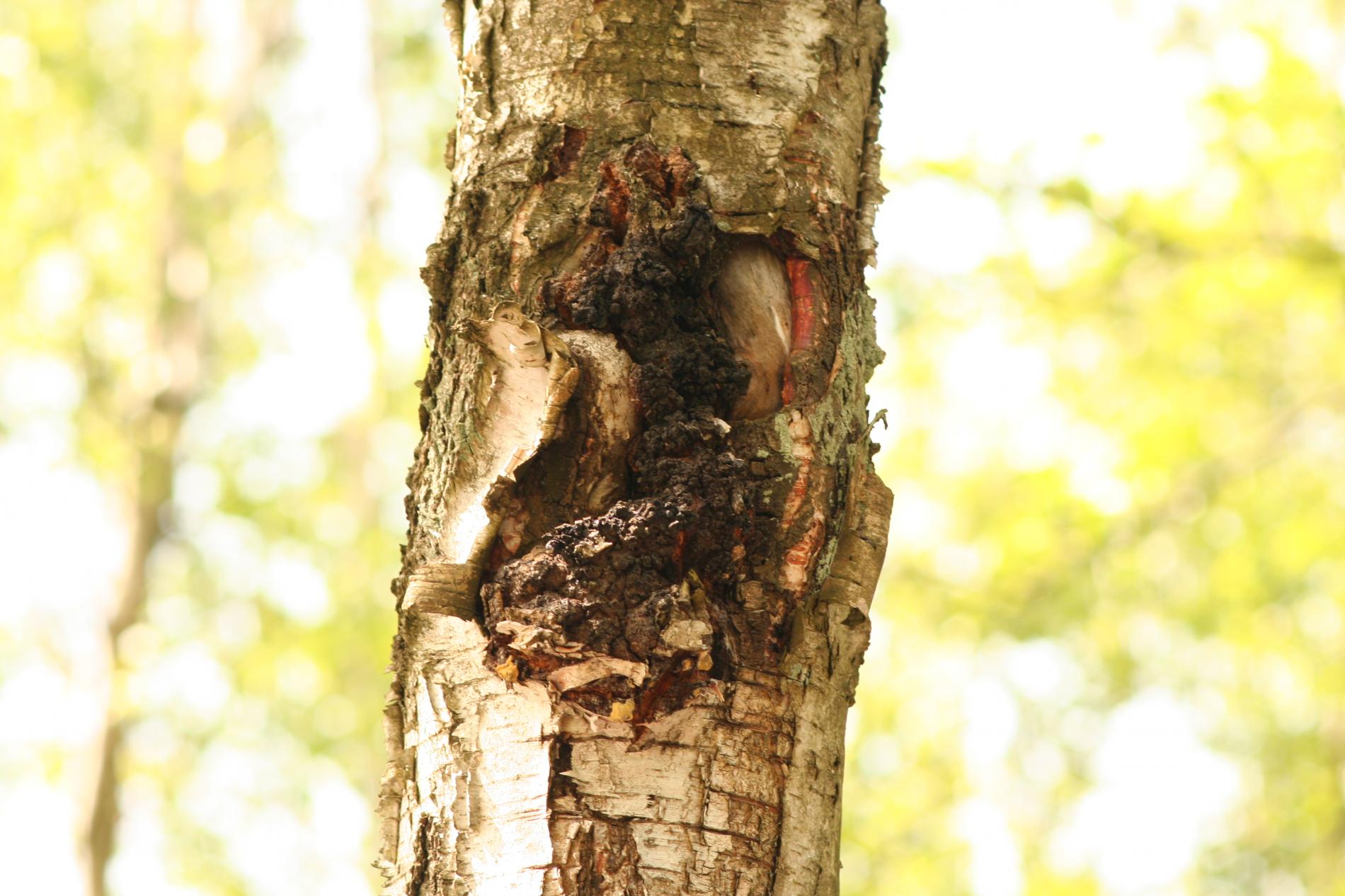
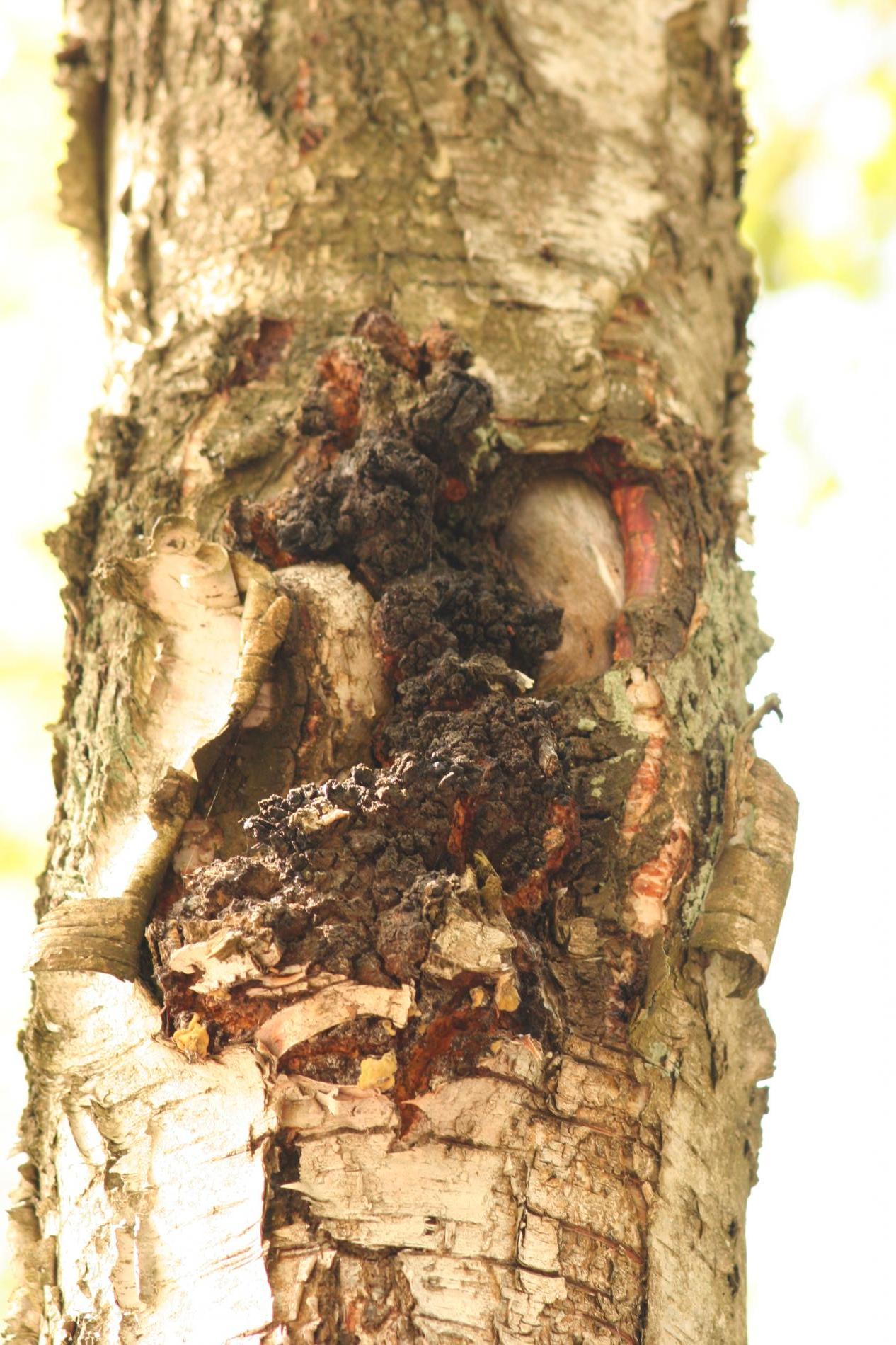
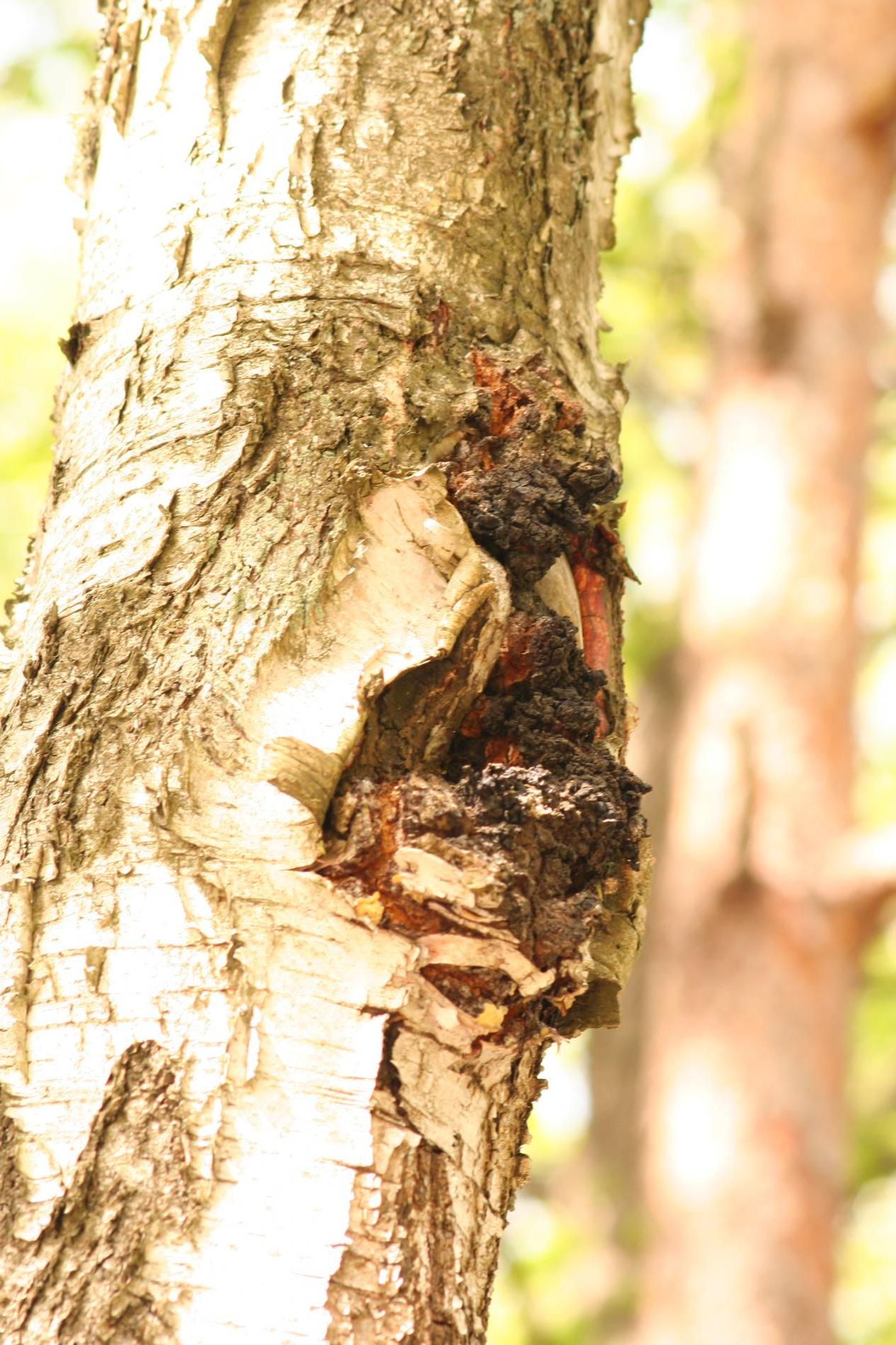
Fruit body is a sterile conk 25–40 cm across; black; deeply cracked, very hard and brittle when dry. Fertile portion is crust-like, thin; dark brown. Tubes are 3–10 mm deep, brittle, usually split in front. Pores are 6–8 per mm, circular; whitish becoming dark brown. Widely effused, no stem. Flesh corky, faintly zoned; bright yellowish brown. Spores are broadly ellipsoid to ovoid, smooth, 9–10 × 5.5–6.5 μm. It is dense, very hard and deeply cracked on the surface resembling something that has been burned. Chaga can be found all year round since it persists on the tree for many years. It has been used as a tonic and tea by the Siberians for hundreds of years. A preparation called Befungin has been used in Russia for cancer treatment since the 1960s. Chaga can be used for dyeing textiles or paper and will yield a yellow or sepia colour depending on what mordant or modifier is used.
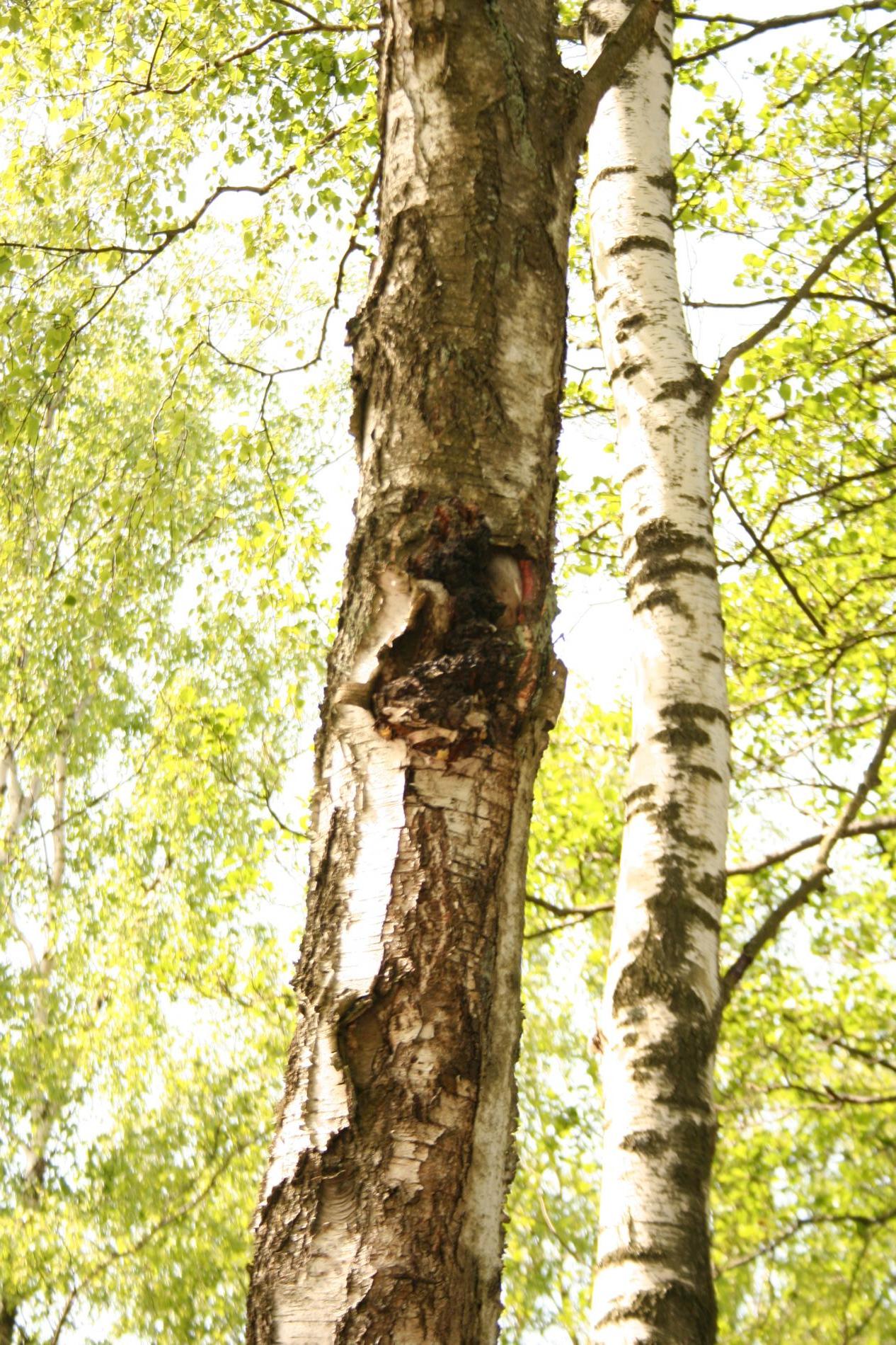
The fruiting body on the trunk is formed by black bumps around the wound as if it were burnt wood.
Tree Species: Birch
Part of a plant- attacked: Tree trunk
Pest significance: Harmful
Pest Category: Fungi
Invasive Species: No
Present in EU: Yes
Pest group: Fungi
Affected part of wood: Heartwood, Sapwood
Depth of damages: More than 5 cm depth, Up to 0,5 cm depth, Up to 2 cm depth, Up to 5 cm depth
The extent of damage: Whole trunk
Prevalence in Europe: Common
Damaged products: Firewood, Fresh timber logs (water still in the sapwood), Furniture, Lumber, boards and prisms, Wooden house constructions
Roundwood size: Diameter 50+, Diameter from 10 up to 50 cm
Wood discoloration: Yes
Pest subcategory: White-rot
Similar pests

Inonotus hispidus

Inonotus cuticularis
