


Inonotus dryadeus
Weeping conk
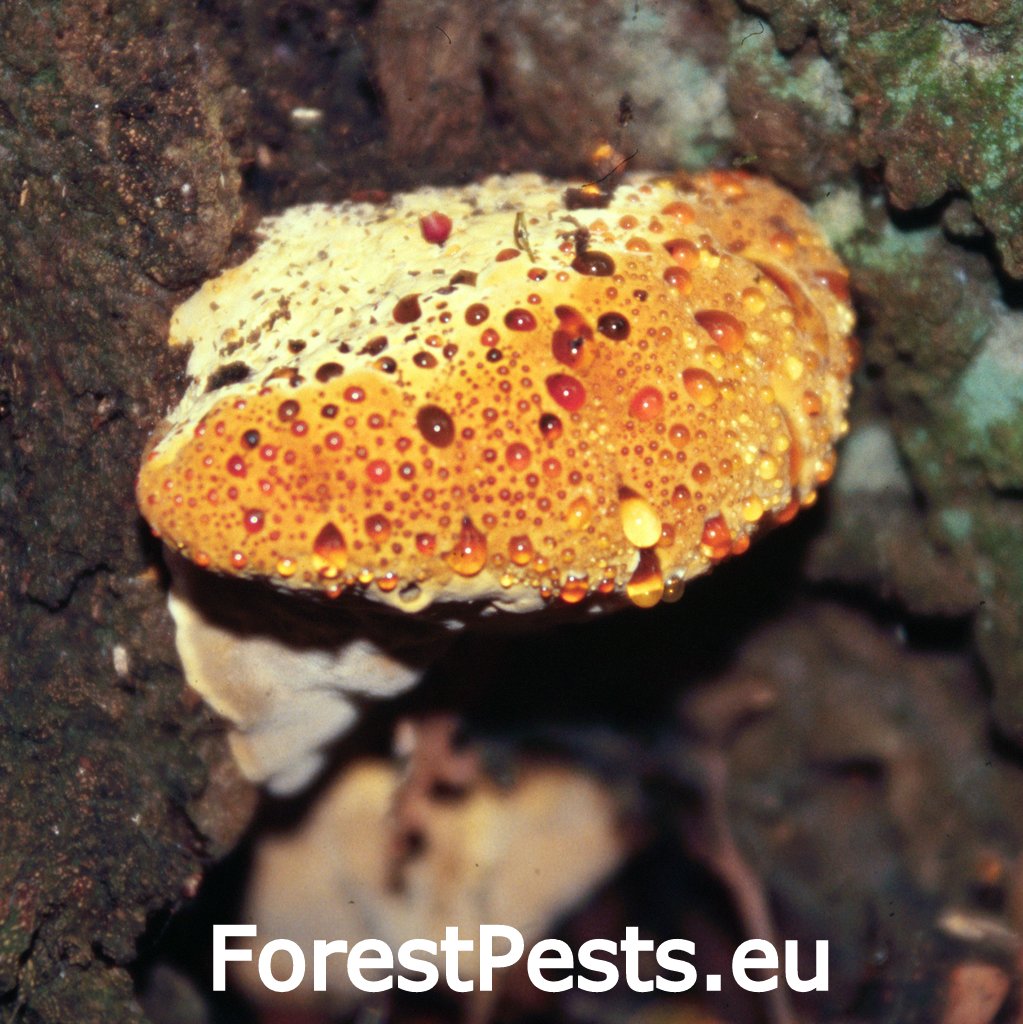
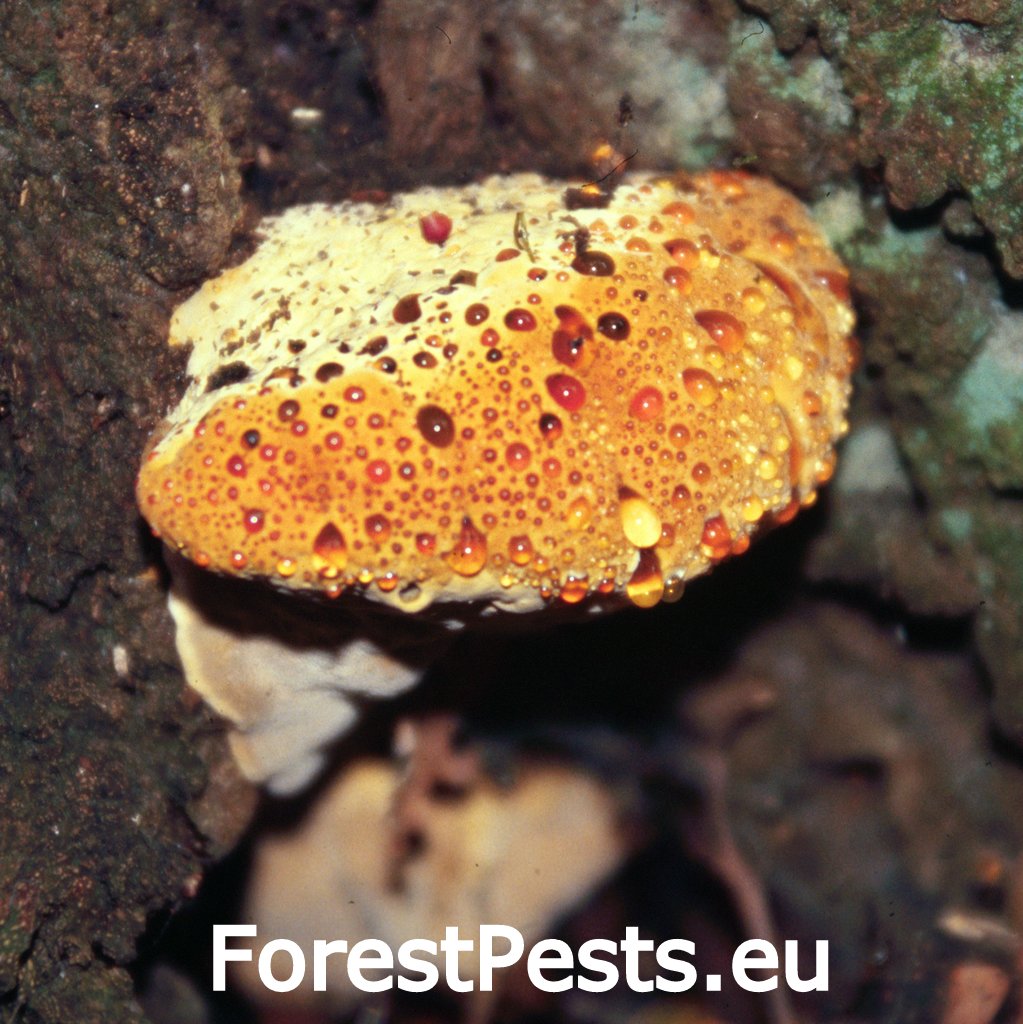
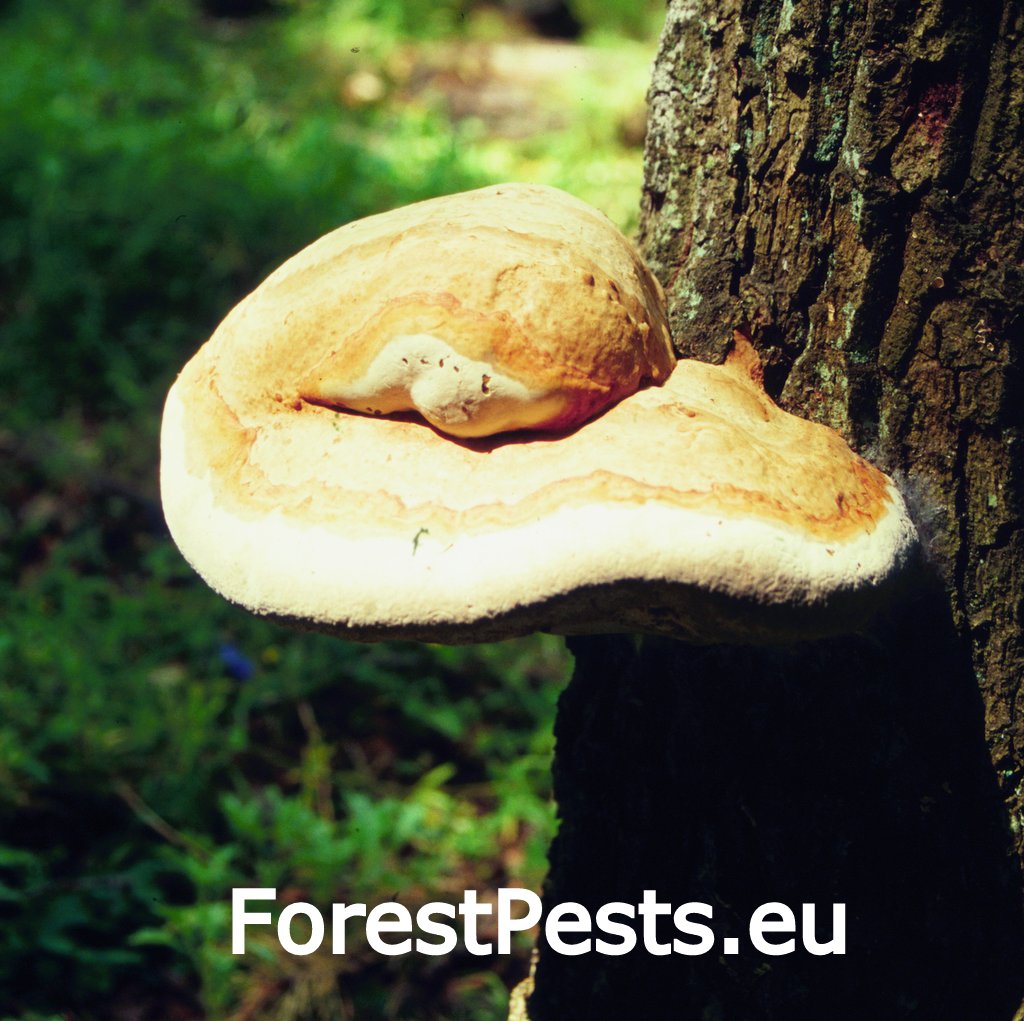
The fungus forms annual, relatively massive fruiting bodies on the stumps of living trees, frequently growing close to the ground. The surface of the fruiting body is leathery, brown to dark brown, and pubescent to felt-like. The border of the fruiting body is ocher to white. The pores are pale yellow, and the entire fruiting body turns darker with age. Drops of yellowish-brown liquid form on the surface of fruiting bodies and pores. The fungus causes white heartwood rot on the roots and lower parts of the trunk, but it does not reach the upper parts of the trunk.
Presence of annual brown-brown fruiting bodies, mainly on the basis of the stem.
Tree Species: Oak, Fir
Part of a plant- attacked: Tree trunk, Roots
Pest significance: Less harmful
Pest Category: Fungi
Invasive Species: No
Present in EU: Yes
Pest group: Fungi
Affected part of wood: Heartwood, Sapwood
Depth of damages: More than 5 cm depth, Under bark only, Up to 0,5 cm depth, Up to 2 cm depth, Up to 5 cm depth
The extent of damage: Whole trunk
Prevalence in Europe: Common
Damaged products: Firewood, Fresh timber logs (water still in the sapwood), Furniture, Lumber, boards and prisms, Wooden house constructions
Roundwood size: Diameter 50+, Diameter from 10 up to 50 cm
Wood discoloration: Yes
Pest subcategory: White-rot
Similar pests

Inonotus cuticularis

Ganoderma applanatum (= lipsiense)
