


Inonotus cuticularis
Inonotus canker
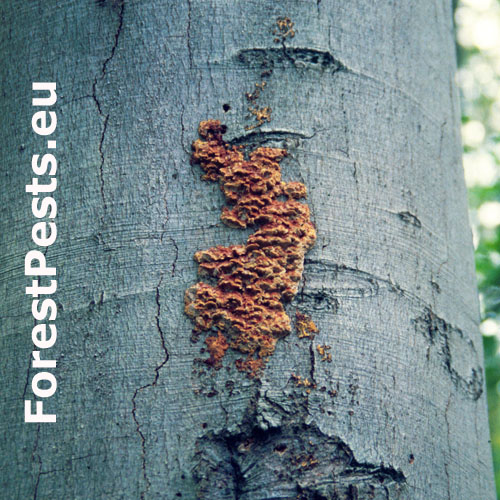
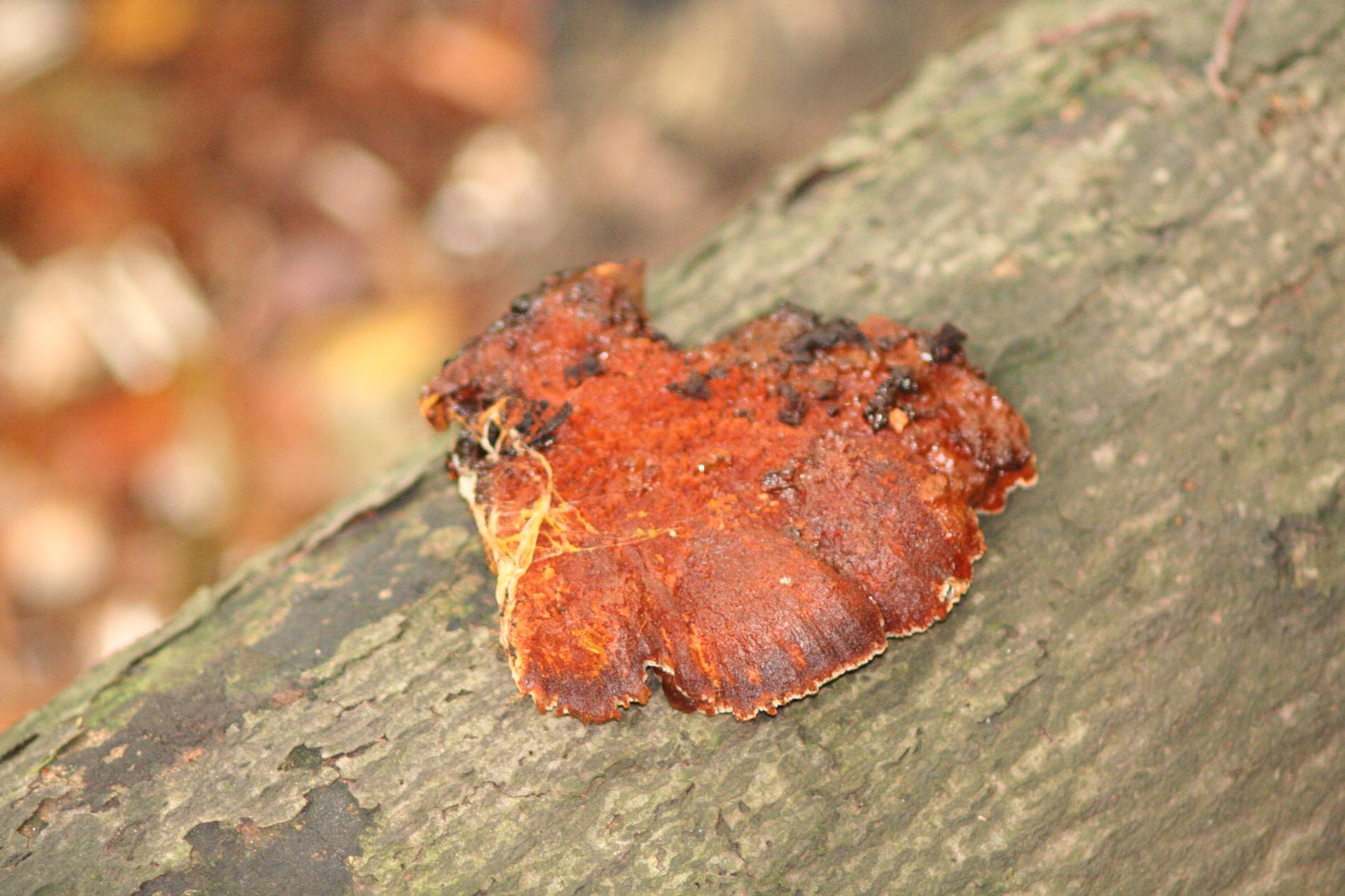
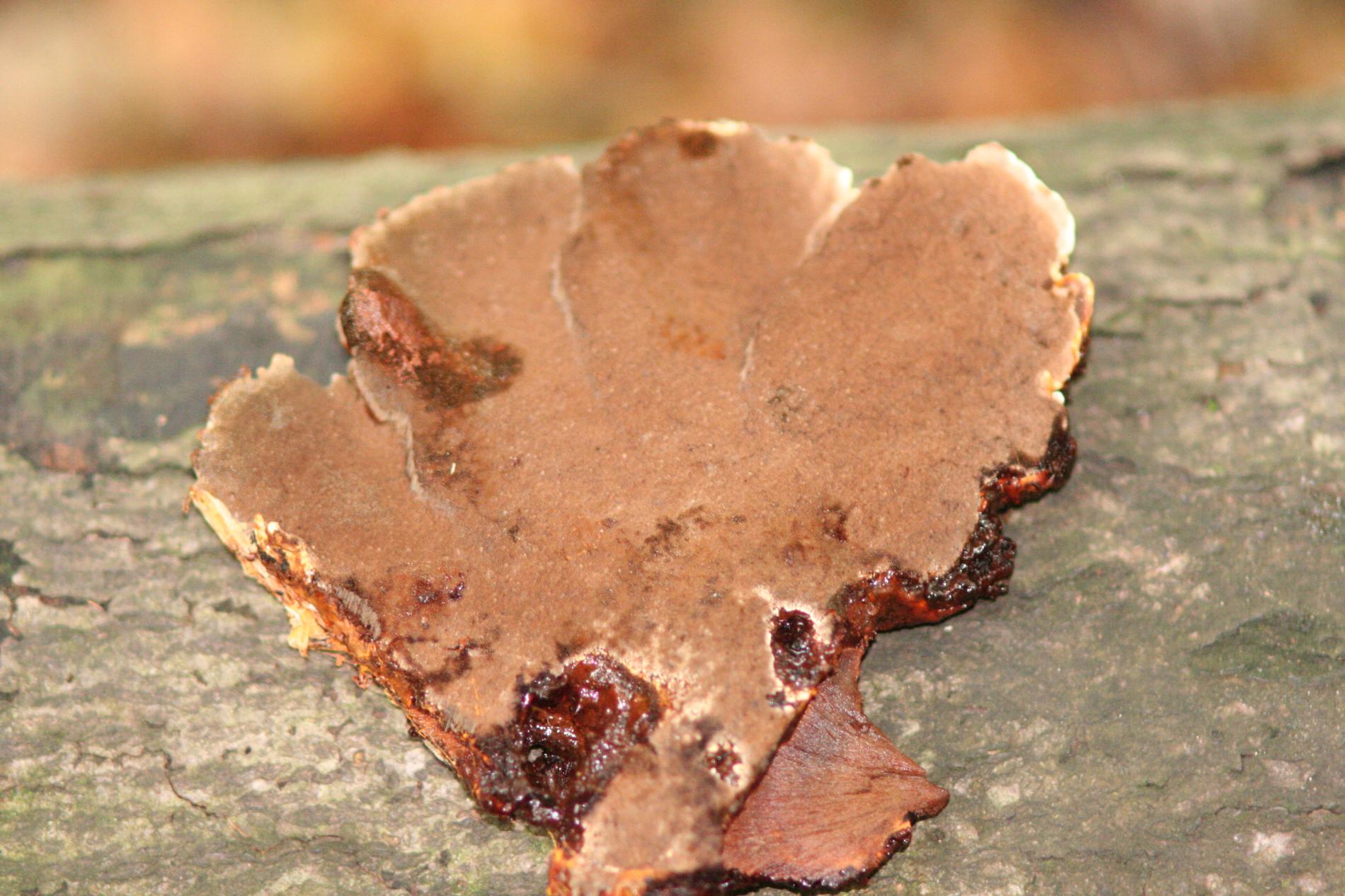
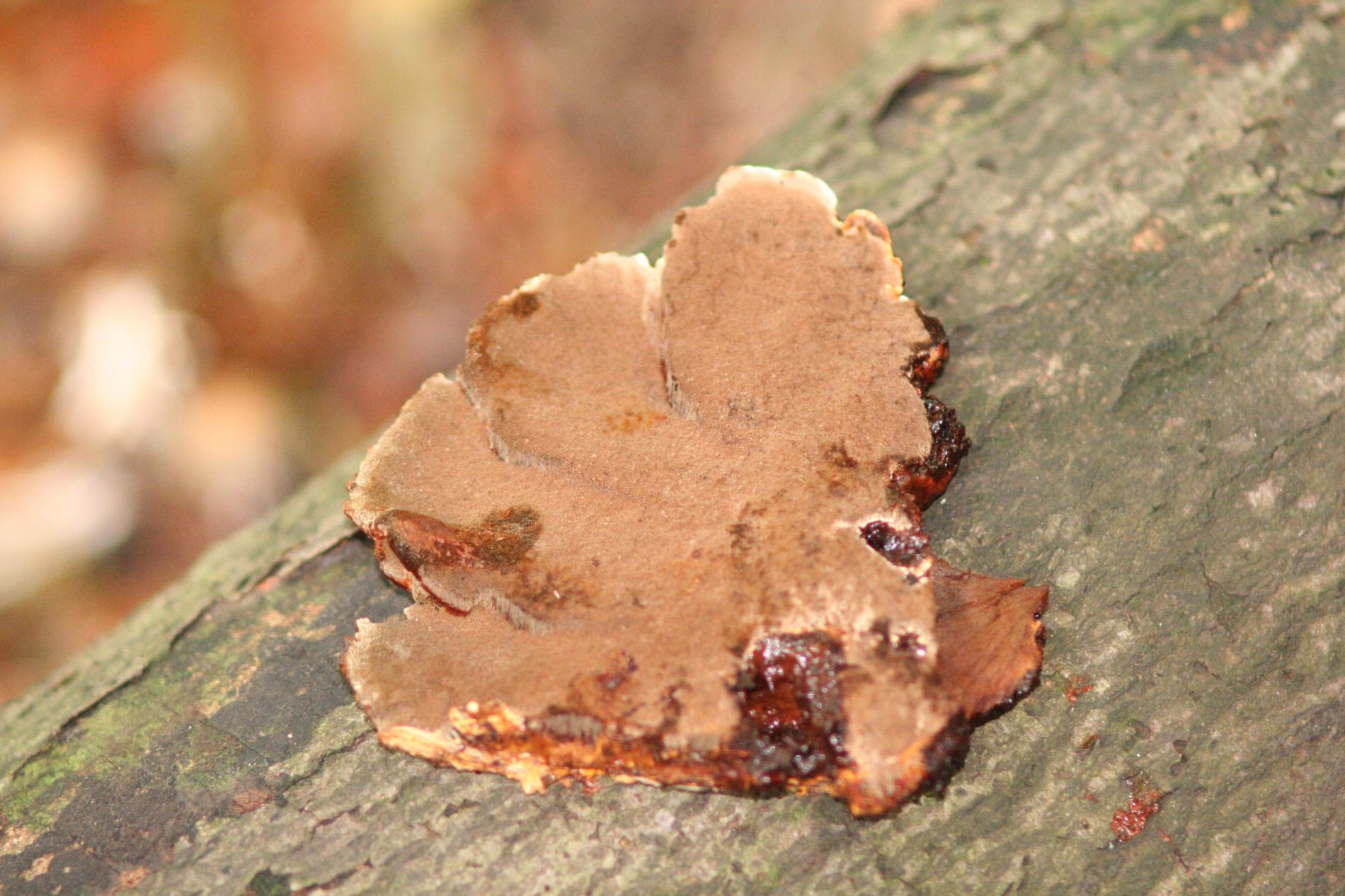
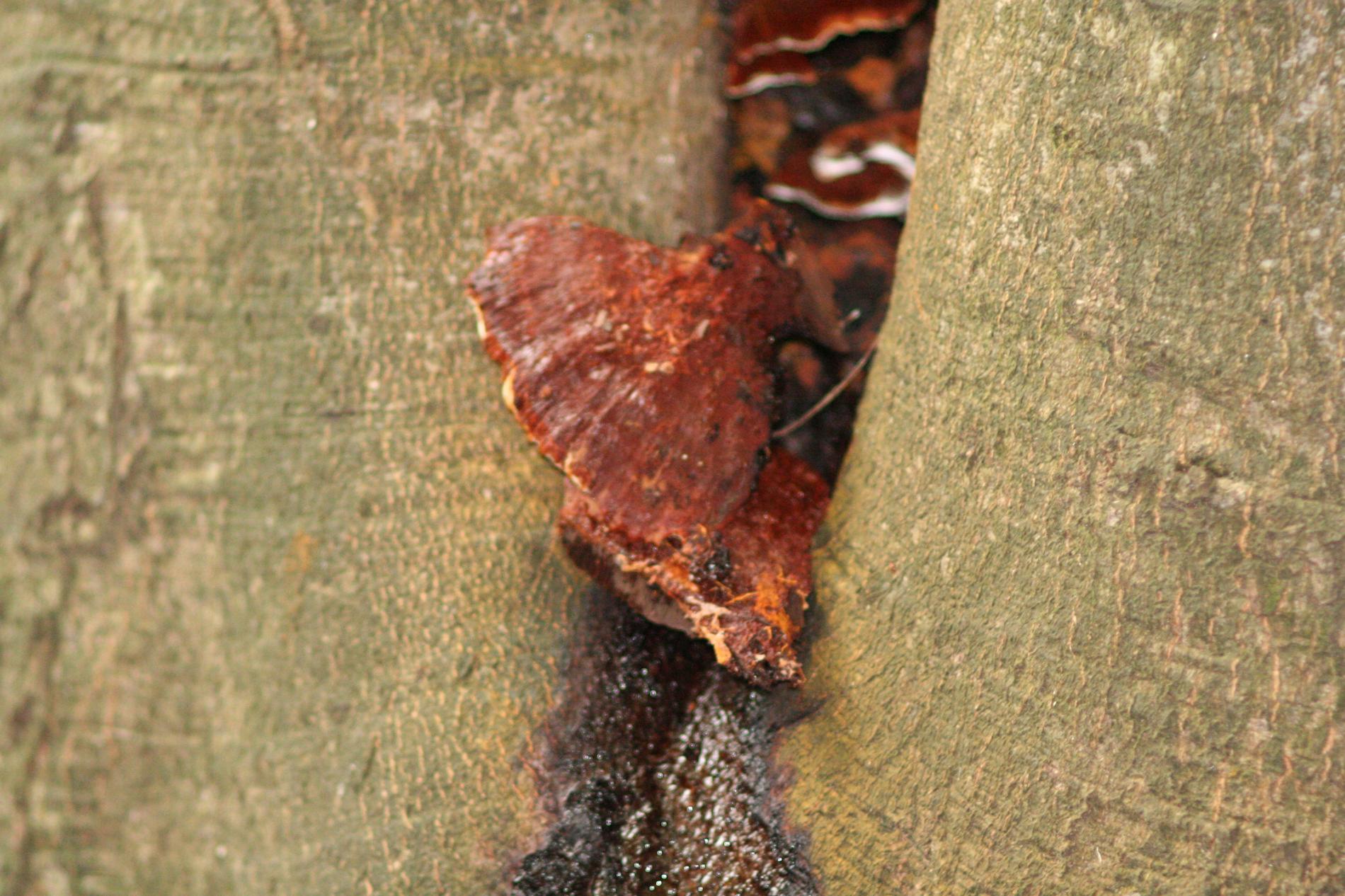
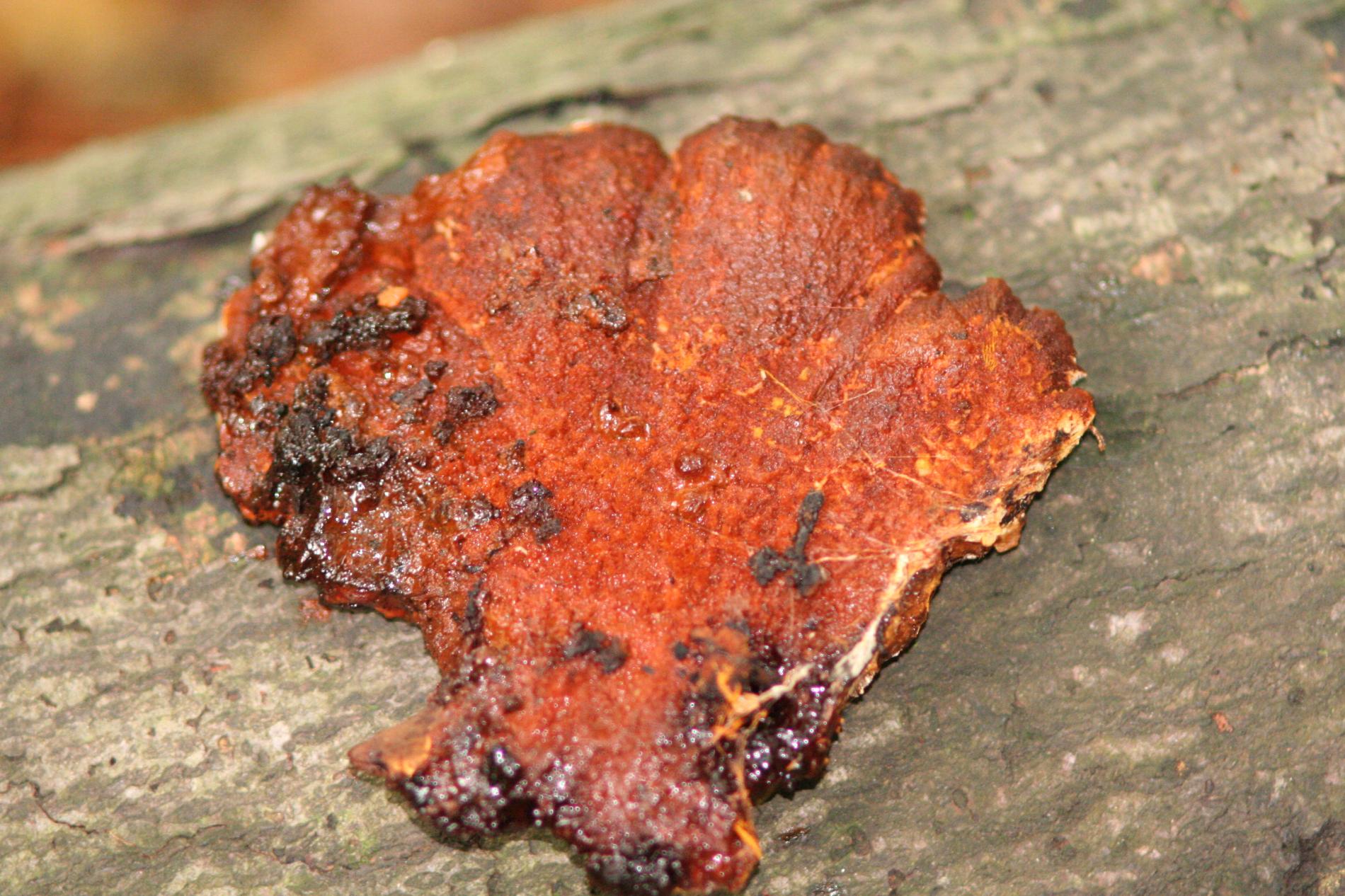
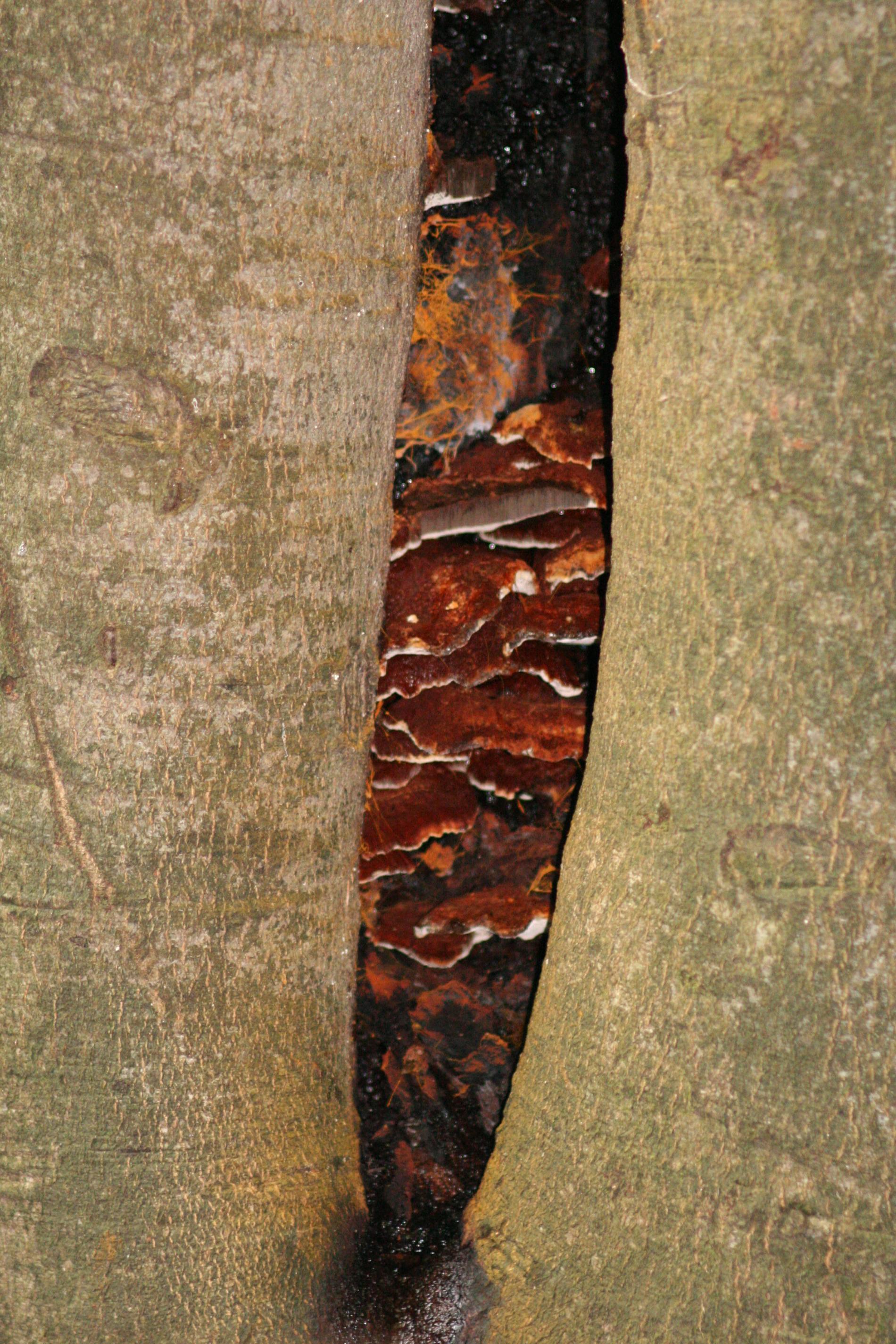
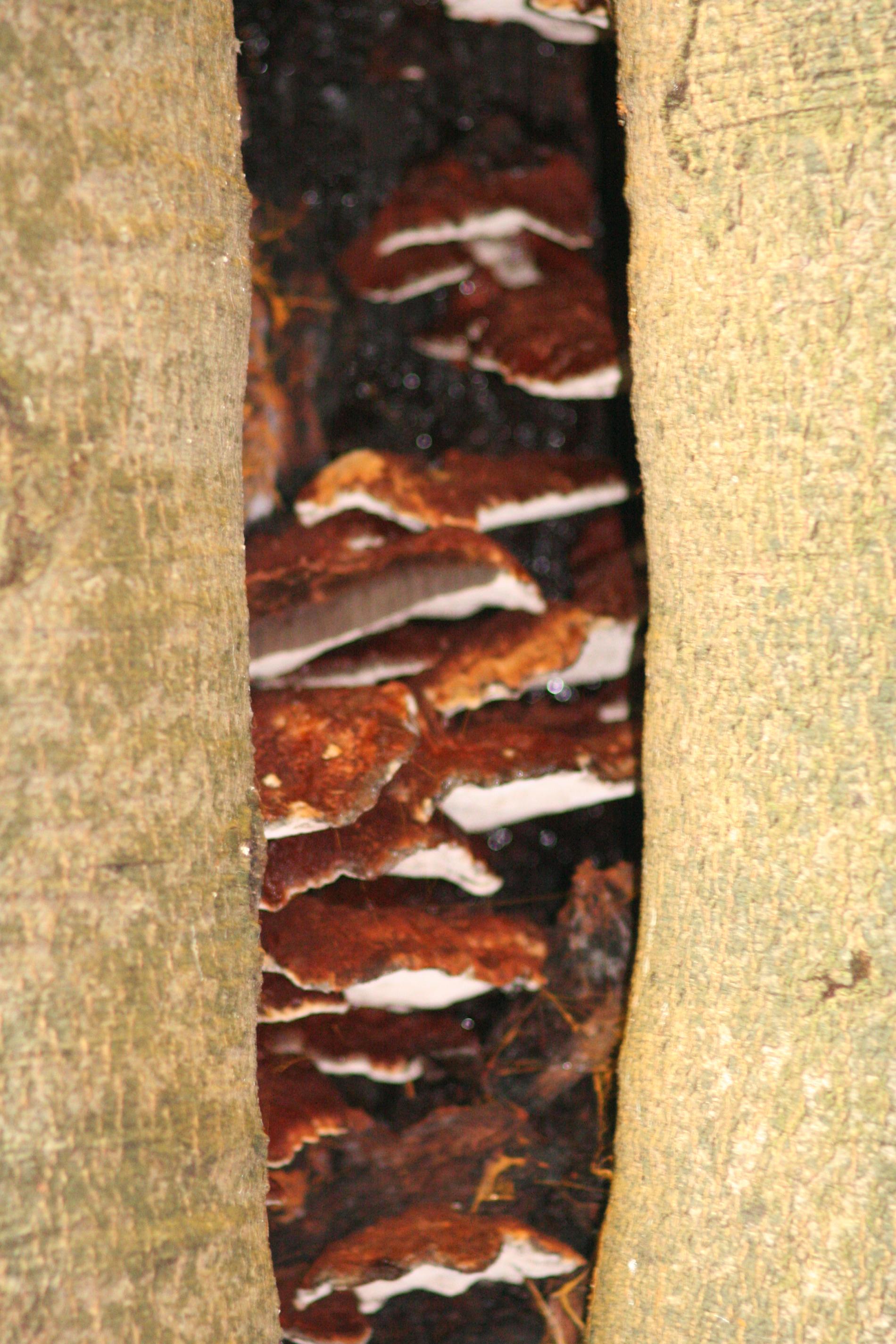
The fruiting bodies are bracket-like, without stem, they are annual, growing singly or in clusters. The surface of the fruiting body is yellowish brown, pubescent, later smooth and black, with no zones. The edge is pale and sharp. The lower side of the bracket is tubular, pale brown to grey. The fungus causes intense white rot of heartwood of broadleaved trees; however, it lives predominantly as a saprophyte on already dead trees. It penetrates into the trunk through wounds. The fungus is widespread all over Europe, less common in northern parts.
Presence of yellow-brown cantilevery fruiting bodies on the trunk.
Tree Species: Beech, Oak, Ash, Maple, Alder, Horse Chestnut, Poplar
Part of a plant- attacked: Tree trunk
Pest significance: Less harmful
Pest Category: Fungi
Invasive Species: No
Present in EU: Yes
Pest group: Fungi
Affected part of wood: Heartwood, Sapwood
Depth of damages: More than 5 cm depth, Under bark only, Up to 0,5 cm depth, Up to 2 cm depth, Up to 5 cm depth
The extent of damage: Whole trunk
Prevalence in Europe: Common
Damaged products: Firewood, Fresh timber logs (water still in the sapwood), Furniture, Lumber, boards and prisms, Wooden house constructions
Roundwood size: Diameter 50+, Diameter from 10 up to 50 cm
Wood discoloration: Yes
Pest subcategory: White-rot
Similar pests

Neonectria coccinea

Nectria fuckeliana
