


Gloeophyllum odoratum
Fungus Gloeophyllum odoratum
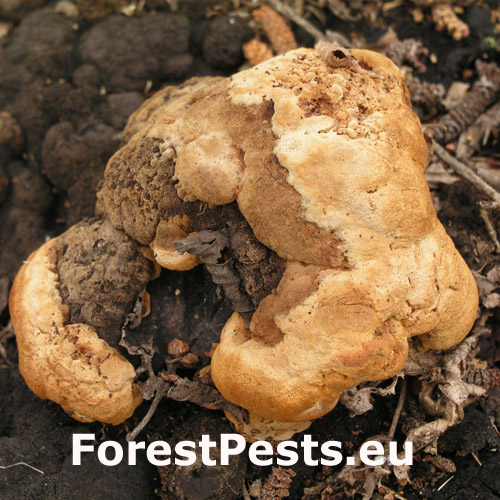
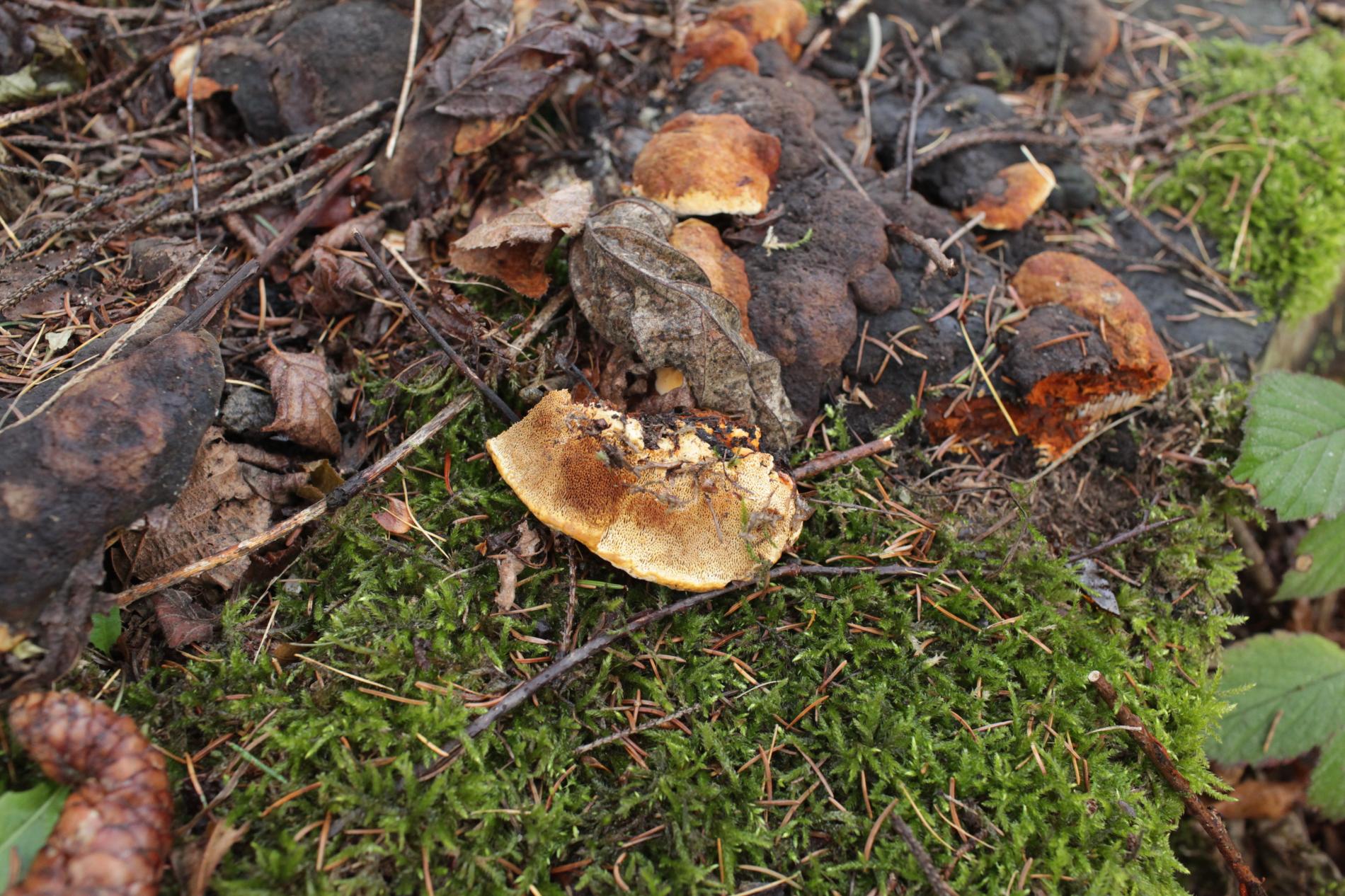
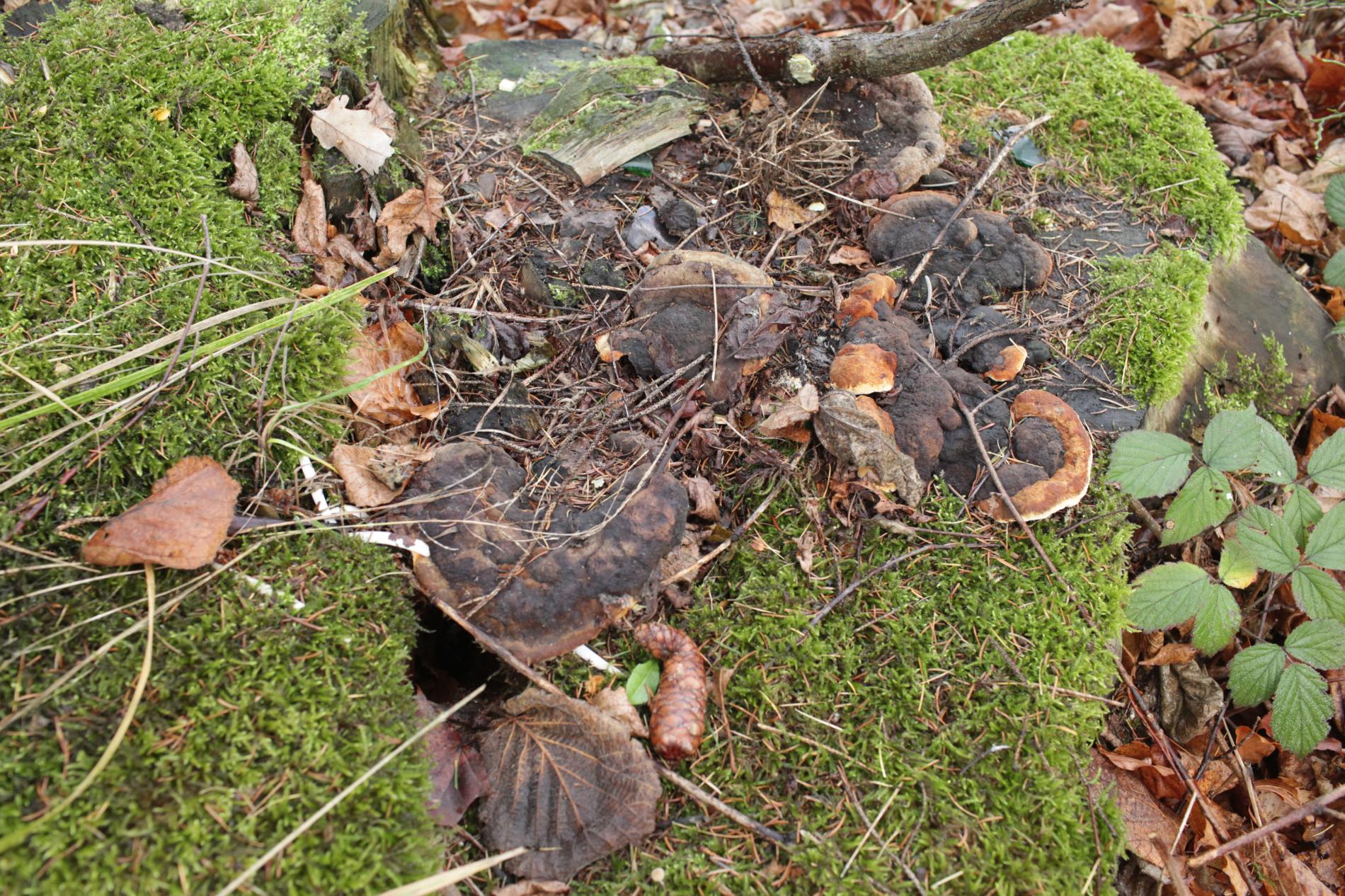
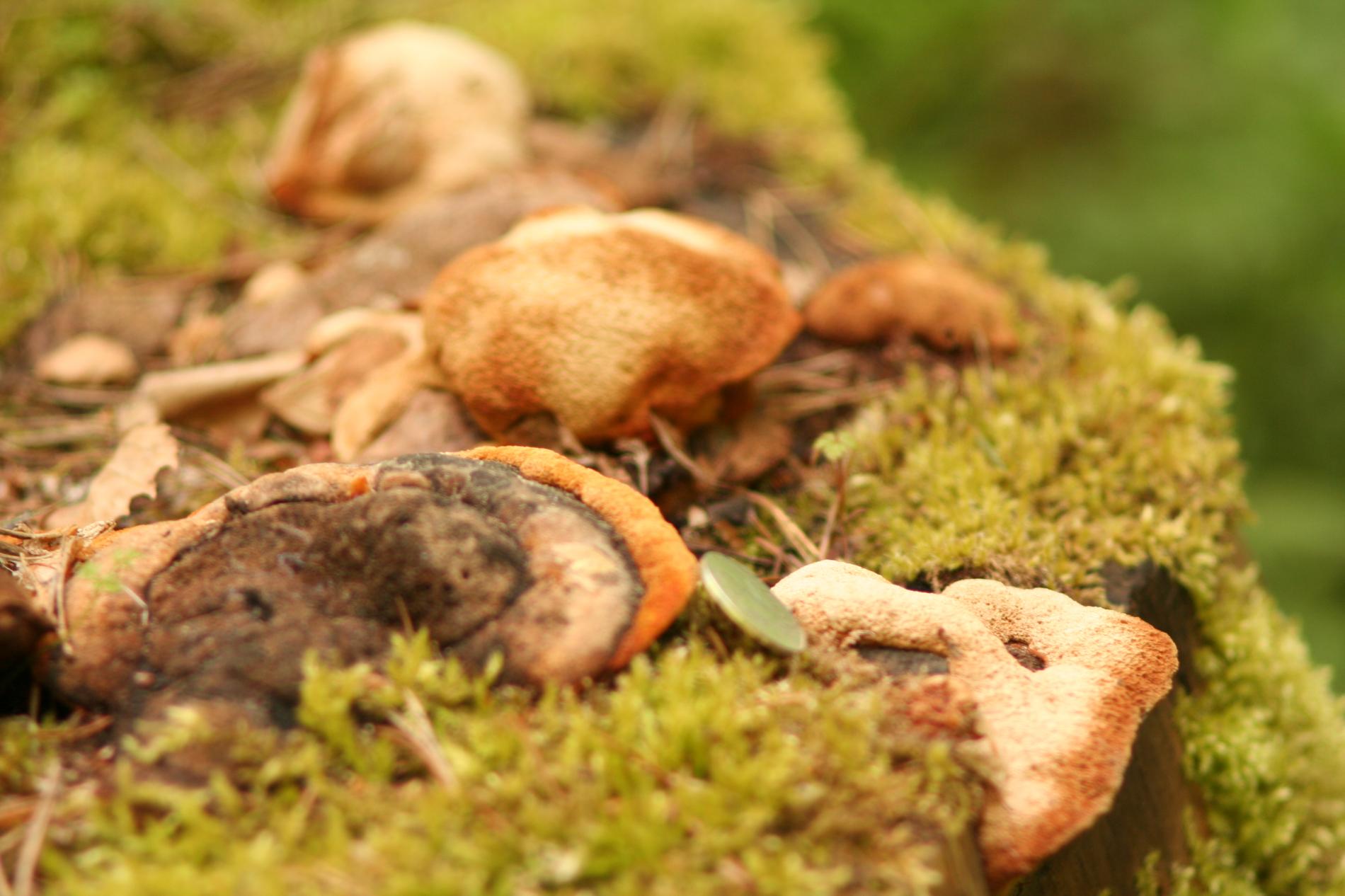
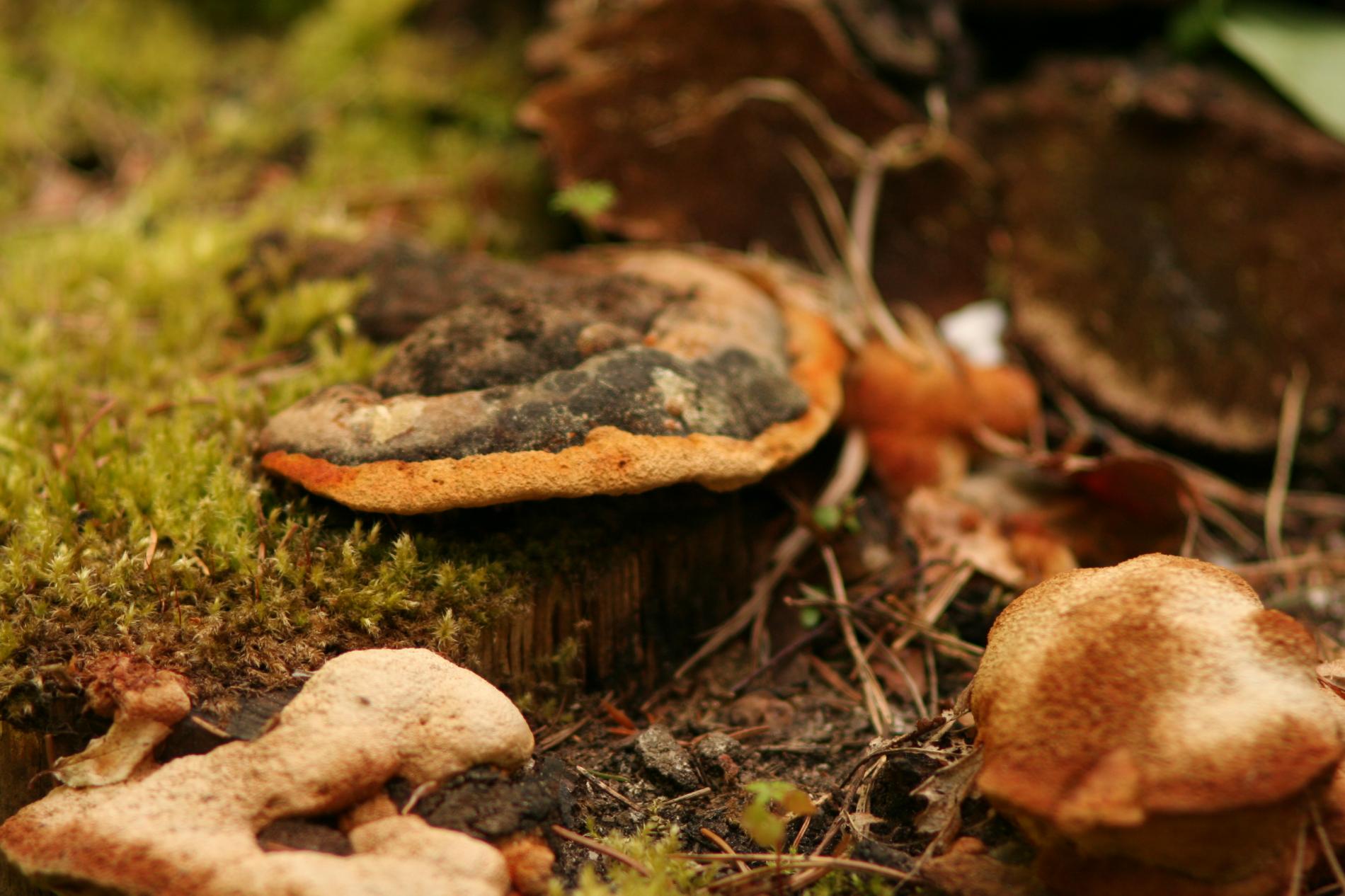
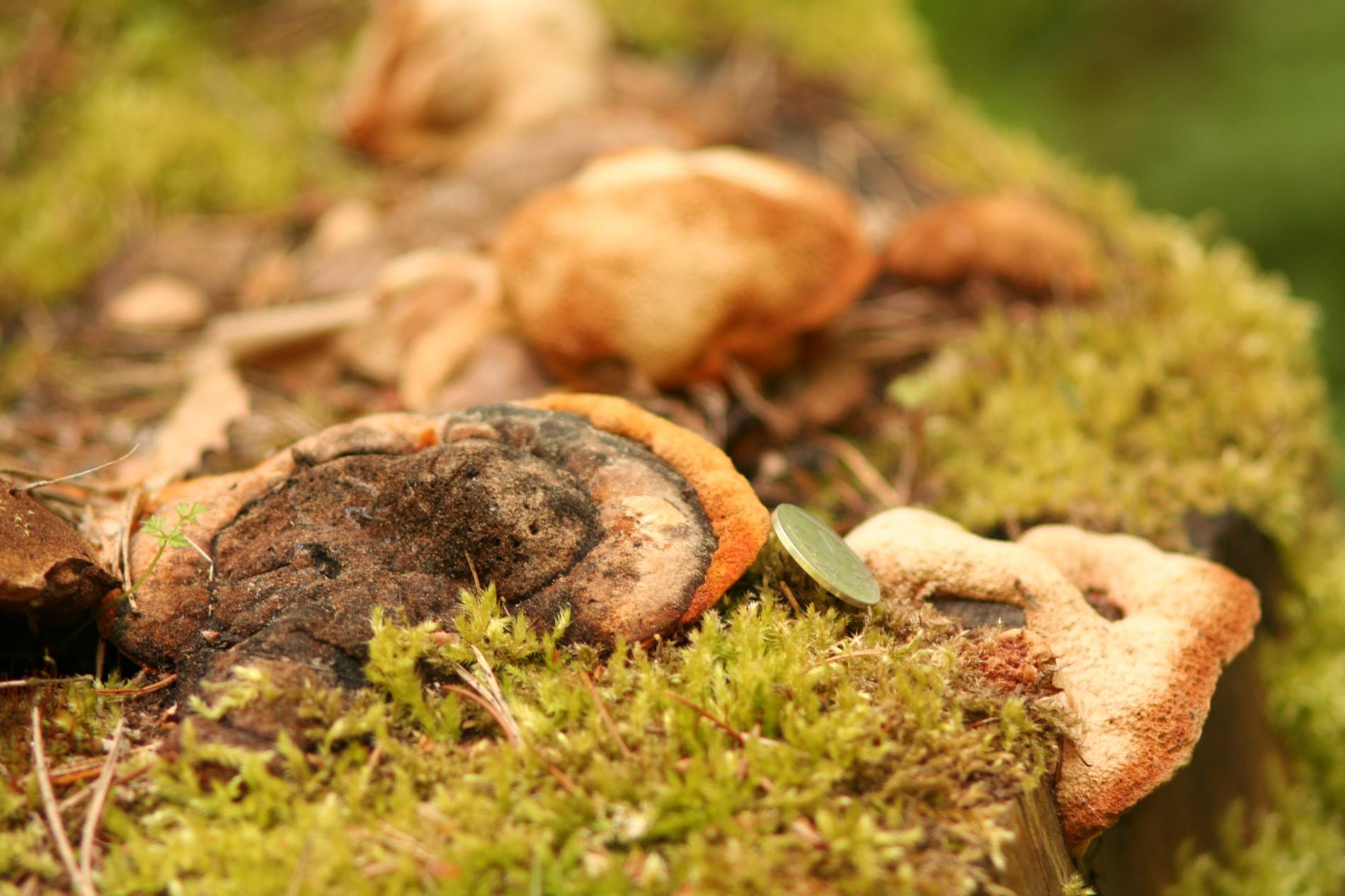
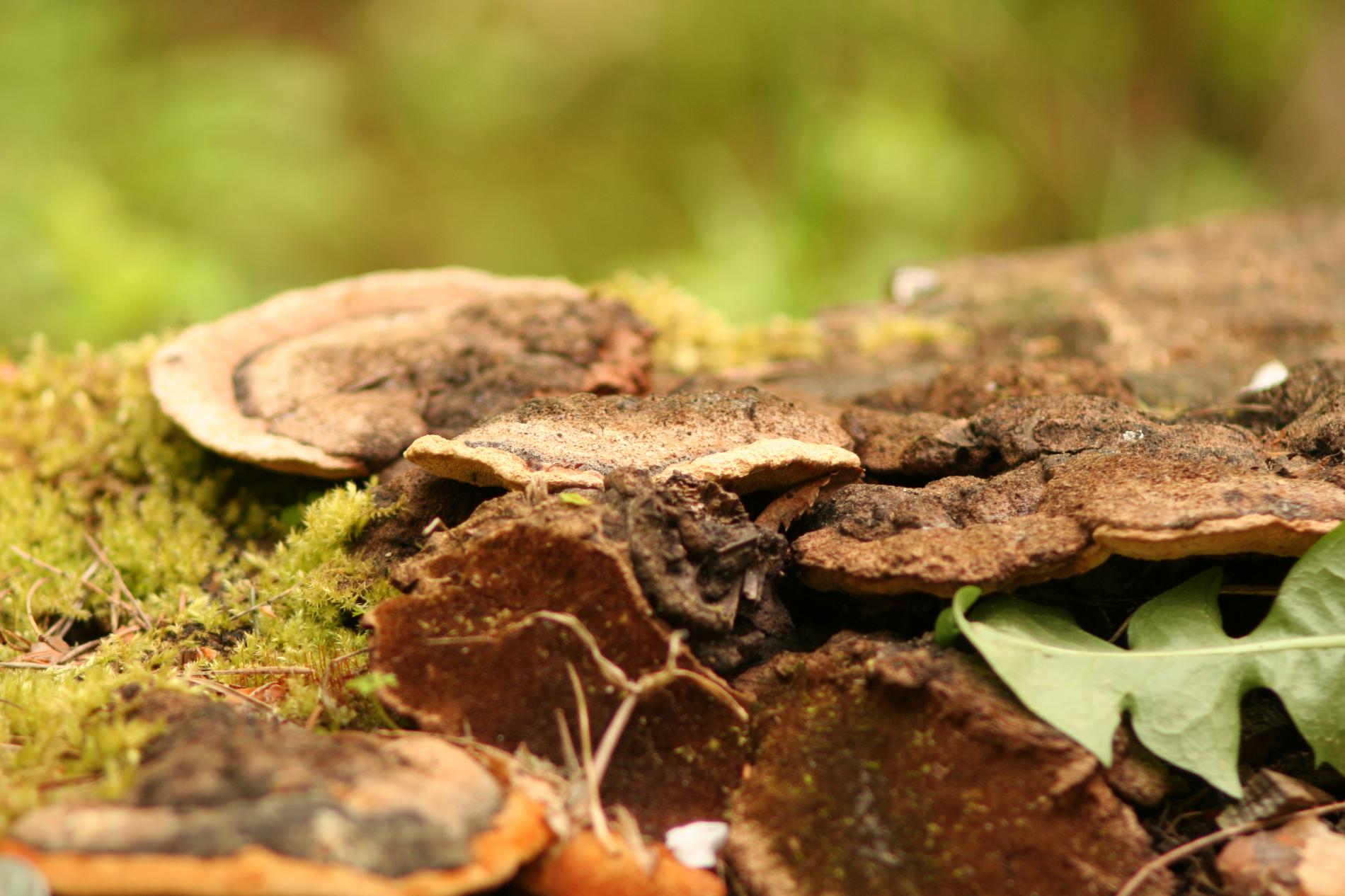
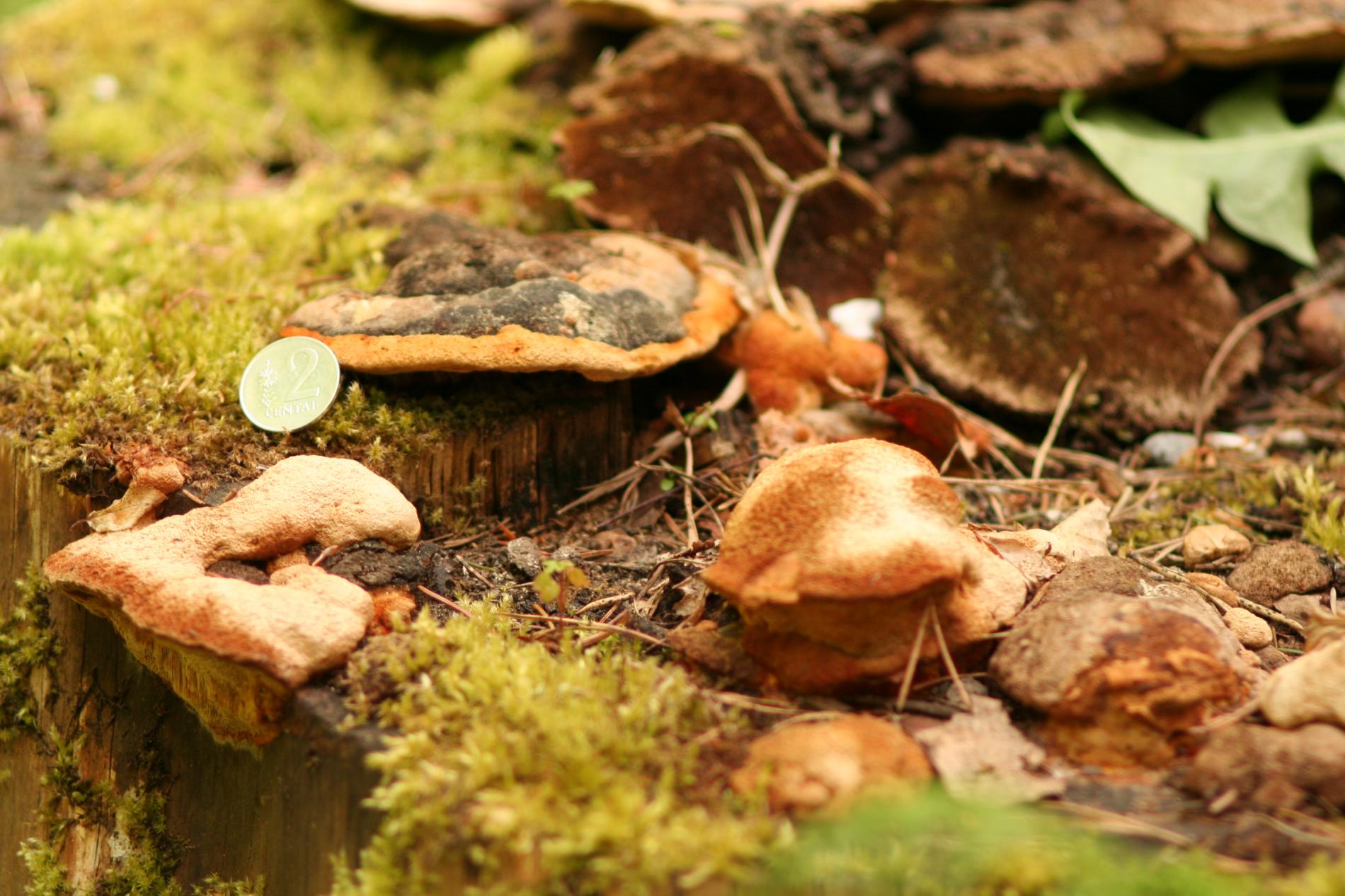
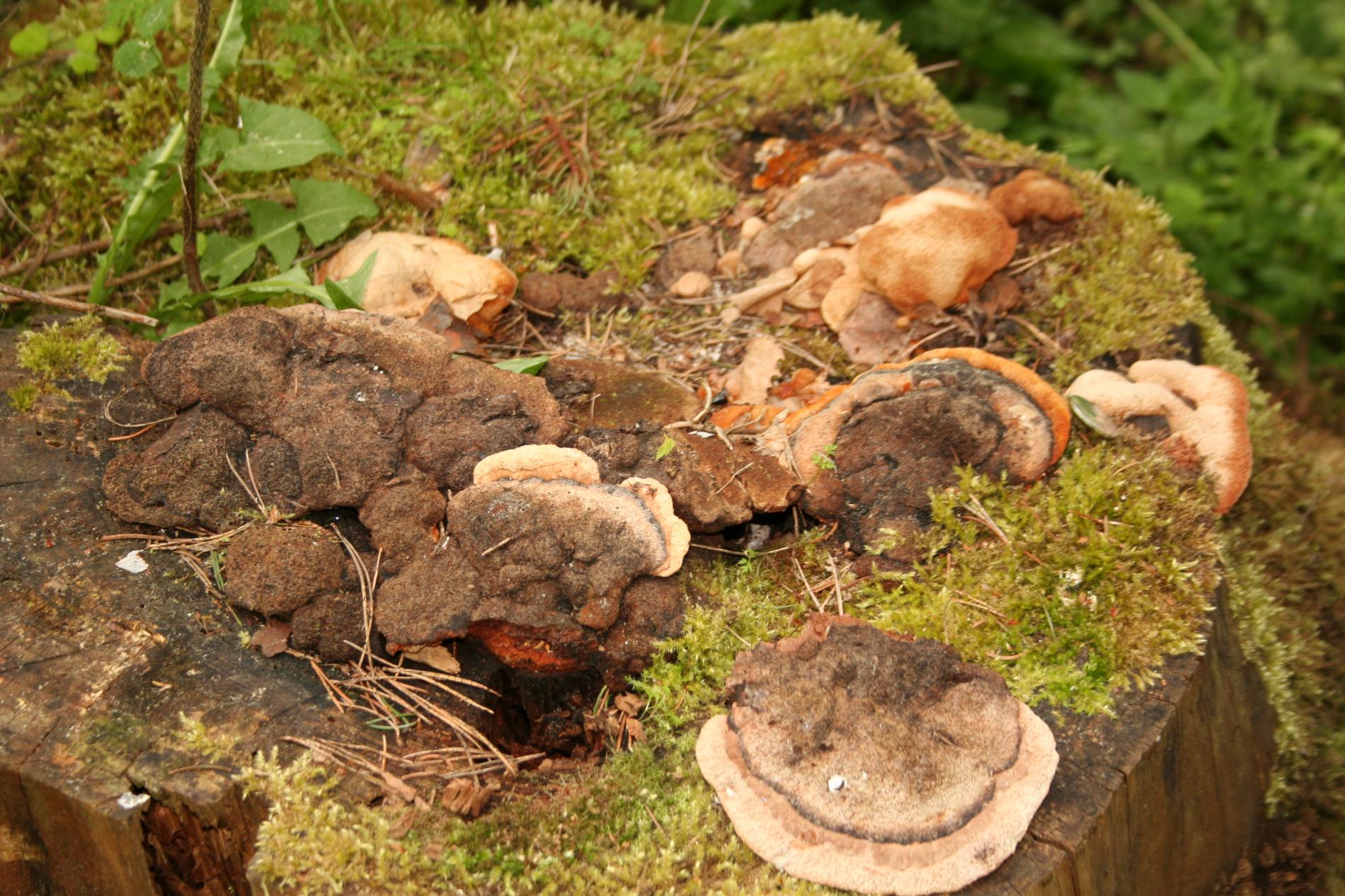
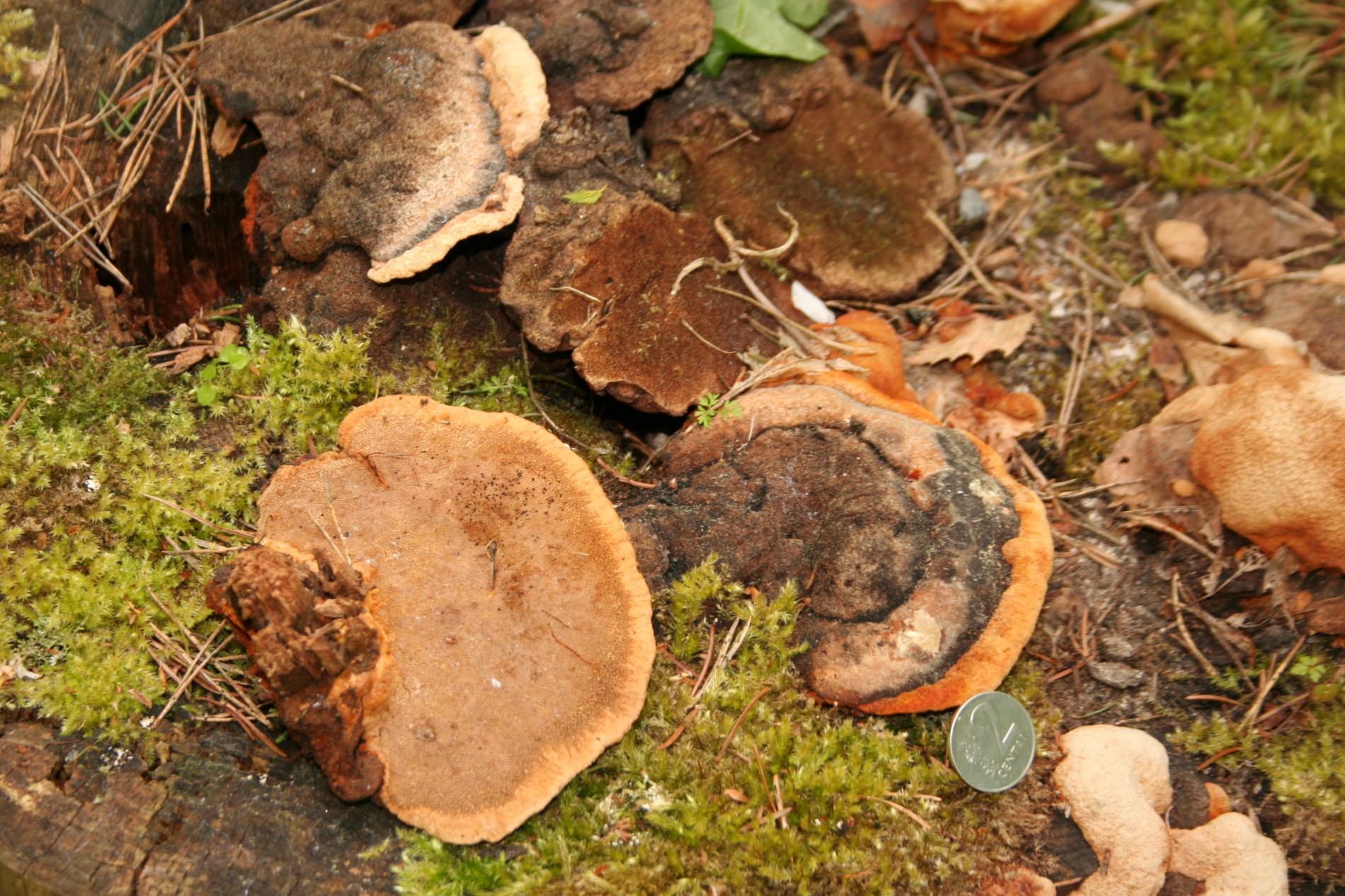
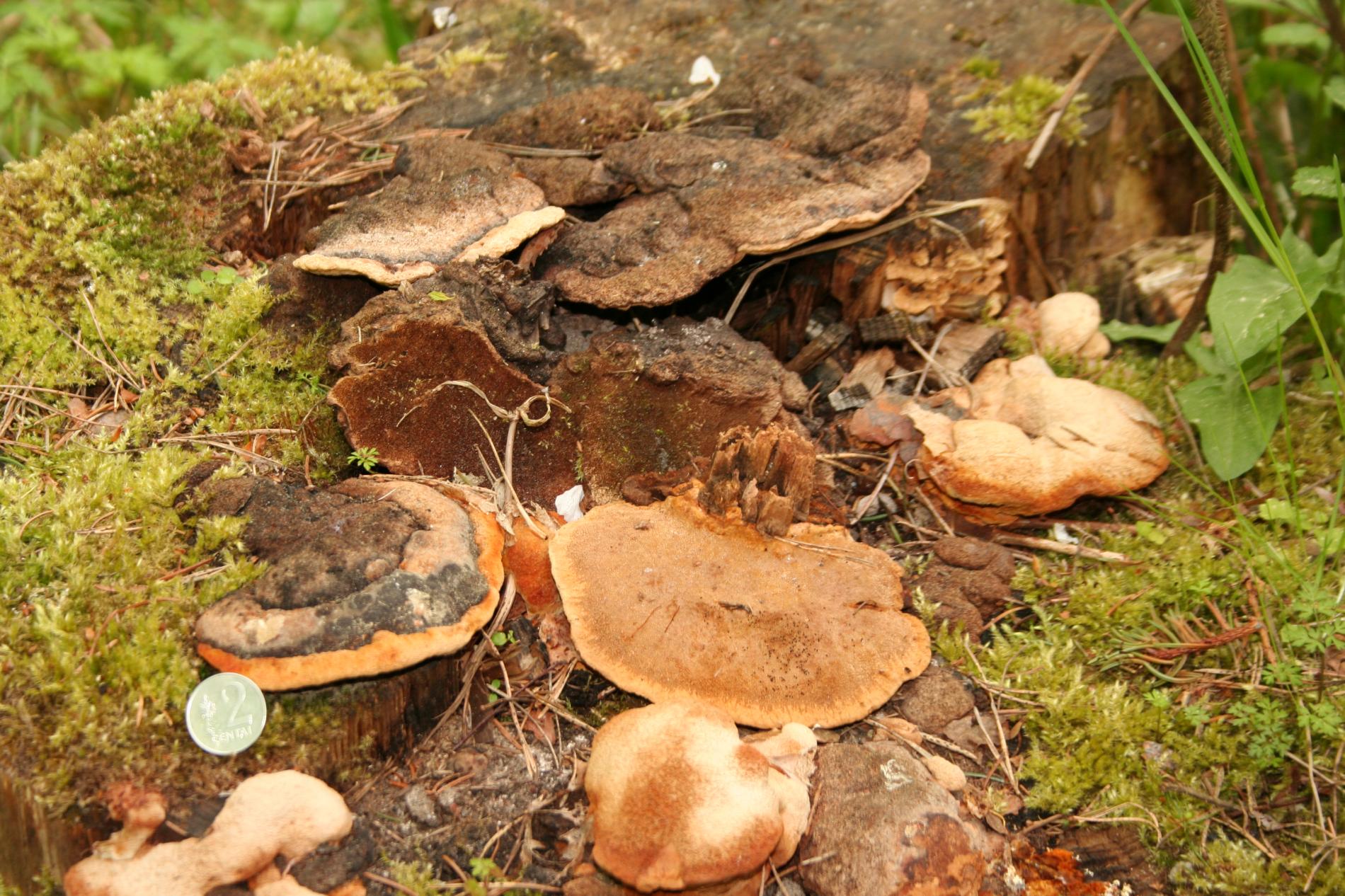
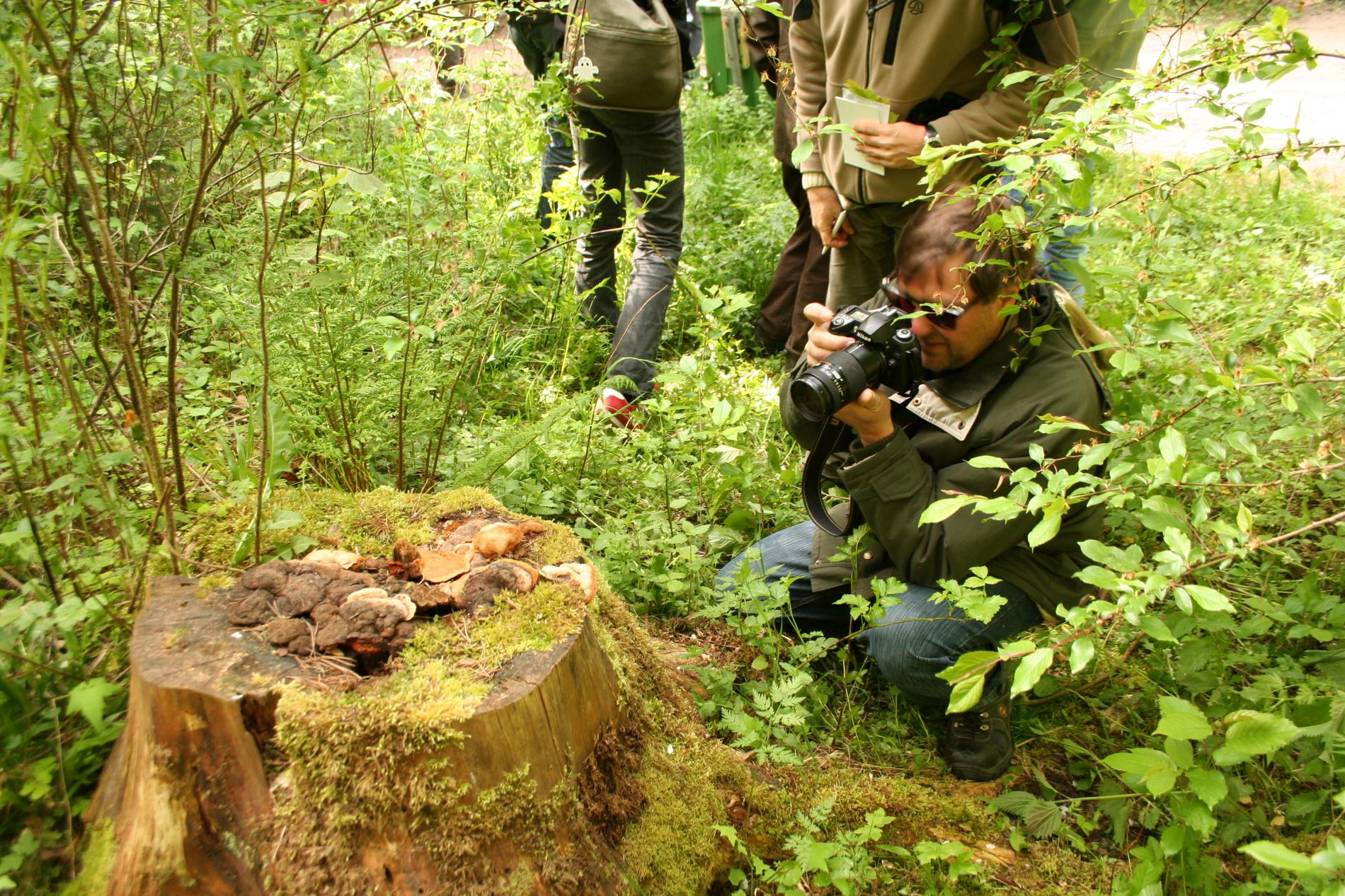
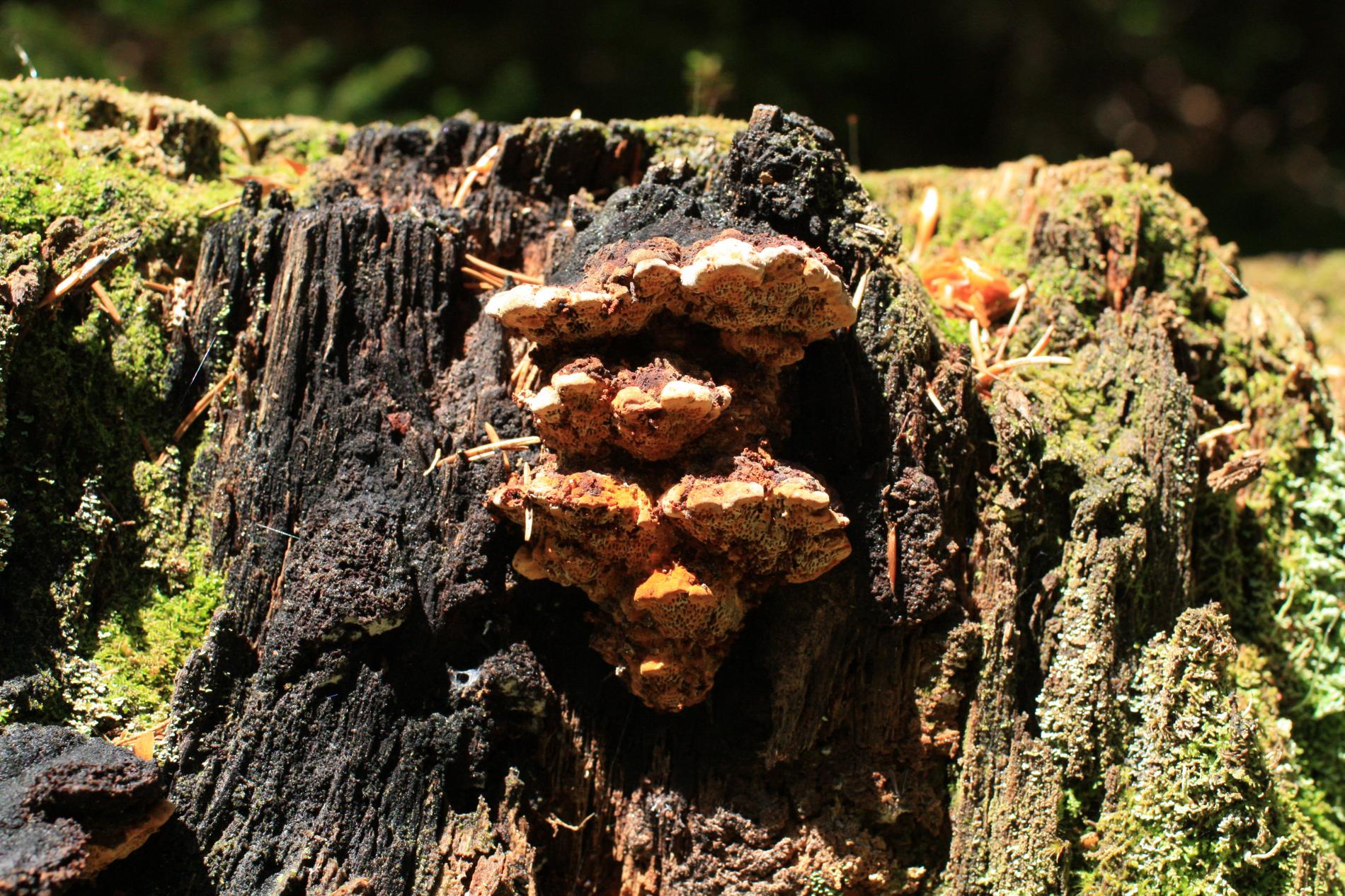
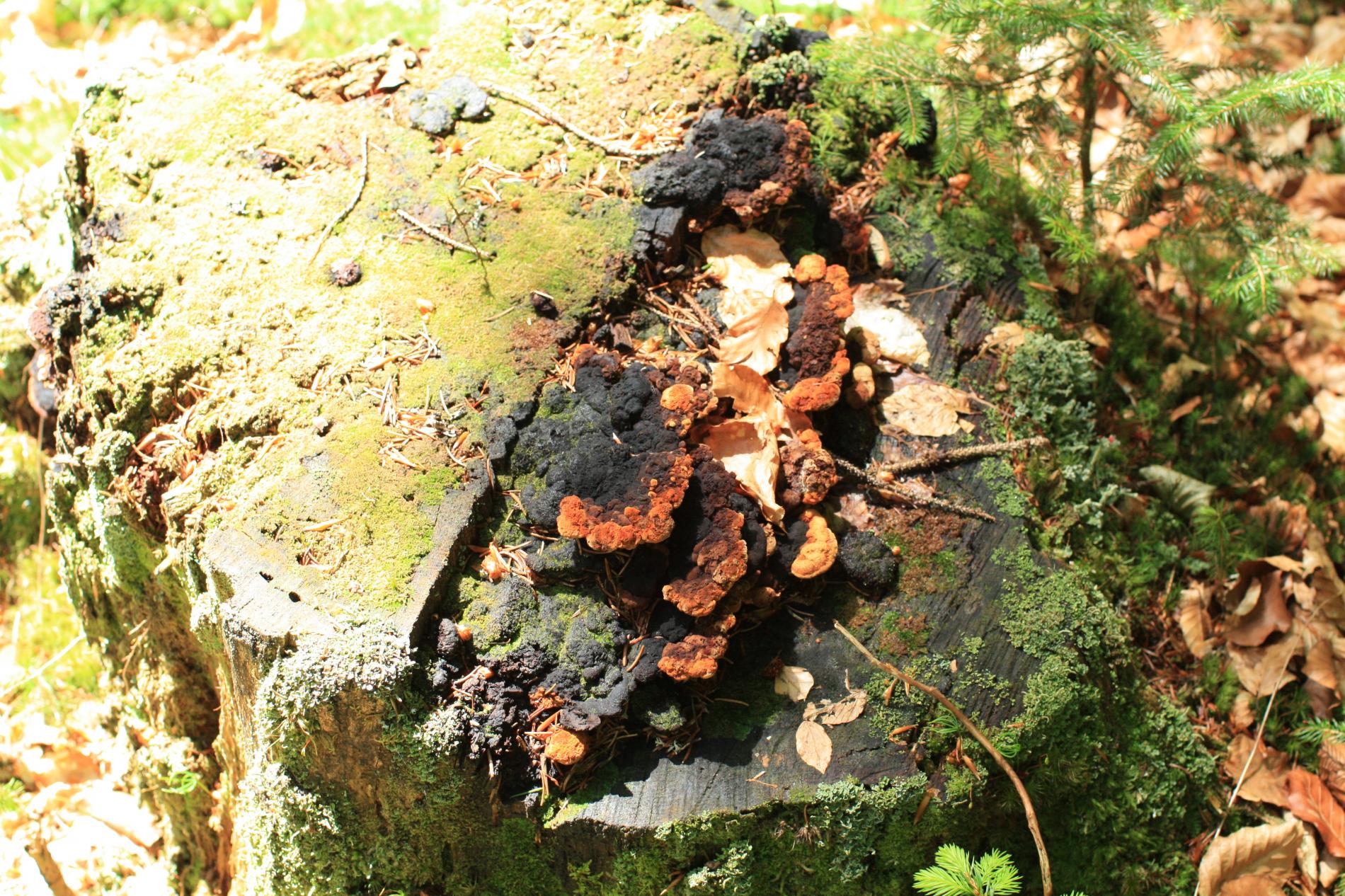
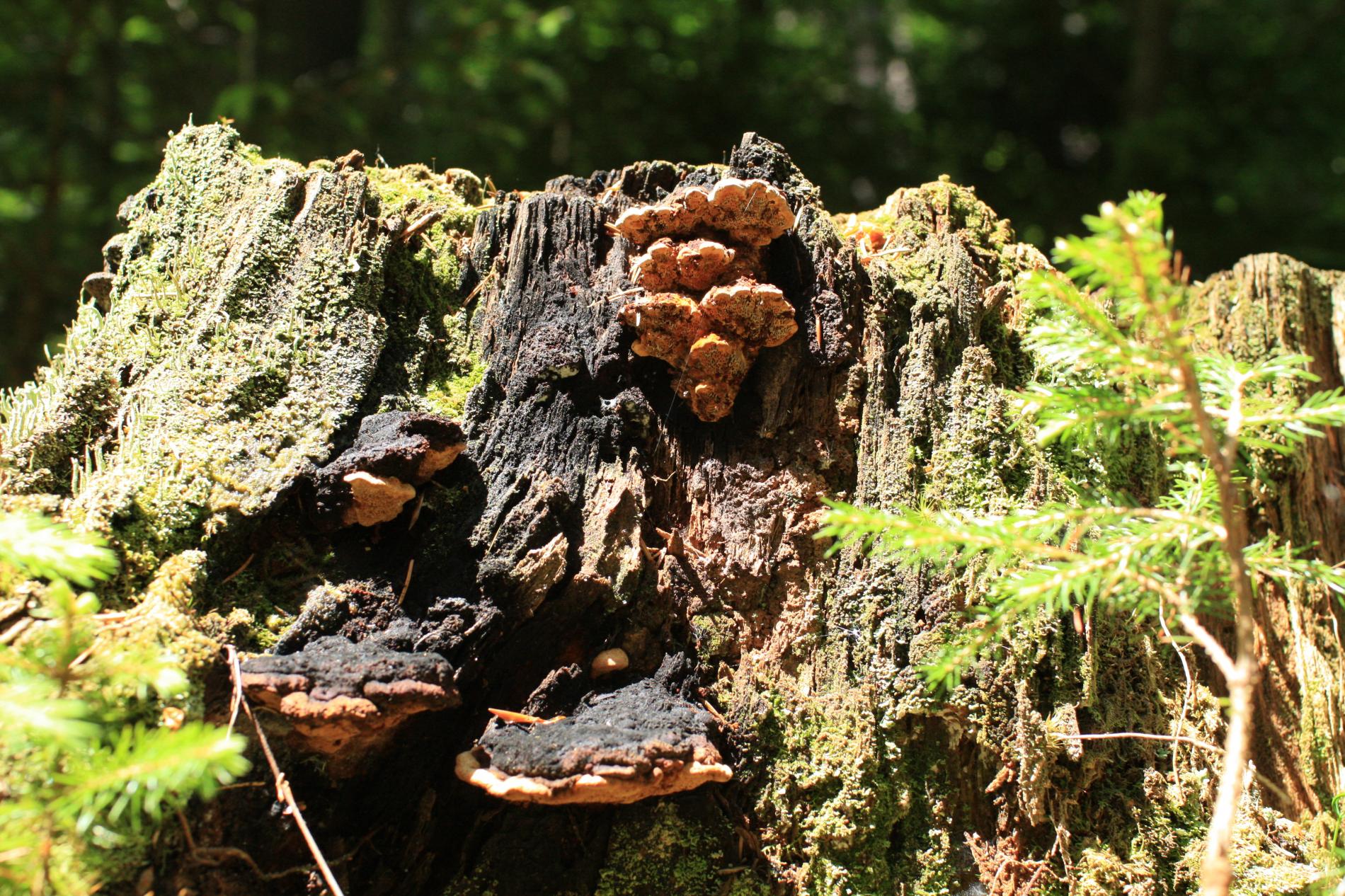
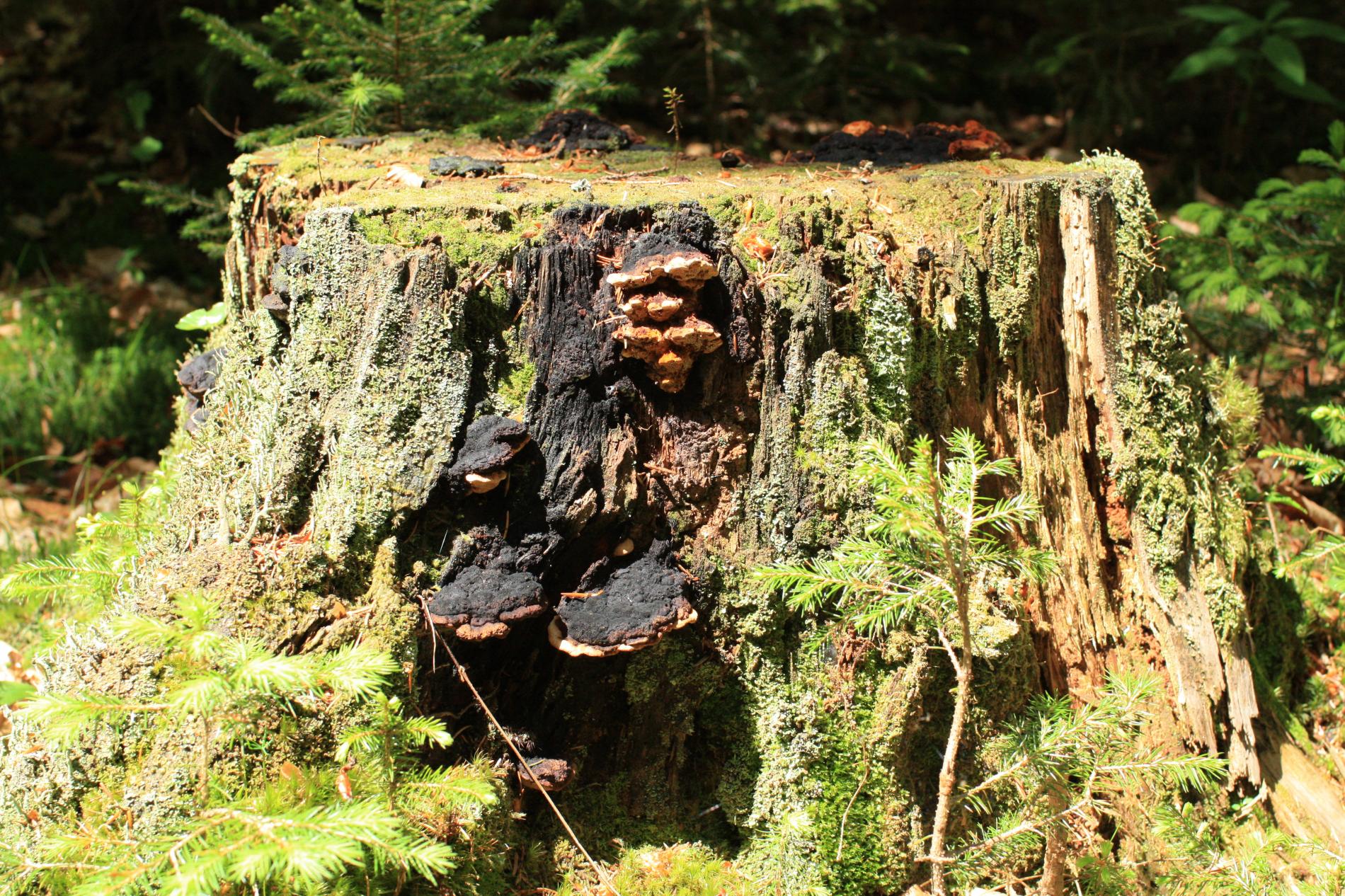
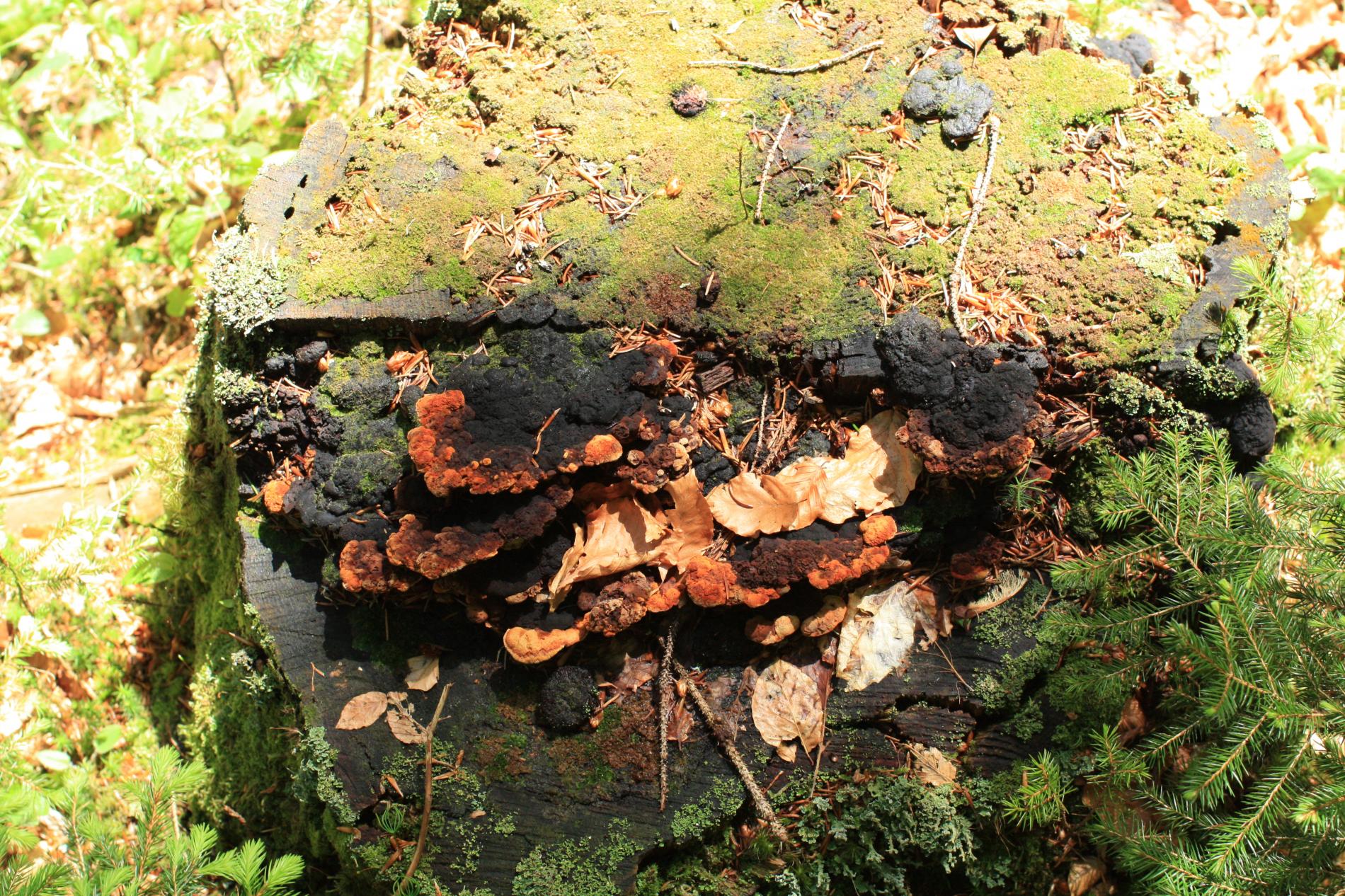
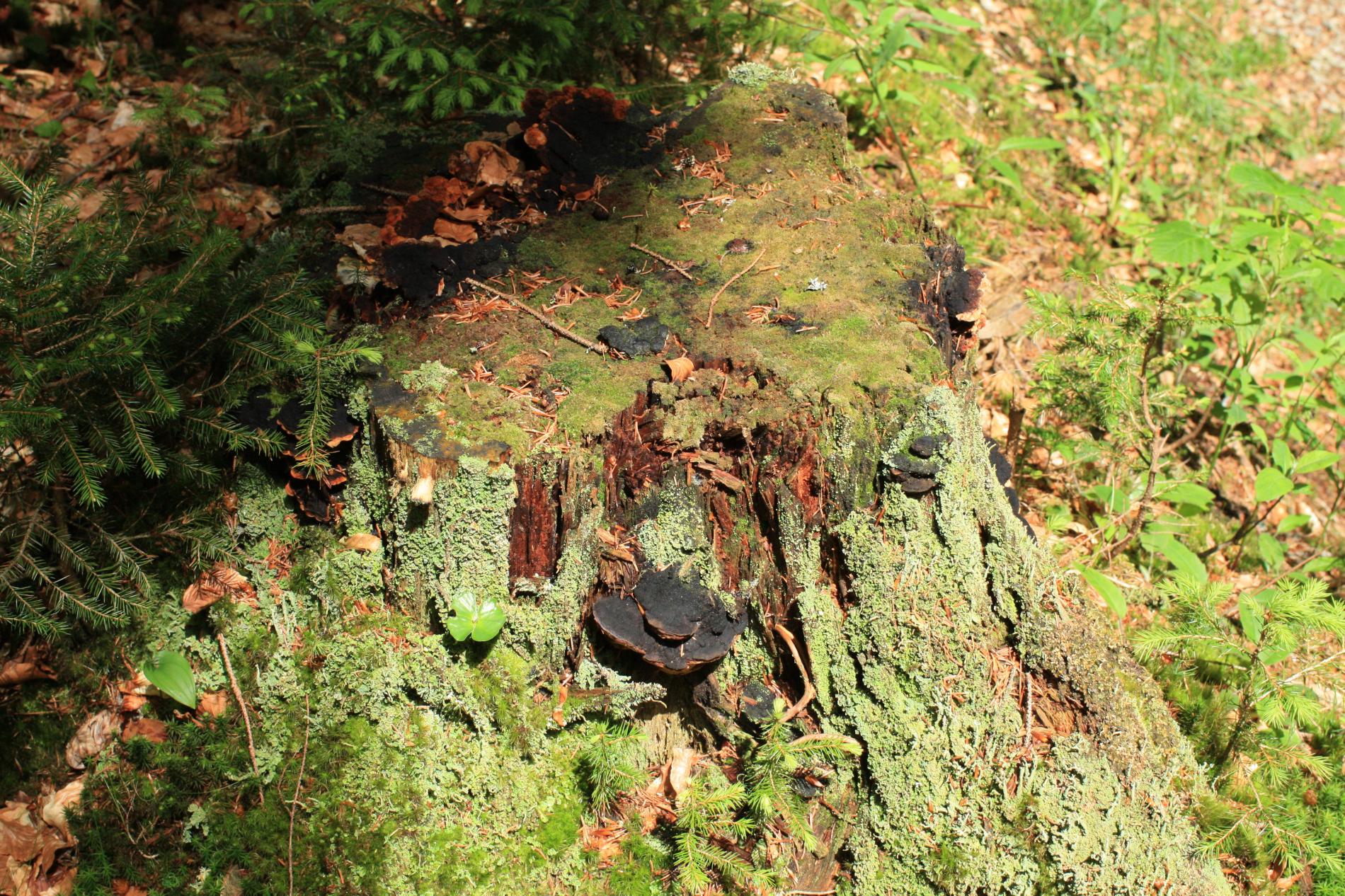
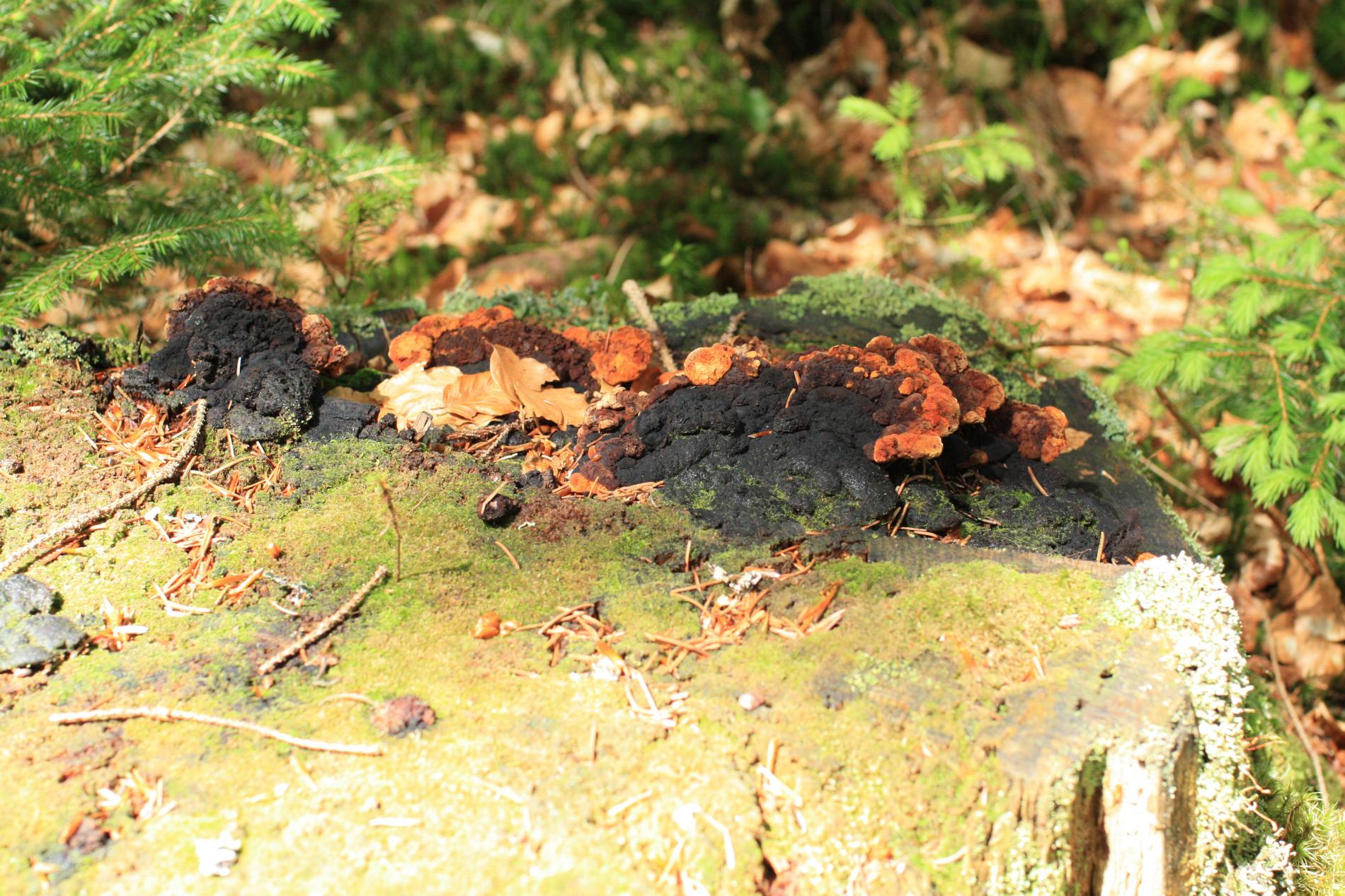
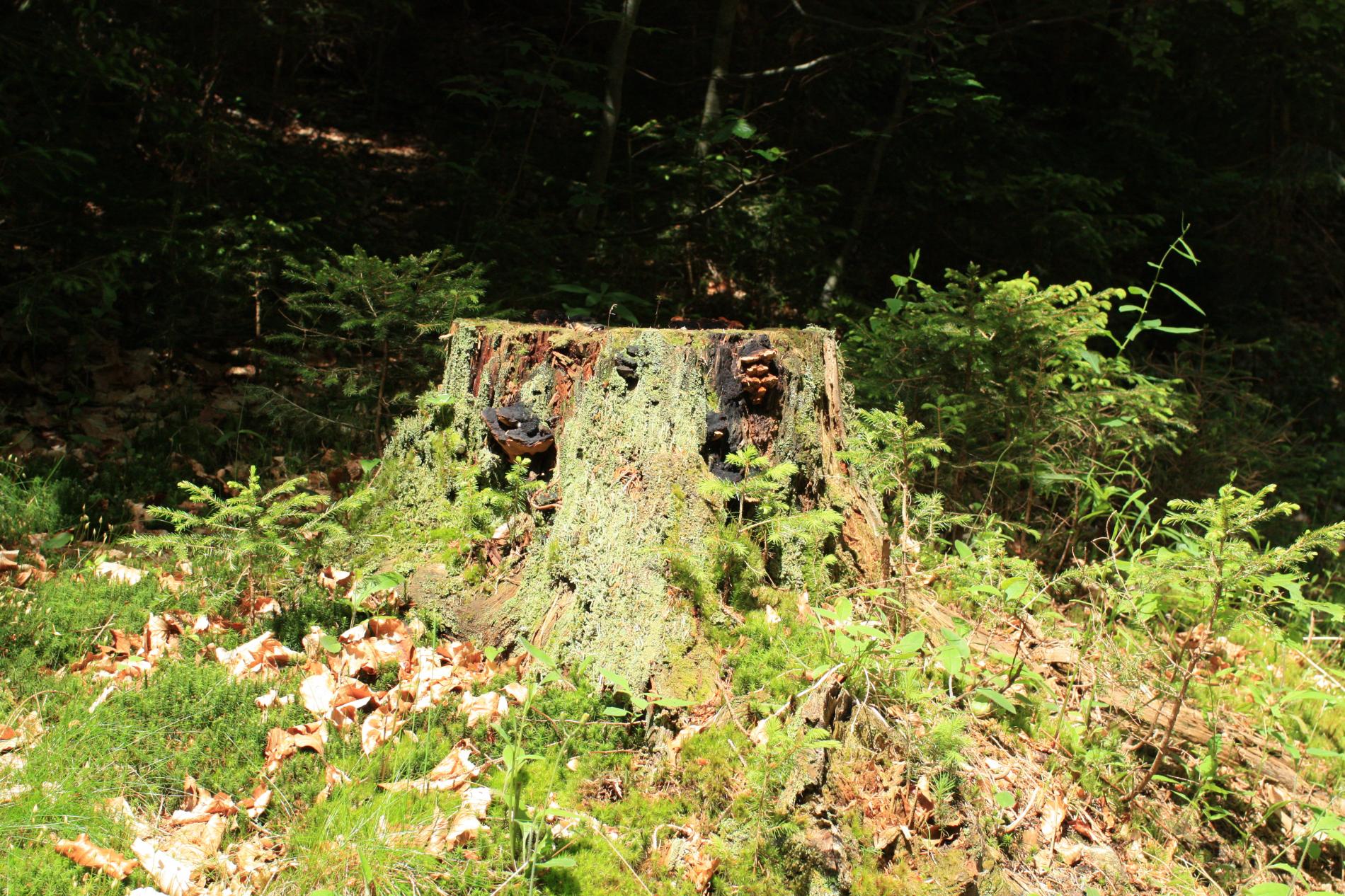
The fruiting bodies are perennial, of irregular fan shape, often laterally attached and arranged in overlapping shelves. Their “felty bracket” formations are often found on tree stumps. The cap is 5–15 cm across, with fine irregular lines on the top and uneven velvety surface.
The expanding edge is blunt, bright yellow or orange, older fruiting body parts are dark brown to black in the centre. When young, the pores are greyish orange, later darkening to dull brown. The fungus is saprophytic, the mycelium causing intensive red dry rot appearing as a brown linear discolouration in the spruce wood. With a tolerance for direct sunlight and higher temperatures, the fungus rather commonly develops its fruiting bodies on the surface of tree stumps. A characteristic feature of the fruiting bodies is their strong aniseed or fennel odour.
Presence of ocher-yellow perennials irregularly semicircular, often laterally overgrown and roof-like fruiting bodies.
Tree Species: Pine, Fir, Spruce, Larch
Part of a plant- attacked: Tree trunk
Pest significance: Harmful
Pest Category: Fungi
Invasive Species: No
Present in EU: Yes
Pest group: Fungi
Affected part of wood: Heartwood, Sapwood
Depth of damages: More than 5 cm depth, Under bark only, Up to 0,5 cm depth, Up to 2 cm depth, Up to 5 cm depth
The extent of damage: Whole trunk
Prevalence in Europe: Common
Damaged products: Firewood, Fresh timber logs (water still in the sapwood), Furniture, Lumber, boards and prisms, Wooden house constructions
Roundwood size: Diameter 50+, Diameter from 10 up to 50 cm
Pest subcategory: Brown-rot
Similar pests

Gloeophyllum sepiarium

Trametes versicolor
