


Ganoderma australe
Ganoderma root and butt rot
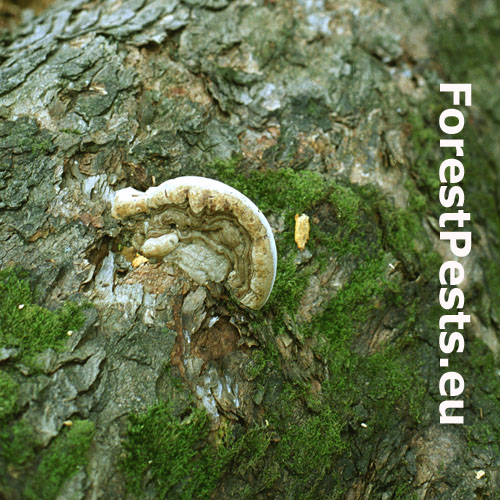
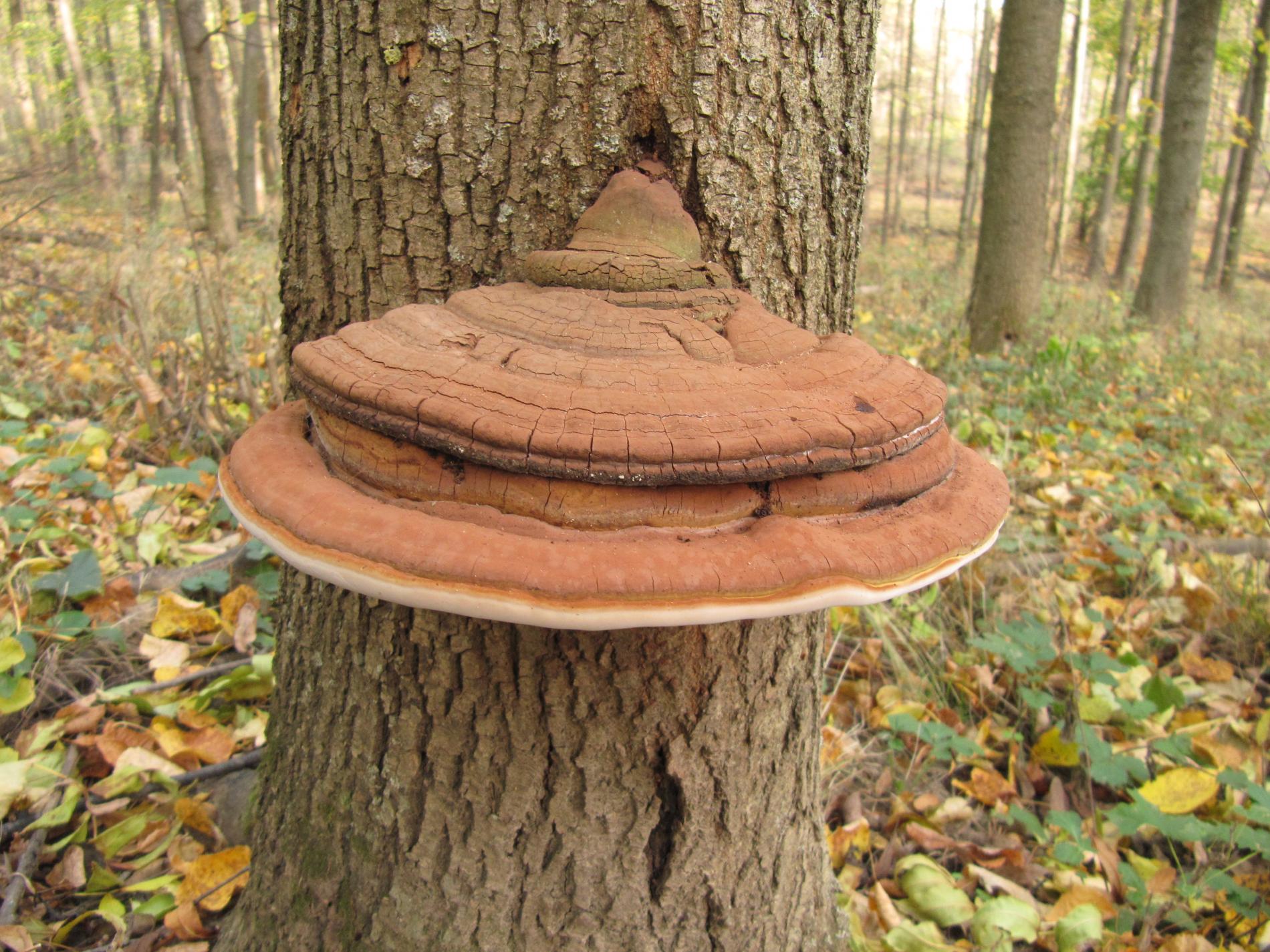
The fruiting bodies are perennial, bracket-like, up to 50 cm wide and 20 cm thick. The surface is dark brown, grooved, waved and covered with bark reaching up to 3 mm in thickness. Edges of the fruiting bodies are round and white at the time of increment. Similarly, the pores on the bottom side of the fruiting bodies are white first, later they are ochre to reddish-brown. The ecosystem of the fungus is the urban environment. It infects living or dead broadleaves, mostly in parks and alleys. Besides, a common symptom is intense spotty white rot of roots and the trunk. Infected wood is covered with black pseudosclerosis lines.
Fruiting bodies on the trunk.
Tree Species: Oak, Maple, Lime, Horse Chestnut
Part of a plant- attacked: Tree trunk, Roots
Pest significance: Harmful
Pest Category: Fungi
Invasive Species: No
Present in EU: Yes
Pest group: Fungi
Affected part of wood: Heartwood, Sapwood
Depth of damages: More than 5 cm depth, Under bark only, Up to 0,5 cm depth, Up to 2 cm depth, Up to 5 cm depth
The extent of damage: Whole trunk
Prevalence in Europe: Common
Damaged products: Firewood, Fresh timber logs (water still in the sapwood), Furniture, Lumber, boards and prisms, Wooden house constructions
Roundwood size: Diameter 50+, Diameter from 10 up to 50 cm
Pest subcategory: Brown-rot, White-rot
Similar pests

Gloeophyllum sepiarium

Ganoderma applanatum (= lipsiense)
