


Fuzáč Semanotus laurasi
Longhorn beetle Semanotus laurasi
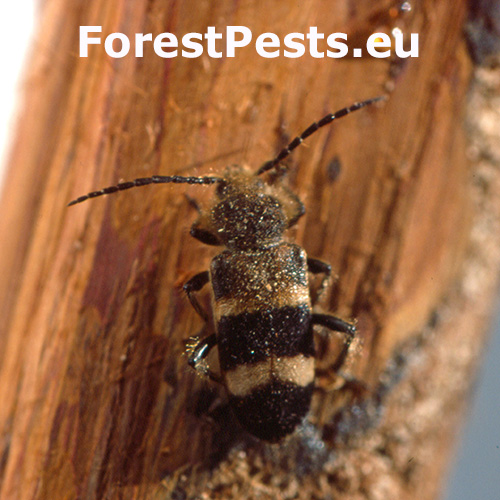
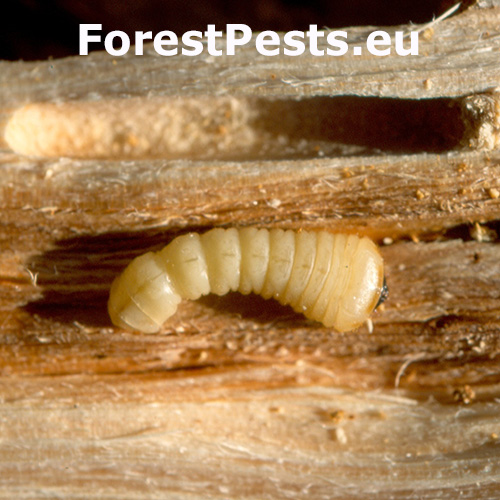
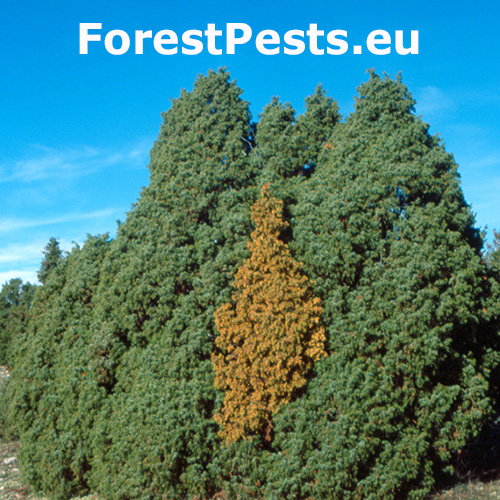
Longhorn beetle Semanotus laurasi is a species of longhorn beetle (Cerambycidae) associated mainly with coniferous trees of the family Cupressaceae. Larvae develop under the bark and in the outer wood of weakened, stressed or recently dead host plants. The species is primarily linked to cypresses (Cupressus spp.), junipers (Juniperus spp.) and arborvitae (Thuja spp.), especially in ornamental plantings, parks and cemeteries. Adult beetles usually appear in spring and early summer, while larval development takes place hidden within the wood. The species has one generation per year. The intensity of attack is usually not strong, but repeated colonisation can worsen the overall health condition of host trees and negatively affect their aesthetic appearance, particularly in hedges and solitary ornamental trees. In Europe, the species is distributed mainly in southern and western regions, with records gradually extending northwards, often connected with the planting of ornamental Cupressaceae.
On branches and stems, elongated exit holes are present. Under the bark, irregular larval galleries occur, often accompanied by resin flow and accumulations of fine wood dust.
Tree Species: Juniper, Cypress
Pest significance: Less harmful
Pest Category: Insects
Present in EU: Yes
Pest group: Insect
Affected part of wood: Sapwood
Depth of damages: Bark, Under bark only, Up to 0,5 cm depth, Up to 2 cm depth, Up to 5 cm depth
The extent of damage: Individually - one place, Lokally
Prevalence in Europe: Rare
Damaged products: Firewood, Fresh timber logs (water still in the sapwood), Lumber, boards and prisms
Roundwood size: Branches and twigs, Diameter from 10 up to 50 cm, Diameter up to 10 cm
Wood discoloration: No
Exit holes: Oval
Pest subcategory: Bark and underbark insect
Similar pests
