


False heardwood
False heardwood
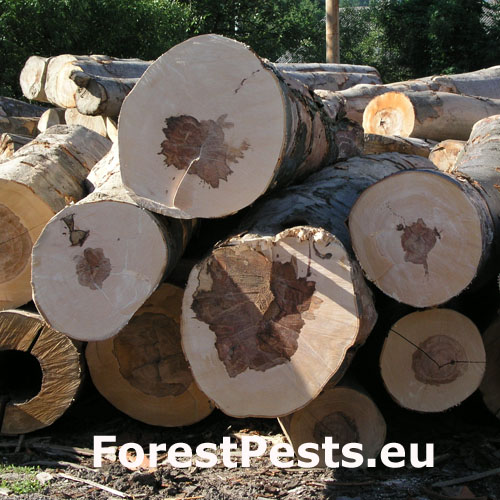
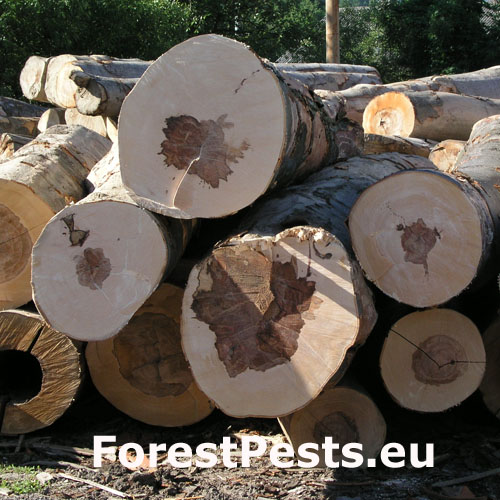
The color of oxidation stains of heardwood is brown, e.g. in beech or gray-brown e.g. in oak. Staining begins when oxygen penetrates the heardwood and comes into contact with phenolic compounds in the cells (oxidative staining of the core wood). This is associated with a decrease in the moisture content of the strain below 50%, tulle in the vessels and the death of parenchymal cells of the heardwood of the sawn log. Fungi are not involved in this process. Such a false hardwood does not affect the mechanical properties of the log, but reduces the efficiency of wood impregnation, reduces the value of veneer and later such logs are more easily attacked by fungi causing white rot, which already mechanically weakens the log.
Dark center of the trunk.
Tree Species: Beech, Oak
Part of a plant- attacked: Tree trunk
Pest significance: Less harmful
Pest Category: Other
Invasive Species: No
Present in EU: Yes
Pest group: Fungi
Affected part of wood: Heartwood
Depth of damages: More than 5 cm depth, Under bark only, Up to 0,5 cm depth, Up to 2 cm depth, Up to 5 cm depth
The extent of damage: Whole trunk
Prevalence in Europe: Very common
Damaged products: Firewood, Furniture, Lumber, boards and prisms, Wood chips, Wooden house constructions
Roundwood size: Diameter 50+, Diameter from 10 up to 50 cm
Wood discoloration: Yes
Pest subcategory: White-rot
Similar pests

Phytophthora cambivora

Pezicula cinnamomea
