


Cytospora chrysosperma
Cytospora canker C. chrysosperma
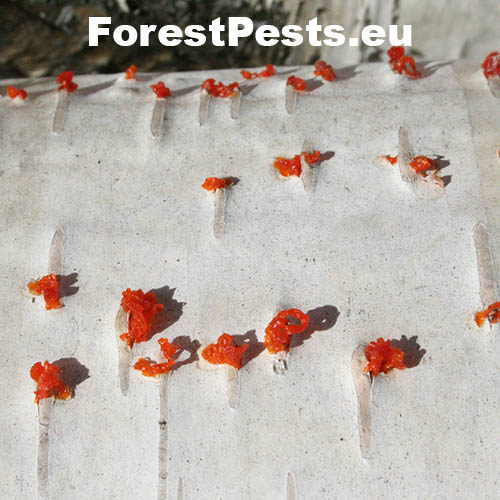
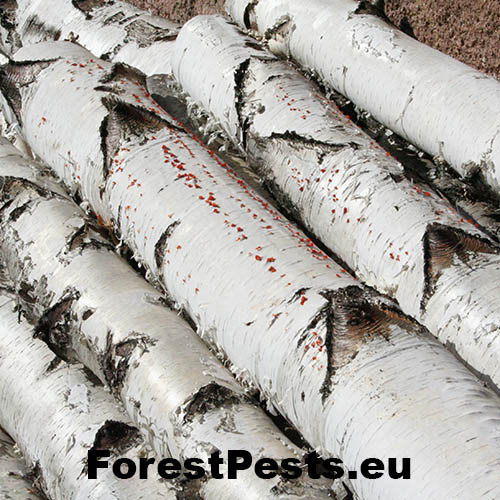
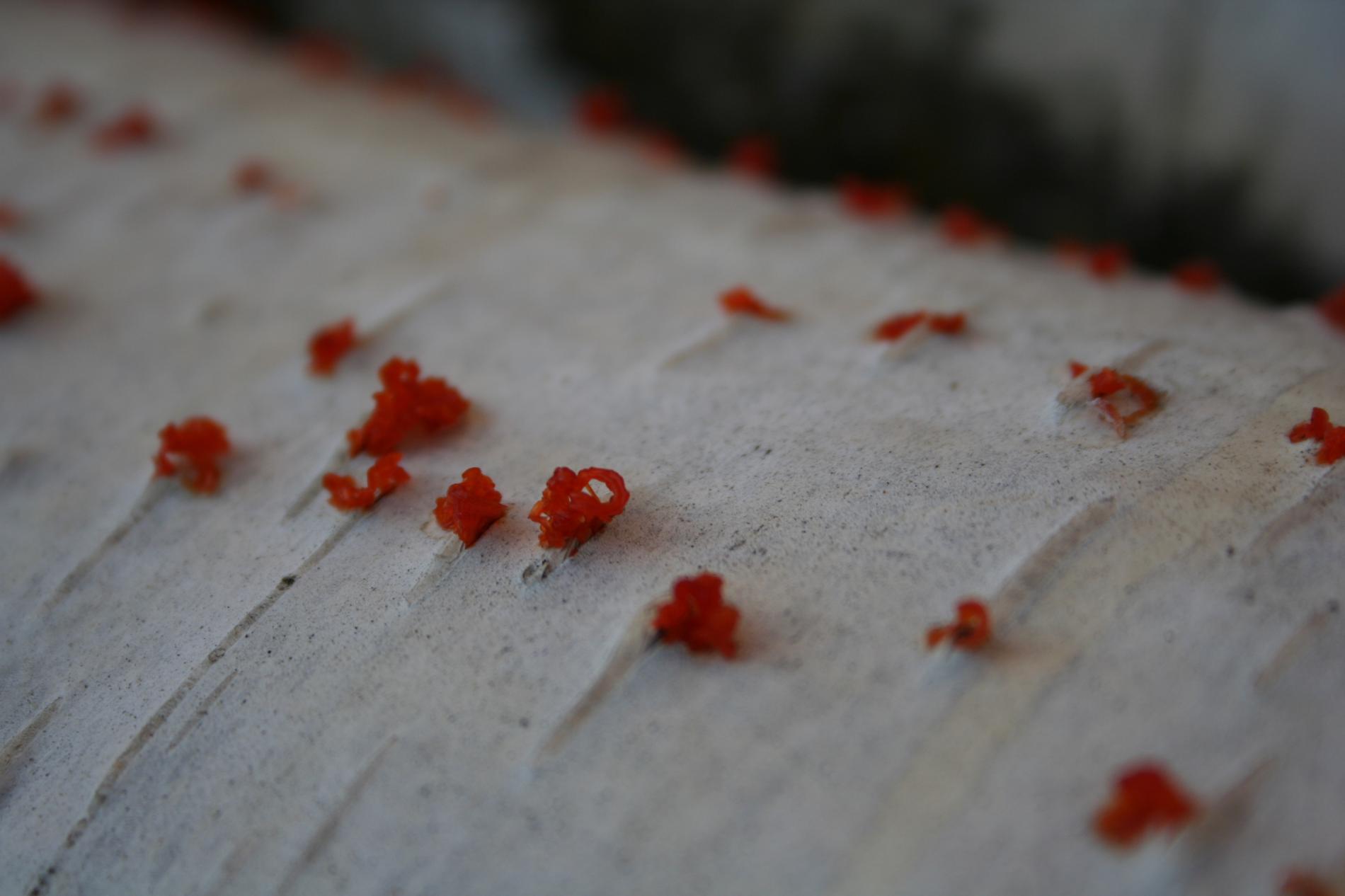
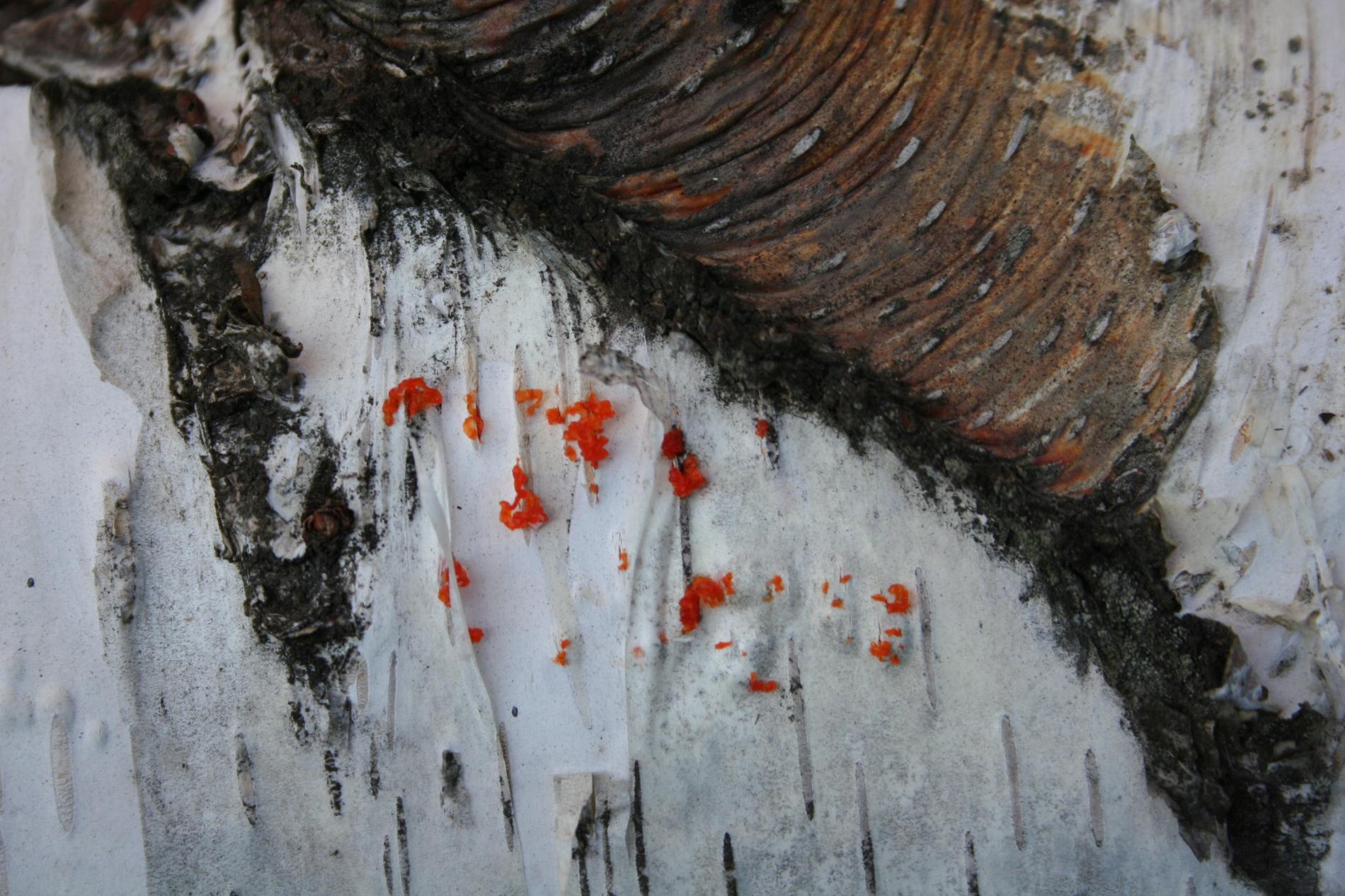
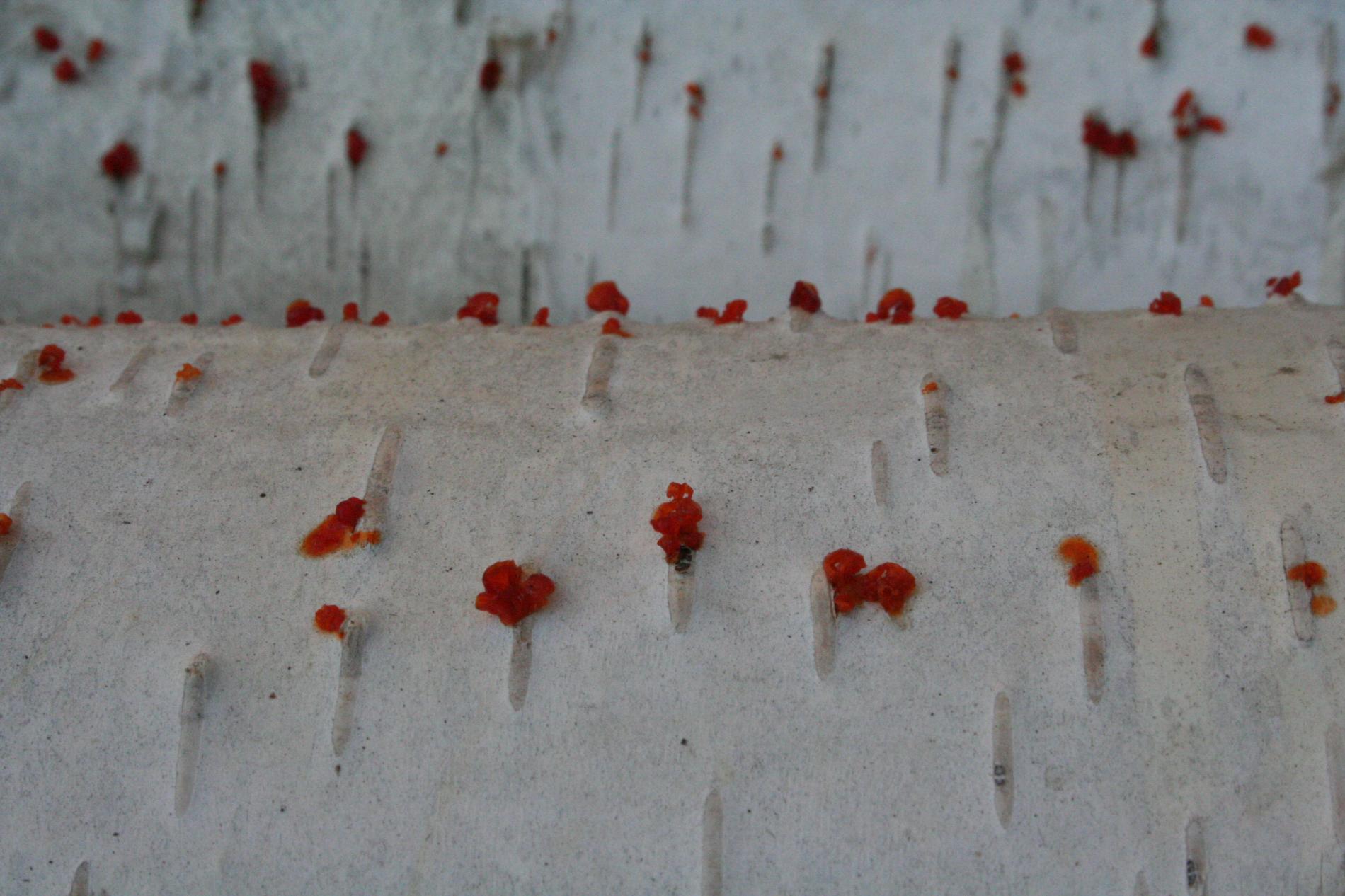
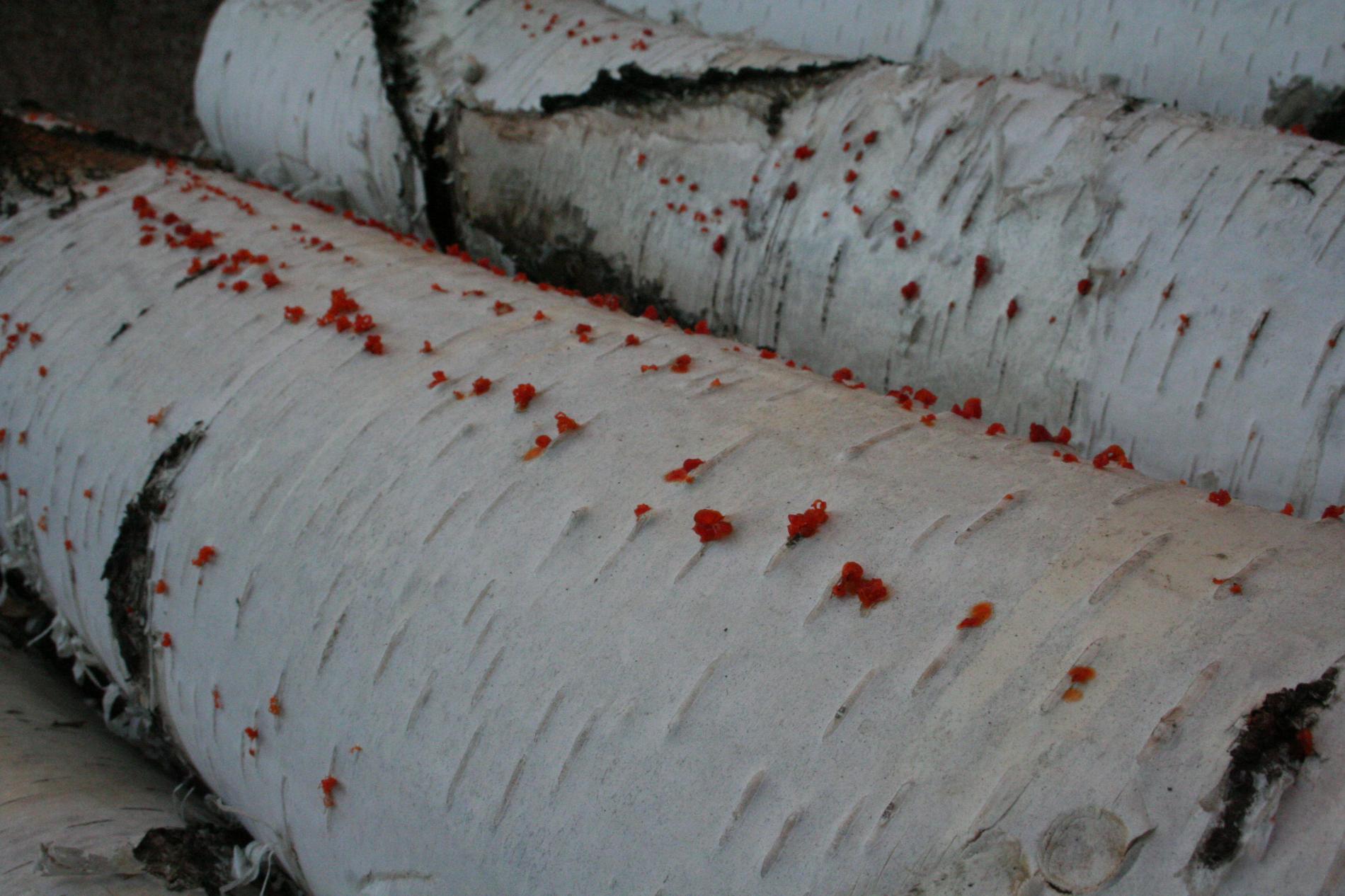
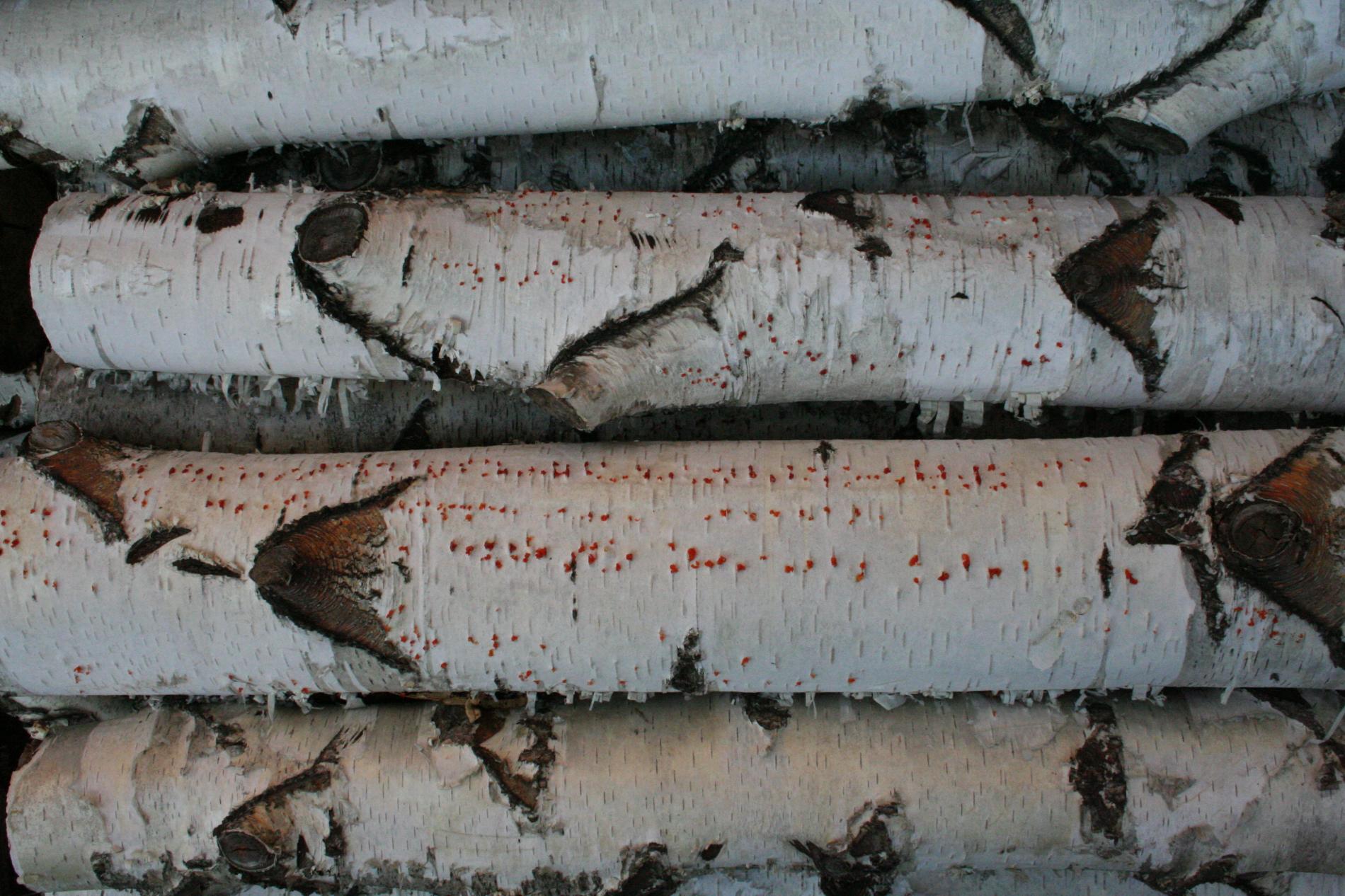
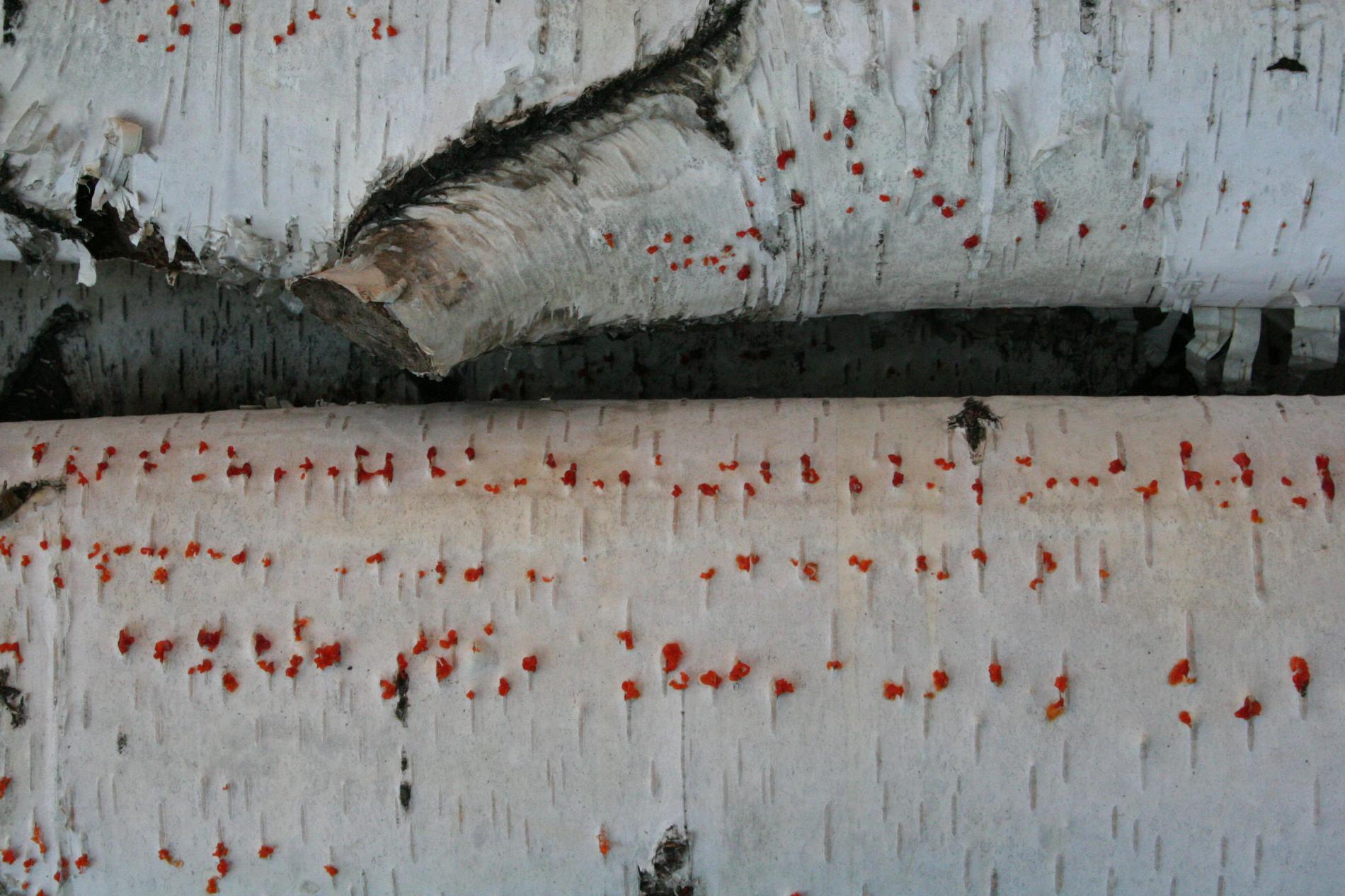
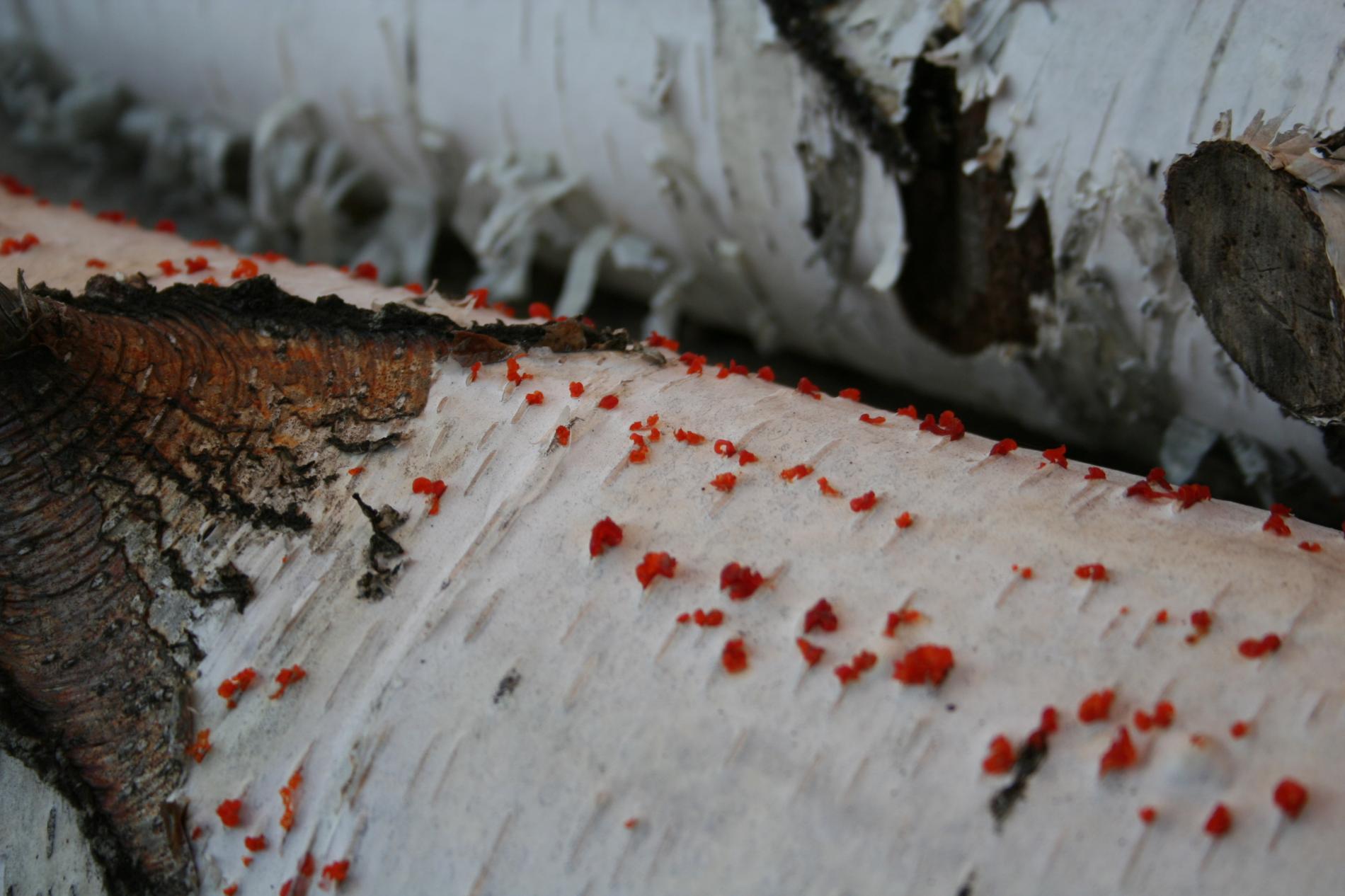
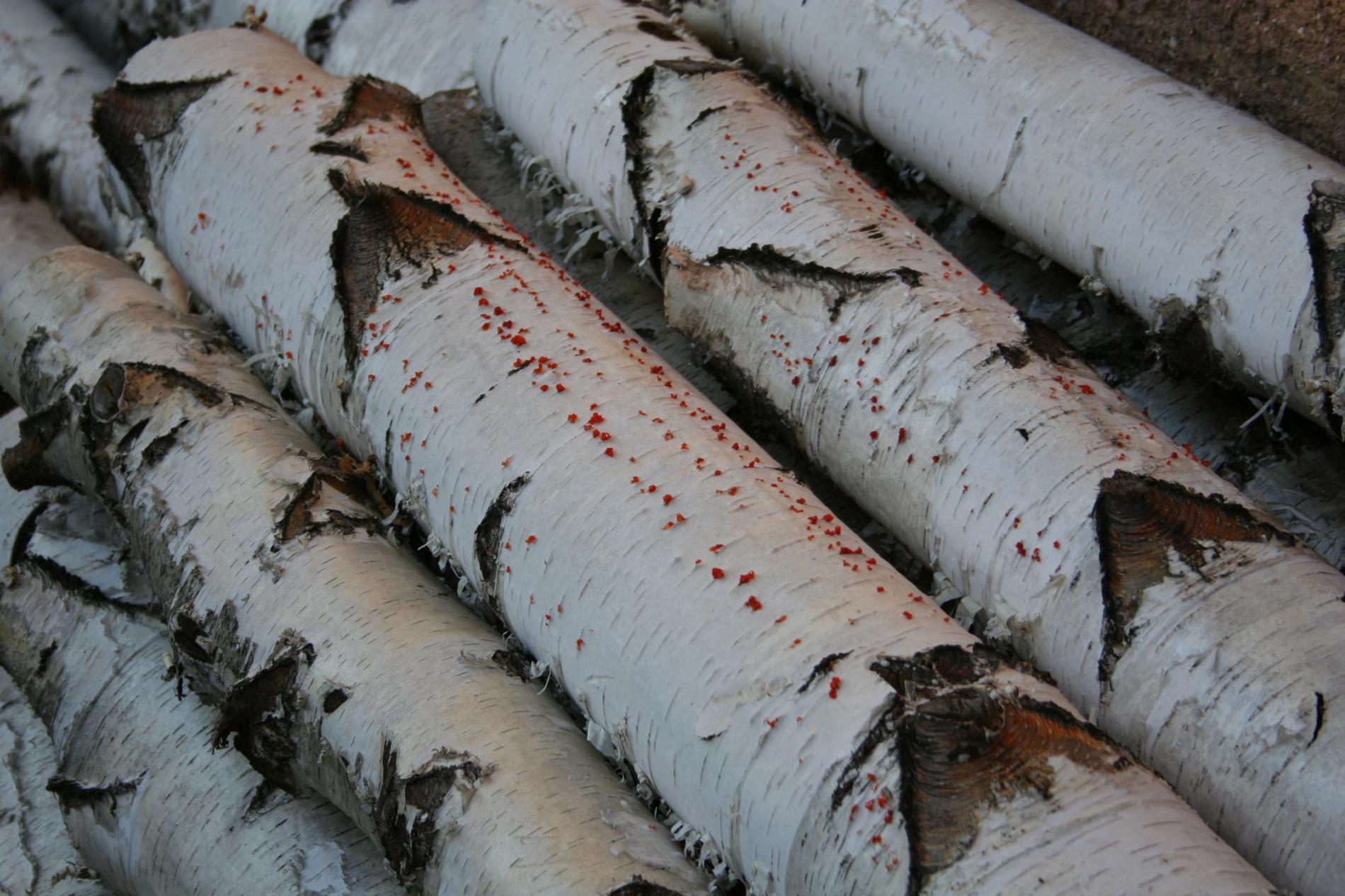
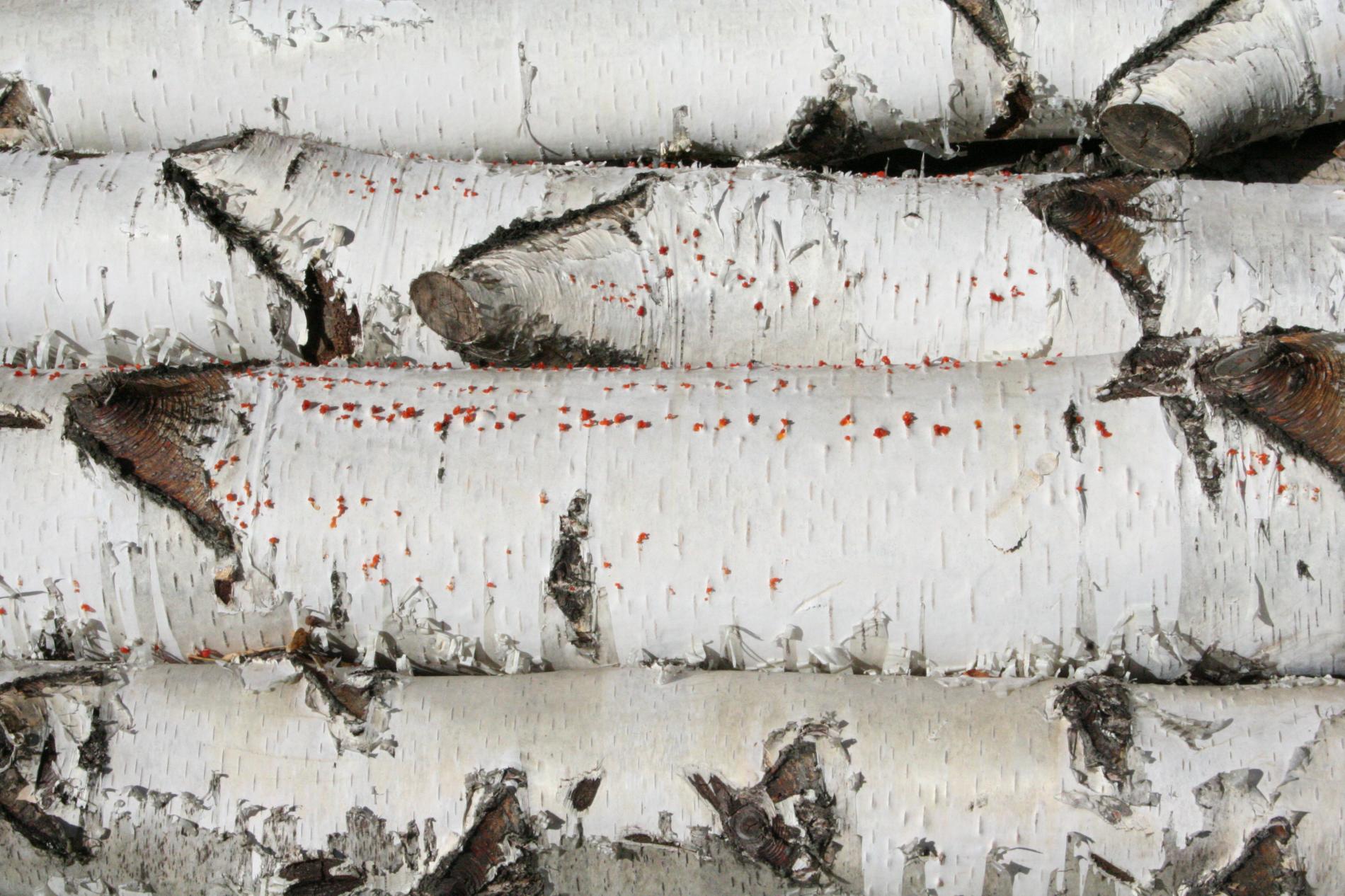
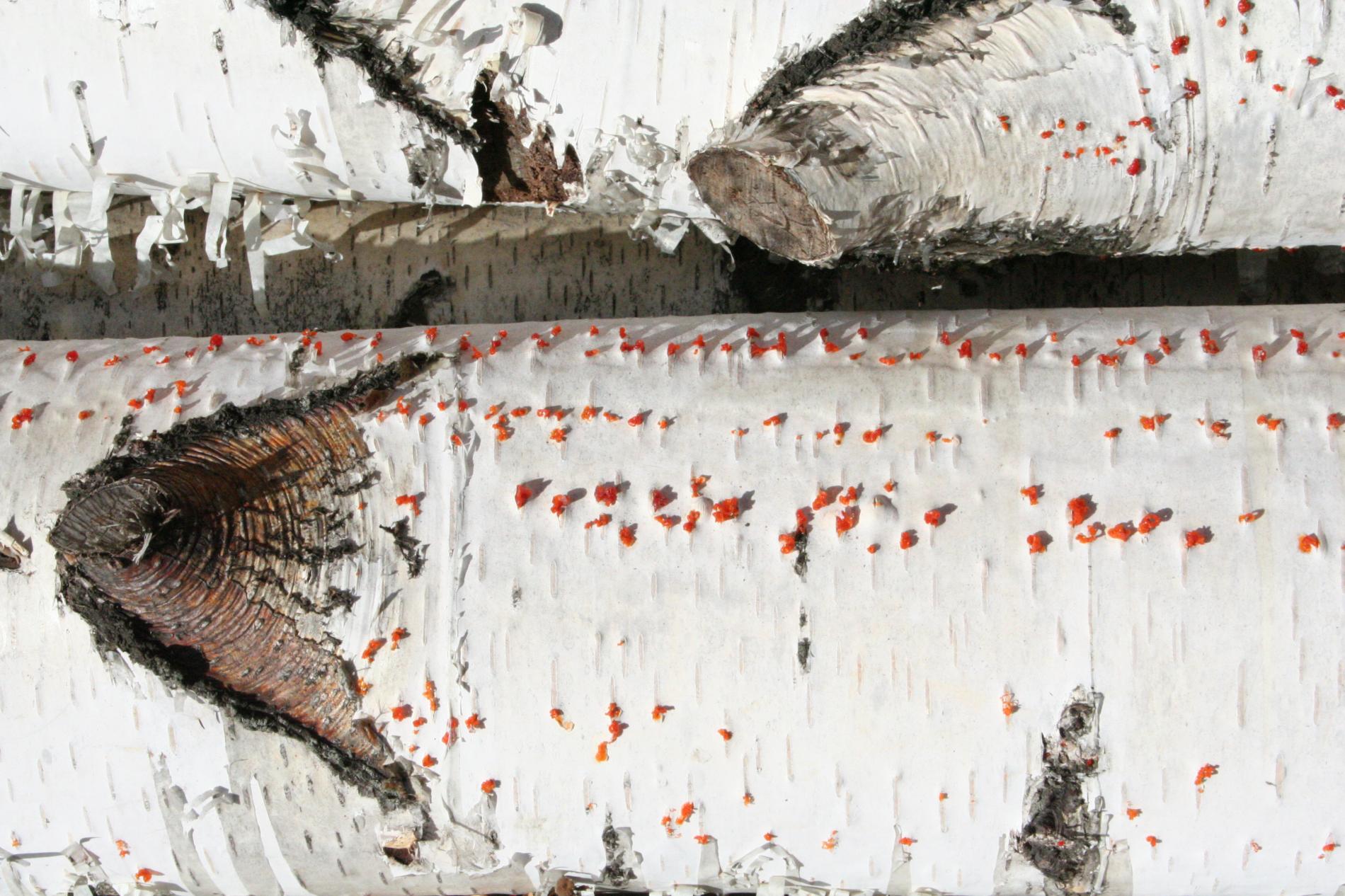
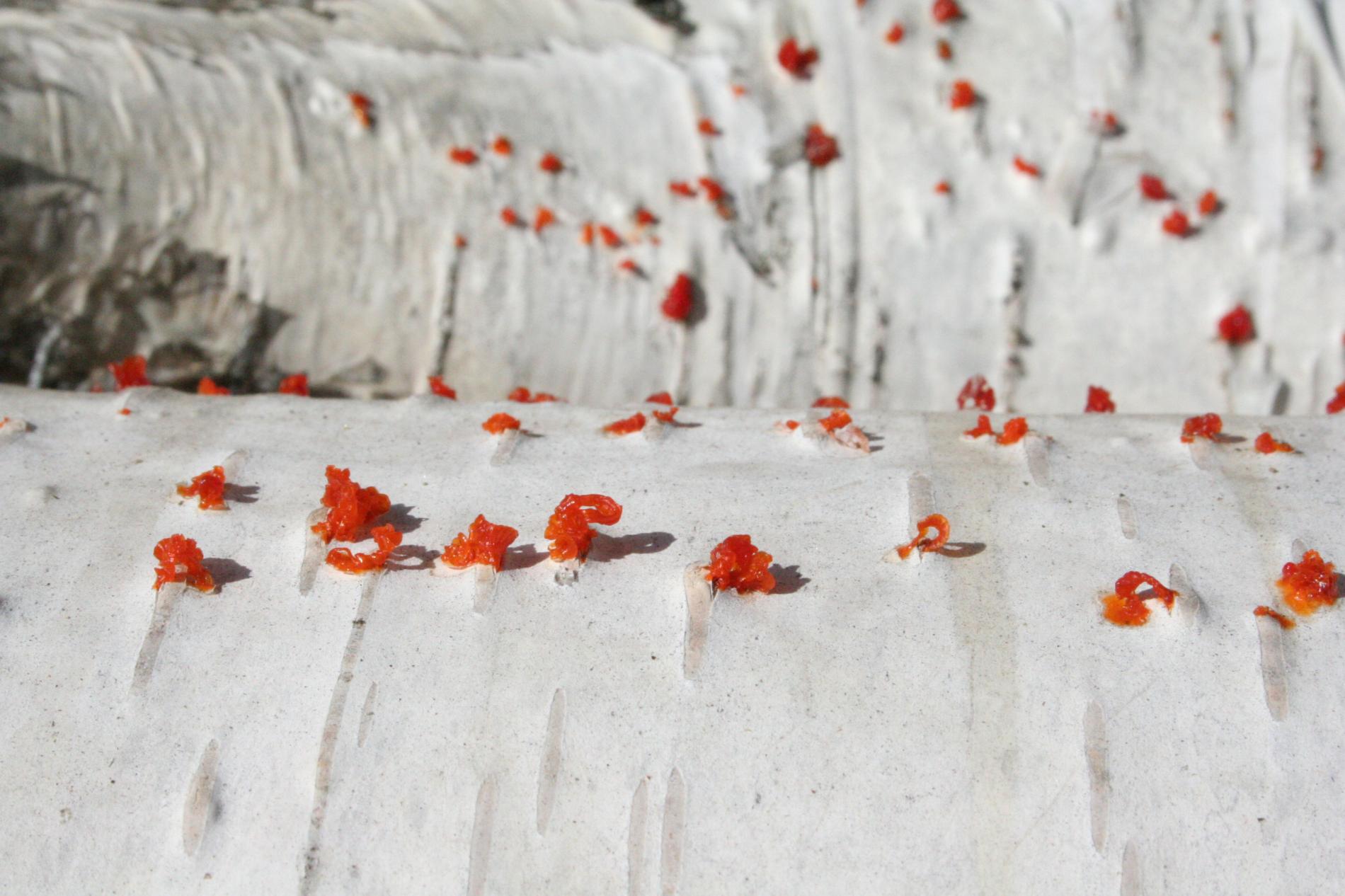
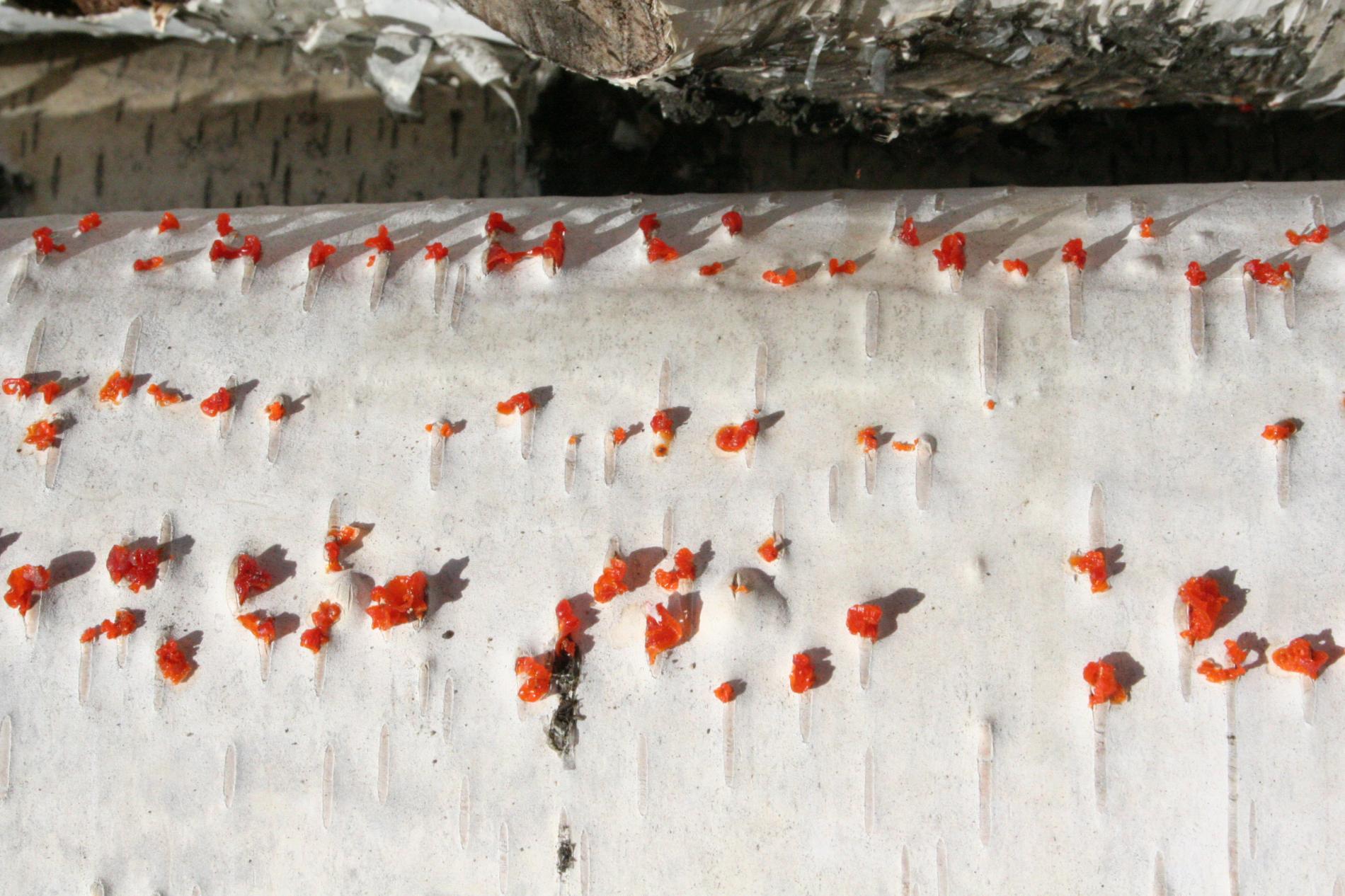
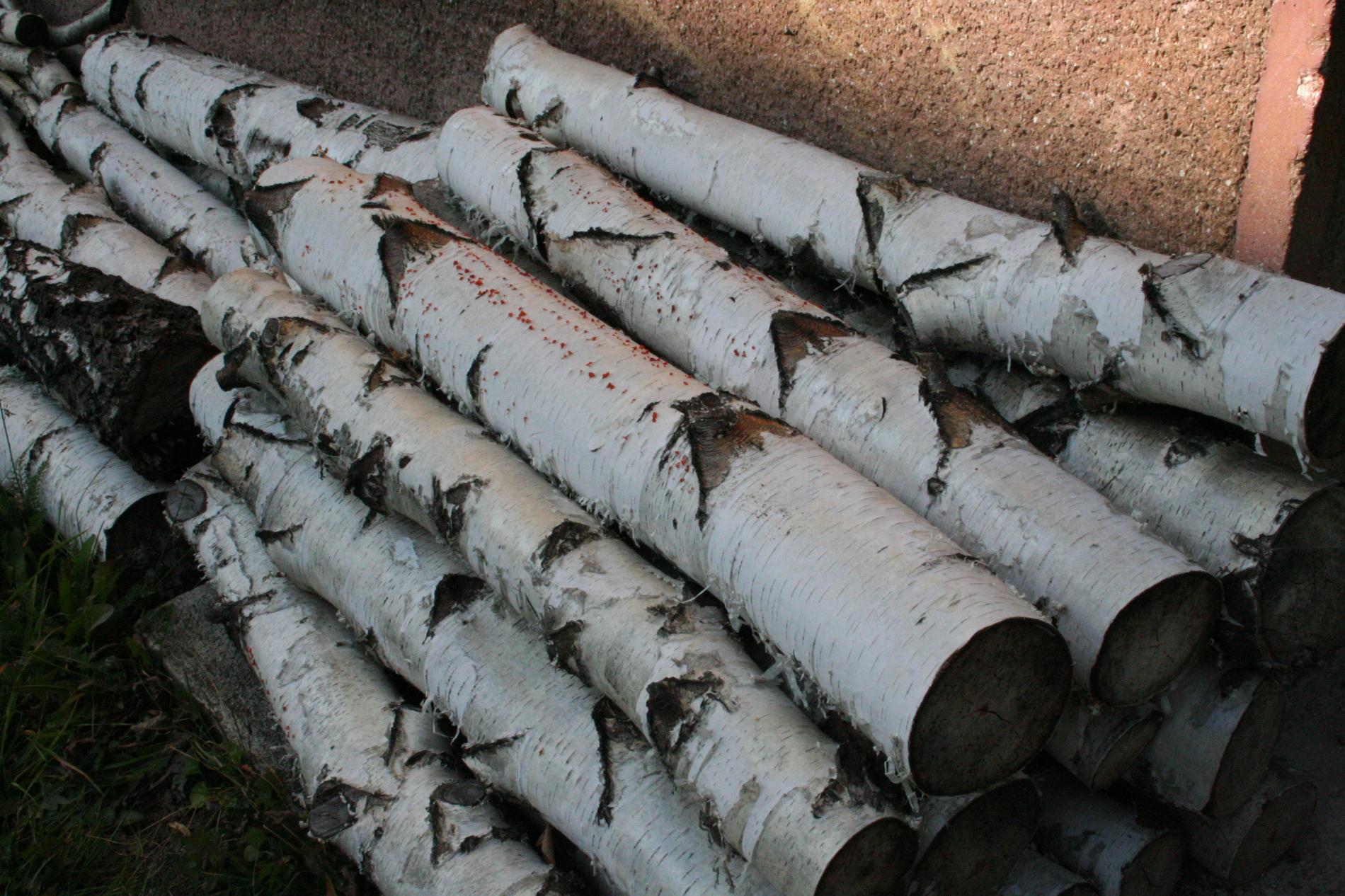
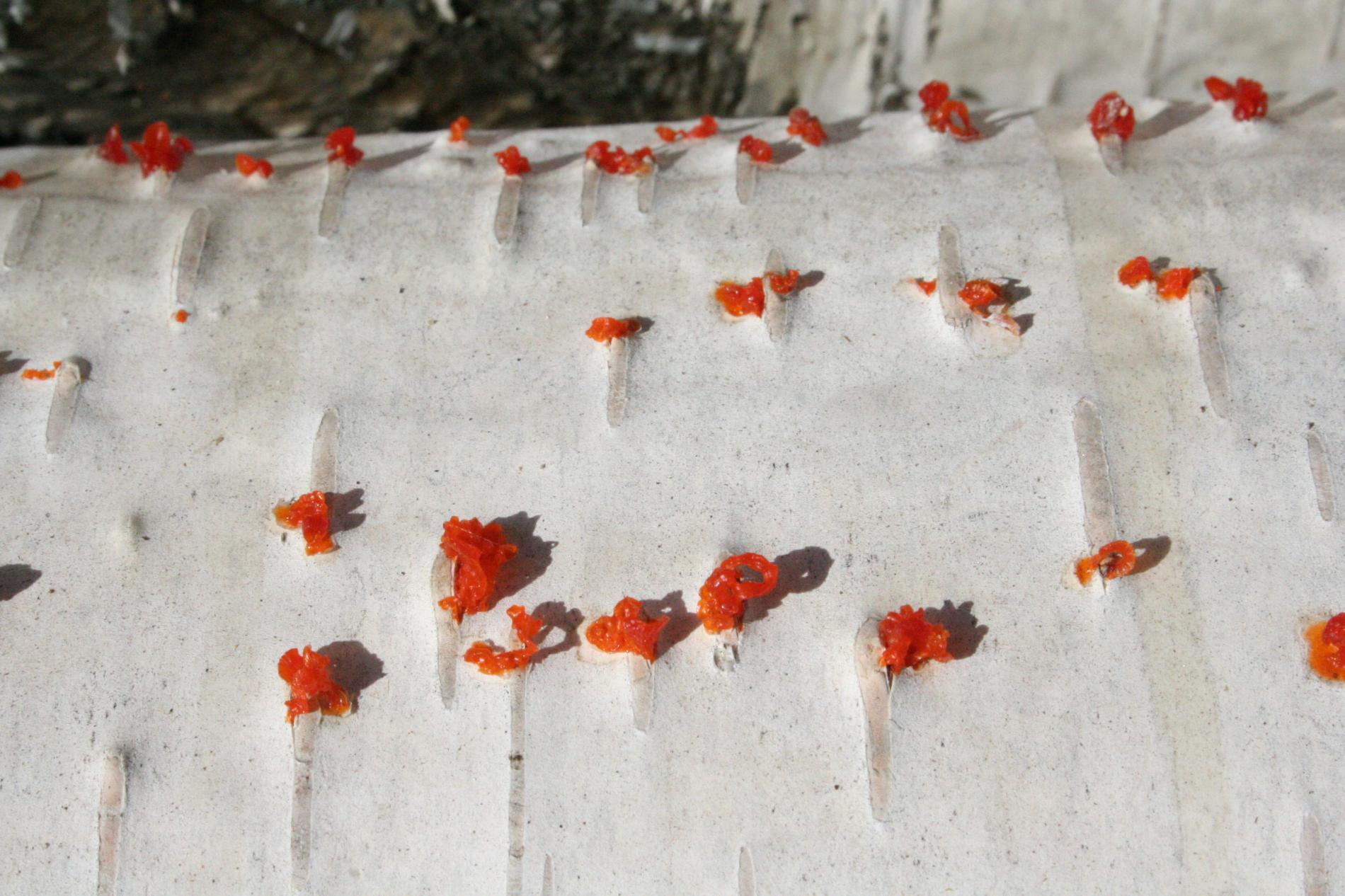
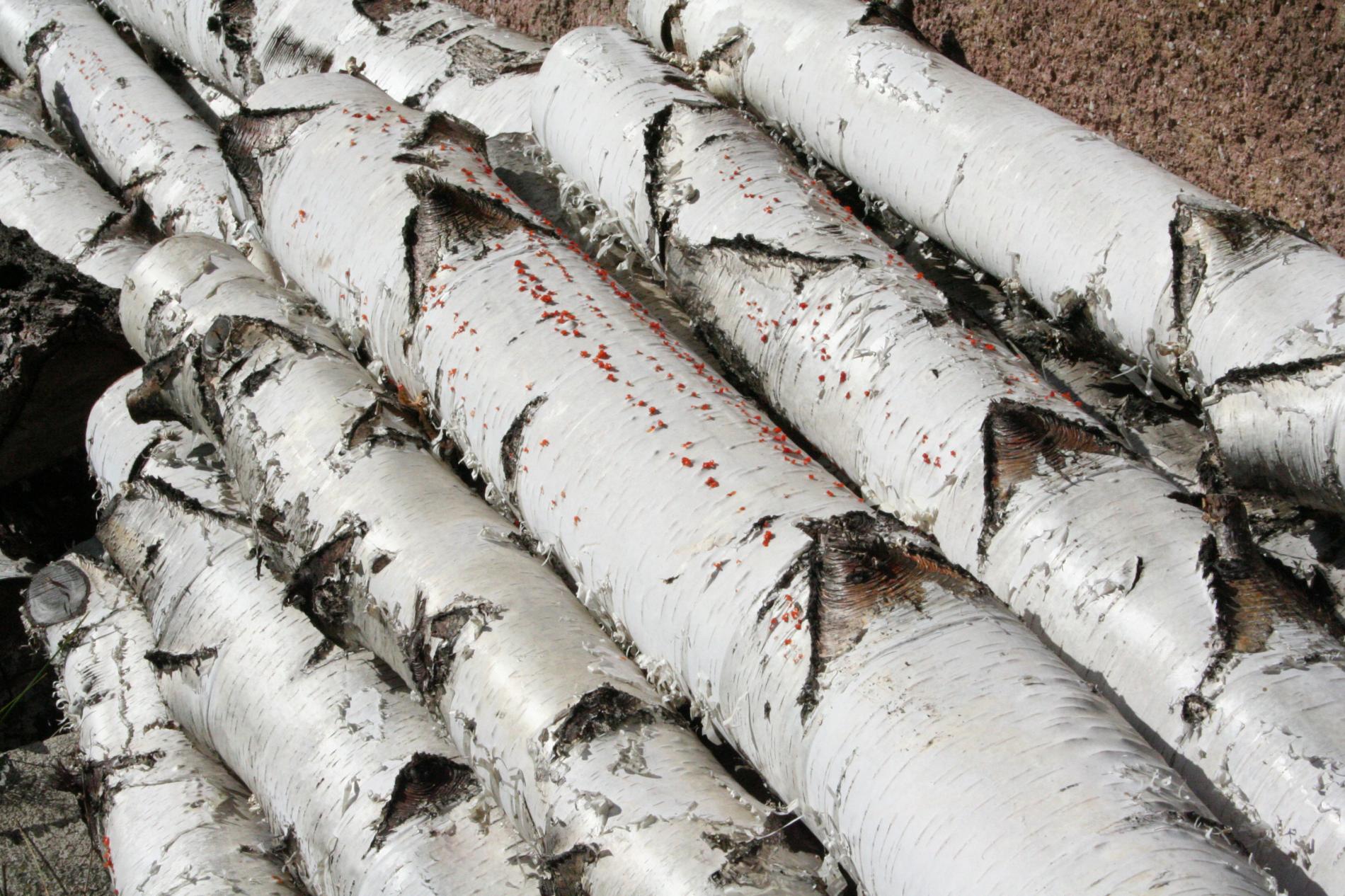
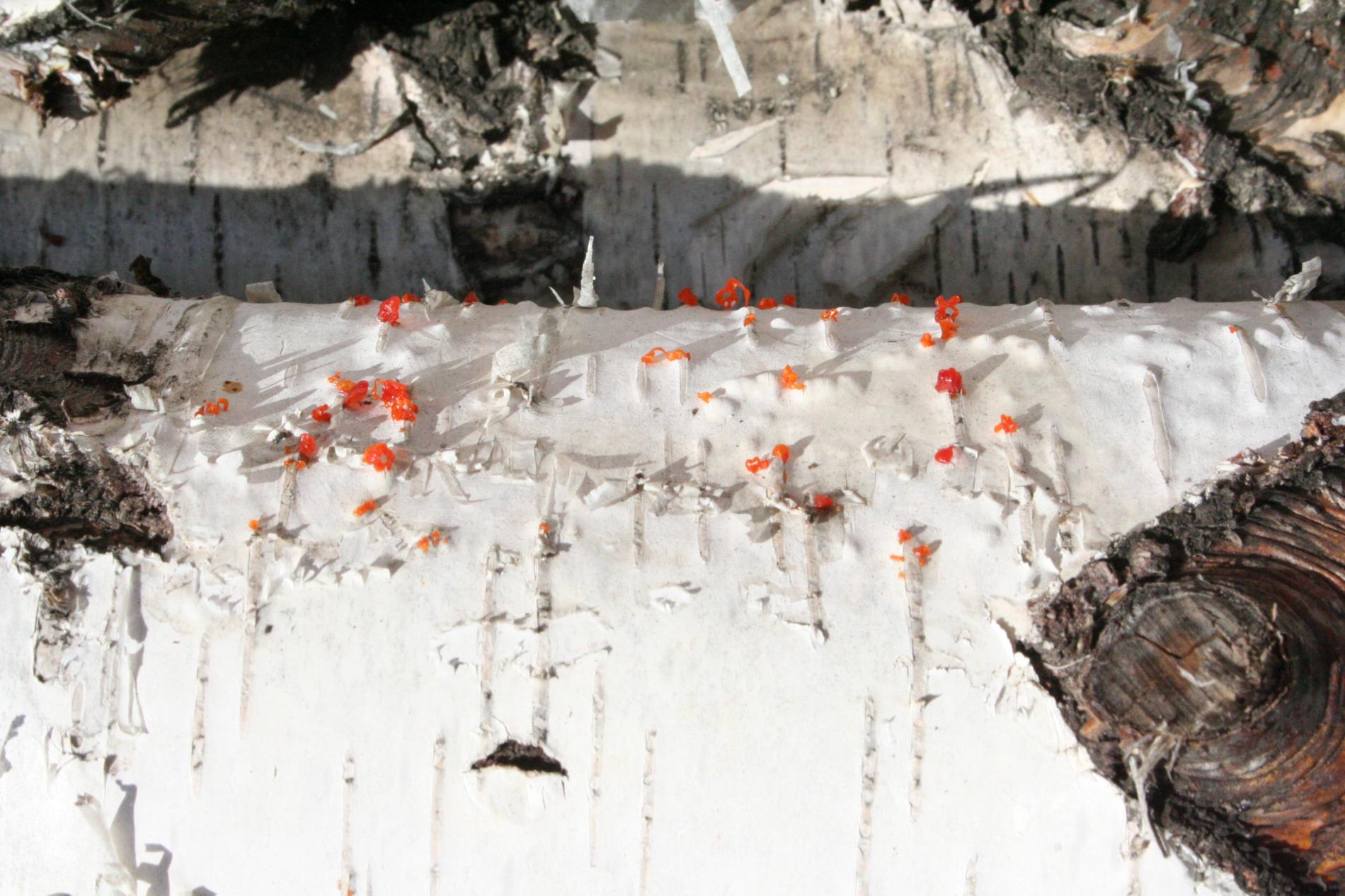
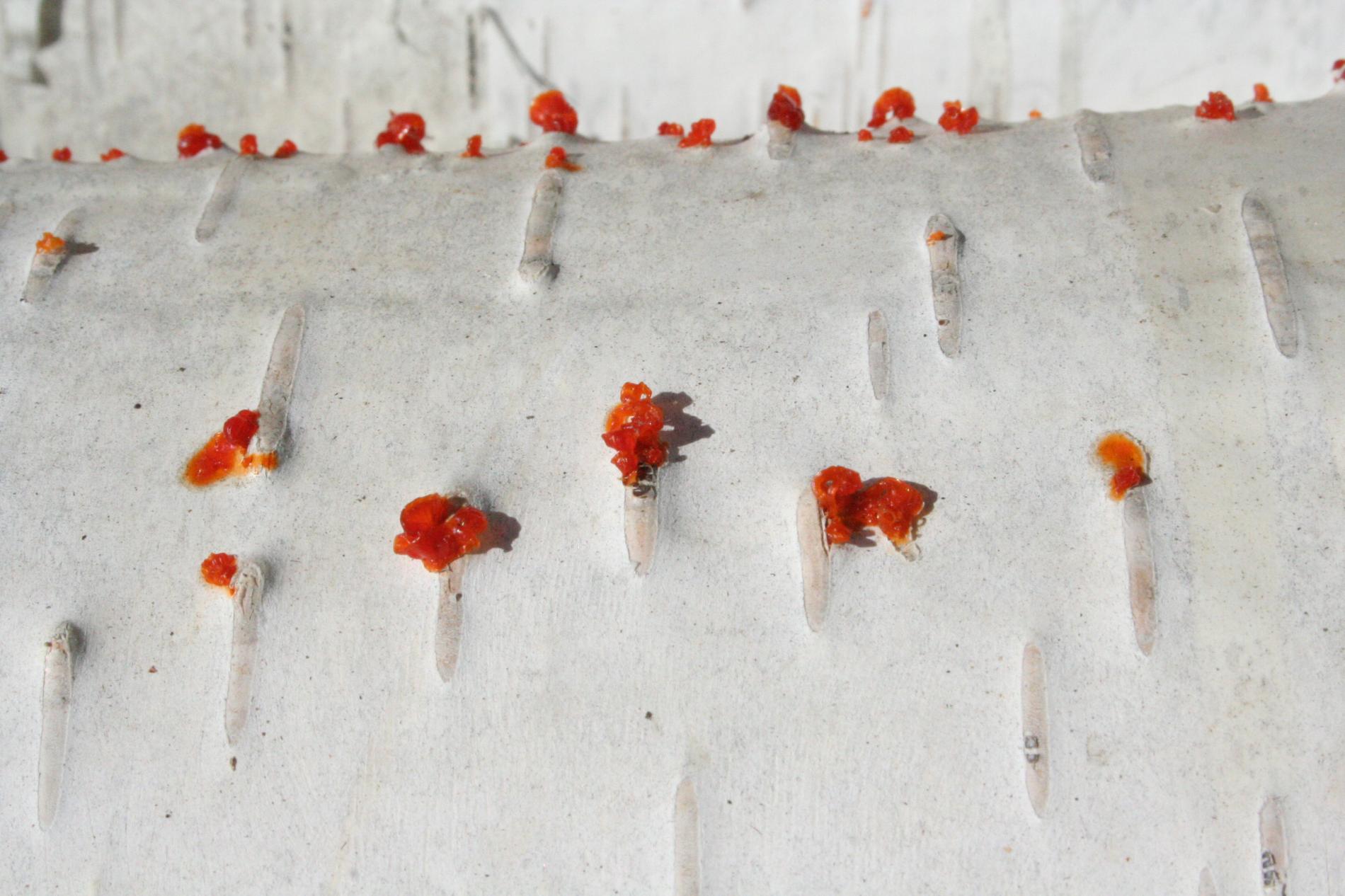
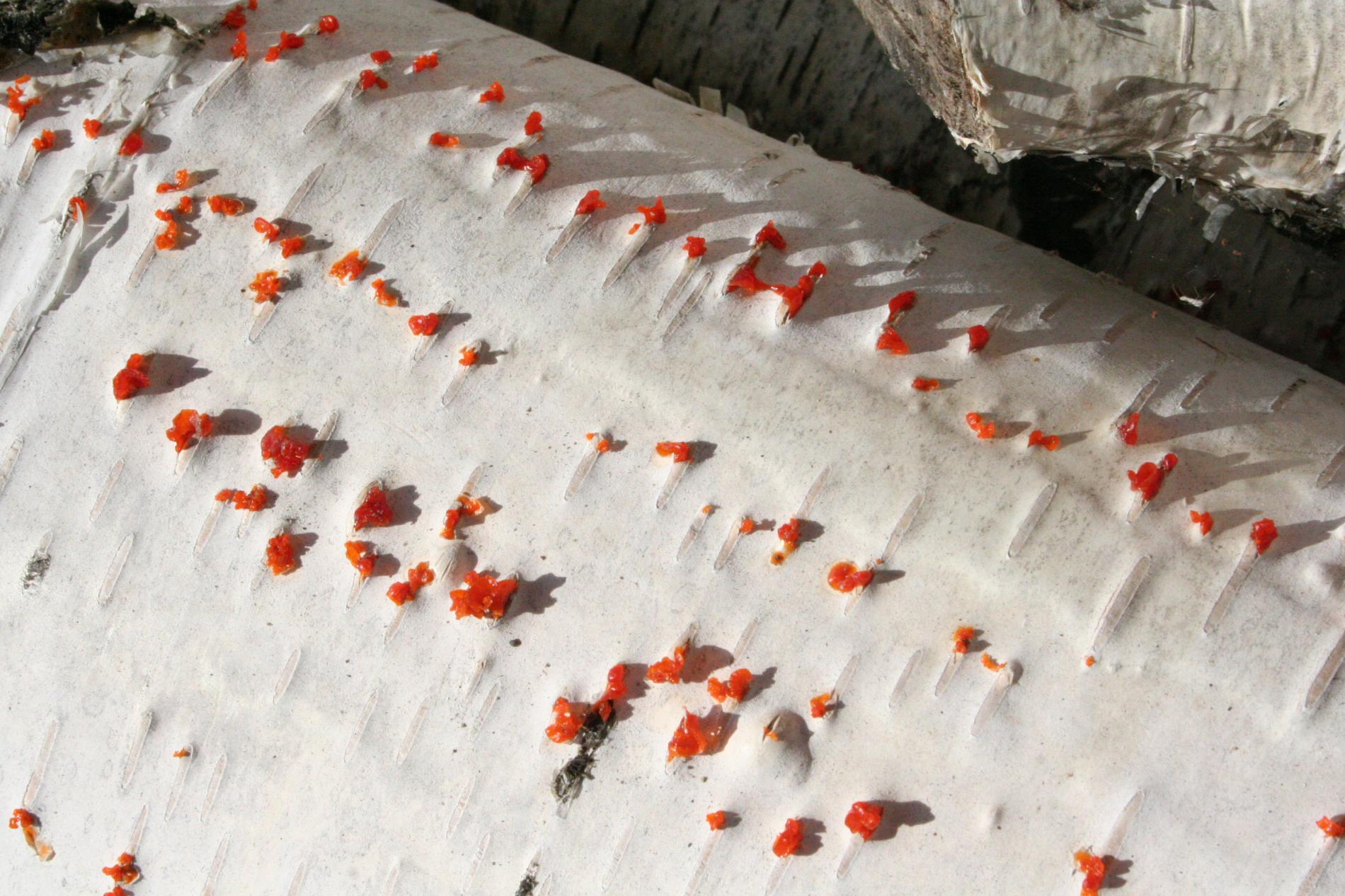
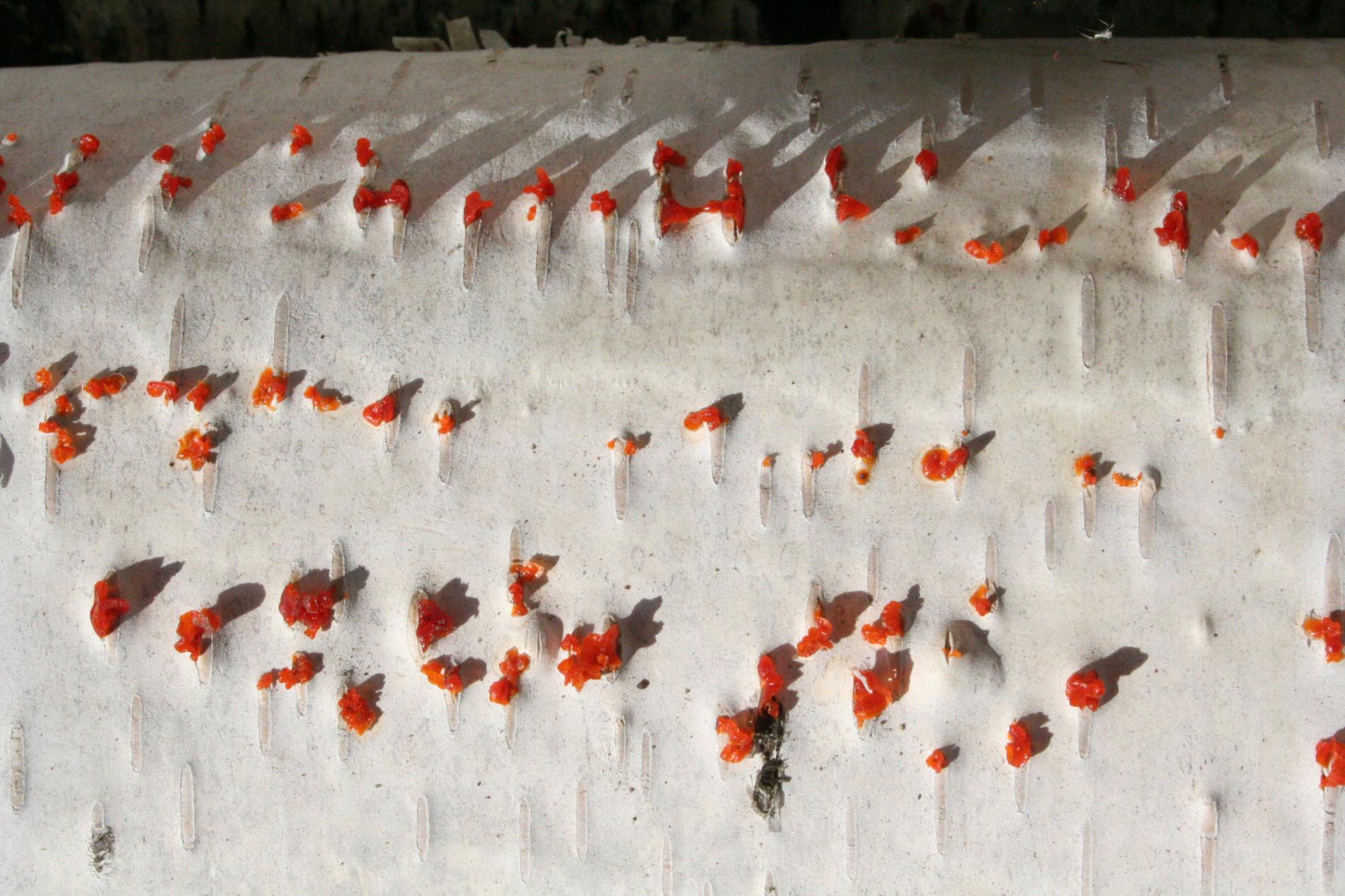
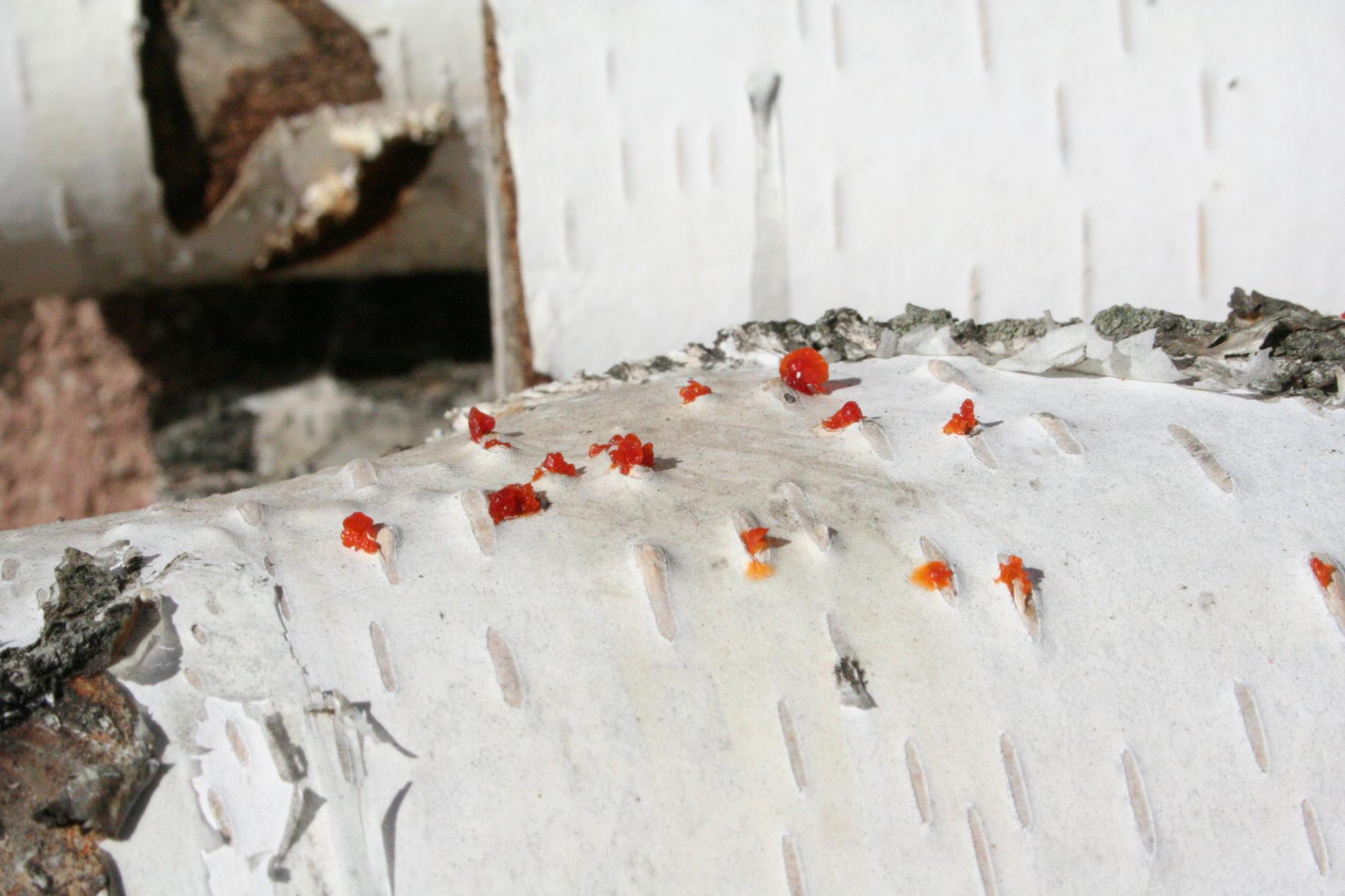
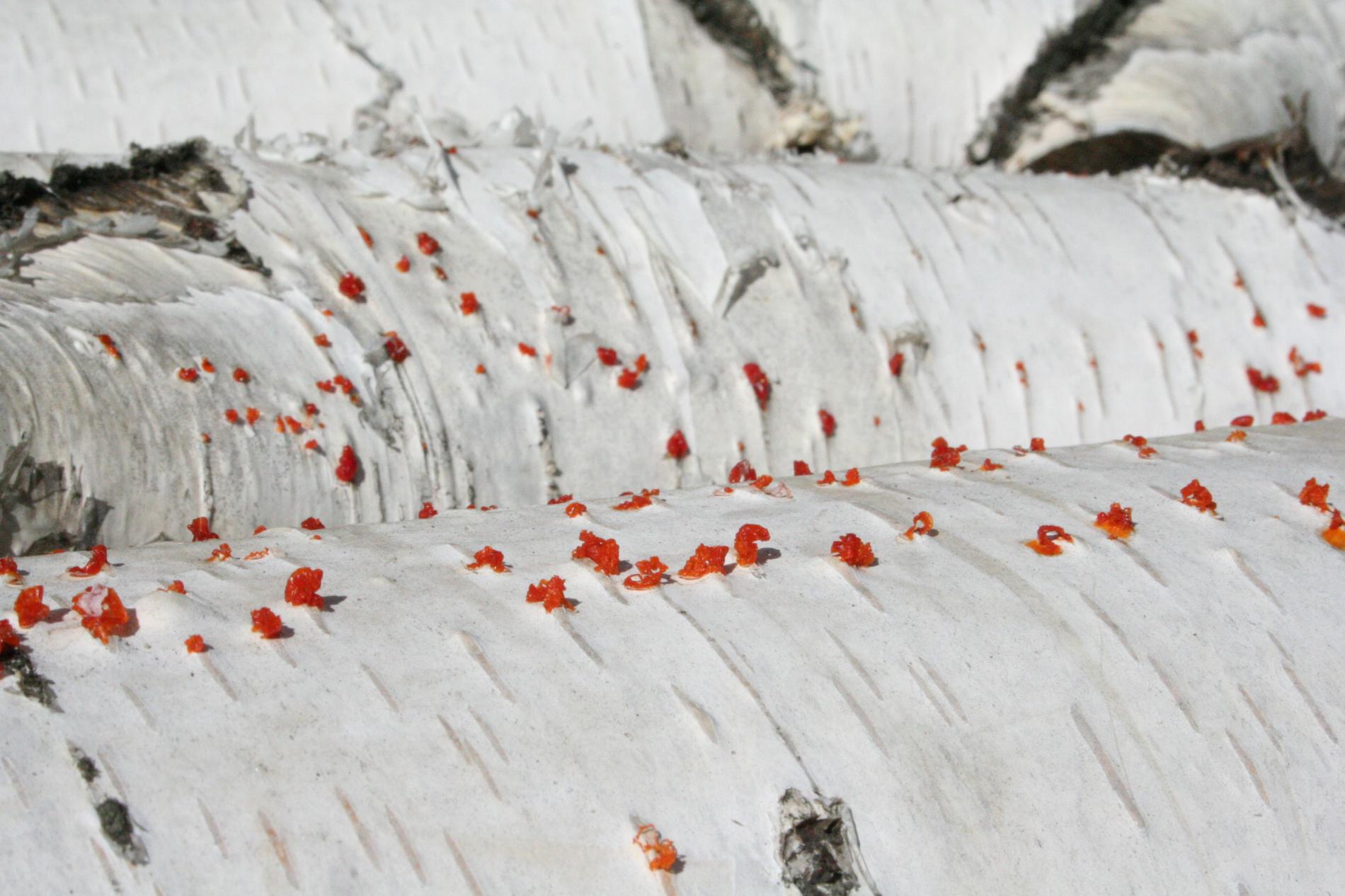
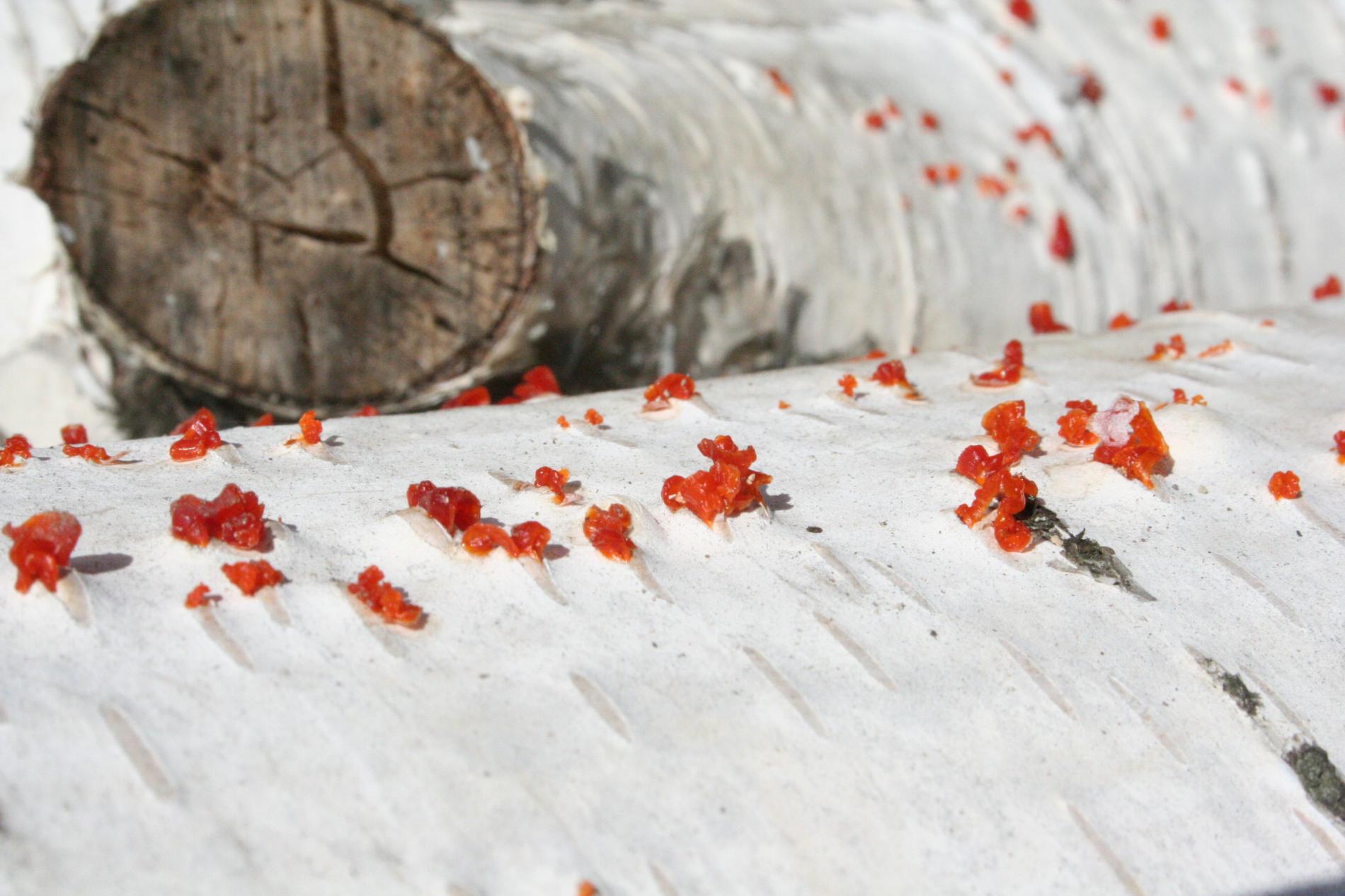
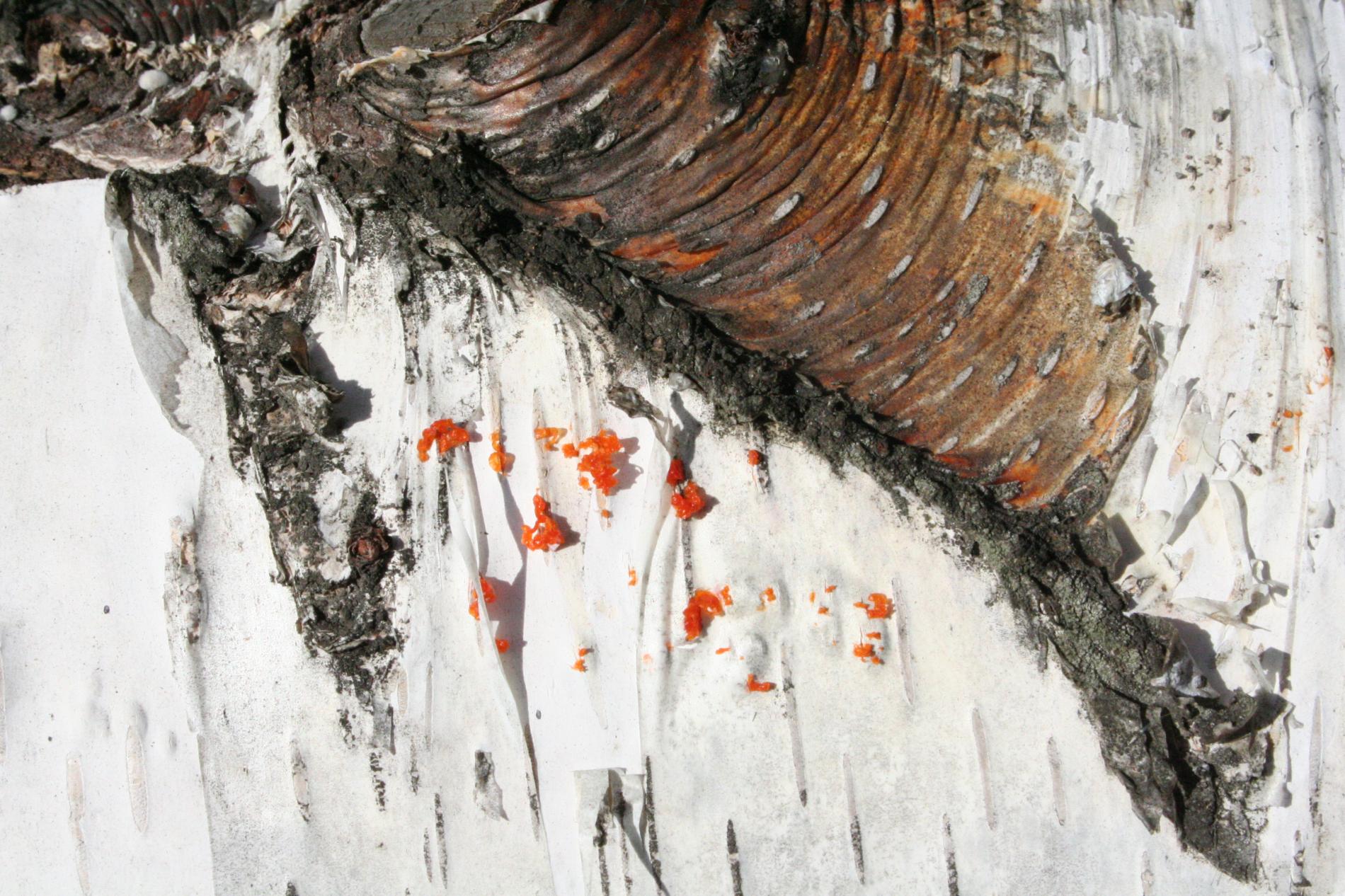
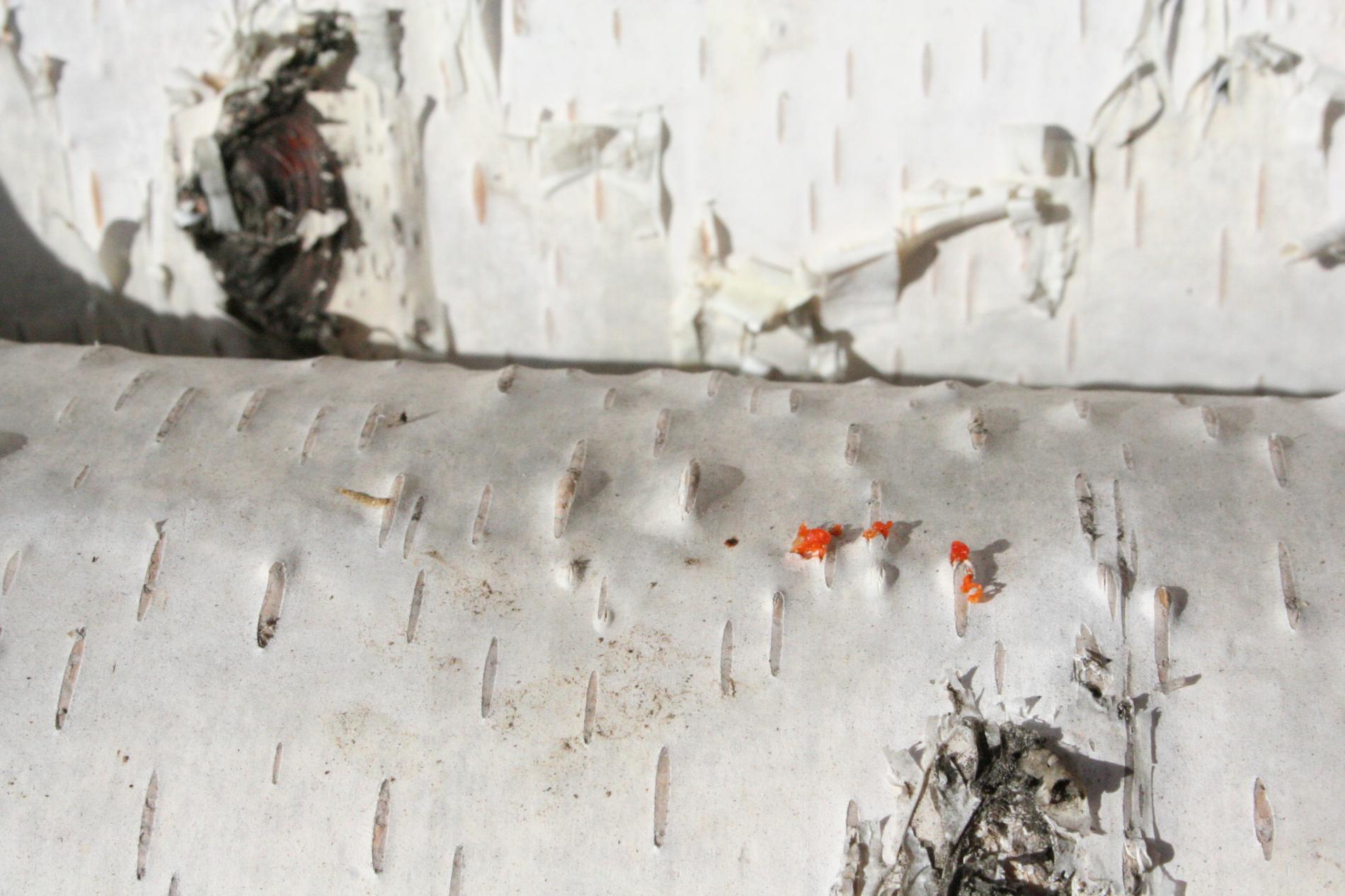
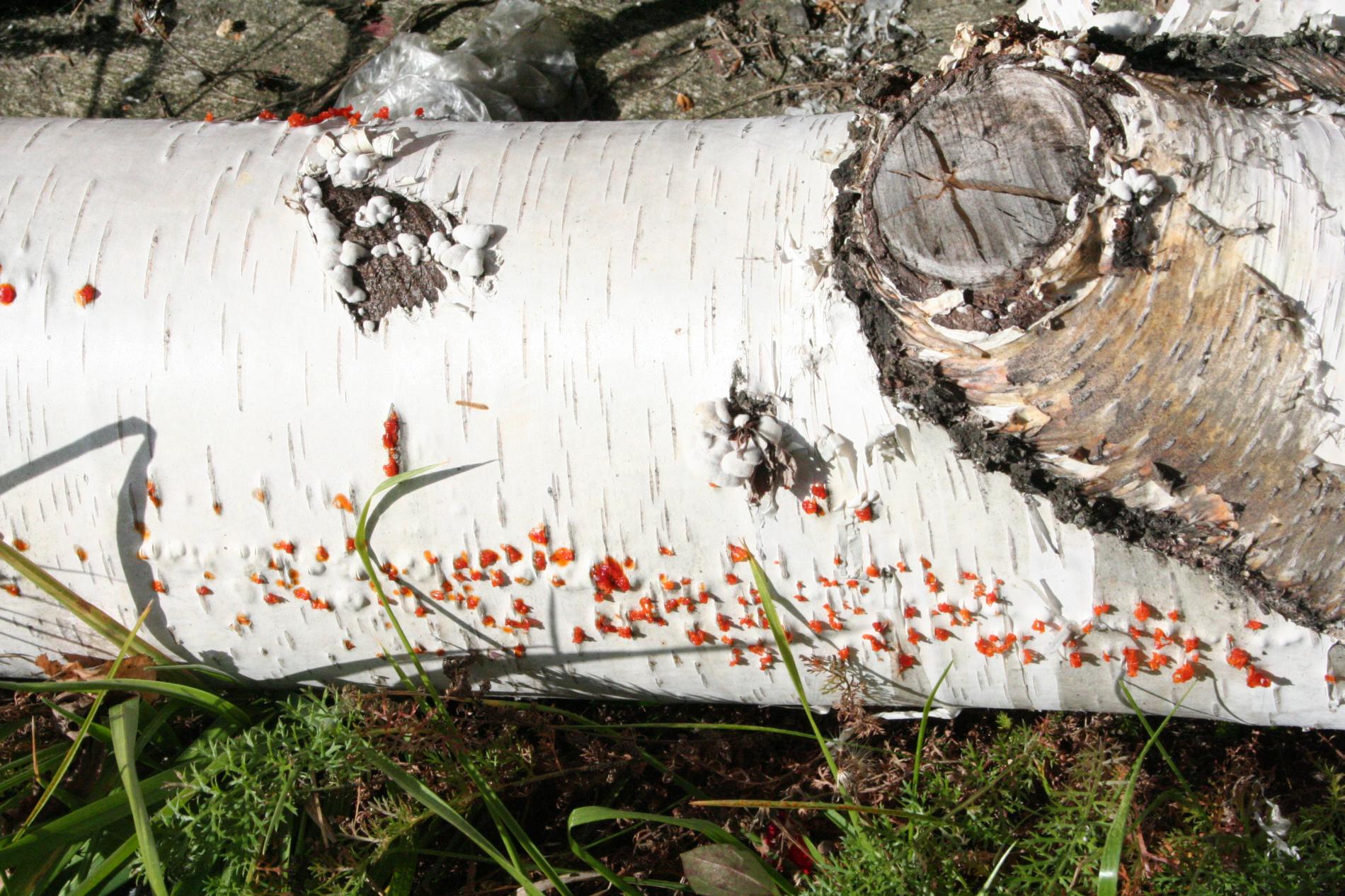
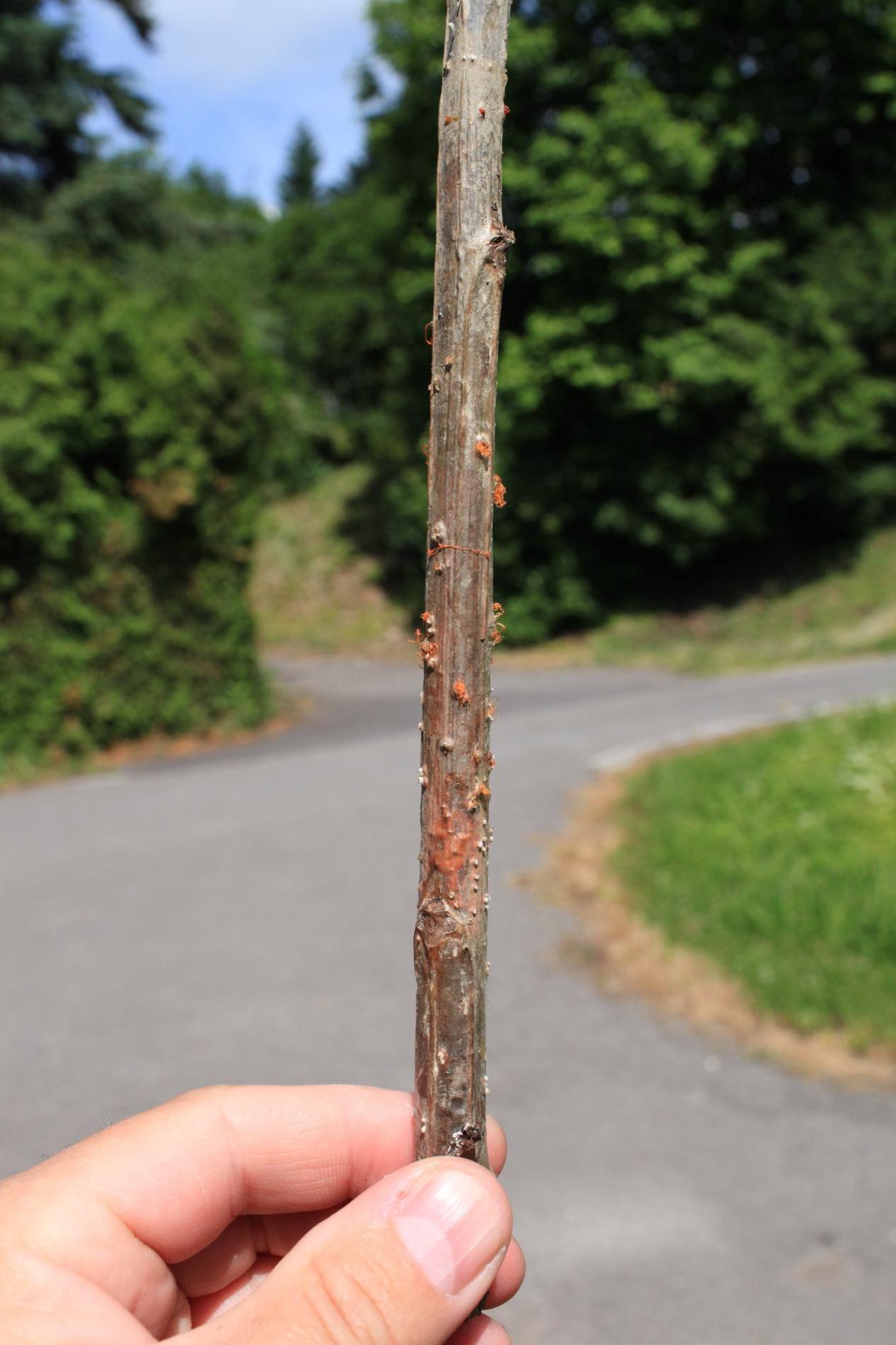
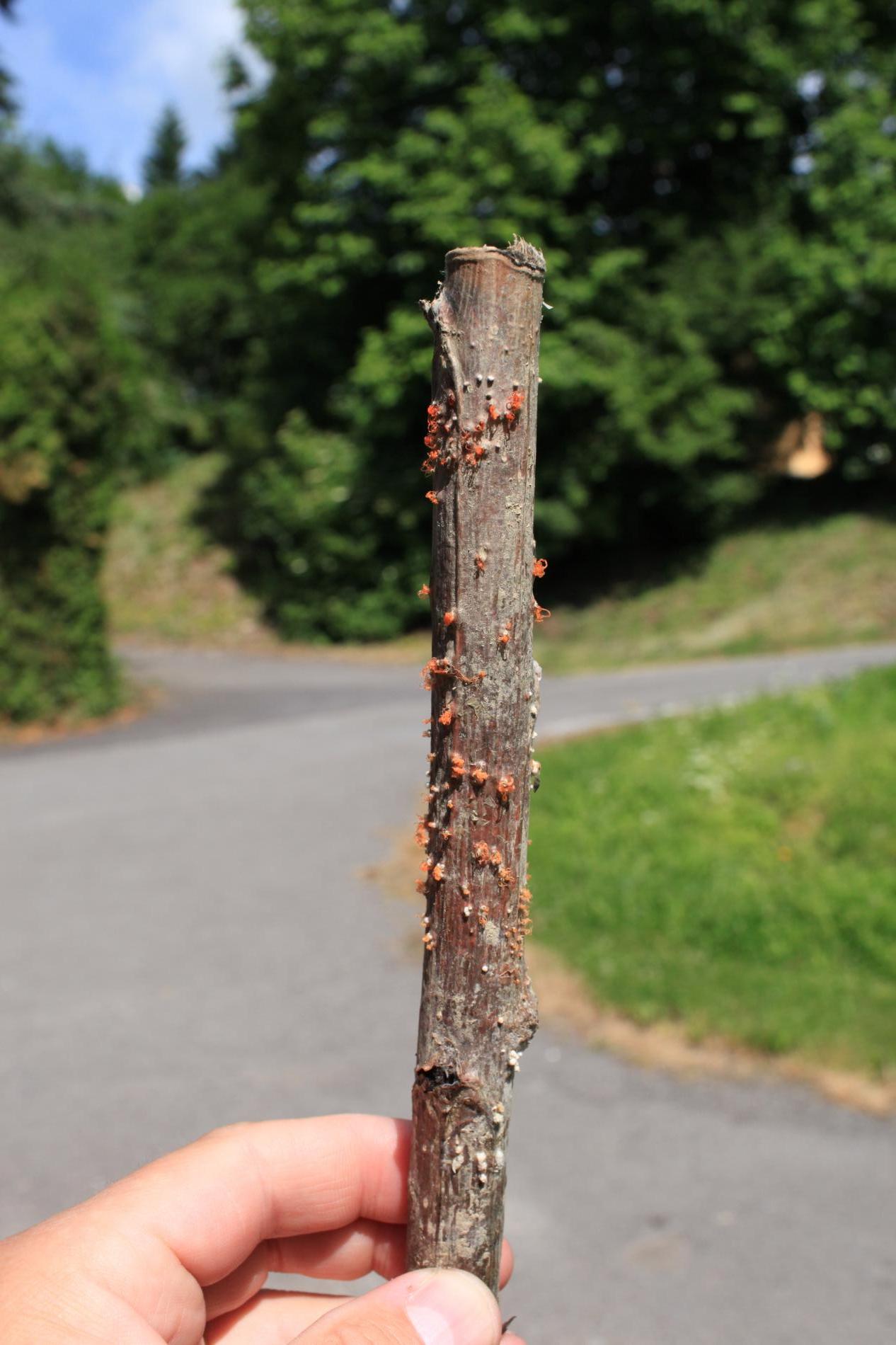
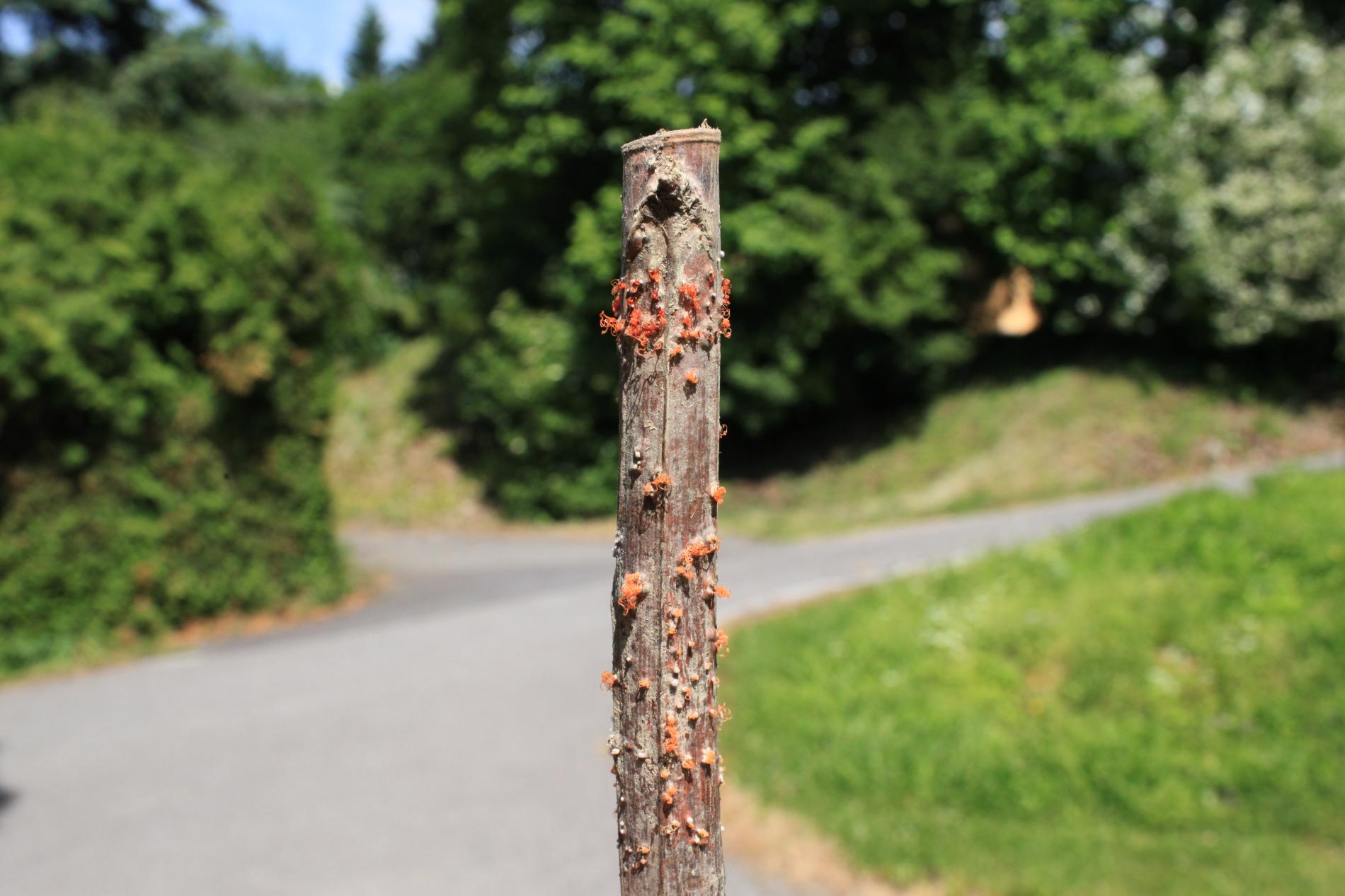
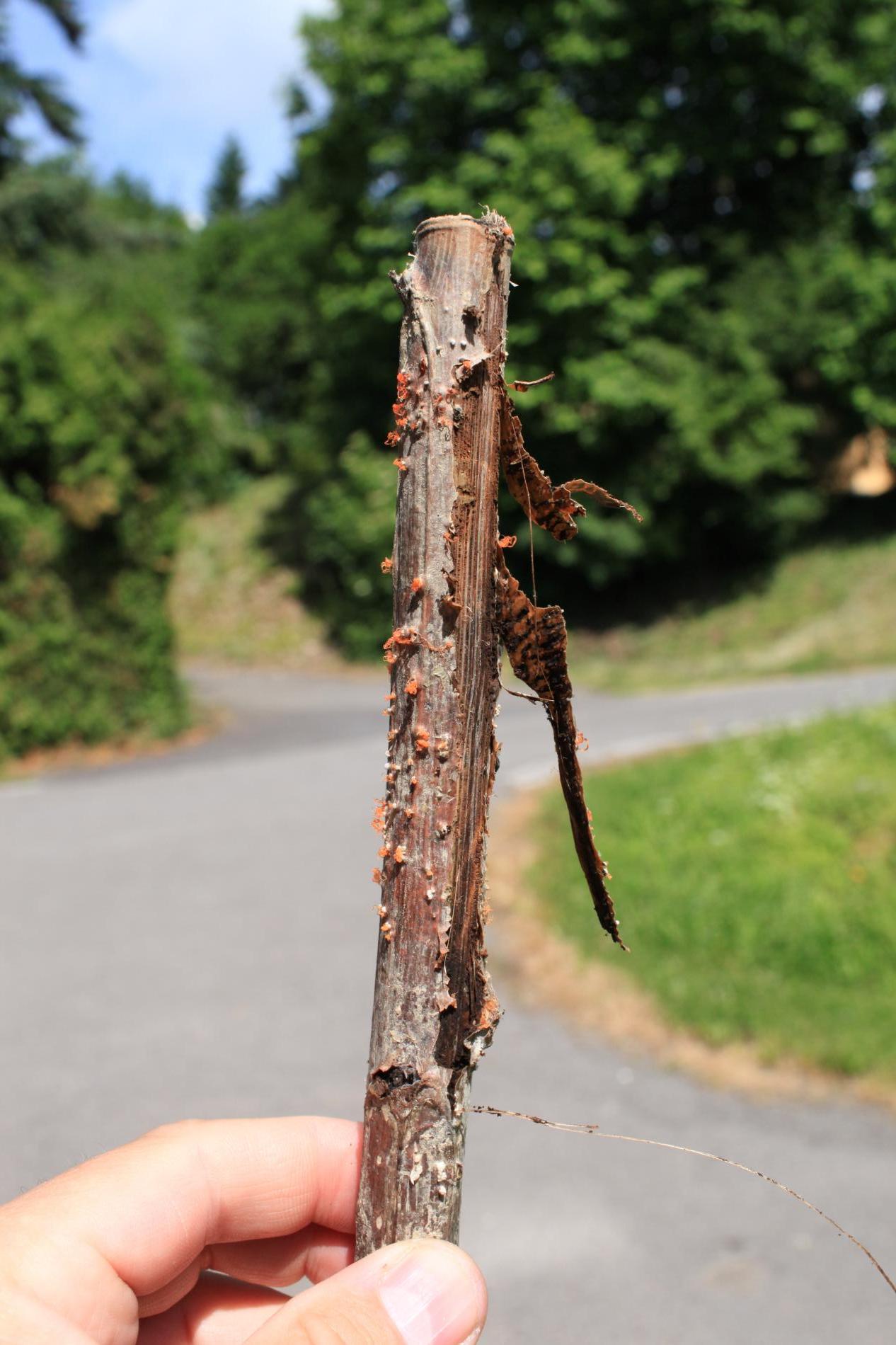
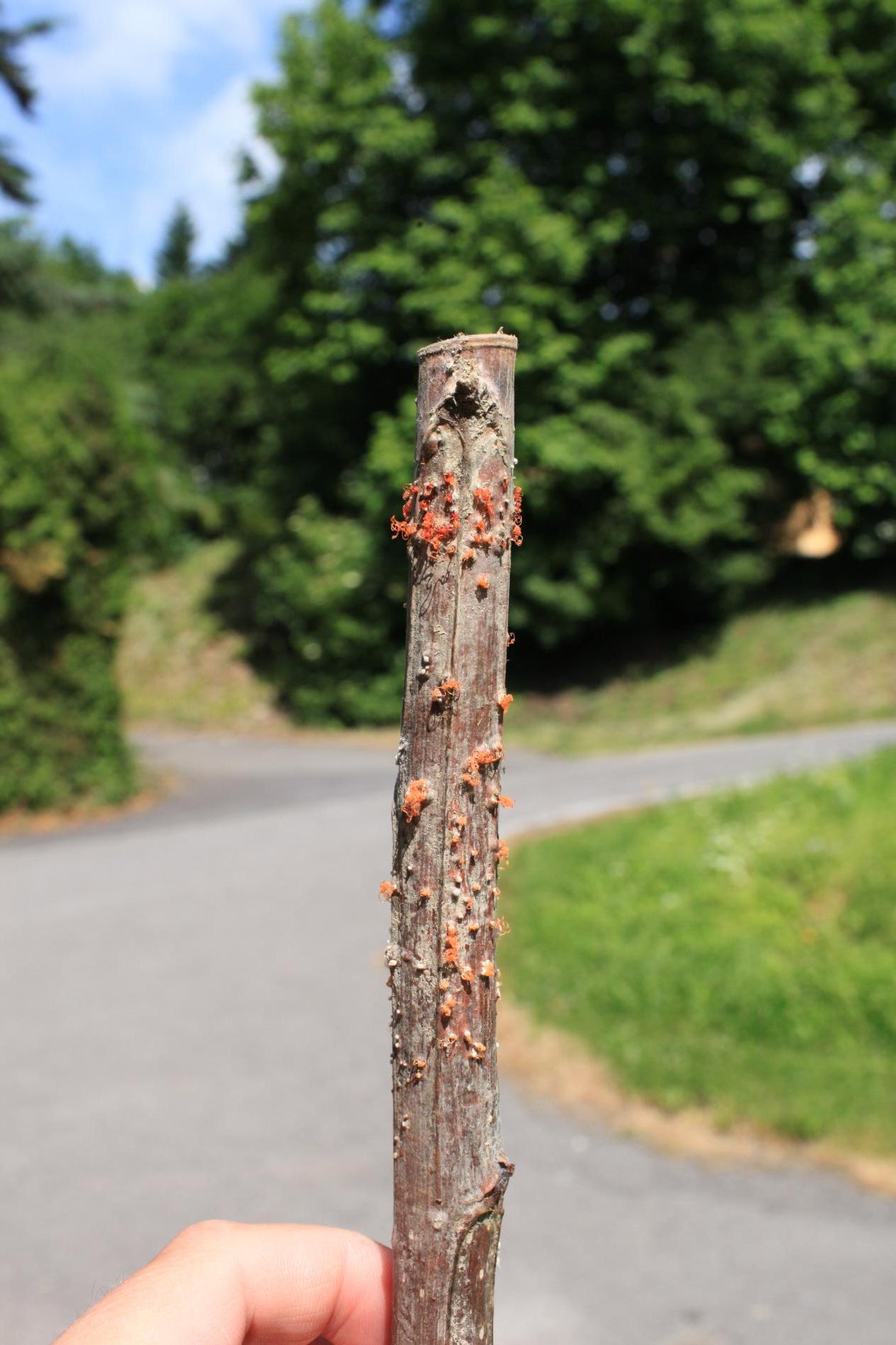
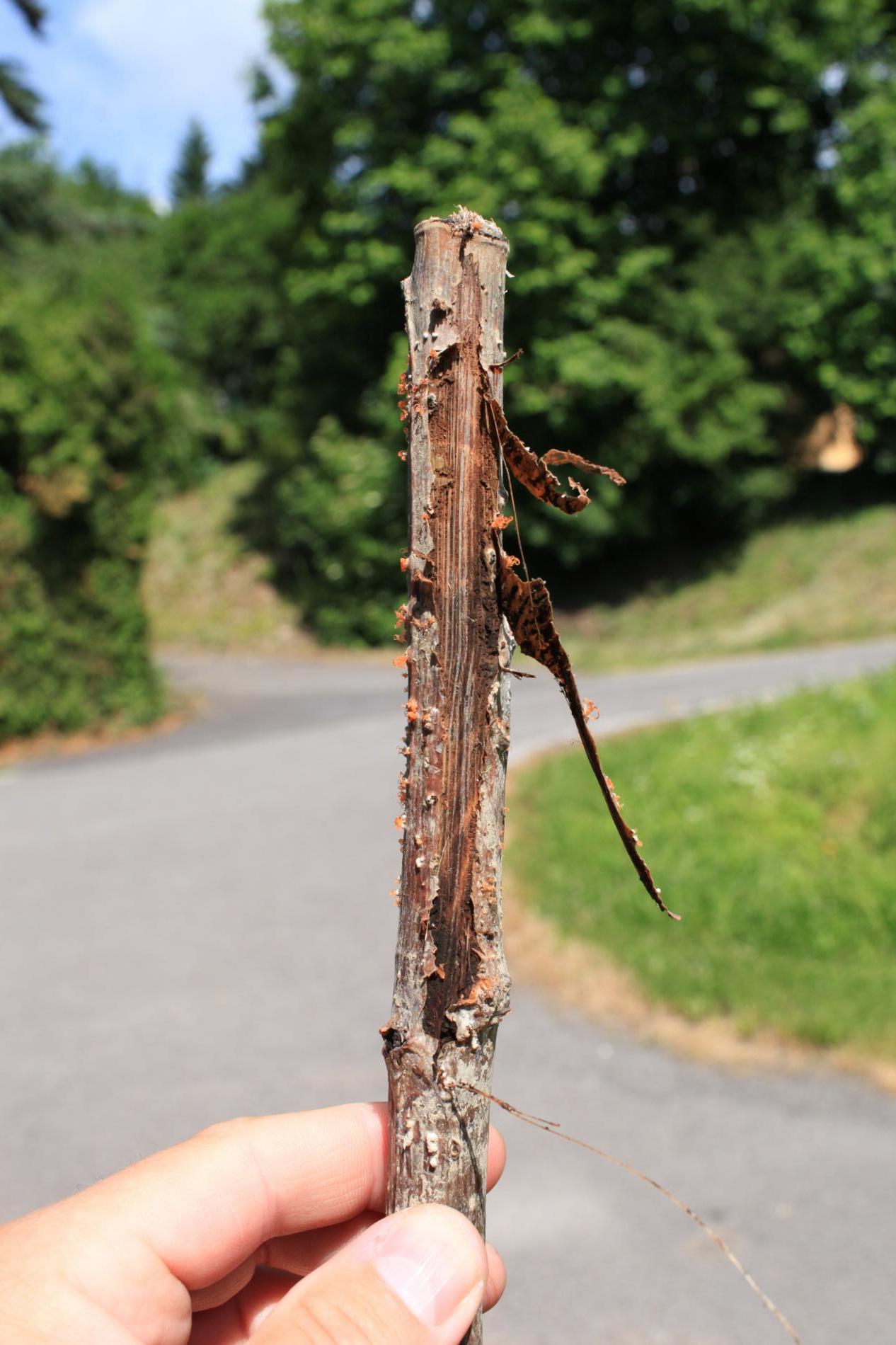
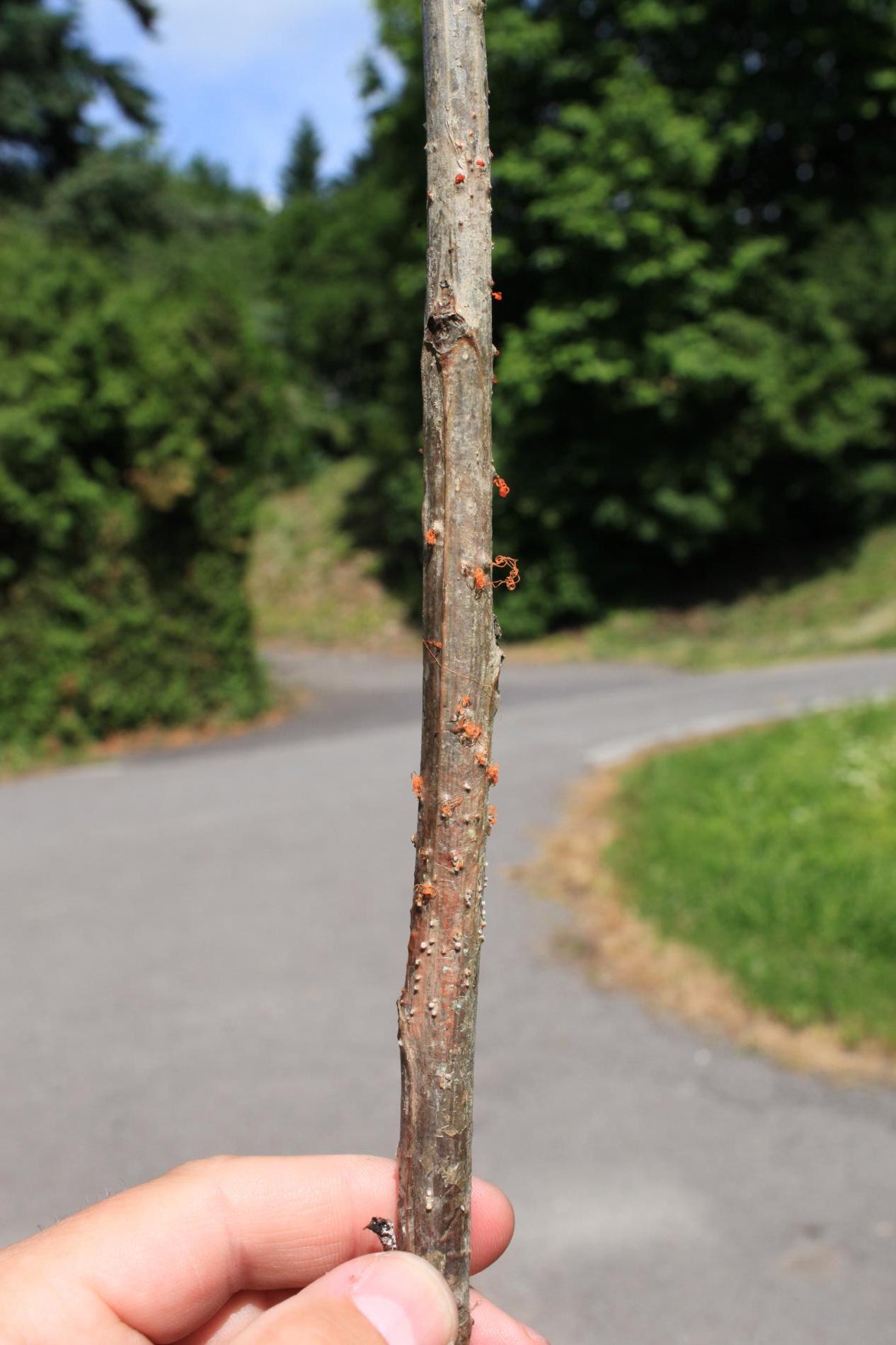
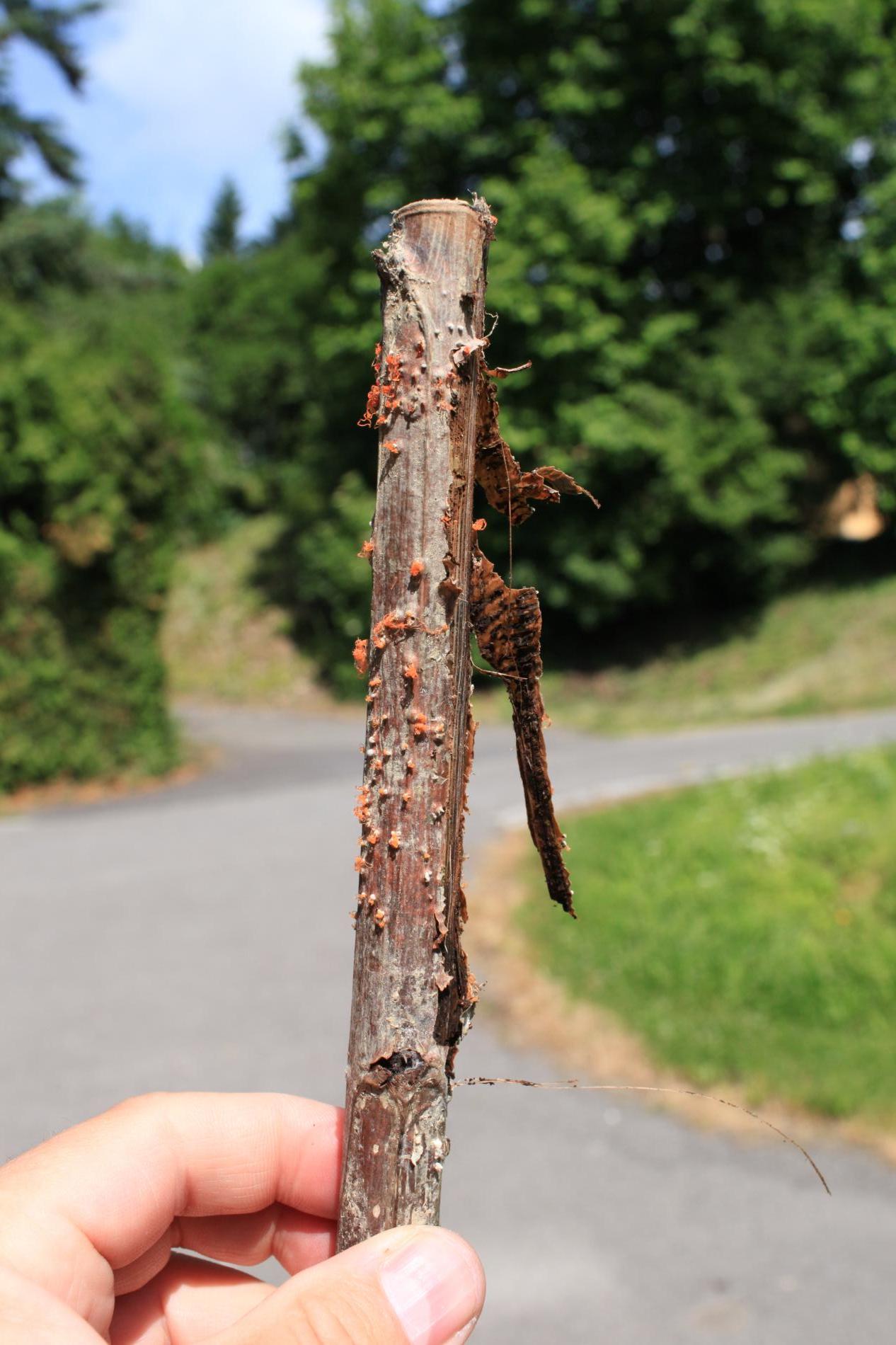
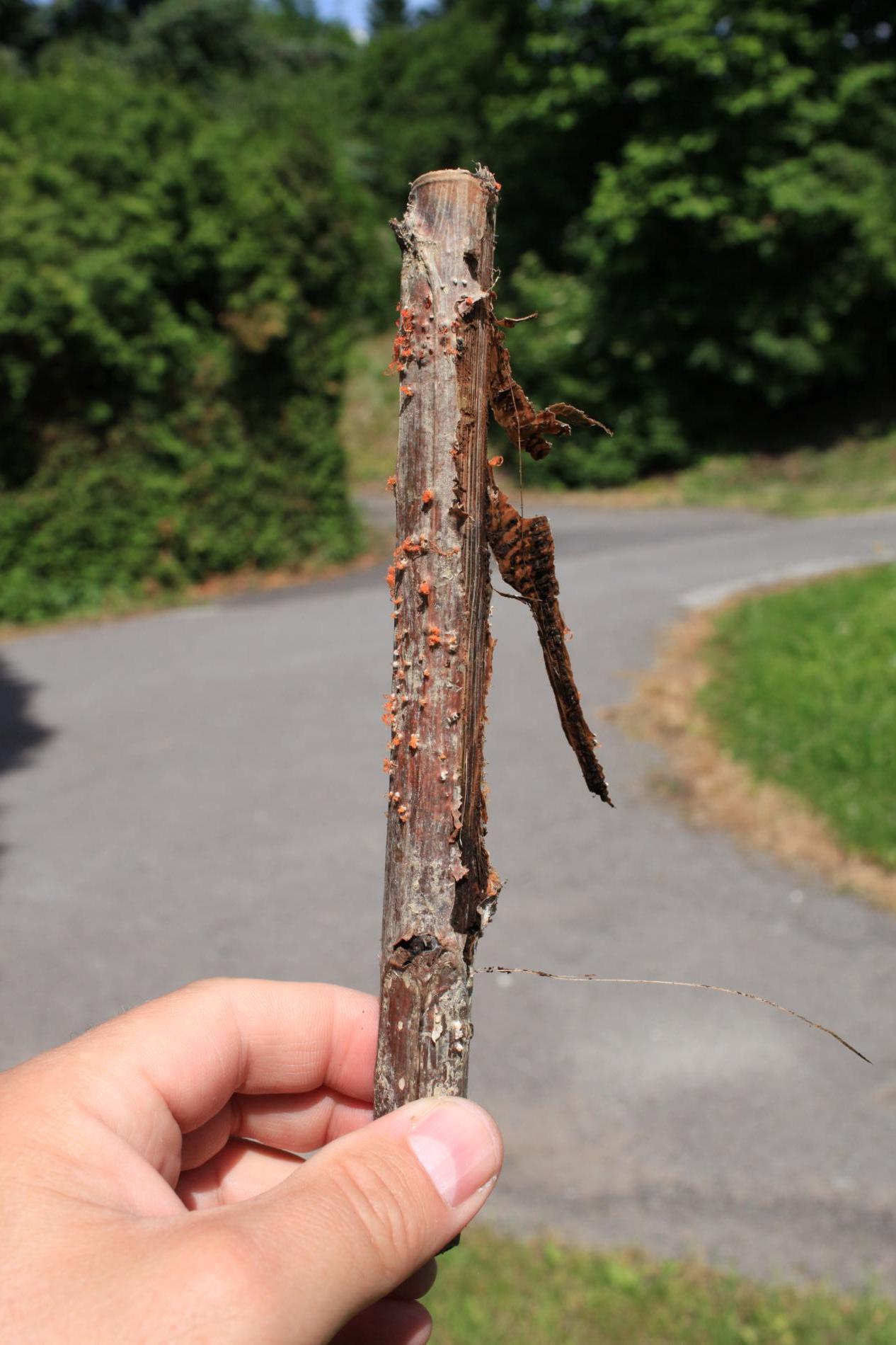
In the picture are tendrils of conidiospores that were formed in 1-2 mm wide pycnidia under the bark. Such tendrils are formed by several fungi, in the given case it was Cytospora chrysosperma whose sexual stage is Valsa sordida. The fungus is a weak pathogen and it causes damage only if a host plant was in unfavourable soil and weather conditions before. Necrotized tissue is sunken, the tree can die back within 2-3 years from infection. The tendrils of spores are formed in lines, when wood is moist (not wet). They get dry quickly in the air, when it rains they melt in water drops. After getting dry, the spores, which are similar to soft powder, are spread by air in the area. An entrance gate for the infection are wounds.
The symptoms are conidiospore penticles, which are formed in pycnids 1-2 mm wide under the bark.
Tree Species: Birch, Cherry, Apple Tree, Ash, Poplar
Part of a plant- attacked: Tree trunk
Pest significance: Harmful
Pest Category: Fungi
Invasive Species: No
Present in EU: Yes
Pest group: Fungi
Affected part of wood: Heartwood, Sapwood
Depth of damages: Under bark only
The extent of damage: Whole trunk
Prevalence in Europe: Very common
Damaged products: Firewood, Fresh timber logs (water still in the sapwood), Furniture, Lumber, boards and prisms, Wooden house constructions
Roundwood size: Diameter 50+, Diameter from 10 up to 50 cm
Wood discoloration: No
Pest subcategory: White-rot
Similar pests

Nectria fuckeliana

Polyporus squamosus
