


Cydia pactolana
Spruce bark tortrix Cydia pactolana
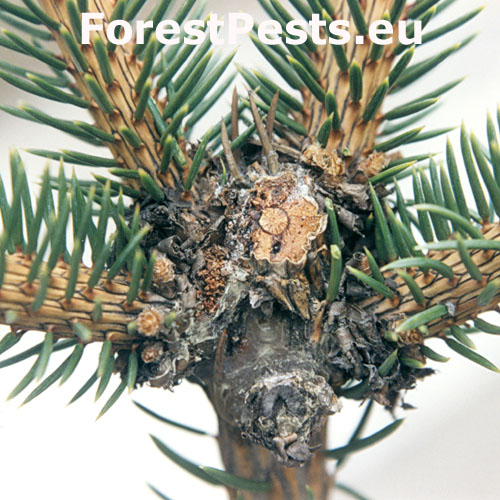
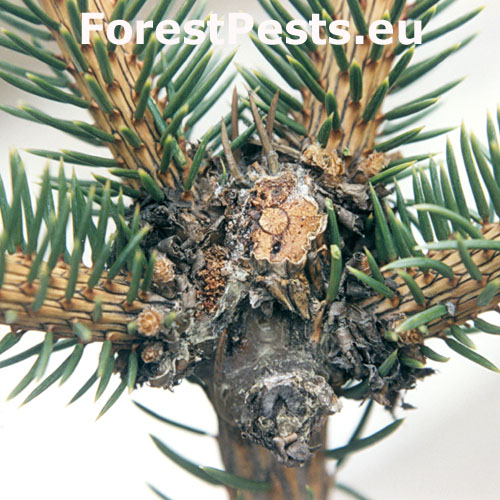
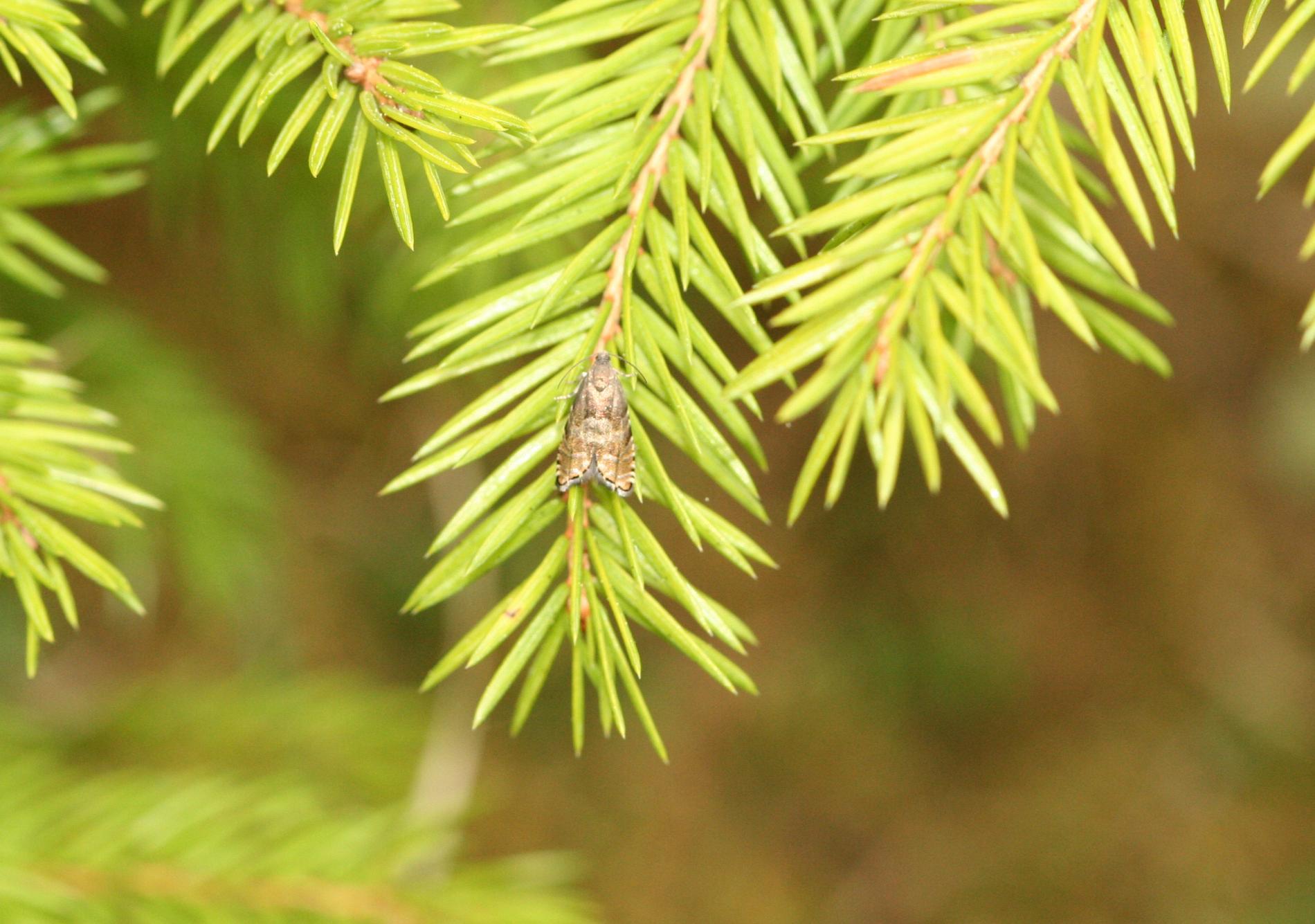
The spruce bark tortrix is a small moth with a wingspan of approx. 13–15 mm. In May and June the females lay eggs under the bark scales on branch nodes or other parts of 10–20 year old spruce stems. The larvae hatch
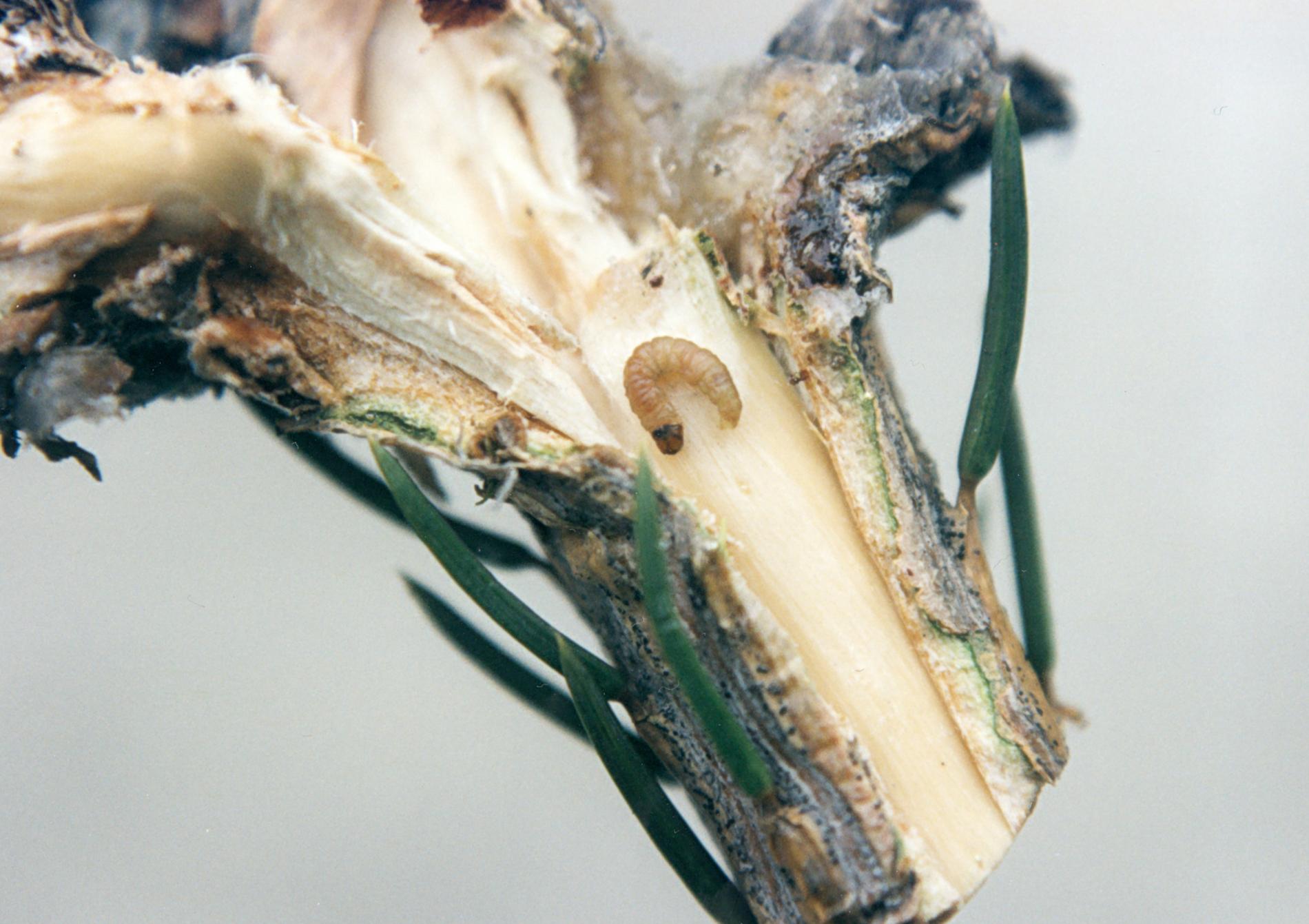
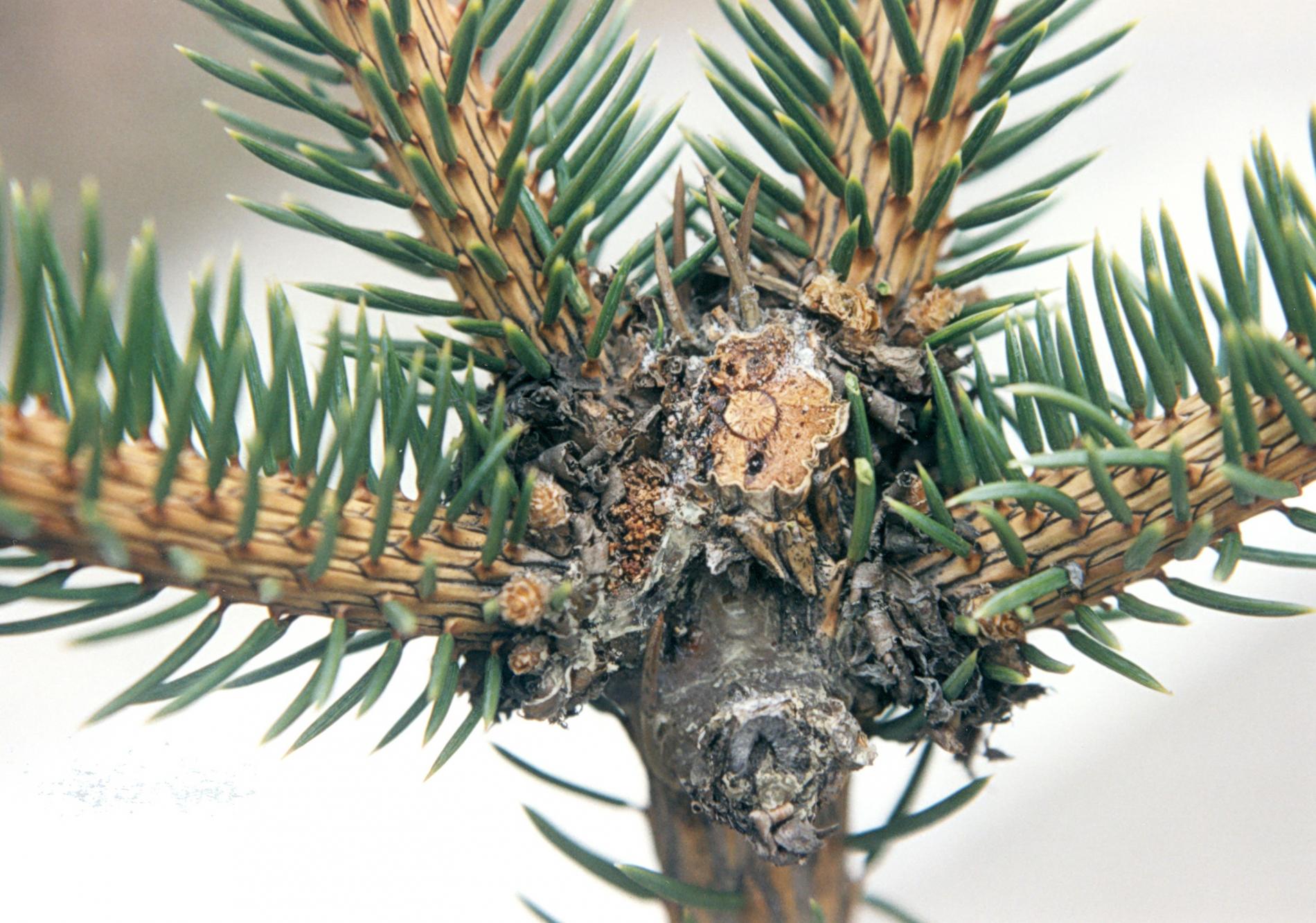
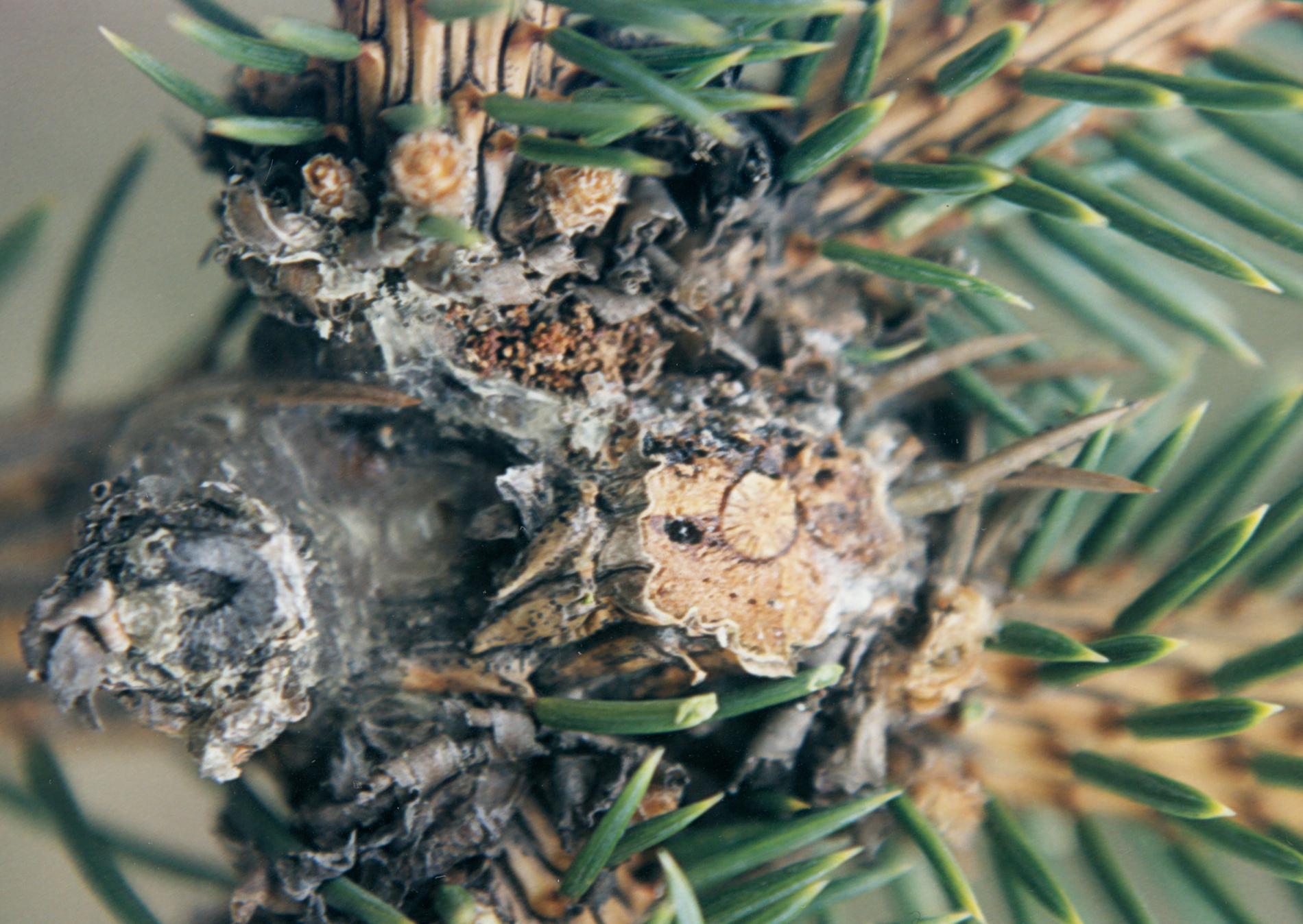
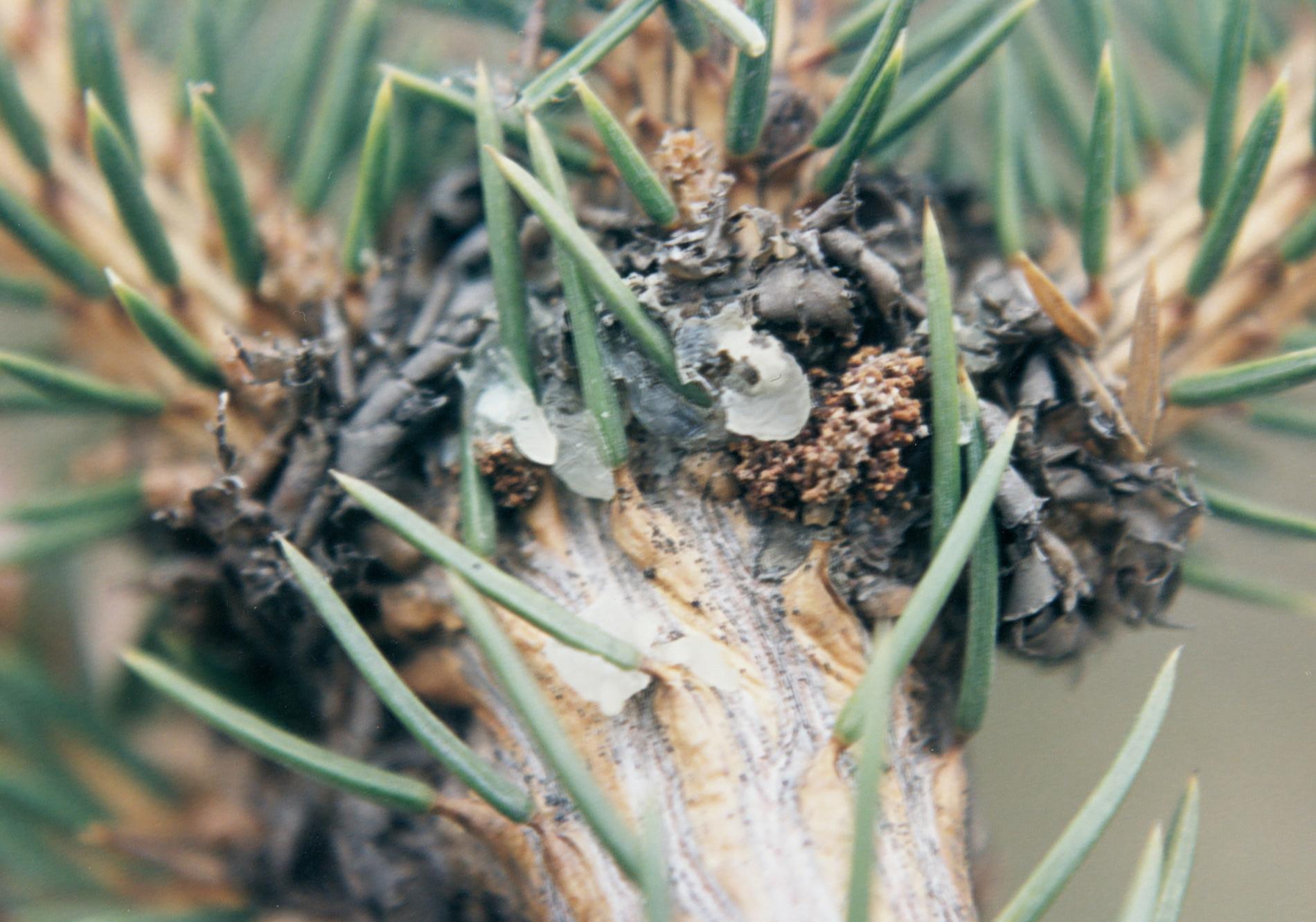
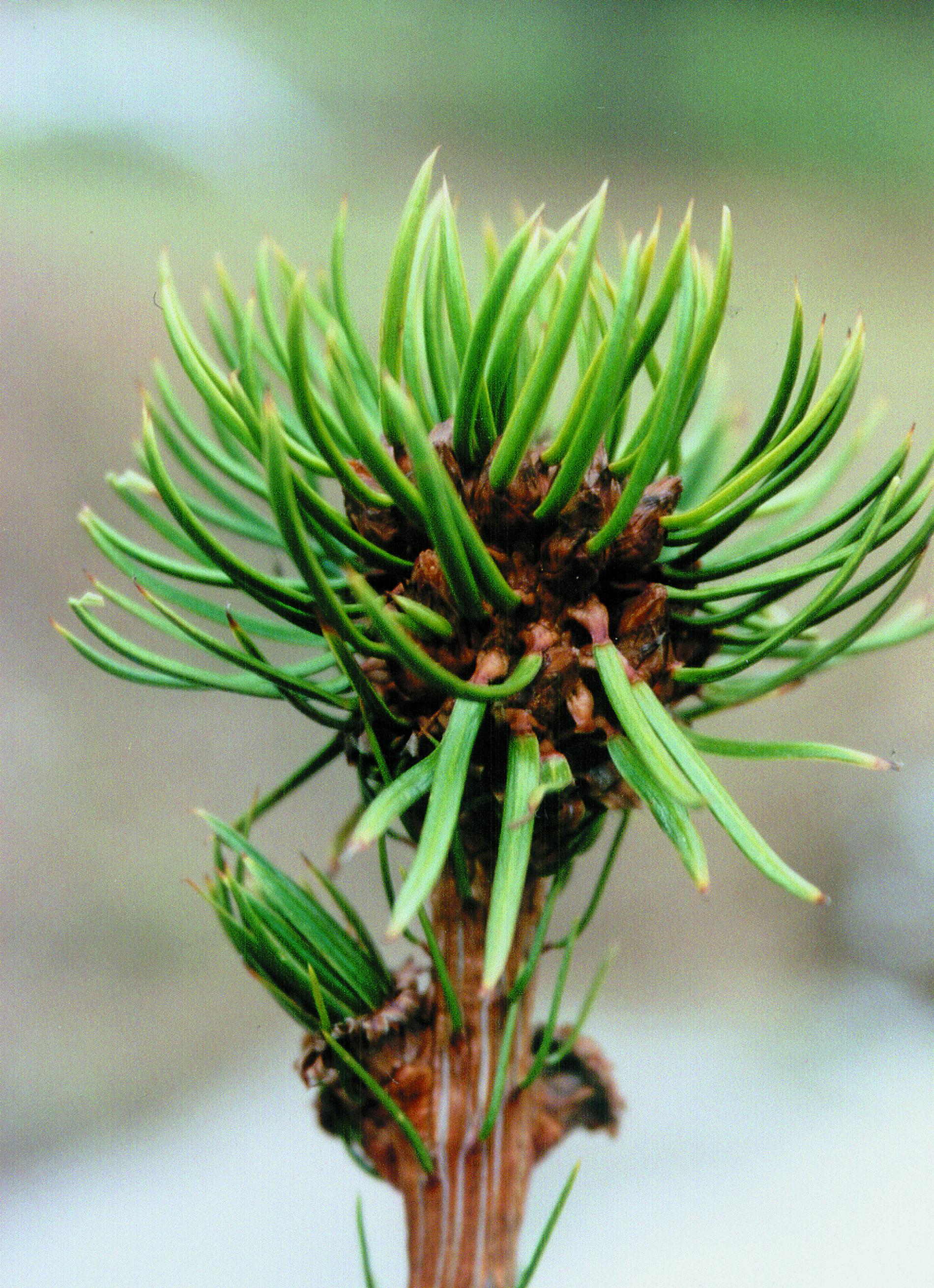
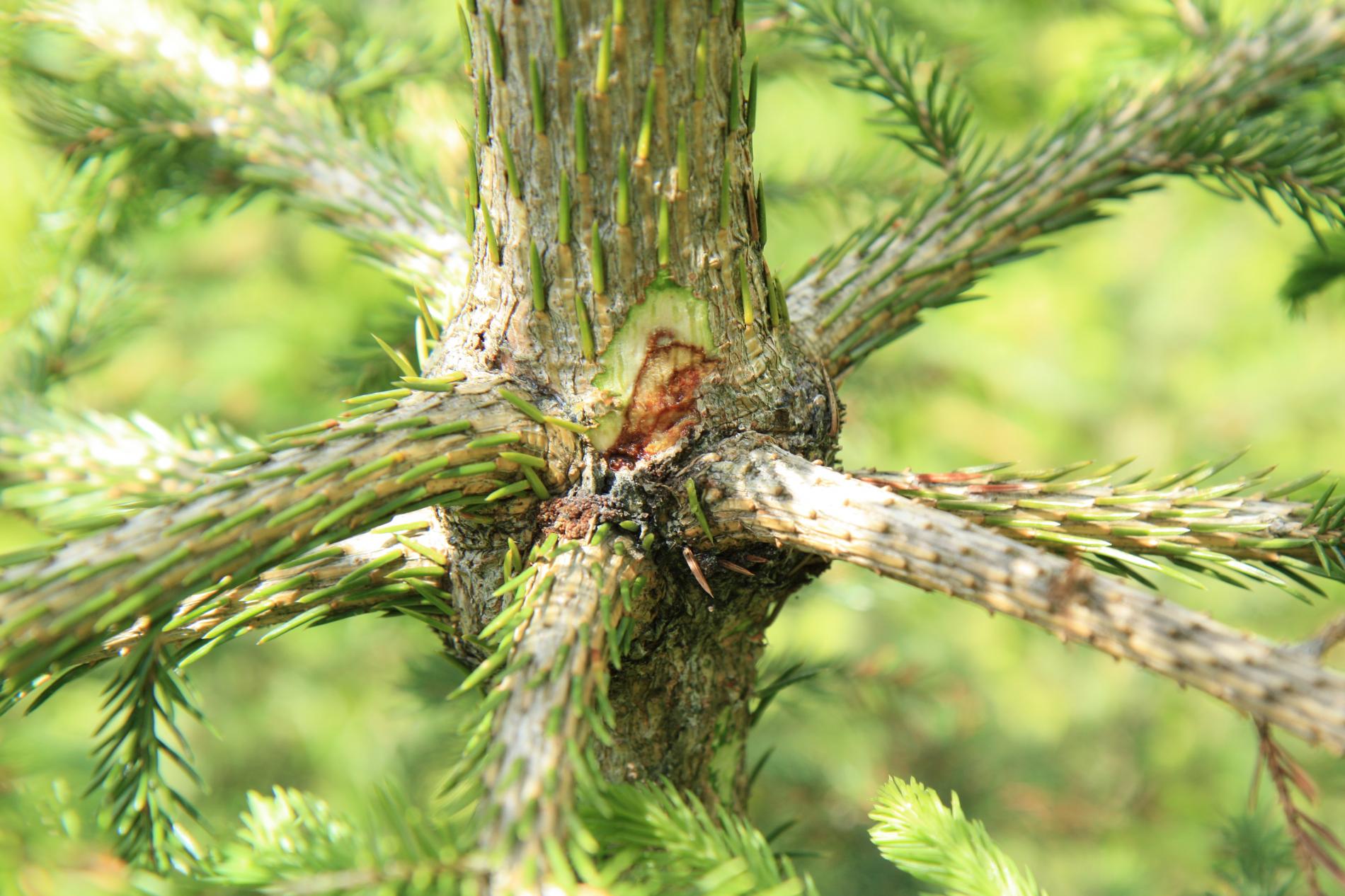
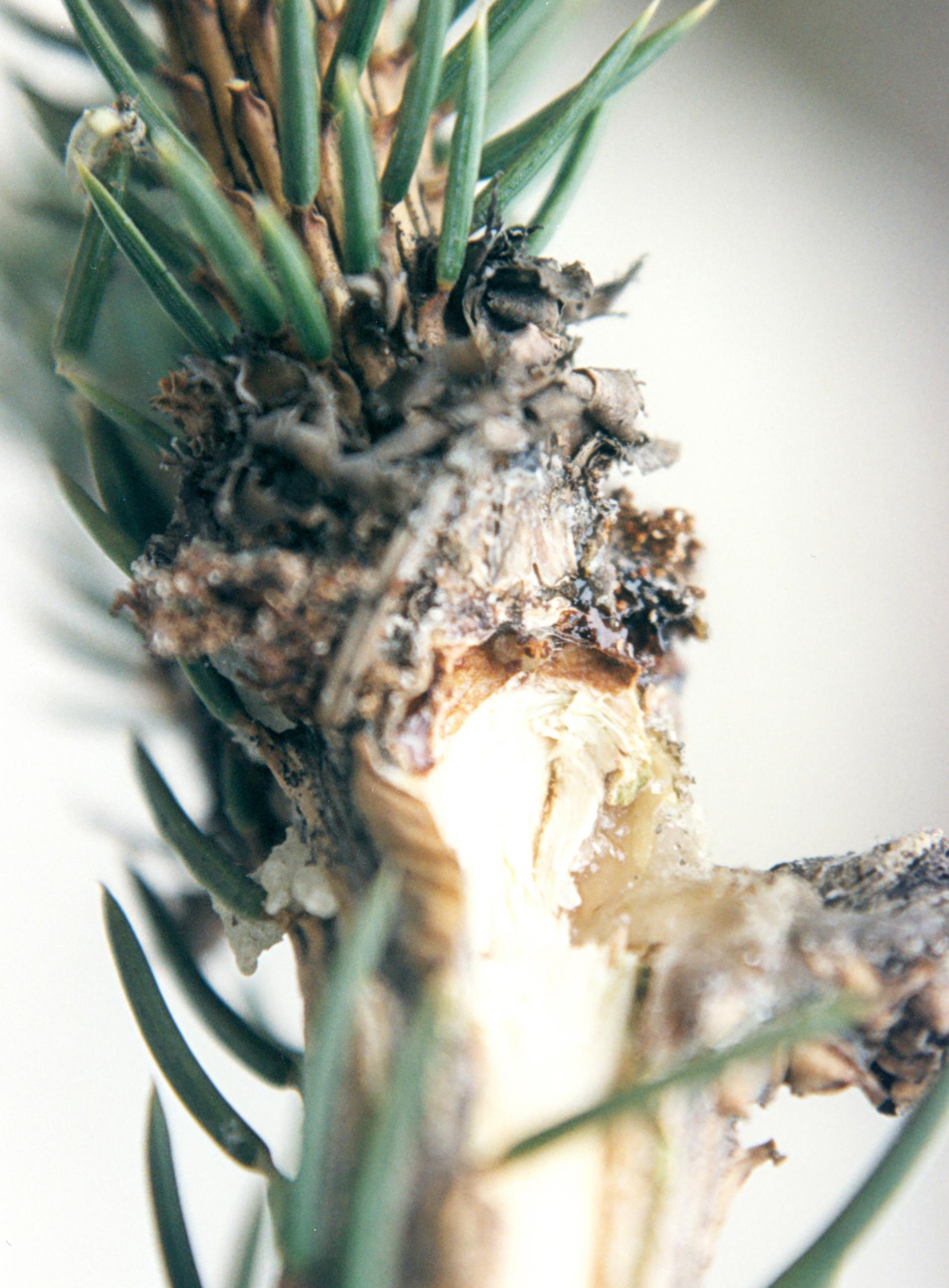
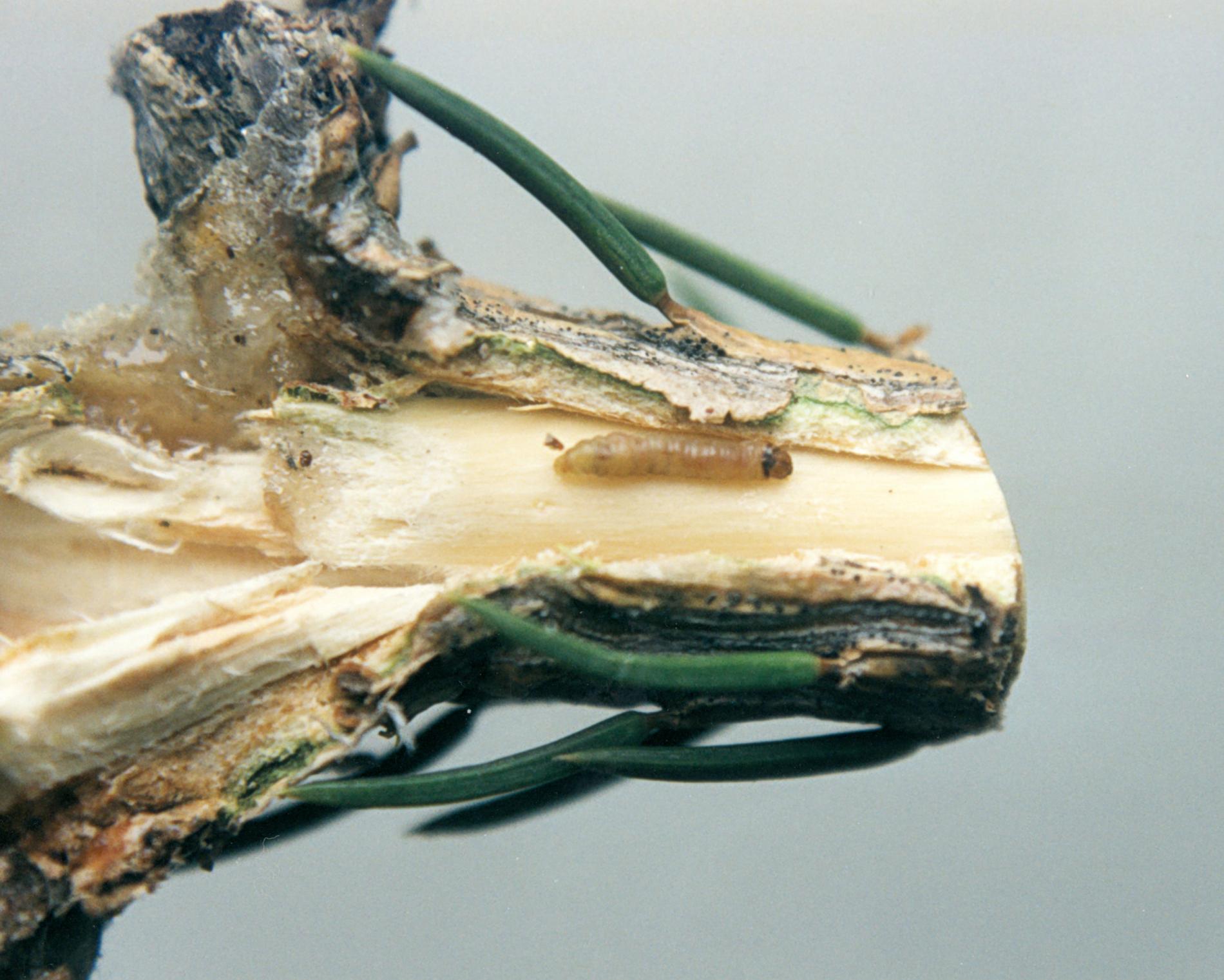
in June, mine under the bark and tunnel 5–6 cm long galleries. Overwintering inside the larval galleries, they pupate in spring. The presence of the caterpillar is indicated by resin flow and frass coming out from the larval tunnel. Can cause damage mainly in young spruce stands (Christmas tree plantations) when abundant. The feeding damage induces galls on the injured parts, disfiguration of trees and secretion of resin. Minor damage usually heals rapidly. Not rare in Central Europe.
Thickening of the stem. Presence of excrements.
Tree Species: Spruce
Part of a plant- attacked: Tree trunk, Leaf / Needle, Branch
Pest significance: Harmful
Pest Category: Insects
Invasive Species: No
Present in EU: Yes
Pest group: Insect
Affected part of wood: Bark, Heartwood, Sapwood, Underbark area
Depth of damages: Bark, More than 5 cm depth, Under bark only, Up to 0,5 cm depth, Up to 2 cm depth, Up to 5 cm depth
The extent of damage: Individually - one place
Prevalence in Europe: Common
Damaged products: Firewood, Fresh timber logs (water still in the sapwood), Furniture, Lumber, boards and prisms, Wooden house constructions
Roundwood size: Branches and twigs, Diameter from 10 up to 50 cm, Diameter up to 10 cm
Wood discoloration: No
Exit holes: Round
Pest subcategory: Wood-boring insect
Similar pests

Xiphydria longicollis

Sirex noctilio
