


Cryptorhynchus lapathi
Poplar-and-willow borer
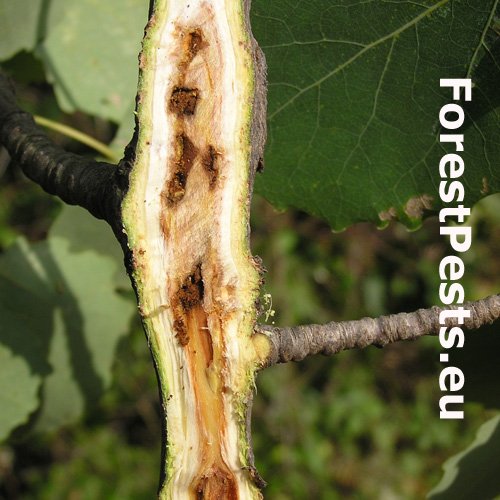
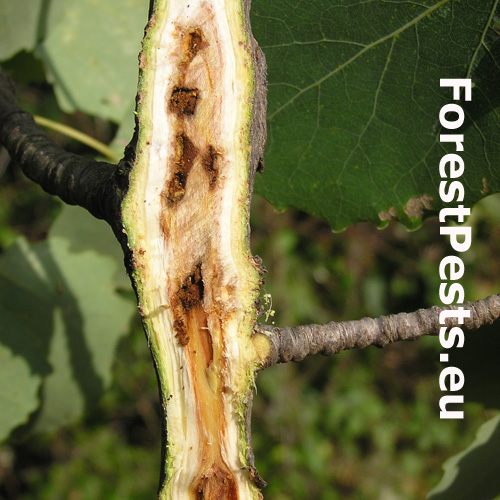
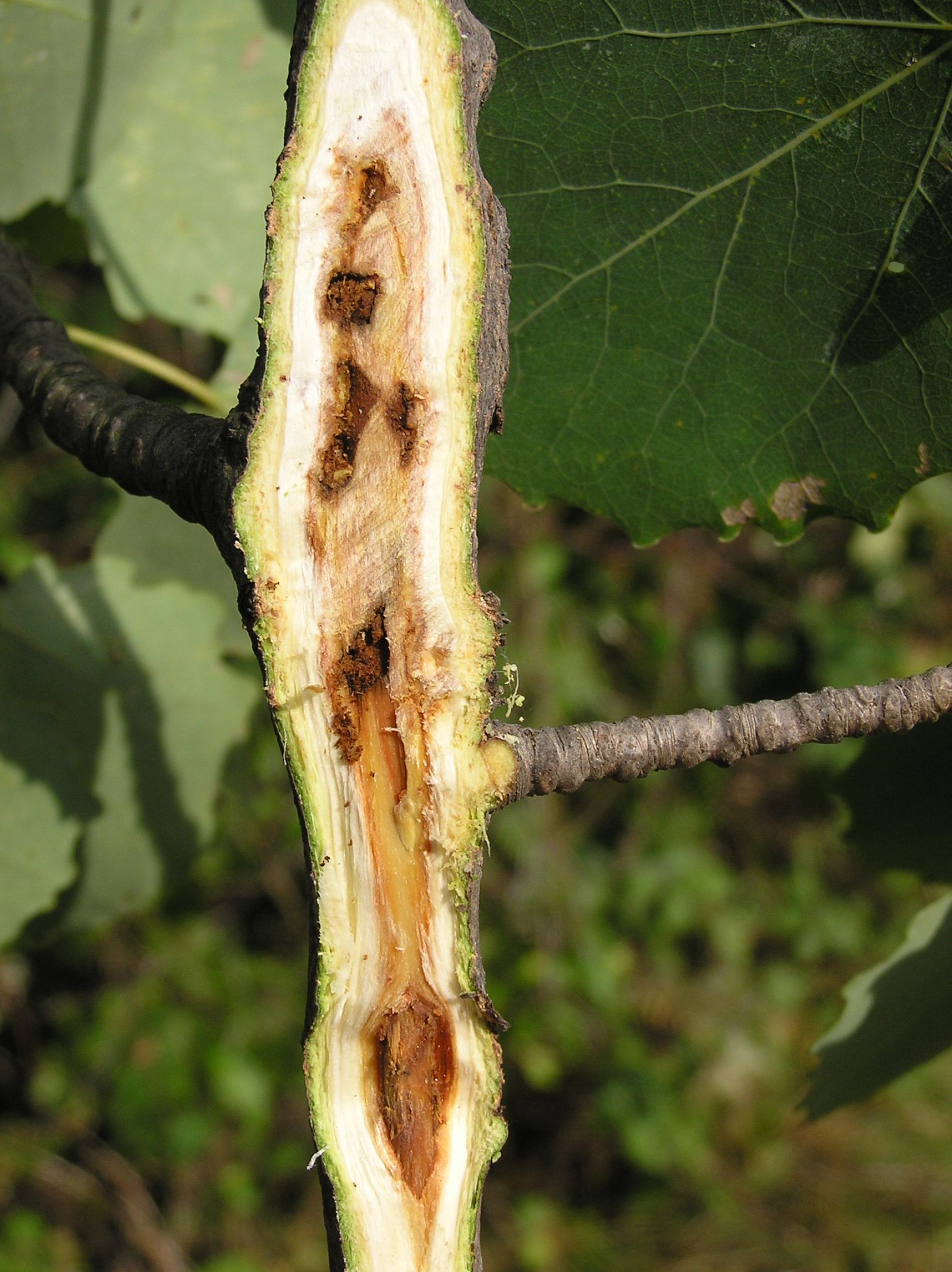
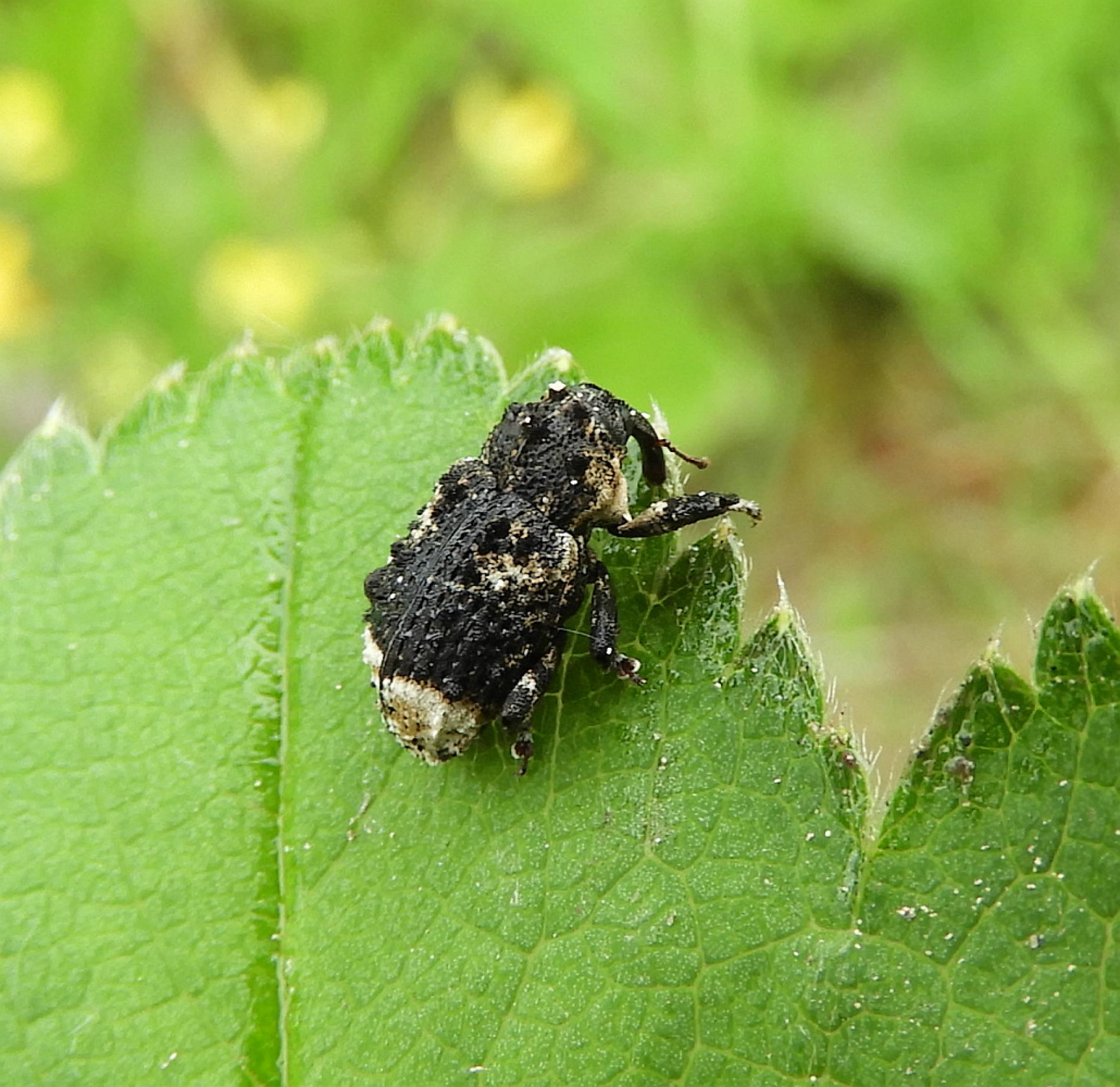
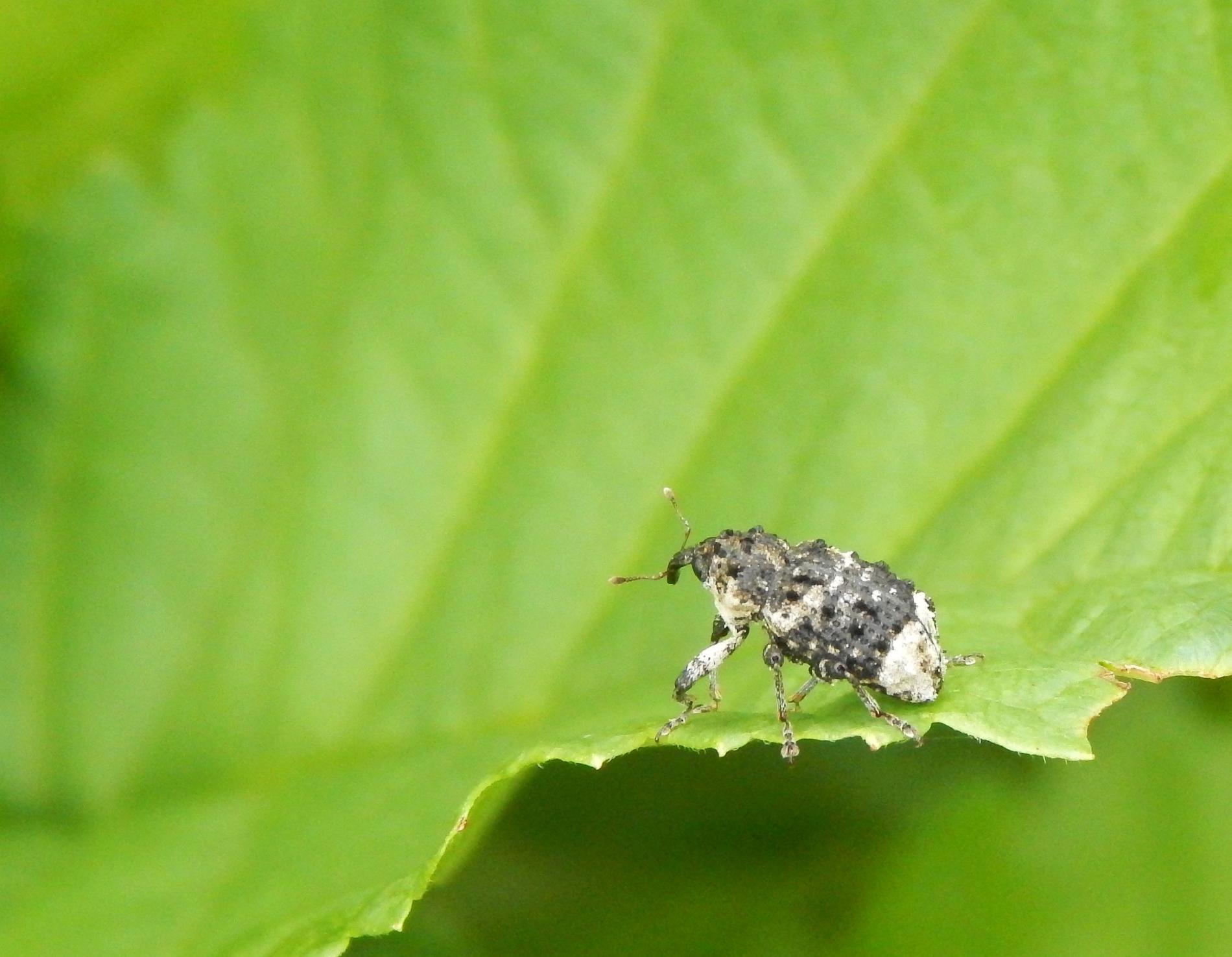
The brownish and greyish white beetles with a long “nose” live in the late summer. In April, after a short period of feeding on soft and tender bark, the insects mate early in the season. Females then lay their eggs during May and June, either individually or in small numbers. These eggs are deposited in tiny holes or slits that the insects chew into the bark of branches or small trunks. After about one to two weeks, the larvae hatch from the eggs. Initially, they feed within the cambium layer of the tree, but as they grow, they also tunnel into the xylem. While feeding, they create straight or meandering galleries, and sometimes induce the formation of galls. The larvae may continue to develop throughout the summer and autumn, overwintering in the wood until they complete their development in the following spring. Alternatively, larvae from early eggs may pupate in late summer, giving rise to adults in August. Some of these adults become active, mating, and laying eggs that will overwinter. Others remain in the pupal stage until the spring. Pupation takes place within the feeding galleries, and this stage lasts approximately two weeks. The life cycle typically spans two years, while in the northern areas, it may extend to three years. Adults of this species are not commonly found in large numbers. They are active during both day and night, spending most of their time in bark crevices or exposed on small stems. They bear a strong resemblance to bird droppings, making it necessary to search for them diligently. Pest in the nurseries and intinsive plantations with willows and poplars.
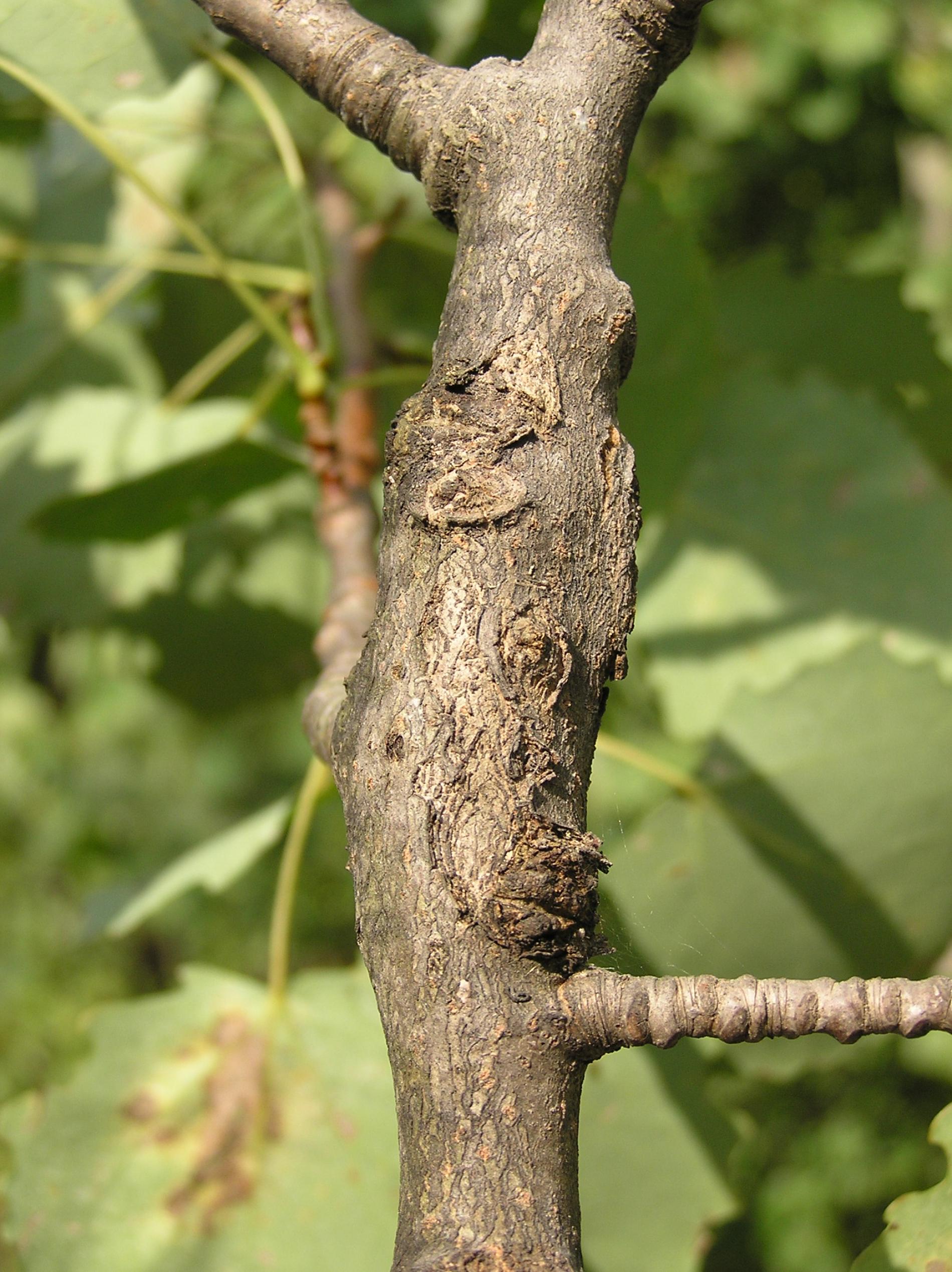
Twigs get thick and they are deformed. Larva living inside.
Tree Species: Alder, Poplar, Willow
Part of a plant- attacked: Tree trunk, Branch
Pest significance: Harmful
Pest Category: Insects
Invasive Species: No
Present in EU: Yes
Pest group: Insect
Affected part of wood: Heartwood, Sapwood
Depth of damages: Bark, Up to 0,5 cm depth, Up to 2 cm depth, Up to 5 cm depth
The extent of damage: Lokally
Prevalence in Europe: Common
Damaged products: Firewood, Fresh timber logs (water still in the sapwood), Furniture, Lumber, boards and prisms, Wooden house constructions
Roundwood size: Branches and twigs, Diameter up to 10 cm
Wood discoloration: Yes
Exit holes: Round
Pest subcategory: Wood-boring insect


Similar pests

Saperda populnea

Saperda carcharias
