


Cerambyx welensii
Longhorn beetle Cerambyx welensii
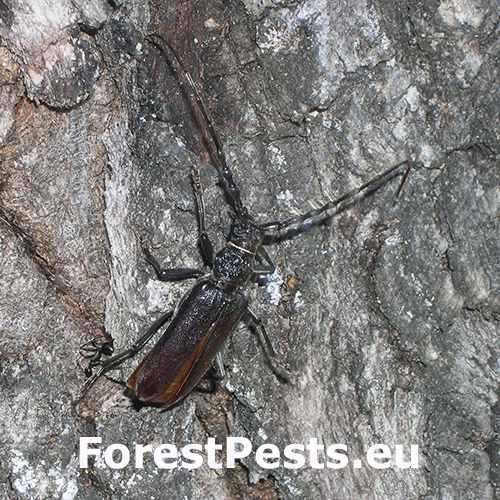
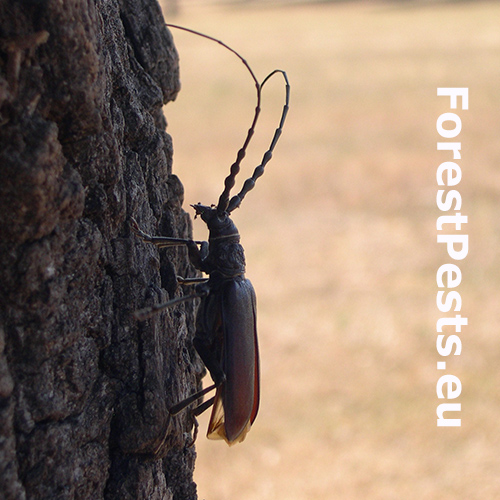
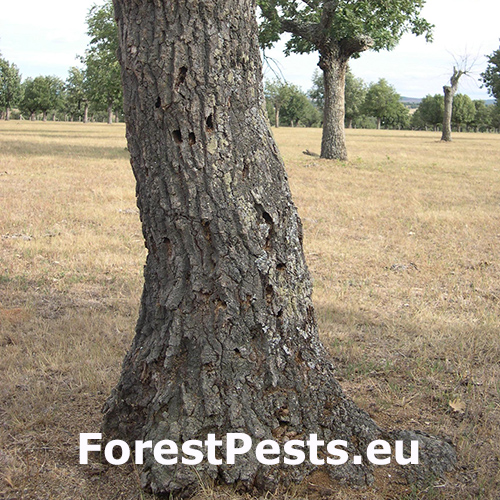
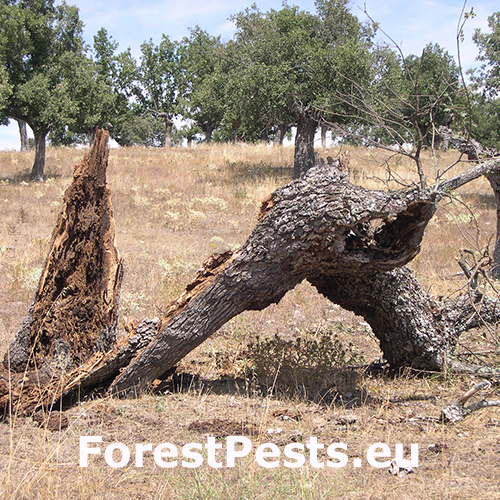
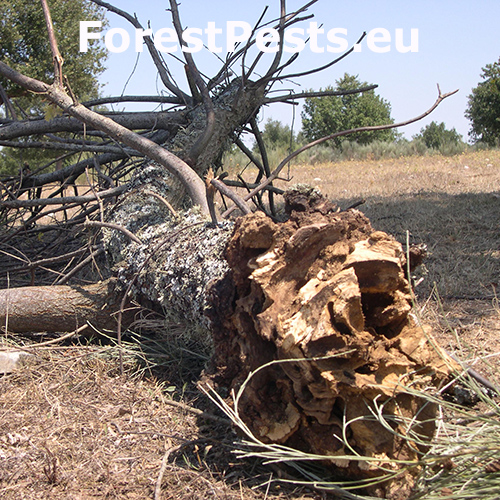
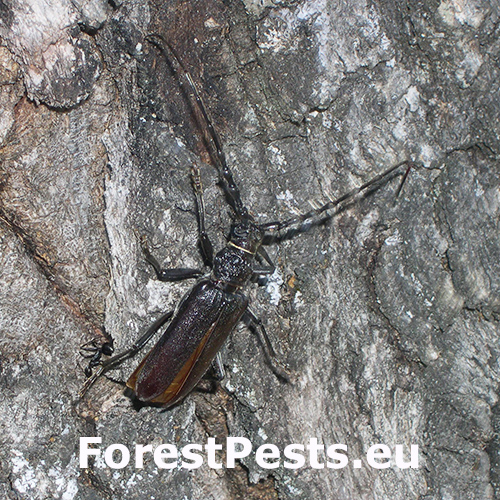
Cerambyx welensii is a large longhorn beetle in the family Cerambycidae, measuring 25–58 mm in length. It is widespread in Southern Europe, North Africa, and the Near East, inhabiting oak forests and mixed woodlands. The species mainly feeds on oak species such as cork oak (Quercus suber) and holm oak (Quercus ilex), but it can also develop on other broadleaf trees like Juglans, Fraxinus, and Platanus. Larvae are xylophagous, boring deep galleries into trunks and branches of living trees, weakening their structural integrity and vitality.
The life cycle spans three years, with larvae causing significant damage as they grow. Adults are active from mid-May to late July. Infestations often lead to branch dieback and bark cracking, making trees more vulnerable to pathogens and secondary pests, and reducing their aesthetic value in forested and urban settings.
Affected trees show deep larval galleries in the trunk and branches. Bark may crack, and large oval exit holes are often visible. The wood appears structurally weakened and roughened. Frass can be seen at the base of the trunk.
Tree Species: Oak, Ash, Walnut
Part of a plant- attacked: Tree trunk, Branch
Pest significance: Harmful
Pest Category: Insects
Invasive Species: No
Present in EU: Yes
Pest group: Insect
Affected part of wood: Heartwood, Sapwood
Depth of damages: Bark, More than 5 cm depth, Under bark only, Up to 0,5 cm depth, Up to 2 cm depth, Up to 5 cm depth
The extent of damage: Lokally
Prevalence in Europe: Common
Damaged products: Firewood, Fresh timber logs (water still in the sapwood), Furniture, Lumber, boards and prisms
Roundwood size: Diameter 50+, Diameter from 10 up to 50 cm
Wood discoloration: No
Exit holes: Oval
Pest subcategory: Wood-boring insect
Similar pests

Rhagium mordax
