


Cerambyx cerdo
Great capricorn beetle
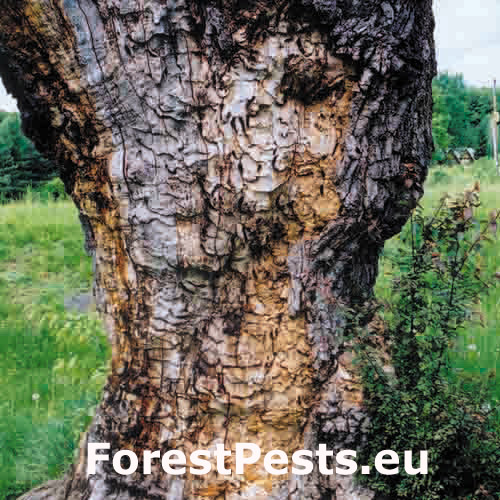
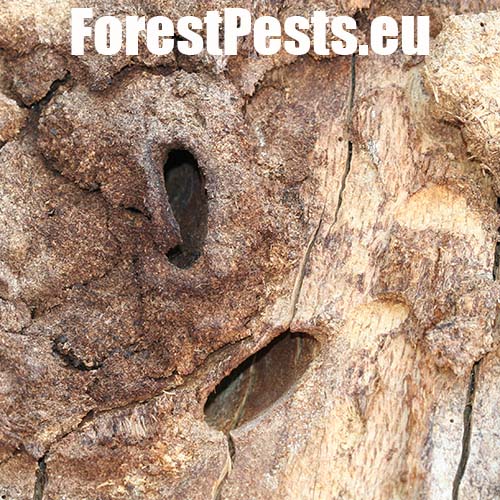
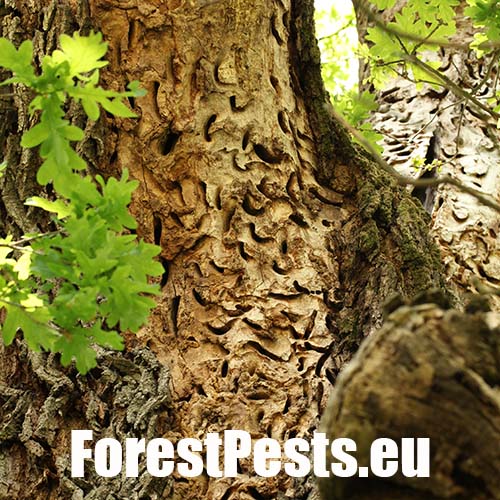
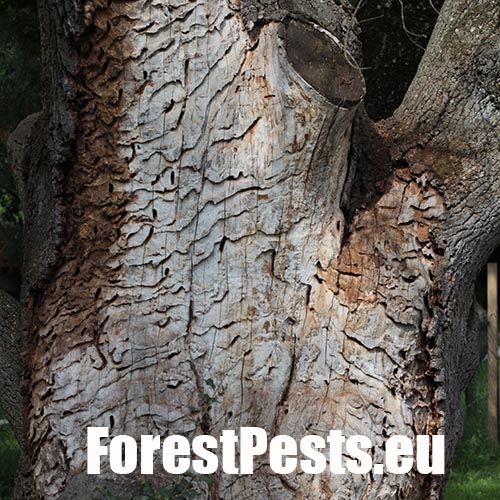
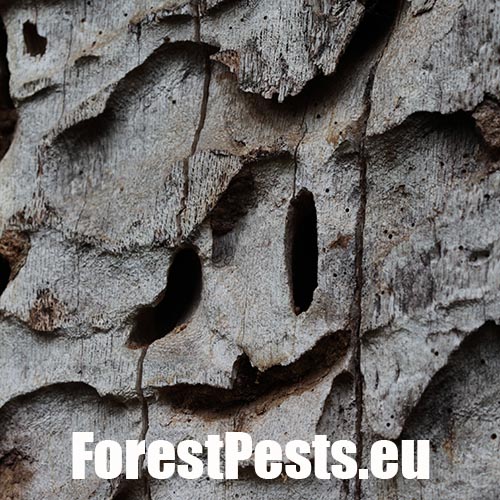
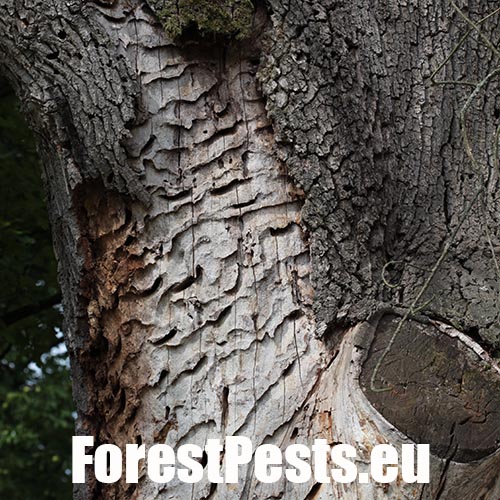
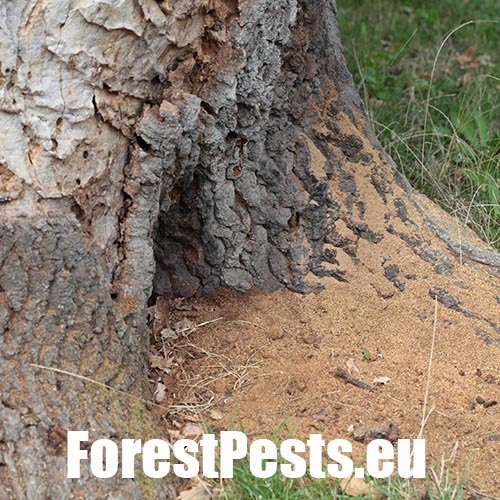
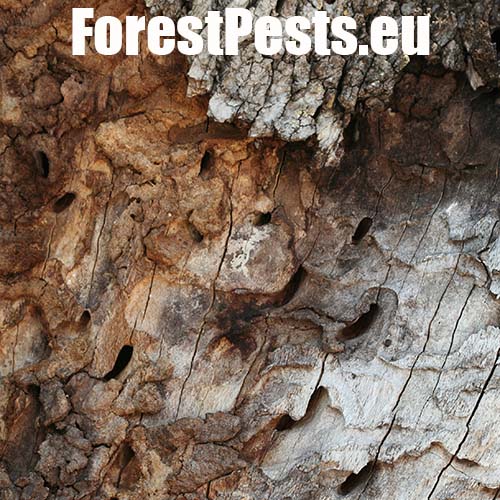
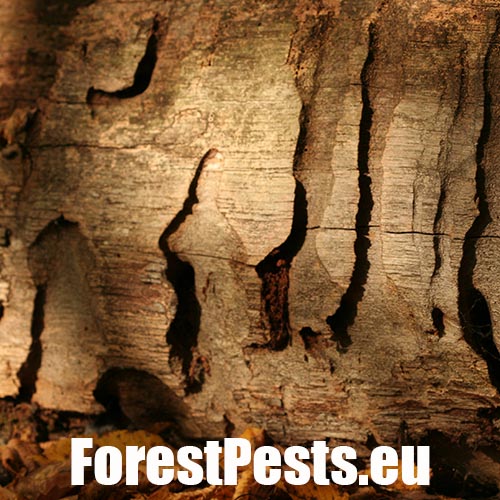
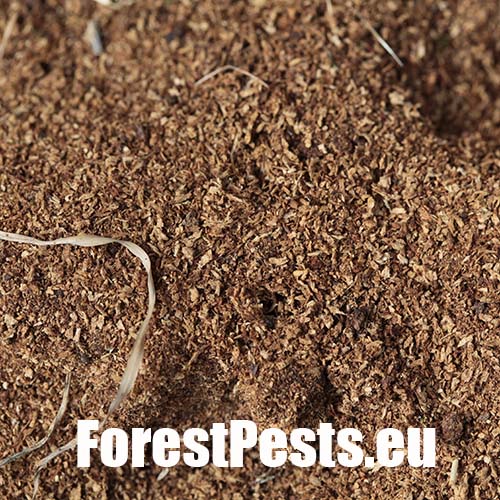
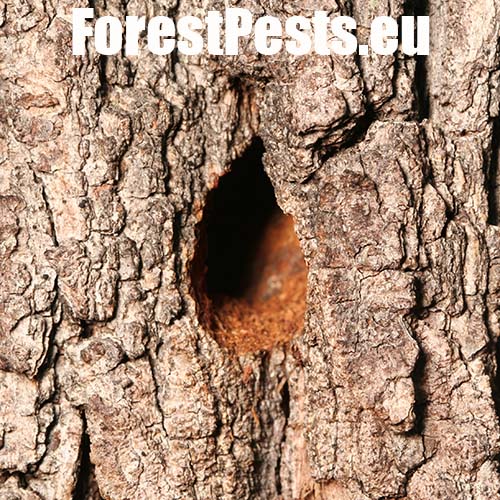
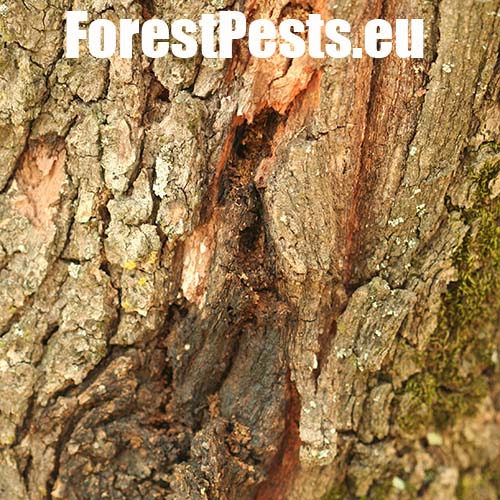
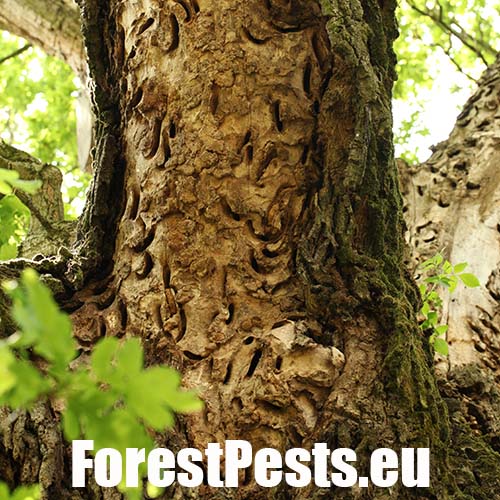
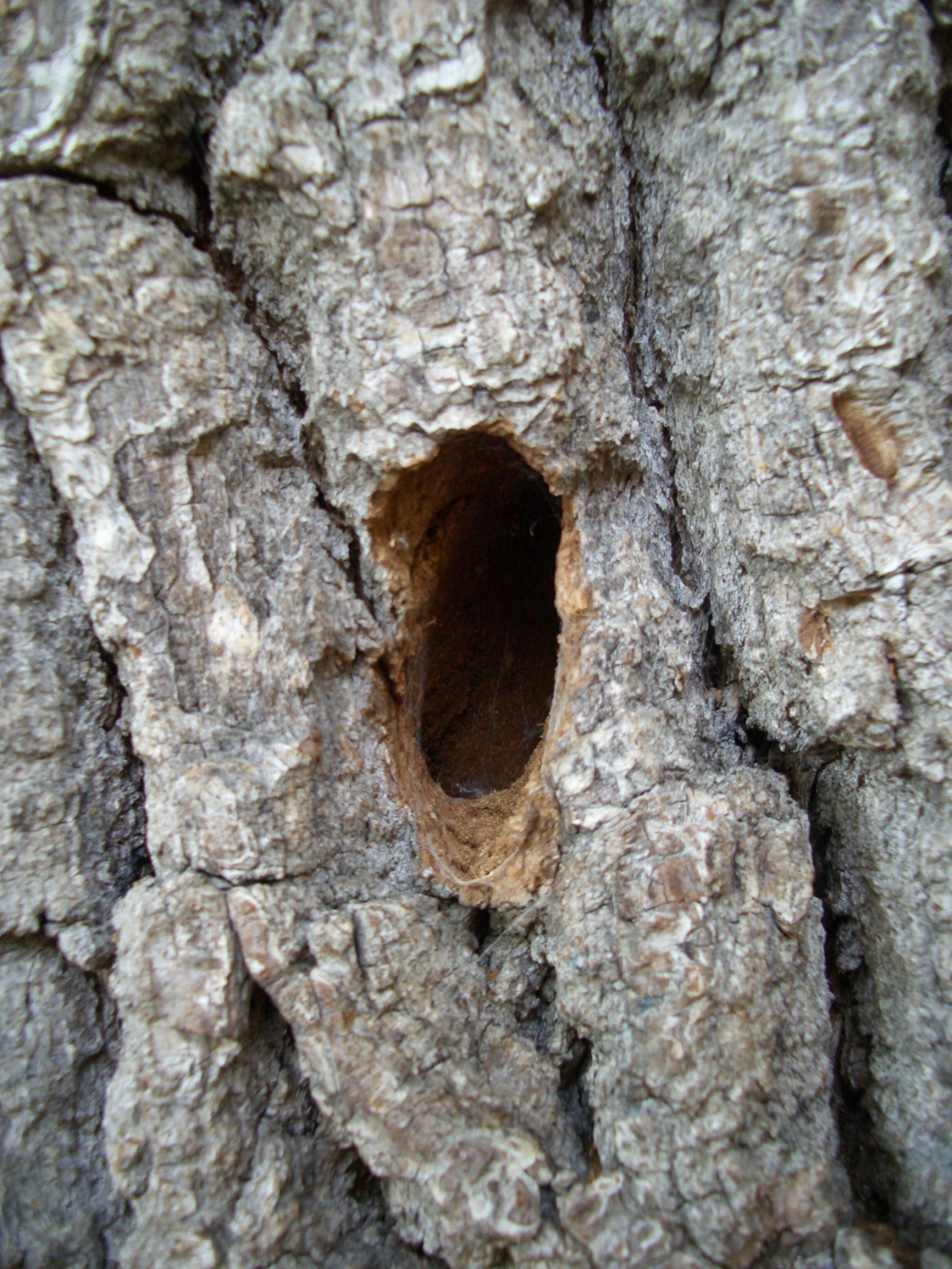
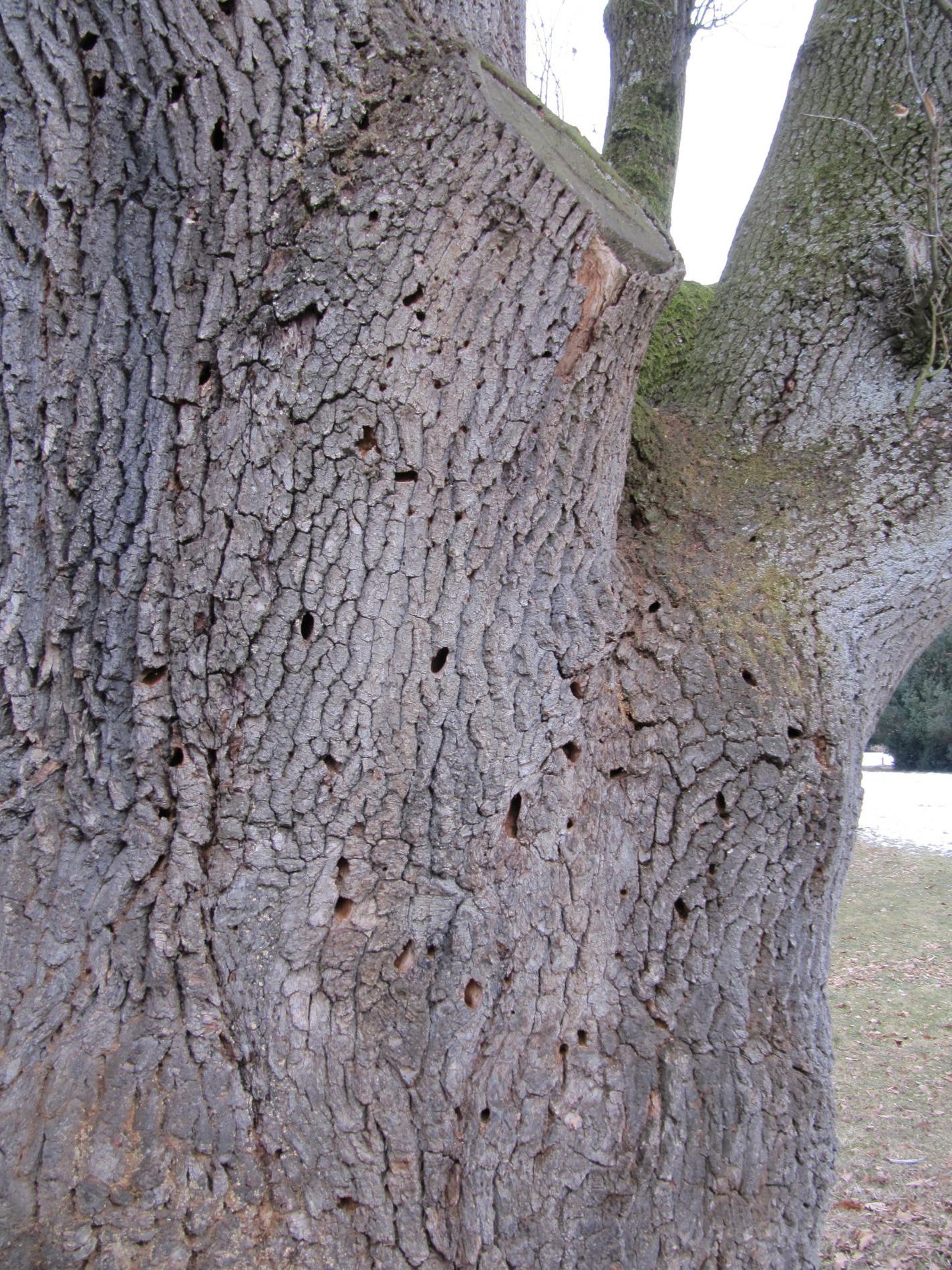
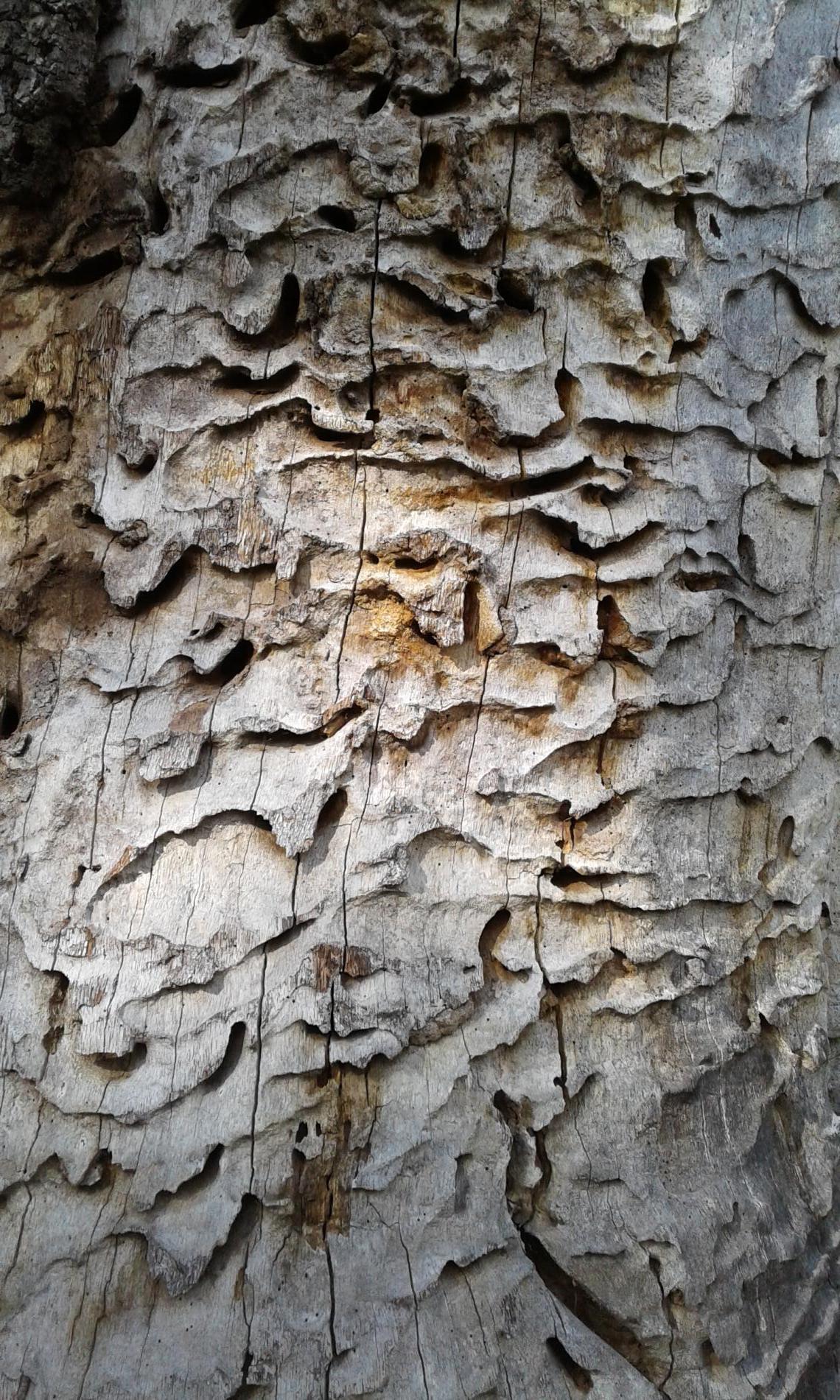
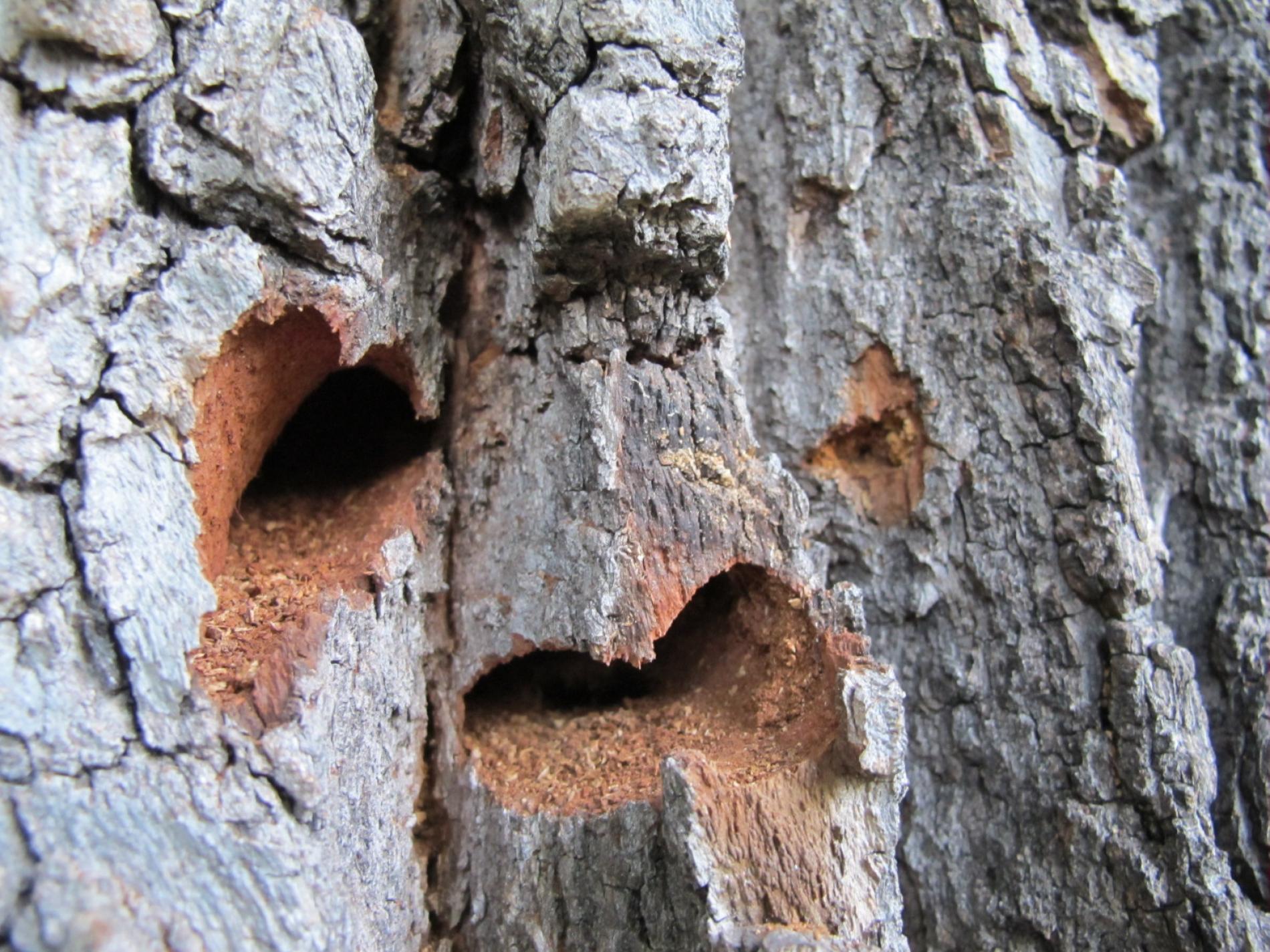
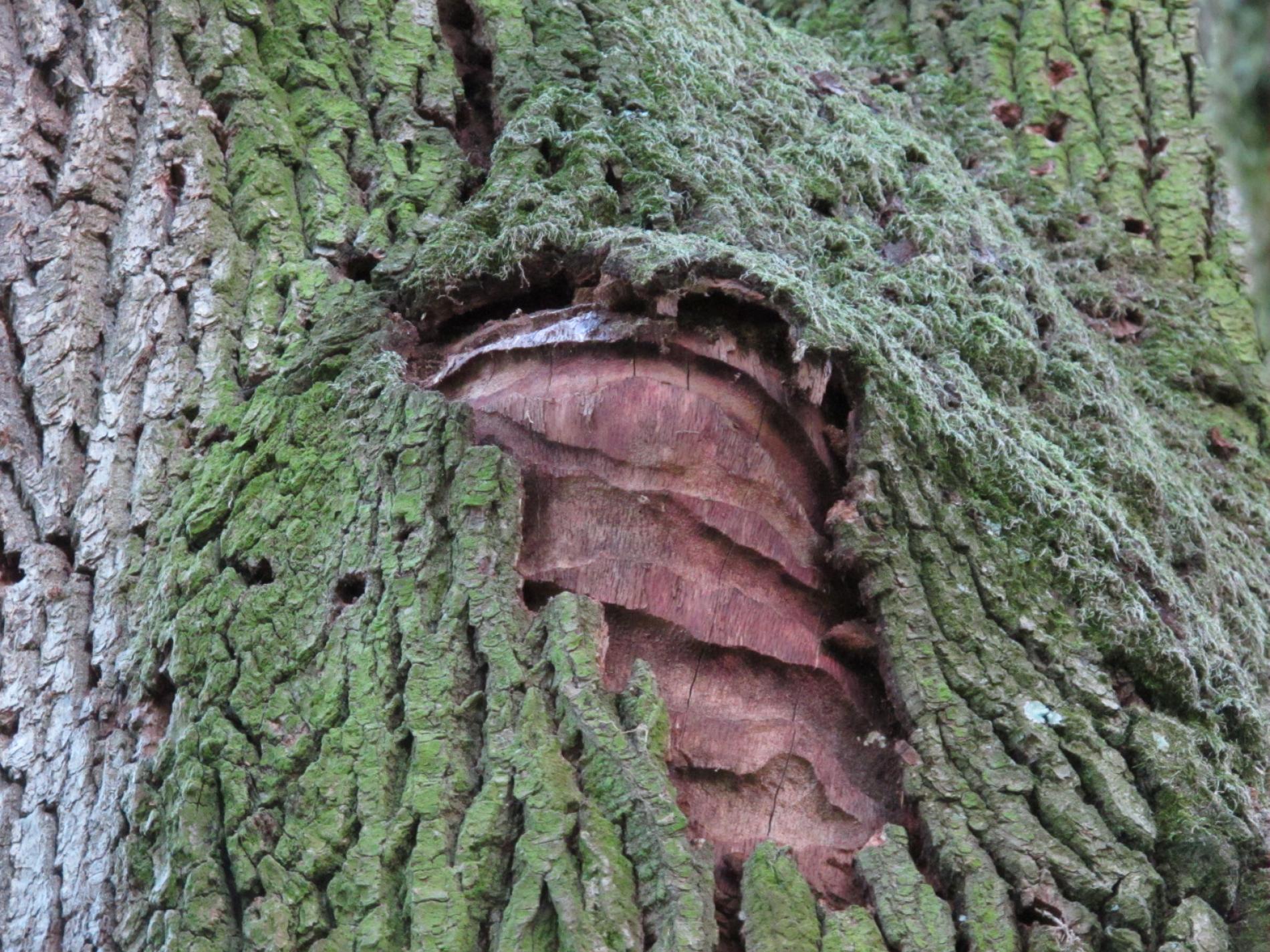
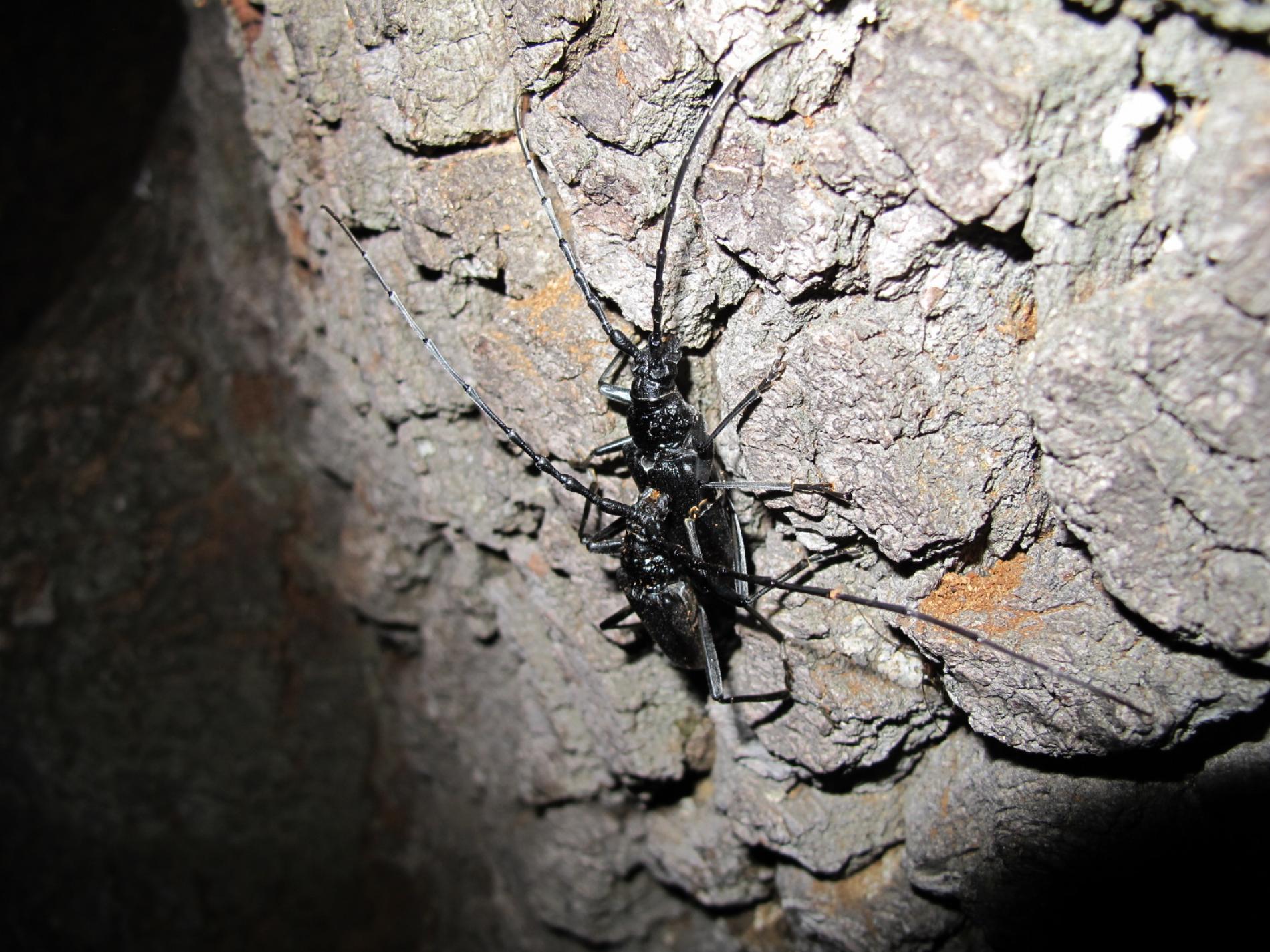
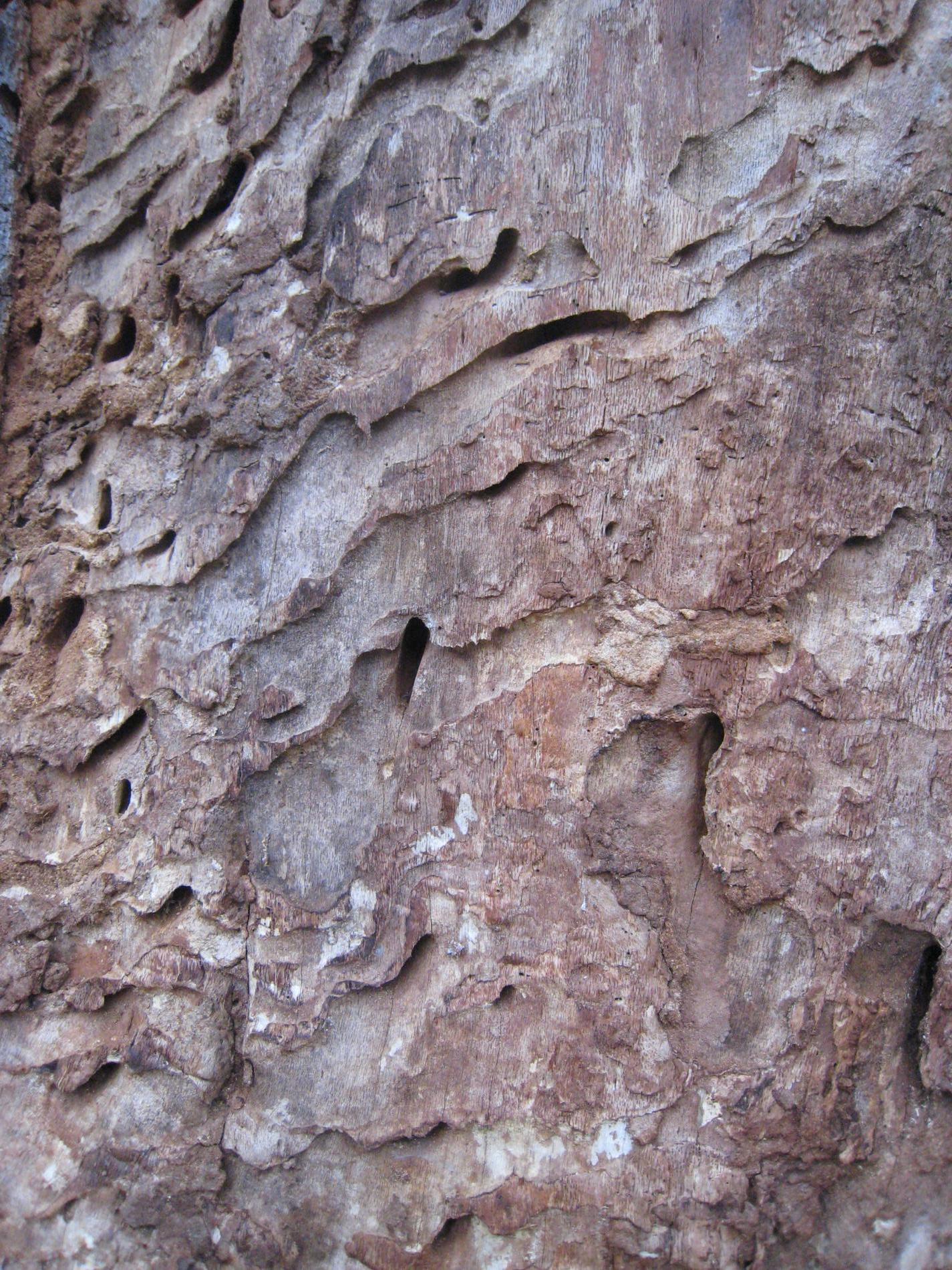
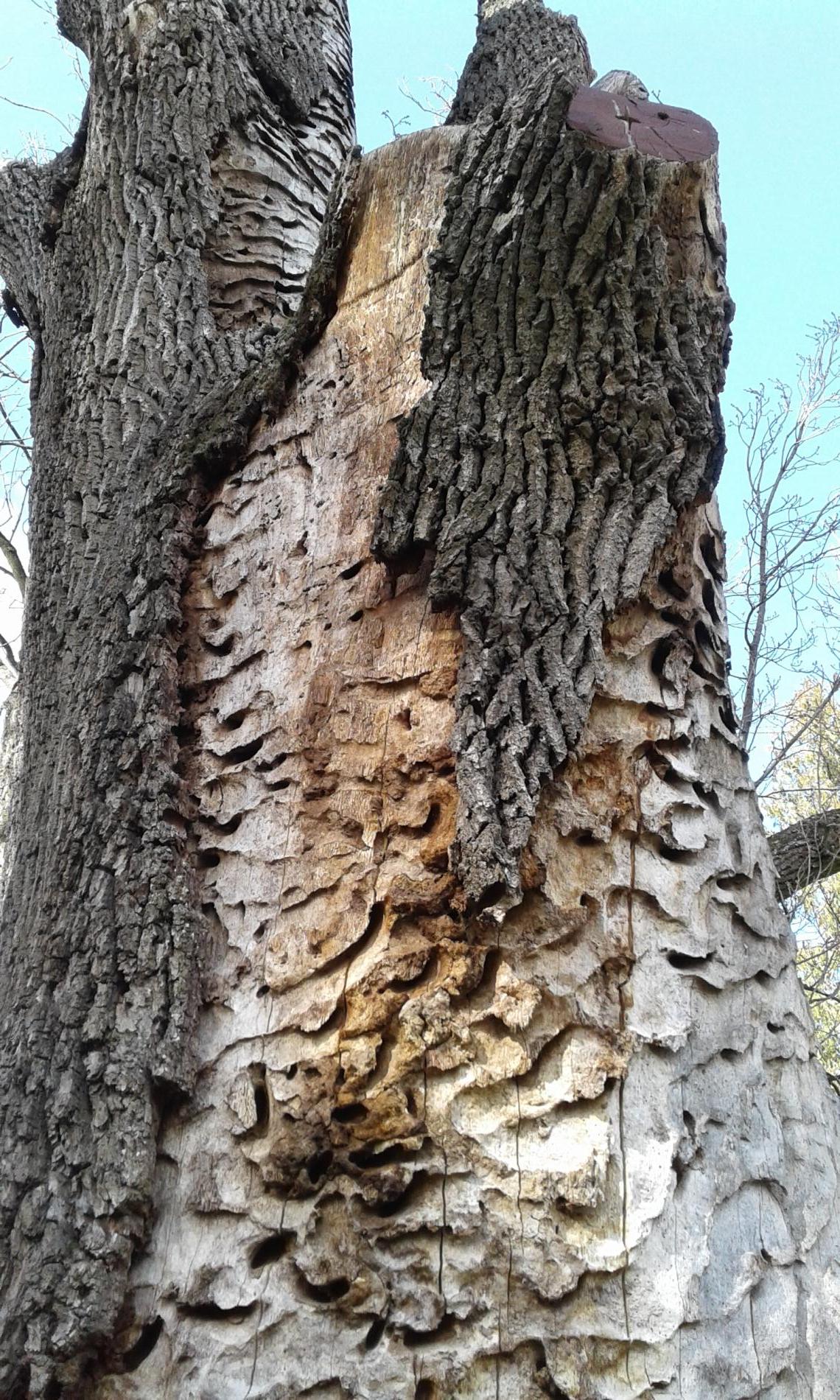
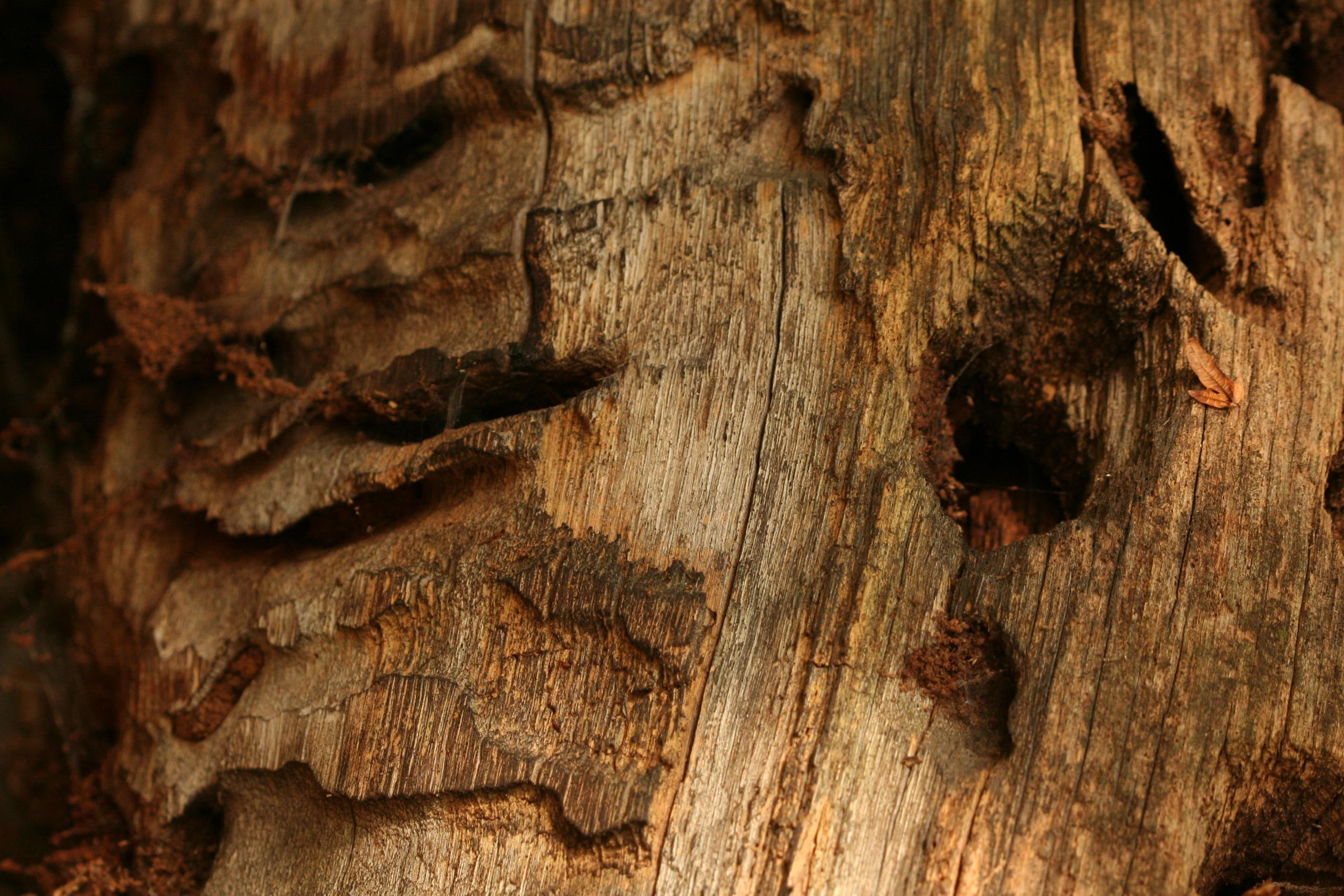
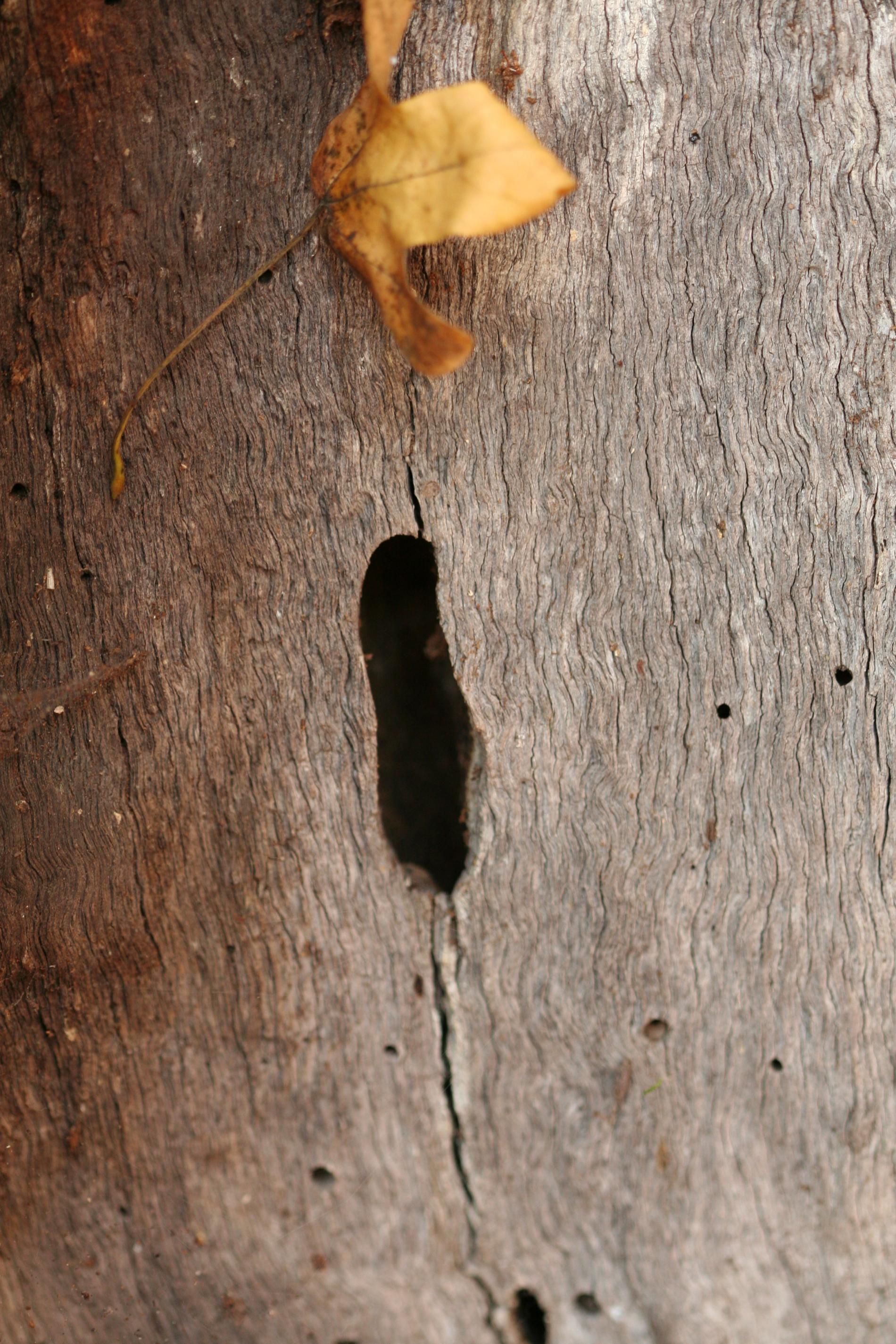
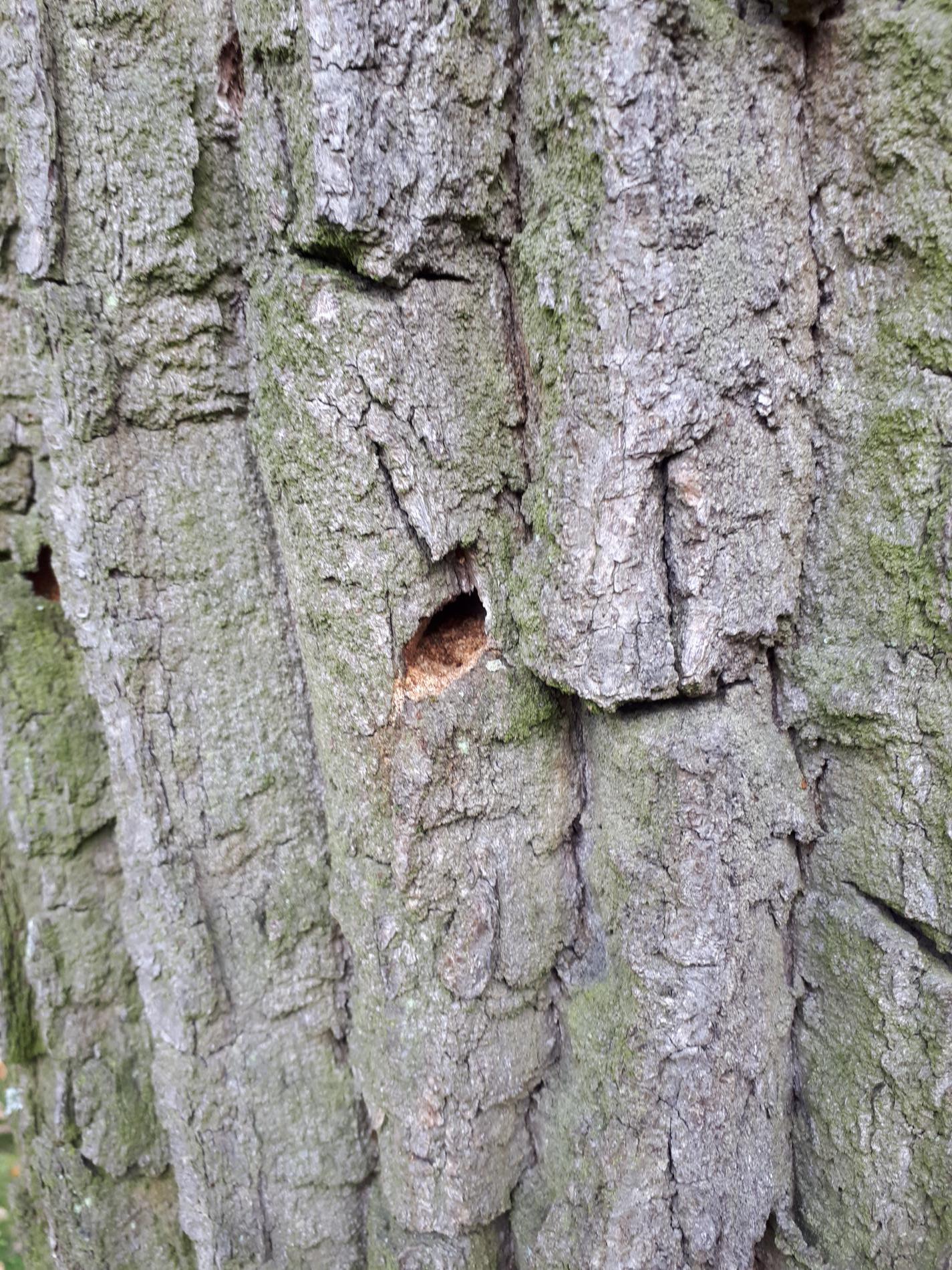
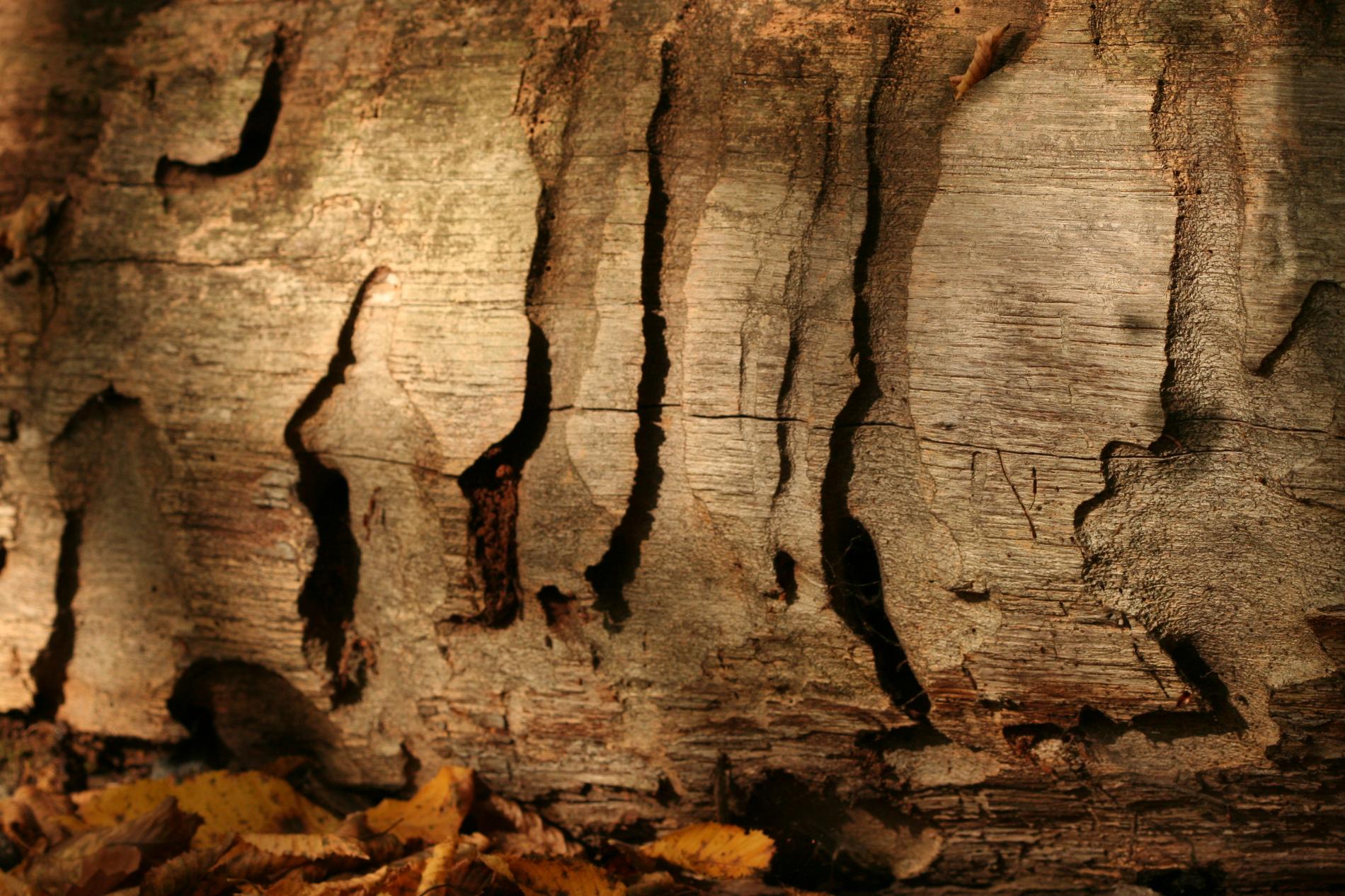
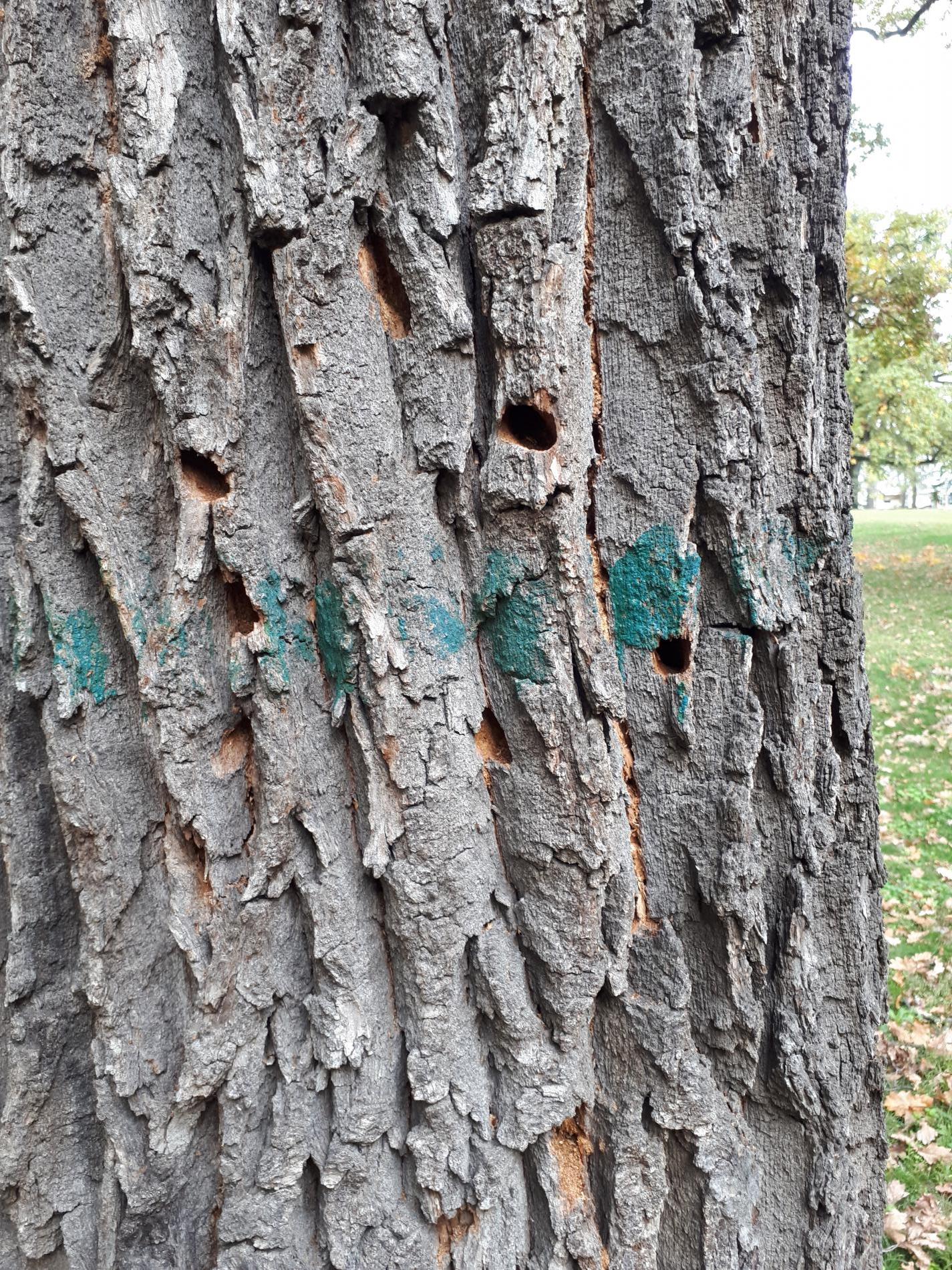
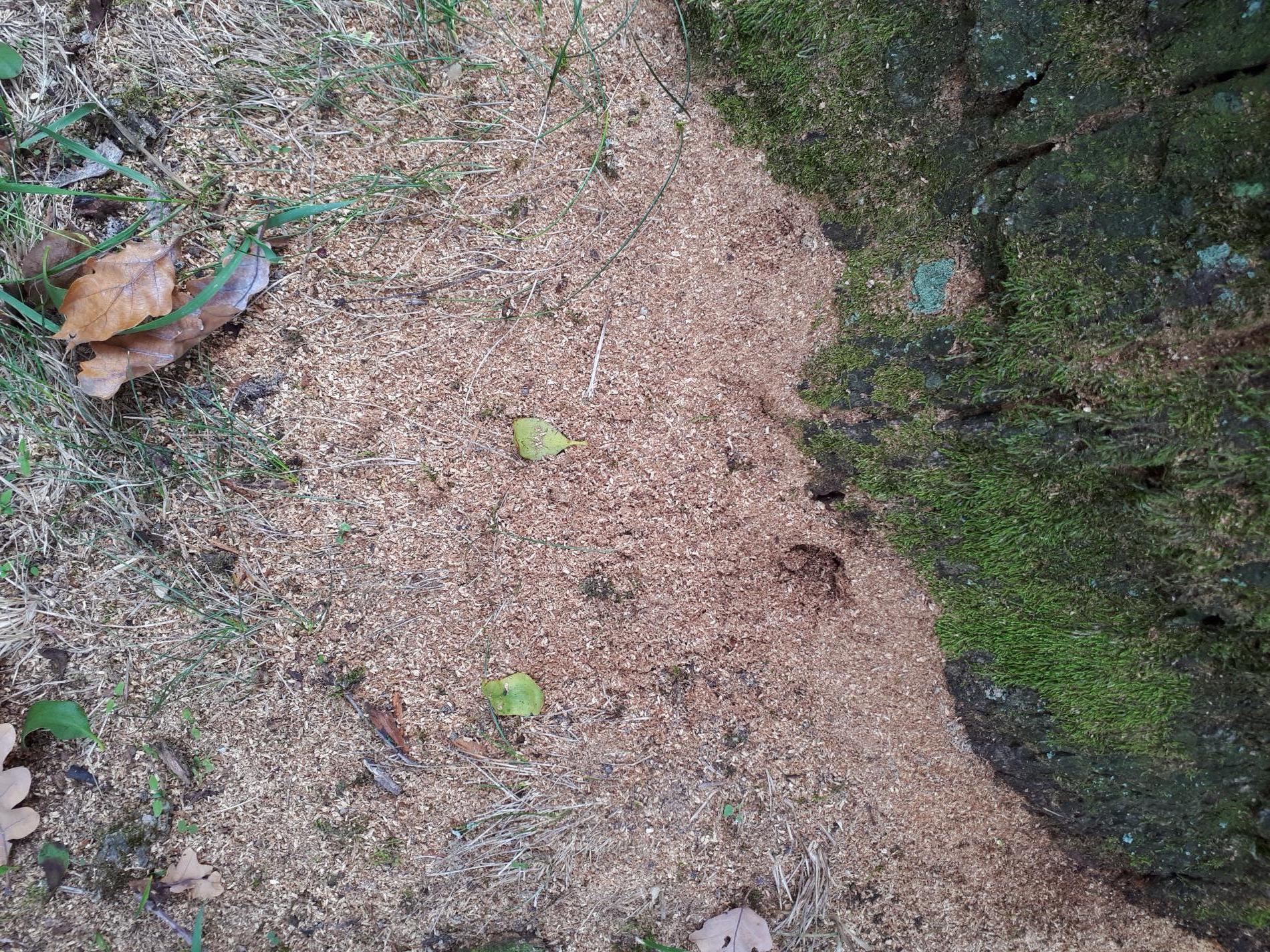
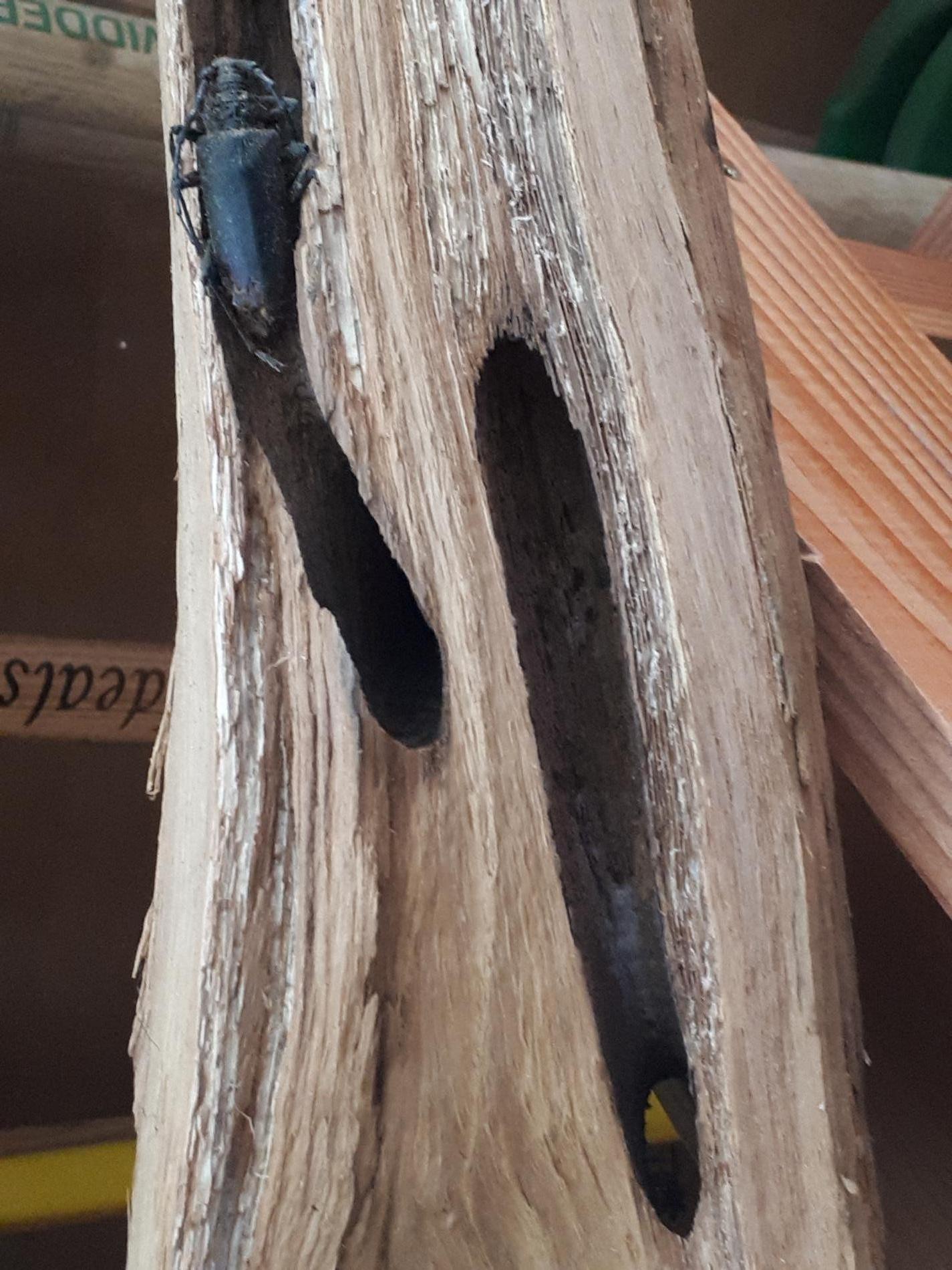
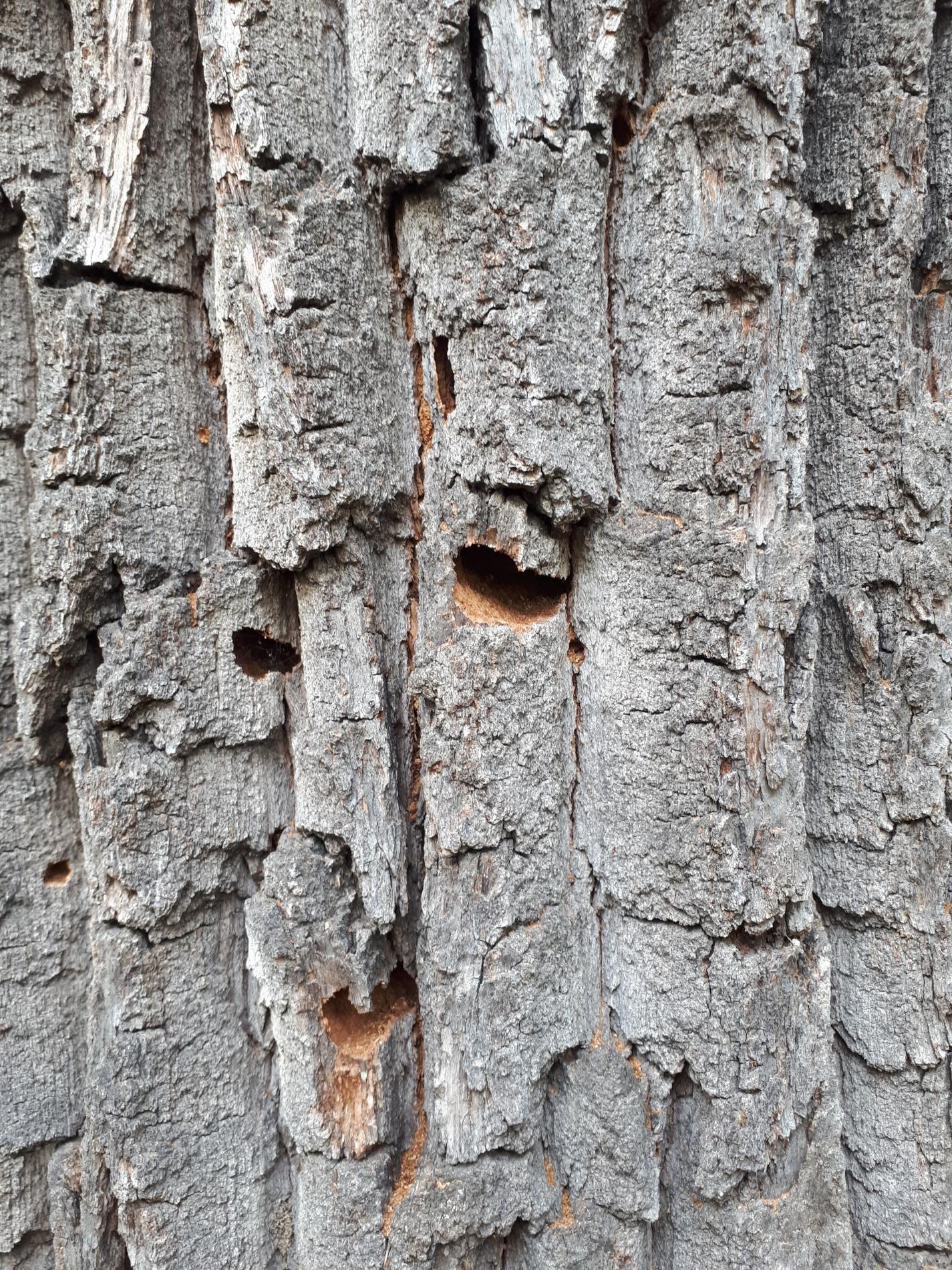
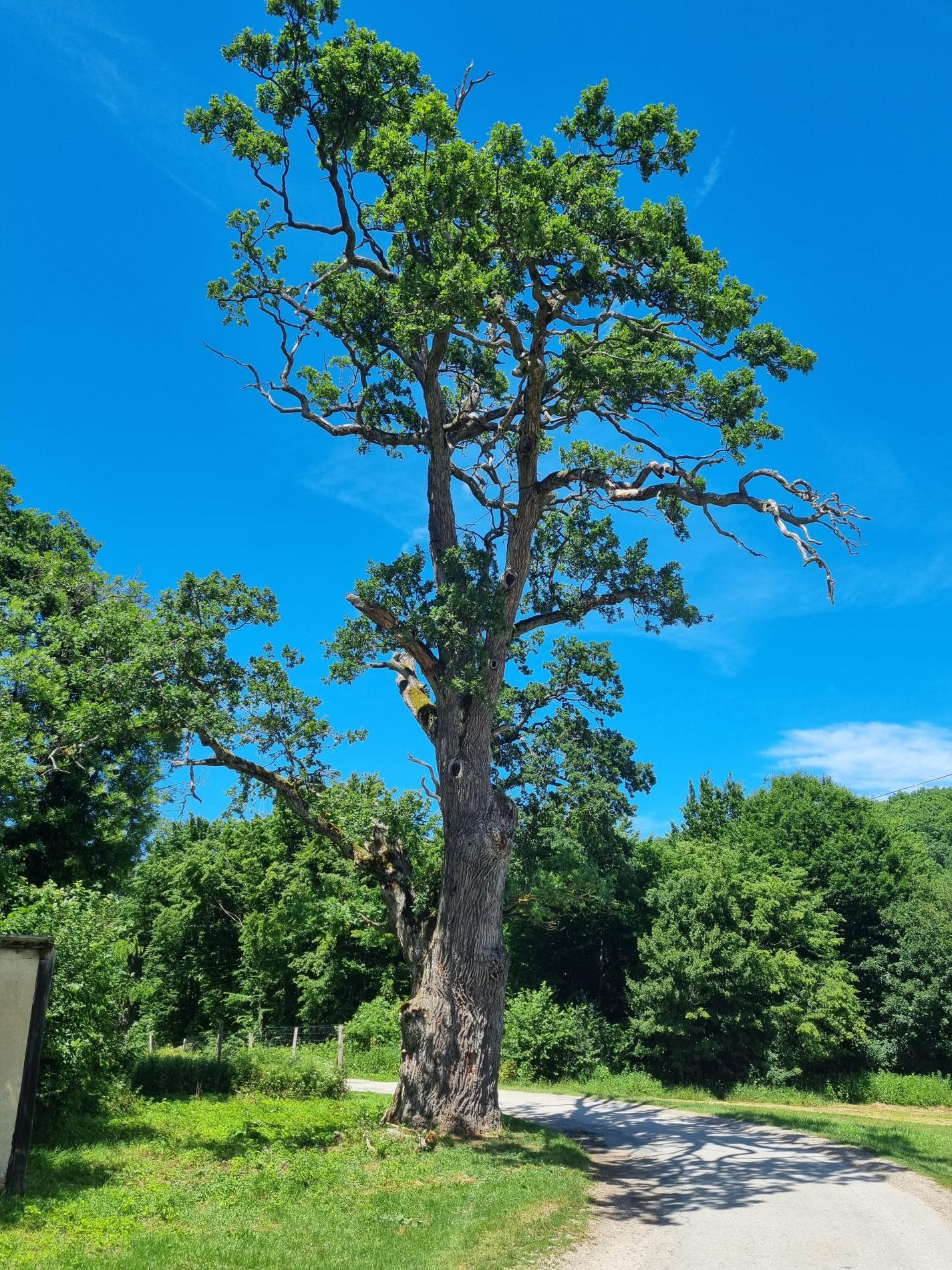
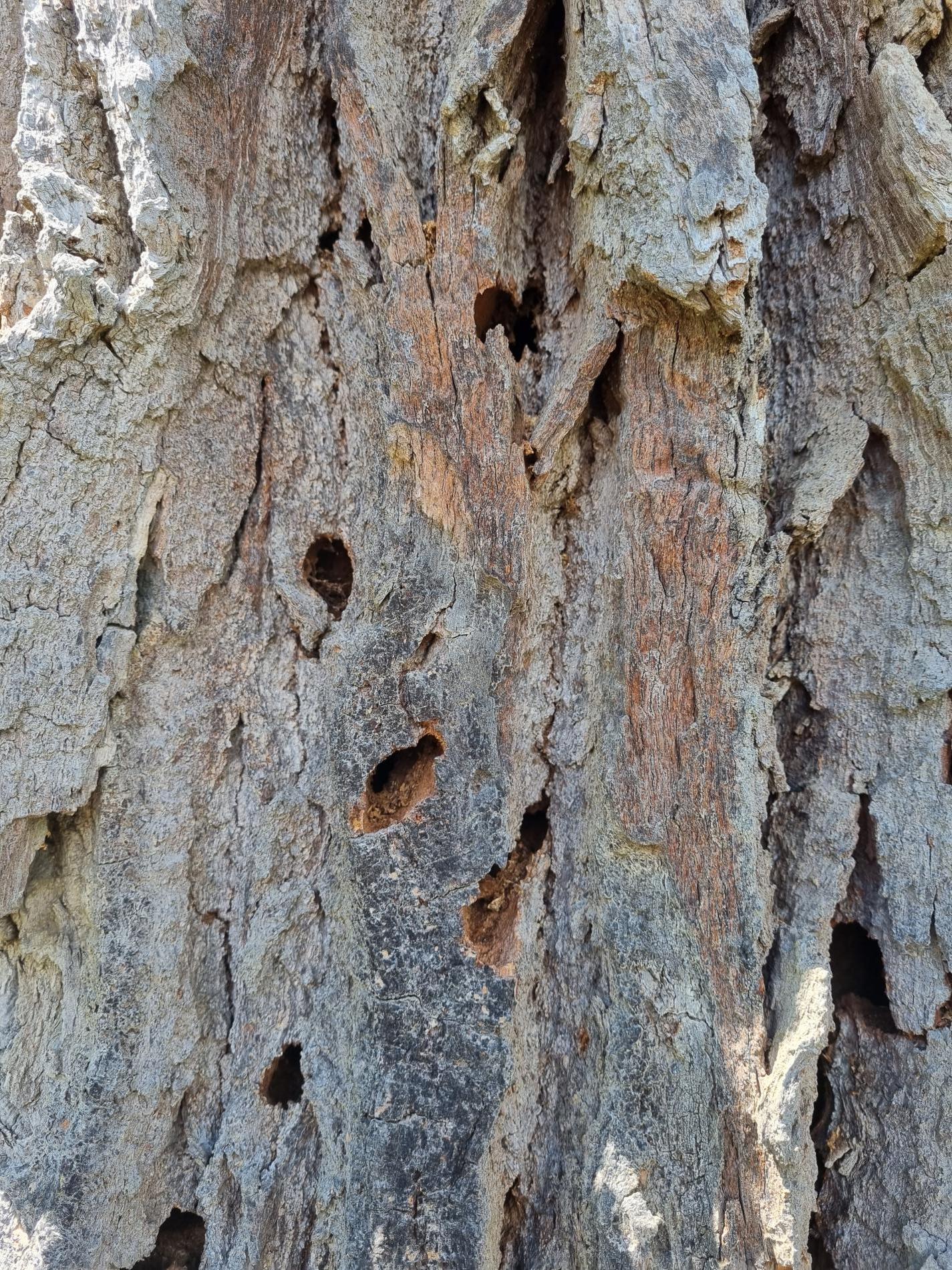
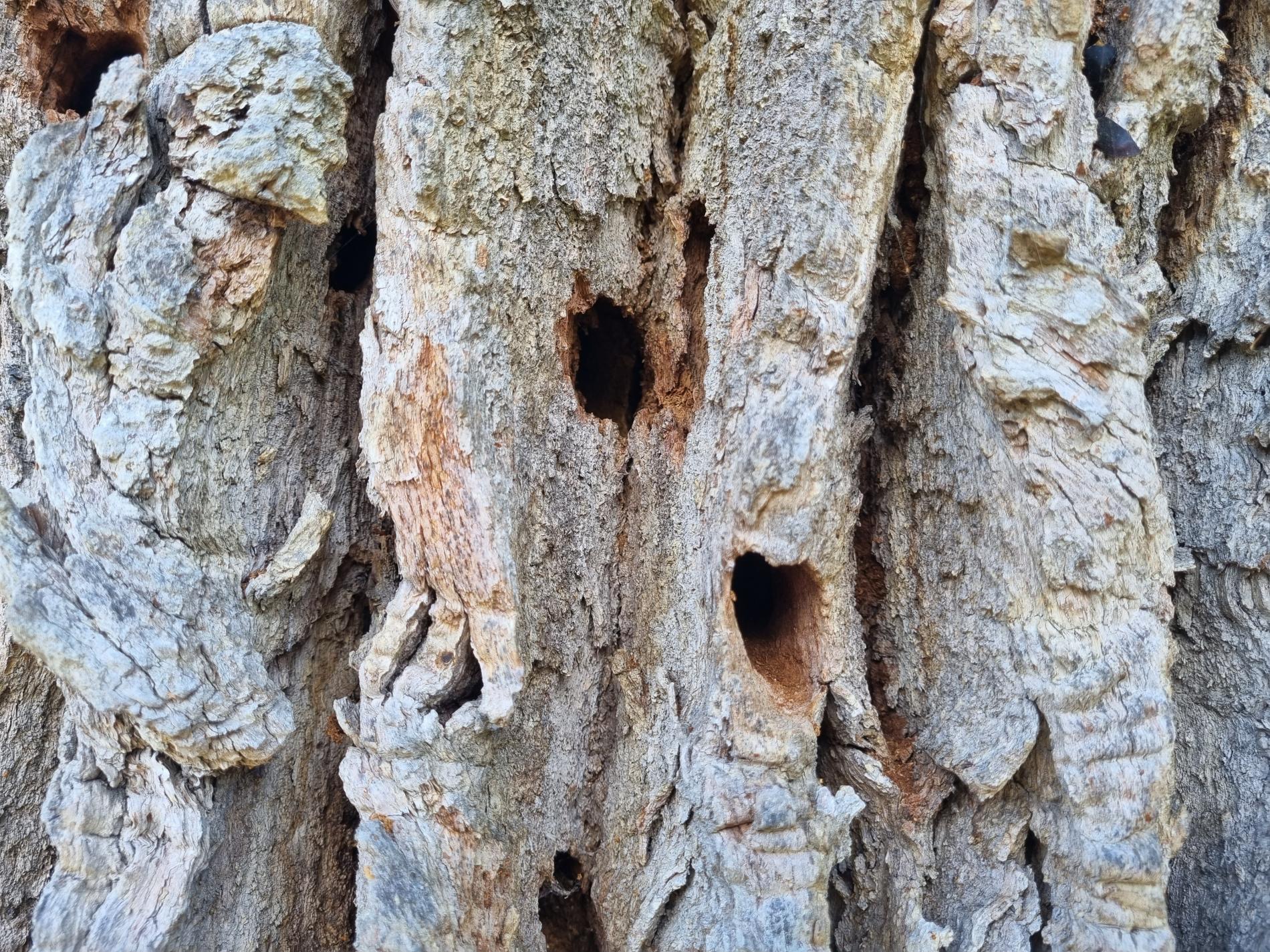
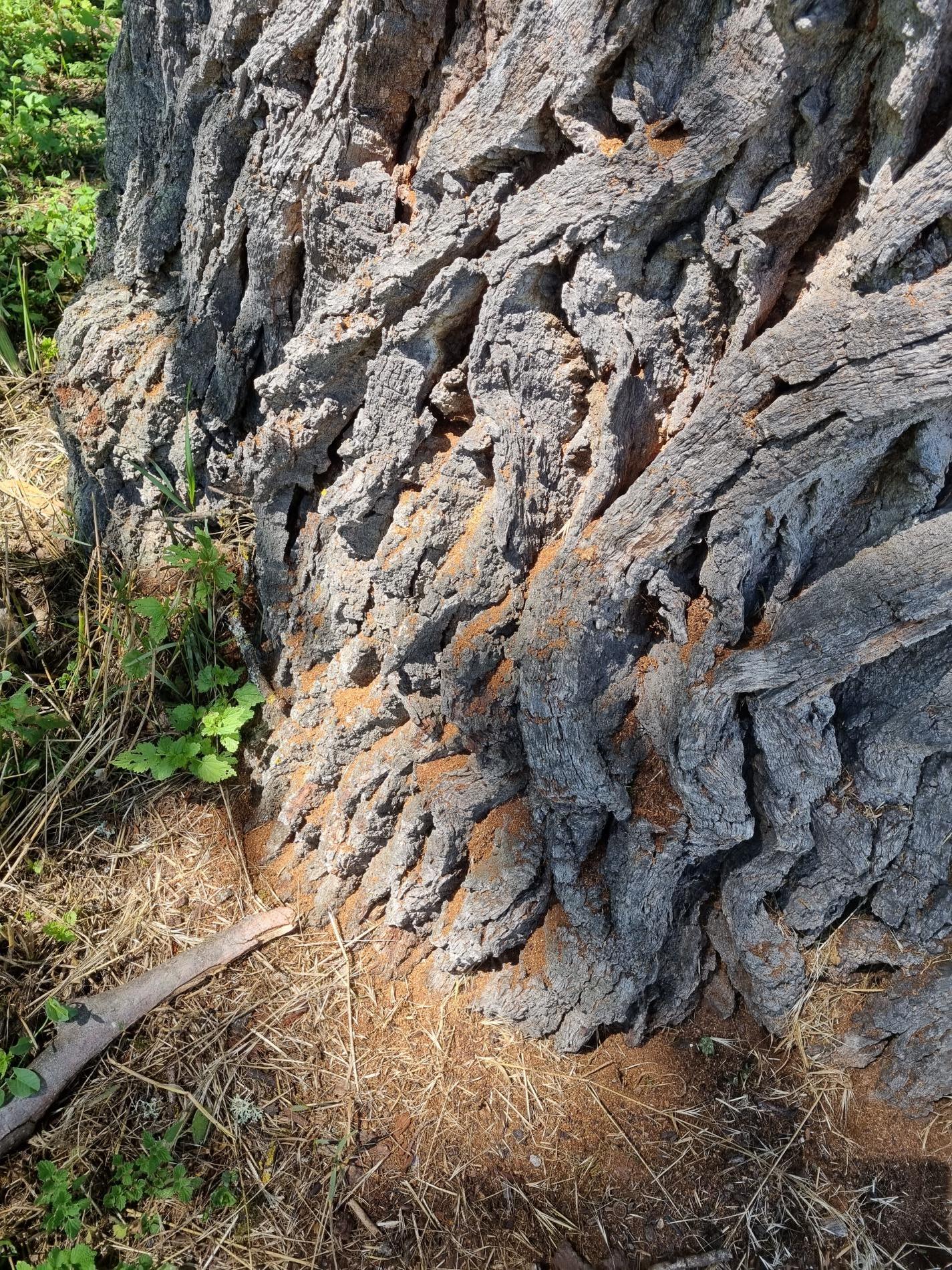
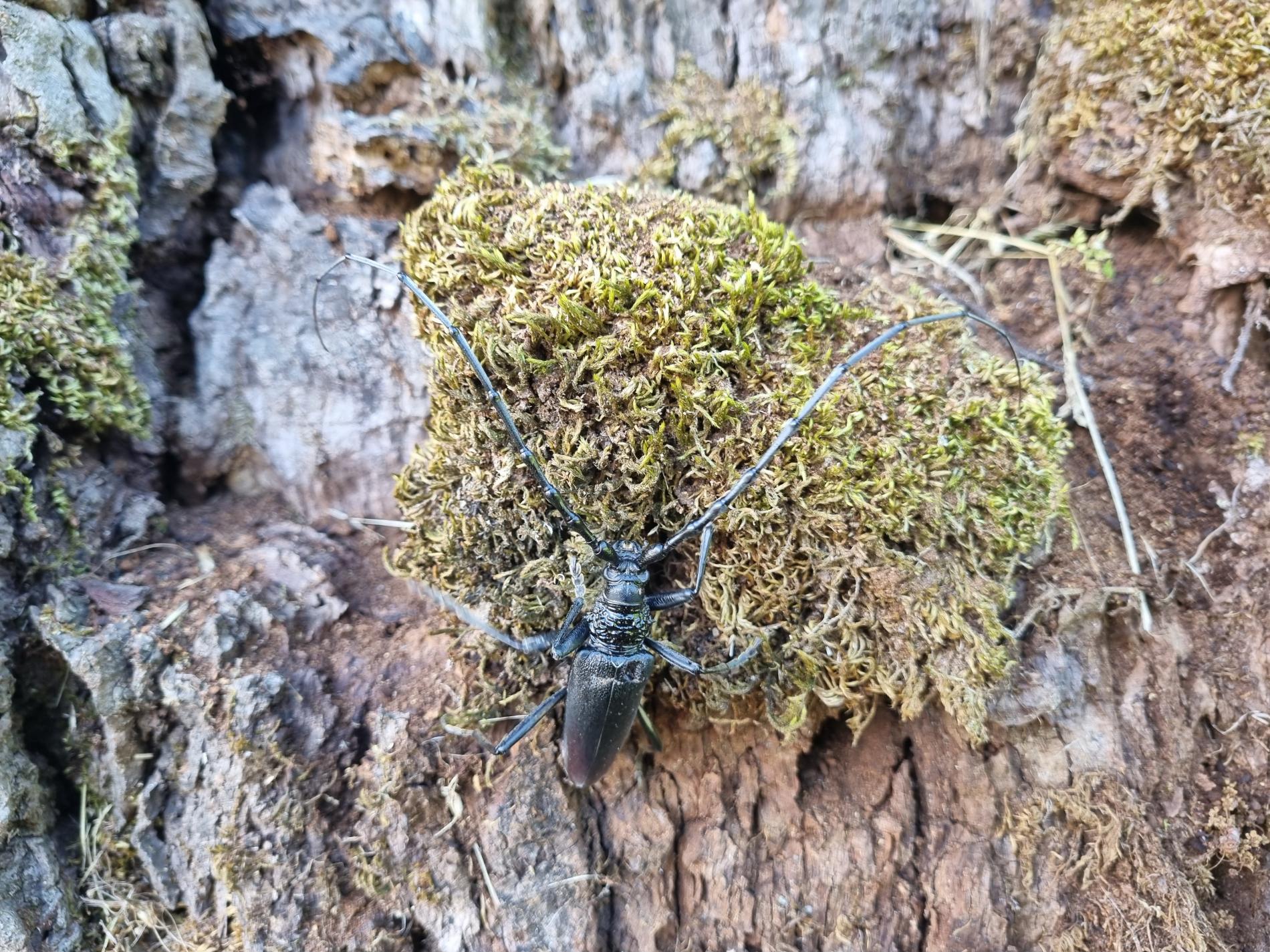
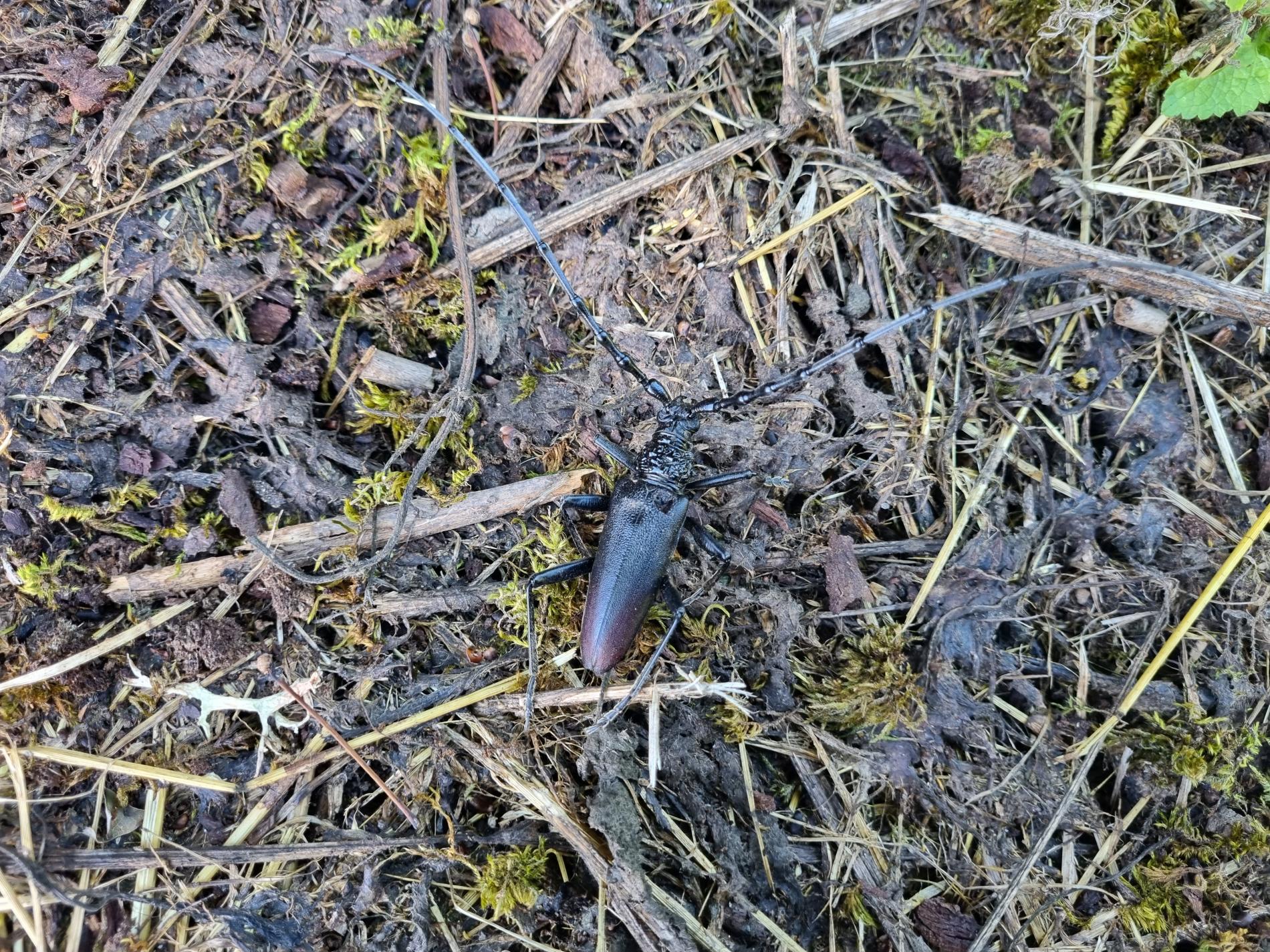
One of the largest beetles in Europe. Adult beetles are 24 to 53 mm long, with a blackish body and legs. Male antennae are twice as long as the body, while those of the female extend to the elytral apex. Females of several generations lay eggs on the same tree trunk which is later on bored by a maze of galleries. The larva feeds subcortically during the first year and moves into wood and sapwood in the second year. Larval galleries are long, irregular and widen as the larvae increase in size. A large amount of woodchips accumulates at bottom of the trunk. Pupation occurs in the sapwood (approximately 80 mm deep) in a large, elongate, oval pupal cell. Exit holes are oval, up to 2 cm in diameter. The species does not attack healthy trees but technically damages wood of dying trees. It develops in old oak stands or in old solitary trees.
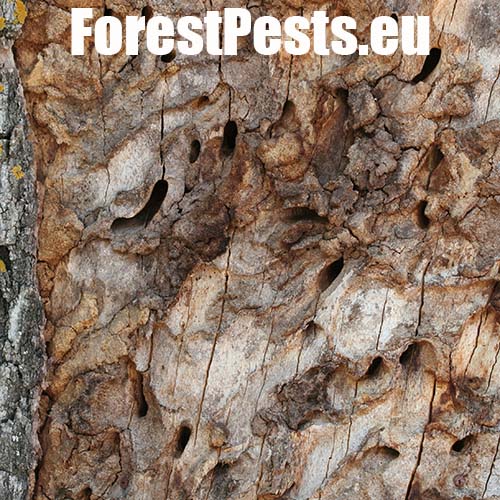
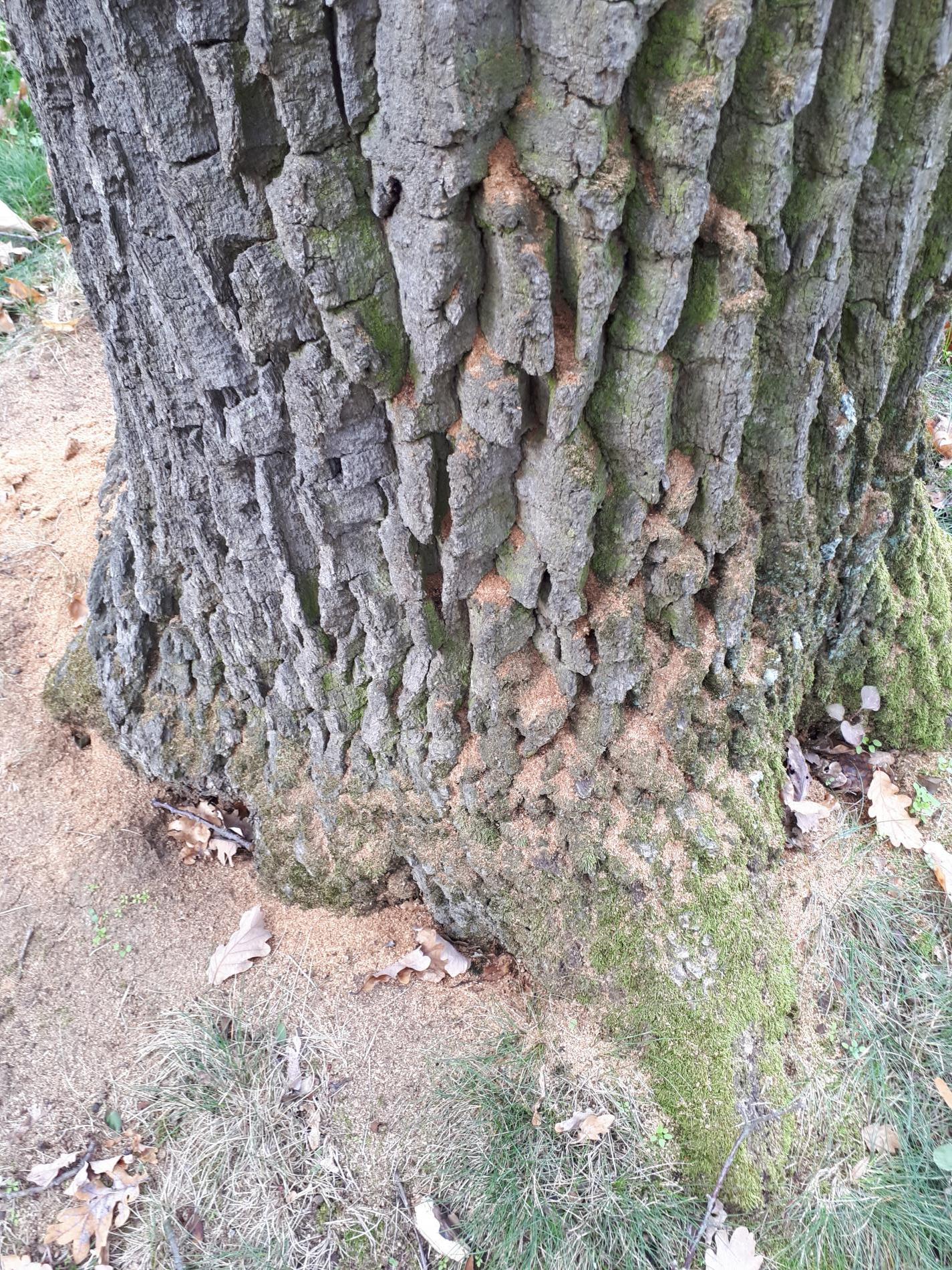
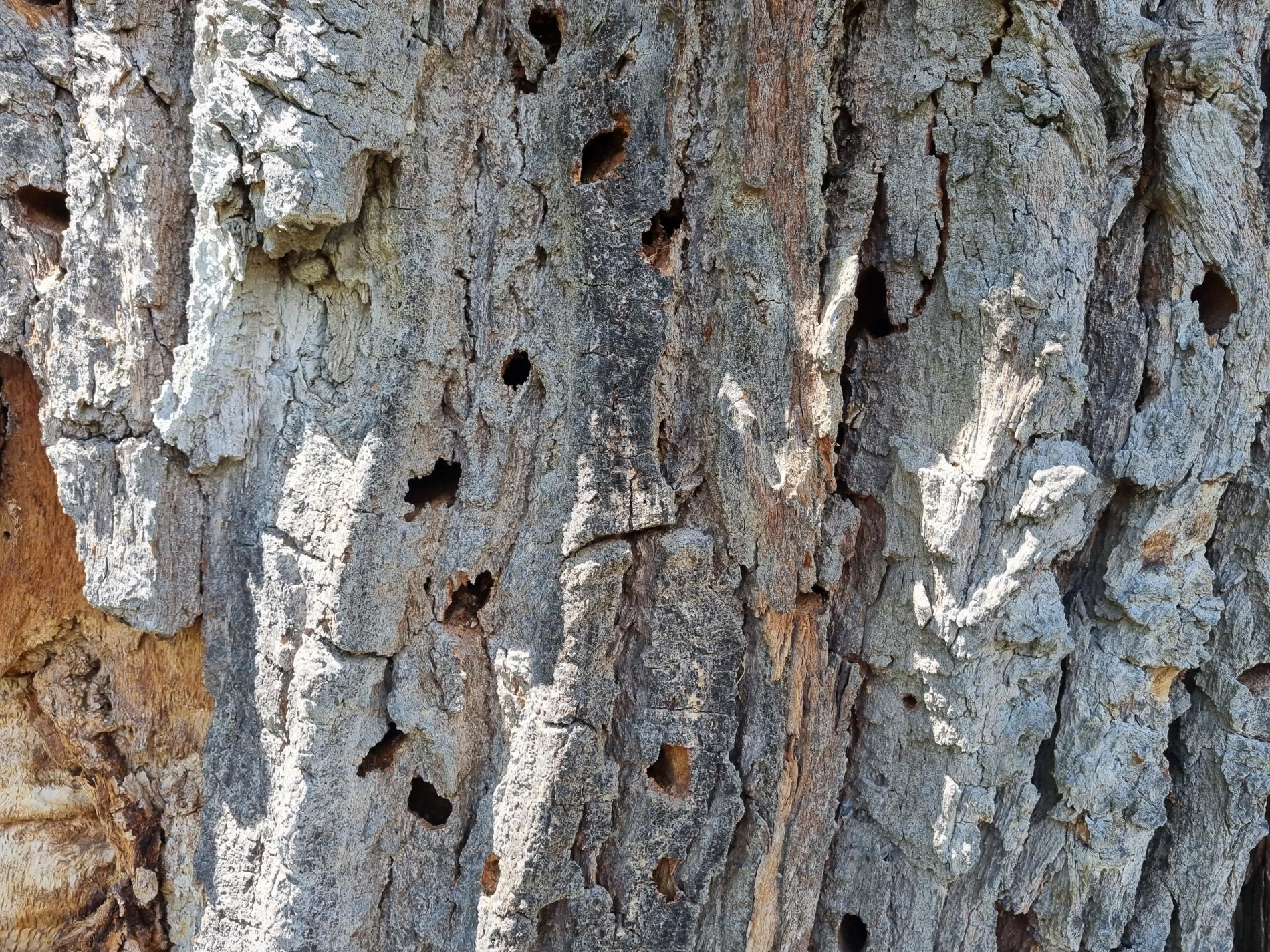
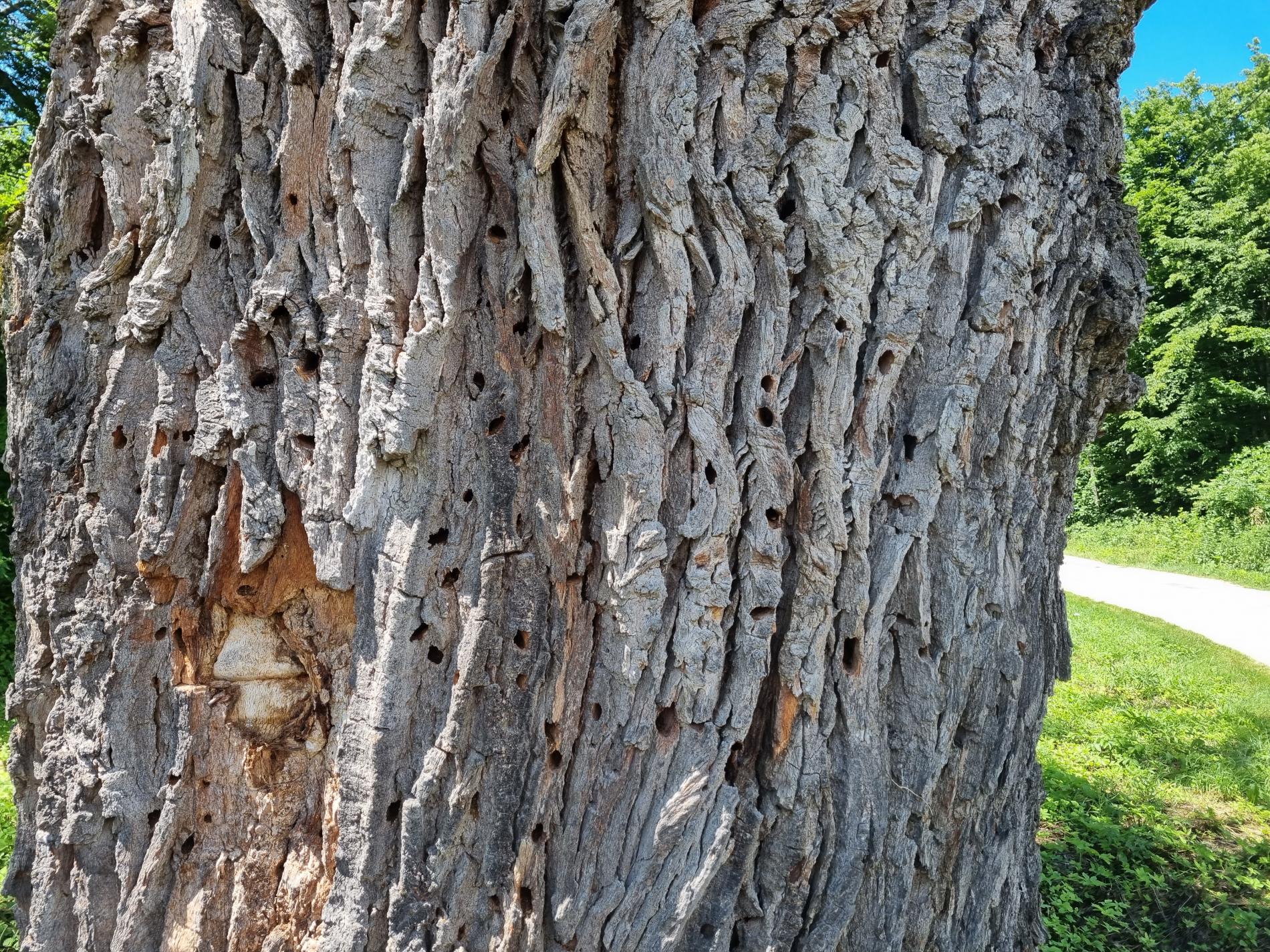
Larval galleries are long, irregular and widen as the larvae increase in size. A large amount of woodchips accumulates at bottom of the trunk. Huge exit holes on stems.
Tree Species: Oak
Part of a plant- attacked: Tree trunk
Pest significance: Harmful
Pest Category: Insects
Invasive Species: No
Present in EU: Yes
Pest group: Insect
Affected part of wood: Bark, Sapwood, Underbark area
Depth of damages: Bark, More than 5 cm depth, Under bark only, Up to 0,5 cm depth, Up to 2 cm depth, Up to 5 cm depth
The extent of damage: Lokally
Prevalence in Europe: Rare
Damaged products: Firewood, Fresh timber logs (water still in the sapwood), Stored timber logs (dried wood)
Roundwood size: Diameter 50+, Diameter from 10 up to 50 cm
Wood discoloration: No
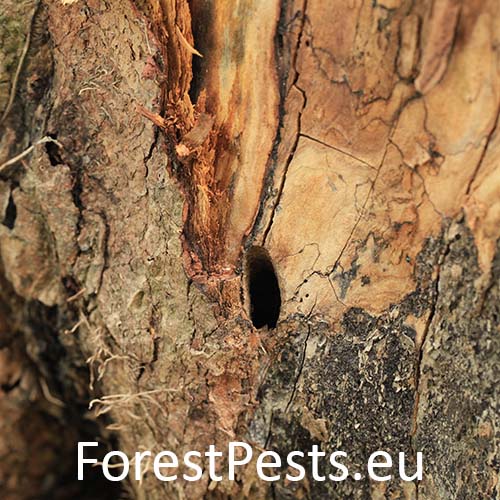
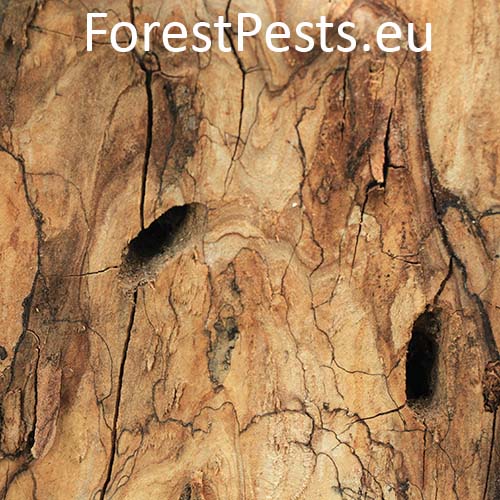
Exit holes: Oval
Pest subcategory: Wood-boring insect
Similar pests

Ergates faber

Rosalia alpina
