


Cenangium ferruginosum
Pine dieback
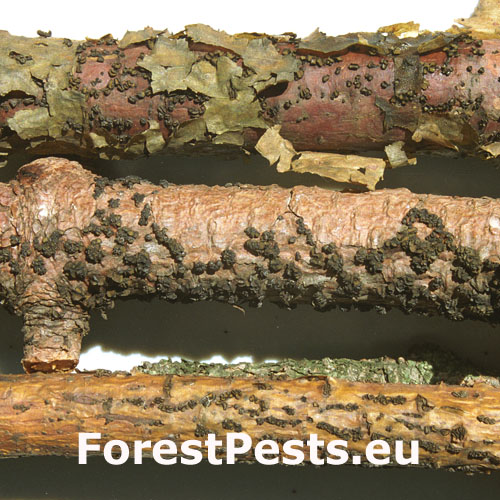
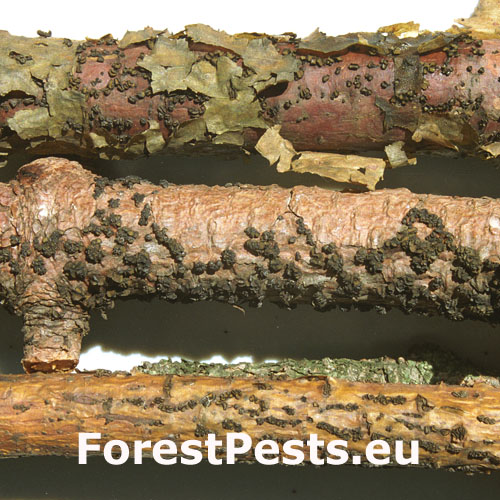
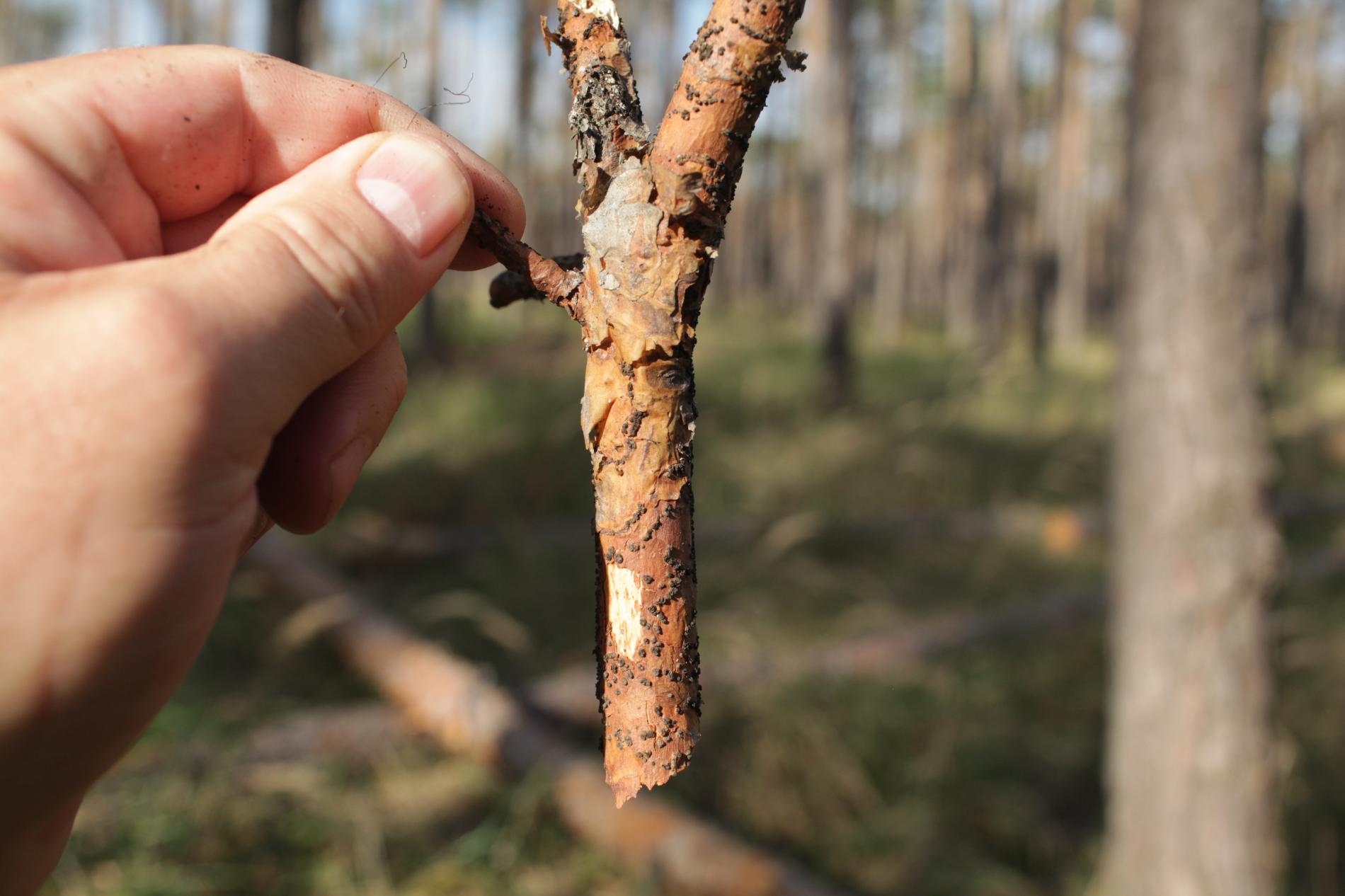
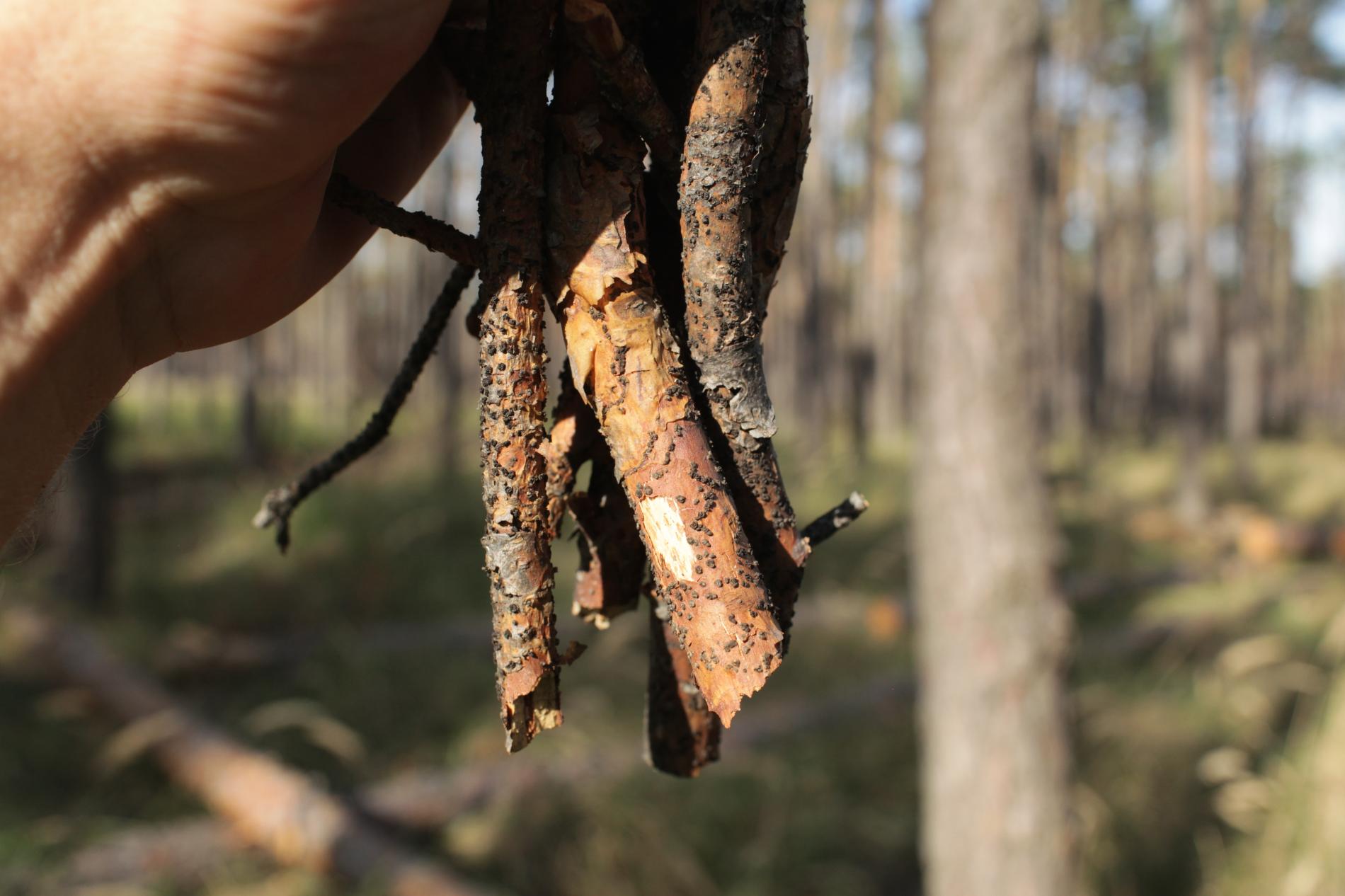
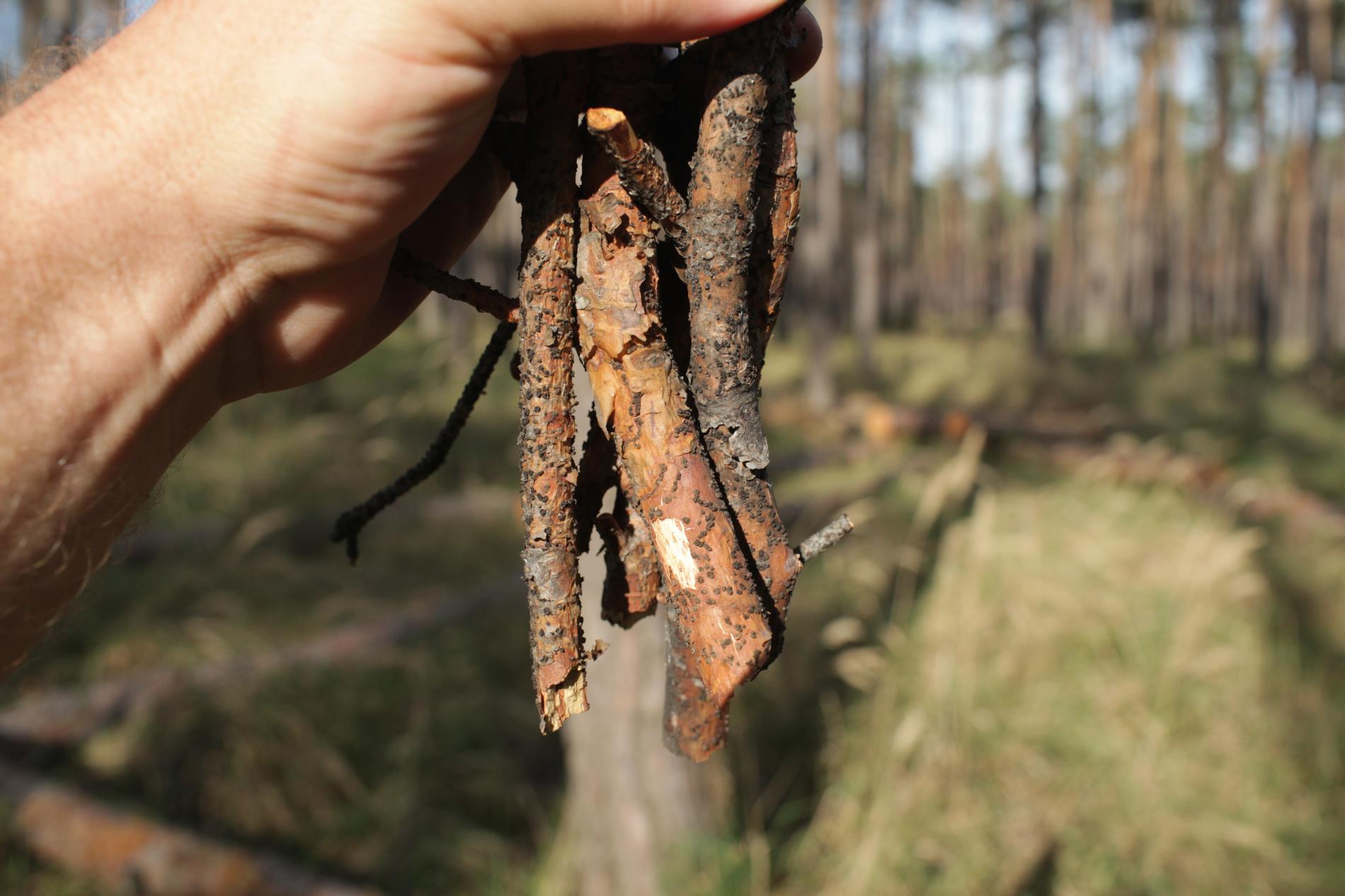
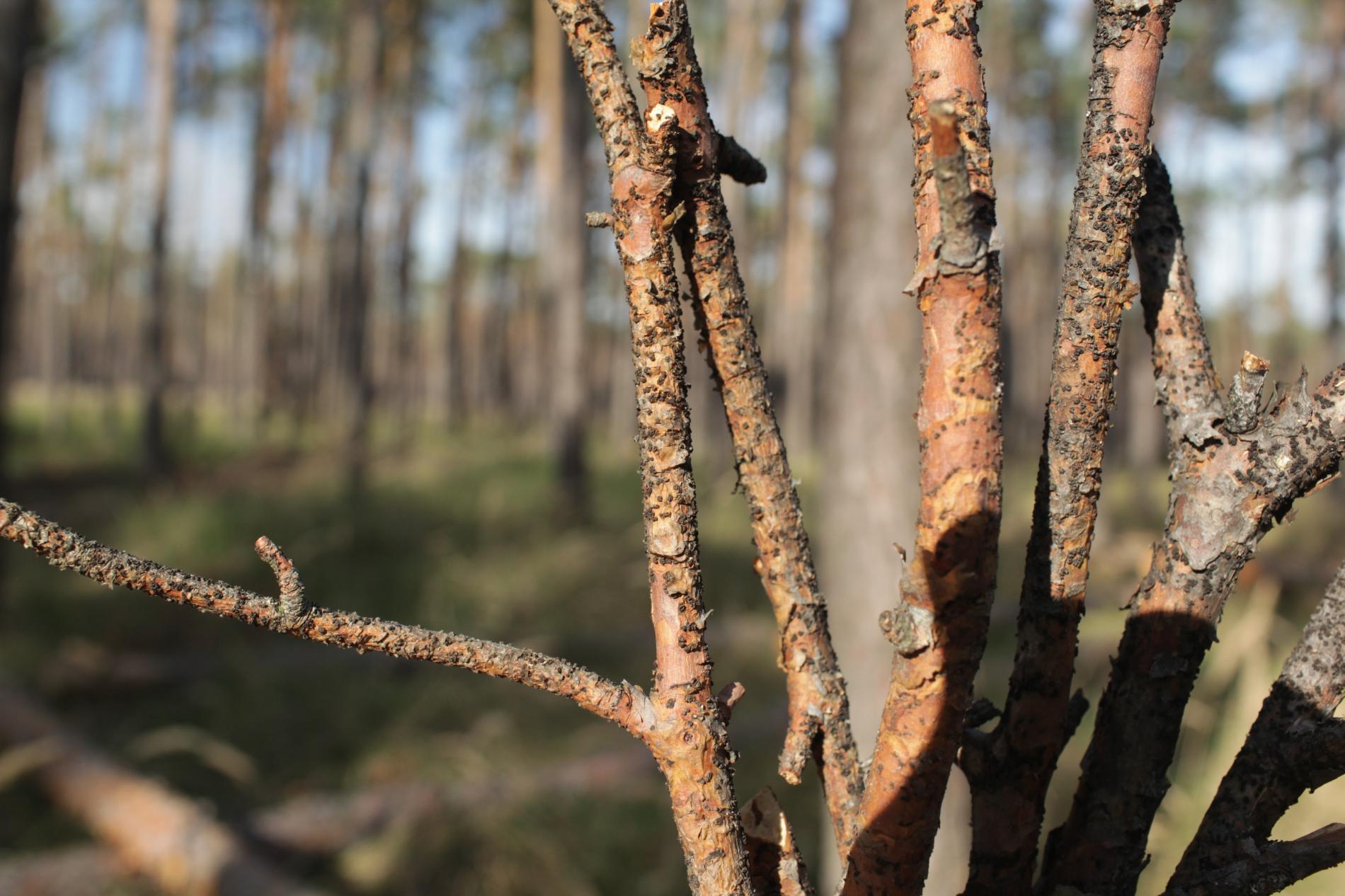
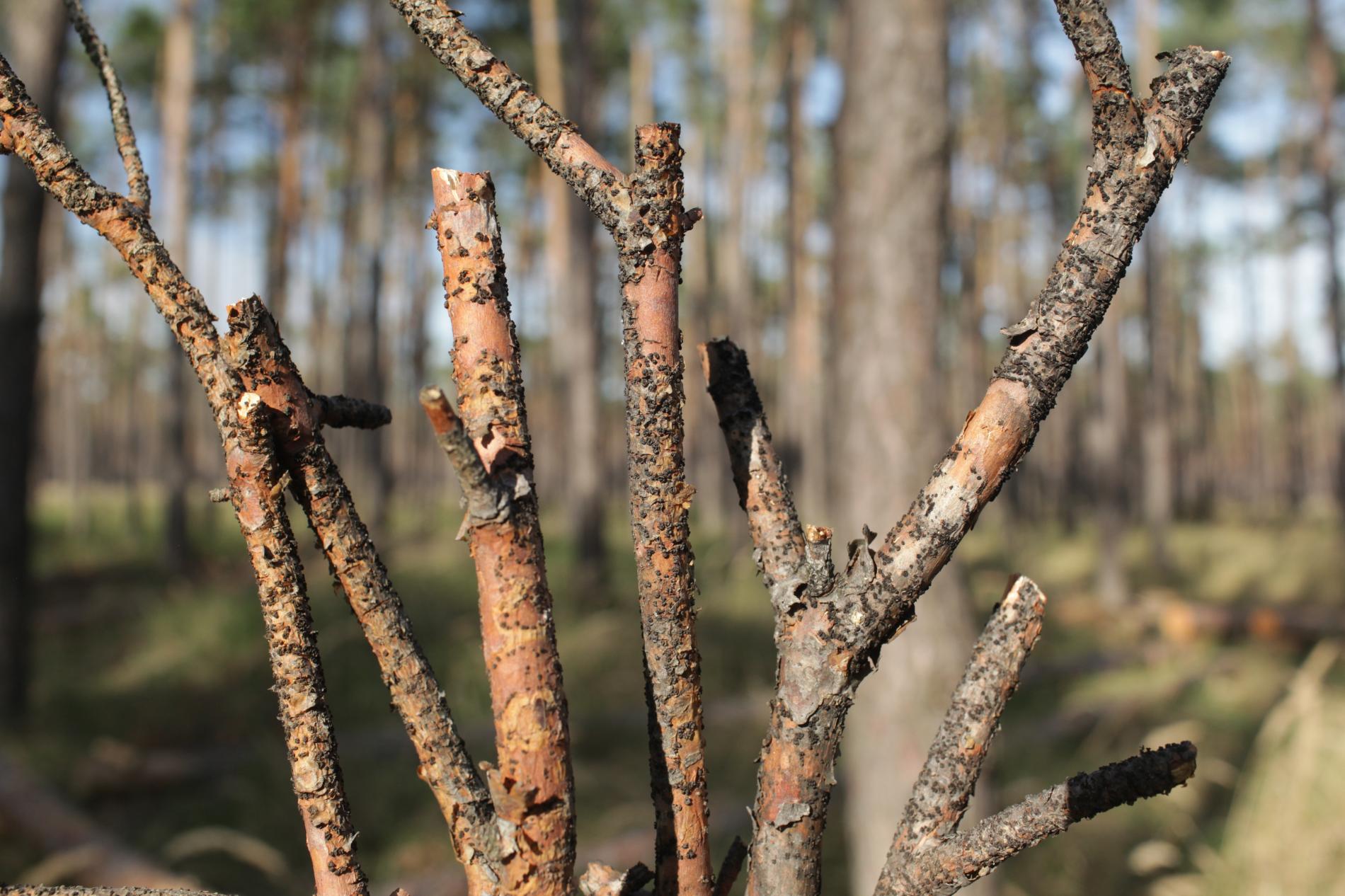
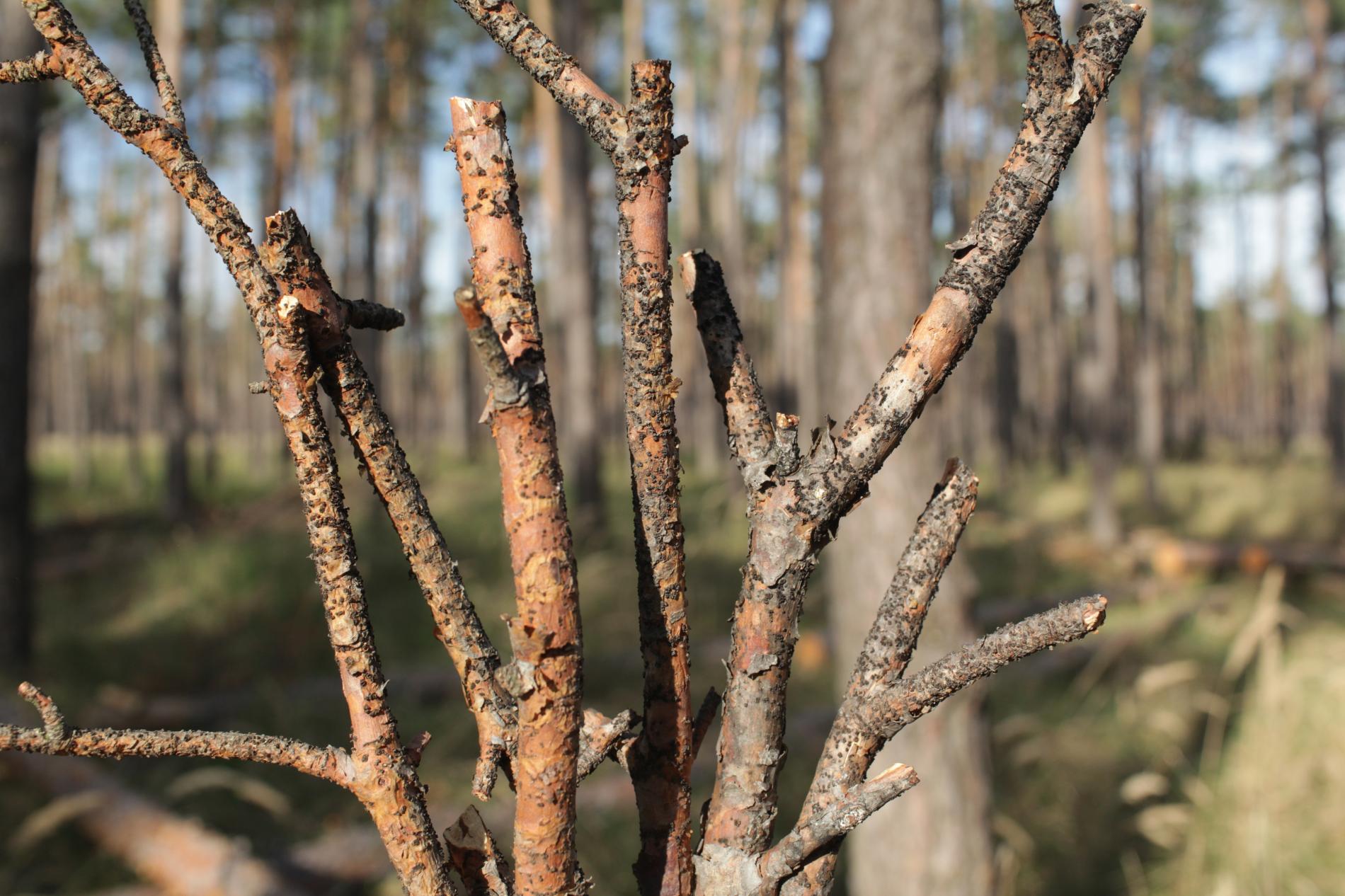
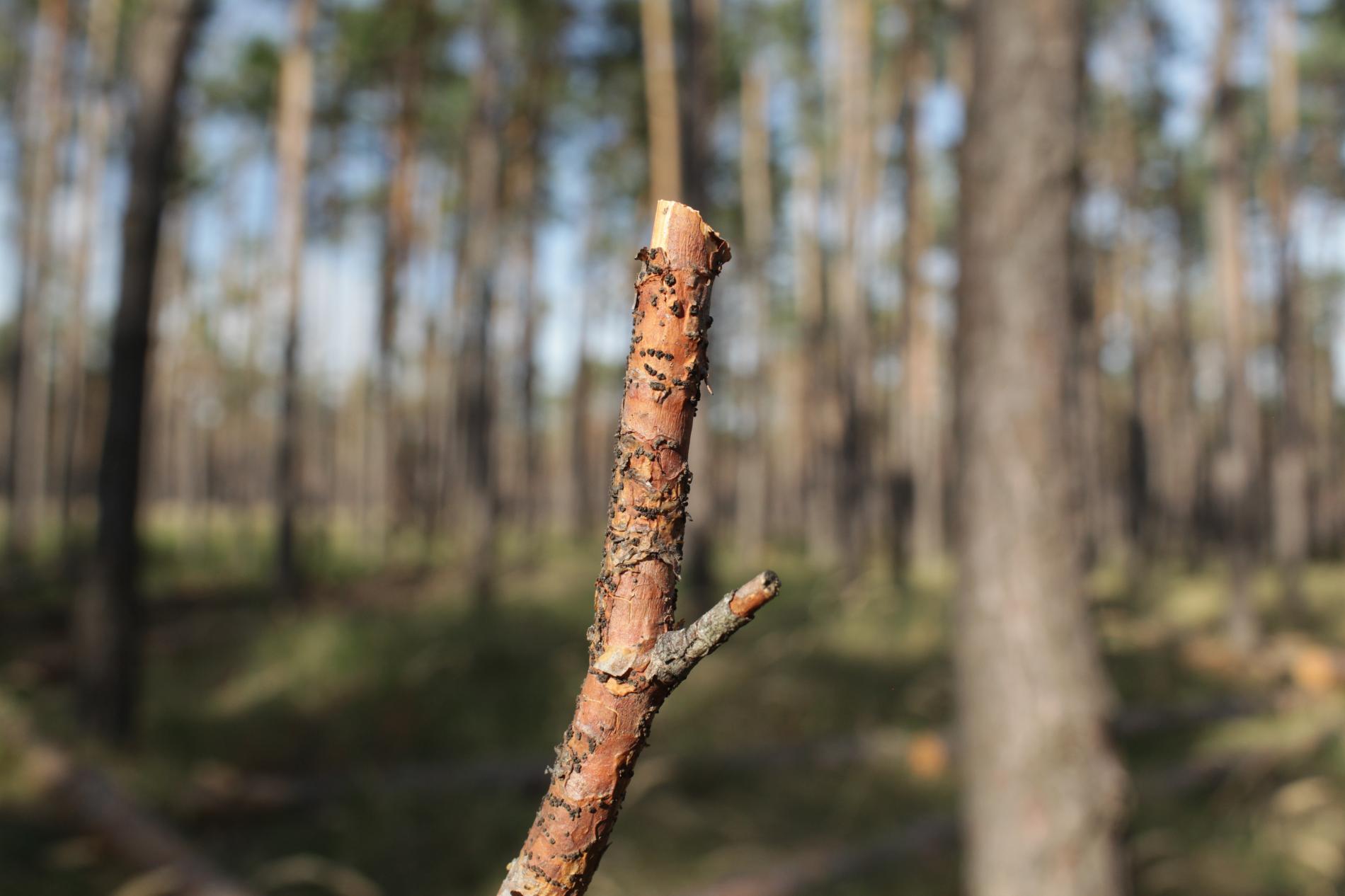
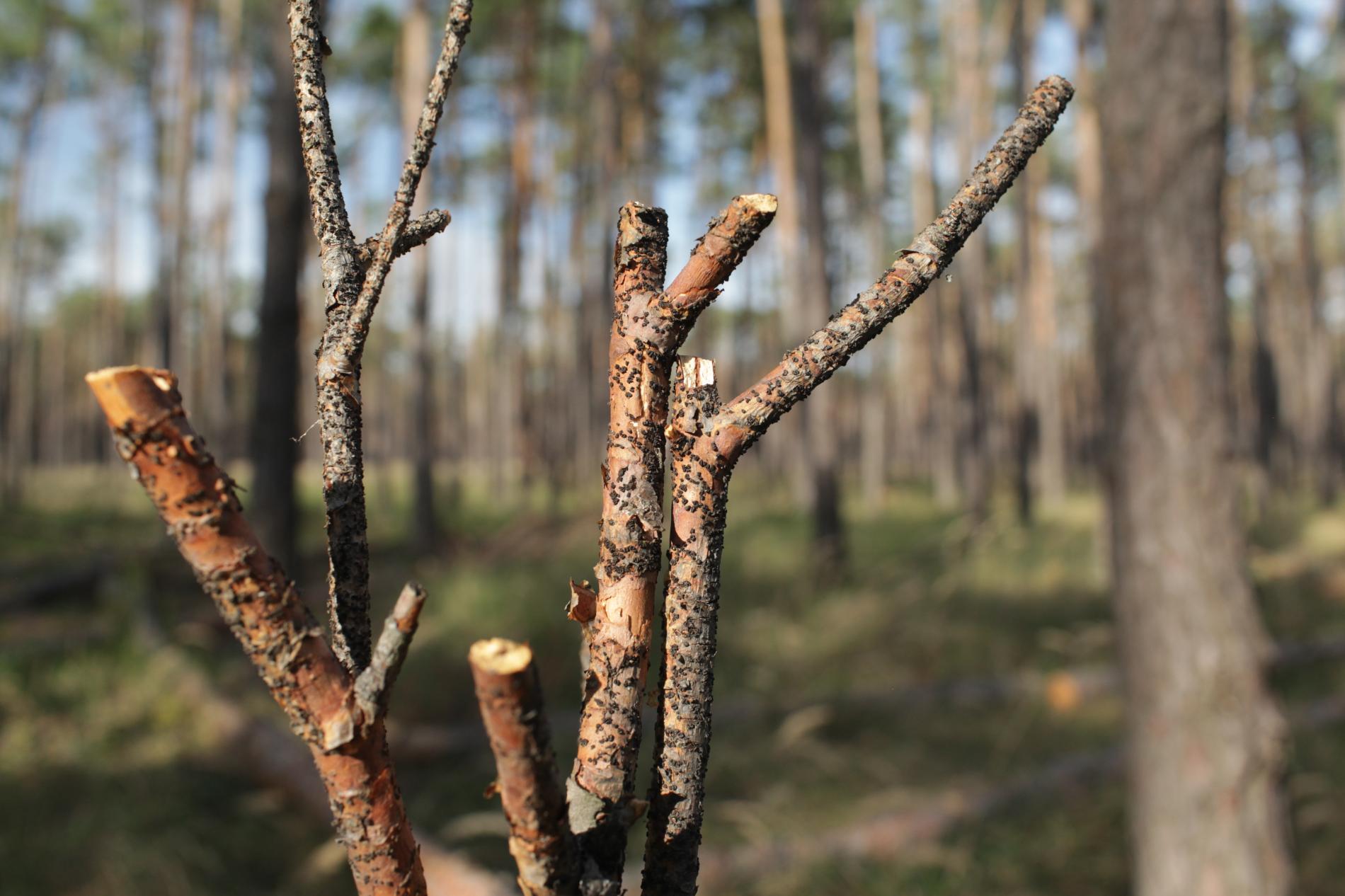
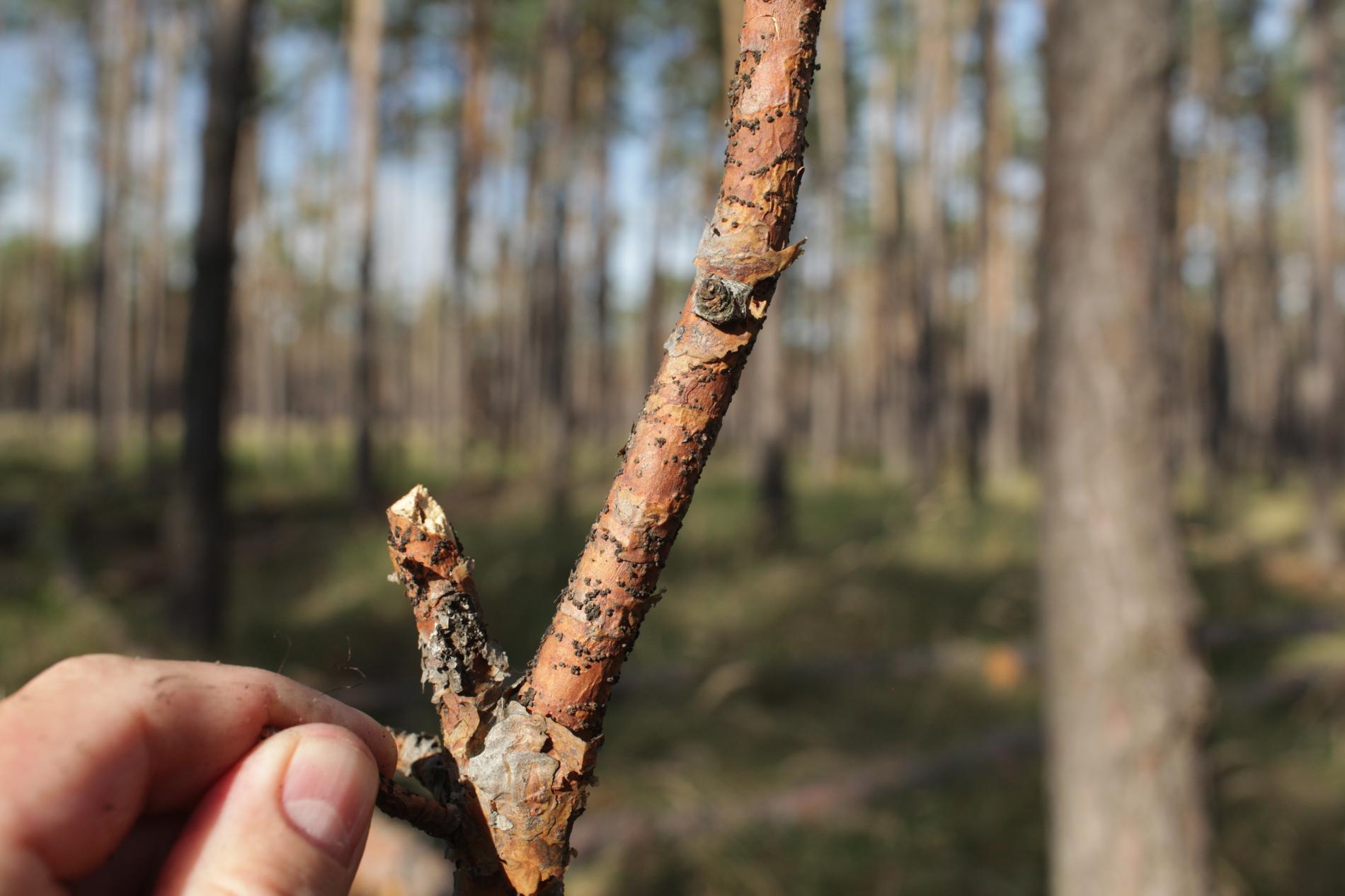
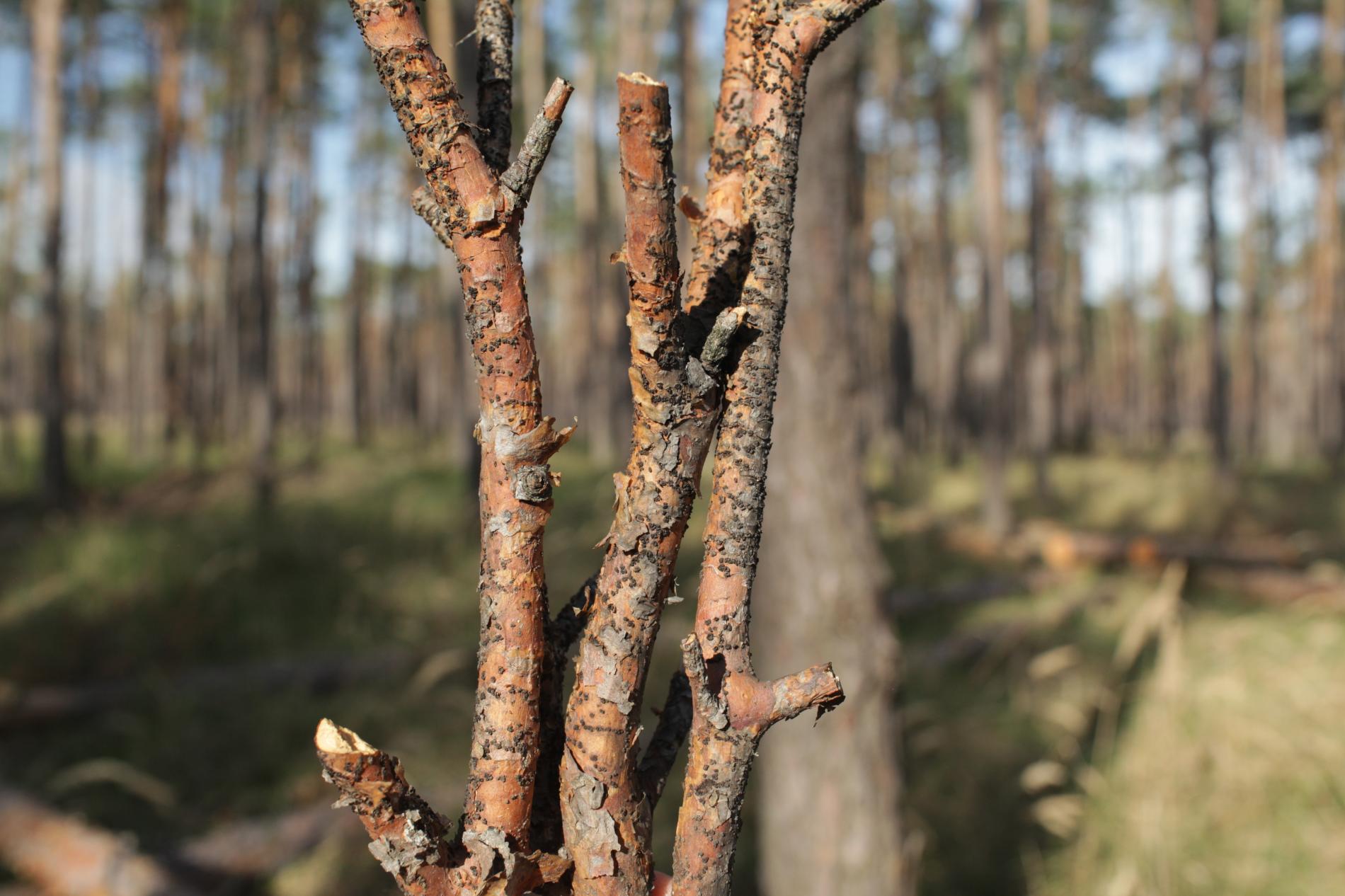
It is a necrotic limb bark disease of various pine species. The infection occurs from the middle of July until the middle of September through various wounds on branches. The needles turn brown from the basis up to the point, the under-bark tissues die even before the symptoms on needles occur. However, these are always the symptoms reminding of Sphaeropsis sapinea or Gremmeniella abietina fungal infection. The sufficient evidence of Cenangium limb canker are the fruiting bodies created in bark cracks on dead twigs, typically in dense row formations, or in smaller groups. In wet conditions, the fruiting bodies are plate-like open, 1-2 mm wide and pale brown. In dry conditions, the fruiting bodies are grey to black and folded. Infestation can be severe.
Black fruiting bodies on branches.
Tree Species: Pine
Part of a plant- attacked: Leaf / Needle, Branch
Pest significance: Very harmful
Pest Category: Fungi
Invasive Species: No
Present in EU: Yes
Pest group: Fungi
Affected part of wood: Sapwood
Depth of damages: More than 5 cm depth, Under bark only, Up to 0,5 cm depth, Up to 2 cm depth, Up to 5 cm depth
The extent of damage: Individually - one place
Prevalence in Europe: Rare
Damaged products: Firewood, Fresh timber logs (water still in the sapwood), Furniture, Lumber, boards and prisms, Wood chips, Wooden house constructions
Roundwood size: Branches and twigs
Wood discoloration: No
Pest subcategory: White-rot
Similar pests

Armillaria gallica

Pleurotus ostreatus
